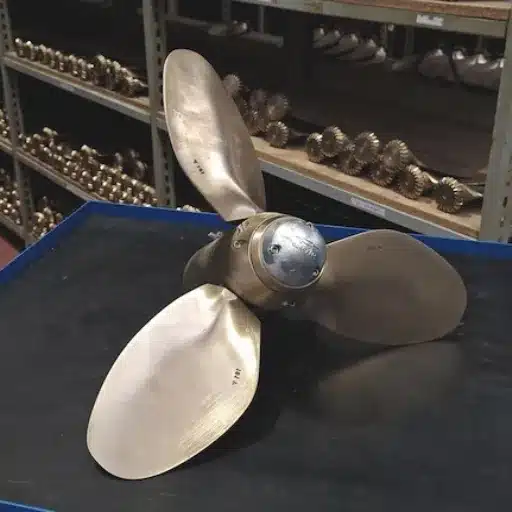
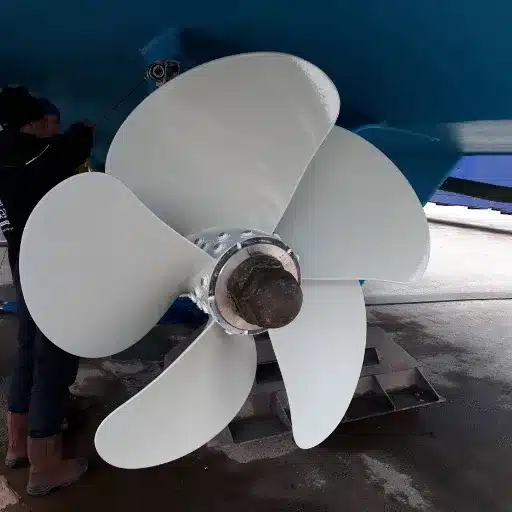
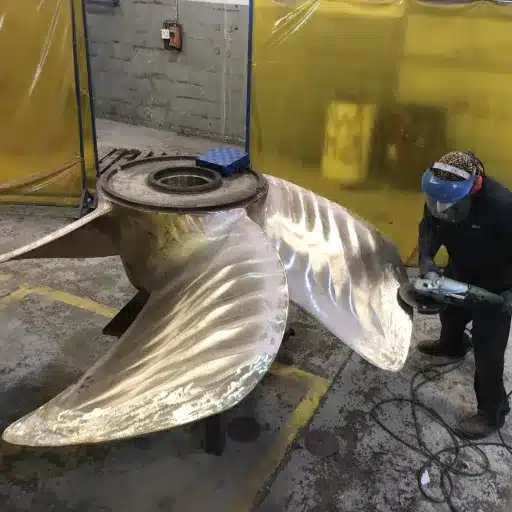
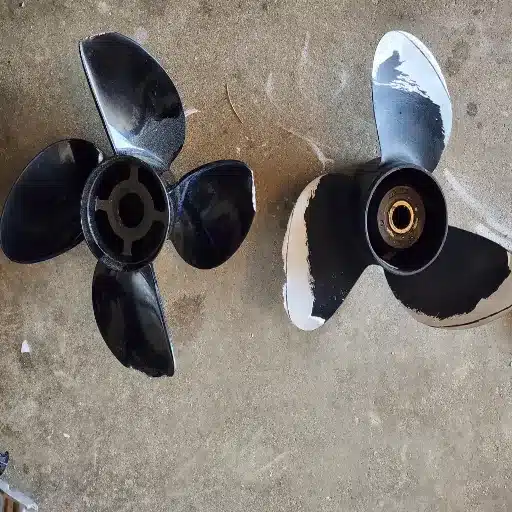
Choisir la bonne taille d'hélice nécessite de déterminer le diamètre et le pas, qui doivent correspondre à la puissance du moteur, au poids du bateau et à votre utilisation réelle sur l'eau. Un mauvais choix entraîne un gaspillage de carburant, une sollicitation excessive du moteur et une baisse des performances. Un bon choix permet à votre bateau de déjauger plus rapidement, de naviguer plus confortablement et de réduire sa consommation de carburant lors de toutes vos sorties.
Vous vous êtes probablement déjà demandé ce que signifiaient les chiffres gravés sur le moyeu d'une hélice. La réponse à votre question existe car vous partagez cette expérience avec d'autres plaisanciers. La plupart d'entre eux considèrent le choix de la taille de leur hélice comme un mystère insoluble.
On néglige souvent la confusion car elle engendre des pertes financières. Marcus, propriétaire d'un ponton en Floride, l'a appris à ses dépens au printemps dernier. Il avait acheté en ligne une hélice neuve en acier inoxydable, séduit par les excellents avis et un prix apparemment raisonnable.
Deux week-ends plus tard, son moteur hors-bord de 115 CV tournait à 4 200 tr/min, au lieu des 5 500 tr/min prévus. Son accélération était catastrophique. Sa consommation de carburant avait bondi de 20 %. Le problème ne venait pas de la marque de l'hélice, mais du choix de sa taille. Il avait acheté une hélice de 15 pouces de pas pour un bateau qui nécessitait une hélice de 17 pouces. Une erreur de mesure a transformé un bon achat en une coûteuse déconvenue.
Ce guide des tailles d'hélices est indispensable car nous l'avons conçu. Il contient des instructions pour lire les dimensions des hélices et utiliser notre tableau des tailles spécifique à chaque moteur, qui vous sert de point de départ. Le test à plein régime confirmera votre choix final. La procédure est simple et sans incertitude. Elle ne nécessite aucune dépense inutile et vous fournit des instructions claires à suivre avant votre prochaine sortie en mer.
Cet article se concentre sur les principes de dimensionnement des hélices et notre tableau des tailles spécifiques aux moteurs. Pour connaître l'intégralité du processus de sélection, consultez notre Guide de sélection des hélices de bateau.
Points clés à retenir
- La taille d'une hélice de bateau est exprimée en diamètre x pas (par exemple, 14 x 19), et les deux nombres ont la même importance pour les performances.
- Le tableau des tailles d'hélices de bateau ci-dessous vous donne un point de départ en fonction de la puissance du moteur et du type de bateau.
- Modifier le pas de 1 pouce entraîne une modification correspondante du régime moteur d'environ 150 à 200 tr/min en fonctionnement à plein régime.
- Les hélices en aluminium coûtent entre 80 et 250 dollars, celles en acier inoxydable entre 250 et 700 dollars, et le matériau influe sur les performances de l'hélice sous charge.
- Vous devriez tester la taille de votre hélice par un test de régime moteur à plein régime avant de commencer la saison complète.
Que signifient les chiffres de la taille d'une hélice ?
Le moyeu de chaque hélice affiche deux mesures essentielles, qui apparaissent sous la forme « 14 x 19 » ou « 13 1/4 x 17 ». Ces deux mesures déterminent le fonctionnement de l’hélice dans l’eau, ce qui constitue la base de tous vos choix de dimensionnement d’hélice pour bateau.
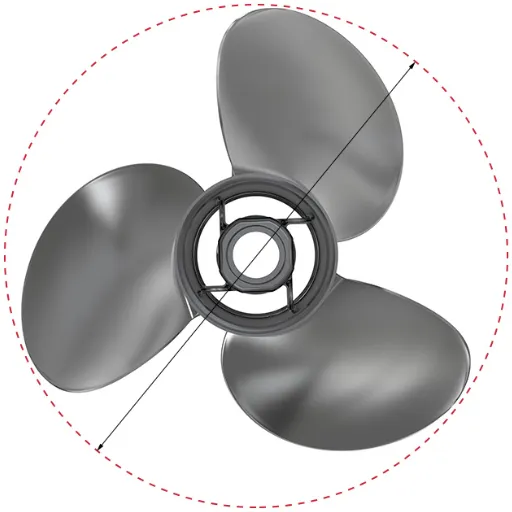
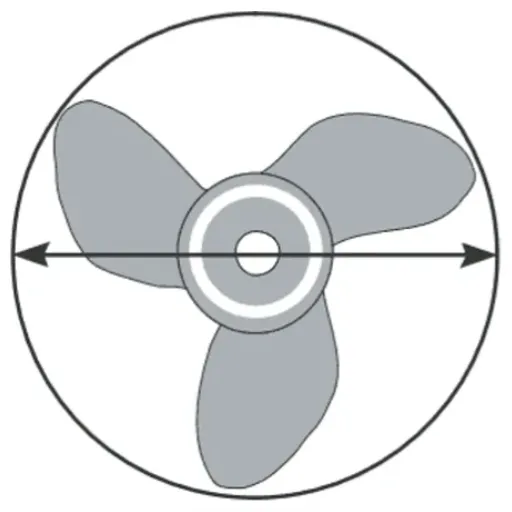
Le premier chiffre correspond au diamètre. La mesure, exprimée en pouces, indique la largeur totale de la zone circulaire créée par les pales lors de leur rotation. Les extrémités d'une pale de 14 pouces de diamètre dessinent un cercle de 14 pouces de diamètre. Un diamètre plus important déplace davantage d'eau par tour, ce qui génère une poussée accrue. Cette poussée supplémentaire aide les bateaux lourds à déjauger lorsqu'ils naviguent en eaux agitées. En contrepartie, un diamètre plus important crée une traînée. Il génère également une résistance plus grande, ce qui peut limiter la vitesse maximale et solliciter davantage le moteur.
Le deuxième chiffre correspond au pas de l'hélice. L'hélice parcourt une distance précise à chaque tour, car la distance théorique représente son déplacement sans glissement. Un pas de 19 pouces signifie que, dans des conditions idéales, l'hélice avancerait de 19 pouces dans l'eau par tour. Le glissement de l'hélice réduit la distance parcourue par le bateau à environ 60-75 % de sa distance théorique. Un pas plus élevé signifie un potentiel de vitesse plus important par tour. Un pas plus faible signifie une accélération plus rapide et un déjaugeage plus facile.
La plupart des plaisanciers ignorent un point essentiel concernant leur équipement : le diamètre et le pas de leur hélice sont interdépendants. Toute modification de l’un aura un impact sur l’autre. Votre moteur sera en surcharge si vous utilisez une hélice de grand diamètre avec un pas élevé. À l’inverse, il atteindra sa vitesse maximale avec une hélice de petit diamètre et un pas faible. Le tableau des tailles d’hélices, présenté plus loin dans ce guide, vous aidera à trouver le bon compromis pour votre configuration. Pour une vue d’ensemble du processus de sélection, consultez notre guide complet sur le choix de la taille d’hélice adaptée.
Vous voulez approfondir le sujet du terrain ? Notre guide sur meilleur pas d'hélice pour mon bateau explique précisément comment ajuster la hauteur du moteur en fonction de vos relevés de régime moteur à pleine charge.
Pourquoi la taille de l'hélice est importante pour les performances, le rendement énergétique et la santé du moteur
Choisir une hélice de taille inadaptée à votre bateau entraîne deux conséquences négatives. Premièrement, cela endommage votre moteur et vous coûte de l'argent. Le tableau des tailles d'hélices fournit des informations précieuses qu'il est important d'étudier, car il illustre les conséquences des différentes tailles d'hélices.
Lorsque votre hélice est trop grande pour votre configuration, que ce soit en diamètre ou en pas, votre moteur ne peut pas atteindre son régime moteur maximal recommandé. On parle alors d'hélice surdimensionnée. Les paliers du moteur fonctionnent au-delà de leurs limites normales, ce qui entraîne une surchauffe. Les pièces internes du système sont endommagées, ce qui réduit la durée de vie du moteur. Ce dernier devient moins efficace car il consomme davantage de carburant lorsqu'il fonctionne hors de sa plage de performance optimale.
Jennifer, une pêcheuse en bateau à moteur au Texas, a constaté que son moteur hors-bord de 150 CV peinait à atteindre 5 000 tr/min alors que le manuel préconisait une plage de 5 200 à 5 800 tr/min. Son bateau était équipé d'une hélice de 23 pouces de pas, alors que les spécifications du moteur indiquaient un pas de 21 pouces. Après avoir changé l'hélice, son régime moteur est passé à 5 600 tr/min. Son accélération au déjaugeage s'est améliorée de 30 %. Sa consommation de carburant est passée de 12 gallons par heure à 10.5 gallons par heure. Une meilleure accélération, une navigation plus fluide et des économies de carburant ont été réalisées grâce au changement d'hélice.
La petite taille de l'hélice permet au moteur de dépasser son régime maximal de fonctionnement sûr. On parle alors de moteur « sous-équipé ». Le moteur fonctionne au-delà de sa limite de vitesse maximale, ce qui entraîne un gaspillage de carburant et une usure prématurée des paliers et des pistons. Le moteur produit un couple supérieur à celui que l'hélice peut convertir en propulsion, ce qui engendre une perte de puissance potentielle.
Ces deux situations entraînent une baisse du rendement énergétique. Le moteur consomme davantage de carburant lorsqu'il tente de déplacer une charge supérieure à celle autorisée par ses spécifications. Il consomme également plus de carburant car, en raison d'une hélice sous-dimensionnée, il fonctionne à des régimes plus élevés sans pour autant atteindre les gains de vitesse correspondants. L'équilibre optimal est atteint lorsque l'hélice permet au moteur d'atteindre son régime maximal (WOT RPM) dans des conditions d'utilisation normales. Ce juste équilibre entre puissance et efficacité garantit une longue durée de vie aux pièces du moteur.
Comment mesurer la taille de votre hélice actuelle
Le processus de sélection d'une nouvelle hélice nécessite d'identifier au préalable votre équipement actuel. Il existe trois méthodes différentes pour déterminer les dimensions de votre hélice actuelle.
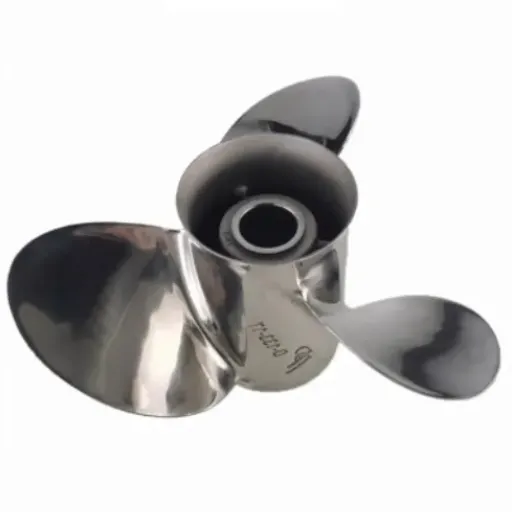
La méthode la plus simple consiste à accéder aux informations de marquage du moyeu. Faites tourner l'hélice jusqu'à trouver les marquages numériques présents sur la surface métallique entourant le moyeu central. L'illustration présente « 14 x 19 » et « 13.25 x 15 » comme deux options différentes. Le premier nombre correspond au diamètre. Le second indique le pas de l'hélice. Certains fabricants proposent un marquage indiquant à la fois le sens de rotation (RH pour droite et LH pour gauche) et le code d'identification du matériau.
Il est nécessaire de mesurer le diamètre lorsque le marquage devient illisible ou disparaît complètement. À partir du centre du moyeu, mesurez jusqu'à l'extrémité de la lame, puis doublez cette mesure. Utilisez un mètre ruban et mesurez l'extrémité de la lame, et non son milieu. Cette méthode permet d'obtenir le diamètre réel.
La mesure manuelle du pas d'hélice nécessite plusieurs étapes. Les outils nécessaires sont un gabarit de pas ou une règle et un rapporteur. L'angle de la pale doit être mesuré à 70 % de la distance entre le moyeu et l'extrémité de la pale. Le pas est calculé à partir de cet angle grâce à la formule suivante : pas = tangente de l'angle de la pale × 2 × π × rayon. La plupart des plaisanciers négligent cette étape et se fient au marquage du moyeu ou à un atelier spécialisé pour la vérification.
Tableau complet des tailles d'hélices de bateau
Voici la section que nos concurrents ont omise. Les tableaux ci-dessous vous donnent un point de départ pour le dimensionnement de l'hélice en fonction de la puissance du moteur et du type de bateau. Considérez-les comme des indications, et non comme une vérité absolue. Le dimensionnement final doit toujours être confirmé par un test à plein régime.
Tableau des tailles d'hélices pour moteurs hors-bord
| HP moteur | Diamètre typique | Gamme de hauteur typique | Idéal pour |
|---|---|---|---|
| 15-25 HP | 9-10 dans | 8-11 dans | petits bateaux de pêche, canots |
| 30-40 HP | 10-11 dans | 10-13 dans | barques Jon, petits pontons |
| 50-60 HP | 11-12 dans | 11-15 dans | Pontons de taille moyenne, bateaux de baie |
| 75-90 HP | 12-13 dans | 13-17 dans | Bateaux à pont, consoles centrales |
| 115-150 HP | 13-14 dans | 15-21 dans | Bateaux de pêche à l'achigan, bateaux de ski nautique, consoles hauturières |
| 175-200 HP | 14-15 dans | 17-23 dans | Bateaux haute performance, charges lourdes |
| 225-300 HP | 14.5-16 dans | 19-27 dans | Pêche en haute mer, sports de remorquage |
Tableau des tailles d'hélices pour moteurs hors-bord
| HP moteur | Diamètre typique | Gamme de hauteur typique | Idéal pour |
|---|---|---|---|
| 135-175 HP | 14-15 dans | 17-21 dans | Croiseurs, runabouts |
| 190-220 HP | 14.5-15.5 dans | 19-23 dans | bateaux de sport, cabines à deux places |
| 260-300 HP | 15-16 dans | 21-25 dans | Bateaux de performance, croiseurs lourds |
| 320-430 HP | 15.5-17 dans | 23-27 dans | Grands croiseurs, hautes performances |
Guide rapide des types de bateaux
| Type de bateau | Tendance du diamètre | Tendance à la hauteur | Pourquoi |
|---|---|---|---|
| Ponton | Agrandir | Coût en adjuvantation plus élevé. | Charge lourde, rabotage plus lent |
| bateau bas | Moyenne | Meilleure performance du béton | Axé sur la vitesse, charge légère |
| Console centrale | Moyenne | Moyenne | Performances équilibrées |
| Sports nautiques / Remorquage | Agrandir | Moyenne | priorité au trou |
| auxiliaire du voilier | Plus petit | Coût en adjuvantation plus élevé. | Faible régime moteur, coque à déplacement |
| bateau de travail commercial | Agrandir | Coût en adjuvantation plus élevé. | Charge lourde, faible vitesse |
Utilisez le tableau des moteurs hors-bord ou in-bord pour déterminer le diamètre et le pas d'hélice de départ. Reportez-vous ensuite au tableau des types de bateaux pour savoir s'il est préférable d'opter pour une hélice plus grande ou plus petite en fonction de votre coque. N'oubliez pas qu'une hélice tripale est la norme. Passer à une hélice quadripale permet généralement de réduire le régime moteur à plein régime de 50 à 100 tr/min et d'améliorer les performances au déjaugeage.
Comprendre la différence entre le diamètre et le pas d'une hélice
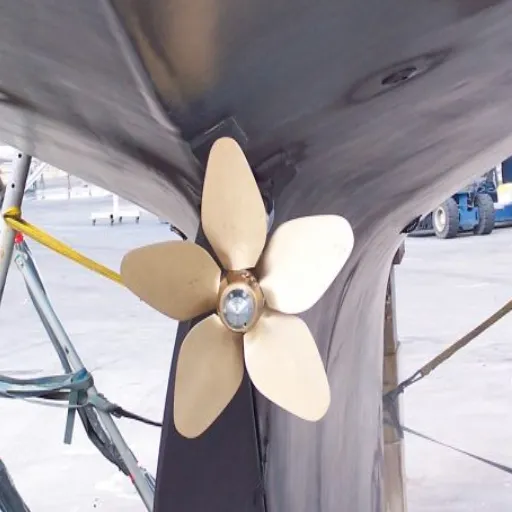
Les deux facteurs essentiels pour le réglage d'une hélice sont son diamètre et son pas. Comprendre le fonctionnement de chaque composant vous permettra d'effectuer des réglages plus judicieux.
Le diamètre est le principal facteur déterminant la poussée. Un diamètre plus important offre un meilleur rendement car, grâce à une plus grande amplitude de rotation, la poussée est générée par une hélice plus large, ce qui produit un plus grand volume d'eau. Ce déplacement d'eau accru génère une force supplémentaire qui propulse le navire. C'est pourquoi les bateaux lourds, les pontons et les navires commerciaux sont équipés d'hélices de grand diamètre. Cependant, la traînée accrue constitue un inconvénient. La surface de pale plus importante génère une traînée supplémentaire, ce qui limite le régime moteur maximal. À haut régime, la traînée limite les performances. Le moteur atteint son régime maximal car les bateaux légers à grande vitesse utilisent des hélices de petit diamètre, qui offrent moins de résistance.
Le rapport entre le pas de l'hélice et sa vitesse de rotation détermine la vitesse de déplacement d'un bateau à chaque cycle moteur. Plus le pas est élevé, plus l'hélice est efficace car elle propulse davantage le bateau vers l'avant à chaque rotation. Le principe est similaire à celui des rapports de vitesse d'un vélo. Un pas élevé est comparable à une vitesse élevée car il permet d'atteindre des vitesses importantes sur terrain plat, mais rend les démarrages difficiles. Un pas faible est comparable à une vitesse réduite car il permet des accélérations rapides mais empêche d'atteindre la vitesse maximale. Les bateaux de sports nautiques privilégient les hélices à pas faible car elles offrent de meilleures performances de remorquage pour les skieurs nautiques et les wakeboarders.
Le dimensionnement d'une hélice atteint son apogée lorsqu'il s'agit d'ajuster le diamètre et le pas. Augmenter le pas sans modifier le diamètre peut entraîner une surcharge du moteur. À l'inverse, une augmentation du diamètre sans ajustement du pas réduit la vitesse de pointe. Les ingénieurs navals utilisent la dynamique des fluides numérique pour modéliser ces interactions, mais pour la plupart des plaisanciers, la règle générale est simple : ajuster d'abord le pas, puis le diamètre.
Pour une explication complète du réglage du pas d'hélice et comment trouver la valeur exacte pour votre bateau, consultez notre guide sur le pas d'hélice idéal pour mon bateau.
D'après les données techniques de Mercury Marine, une modification du pas de 2,5 cm (1 pouce) modifie le régime moteur à plein régime d'environ 150 à 200 tr/min. Si votre moteur surrégime de 300 tr/min, augmentez le pas de 5 cm (2 pouces). S'il sous-régime de 200 tr/min, diminuez-le de 2,5 cm (1 pouce). Les modifications de diamètre ont un impact plus important et doivent être envisagées lorsque le pas est déjà optimisé, mais que vous avez encore besoin de plus de poussée ou de moins de traînée.
Guide étape par étape : Comment choisir la bonne taille d’hélice pour votre bateau
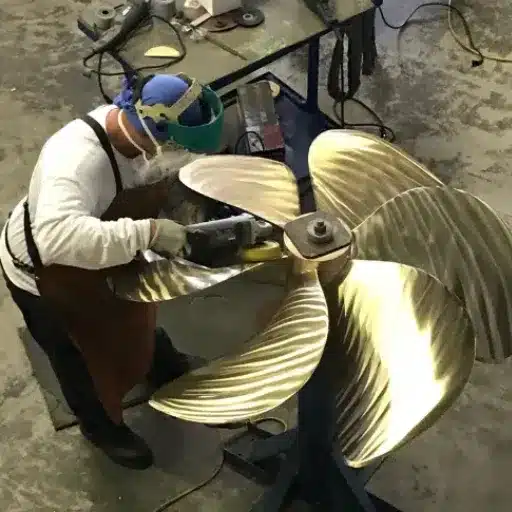
Le processus de choix de la taille d'hélice idéale nécessite de suivre six étapes dans un ordre précis.
Étape 1 : Rassemblez les spécifications de votre bateau et de votre moteur
Consultez le manuel de votre moteur et notez trois éléments : la puissance (en chevaux), la plage de régime moteur recommandée à plein régime et le rapport de transmission. Pesez ensuite votre charge habituelle, incluant les passagers, l’équipement, le carburant et l’eau. Un ponton chargé à bloc avec huit personnes à bord se comporte très différemment du même bateau avec deux personnes.
Étape 2 : Déterminez votre cas d’utilisation principal
Soyez honnête quant à la façon dont vous utilisez votre temps sur l'eau. La navigation à grande vitesse requiert une hélice différente de celle utilisée pour les sports nautiques, le remorquage et la pêche hauturière. Votre activité principale déterminera si vous privilégiez l'accélération ou la vitesse de pointe.
Étape 3 : Utilisez le tableau des tailles pour trouver votre point de départ
Utilisez les informations relatives à la puissance de votre moteur pour trouver le tableau des moteurs hors-bord ou in-bord correspondant à sa puissance. Déterminez le diamètre et le pas d'hélice typiques à identifier. Consultez ensuite le tableau des types de bateaux pour vérifier si des ajustements sont nécessaires. Un ponton équipé d'un moteur hors-bord de 150 CV pourrait nécessiter une embase de 14 x 17 pouces, tandis qu'un bateau de pêche avec le même moteur pourrait nécessiter une embase de 13.5 x 19 pouces.
Étape 4 : Test à plein régime
Vous devez installer l'hélice et faire naviguer votre bateau à plein régime avec une charge standard. Vous devez enregistrer le régime moteur exact à l'aide d'un compte-tours. Procédez ainsi en eau calme, avec le trim réglé sur votre position de croisière habituelle. Le moteur doit tourner à plein régime pendant 30 à 60 secondes afin d'établir un signal permanent.
Étape 5 : Ajuster la hauteur du son en fonction des relevés de régime moteur
Il est nécessaire de comparer la plage de régime moteur recommandée par le constructeur avec votre régime réel à plein régime. Le manuel d'utilisation ou le site web du constructeur devraient contenir les spécifications précises. Par exemple, les spécifications des moteurs hors-bord Yamaha indiquent la plage de régime à plein régime complète pour chaque moteur de leur gamme. Si votre régime est inférieur à la plage recommandée, le pas de votre hélice est trop élevé. Diminuez-le de 1 à 2 cm. Si votre régime est supérieur à la plage recommandée, le pas de votre hélice doit être ajusté. Augmentez-le de 1 à 2 cm. Il est impératif de tester à nouveau le système après chaque ajustement.
Étape 6 : Tenir compte du matériau et du nombre de lames
Une fois le pas d'hélice réglé, choisissez le matériau et le nombre de pales. Les hélices en aluminium coûtent entre 80 et 250 $ et fléchissent légèrement sous la charge, ce qui réduit leur efficacité. Les hélices en acier inoxydable, entre 250 et 700 $, conservent leur forme et transmettent davantage de puissance à l'eau. Une hélice à 3 pales est standard. Une hélice à 4 pales améliore l'accélération et la maniabilité, mais entraîne généralement une perte de vitesse de 1 à 2 mph à pleine vitesse.
Vous avez encore des questions après avoir suivi ces étapes ? Notre équipe chez Captain Marine est spécialisée dans l'adaptation des hélices aux bateaux. Contactez-nous pour obtenir de l'aide personnalisée concernant les tailleset nous vous expliquerons en détail les spécifications exactes de votre moteur et de votre coque.
Taille des hélices selon le type de bateau : un examen plus approfondi
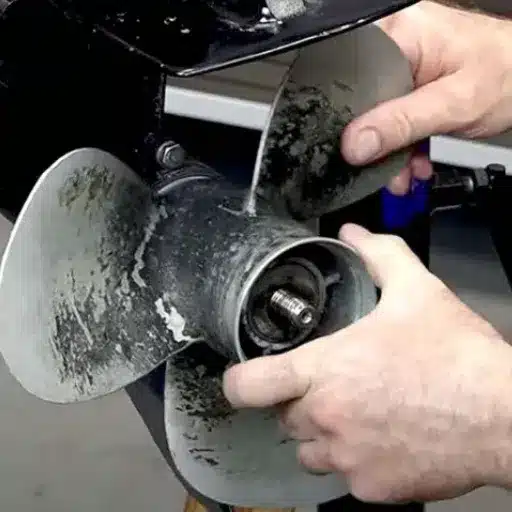
Les conseils génériques ont leurs limites. Voici comment le dimensionnement de l'hélice varie selon le bateau que vous possédez.
Bateaux pontons
Les pontons sont lourds et lents à déjauger. Ils nécessitent des hélices de plus grand diamètre et à pas réduit pour générer une poussée suffisante et soulever leur poids. Un ponton standard de 7,30 m (24 pieds) équipé d'un moteur hors-bord de 115 ch utilise généralement une hélice de 14 x 15 ou 14 x 17 pouces. Le plus grand diamètre contribue à propulser le poids, tandis que le pas réduit maintient le régime moteur élevé, optimal pour le couple. Pour des recommandations plus détaillées concernant les pontons, consultez notre guide. meilleure hélice pour bateaux pontons.
Bateaux de basse
Les bateaux de pêche à l'achigan (bass boats) naviguent à grande vitesse grâce à leur construction légère. Leur conception nécessite une embarcation plus étroite pour atteindre une vitesse maximale, notamment grâce à l'utilisation d'hélices à grand pas. Le bateau de 150 CV utilise une hélice de 13.5 x 21 pouces et une autre de 13.5 x 23 pouces. Ce type de bateau requiert un déjaugeage rapide après chaque escale, permettant ainsi des déplacements efficaces entre les zones de pêche. La plupart des pêcheurs participant à des compétitions utilisent des hélices à 4 pales, car elles offrent une meilleure accélération.
Consoles centrales
Les consoles centrales sont des bateaux hybrides. En haute mer, il est essentiel que le bateau soit suffisamment puissant pour bien gérer le clapot tout en conservant une vitesse suffisante pour naviguer sur les zones de pêche. Un bateau à console centrale de 200 CV est généralement équipé d'une hélice de 14 x 19 ou 14 x 21 pouces. La taille exacte dépend du choix du propriétaire entre la vitesse de traîne et la vitesse de croisière.
sports nautiques et bateaux de remorquage
Les bateaux de ski nautique et de wakeboard ont avant tout besoin d'un couple important à bas régime. Ils utilisent des hélices de plus grand diamètre car leur conception leur permet de sortir les pratiquants de l'eau. Un bateau de 350 CV peut fonctionner avec deux configurations d'hélices : 14.5 x 17.5 et 15 x 18. La configuration à 4 pales est courante dans cette catégorie pour une meilleure motricité.
Auxiliaires de voiliers
Les moteurs hors-bord pour voiliers sont petits et fonctionnent à bas régime. Ils nécessitent des hélices de petit diamètre et à faible pas pour s'adapter à la courbe de puissance du moteur. Un moteur auxiliaire de 6 CV pour voilier peut être équipé d'une hélice 7 x 6 ou 8 x 7. Ces hélices privilégient la poussée à bas régime, au détriment des performances à haut régime.
Bateaux de travail commerciaux
Les bateaux de travail transportent de lourdes charges et fonctionnent de longues heures. Ils nécessitent des coques de grand diamètre et à faible pas pour une poussée maximale et une consommation de carburant réduite. Un canot de travail de 225 CV pourrait être équipé d'une coque de 15 x 15 ou 15 x 17 pouces. L'acier inoxydable est couramment utilisé dans cette catégorie pour sa résistance aux débris et aux chocs.
Erreurs courantes de dimensionnement des hélices (et comment les éviter)
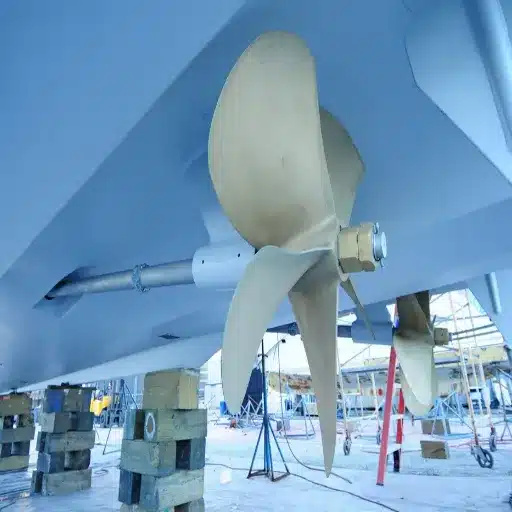
Même les plaisanciers expérimentés commettent ces erreurs. Voici les points à surveiller.
En ignorant la plage de régime à pleine charge. La première erreur que l'on commet lors du choix d'une hélice consiste à vérifier quelle hélice correspond au régime moteur requis. Il est indispensable d'effectuer un essai à plein régime avant tout achat.
Choisir le pas d'hélice pour une vitesse maximale sans tenir compte de la charge. Une hélice à pas élevé permet d'atteindre 2 km/h par faible luminosité. Avec quatre passagers et une glacière à bord, cette même hélice ne pourra plus atteindre sa vitesse de déjaugeage.
Le même accessoire est utilisé tout au long de l'année. Les week-ends d'été en famille impliquent une charge plus importante que les sorties en solitaire au printemps. Votre bateau nécessite deux hélices si son fonctionnement diffère selon les saisons, mais une seule suffit lorsque vous transportez la charge maximale prévue.
Il convient de tenir compte des différences entre les matériaux. Une lame en aluminium de 14 x 19 et une lame en acier inoxydable de 14 x 19 présentent des performances différentes. La lame en aluminium fléchit sous la charge, ce qui réduit le pas d'hélice. La lame en acier inoxydable conserve sa forme initiale, permettant ainsi à l'utilisateur d'atteindre ses performances nominales optimales.
Acheter uniquement en fonction du prix. Une hélice en aluminium à 120 $ peut sembler une bonne affaire. Ce produit entraîne une surconsommation de carburant de 15 % par trajet sans pour autant offrir les gains de performance escomptés.
Matériaux et conception : leur influence sur la taille effective
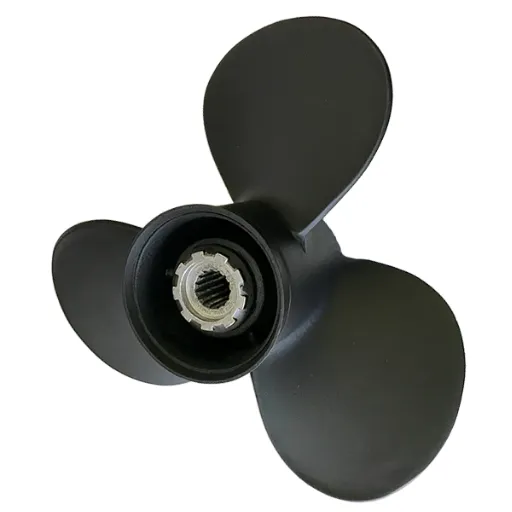
Les numéros de moyeu donnent une explication partielle de la situation, que la conception des pales et la composition des matériaux complètent.
Hélices en aluminium
La plupart des moteurs hors-bord sont équipés de série d'hélices en aluminium. Leur prix varie de 80 $ à 250 $ selon leur taille et la marque. Fabriquées en aluminium, ces hélices légères sont conçues pour absorber les chocs : en cas d'impact, elles se déforment ou se cassent, évitant ainsi d'endommager l'embase. Cependant, la flexibilité de l'aluminium présente un inconvénient : sous forte charge, les pales se courbent vers l'arrière, ce qui réduit le pas et entraîne une perte d'efficacité de 5 à 8 %. L'aluminium convient donc aux plaisanciers occasionnels qui naviguent avec des charges légères.
Hélices en acier inoxydable
Les hélices en acier inoxydable coûtent entre 250 et 700 dollars. Leurs pales, plus fines tout en conservant leur rigidité, conservent leur forme même sous charge. Cette rigidité accrue améliore l'accélération, augmente la vitesse de pointe et améliore la stabilité opérationnelle. Selon les ressources techniques de Michigan Wheel, l'acier inoxydable offre une durabilité supérieure : sa durée de vie est quatre fois plus longue que celle de l'aluminium dans des conditions environnementales identiques. Il existe cependant un compromis entre le coût et le risque, en cas de choc violent, d'endommager l'embase plutôt que l'hélice.
Hélices composites
Les hélices composites représentent un segment de marché émergent qui utilise des mélanges de polymères renforcés pour créer de nouveaux modèles d'hélices. Leur coût est comparable à celui des hélices en aluminium, mais elles offrent une résistance supérieure aux impacts. Bien que ce produit reste un produit de niche, il est essentiel de suivre son évolution, car vos opérations se dérouleront dans des zones d'eau peu profonde et encombrées de débris.
Ventouses et râteau
Le creusement crée un rebord incurvé qui s'étend depuis le bord de fuite de la pale. Le pas supplémentaire induit par cette caractéristique réduit le régime moteur à plein régime de 200 tr/min par rapport à une hélice non creuse de même dimension. L'angle de la pale, qui s'étend depuis le moyeu, définit l'assiette. Une assiette plus importante relève la proue, ce qui est avantageux pour les bateaux rapides. Une assiette plus faible maintient la proue basse, ce qui est avantageux pour les bateaux lourds. Ces modifications de conception permettent aux fabricants d'ajuster les performances sans avoir à modifier le diamètre ou le pas d'origine.
Quand faut-il changer la taille de votre hélice ?
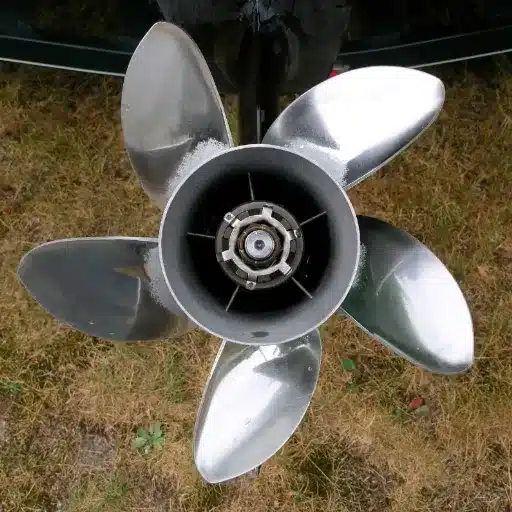
La taille idéale de votre hélice évolue en fonction des caractéristiques de votre bateau. Voici cinq situations où un changement de taille s'avère judicieux.
Poids ajouté. Si vous avez installé un T-top, une tour de wakeboard ou des batteries supplémentaires, votre bateau est plus lourd qu'au moment du dimensionnement initial de l'hélice. Ce poids supplémentaire peut nécessiter un pas plus faible ou un diamètre plus important.
Usage principal modifié. Un bateau utilisé pour la pêche le samedi et les sports nautiques le dimanche nécessite des performances différentes pour chaque activité. De nombreux propriétaires possèdent deux hélices et les intervertissent en fonction de leurs activités du week-end.
Remplacement du moteur. Un changement de moteur bouleverse tout. Même si le nouveau moteur a la même puissance, le rapport de transmission et la plage de régime peuvent différer. Il est impératif de refaire un essai à pleine charge après un changement de moteur.
Variations saisonnières de la charge. L'été rime avec plus de passagers, plus de matériel et plus de carburant. Si votre hélice de printemps vous met à rude épreuve en août, envisagez de la dimensionner pour votre charge habituelle la plus lourde.
Baisse des performances. Si votre bateau déjaugeait en 6 secondes et qu'il lui faut maintenant 10 secondes, ou si votre vitesse de pointe a diminué de 3 mph sans autre explication, votre hélice est peut-être endommagée ou tout simplement inadaptée aux conditions actuelles. guide de dépannage des hélices de bateau vous guide pas à pas dans le diagnostic de ces symptômes.
FAQ sur la taille des hélices de bateau
Que se passe-t-il si mon hélice est trop grande ?
Le problème est que votre moteur ne tourne pas à plein régime comme recommandé. Il en résulte un fonctionnement à bas régime, une surchauffe, une consommation de carburant accrue et une usure accélérée. À terme, cela peut endommager les pistons, les coussinets et l'embase.
Que se passe-t-il si mon hélice est trop petite ?
Le moteur de sortie va monter en régime et dépasser le régime maximal autorisé. Cela entraînera un gaspillage de carburant et une usure prématurée des composants internes, tout en manquant de nombreuses opportunités de poussée.
Comment une hélice à 4 pales modifie-t-elle mes besoins en matière de dimensions ?
Une hélice à quatre pales réduit généralement le régime moteur à plein régime de 50 à 100 tr/min par rapport à une hélice à trois pales de diamètre et de pas similaires. Si vous remplacez une hélice à trois pales par une à quatre pales, il vous faudra peut-être réduire le pas d'environ 2,5 cm (1 pouce) pour retrouver le régime moteur optimal. Vous bénéficierez ainsi d'une meilleure accélération, d'une navigation plus stable dans le clapot et d'un meilleur maintien du déjaugeage à bas régime.
Puis-je utiliser un tableau des tailles d'hélices pour n'importe quelle marque ?
Oui, procédez avec prudence. Le diamètre et le pas sont identiques chez tous les fabricants. Une hélice Mercury 14 x 19 offrira des performances sensiblement équivalentes à une hélice Yamaha ou Solas 14 x 19. Les différences de conception, de forme et d'angle de pale entraînent de légères variations de performances ; le tableau des tailles vous permettra de trouver un point de départ fiable pour chaque marque.
Dois-je dimensionner le véhicule pour une charge maximale ou pour une charge typique ?
Dimensionnez l'hélice en fonction de la charge moyenne, et non de la charge maximale. Imaginez que vous transportez généralement trois passagers, mais parfois huit : dimensionnez donc l'hélice pour une charge de trois passagers. Un léger surdimensionnement de l'hélice pour les rares journées de forte charge sera moins problématique qu'un sous-dimensionnement d'une charge à l'autre, chaque week-end. Si vos charges varient considérablement, prévoyez deux hélices.
Comment savoir si la taille de mon hélice actuelle est incorrecte ?
Effectuez un test à pleine charge. Si le paramètre est inférieur à la plage recommandée par le fabricant, l'hélice est trop grande. S'il est supérieur, l'hélice est trop petite. Si le bateau a du mal à déjauger, augmentez le pas de l'hélice. Si votre moteur hurle en croisière, le pas de l'hélice est trop faible.
Conclusion
Choisir la taille d'hélice idéale n'est pas un mystère : c'est une question de choix réfléchi, basé sur les caractéristiques de votre moteur, le type de bateau et son utilisation. Vous pouvez commencer par consulter le tableau des tailles d'hélices disponible ici. Déterminez d'abord votre plage de puissance (en chevaux). Comparez ces données avec le type de bateau que vous possédez. Notez le diamètre et le pas de départ. Enfin, confirmez votre choix en effectuant un test à plein régime moteur sur l'eau.
À moins que vous ne le voyiez ainsi : les chiffres gravés sur le moyeu de l’hélice ne sont pas de simples spécifications. Ce sont les réglages qui déterminent l’accélération, la vitesse de croisière et la consommation de carburant, pour une expérience optimale à chaque voyage. En revanche, de mauvais réglages risquent de nuire au bon fonctionnement de votre appareil.
Si vous ne connaissez pas encore la taille d'hélice idéale pour votre bateau, pas de panique ! Chez Captain MARINE, nous savons exactement comment vous aider. Nous vous accompagnons pour trouver l'hélice parfaitement adaptée à votre moteur et à votre coque. Consultez notre catalogue d'entretien par taille d'hélice ou contactez-nous pour obtenir des conseils personnalisés. Nous vous garantissons un retour à l'eau avec l'hélice idéale pour votre bateau.