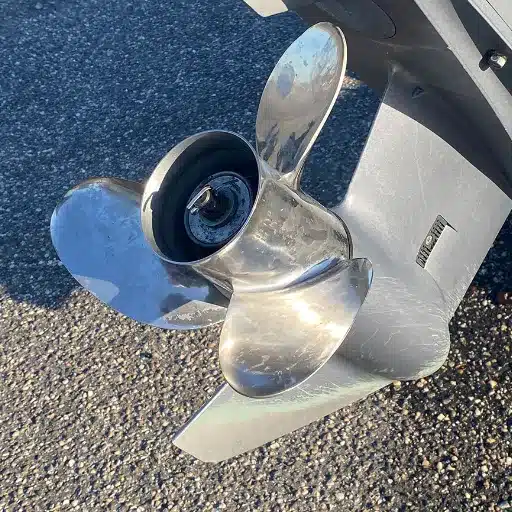
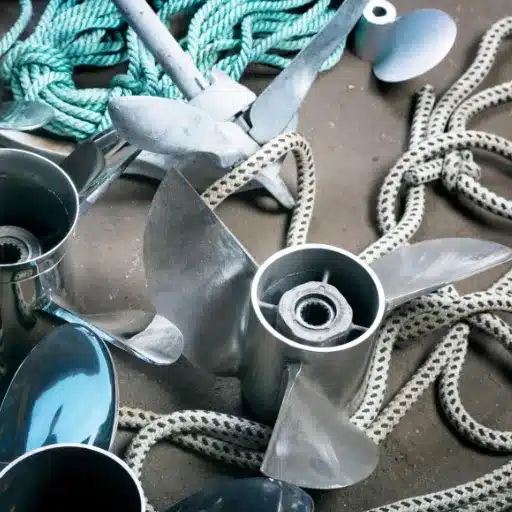
Sí. Las hélices de acero inoxidable suelen aumentar la velocidad máxima entre 2 y 5 mph a máxima potencia en embarcaciones con motores fueraborda de más de 150 caballos de fuerza, siendo las mayores mejoras en lanchas de pesca, consolas centrales y lanchas de esquí acuático. Sin embargo, el aumento exacto de velocidad depende del tipo de embarcación, la potencia del motor, el estado actual de la hélice y si la nueva hélice de acero inoxidable es compatible con su configuración.
Esa respuesta breve es útil, pero la mayoría de los artículos se quedan ahí. Si estás considerando cambiar de aluminio a acero inoxidable, necesitas datos concretos para tu embarcación específica, no una afirmación genérica. También necesitas saber cuándo el acero inoxidable no te beneficiará, cuánto mejora la aceleración y si la ganancia de velocidad justifica el precio.
En Captain Marine, hemos medido el rendimiento de las hélices en cientos de configuraciones. Hemos visto cómo las hélices de acero inoxidable transforman una lancha con consola central lenta en una máquina de planeo. También hemos visto a navegantes gastar 500 dólares en una hélice de acero inoxidable y no ganar ni un ápice de velocidad porque el paso era incorrecto o el casco tenía poca potencia. El contexto importa.
En esta guía, explicaremos con detalle cómo el acero inoxidable aumenta la velocidad, mostraremos las ganancias cuantificadas en millas por hora según el tipo de embarcación y la potencia del motor, explicaremos la física de la flexión de las palas y el deslizamiento de la hélice, y le guiaremos a través de un sencillo protocolo de prueba GPS que usted mismo puede realizar. Al finalizar, sabrá si el acero inoxidable es adecuado para su embarcación, qué velocidad puede esperar de forma realista y qué problemas debe evitar.
Puntos Clave
- Las hélices de acero inoxidable suelen añadir entre 2 y 5 mph a máxima potencia en embarcaciones adecuadamente equipadas con motores fueraborda de más de 150 CV, con ganancias proporcionales a la potencia y la eficiencia del casco.
- El aumento de velocidad se debe a dos factores: las palas de acero inoxidable se flexionan mucho menos que las de aluminio bajo carga, y el acero inoxidable permite perfiles de pala más delgados que reducen la resistencia.
- El deslizamiento de la hélice disminuye del 12-18% con aluminio al 8-12% con acero inoxidable, que es donde se originan la mayor parte de las ganancias en velocidad y eficiencia de combustible.
- Las mejoras en la aceleración inicial (entre un 10 % y un 25 % más rápido para planear) suelen ser más notables que las ganancias en la velocidad máxima, especialmente en embarcaciones más pesadas.
- El acero inoxidable no aumenta la velocidad cuando el ángulo de inclinación es incorrecto, la embarcación tiene poca potencia o el diseño del casco es el factor limitante.
¿Las hélices de acero inoxidable aumentan la velocidad?

Sí. En una embarcación bien equipada, el cambio de aluminio a acero inoxidable suele aumentar la velocidad máxima entre 2 y 5 mph a máxima potencia. Las mejoras son más notables en embarcaciones con más de 150 caballos de fuerza, donde la flexión de las palas de aluminio supone una pérdida de rendimiento considerable.
El acero inoxidable es aproximadamente cinco veces más resistente que el aluminio. Esta resistencia permite a los fabricantes fundir palas más delgadas que generan menor resistencia hidrodinámica. Además, significa que las palas mantienen su paso y curvatura originales bajo cargas pesadas, convirtiendo así más potencia del motor en empuje hacia adelante en lugar de desperdiciarla en deslizamiento.
Sin embargo, existen advertencias importantes:
- Embarcaciones pequeñas (de menos de 90 CV) A menudo se observan ganancias mínimas (0-2 MPH) porque el casco y el motor son los factores limitantes, no la flexión de la hélice.
- Tono incorrecto En realidad, puede reducir la velocidad. Una hélice de acero inoxidable con un paso excesivo sobrecargará el motor y hará que las RPM caigan por debajo del rango óptimo.
- Accesorios dañados Ambos materiales presentan un rendimiento deficiente. Una hélice de aluminio dañada no constituye una base de comparación justa.
Para una comparación completa de materiales que abarque durabilidad, costo, resistencia a la corrosión y ROI del ciclo de vida, consulte nuestra Guía de hélices de aluminio frente a acero inoxidable.
¿Por qué las hélices de acero inoxidable son más rápidas?: La física
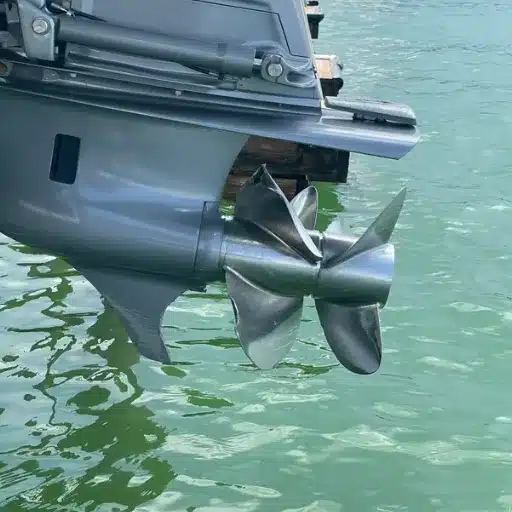
La ventaja de velocidad del acero inoxidable no es una estrategia de marketing, sino ciencia de los materiales. Dos factores explican casi toda la diferencia de rendimiento: la rigidez y el grosor de la hoja.
Rigidez de la hoja y el impuesto flexible
Cuando un motor fueraborda gira a más de 5,000 RPM, las palas experimentan una enorme fuerza hidrodinámica. El aluminio, con su menor resistencia a la tracción, se flexiona notablemente bajo esa carga. Las pruebas industriales demuestran que las palas de aluminio pueden flexionarse entre un 10 % y un 15 % respecto a su paso de diseño a altas RPM y bajo cargas pesadas. Esta flexión es invisible a simple vista, pero se puede medir en un banco de pruebas de hélices.
¿Qué significa la flexión de la pala en el agua? Su hélice de aluminio de 21 pasos podría comportarse como una hélice de 19 pasos cuando navega a máxima velocidad con una carga completa de pasajeros y equipo. El motor trabaja más, la embarcación se mueve más despacio y la eficiencia del combustible disminuye. Esto es lo que llamamos la impuesto flexible.
Las palas de acero inoxidable conservan su geometría. Mantienen su paso y curvatura originales desde el ralentí hasta el límite de revoluciones. Una menor flexión significa que una mayor parte de la potencia del motor se convierte en movimiento hacia adelante en lugar de perderse por la deformación de las palas. Según Mercury Marine, la rigidez del acero inoxidable es el factor principal que explica su aceleración superior y su excelente rendimiento a altas revoluciones.
Perfiles de pala más delgados, menor resistencia
Debido a que el acero inoxidable es mucho más resistente, los fabricantes pueden fundir palas con secciones transversales más delgadas. Una pala de acero inoxidable suele ser entre un 15 % y un 20 % más delgada que una pala equivalente de aluminio. Las palas más delgadas generan menos resistencia al cortar el agua, lo que mejora la eficiencia a cualquier velocidad.
La reducción de la resistencia es especialmente notable a altas RPM. A medida que aumenta la velocidad, la resistencia hidrodinámica aumenta exponencialmente. Un perfil de pala más delgado reduce esa resistencia, lo que permite que el motor impulse la embarcación más rápido con la misma potencia. Para un análisis más profundo de cómo los materiales y el diseño avanzados afectan la eficiencia, lea nuestro Guía de ventajas de las hélices de acero inoxidable.
Prop Slip: De dónde provienen realmente las ganancias
El deslizamiento de la hélice es la diferencia entre el recorrido teórico (basado en el paso y las RPM) y el recorrido real. Un menor deslizamiento significa una mayor eficiencia. Aquí es donde la goma toca el agua:
- Hélices de aluminio: Normalmente, un deslizamiento del 12-18% bajo carga.
- Hélices de acero inoxidable: Normalmente, un deslizamiento del 8-12% bajo carga.
Esa reducción del 4-6% en el deslizamiento es el factor más importante que contribuye a las ganancias de velocidad y combustible. Las palas de acero inoxidable se adhieren al agua de manera más efectiva porque no se flexionan para evitar la carga. Mayor agarre significa mayor empuje por revolución, lo que significa mayor velocidad. Para obtener información sobre cómo los elementos de diseño de la hélice, como la curvatura y el ángulo de ataque, también afectan el deslizamiento y la tracción, consulte nuestra Guía de inclinación y curvatura de la hélice.
¿Cuánto más rápido? Datos reales de velocidad en MPH por tipo de embarcación
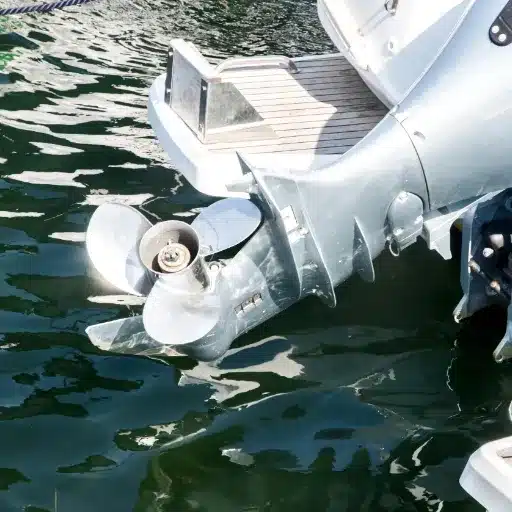
La mayoría de los artículos se limitan a afirmar vagamente que la embarcación alcanza entre 2 y 5 mph más de velocidad y no dan más detalles. Te mereces algo mejor. Aquí te mostramos cómo se ven las ganancias de velocidad desglosadas por tipo de embarcación, rango de potencia y uso típico.
Ganancias en velocidad y aceleración inicial según el tipo de embarcación.
| Tipo de barco | Rango HP | Aluminio WOT | Acero inoxidable WOT | Ganancia de MPH | Mejora del tiro al hoyo |
|---|---|---|---|---|---|
| Barco bajo | 150-250 | 48-52 MPH | 51-56 MPH | +2-4 | Entre un 15 y un 20 % más rápido para llegar al avión. |
| Pontón | 90-150 | 22-28 MPH | 24-30 MPH | +1-3 | Entre un 10 y un 15 % más rápido para llegar al avión. |
| Consola central | 200-300 | 38-45 MPH | 41-49 MPH | +2-5 | Entre un 20 y un 25 % más rápido para llegar al avión. |
| Lancha de esquí acuático/wakeboard | 300-400 | 42-48 MPH | 45-52 MPH | +2-4 | Entre un 15 y un 20 % más rápido para llegar al avión. |
| Barco Jon | 25-60 | 18-24 MPH | 19-25 MPH | +0-2 | Minimo |
| Se desarrolla alrededor de | 90-150 | 32-38 MPH | 34-40 MPH | +1-3 | Entre un 10 y un 15 % más rápido para llegar al avión. |
Datos recopilados a partir de las especificaciones del fabricante, pruebas GPS independientes y pruebas instrumentadas publicadas en revistas especializadas en navegación. Los resultados reales varían según el diseño del casco, la carga y la hélice elegida.
Qué significan los datos
Las ganancias son proporcionales a la potencia y la eficiencia del casco. Una lancha de 25 CV ya está limitada por la potencia del motor y la resistencia del casco. Cambiar a acero inoxidable podría añadir 1 mph, pero el costo rara vez se justifica. Una consola central de 250 CV, por otro lado, tiene potencia suficiente para aprovechar las mejoras en la eficiencia. La misma hélice de acero inoxidable que añade 1 mph a una lancha puede añadir entre 4 y 5 mph a una embarcación de alta mar bien equipada.
Cuando Marcus mejoró la hélice de aluminio de 21 pulgadas de su lancha de pesca de 19 pies a una de acero inoxidable de 19 pulgadas en su motor fueraborda de 200 HP, su velocidad máxima según el GPS aumentó de 49 mph a 52 mph. Y lo que es más importante, su tiempo de aceleración para planear se redujo de 5.2 segundos a 4.1 segundos. En la pesca de competición, ese segundo extra significa llegar a tu lugar antes que la competencia. También significa menos elevación de la proa cuando intentas ver por encima del parabrisas en aguas agitadas.
Aceleración inicial vs. Velocidad máxima: ¿Dónde se nota más?
He aquí una verdad sorprendente: la mayoría de los navegantes notan más la mejora en la aceleración inicial que en la velocidad máxima. Alcanzar el planeo más rápido significa menos elevación de la proa, mejor visibilidad, una navegación más suave y menor esfuerzo para el motor. Los datos lo confirman. Las mejoras en la aceleración inicial oscilan entre el 10 % y el 25 %, mientras que las ganancias en la velocidad máxima suelen ser del 3 % al 8 %. La diferencia es especialmente grande en embarcaciones más pesadas, donde la flexión de las palas de aluminio es más pronunciada bajo carga.
Diferencias de RPM: Por qué el acero inoxidable mantiene la velocidad bajo carga.
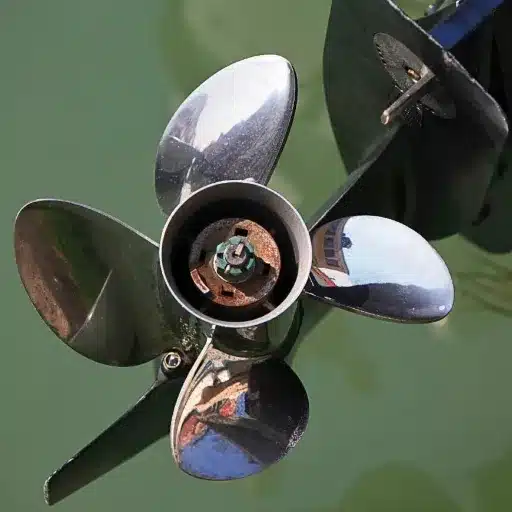
Una de las diferencias menos comentadas, pero más importantes, entre el aluminio y el acero inoxidable radica en cómo se comporta cada material bajo carga a altas revoluciones por minuto. Aquí es donde se aprecia la diferencia en el rendimiento real.
El aluminio se flexiona, las RPM bajan.
Al cargar una hélice de aluminio, las palas se flexionan hacia atrás. Esta flexión reduce el paso, lo que permite que el motor gire más rápido momentáneamente, pero también reduce el empuje. Bajo carga sostenida, el motor busca el equilibrio. El resultado suele ser una caída de las RPM de 100 a 300 respecto al máximo teórico, incluso con el acelerador a fondo.
Esa caída de RPM es importante porque la mayoría de los motores fueraborda están diseñados para ofrecer la máxima potencia en un rango específico de RPM, generalmente entre 5,000 y 6,000. Si tu hélice de aluminio te obliga a bajar las RPM hasta las 4,700 a máxima potencia, no estás aprovechando toda la potencia del motor.
El acero inoxidable mantiene la geometría de la hoja.
Las hélices de acero inoxidable mantienen su forma. Las palas no se deforman de forma apreciable bajo cargas recreativas. Esto significa que el paso de hélice que usted pagó es el que obtendrá, independientemente de las RPM o la carga. El motor puede alcanzar su rango de RPM de máxima potencia nominal y mantenerse ahí, entregando toda su potencia al agua.
Cuando la familia Wilson salió con su tritón de 22 metros con ocho pasajeros y una nevera portátil llena, su motor fueraborda de 115 CV con hélice de aluminio tenía dificultades para planear. El motor alcanzaba las 5,200 RPM, pero la embarcación se balanceaba a 14 km/h, con la proa elevada, durante lo que pareció una eternidad. Tras cambiar a una hélice de acero inoxidable con el paso adecuado, la misma embarcación, cargada, planeó en menos de 6 segundos y navegó cómodamente a 22 km/h. La velocidad máxima solo aumentó 2 km/h, pero la transformación en el rendimiento con carga fue espectacular.
Una sencilla prueba de RPM a plena aceleración que puedes ejecutar
No necesitas un dinamómetro para ver la diferencia. Aquí tienes un protocolo de prueba GPS que el lector puede replicar:
- Encuentra aguas tranquilas con corriente mínima y viento ligero.
- Cargar el barco como lo usas normalmente (pasajeros, equipo, combustible).
- Instala tu hélice de aluminio y observe la línea de base.
- Acelerar suavemente a máxima aceleración.
- Anote la velocidad GPS y las RPM. una vez que la embarcación esté completamente planeando y estable.
- Instale la hélice de acero inoxidable (Recuerda bajar el tono entre 1 y 2 pulgadas).
- Repita la prueba en condiciones idénticas
- Compara la velocidad, las RPM y el tiempo para planear.
Si su hélice de acero inoxidable está correctamente ajustada, debería observar una mayor velocidad GPS a las mismas RPM o ligeramente superiores, junto con una aceleración más rápida. Si sus RPM disminuyen significativamente, es probable que la hélice de acero inoxidable tenga demasiado paso. Para obtener la guía completa sobre la selección y el dimensionamiento adecuados del paso, consulte nuestra Tabla de tamaños de hélices para barcos.
Cuando el acero inoxidable NO aumenta la velocidad
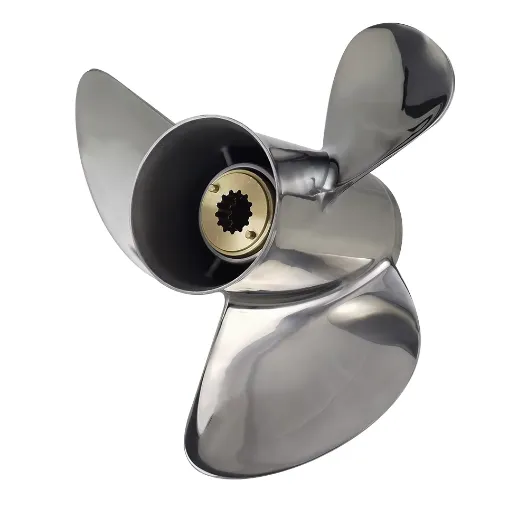
El acero inoxidable no es la solución mágica. Hay situaciones en las que cambiar de material no te proporcionará las mejoras de velocidad que esperas. Saber esto de antemano puede ahorrarte cientos de dólares y mucha frustración.
Tono incorrecto: El principal enemigo de la velocidad
El error más común al cambiar a una hélice de acero inoxidable es mantener el mismo paso. Dado que el acero inoxidable es más eficiente y se desliza menos, una hélice de acero inoxidable de paso 21 se comporta como una hélice de aluminio de paso 22 o 23 en términos de carga del motor. Si cambia de una hélice de aluminio de paso 21 a una de acero inoxidable de paso 21, es probable que su motor se fuerce. No alcanzará su rango de RPM a máxima potencia nominal y su velocidad máxima podría incluso disminuir.
Como regla general, se recomienda reducir el paso de la hélice entre 1 y 2 cm al cambiar de aluminio a acero inoxidable. Por ejemplo, si su embarcación utiliza actualmente una hélice de aluminio de paso 21 y alcanza las 5,400 RPM a máxima potencia, una hélice de acero inoxidable de paso 19 probablemente le permitirá volver al rango óptimo de 5,000 a 5,500 RPM.
Casco con potencia insuficiente o inadecuado
Si su embarcación ya tiene poca potencia, una hélice de acero inoxidable no lo solucionará. Un motor fueraborda de 50 CV en un pontón pesado de 7,3 metros (24 pies) tiene poca potencia independientemente del material de la hélice. El diseño del casco es el factor limitante, no la hélice. En estos casos, el motor no puede generar la potencia suficiente para aprovechar las ventajas de eficiencia que ofrece el acero inoxidable.
De igual modo, el diseño del casco limita la velocidad máxima. Un casco de desplazamiento nunca planeará, independientemente de la hélice que se le instale. Un casco en V profunda con una mala distribución del peso podría cabecear antes de alcanzar la velocidad que, en teoría, podría proporcionar una hélice de acero inoxidable.
Condición de la propiedad: Importancia de la línea base
Una hélice de aluminio dañada no es un buen punto de referencia para comparar. Si tu hélice actual tiene palas dobladas, bordes astillados o corrosión importante, casi cualquier hélice nueva, de aluminio o acero inoxidable, se sentirá más rápida. Asegúrate de que tu punto de referencia sea una hélice de aluminio en buen estado y con el mantenimiento adecuado. De lo contrario, estarás midiendo la diferencia entre una hélice desgastada y una nueva, no la diferencia entre los materiales.
¿No estás seguro de si el acero inoxidable es adecuado para tu configuración? Antes de gastar dinero en una mejora, asegúrese de que su hélice actual tenga el tamaño adecuado. Cómo elegir la hélice adecuada para su barco. Esta guía le acompaña a través de todo el proceso de selección, incluyendo el diámetro, el paso, el número de aspas y el material.
Análisis de la realidad del costo por milla por hora
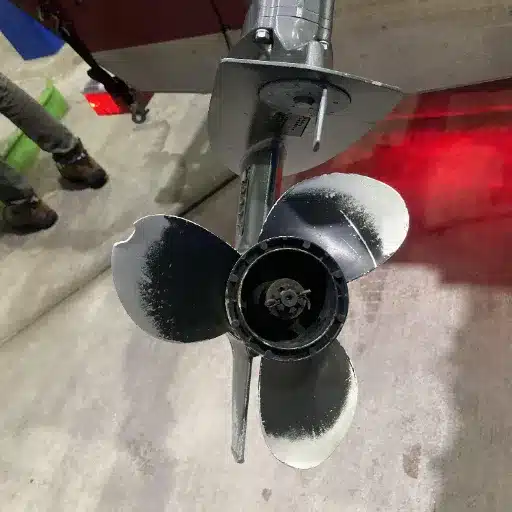
Las hélices de acero inoxidable cuestan de 2 a 4 veces más que las de aluminio. Una hélice de aluminio de calidad funciona 60-60-200. Una hélice de acero inoxidable comparable funciona 300-300-Más de 800. ¿Merece la pena pagar el precio por la mejora de velocidad?
Desglosando las matemáticas
Para una configuración recreativa típica que permite ganar 3 MPH, el costo por MPH se ve así:
| Escenario | Costo de la propiedad | Ganancia de MPH | Costo por milla por hora | ¿Vale la pena? |
|---|---|---|---|---|
| Vehículo de fin de semana, utilitario de 150 CV. | $450 | +2 MPH | $225 | Marginal |
| Pescador de torneo, lancha de pesca de 200 CV | $550 | +3 MPH | $183 | Sí: |
| Alquiler de embarcaciones en alta mar, dos de 250 CV. | $1,100 | +4 MPH | $275 | Sí: |
| Pontón informal, 115 CV | $400 | +2 MPH | $200 | Probablemente no |
Los cálculos de coste por milla por hora se basan en los precios de venta al público de las hélices de acero inoxidable y en las ganancias típicas obtenidas mediante pruebas GPS para configuraciones correctamente ajustadas.
Los cálculos cambian cuando se tienen en cuenta el ahorro de combustible y la durabilidad. Las hélices de acero inoxidable suelen mejorar la eficiencia del combustible entre un 3 % y un 5 %, lo que supone un ahorro considerable a lo largo de cientos de horas. Además, duran entre dos y tres veces más que las de aluminio en la mayoría de los entornos. Para un análisis completo del coste total de propiedad a 5 años que incluye el retorno de la inversión en combustible, los costes de reparación y los ciclos de sustitución, consulte nuestra ¿Merecen la pena las hélices de acero inoxidable?.
Cuando la velocidad lo justifica
Las mejoras de velocidad del acero inoxidable ofrecen el mayor valor para:
- Pescadores de torneo quienes necesitan cada MPH para llegar primero al próximo agujero de miel
- capitanes de chárter en alta mar quienes recorren largas distancias a diario
- Aficionados a los deportes acuáticos quienes necesitan golpes de tracción consistentes y rápidos en el hoyo
- Operadores de agua salada donde la corrosión también influye en la decisión
Cuando no merece la pena
Para quienes navegan ocasionalmente en pontones, pescadores de fin de semana con motores fueraborda pequeños o cualquier persona que rara vez navegue a máxima velocidad, el costo por milla por hora es difícil de justificar. El aluminio es asequible, reemplazable y perfectamente adecuado para una navegación relajada.
Cuando el capitán Dave renovó su flota de lanchas de 25 pies con consola central, pasando de aluminio a acero inoxidable, logró una ganancia de 4 mph a máxima potencia en cada embarcación. Y lo que es más importante, su consumo de combustible a velocidad de crucero se redujo en aproximadamente un 8 %. Durante una temporada de 400 horas, a 3.50 dólares por galón, esta mejora en la eficiencia le ahorró más de 1,000 dólares por embarcación. Las hélices de acero inoxidable se amortizaron con el ahorro de combustible antes de que terminara la primera temporada.
Preguntas frecuentes
¿Cuánto más rápida es una hélice de acero inoxidable?
En una embarcación bien equipada con más de 150 caballos de fuerza, se puede esperar una ganancia de 2 a 5 mph a máxima potencia. Las embarcaciones pequeñas con motores de menos de 90 HP suelen experimentar ganancias de 0 a 2 mph. La mejora es proporcional a la potencia, la eficiencia del casco y la compatibilidad de la hélice con el motor.
¿Las hélices de acero inoxidable aumentan las RPM?
Las hélices de acero inoxidable generalmente permiten que el motor alcance o supere ligeramente sus RPM máximas anteriores, ya que las palas no se flexionan bajo carga. Sin embargo, si se mantiene el mismo paso que en la hélice de aluminio, la mayor eficiencia puede sobrecargar el motor y reducir las RPM. Por eso, normalmente se reduce el paso entre 1 y 2 cm al cambiar a una hélice de acero inoxidable.
¿Una hélice de acero inoxidable ayudará a mi barco pontón?
A veces. Un pontón con más de 115 caballos de fuerza puede ganar de 1 a 3 mph y planear notablemente más rápido con una hélice de acero inoxidable. La mejora es más notoria cuando el pontón está muy cargado. Sin embargo, un pontón pequeño con 50 a 90 caballos de fuerza experimentará ganancias mínimas, ya que el motor es el factor limitante.
¿Los soportes de acero inoxidable dañan las unidades inferiores?
Las hélices de acero inoxidable son más rígidas y no se deforman con el impacto, lo que significa que pueden transmitir cargas de choque a la unidad inferior. Los sistemas de buje modernos, como Mercury Flo-Torq SSR y Yamaha SDS, incorporan elementos de sacrificio que se rompen antes de que los engranajes se dañen. Si utiliza una hélice de acero inoxidable, se recomienda encarecidamente usar un buje amortiguador.
¿Puede un cambio de tono incorrecto hacer que mi barco vaya más lento?
Sí. Una hélice de acero inoxidable con un paso excesivo sobrecargará el motor, reduciendo las RPM por debajo del rango óptimo y, potencialmente, disminuyendo la velocidad máxima. Una hélice con un paso insuficiente permitirá que el motor se sobreacelere sin generar suficiente empuje. La selección adecuada del paso es fundamental, independientemente del material.
¿El acero inoxidable mejora más la aceleración inicial que la velocidad máxima?
Generalmente sí. Es común que las palas de acero inoxidable mejoren la aceleración inicial entre un 10 % y un 25 %, mientras que las ganancias en velocidad máxima suelen ser de entre un 3 % y un 8 %. Esto se debe a que la flexión de las palas es más pronunciada durante la fase de aceleración de alto par y bajas revoluciones. Las palas de acero inoxidable tienen mayor agarre desde parado, lo que permite que la embarcación planee más rápido y con menor elevación de la proa.
¿Cómo puedo comprobar mi aumento de velocidad después de cambiar las hélices?
Utilice un velocímetro GPS (no el indicador de velocidad del tablero, que puede ser impreciso). Busque aguas tranquilas, cargue la embarcación normalmente y navegue a máxima potencia en ambas direcciones para compensar la corriente y el viento. Anote la velocidad GPS, las RPM y el tiempo para planear. Repita el proceso con la nueva hélice en condiciones idénticas.
Conclusión
¿Aumentan la velocidad las hélices de acero inoxidable? Sí, pero la respuesta requiere un análisis más profundo. En embarcaciones con motores de más de 150 caballos de fuerza, una hélice de acero inoxidable bien elegida suele aumentar la velocidad entre 2 y 5 mph a máxima potencia y mejora la aceleración inicial entre un 10 y un 25 %. Estas ventajas se deben a palas más rígidas que resisten la flexión y a perfiles más delgados que reducen la resistencia al avance.
Sin embargo, el acero inoxidable no es universalmente mejor. Las embarcaciones pequeñas, los cascos con poca potencia y los pasos de hélice desajustados verán ganancias mínimas o ninguna en absoluto. El costo por MPH varía desde 150-150-275 para configuraciones recreativas típicas, lo que significa que la actualización tiene más sentido para pescadores apasionados, entusiastas de los deportes acuáticos, operadores de agua salada y usuarios comerciales.
Si aún no te decides, ejecuta el protocolo de prueba GPS WOT descrito anteriormente con tu hélice de aluminio actual. Esta prueba inicial te indicará si tu configuración actual es el factor limitante o si existe un margen real de mejora.
¿No está seguro de qué hélice de acero inoxidable es la adecuada para su embarcación? Captain Marine ofrece consultas gratuitas sobre hélices. Díganos qué motor tiene, el tipo de casco y cómo usa su embarcación. Le recomendaremos el diámetro, el paso y el material exactos para maximizar su rendimiento. Obtén tu recomendación de hélice gratuita ->
Para una comparación completa del aluminio y el acero inoxidable que abarca durabilidad, resistencia a la corrosión y costo de propiedad a largo plazo, consulte nuestra Guía de hélices de aluminio frente a acero inoxidableY para obtener ayuda para elegir el tamaño y el paso de hélice adecuados para su configuración específica, consulte nuestra Guía de selección de hélices para embarcaciones.