La différence entre une après-midi d'été parfaite sur l'eau et une erreur de pilotage des plus coûteuses tient en réalité à un seul chiffre dans la plupart des spécifications : le poids du jet ski. Ce chiffre a des répercussions sur tout, du sol de votre garage jusqu'à la transmission de votre véhicule.
Ainsi, si vous conduisez votre berline jusqu'à un Sea-Doo Spark et que vous vous demandez encore si le poids du Kawasaki Ultra 310 n'aura pas d'incidence sur votre pick-up, la question est pertinente : quel est le poids d'un jet ski ? La réponse est bien plus nuancée qu'un simple chiffre. En 2025, le poids des motomarines disponibles sur le marché variait considérablement, allant de 375 kg à un poids à sec impressionnant de 1,137 kg, sans compter le carburant, l'équipement ni la remorque.
À la fin de ce guide, vous saurez, ou plutôt, vous aurez compris, où se situe chaque modèle majeur sur cette échelle. Ce guide vous permettra de mieux comprendre le fonctionnement des indications de poids des constructeurs, le calcul du poids total remorquable et l'influence directe de la masse de la coque sur l'accélération et la consommation de carburant. Nous vous montrerons également comment le moteur, situé sous la coque, est lié au poids du bateau.
Quel est le poids moyen d'un jet ski ?
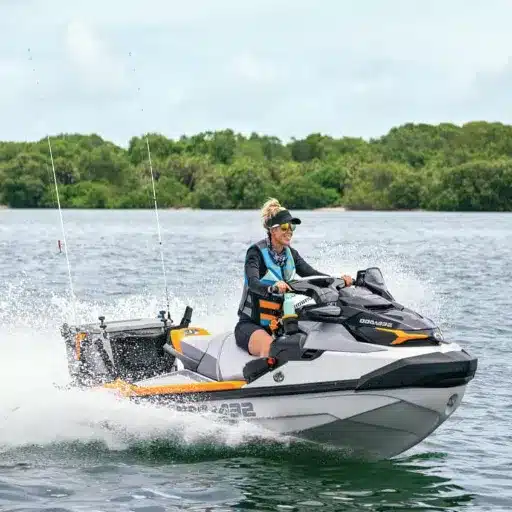
Le poids à sec est d'environ 345 kg (760 livres), ce qui correspond au poids moyen d'un jet ski. Cette valeur moyenne peut être utilisée pour toute la gamme, depuis les modèles de type « stand-up » pour les figures acrobatiques jusqu'aux grands modèles pouvant accueillir trois passagers et dotés de nombreuses options de réglage.
En réalité, la gamme de poids possibles est très étendue. Par exemple, le Yamaha SuperJet ne pèse que 170 kg (375 livres). À l'autre extrémité de l'échelle, on trouve le Kawasaki Ultra 310LX-S, qui pèse un poids conséquent de 515 kg (1 137 livres), tous fluides inclus. Il y a donc une différence de 346 kg (762 livres) entre la machine la plus légère et la plus lourde parmi les modèles neufs disponibles l'année prochaine.
Avant toute comparaison, il est important de comprendre comment les chiffres sont communiqués. La plupart des marques indiquent le poids brut, c'est-à-dire sans carburant, huile, liquide de refroidissement ni équipement. Kawasaki, quant à elle, indique généralement le poids à vide, qui correspond au poids total avec le plein de carburant, de légumes et d'essence, ainsi que tous les fluides nécessaires. Il est environ 50 à 80 kg plus lourd qu'un Sea-Doo ou un Yamaha comparable, pour une coque similaire, mais avec tous les frais d'entretien.
Conseil de pro du capitaine Marine : Ajoutez toujours environ 100 à 150 kg au poids à sec pour estimer le poids réel en ordre de marche. Pour les calculs de remorquage, vous devez également tenir compte de la remorque, des gilets de sauvetage et de tout chargement prévu.
Poids des jet skis par catégorie
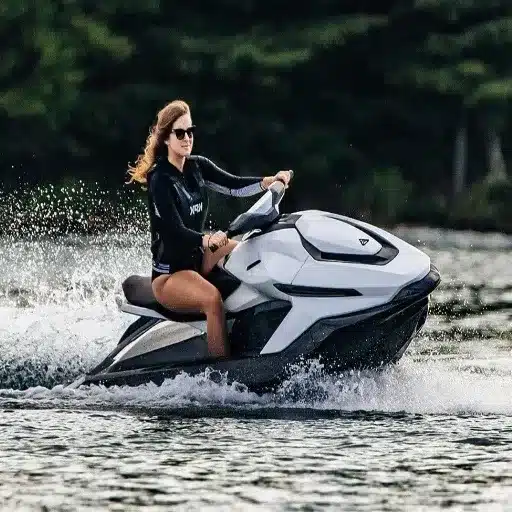
Les motomarines ne sont pas classées selon un poids unique. Les fabricants ont segmenté leur gamme en différents groupes, généralement en fonction du poids, étroitement lié aux performances, à la taille et à la puissance du moteur. Vous trouverez ci-dessous une description des principales catégories pour l'année modèle 2025.
Rec-Lite : 425 à 450 livres
Les modèles Rec-Lite sont conçus pour les débutants et les jeunes familles qui recherchent une motomarine facile à remorquer et maniable. Le Sea-Doo Spark domine incontestablement ce segment : la version biplace pèse 196 kg à sec et la version triplace jusqu’à 201 kg. Enfin, le Spark Trixx monoplace est le modèle cruiser assis le plus léger, avec seulement 193 kg.
Ce sont parmi les embarcations les plus atypiques mais aussi les plus performantes du marché actuel, car elles peuvent être tractées par un petit véhicule, un crossover compact ou même certaines berlines.
Loisirs : 600 à 750 livres
La plupart des gens sont pleinement satisfaits d'un modèle de loisirs correct. Ces modèles ont tendance à être plus stables et offrent une plus grande capacité de chargement, même avec des passagers, que les modèles Rec-Lite, sans pour autant atteindre des prix exorbitants. Le Yamaha VX Deluxe pèse 311 kg (686 livres), tandis que le Sea-Doo GTI 130 pèse 336 kg (741 livres).
Dans cette catégorie, on trouve déjà des modèles à trois places, des réservoirs de carburant plus grands et un moteur nettement plus puissant. Le confort en eaux agitées a été amélioré, mais le véhicule doit disposer d'une capacité de remorquage suffisante pour que cet équipement supplémentaire soit rentable.
Performance : 750 à 850 livres
Dans ce segment de performances, la vitesse dépendra de la maniabilité. Les moteurs suralimentés des modèles hautes performances sont toujours associés à une conception de base améliorée et à des composants renforcés. Le Yamaha GP SVHO pèse 344 kg (758 livres) et le Sea-Doo RXT-X 325, 382 kg (842 livres).
Aucun de ces modèles n'est conçu pour supporter un poids supplémentaire sans conséquence. Une direction à crémaillère plus précise, associée à une réponse franche de l'accélérateur, exige de telles mesures, même si, avec une structure plus lourde et par mer agitée, leur efficacité reste limitée.
Luxe / Touring : 820 à 1 137 livres
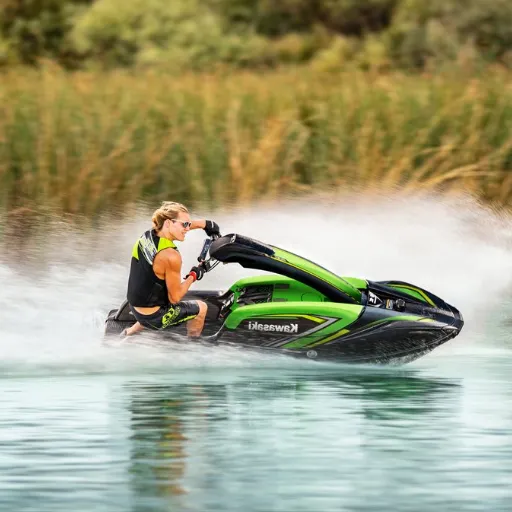
Parmi les motomarines 2021, les modèles de tourisme et de luxe appartiennent à la catégorie des SUV de luxe. Certains offrent un confort optimal grâce à leurs équipements de bord : grands écrans tactiles, systèmes audio haute performance et réservoirs pour une grande autonomie. On trouve ainsi le Yamaha FX Limited SVHO, le plus léger avec un poids de 877 kg, et le Kawasaki Ultra 310LX-S, le plus lourd avec un poids à vide de 1,137 kg.
Ces modèles sont parfaits pour des sorties en mer à sensations fortes, la pêche hauturière ou les voyages. Cependant, il faudra faire des compromis quant à leur capacité de charge. Le poids total remorquable peut s'avérer élevé si vous utilisez une remorque en acier avec un jet ski ultra-luxueux et imposant.
Position debout : 375 à 551 livres
Les modèles à pilotage debout sont conçus spécifiquement pour les pilotes expérimentés, privilégiant avant tout la maniabilité. Le Yamaha SuperJet est un jet-ski de série exceptionnellement léger, avec un poids de seulement 375 kg. Le Kawasaki SX-R 160 est un modèle à pilotage debout plus imposant, équipé d'un moteur quatre temps et affichant un poids en ordre de marche d'environ 551 kg.
Le modèle à bras debout est sans doute l'exemple le plus frappant, parmi les motos monoplaces, de la façon dont un minimum de modifications et d'éléments de carrosserie peuvent radicalement transformer une machine et sa maniabilité. De ce point de vue, c'est au moins le plus facile à déplacer et à ranger. Malgré cela, grâce à sa maniabilité exceptionnelle, supérieure à celle des modèles monoplaces, le modèle à bras debout reste très populaire, et de nombreux pilotes le choisissent encore spécifiquement pour la compétition freestyle.
Tableau des poids des jet skis 2025
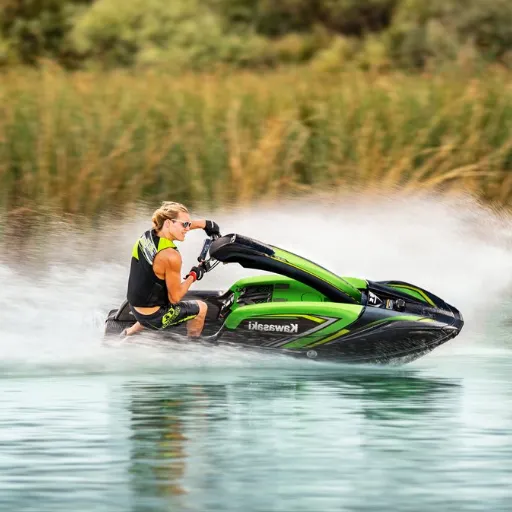
Pour faciliter la comparaison des prix, voici un tableau comparatif des modèles 2025 les plus populaires de Sea-Doo, Yamaha et Kawasaki. Veuillez noter que Sea-Doo et Yamaha indiquent le poids à sec, tandis que Kawasaki indique le poids en ordre de marche.
| Rang | Marque | Modèle | Poids | Configuration |
|---|---|---|---|---|
| 1 | Yamaha | SuperJet | 375 livres | Sec ; debout |
| 2 | Sea Doo | Spark Trixx 1-Up | 425 livres | Sec; rec-lite |
| 3 | Sea Doo | Spark 2-Up | 432 livres | Sec; rec-lite |
| 4 | Sea Doo | Spark 3-Up | 443 livres | Sec; rec-lite |
| 5 | Yamaha | JetBlaster PRO 2-Up | 538 livres | Sec; loisirs |
| 6 | Kawasaki | SX-R 160 | 551 livres | Bordure; debout |
| 7 | Yamaha | Jet Blaster | 575 livres | Sec; loisirs |
| 8 | Yamaha | VX Deluxe | 686 livres | Sec; loisirs |
| 9 | Yamaha | VX Cruiser | 690 livres | Sec; loisirs |
| 10 | Yamaha | GP HO | 714 livres | Sec; performance |
| 11 | Yamaha | GP SVHO | 758 livres | Sec; performance |
| 12 | Sea Doo | GTI 130 / SE | 741 livres | Sec; loisirs |
| 13 | Sea Doo | RXP-X325 | 778 livres | Sec; performance |
| 14 | Sea Doo | GTX 325 | 829 livres | Sec; luxe |
| 15 | Sea Doo | GTX limitée 325 | 849 livres | Sec; luxe |
| 16 | Yamaha | FX HO | 820 livres | Sec; luxe |
| 17 | Yamaha | FX Cruiser SVHO | 875 livres | Sec; luxe |
| 18 | Yamaha | FX Limited SVHO | 877 livres | Sec; luxe |
| 19 | Kawasaki | STX 160LX | 877 livres | Bordure; loisirs |
| 20 | Sea Doo | Explorer Pro 230 | 937 livres | Sec; aventure |
| 21 | Sea Doo | Trophée Fish Pro | 938 livres | Sec; pêche |
| 22 | Kawasaki | Ultra 160LX-S | 963 livres | Bordure; luxe |
| 23 | Kawasaki | Ultra 160LX | 987 livres | Bordure; luxe |
| 24 | Kawasaki | Ultra 310LX-S | 1,137 livres | Bordure; luxe |
| 25 | Kawasaki | Ultra 310LX | 1,137 livres | Bordure; luxe |
Marcus a acheté son premier jet ski en 2024, pensant sans doute que, comme ils ont tous à peu près la même taille, il pourrait le soulever, l'atteler et le poser derrière sa berline. Il était à mi-chemin du lac lorsque la transmission a commencé à patiner dans une côte. Il s'est avéré qu'il tractait près de 1,200 kg (remorque et équipement), alors que son véhicule est homologué pour une capacité de remorquage maximale de 1,000 kg. Curieusement, la facture des réparations était supérieure au coût du carburant pour une saison, alors qu'il lui aurait suffi de cinq minutes pour consulter le tableau et éviter cette erreur.
Limites de poids et capacité de charge des jet skis
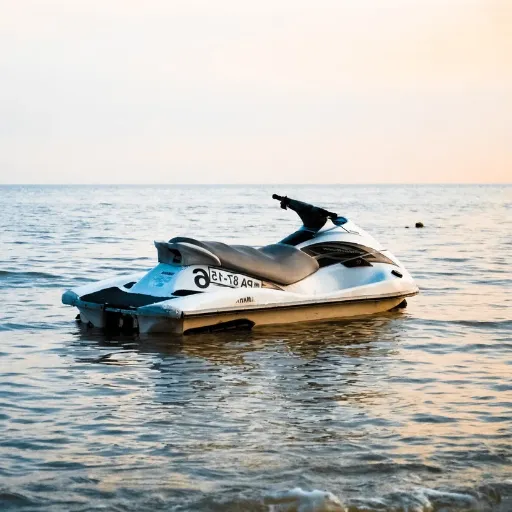
poids du jet ski Il ne s'agit pas uniquement de remorquage. Chaque constructeur publie également un manuel d'utilisation. la capacité de charge or Limite de poids, qui définit le poids combiné maximal des passagers, du carburant, de l'équipement et du chargement que la coque peut supporter en toute sécurité.
Limites de poids par marque pour 2025
Sea-Doo impose une large gamme de limites de poids. Sur le Spark 2-Up, la limite est fixée à 160 kg (352 lbs), tandis que les modèles trois places des gammes GTI, GTX, RXT et Wake sont limités à 272 kg (600 lbs). Les modèles biplaces plus légers, les RXP-X 325 et GTR-X 300, sont quant à eux limités à 181 kg (400 lbs).
Yamaha reste prudent. La série EX, destinée aux débutants, est plafonnée à 220 kg (485 lbs), tandis que les modèles VX et FX, plus luxueux, peuvent atteindre 240 kg (530 lbs). La SuperJet, à pilotage debout, est réservée à une seule personne, sans limite de poids spécifiée.
Kawasaki simplifie les choses : presque tous ses modèles à selle pèsent 496 kg. C’est le cas notamment des gammes STX 160 et Ultra 310.
Pourquoi les limites sont importantes
Dépasser la limite de poids indiquée par le fabricant est non seulement dangereux, mais peut également annuler votre garantie, augmenter le risque de chavirage et exercer une contrainte excessive sur le moteur et l'hélice. Un jet-ski surchargé s'enfonce davantage dans l'eau, ce qui accroît la résistance et rend la coque instable dans les virages.
Conseil du capitaine Marine : La limite de poids comprend beaucoup à qui n'étaient pas inclus avec la coque sèche. Cela signifie que les passagers, les gilets de sauvetage, le carburant, les glacières, le matériel de pêche et tous les accessoires ajoutés après l'achat sont comptabilisés dans le total.
Poids de la remorque et calculs de remorquage
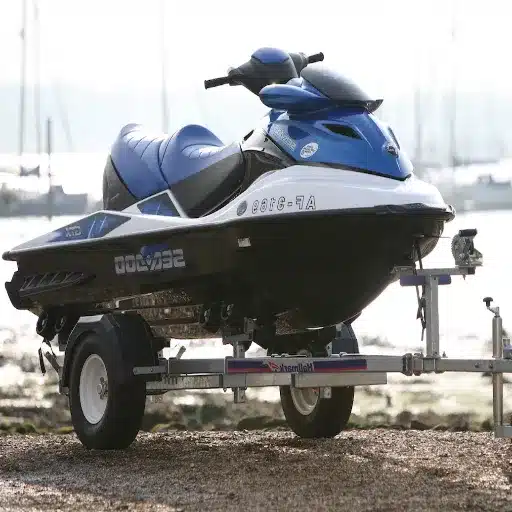
Maintenant, ajoutez le poids de la remorque à celui de votre jet ski pour savoir si votre véhicule peut réellement le tracter. Voilà comment on fait les calculs.
Remorque simple : 195 à 300 livres
Ce dernier type de remorque est souvent en aluminium et pèse généralement entre 195 et 250 kg, tandis que la plupart des remorques en acier sont plus lourdes, entre 280 et 300 kg. Le remorquage d'un Sea-Doo Spark et du modèle Rec-Lite permet de rester sous la barre des 700 kg.
Remorque double : 340 à 650 livres
La seconde option est celle des remorques doubles, souvent lourdement chargées. Prévoyez donc un poids allant de 340 kg pour une remorque tandem en aluminium légère à environ 650 kg pour les modèles en acier plus lourds. Ainsi, deux motos Kawasaki Ultra de luxe sur une remorque double en acier peuvent dépasser les 900 kg, rendant le remorquage difficile même avec un pick-up ou un gros SUV.
Exemples concrets de remorquage
- Configuration la plus légère : Sea-Doo Spark 2 places (432 kg à sec + ~100 kg de fluides/équipement) + remorque simple en aluminium (200 kg) = ~1 837 livres au total
- Configuration de milieu de gamme : Yamaha VX Cruiser (690 lb à sec + ~100 lb) + remorque simple en acier (280 lb) = ~1 837 livres au total
- Configuration la plus lourde : Kawasaki Ultra 310LX-S (1,137 kg à vide) + remorque double en acier (600 kg) + équipement (100 kg) = ~1 837 livres au total
De nombreux États ont lois où là is a immatriculation et assurance de la remorque limite pour a véhicule. qui pèse plus que 2,000 livres sterling. connaissance le configuration complète vont vous aider Vous se conformer avec remorquage lois in votre région.
Pourquoi le poids d'un jet ski influence ses performances
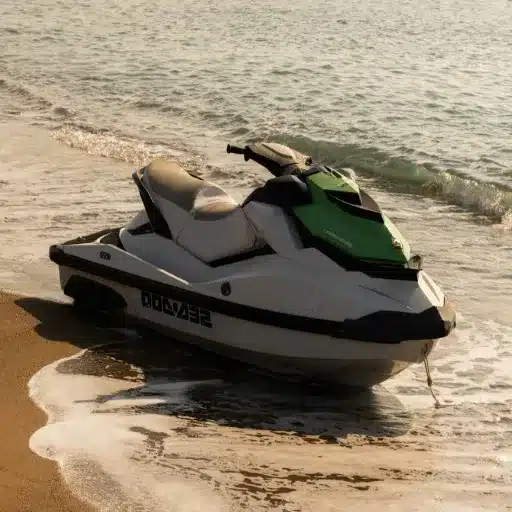
Le poids de la coque peut également influencer plusieurs aspects du comportement d'un jet-ski. L'accélération, la tenue de route en virage et la consommation de carburant dépendent toutes du poids de la coque ; par conséquent, connaître ce facteur vous aidera à choisir le modèle le mieux adapté à votre style de pilotage.
Accélération et départ canon
Un poids plus important exige une force plus grande pour décoller rapidement de l'eau au ralenti. C'est pourquoi les modèles haut de gamme sont équipés de moteurs suralimentés de plus de 300 chevaux. Cette masse supplémentaire requiert un pas d'hélice important et un régime moteur élevé pour assurer la portance nécessaire. À l'inverse, les modèles légers de la catégorie Rec-Lite peuvent paraître agiles avec leurs moteurs de 60 chevaux seulement, car leur poids est relativement faible.
Consommation de carburant
Chaque kilo supplémentaire augmente le volume d'eau que la coque doit déplacer et la charge que l'hélice doit accélérer. Un jet ski surchargé peut voir sa consommation de carburant augmenter de 15 % ou plus par rapport à un jet ski peu chargé. Pour les plaisanciers qui accumulent de nombreuses heures de navigation chaque saison, cette différence se fait rapidement sentir à la pompe.
Cavitation et déformation de la pompe
Lorsqu'un jet ski est surchargé, la turbine doit fournir un effort accru pour accélérer, ce qui augmente le risque de cavitation. Ce phénomène se produit lorsque la pression de l'eau chute autour des pales de la turbine, provoquant la formation de bulles de vapeur. L'implosion brutale de ces bulles corrode le métal et entraîne une perte de poussée. À terme, cela provoque une usure prématurée de la bague d'usure, de la turbine et des paliers de la pompe.
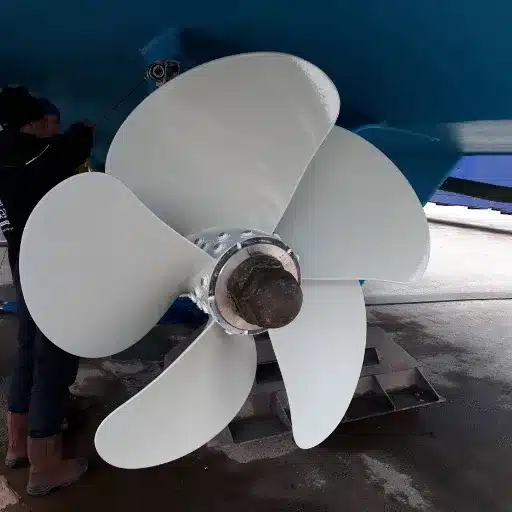
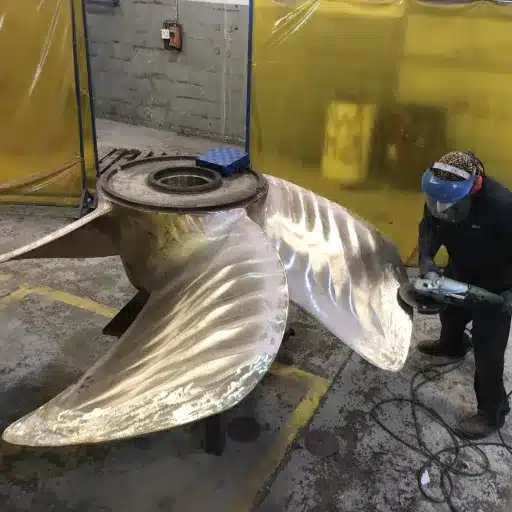
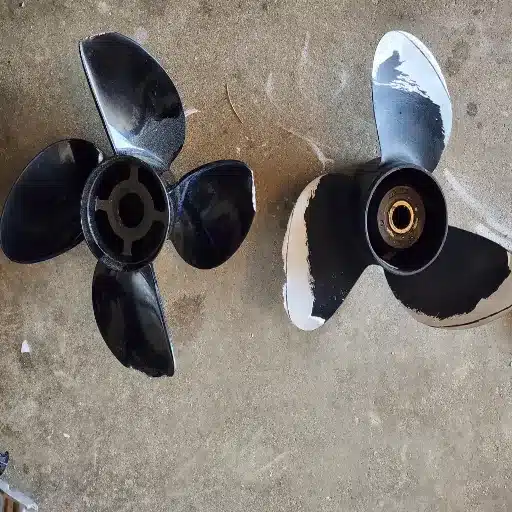
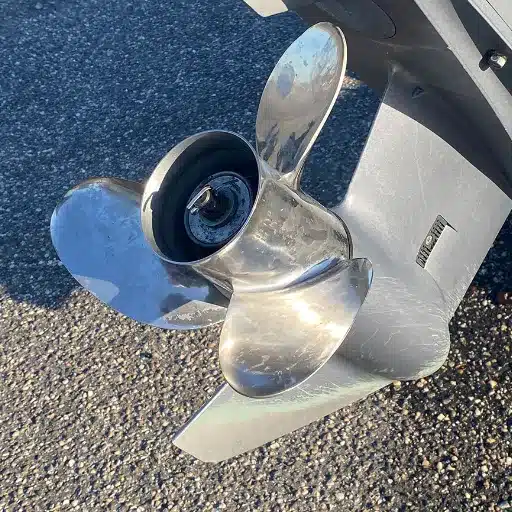
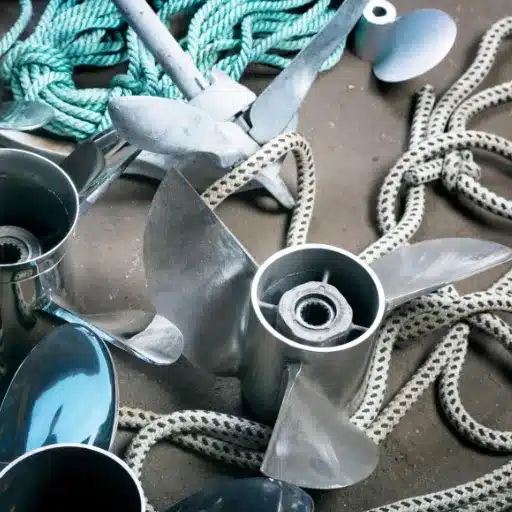
Le parallèle de propulsion : Tout comme un jet ski surchargé force sur son hélice, un bateau surchargé avec une hélice au pas inadapté souffre d'une mauvaise accélération, d'une vitesse de pointe réduite et d'une consommation de carburant accrue. Sur l'eau, le poids et la propulsion sont indissociables.
Sarah possède une entreprise de location de bateaux dans la région du lac Travis. La saison dernière, elle aussi s'est aperçue que ses bateaux de tourisme à trois places consommaient énormément de carburant et manquaient de puissance à pleine charge, avec les passagers et les glacières. Elle a découvert que son équipage dépassait de 23 à 34 kg la capacité maximale de 272 kg. Elle a donc réduit le nombre de passagers, réorganisé le chargement et testé une hélice à pas légèrement plus élevé. Ce changement a permis de normaliser sa consommation de carburant et de faire disparaître les plaintes des clients concernant la lenteur de l'accélération.
Comment choisir le poids du jet ski adapté à vos besoins
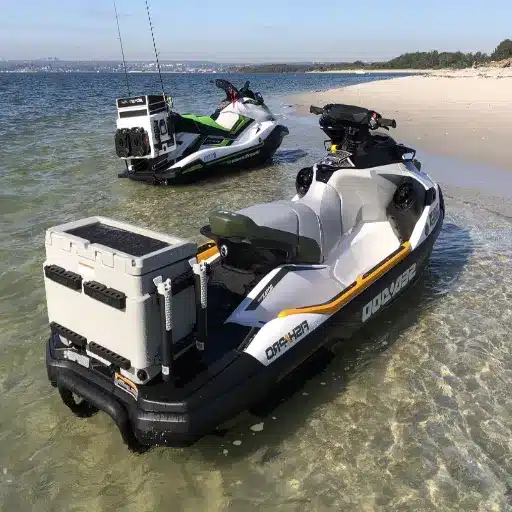
Le choix du jet ski et de la remorque adaptés dépend de l'adéquation de l'engin à votre style de vie et à votre véhicule tracteur, ainsi qu'aux possibilités de stockage et aux installations disponibles. Vous trouverez ci-dessous un tableau simple pour vous aider dans votre choix.
Choisissez le véhicule tracteur adapté à votre véhicule tracteur
Vérifiez le poids total autorisé en charge de votre remorque en vous référant au manuel du propriétaire. Ajoutez 10 % au poids estimé de votre motomarine et de la remorque pour tenir compte de l'équipement et du carburant. Avec une capacité de charge maximale de 680 kg (1 500 livres) sur l'attelage, la plupart des motomarines à une seule configuration conviennent. Si la capacité maximale est de 450 kg (1 000 livres) ou moins, optez plutôt pour un modèle Rec-Lite ou un modèle à pilotage debout.
Tenir compte de la capacité de stockage et d'ascenseur
Si vous prévoyez de ranger votre motomarine sur un ponton flottant, un élévateur à ponton ou un support de rangement suspendu, vérifiez la capacité de charge de l'équipement. La plupart des élévateurs standard pour motomarines, disponibles pour les particuliers, supportent un poids de 800 à 1,000 kg. Un modèle de luxe plus lourd peut même atteindre cette limite, mais n'oubliez pas que la présence d'algues et d'eau dans la coque pendant plusieurs saisons peut considérablement réduire le gonflage.
Équilibre entre passagers et portabilité
Les modèles les plus légers sont faciles à transporter, mais offrent moins d'espace pour les passagers et les bagages. À l'inverse, les modèles les plus lourds sont stables, confortables et dotés de nombreuses fonctionnalités, mais nécessitent un véhicule tracteur puissant et un espace de rangement plus important. La plupart des gens considèrent que la catégorie Loisirs représente le meilleur compromis pour une famille.
Questions fréquemment posées
Combien pèse un jet ski 3 places ?
Un jet ski trois places pèse généralement entre 318 et 500 kg, selon son modèle. Les jet skis de loisirs, comme le Yamaha VX Deluxe, pèsent environ 311 kg, tandis que les jet skis haut de gamme, comme le Kawasaki Ultra 310LX-S, peuvent dépasser les 500 kg avec les fluides.
Quel est le jet ski le plus léger en 2025 ?
Il s'agit du jet-ski le plus léger actuellement en production (2025) ; il se distingue du Yamaha SuperJet par son poids à sec de 375 kg. Le jet-ski assis le plus léger est le Sea-Doo Spark Trixx 1-Up, avec un poids de 425 kg.
La limite de poids du jet ski inclut-elle le carburant ?
Oui, c'est le cas. La limite de poids indiquée par les constructeurs comprend le poids total des passagers, de l'équipement, du carburant et du chargement. Elle ne tient pas compte du poids à sec de la coque.
Une voiture peut-elle remorquer un jet ski ?
De nombreuses voitures compactes et berlines peuvent tracter un jet ski Rec-Lite léger sur une remorque en aluminium, avec une charge totale d'environ 650 à 750 kg. Les modèles de loisirs et de luxe plus imposants nécessitent généralement un véhicule doté d'une capacité de remorquage supérieure, comme un crossover, un SUV ou un pick-up.
Est-il possible de remorquer un jet ski qui a coulé à cause d'une surcharge ?
Oui. Lorsqu'un jet ski est surchargé et se retourne, il prend l'eau si rapidement qu'il risque de couler. C'est l'une des raisons pour lesquelles les fabricants imposent des limites de charge strictes à ces engins nautiques.
Quel est le poids d'une remorque pour jet ski ?
Une remorque simple pèse entre 195 et 300 livres, tandis qu'une remorque double pèse entre 340 et 650 livres. Ces poids varient en fonction des matériaux et de la construction utilisés.
Conclusion
Quel est le poids moyen d'un jet ski ? En 2025, les poids varieront du très léger Yamaha SuperJet (375 kg) au plus lourd Kawasaki Ultra 310LX-S (1,137 kg). La moyenne se situe autour de 760 kg, mais au final, ce qui compte vraiment, c'est comment ce poids s'intègre à vos besoins en matière de remorquage, de rangement et de performances.
Faites vos calculs avant d'acheter. Notez tous les poids : poids du jet-ski, de la remorque, du carburant, de l'équipement et une marge de sécurité. Vérifiez la capacité de remorquage de votre véhicule, la capacité de l'élévateur à quai et la limite de charge spécifiée par le fabricant. Vous passerez ainsi moins de temps à vous soucier de la logistique et plus de temps à mettre votre bateau à l'eau.
Chez The Captain's Marine, nous pensons que bien connaître son embarcation, à l'intérieur comme à l'extérieur, est essentiel pour profiter pleinement de ses journées sur le lac, la rivière ou la baie, et pour naviguer en toute sérénité. Qu'il s'agisse de peaufiner les réglages d'un turbine de jet ski Pour une accélération plus rapide ou pour choisir la meilleure hélice marine afin d'optimiser les performances de votre bateau, notre équipe est là pour vous accompagner si vous souhaitez tirer le meilleur parti de chaque cheval-vapeur.
Prêt à optimiser votre propulsion marine ? Découvrez nos solutions d'hélices sur mesure ou contactez-nous pour une consultation gratuite. Nous veillerons à ce que votre configuration soit parfaitement adaptée à votre coque, votre moteur et votre style de navigation.