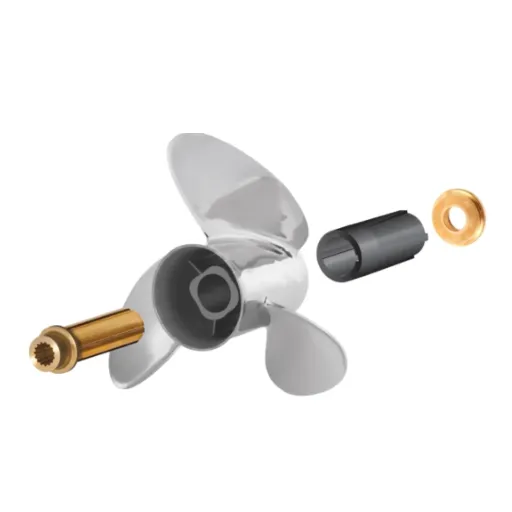
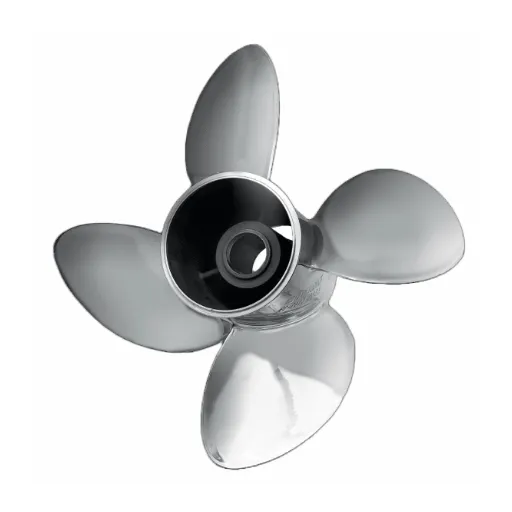
In the context of enhancing the performance of a boat, perhaps the most important factor is the propeller. When deciding on a propeller, one of the primary dilemmas boaters face is choosing between a 3 blade or 4 blade propeller. Both types have their pros and cons, and it is important to know how each of them influences the speed, overall efficiency and control of a boat.
Understanding Propeller Design
Differences Between 4-Blade and 3-Blade Propellers
The main difference in 4 blade vs 3 blade prop comes down to their performance. A 4 blade propeller increases the grip of the propeller in the water adding a better handling capacity along with more stability and accuracy in rough waters and lower speeds. Due to this, such propeller is more suited for watersport activities or other activities that demand strict control for example navigating a narrow channel.
Whereas, when it comes to 3-blades, the propellers offer better performance with higher end speeds and efficiencies at higher RPMs due to lesser drag. Having lesser blades means that resistance to drag in the water is minimized hence increasing the top speed and reduction in consumption of fuel. This type of ship likes the 3-bladed prop primarily because of its most important attributes; speed and efficiency in terms of consumption of fuel for instance in a racing or in a long voyage at sea.
Selecting either is dependant on what you need to use the boat for. A 4-bladed one would be used to smoothen the ride, and have more control over the boat, and thus work best in any environment. If instead speed is what you need and in smooth waters, then look no further than a 3-bladed one.
Design and Structure of Four-Blade and Three-Blade Propellers
Compared to the construction of three-blade propellers, four-blade typically include one extra blade; because of this, the load is more equitably shared and the functioning is smoother. Such design allows more stability and causes less vibration, and makes four-blade propellers favourable to be used with vessels in fast waters and precise maneuvers required. Because of their increased surface area of different blades coming into water, they allow for better gripping of the water enhancing control and performance of the propeller in different situations.
There is another extreme. By minimizing the number of blades to three, propellers turn out to be more streamlined; less drag is generated, which results in the improvement of the propeller’s performance at greater speeds. That kind of propeller construction tends to have a relatively high speeds and is also efficient in terms of fuel consumption and motion resistance in still water. That is why; the installation of a three-blades system is recommended in the boats, in which speed is a prime consideration say in the case of races or long voyage.
The fact that, two types of propellers (four and three blades) are constructed differently is enough reason to argue that they vary in performance. There is more user satisfaction in dealing with four-blade propellers when there are harsh conditions thanks to its smooth running and adaptability is concerned as opposed to three – blades which bring out its speed and performance in calm conditions. In this regard, knowing this difference can help you decide on the kind of propeller you require for your boat.
Impact of Blade Area on Performance
The blade surface has a fundamental impact on the propeller’s efficiency since it enables the transformation of power developed by the engine into thrust. Larger blade areas yield better control and thrust, which is particularly beneficial when transporting heavy loads or navigating rough waters. Conversely, smaller blade areas enhance efficiency and reduce drag. Five specific effects of blade area on performance are detailed below:
1. Thrust Production
The more the blades, the more thrust they generate making the watercraft easier to carry heavier loads and perform optimally in hostile waters and at lower speeds.
2. Fuel Consumption Savings
One of the ways to reduce drag is to use propellers with smaller blades since they are fuel-saving and perform best in low waves and on lighter boats.
3. Vibrations and Noise Reduction
Bigger blades create smoother water flow which reduces vibrations and considerable noise that is common with smaller blades, making larger-bladed propellers ideal for comfort and quiet operation.
4. Cavitation Resistance
With larger blades, the threat of cavitation is reduced because the pressure stress distribution is dispersed over a bigger area. This tends to be more beneficial when dealing with high-performance engines or harsher conditions.
5. High Velocity vs. Load Bearing
Smaller diameter prop blades are good for achieving maximum speeds; however, larger diameter propellers offer increased load capabilities, improved steering performance and better stability.
Performance Comparison

Thrust and Acceleration: 3-Blade vs 4-Blade Propeller
The number of blades on a propeller directly affects the thrust and the rate of acceleration achievable, with each design optimized for a certain magnitude of performance. A propeller that has 3 blades is very good at providing high speed and efficiency at maximum performance. The decreased area helps in reducing drag which allows a faster rate of change in speed and an increase in fuel economy thus, making this ideal for leisure boats and speed-orientated equipment.
On the other hand, a propeller with a four-blade configuration offers more thrust, more so at low speeds. This is because the additional blade increases the surface of contact with the water which provides more grip on it. Consequently, the operator enjoys enhanced comfort, enhanced stability and better performance when the waters are rough or when the load is heavy. These features enhance the suitability of the 4 blade vs 3 blade prop to activities such as watersports, watercraft towing, or situations where grip and control require to be maintained.
Simply put, speed, load carrying capacity and performance determine whether a 3-blade or a 4-blade propeller is to be used. In conjunction with that, practical sources of data like performance tests and manufacturer information can be used to ensure the right propeller is always chosen for the necessary requirements.
Cavitation Effects in 3-Blade and 4-Blade Propellers
The phenomenon of cavitation, characterized by pressure reduction leading to the generation and instantaneous collapse of vapor cavities on the surface of the propeller, has a considerable influence on the performance of the propeller. Whether 4 blades or 3 blades, propellers will encounter cavitation; but the extent or intensity is different based on how these propellers are designed and operate.
The effectiveness of 3-bladed propellers can be explained by the fact that they have less surface area which grants less drag and more speed and therefore allows for the formation of small bubbles on the blades. The formation of cavitation is susceptible to occur in high-speed or heavily loaded applications due to this reason. Meanwhile, 4-bladed propellers improve this aspect as they have one more blade and all the propeller surface area increases, thus distributing power in the water more effectively and reducing the pressure differences that often cause cavitation.
In both cases, dealing with cavitation is done by taking into account the design factors of the blades, the pitch, and the material, as well as by reducing engine rpm or redistributing the load. More importantly, there are new improvements being developed in the construction of these propellers and in some cases anticavitation devices which helps to improve the situation and makes the best out of the system. When comparing a 4 blade vs 3 blade prop, consideration of such dynamics is recommended for the durability of these technologies in respective water specifics.
Advantages and Disadvantages

Pros of 4-Blade Propellers
✓ Enhanced Acceleration
Heavy boats or boats with lots of cargo can be easily accelerated using propellers with multiple blades. The fourth blade increases the area, resulting in faster response time and fluid transition between levels.
✓ Improved Handling and Stability
These propellers provide better handling in high wave conditions and when turning corners. The extra blade adds to the sea worthiness of the boat.
✓ Better Low-Speed Performance
The 4-blade propellers provide more forward thrust at a lower engine speed, making them better suited to activities such as trolling, which explains why these types of blades are preferred for fishing or pleasure crafts.
✓ Reduced Vibration
With an additional blade in motion, the 4 blade vs 3 blade prop decreases vibration because of the balanced masses, causing a comfortable and smooth ride.
✓ Improved Resistance to Cavitation
One of the main advantages of a four-bladed propeller is that it helps to prevent cavitation—more blades distribute the pressure exerted on them more evenly, increasing the lifespan and efficiency of the propeller.
Cons of 3-Blade Propellers
✗ Lower Power Output with Heavy Loads
The majority of three-bladed propellers have lower power output especially for heavier loads, making them unsuitable for some demanding applications like towing or pushing at higher speeds.
✗ Reduced Stability at Low Speeds
4 blade vs 3 blade prop comparisons show that in most low-speed conditions, the experience with 3-blade propellers can be rougher.
✗ Increased Vibrations
For three-blade propellers, bearing higher vibration levels is an inherent characteristic due to fewer blades, making the ride more uncomfortable especially in smaller crafts.
✗ Higher Cavitation Risk
Three-blade propellers due to the fewer number of blades usually have a non-uniform pressure distribution increasing the chances of cavitation, an effect majorly affecting efficiency as well as longevity.
✗ Poor Performance in Rough Conditions
High waves may lead to significant performance loss because the average three-bladed prop has less area than the average four-bladed prop.
When to Choose a 3-Blade vs 4-Blade Propeller
When the option comes for choosing between a 3-blade and a 4-blade propeller, it’s essential to consider the pros and cons in terms of performance, operating conditions, and boat application. If speed and efficiency are the desired qualities especially in calm waters, then a 3-blade propeller ensures those needs are met. Its shape reduces drag and thus makes it possible for higher speeds and better fuel economy, making it perfect for recreational sports or boats where performance is a top requirement.
Conversely, a 4-blade propeller is more suited where there is a need for control, improved stability, and better performance in choppy water. Owing to an increased surface area, the design of the 4-blade propeller enhances acceleration and smooth movement at very low speeds as well. To conclude, 4 blade vs 3 blade prop—the 4-blade is much better in choppy waters, hence they can be used on fishing boats, large craft, or where low-speed handling is very important.
There is no one-size-fits-all answer to this dilemma. It all depends on the type of boating that will be performed. In most cases, a 3-blade is preferred for top speed and fuel efficiency. Conversely, in rough waters where comfort is paramount and grip is essential as well as low-speed control is desired, a 4-blade comes in handy the majority of times. Thinking through the intended use and environment of the boat is always beneficial in making the right choice.
Ideal Use Cases for Each Propeller Type

Best Applications for 4-Blade Propellers
Particularly because their blades tend to ‘grab or hold’ the water, a 4 blade vs 3 blade prop performs better in rough waters. With the help of a 4-blade prop, boats are easier to control for example in the open sea currents or in wind-swept lakes. Furthermore, this technological advancement is not just for safety purposes but rather for the comfort of the people in the boat. That is why 4-blade propellers are preferred in recreational boating.
4-blade propellers are also preferred more than 3 blades for activities where there is a requirement for a constant low-speed cruise like wakeboarding, water skiing or trolling. The addition of blade surface area increases thrust at low speeds enabling faster acceleration, hence less strain on the engine. The ability to maintain steady speeds without making abrupt movements during such activities improves the accuracy of positioning and controlling the boat in various wetland environments. In such cases, effectiveness can make a significant difference where precision is expected and the activity takes a long time.
One of the critical aspects of consideration for four-blade propellers is when improvement in fuel consumption at slower cruising speeds is required. The concerns associated with fuel economy can greatly be addressed with a four-blade design for boats used in long-distance navigation, pontoons and heavier vessels. Additionally, they can also maintain performance while reducing vibrations which are excellent for longer journeys on boats that carry families or guests for whom comfort is paramount. When choosing a propeller, its usefulness should be weighed against the other needs involved in the boating activity since this will help to enhance the overall experience.
3-Blade Propellers: Speed Enthusiasts and Racing
Three-blade props are the best for those who want speed and fast movement in the waters. These blades allow optimum propelling coupled with less friction, especially useful in activities that require speed such as racing and water sports. The additional advantage is the low weight and the low number of blades which lessens the friction and makes it easier for boats to accelerate very fast and to reach the desired maximum speed easily.
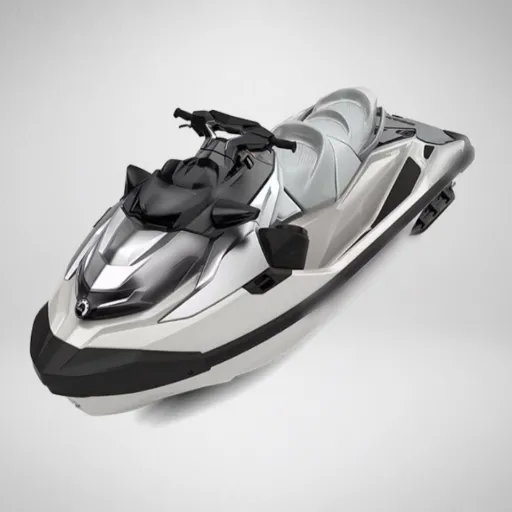
The other positive aspect of the 3-blade propeller is that it helps to save fuel or improve efficiency when the engine is running at full throttle. This is particularly useful among racing boat enthusiasts since the conditions do not remain the same and they need the boat to perform at the top of its ability in every situation. Also, the propeller itself is lightweight which helps to reduce the load on the engine during quick turning and snappy steering maneuvers of the boat, improving its performance. This, for example, is very useful when using powerboats, jetskis, or other water vehicles.
Nevertheless, the focus on rapidity and nimbleness has its limitations and challenges. In contrast to 4 blade vs 3 blade prop, the 3-blade has certain setbacks which include less stability and higher fuel consumption at lower RPMs or in rough seas. It is necessary to ascertain the type of application the vessel will be used for prior to settling for a three-bladed design. With a proper 3-blade propeller, a complementing engine, and appropriate hull contours, high performance levels in terms of speed can be attained without compromising stability.
Choosing Between 3 Blade and 4 Blade for Outboard Motors
When there is a choice between 3-blade and 4-blade propellers for use in outboard engines, one’s boating requirements, as well as the environment, should be considered first. A 3-blade propeller will typically produce higher speeds because of less drag besides improvement in the boat’s agility, which would be most desirable for water skiers or any other sports enthusiasts seeking quick speeds. It is however possible to compromise on some economy and stability when the going gets rough in waters where it is mostly used.
The flip side is that a 4-blade prop will offer more stability and lift at the back, allowing for a smooth ride even in rough waters and when the boat is heavily loaded. Additionally, compared to a 3-bladed propeller, a 4 blade vs 3 blade prop consumes less fuel when operating at medium speeds, thus making it appropriate for activities like fishing or cruising. Most importantly, 4-blade propellers minimize vibration and noise, ensuring that users are comfortable even during long distances.
The performance differences between a 3-blade propeller and a 4-blade propeller have continued to reduce owing to recent changes in design as well as in the materials used for the propeller. New studies indicate that the 4-blade options are getting closer and even matching some speed capabilities compared to the 3-blade options. Boat owners should pay attention to the relevant performance data and seek professional advice from credible representatives in order to choose the suitable propeller for their engine, the specifics of the hull, and the frequency and intensity of sea operations.
Practical Tips for Propeller Selection
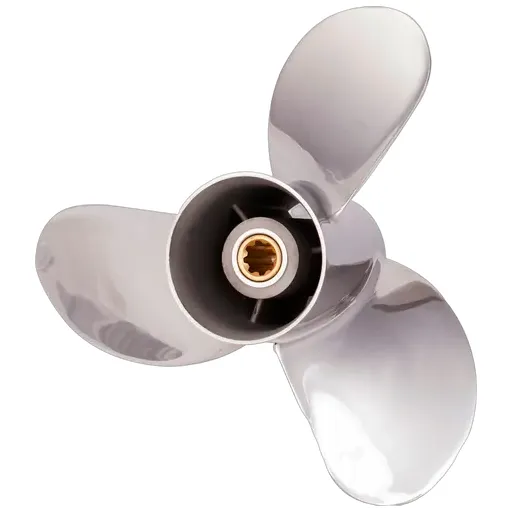
Maximizing Speed with the Right Blade Propeller
When seeking the right blade, propeller speed and enhancing the performance of the boat is dependent on it. Different blade styles are available for propellers, mostly in 3-blade, 4-blade or 5-blade configurations. These designs determine how efficiently the power generated by the engine is transmitted to the water. For every blade composition, certain parameters have been designed which have been successful for the purposes they target. The 3-blade type is preferred for speedboats or any other situation where speed is most important as less drag means higher speeds can be attained. Nevertheless, 4 blade vs 3 blade prop comparisons show that 4-blade propellers give more prop surface area. This is useful for high-impact water sports and performance in challenging weather conditions.
The pitch of a propeller is one of the most important factors that influence propeller selection and can be simply explained as the distance which a propeller can travel in one complete rotation. A propeller with a larger pitch generally travels more and affords higher speed capabilities, but it requires more in terms of engine power to effectively produce its performance. On the other hand, a propeller with a lower pitch picks up speed relatively quickly, however, at the cost of top speed. In order to optimize speed, match the pitch with the working range of your engine and RPMs and do not push them too far, because there will be strong loading of the motor and inefficient fuel burning. Conduct sea trials and experiment with different pitches until the best combination is found.
Moreover, the development of new materials and overall propeller design has played a significant role in maximizing the speeds attainable. This is because lightweight yet robust materials, including stainless steel, decrease the drag force and help optimize water circulation. Such improvements include the incorporation of blade geometry features such as cupping and raking to facilitate the water grip of the propeller and minimize the effects of slip at higher velocity. By taking all these factors into consideration, you can pursue maximum vessel speed and enhance performance levels without compromising comfort and the pleasure of navigation.
Improving Fuel Efficiency with 3-Blade vs 4-Blade Options
Fuel consumption and efficiency in the 4 blade vs 3 blade propeller debate can be evaluated only when performance and application are considered. For example, for boats that are comparatively light and where speed is the most important factor, three-bladed propellers would be a better choice. Because there is less drag, these propellers produce better top-end speed. However, the 4-blade propeller is equipped for high torque which gives it a very strong grip even at low speeds, and produces much better acceleration and higher fuel efficiency in loaded conditions or in rough waters.
In recent times, while cruising, much of the efficiency advantage with four-blade as against three-blade propellers has been noted due to enhanced propeller thrust with minimal slippage. This becomes relevant especially when the vessel has to be stabilized, or an environment demanding consistent performance exists. However, the results show that 3-blade propellers function better in situations where the emphasis is on velocity over fuel economy.
In the end, it all comes down to the intended use of boats and the usual circumstances. Where one type fails to give optimal performance, a new configuration can be determined via a combination of different factors including the engine, hull design, activity type, expert advice, and reviews.
Enhancing Maneuverability: Blade Selection Tips
Choosing an appropriate propeller for a boat is not simply a case of appearance or cost—it goes a long way in boosting maneuverability and performance. In most cases, when maneuvering in confined spaces like marinas and channels, the blade configuration becomes a major requirement. When it comes to such situations, 4-blade propellers are mostly used for control as they offer more grip in the water enabling easier turns and providing better thrust at low speeds. Such a configuration also helps in minimizing ventilation thereby allowing one to maintain power in most conditions.
Another important consideration is the pitch and diameter of your propeller. It is advisable to use a propeller with a smaller pitch as it will lead to better acceleration and handling of the boat particularly in areas that require making quick adjustments. Similarly, diameter determines the amount of water displaced for each round of propeller movement and determines the amount of power available for maneuvering. Alterations in pitch and diameter must ideally go hand in hand with consideration of the other related performance aspects of the engine including the RPM range; this helps to ensure optimal operation of the boat both in terms of speed and agility.
Ultimately, the use of composite materials or stainless steel to make your propellers would lead to even smoother maneuverability. For instance, one advantage of stainless steel blades is that high pressure won’t bend them out of shape, hence they are optimal for demanding applications. Composite blades are a bit more flexible but still lightweight and effective enough for smaller vessels, making them a more economical option. Review manufacturer recommendations along with performance standards when making decisions on the most ideal blade setup to use when maximum control in the navigation of a watercraft is desired.
Comparison Table: 3-Blade vs 4-Blade Propellers
Frequently Asked Questions (FAQ)
Q: How does a 4 blade vs 3 blade prop compare?
The main distinction of a 4 blade vs 3 blade prop is the number of blades and how it assists in maneuvering the watercraft. Four-blade propellers provide greater blade surface and grip in the water—they tend to improve thrust, hole shot, and stability in rough waters, while three-blade propellers usually cause less drag and offer better fuel efficiency at higher speeds. The choice is a balance of diameter and pitch, blade area, engine power, and displacement of the vessel.
Q: What is the significance of the number of blades on the attained speed and performance of a craft?
The movement of the vehicle is influenced by the number of blades. Having fewer blades, such as in two-blade and three-blade propellers, causes less resistance to motion and increases available top speed at the same power and revolutions per minute. When additional blades are introduced, as we see in four-blade props, the total blade area expands, providing better bite and grip in the water for heavy workloads and heavier boats but generally at the cost of maximum speed due to increased drag.
Q: In what scenario should I select a 4-blade prop over a three-blade prop?
A three-blade is preferable for lighter loads and speed-oriented applications, while a 4-blade is needed for heavier loads. For instance, if carrying multiple passengers, towing water skiers, or transporting additional cargo, it is advisable to use a four-blade propeller. A four-blade propeller is generally the easier option because of the increased surface area and better grip. The choice depends on factors such as what the engine can handle at the desired RPM, the size and pitch of the prop, and the usage of the vessel.
Q: Do four-blade propellers have less or more vibration than three-blade propellers?
It is a recognized fact that a larger surface prop or four-blade prop has a lower chance of vibration compared to three blades because the weight and load are distributed more evenly across each blade. A two or three-blade propeller can experience more movement during operation, while a four-blade propeller with its additional blades provides smoother and more balanced performance.
Q: How do the blade length, blade tips, and diameter of props affect 4 blade vs 3 blade prop comparisons?
Thrust generated by each individual blade depends on the blade length, tip design, and the propeller’s diameter and pitch. It is possible to make a 4-blade prop that achieves the same diameter as a 3-blade but uses shorter blades or different blade tips to increase the total blade area. As cavitation is reduced, designers can optimize the design to create a propeller that has more grip in the water. For example, given the same diameter and pitch, if there is one more blade added, the blade area will increase and the flow behavior will be altered such that for the sacrifice of a little bit of speed, better low-speed or turning performance is enhanced.
Q: Will a 4-blade prop help even with less powerful or low-power engines?
Yes, 4-blade props assist low-powered motors to enable the boat to plane in a shorter distance and perform better in low-speed conditions under load. Even for the lowest powered motors, the presence of an additional blade helps to distribute thrust and makes maximum use of the available power. If maximizing high top-end efficiency is the intention and the horsepower is adequate, the trade-off for the 4 blade vs 3 blade prop may favor the three-blade prop due to its better top speed.
Q: What is the significance of a four-blade prop in relation to heavy loads and heavy boats?
More blades and overall surface area make four-blade propellers more efficient for heavy loads and boats. This helps with quicker acceleration, decreases the tendency to bog down when loaded, and enhances steerability in rough seas. The four-bladed propeller offers obvious advantages for situations that demand increased load accommodation without much variance in horsepower output.
Q: Would adding extra blades impact fuel efficiency, and if so, what is the impact?
Fuel efficiency would likely decrease marginally if more blades are included because the prop tends to create more drag, although this is not always the case. Especially for boats that tow skiers, carry heavy loads, or encounter rough waves often, cruising with a 4-blade in practical terms often saves fuel and enhances control of the boat since there is better grip and less slippage. Light boats whose main concern is achieving higher speeds on the waters will often benefit more from having one fewer blade.
Q: Three-blade or four-blade propeller—how will you determine which one fits you best?
This really depends on your objective with the boat. Do you care about the highest speed or achieving decent top speed with better efficiency? Then 3 blades or even 2 blades could work under some circumstances. If, however, you are more focused on what is considered lower to mid-range performance, such as better acceleration, grip, operation in choppy conditions, or transporting heavy loads, then a 4-blade propeller would most likely suffice. Take into account factors such as engine power, blade shape and size, and whether you are more interested in top-end efficiency or finessing turns and getting the boat out of the hole. Testing various combinations, including different types of multi-bladed propellers, is often the only way to discover the most suitable application.
References
-
- •
- Aircraft Propellers – Introduction to Aerospace Flight Vehicles (Embry-Riddle Aeronautical University)
Discusses the efficiency of propellers with varying blade numbers and their aerodynamic properties. - Boat Prop Guide: The Basics (Automotive Training Center)
Explains the differences between three-blade and four-blade props, focusing on speed and performance for recreational boating. - Click here to read more.
- Aircraft Propellers – Introduction to Aerospace Flight Vehicles (Embry-Riddle Aeronautical University)
- •