Selecting the best propeller for your 90HP Yamaha 4-stroke outboard is not an easy task. You should think about performance, speed, fuel economy and other aspects of boating including how easy or difficult it is to handle. Remember that boating experience can be pleasant and effortless if you have the fitting propeller. With so many propellers on the market it can be a headache for a client to select the most suitable one. This article will be the all-round guide and will help you understand how to hand pick the best one for yourself. From how to increase the boat’s speed to how to improve the fuel efficiency of the engine, we will go through every detail on looking for the prop which works best with your Yamaha outboard.
Understanding Yamaha Outboards
Overview of Yamaha 4-Stroke Engines
Yamaha outboard motors with a four stroke cycle are not only reliable, but also economical and cutting edge. To be effective, these motors run fairly silently and hence are suitable for those who are into pleasure boating or fishing, yet crave for functionality while on excursion. Therefore, the four stroke engines from Yamaha are versatile in that they very cleverly provide sufficient power throughput, adhere to the environmental regulations due to reduced levels of emissions.
The excellent attributes of Yamaha outboards may be seen in the robustness, and easy serviceability of the 4 stroke motors. These motors are made of selected quality materials and have warning triggers such as an anti-corrosion to withstand extremes encountered in the sea. Furthermore, Yamaha offers comprehensive service, facilitating the availability of parts without delays, and most importantly, making sure the owners’ engines are maintained in sound working conditions over the years.
Diverse models are available from Yamaha for four-stroke outboard engines for different purposes of boating as well. It does not matter whether one requires a compact portable unit for a small boat or an enormous engine for a big boat, within Yamaha’s product range, everything is there for each need. Apart from that, these motors have features making them easy to use such as fuel injection for efficient fuel consumption and advanced handling modes. Therefore, combining modern technologies with multifunctionality, the engines with four strokes created a positive image of the company worldwide.
Importance of Selecting the Right Propeller
The choice of a propeller is significantly important since this helps in improving the boat’s performance, and gas consumption as well as the ease of maneuvering. This is because an aptly chosen prop enables the engine to run at the correct RPM band, allowing the speed-power ratio to be achieved. This increases the total operational capability and also reduces the pressure on the engine hence increasing the engine’s operational time.
Boat efficiency heavily relies on the diameter and pitch of propeller used. A mismatch in the specifications of the propeller leads to low performance, less fuel economy, and inability to reach maximum speeds. For instance, a propeller with a high pitch will have difficulty accelerating, while low pitched propeller will cause the engine to over-rev; either of the conditions is bad as far as the engine is concerned.
⚙️ Key Factors Affecting Propeller Performance
- Weight: Influences acceleration and overall boat handling
- Material: Aluminum vs. stainless steel offers different advantages
- Blade Design: Configuration affects efficiency and performance
Aluminum and stainless steel are the popular materials used in making propellers and they have different advantages to them. Aluminum is light and inexpensive, hence that’s why it’s appropriate when there’s no specific task to perform. On the other hand, it’s the steel one that is stronger and more appropriate when performing more demanding activities. A given configuration is ideal for its function and nature. If a boat is to be used for cruising, fishing, or in any water sports, it should have the best prop for 90hp yamaha 4 stroke so that it does not affect its performance.
Common Uses for 90hp Yamaha Outboards
The 90hp Yamaha outboard is a utility-oriented engine built to meet an array of boating needs. The most obvious one is for recreation, where its sheer reliability and good economy makes it ideal for small to medium boats cruising. This outboard is favored by boaters who want reliable and silent engines for fun cruises due to its optimal operation and simple layout.
In the world of sport fishing, the 90hp Yamaha outboard achieves a harmonious relationship between strength and agility. Its lightweight nature makes it easy to navigate into the small depths and its robustness guarantees it will keep going as long as one fishes. Freshwater or saltwater this engine provides the quality which makes fishing both enjoyable as well as fruitful.
People who are involved in water sports activities also tend to favor the Yamaha outboard which has power output of 90hp as well. This is because of how quickly it is able to accelerate and maintain that large power output when doing anything related to towing like wakeboarding, waterskiing, or even pulling a person on an inner tube. It is an efficient engine that runs smoothly and gives the users peace of mind especially when athletes are performing, hence making it suitable for such activities both for families who want to have fun as well as for those who love adventures. All in all, the practicality and efficiency of this engine has been built to suit most or all the tasks that an owner of a boat may require from it.
Factors to Consider When Choosing a Yamaha Propeller
Pitch: What It Means for Performance
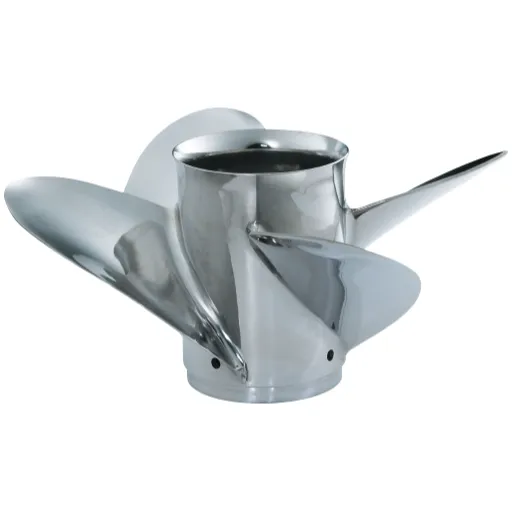
It is important to learn what a pitch means when choosing a Yamaha propeller as this ensures performance is achieved. In simple terms, the pitch is the distance that a propeller is expected to cover within a given rotation. However, in the real sense, as the propeller adheres to several forces and dynamics there are some graph slips encountered in this area. If all is well a 19 inch propeller will make 19 inches of forward motion in each complete revolution. However, that may not be the case considering several factors that influence such a measurement and also understanding all other determining factors such as propeller slip just to name a few. Having the appropriate measure of pitch helps you consider speed, pick up, and the efficiency of the engine to confirm that the vessel is functioning in its optimum RPM level specified by the model.
📊 Pitch Selection Guidelines
Lower Pitch Propeller:
- Higher engine RPMs
- Faster acceleration
- Ideal for towing sports (wakeboarding, waterskiing)
- Better for quick take-offs and stable navigation
Higher Pitch Propeller:
- Greater top-end speed
- Covers more distance per revolution
- Requires sufficient engine power
- Best for cruising and high-speed applications
It is important to recognize that the best prop for 90hp yamaha 4 stroke will heavily rely on pitching considerations. Selecting a wrong pitch, for instance, high or low pitch may have constructive effect on engine, fuel consumption, boat performance and its long life span.
The choice of the best pitch should be made taking into account your boats weight, hull shapes and its main uses. In addition, Yamaha provides different types of propellers for various purpose to suit desired conditions. Knowing how your boat acts with different pitch sizes, or seeking advice from a marine professional, can assist you in choosing the best prop for a given set up. Do not forget that proper selection of the propeller is not only focused on performance but also efficiency and engine longevity hence it is a must for every owner of any Yamaha outboard.
Diameter: Finding the Optimal Size
Before deciding on the right prop to fit into one’s Yamaha outboard engine boat, it is important to consider one that will give the best performance. The blade length is determined by the measure crossing the plane of rotation. Larger diameters provide more driving force thus are meant for heavier vessels and simply loaded as towing ski boats and such. On the contrary, smaller diameters result in higher revolutions per minute and are more applicable to the lighter boats which are faster. Comprehending how diameter affects the boat’s performance helps in making sure the boat is able to acquire the best capacity in different prevailing circumstances.
The diameter choice should be made with the vessel usage and specifications in mind: what kind of ship, what activities it will perform, and what will be the maximum load. Suppose you own a fishing vessel that frequently gets loaded with fish or any other cargo? A larger diameter prop will often be the way to go because it provides the thrust needed, for instance, to move a vessel in typical sea conditions. On the other hand, smaller-diameter blades may be preferable in fast water as such props improve acceleration and speed in pleasure boats. A number of other components, like the shape of the hull, the diesel engine capacity, and even the purpose of the vessel, interrelate in a way in which they all assist in selecting the best diameter for a particular application.
💡 Professional Tip
The Propeller industry has evolved over time and it is easier now to calculate maximum efficiency with the aid of computers and marine online materials. More recent developments entail manufacturing processes that use sophisticated techniques for testing and adjusting propellers in dynamic water flow and designing advanced simulation techniques for performance optimization. Making the correct choice for the prop diameter requires more than just assessing the technical implications; it is an inherent requirement for ensuring the best performance from a boat, inclusive of maintenance.
Material: Aluminum vs. Stainless Steel
Aluminum props are cost-effective and lightweight, while stainless steel props are durable, efficient, and better for performance.
Three-blade propellers tend to be popular because they enable quicker top-end speeds as they also have less drag on the hull. Their construction makes it possible to experience less drag as the vessel moves through the water thereby making them suitable in situations where speed is of the essence. This is most applicable in light boats or optimized performance applications where speeding up is of most importance.
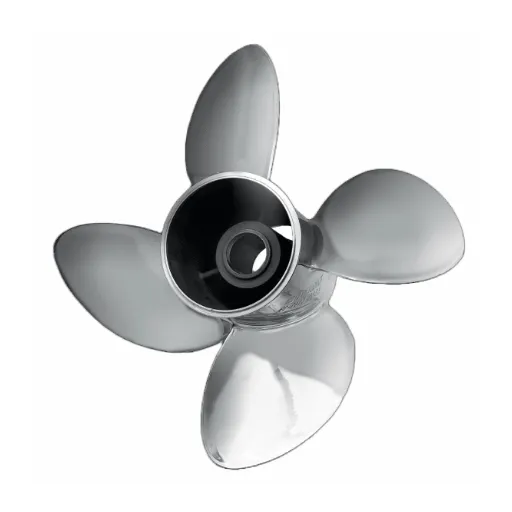
Conversely, four-blade propellers are linked with good handling, fast acceleration, and better mid-range performance. They generate higher efficiency since the blades take more bites of the water at slower speeds for better angle of attack. Recreational boats that go at cruising speeds may benefit from four-blade props. The introduction of such efficiency focused design facilitates improved towing for heavier boats while supporting a number of other watersports.
For one to come up with the best propeller choice, a number of considerations relative to the application is critical. Consider things like the usual water concentration, the nature of exploitation – whether fishing, water sports, or cruising and the boat engine power as all these aspects will influence the choice of a propeller. It is always important to consult Yamaha dealers and other experts to ensure that the propeller chosen fits the design and performance of your boat.
Performance Benefits of Different Outboard Props
Improved Acceleration with the Right Propeller
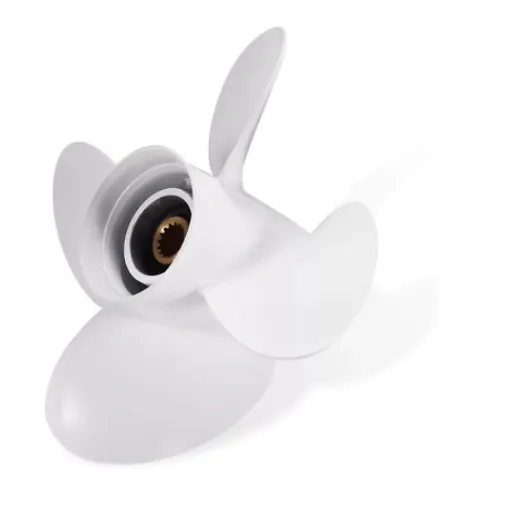
The pursuit of higher speeds on the water is facilitated by proper propeller selection for the outboard engine that enhances acceleration. Generally, a lower pitch propeller also improves acceleration because, in simple terms, the RPM goes up faster. That is useful in cases such as water skiing or when pulling someone as rapid acceleration is a key element for an effortless performance.
Other than that, type and structure are the factors affecting the efficiency. A good example is choosing between aluminum and stainless steel propellers where stainless, being more rigid and durable, will facilitate more effective acceleration as less energy is wasted to generate thrust. Besides, improvement in the design of blades including vents and cup will also boost the takeoff usefulness by having less slip and more grip on the water.
To properly adjust anything, one needs to determine particular details of one’s boat, for example, engine capacity, load, or intended area of operation. Performance tests show an accelerated advantage that comes with the prop when it is matched in accordance with the manufacturer’s recommended range of RPMs in the engine for the installed propellers.
Maximizing Top Speed
Getting your speed boat to go its fastest is a matter of not only finding the best components, but also doing the minute things that fine tunes your set-up to the extreme end. A good example is that of propeller pitch. It pitches high and therefore picks up high speed, however, it takes a bit of time on the throttle to get to a constructive RPM. Even pitch has to be restricted to the available power of the engine or rather the intent of the RPM objective. Otherwise it wouldn’t be any good because it will either be unable or too stressed to do such work. Weight projected outwards also affects top speed due to its relation to drag, and performance enhancement as well. This is why those that use lightweight construction of stainless-steel and aluminum make out better than others that do not.
🚤 Speed Optimization Checklist
- Adjust trim angle of the outboard motor to lift the bow and reduce water contact
- Use trim tabs and hydrofoils for stability and drag reduction
- Clean and fair the hull surface regularly to prevent algae build-up
- Optimize load distribution within the boat
- Choose routes with favorable conditions (less waves and wind)
- Use GPS-based speedometers and tachometers for real-time monitoring
Yet another factor that must be taken into account is the trim angle of the mounted outboard or sterndrive engines. The trim of the outboard motor can be raised, lifting the bow, to reduce the surface area of the hull on the water. This can improve the speeds that can be achieved while running a boat. On the other hand, a boat may lose stability or may suffer from cavities, hence the adjustment should be careful.
Enhancing Fuel Economy
Optimizing the performance of your boat can help save costs and reduce the effects of climate change. Regular care and maintenance are indispensable for improving fuel economy. When the engine is serviced up to standard, the worn out parts are replaced, and clean fuel is used, the performance of the boat improves without any interruptions. Dirty boats have a lot of growths, which increases friction and drag, hence burning more fuel and making the boats less efficient.
⛽ Fuel Efficiency Best Practices
- Maintain Your Engine: Service regularly, replace worn parts, and use clean fuel for optimal performance
- Practice Good Boating Behavior: Avoid quick acceleration and cruise at constant speeds whenever possible
- Operate Within Recommended RPM: Follow manufacturer’s guidelines to ensure the engine runs at optimum capacity
- Minimize Weight: Keep excess weight and bulk to a minimum for better efficiency
- Plan Trips Ahead: Check weather conditions and select the best, safest, and shortest routes
- Use Technology: Employ fuel flow meters and monitoring applications for real-time usage tracking
- Consider Upgrades: Replace with hybrid or more efficient motors when possible
Boating enthusiasts can benefit from the advancement of technology in terms of fuel economy. All this presents a financial benefit as well as environmental one since it is worthwhile to upkeep, responsibly manage, and develop in such a way to save expenses and lessen pollution.
Technical Specifications of Yamaha Propellers
Understanding RPM and Horsepower Compatibility
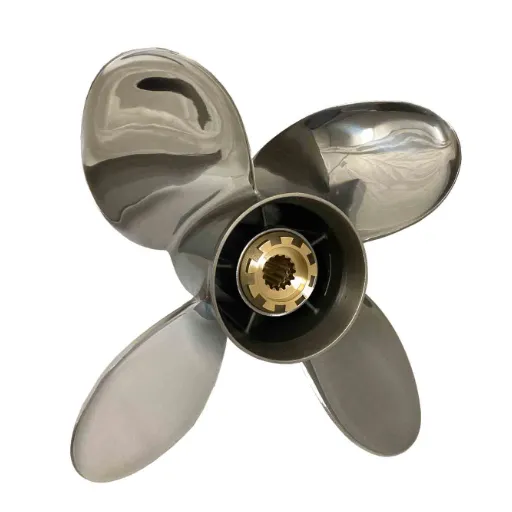
While choosing the size of yamaha propeller, in order to improve the performance of engine be observant of the RPM and the horsepower. RPM (revolutions per minute) is the speed of the engine crankshaft which causes the engine power. While the horsepower describes the power which the engine generates to work. For instance, for Yamaha outboard motors adjusting the size of propeller according to the specified RPM given in the user manual of the engine is important. This is because it will prevent frequent over and underrunning of the engine ensuring effective and economical use of the engine.
📈 Example: 200HP Yamaha Engine
The maximum WOT (wide open throttle) speed a 200HP Yamaha engine maintains may fall between 5,000 to 6,000 RPM. Choosing a propeller with the incorrect pitch turns out to be a mistake as it can either overspeed the engine and consequently reduce its life, or if RPM is reduced the boat will be slow.
Yamaha’s charts or curve can be consulted as a guide to determine in what tonnage, what load, and what purpose a given propeller will be used. These factors can also be assessed with modern applications such as Yamaha’s Prop Selector software to find the best propeller to use without sacrificing engine longevity.
Understanding these features is important, not only because of the performance effectiveness, but also because they give a boost to the fuel economy and also reduce the maintenance costs. Always seek advice from professionals or Yamaha authorized dealers for more accurate evaluation, if needed.
Comparing Blade Numbers and Their Impact
Propeller blade count is an important aspect whose consideration affects the process of boat operation. Most propellers are available with either 3 or 4 blades, each coming with certain benefits relative to the user’s wishes.
Choosing the Right Outboard Propeller for Your Boat
As you wade into the process of selecting the best outboard propeller for your boat, you must first consider the kind of boat you have and the activities you will most likely be engaging in. Selecting the best propeller suitable for a 90hp Yamaha outboard engine requires taking into consideration aspects such as the ship’s construction, the horsepower output of the engine and the activities that you engage in whether it is fishing, watersports or cruising. Scale and pitch of the propeller are another important thing to bear in mind. A much wider one might generate the much needed power for relatively higher loads while a much lower pitched one would increase speed but would need the engine to accept more power in order to perform well.
🔧 Step-by-Step Selection Process
- Identify Your Boat Type: Determine the construction, size, and weight of your vessel
- Define Your Primary Activities: Fishing, cruising, water sports, or mixed use
- Use Yamaha’s Prop Selector: Input your boat’s characteristics and get optimized recommendations
- Compare Options: Evaluate different propellers based on pitch, diameter, material, and blade count
- Consult with Experts: Visit Yamaha authorized dealers for professional technical assistance
- Test Performance: Try different propellers to understand which performs best in practice
- Verify RPM Range: Ensure the propeller keeps your engine within manufacturer specifications
In order to zero in on the best option, you can employ the use of Yamaha’s Prop Selector. This will reduce any gaps in ideas that may exist by providing the needs of the boat and the recommended use of the propeller optimized for the boat’s characteristics. The Prop Selector also allows different propellers to be compared to the specific requirements such that it is possible to buy one that encompasses the right balance of speed, fuel economy and strength. Adopting this kind of decision-making whereby choices are factual-based minimizes the number of errors made, while enhancing the capacity of the vessel in water.
Furthermore, seeking advice from a Yamaha accredited dealership or an expert who is trained in such a field is highly beneficial. Such individuals have the ability to look at the boat and come up with technical assistance which may not be obvious. They may even assist in trying out various propellers to gain an understanding of which one is in the correct range in practice. When equipped with the support of these individuals and their resources, it becomes easier to find the best prop for 90hp yamaha 4 stroke that complements a boat’s functionality and fits in with how you use it.
Maintenance and Optimization Tips for Yamaha Propellers
Routine Maintenance for Longevity
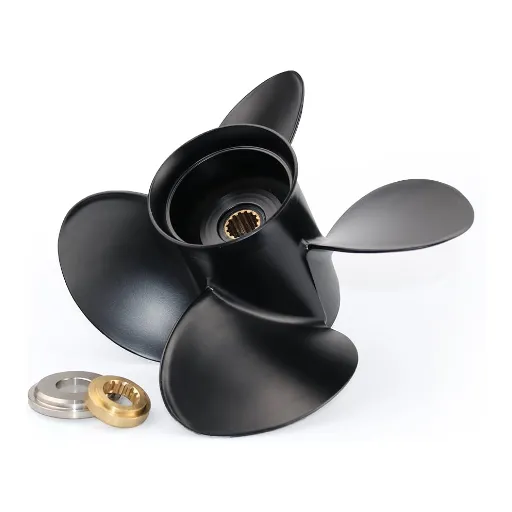
It is crucial to maintain your Yamaha prop in optimum condition. Begin by conducting a visual examination of the propeller to detect any mechanical damage—cracks, chips, or bent blades. These elements may drastically influence the performance as well as the economy of gas consumption. A lot of things that may appear small at the moment can become, over time, larger problems. Hence, it is very important to check after every boat ride. In addition to that, check for any fishing lines or trash that could wrap around the propeller hub as they might cut through the seals and permit water entry into the lower unit.
✅ Maintenance Checklist
- Visual Inspection: Check for cracks, chips, or bent blades after every use
- Remove Debris: Clear fishing lines, weeds, or trash from the propeller hub
- Clean After Use: Rinse with fresh water, especially after saltwater use
- Apply Protective Coating: Use marine-grade spray to prevent corrosion
- Remove Periodically: Take out the propeller to check for wrapped material on the shaft
- Lubricate Shaft: Clean and apply marine-grade grease before reinstallation
- Torque Properly: Tighten propeller nut to Yamaha’s specified torque
Cleaning the propeller regularly is also an integral part of maintaining one’s equipment. It is even more necessary in saline water as corrosion deposits form easily if washing with plain water is avoided. Rinse all salt and dirt with fresh water after using it and as a protective measure you can always apply marine coating on the structure. It is prudent to take out the propeller at regular intervals as well to ascertain whether debris has wound around the shaft. These must be checked in a timely manner in order not to incur undue wear and tear or costly expenses later.
Lastly, the propeller must only be mounted after ensuring that the shaft of the propeller is clean and well lubed. This helps prevent rusting and makes the reinstallation process easier for any future work. The best marine grade grease should be applied and the propeller nut should be set to the desired torque according to Yamaha’s specifications. By following the maintenance practices that have been described, you will be able to extend the use of your Yamaha propeller and maintain its efficiency in performance even under different water conditions.
Optimizing Performance Through Adjustments
The effectiveness of your Yamaha propeller can be at its highest when the user closely monitors the dynamics and makes some occasional changes. The sharpness of the blade, the ridges as well as the ridge thickness differ according to a particular type and the purpose to be achieved when using the blade. Reducing the pitch improves acceleration which is always required in watersports but on the other hand increasing the pitch will help improve the speed more which is needed when the vessel has passengers in it. Make sure to read the manual for proper propeller selection from your manufacturer or marine equipment supplier.
Another important factor is ensuring that the propeller is well balanced and devoid of any fractures or dents. Because even the slightest dent, bend, or scratch in the shaft may cause great imbalance, performance issues, and poor efficiency. Examine your propeller for any damages caused by use, corrosion or growths that could affect its performance. Regular propeller inspection and avoidance of self-initiated repairs are able to ensure that performance is smooth, fuel is not wasted and the engine does not strain. Should problems be detected, call propeller services and get their help to repair or exchange the propeller.
⚡ Performance Optimization Tip
The efficiency at which the propeller pushes water and the boat’s speed is largely dependent on the angle of trim of the outboard engine. By making changes to the motor trim, you can achieve either an increment in speed, stability boost, or even a reduction in fuel usage by means of less drag while floating. There is an advantage in modifying trim depending on the kind of water being presented and its weight distribution.
Yamaha has come up with improved propeller designs and technologies that can enhance the performance and experience of the users. Just as you use every other piece of equipment, take care of your Yamaha propeller to ensure every trip is as good as the rest.
Signs Your Propeller Needs Replacement
Knowing when it is time to replace your propeller is crucial for the best performance and the prevention of engine wear in your boat. A very noticeable sign is when there is loss of speed or power while the engine is at its normal RPMs. This can represent that the blades have sustained damage, been deformed, or have worn down to the point where they are not cutting as well as they should. In this case, unusual thumping or excessive noise while operating the boat also suggests the existence of an imbalance resulting from structural damage in the propeller. Failure to treat such conditions on time will cause more serious issues, therefore, it is wise to start addressing them as soon as possible.
🚨 Warning Signs for Replacement
- Loss of Speed or Power: Decreased performance at normal RPMs
- Unusual Noise: Excessive thumping or vibration while operating
- Visual Damage: Chips, cracks, bent blades, or corrosion
- Increased Fuel Consumption: Higher fuel use than before for the same distances
- Vibration: Noticeable imbalance or shaking during operation
- Cavitation: Excessive bubbles or air pockets around the propeller
Visual damage is another symptom that indicates propeller repair work or replacement is needed. Inspecting the condition of the blades often will help identify issues like chipping, which is essentially breaking off small bits of the blades. This also helps avoid cracks and damage besides corrosion which comes especially from hard water, salty sea waters or seawater. Props made from aluminum and stainless steel contain properties that are reasonably strong, however, those properties are still not foolproof, mainly if you operate your craft in areas with submerged objects, shallow waters, or even high levels of salt in the water. A damaged prop will result in poor hydrodynamics and low fuel economy even if there are very few scratches. Watching these details will help you reduce if not avoid extreme cases of damage and resultant replacement which is quite expensive.
Finally, please note the fluctuations in engine fuel use. An impaired or damaged prop usually increases fuel consumption mainly because the engine is pushing more power to cover the poor performance. This is usually very noticeable on long distance voyages or voyages with heavy weights. When it happens that the fuel consumption is higher than it was before, it would be prudent to have the propeller checked. Regular inspection of propellers and knowledge on the latest developments and propeller materials always guarantees the best prop for 90hp yamaha 4 stroke is in perfect condition and performance.
Frequently Asked Questions (FAQ)
Q: Which propeller offers maximum efficiency for a 90 horsepower Yamaha four stroke engine?
A: A 90 horsepower Yamaha four-stroke engine is typically at its best in terms of performance when a multi-blade, medium-pitch stainless steel prop is used for cruising. For better results, Yamaha Marine typically recommends consultation with authorized dealers or the usage of a Yamaha prop selector tool as it helps in narrowing the possible options given the boat’s pitch requirements, the diameter of the prop, and the weight of the vessel being driven.
Q: With a 90 hp Yamaha outboard, how do I figure out which propeller to get for my boat?
A: The right propeller for a particular boat equipped with Yamaha engines can be chosen through matching pitch and the number of blades (choice of three or four) with the hull shape and typical loading pattern. A higher pitch ensures high speed at the expense of acceleration while a lower pitch enhances acceleration. Take a look at Yamaha’s prop selector tool or consult the Yamaha propeller guide which will show you a propeller perfectly fit for your specific boat setup and riding style.
Q: What’s the best prop for 90hp Yamaha 4 stroke? Three blade or four blade?
A: The three blade prop tends to give higher speeds and is more commonly fitted, while the four blade prop reduces ventilation and increases control, making it suitable for heavier boats, pontoon boats, and fishermen who need rapid acceleration and tight turns. The choice entirely depends on your needs – for some, cruising at high RPMs is more important and for others, strong pull at low RPMs is preferred.
Q: Is ventilating less with a 90hp Yamaha 4 stroke using stainless-steel propellers?
A: Yes, ventilating is less with stainless-steel propellers than aluminum propellers under most circumstances. Stainless-steel propellers resist damage more than aluminum propellers do. Furthermore, stainless options are not cheap, but they render greater efficiency and lesser power loss along with improved control in comparison to aluminum propellers in many offshore and high-performance applications.
Q: How important is the pitch of the prop when looking for the best prop for 90hp yamaha 4 stroke?
A: The prop pitch makes it possible to know the distance moved by the boat for one revolution of the prop, hence the importance of matching the proper propeller pitch to the hull and load levels. Higher propeller pitches give better speeds but worsen the acceleration or the engine performance by potentially overloading the engine, while a lower prop pitch is more beneficial for acceleration and getting on plane. Seek Yamaha’s recommendations or employ the Yamaha propeller selection tool to select the proper pitch without sacrificing performance.
Q: Are there Yamaha propellers that have a shift dampener system or the SDS design?
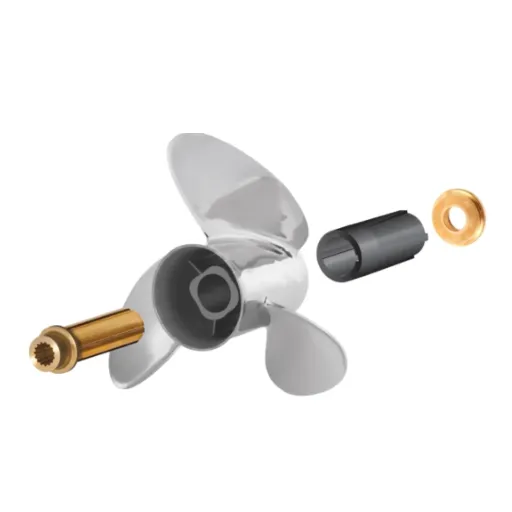
A: In fact, certain Yamaha propellers do come with an SDS (Shift Dampener System), which incorporates a redesigned system intended to cut back on shift shock and improve the shifting feel. This innovative SDS does not call for any additional installation hardware, and the hub system can also be fitted on previous generation Yamaha engines, meaning they can be fitted on an entire range of outboard engines.
Q: Do I need a performance prop if I am carrying a heavy load on a boat with a 90hp Yamaha engine?
A: It is advisable to use either a performance propeller or a four blade propeller for boats with heavy loads as this provides good acceleration and better maneuvering in comparison to an ordinary propeller. On boats carrying significant luggage or passengers, using a smaller pitch and/or a more bladed area is advantageous as it helps the engine stay within optimal RPM range without overheating or straining.
Conclusion
Selecting the best prop for your 90hp Yamaha 4 stroke outboard is a crucial decision that significantly impacts your boating experience. From understanding the importance of pitch and diameter to choosing between aluminum and stainless steel materials, every factor plays a vital role in optimizing performance, fuel economy, and overall satisfaction on the water.
Remember that the ideal propeller depends on your specific boating needs – whether you prioritize speed, acceleration, fuel efficiency, or a balance of all three. Utilize Yamaha’s prop selector tools, consult with authorized dealers, and don’t hesitate to test different options to find the perfect match for your vessel.
With proper maintenance, regular inspections, and appropriate adjustments, your Yamaha propeller will deliver reliable performance for years to come. Make an informed decision, and enjoy smooth, efficient, and exhilarating adventures on the water with your perfectly matched propeller.