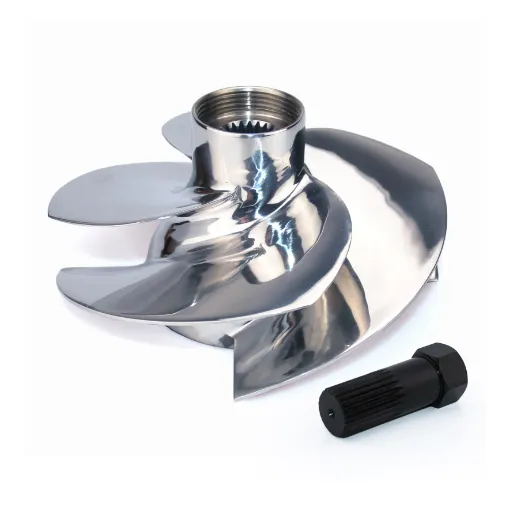
Enjoying a ride on the water, especially with a jet ski has always been equated with motorized excitement. However, the speed and the agility of this fun machine are actually attributed to what is not seen – the impeller. Quite often, such small, yet efficient element is what all jet ski’s propulsion system as it affects its speed, dependability, or sometimes even the fuel consumption. Whether you are an expert in riding the jetski and wish to improve its functionalities or you are a novice who wants to learn how they are artound science interrupted, an impeller and about it, is something you need to know. The role played by the impeller in the integrity of the jet ski, how to look after and repair the same also how to choose an impeller on a jet ski will all be the themes of the paper. This is one of the articles that can enrich your knowledge and experience of riding a jet ski.
Basics of the Jet Ski Impeller
What is an Impeller?
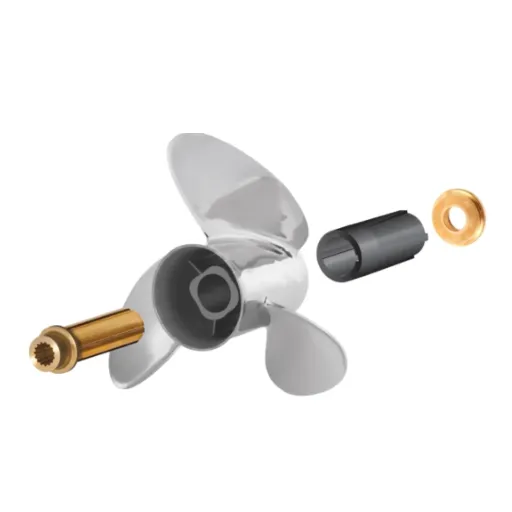
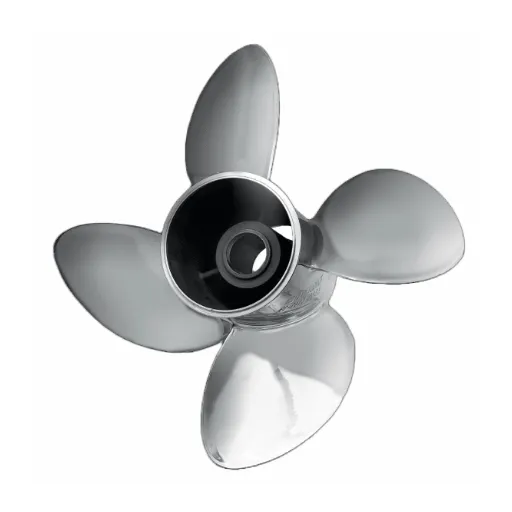
The mechanical operation of a jet ski is incomplete without the most critical part, the impeller. Within a jet ski is a kind of screw-like device known as an impeller. The overall intention of the impeller’s configuration is to suck in water from the bottom of the jet ski and jet it out of the nozzle located at the jet ski’s rear. This is what provides enough force to allow the jet ski to move forward.
In terms of working principle, the impeller on a jet ski relies on the engine force to draw it in water and accelerate it. In Newton’s law of motion, this action propels the jet ski due to the high velocity flow of the water in the opposite direction. This design of an impeller may be of different shapes, sizes and materials besides most of the materials are high corrosion/hairdressing speeds proficient or rather stainless steel.
This crucial component is imperative in determining how quickly your jet ski picks up speed as well as how fast it goes on the water and its efficiency and performance in the water overall. The impeller that is in good working condition allows for less vibrations thereby saves a lot regarding fuel and the riding experience is more exciting. That is why it’s crucial to know what it does if there are issues with the performance or one wants to tun up their jet ski.
Role of the Impeller in Watercraft Propulsion
An impeller is an essential element of a propulsion mechanism of a vessel, as its purpose is to transform the power produced by the engine into the force that is required for the movement of the vessel within water. The way it operates and how it is constructed enables optimum levels of motion of water during utilization. The following are five important functions and roles carried out by the impeller in the propulsion of watercraft.
- Thrust: An impeller has an appreciation ability where it sucks up water to be pumped in, runs water across to the impeller, releases water with great force thus providing the thrust for the forward motion of the jet ski or powerboat. This is critical in the maintenance of both the rate of movement and the control of it.
- Ability to Steering or Handling Itself: The impeller on a jet ski assists greatly complex steering mechanisms due to the water management by the impellerpad especially compact interventions such as jet skis. It enables sharp or rough water turns with ease or provides stability when weathers are quite difficult.
- Fuel Effiency: Implementation of the optimum and effective shaped impeller on a jet ski enhances the vessel’s function in water by reducing the agitating friction to the motion of the vessel aspect and saving fuel. Therefore, less fuel is burnt during operation.
- Operating Performance in all conditions: Impellers are capable of withstanding any type of water which reaches shallow level, deep level, still level, calm and even bumpy levels. Thanks to their construction materials which include stainless steels, they can exert their functionality in corrosive, high pressure conditions.
- Safety Function: The design of the impeller is also a safety construction, enclosing the propelling mechanism and reducing injury due to external propellers that are more exposed like the standard propeller systems.
These purposes illustrate the importance of the impeller in the propulsion of watercraft and its important role in ensuring high performance and efficiency, and safety, at a no risk to the operator.
Types of Jet Ski Impellers
Jet ski is a watercraft in which the propeller blades of the propeller also known as an impeller on a jet ski are generally of three categories: stock, performance and aftermarket impellers.
- Standard Impellers: These are Widely used by the manufacturers, standard impellers are the ones commonly fitted on jet skis. The advantage of these impellers being installed is they are a combination of both helping the user in performance and not damaging the equipment and hence can be used for non-race skiing and even pleasure skiing. In some sports, they are effective; however, when it comes to power, stock impellers do not provide an optimum performance.
- Performance Enhanced Impellers: If a rider is calling for faster speeds, better acceleration as well as a uniformly and overall performance the type of an impeller that would be most appropriate for them are performance impellers. Such impellers commonly come with complex shapes which incorporate force expulsion and friction less water expulsion. They are most commonly used by jet ski riders competing in races and wishing to attain more acceleration.
- Impellers Post Purchase: Third-party manufactured impeller on a jet ski appears to be the best option for remembering modified jet skiing tools. You may accustom these propelled jets to other tiding tasks – be it sediments conveyance or game putting forward. Impellers are installed by some such users to modify the configuration of which such users’ watercrafts are utilized.
However, the choice of any other impeller on a jet ski shall meet the intended purpose of the said activity be it for leisure, professional racing, or even some form of water activity like towing. They are still incorporated for the specific use case so that one makes their consideration and achieves the required performance of the Personal Watercraft.
Impeller Pitch and Performance
Understanding Impeller Pitch
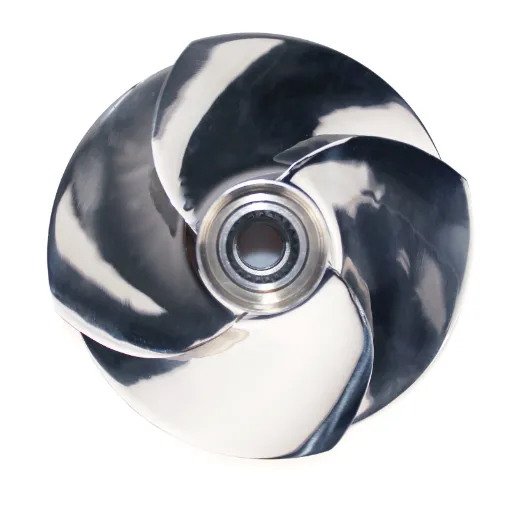
Measured in mm, pitch of an impeller in a jet ski is the number of potential millimeters water would carry the craft of one complete revolution of the impeller, if it were to behave as a screw thread. Pitch is one of the most important characteristics of an impeller on a jet ski in terms of indicators; this is typically calculated in mm. Jet skis designed with a larger pitch, which on a jet ski corresponds to more backward rotation, enhance top speeds and are preferred for skiing or racing purposes. Acquiring a shallow pitch will enable acceleration of spin keeping the machine in motion at some low velocities which is ideal for situations where a person needs to pull someone, make tight turn corners or go over some rough waters.
Issuing when considering high power to weight ratio, it’s important to consider the effect pitch airy blade fit to the surface affects the ratio between the speed and the thrust. Beef or bigger pitch impellers usually required stronger engines, since these have to endure more of the resisting power of the water. In contrast, lower pitch impellers help out the engine, and therefore allow the craft to get off the water sooner, or when useful, however this watercraft takes off at the minimum speed provided. This aspect of the design requires the holder of the jet ski to take into account their principal purpose and circumstances and go for the appropriate pitch of the impeller on a jet ski.
Making a custom impeller for the wave rider is now easier thanks to improvements in techniques and materials. These days, it is common to see stainless steel or composites that are known for their performance and enhanced resilience being used when manufacturing impellers. In many cases, some producers develop variable-pitch impellers with help of sections having fixed and positive pitches inscribed despite the conical surface of the blade. Such modifications ensure good acceleration and high speed as well. Knowing the pitch employed in an impeller on a jet ski and the power capability intended for use, that is knowledgeable combination optimized will always enhance the equipment to its best. Regardless, it is essential that one refers to expert advice or the manufacturers guide in order to check and verify whether the new impeller matches the design of the ski in question.
How Pitch Affects Speed and Control
The shape of the blades in an impeller assembly governs the discharge effect in propeller operation in water, eventually influencing both the thrust and velocity of a jet ski. Since an impeller with a higher pitch is able to push more water out, it is more likely to lead to a higher speed than one with a lower pitch at high velocity but it will come at the sacrifice of acceleration and throttle control at sea level and low speeds. Aiming that an impeller with a lower pitch is much more responsive at lower velocities, and thus provides more power, it’s a welcome level of control and faster take-off, which is useful for activities such as skiing behind the boat over water with frequent defensive turns.
As an example, in situations where thrust and traction need an immediate boost as in draw ramps, tides, or aggressive banked turns in water that is being impelled faster, a smoother and controlled impeller with a low pitch can be the one providing better enhancement. High, unbroken water conditions imply some users would wish to limit the highest speed achievable by the vessel, in which cases a more proficient – higher-pitch magnitude impeller is a more preferable option. Optimum performance is in the balance between impeller pitch and the power of the rowed machine and consideration of how the craft is to be used.
It is pertinent to mention that progress related to the improvement of the impeller technology includes elegant designs which take advantage of dynamism by the introduction of varying pitches of the blades. Furthermore, with expert advice and recommendations from manufacturers concerning the specification of such dynamism of designs, both speed and control can be improved, overriding the normal riding and making it more aggressive and flexible.
Choosing the Right Impeller Pitch for Your Needs
Selecting a jet ski impeller with the right pitch is dependent on the particular performance I wish to achieve with my jet ski. I am more of a fan of straight-line speed on the water; thus I tend to select a higher-pitch for the impeller since this pitch is less aggressive, has more speeds, and can be ideal for cruising long distances. Conversely, When acceleration and quick responsiveness are more of a preference such as pulling, cornering, skiing, or the like, a lower-pitched impeller, usually helps most.
I must also examine my understanding of my jet ski’s motor dynamics, in order to choose an effective impeller for it. In such places, I will ensure that the impeller will not exceed the power, high-speed level of the heli in fear of one still over-speeding it, destroying it that way, and lastly, wasting the fuel. It also helps when I check the pull-down recommendations given by the producer and also, seven to gain from experts advice, impeller for the specific model to meet or exceed the Objectives set.
Finally, for someone who is both looking for fast action and wants to make the most out of it, I may also explore the possibility of trying proprietary impeller designs that combine two shapes or comprise various adjustable-pitch elements. This is because such modern designs provide me the opportunity of experiencing different types of performance as and when I need; so that be it that I’m runnin’ high speeds or needin’’ a throttle accelerator.
Inspecting and Maintaining Your Jet Ski Impeller
Signs of Wear and Damage
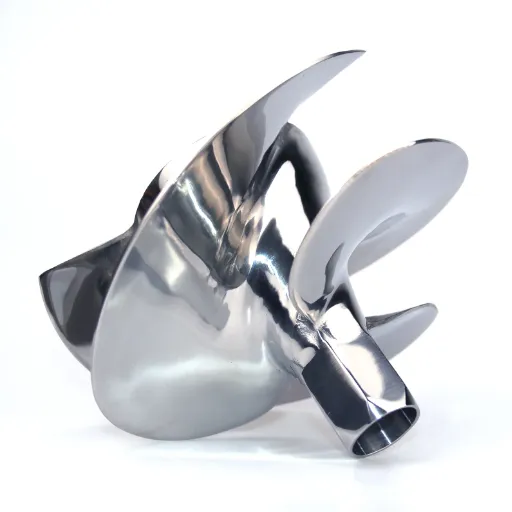
Checking your device’s jet ski impeller for any possible wear or damage is an important aspect of ensuring that it works efficiently and prevents unnecessary costs. One of the biggest telltale symptoms of an impeller being on the wear and tear stage is reduced performance of the entire vehicle. If you notice that your jet ski has difficulty with acceleration or the top speed is not as fast as before, it is most likely because of the attack of the rocks or sand on the impeller blades which causes dullness, dents and breakages. The drop in performance could equally be as a consequence of cavitation which is a preferable condition in the impeller when bubbles filled with air are formed hence propulsion is reduced in effectiveness.
A common signal of trouble is when the equipment vibrates abnormally, and this is accompanied by strange sounds during operation. This mostly affirms that the impeller on a jet ski is actually not properly tuned or aligned, and can be moved out of place if it repeatedly undergoes impact, stress, or usage surpassing its intended design limits, which include that of the shaft as well. Additionally, these vibrations in the long run may very well destroy other parts such as the bearings and seals and unless they are addressed, we will be compounding these problems rather than trying to get to the core of them.
If the impeller housing is checked for any visible fracture, corrosion or uneve wear type on a regular basis, then it is possible to detect the weaknesses early enough. In the same breath, corrosion inside the pump level or the housing may cause the material of the pump to fail especially in marine tertiary tanks. Also, if the leading edges of the blades are too thin, it becomes difficult for water to properly flow through. With that, it is possible to keep the jet ski consistently operational and fit anytime provided you keep a keen eye on the mentioned aspects and get it fixed or replaced appropriately for a scraped impeller on a jet ski.
How to Inspect Your Impeller
One of the most important maintenance activities on your jet ski should be inspecting the impeller. This should be done right after the jet ski is removed from the water, placed on a flat surface with its rear intake area accessible. They should start by inspecting the impeller inside housing and intake grate with a flashlight. Any contamination, wear, or chipping on the impeller blades must be assessed and addressed. Some of the most common problems include existing dings or chevrons and sharp corners which reduce efficiency of flow. And if there is some sort of filth in the entrance, then it is advisable to bring tools such as needle-nose pliers or better yet, use hands while wearing gloves to avoid any cuts.
Now, turn the impeller by hand, making sure it turns with ease and does not rub against anything or surprisingly go crunchy. If noise and difficulty turning are experienced, problems with the pump bearings or a sign, that there is something in the way of the impeller rotation, might be present. The clearance of the impeller against the pump housing should also be checked for any abnormalities. This aspect is called the “wearing clearance” or “wear ring gap”, thus the use of the feeler gauge is employed to ensure it is constant all round and not eccentrically located. Lack of clearance due to either wear of the impeller on a jet ski or that of the surface against which these rinds rotate, will affect the overall hydraulic performance of the unit. This dimension is most often accomplished through a feeler gauge and it is learned when one needs to change the wear ring.
Finally, make a visual check on the other parts that may include the impeller on a jet ski, such as wear rings, pump seals and intake grates. If the wear ring is devoid of any deep cracks or severe scars then it is fine while the intake grate must be secure without any cracks or deformations in it. In case any defect is noticed, it is advisable to fix that damage – if possible – or otherwise call a specialist and fix all of your problems there without hesitating. Periodic check-ups after every 20 – 30 hours of usage will not only successfully uncover any misfunctioning issues but also will help in prolonging the operating period of a water scooter avoiding stress about maintenance for a number of occasions.
Common Repair Techniques for Jet Ski Impellers
Impeller servicing and maintenance in a motor craft is invariably done in form of: fixing the impeller on a jet ski or replacing it entirely in cases where the unit has been worn out or incorporated damages. Bent impeller blades can be reshaped by use of various soon to be discussed tools. Aside from replacing the whole impeller, other fastened solutions include cleaning and removing the objects that are trapped in the impeller cavity during collision; straitening the blades and polishing the external surfaces. Indeed, this is a very meticulous task where a lot of care has to be taken because getting the exact angles throws off the fit of the impellers resulting in improper operations and performance of a watercraft.
Another common problem is debris stuck in the impeller or wear ring, affecting the operation of the equipment. The impeller or other sensitive components should be freed from any foreign bodies with great care, as improper handling can cause more harm. There are, however, other intricate repairs, for example, in changing the impeller or wear ring, which might merit the dismantling of the entire pump unit. Common replacement choices for impellers are stainless steel and composites because they are more resistant to wear and tear.
This technique can be enhanced by the regular application of an impeller repair kit and adherence to the manufacturer’s guidelines. In applying these techniques, apart from going back to operations, the strategies design to prolong the life of the jet ski to improve the workings of the machine, impeller on a jet ski, is operational.
Replacing Your Jet Ski Impeller
When to Replace Your Impeller
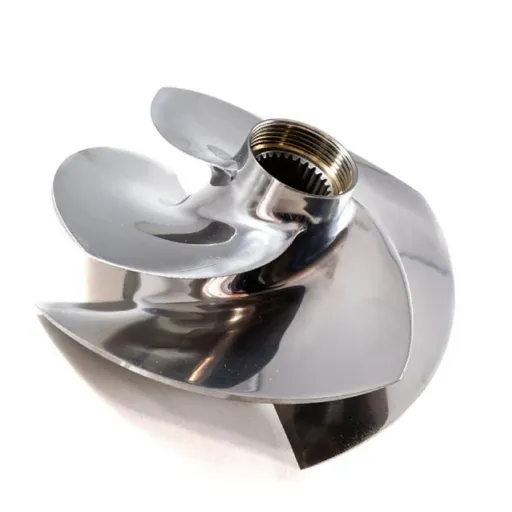
One of the facets of maintaining a jet ski includes renewing the jet ski impeller continuity in cases where the productivity of the jet ski has gone down, for example, if the handling, acceleration or even speed has been affected. Impellers are very crucial as they are responsible for helping move the watercraft forward. However, when impellers are broken or worn out or have some particles stuck in them, the performance of such impellers considerably drops. Similarly, in instances when the motor is gaining revs but the vessel is still at a lower velocity – popularly known as cavitation – It is a sign that the impeller on a jet ski has don its contribution or the wear ring has given up and there is a need for repair or an overhaul.
Another important sign that it is appropriate to change your impeller is any noticeable damages. A visual examination of the impeller, fluctuating with the extent of prior events like sucking substances or hitting the ground, is a normal practice. Even small nicks, chips or curvatures on the blades affect the performance, may cause imbalance which can cause vibrations and make the water flow unevenly. These persistent vibrations could also damage the engine and other parts. Subsequently the problem may become costly to fix when not addressed in time. This problem can be avoided by ensuring periodic checks of the equipment.
Finally, the manufacturer of your jet ski may have particular recommendations on when and after which hours of usage an impeller on a jet ski may require attention. With extensive usage such as riding in a sand filled area, the metal may break down through external conditions and develop cracks. Although you may be able to use some better jet skiing machines for a longer time since their impellers can be replaced, fixed or overhauled as the case may be. Attending to these symptoms and keeping maintenance schedules ensures optimal machinery performance avoiding larger problems in the future.
Steps for a Successful Replacement
- Check out and determine the cause of Imbalance in Impellers: It is quite prudent too to first check if there’s a need to replace the impeller. Is there a clear, obvious exposure to aspects such as Dents, Chips, bend or poor operation as reduced speeds or acceleration. Is there signs of damage on other adjacent parts like the Water ring or Seals, if so then those parts need to be changed.
- Collect Proper Tools and Spare Parts for the Repair: Getting the right replacement impeller that corresponds to your jet ski model is very important before embarking on replacing the impeller on a jet ski. Set of socket wrenches, thread lock compound, spline removing tool and engine impeller puller are some of the necessary tools that a mechanic should have. In order to help eliminate mistakes, read the car maker’s user guide to ensure all part provide fit and correct assembly of components.
- Empty All Contents and Hold the Craft Firmly: The jet ski should be placed on a firm stand or trailer and kept away from water. It is essential to remove all the water that remains in the hull to avoid damaging while performing the installation. It is also recommended to disconnect the battery and also remove the fuel.
- Disassemble the Pump Casing: Let’s proceed in a very gentle manner, open the pump casing by unbolting it and removing any hoses or cables that may be in the way. Now, pull the pump assembly backwards making sure you observe the arrangement so that putting it back will not pose any problem.
- Remove the Blades: Utilize a proper tool to dismount the old blades from the shaft in a safe manner. Assess the shaft for damages or particles and prepare the surface for the new blades.
- Replace the Blades: Fix the blades onto the shaft by applying the locking solution to them where applicable. Check threads and secure the impeller tightly however gentlemen do not make a pull as it may damage the unit. The pump casing and other components should be put back in order to their proper places.
- Check Out the Efficacy Prior to Use: After reassembly, check the efficiency of the impeller by spinning it and confirming its smooth movement. This is appropriate, so one should go on a trial watercraft ride to analyze its performance and check if replacing took care of these its issues. Deal with such eventualities without further creating damages.
Precautionary measures of this nature will enhance your jet ski’s performance as well as its service life and reduce repair bills in the future, if taken.
Choosing a Marine Mechanic for Impeller Replacement
Whenever you need to find someone to replace an impeller on a jet ski, make sure you are looking in the right place because looking and selecting are two different things – expertise, good name, and openness will be of utmost importance. Choose individuals that are specialized in working with water crafts and those who possess an ABYC certification or its equivalent. Make sure that the mechanic has dealt with the make and model of your jet ski, as it may be different from the rest and it may affect the performance drastically.
From arising issues regarding the mechanic, clients’ reviews and recommendations are very essential as the cuts on the role performance of a mechanic, if a mechanic’s skills could be curtailed in the performance of the necessary skills. There are many online avenues in which such information about how other people experience the use of boats can be shared. Further, ask of the services they provide if the warranties or guarantees are there because they show it is the professionals therefore does.
Ask for a detailed quotation which would include the cost of parts, labor and any other charges in order that you will not incur any costs that were not disclosed. It is also advised to get more than one quote in order to get an idea of the market pricing and be able to make the best decision. Finally, looking for a skilled and experienced marine mechanic reassures you will get the replacement in place quickly and your jet ski in full working order, safe and sound back on water.
Enhancing Performance with the Right Impeller
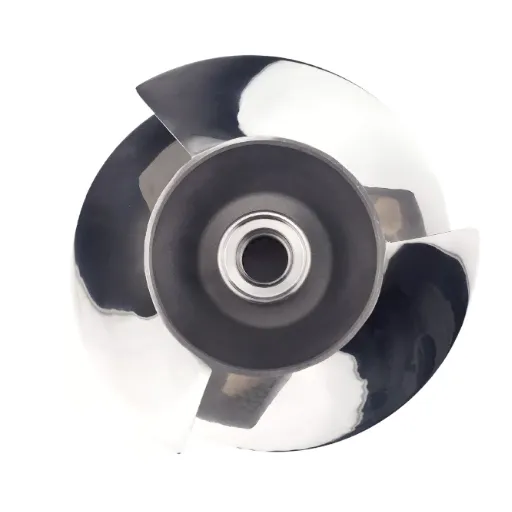
High-Pitch vs. Low-Pitch Impellers
High-pitch impellers provide higher top speeds but less acceleration, while low-pitch impellers offer better acceleration and control at lower speeds.
|
Key Point |
High-Pitch |
Low-Pitch |
|---|---|---|
|
Speed |
High top speed |
Low top speed |
|
Acceleration |
Slower acceleration |
Faster acceleration |
|
Control |
Less precise |
More precise |
|
Use Case |
Racing, cruising |
Towing, tight turns |
|
Engine Load |
Higher strain |
Lower strain |
How Impeller Selection Impacts Top Speed
An impeller will have a great impact on the optimal speed and the watercraft efficiency. Impellers with extreme angles assist in putting extra water on each thrust which helps in obtaining high speeds. They are ideal for those riders who love to go full throttle in open waters. Though, it achieves this by providing lesser low-end acceleration.
Conversely, lower-pitch impellers are more adept at improving hole shot performance; that is, they enable quicker take-off from a halt. They are more maneuverable and less efficient in performance uses such as recreational riding or tow sports. Thus, whether a closely or widely pitched impeller on a jet ski is better depends on the kind of activity a person wants to engage in and the available water conditions.
One should also bear in mind other relevant factors such as the power the engine can provide, the model of the jet ski, and the range of RPM expected, in order to maximize the advantages of having the right impeller installed. More advanced aids or references such as impeller performance charts or calculators can identify the ideal option for your requirements, alleviating the problem of the grossly tanimous results of Google searches. Exploiting this information aids an aware choice wittingly adapted to one’s performance desires.
References
-
Universal Technical Institute (UTI): Explains how a jet ski generates forward thrust using a corkscrew-style impeller.
-
Digital WPI (Worcester Polytechnic Institute): Discusses the force generated by the impeller and its role in propelling the jet ski.
-
Libra ETD (University of Virginia): Covers the design of impellers in waterjet propulsion systems, similar to jet ski engines.
-
Virginia Department of Wildlife Resources (DWR): Provides insights into the jet intake and the impeller’s role in personal watercraft (PWC).
- Click here to read more.
Frequently Asked Questions (FAQ)
Q: Define an impeller on a jet ski and describe the functions it plays in performance.
A: An impeller on a jet ski is the spinning part in a jet pump which sucks the water in and then pushes it out, through the nozzle, to create thrust. Its role is vital in allowing for acceleration, torque and handling — when defunct or faulty, an impeller will prove problematic since it can’t draw the necessary amount of water to generate proper speed and control that a rider seeks.
Q: Explain how the pitch of an impeller determines a PWC’s ability to accelerate and achieve a high top speed?
A: Every impeller, in simple terms, pitches–and that is the angles of the blades–per each revolution, which is meant to determine the volume of the water being moved per revolution. In this case, the purpose of pitch is, for weight or for speed: Lower picks allow for faster acceleration with greater tow capacity or if the water is thicker, while top speed is achieved with bigger pitches. Various riding stles and machines are fitted with different pitches eg Kawasaki and thereby one is able to lessen the demand especially for low end acceleration or the top end pace.
Q: Is it possible to change the impeller on a jet ski so as to improve its performance?
A: Yes, lots of people replace the original impellers into the Solas brand or other alternatives available in the market for better acceleration, smooth functioning or higher speeds. Upgrading can prove to be a time and cost saver and effective in the long run as you dispose of it in a way that best suits your way of riding, although this should be done in consultation with a specialist or a mechanic who’s familiar with such studies to get confirmation whether the new used impeller’s dimensions and angle fit your accommodation and the capacity of your jetskies engine.
Q: When should you check the impeller on a jet ski for wear or damage?
A: Some of the things that would make a person want to look at the impeller are low acceleration, cavitation, shakes, or the engine revs high but does not gain speed. If the watercraft also sucks up water perform any washes, dies or its performance reduces significantly, one must then look into that impeller. While looking into such a problem, the technician would look for chipped or bent fins, clearance within the jet pump of the jet ski and wear that could affect its torque/ control otherwise.
Q: How do various kinds of impellers (such as Solas) determine the strength and efficiency?
A: The material and design will affect the strength, seize up and smoothness of impellers while working, gearing up the impeller. Impellers like the Solas and other premium work related components of the PWC are if not made from hardened materials with alloying elements and/ or coatings they are more exposed to garbage and salt. Such an impeller also minimizes cavitation and increases the performance potential thus proving to be effective for users who expect significant performance increases and/or longer usage between replacement.
Q: Does it make sense for both recreational and sports jet ski riders to invest in specific impellers for their machine?
A: Yes- it does depend though on the usage. Beginner and recreational riders in most cases are better served with a slightly lower pitch allowing them to launch easier and navigate without wrestling with the ski, but racers often employ higher pitch or performance enhancing impellers designed for maximum velocity. Get advice from a specialist, reading dedicated forums, or from a fellow rider to figure out the fun, torque vs speed balance adaptation relevant to your craft and prevailing conditions.
Q: A jet ski impeller – how much does it cost to replace or improve and is the cost implied worth incurring?
A: Prices vary significantly depending on the type of work being done, the product of interest, or the manufacturer of the equipment. High quality aftermarket impellers cost more than stock in the beginning but can potentially save more in terms of fuel efficiency, engine maintenance and pump failure in the long term. Take into account the cost of the jet ski’s pump as well, focusing on inspection, pump fixing, and any additional modifications.
Q: Is it possible to replace the impeller on a jet ski with something different?
A: A skilled DIYer is capable of changing an impeller with adequate tools and a book for repairs, however since this process also involves affecting exit angle, tolerance and the positioning of the pump, it’s advisable to see a mechanic if one has such doubts. Consulting a professional overhauls thus, ensures that the jet ski pump is correctly fitted and prospects of major damage which might take both time and financial resources.