When you’re trying to improve your jet ski’s performance, one of the most high-impact changes you can make is the upgrade of your impeller. Often unseen by casual riders, the impeller is the component that likely contributes most directly to your jet ski’s speed, acceleration, and overall handling. Regardless of whether you need to chase some high-speed thrills, have better control in choppy waters, or even chew up less fuel, the impeller can make all these differences. This article gives you an insight into the basics of jet ski impeller design and assists you in making well-informed decisions for improving your ride. And that can be a small upgrade, yet very powerful to explode your jet ski experience.
Introduction to Jet Ski Impeller Design
Importance of Impeller in Performance
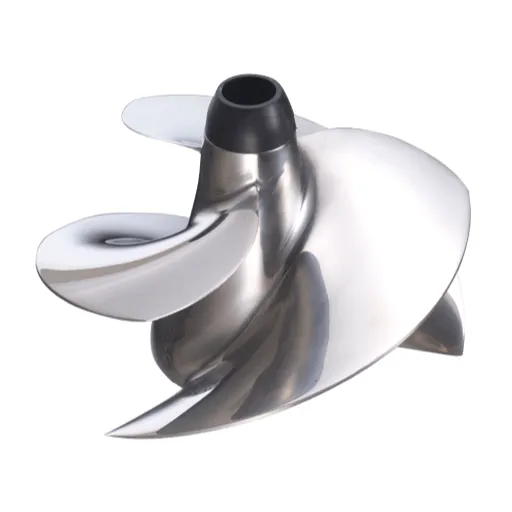
An impeller is considered as the very heart of the jetski performance. It acts as the main driving force of the vehicle. The engine power is used to draw in water and then drive it out with high pressure. The geometric design and the condition of the impeller have direct influence on factors such as speed, acceleration, maneuverability, and fuel efficiency.
An efficient impeller, which is well-designed and correctly matched, optimizes water flow by offering maximum water thrust for minimum drag. The higher acceleration and higher top speeds resulting from these features are really important to the competitive racer and enthusiast who is looking for maximum performance. Above all, by picking out an appropriate impeller, the water craft gets improved control. Handling is improved further by allowing gradual, smooth turns and precise control, especially in rough conditions. However, any damage to the impeller or one that is the incorrect fit will severely affect the engine and cause a considerable drop in performance, an increase in fuel consumption, and a strain on the engine.
💡 Key Insight
Any aid of knowledge of impellers is always meant to enlighten the users to choose the appropriate impeller for the nature of their actions and water conditions at hand. With high-pitched impellers, you can get great speed through the top end at an upward-exponential rate; conversely, low pitch impellers would act perfect for cases where the craft lays emphasis on loads of acceleration in water conditions—arcing incessantly towards recreational uses or rough-water usage. Customization of the indicated impeller to match consumer needs will inevitably go a long way in enhancing capabilities possible on the water from their jet ski. Every ride will prove to be more fabulous and chippy.
Overview of Jet Ski Functionality
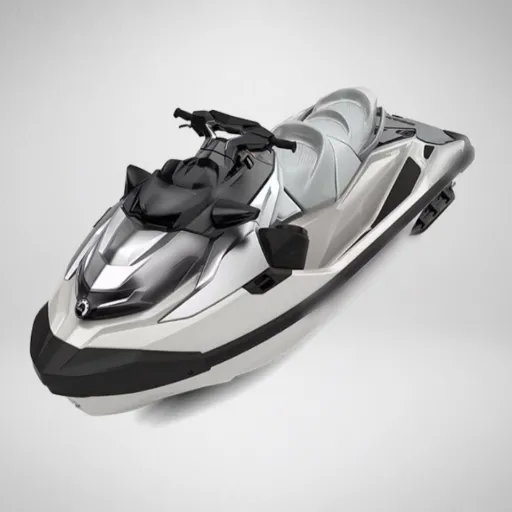
Jet skis have a powerful engine that turns an impeller in a pump; this is what drives motion. The engine provided by the impeller pushes water and causes the water to nourish with drive through the back nozzle of the jet ski. The propulsion pushes the craft ahead into motion. The steering is done by rerouting the flow of water which allows the operator to control the direction of the jet ski.
The principal jet ski for jets are the hull, pump system engine and handlebars. The hull is responsible for stability and flotation while riding the water as the engine helps to power the pump system. Handlebars help to force the steering nozzle to provide the rider with control and improve safety while maintaining the comfort. Various models include other structures such as wire-braking or floating foot caps on the hull and handlebar joints to exploit optimized suspension with crisply written handling in place of the standard models; in accordance with the patent issuance to propel stabilization technologies when forming or surfing.
The design of jet skis is such that they can be used for a variety of activities, from recreational cruising to competitive racing, for a highly versatile time. One could ride across an open expanse of water, perform stunts, or enjoy leisure time with family and friends, thanks to this design. The potential of jet skis to be able to explore and move so freely is enormously interesting. Proper check-ups of the engine and the pump-system components could promise a great deal of fun.
How Impellers Enhance Efficiency
Propulsion is an important mechanism in increasing the efficiency of the system through propelling, that is, moving water. The impellers are installed in the pump system to suck water in and then expel it forcefully to carry a jet ski forward. This perfect mechanism facilitates a slow built-up of speed and better handling on water.
The design of the impeller greatly influences its performance. The impeller receives the optimal engineering that eases water flow and lessens turbulence so that the jet ski attains stability and speed. Modern impeller designs are mostly wrought in materials that can resist high pressure, can resist the water, and will, therefore, contribute toward the health-and-longevity geed towards the efficient and broad embodiment of the latter.
⚠️ Maintenance Reminder
It is very important to regularly maintain the impeller in order to enable it to maximize its work. The performance issues can be averted by, simply, keeping it clean, monitoring for damage and alignment. By maintaining it, the performance gains are consistent propulsion, decreased fuel consumption, and a greater riding experience being felt and enjoyed on water.
Different Jet Ski Impeller Designs
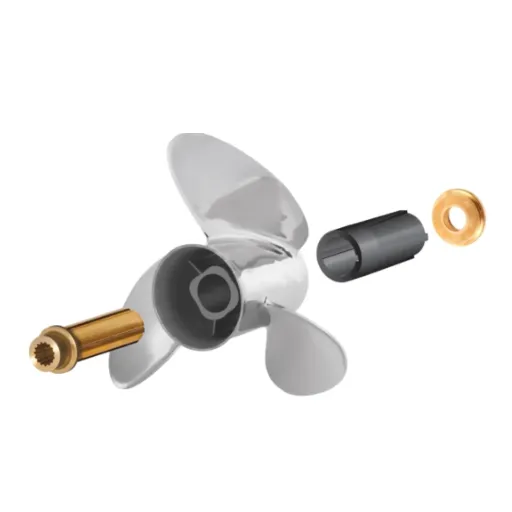
Three-Blade Impellers
Three-blade impellers are extremely common among personal watercrafts because they hold the balance between top speed, acceleration, and efficiency. Such impellers appear to work best for the casual enthusiasts who increasingly choose to venture all across various water conditions. The design features three blades that are positioned at angles such that water is efficiently displaced, thus enabling wonderful rides with significantly less cavitation, even at greater acceleration. They achieve it by projecting an excellent thrust for these riders because of their super-efficient aerodynamic profile, a feature that makes these impellers ones for the everyday man.
Three-blade impellers commonly have an upper hand over four-blade or five-blade designs in terms of attaining higher top speeds. Less drag through the water with fewer blades means this type of impeller can be spun faster, pushing more water. It thus goes without saying that they are the choice of thrill-seekers who want to see their jet ski achieve the maximum speed possible. Moreover, typically, these impellers are engineered using strong materials such as stainless steel or aluminum alloys that ensure their longevity and resistance to wear and tear in hostile water conditions.
🎯 Performance Tips
- Lower Pitch: Improves initial acceleration, ensuring quick takeoff at shorter distances—ideal for towing activities like water skiing
- High Pitch: Sacrifices acceleration to ensure top-end speed, perfect for open water racing
- Material Selection: Match the right blade pitch and impeller material to maximize power delivery and riding enjoyment
Four-Blade Impellers
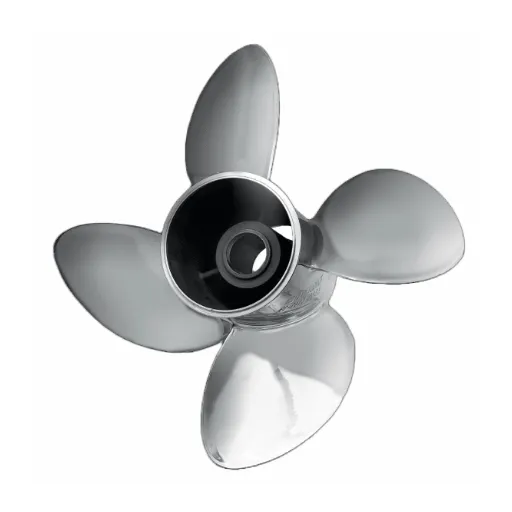
Four-bladed impellers are specifically designed to balance power with efficiency, making them an alluring choice for boat enthusiasts and professionals alike. The additional blade facilitates enhanced grip and stability, via increasing the contact area with the water. Four-bladed impellers are, therefore, most efficient when performance is maintained in rough water conditions, providing consistency in rough water situations. They are much sought after by boaters desiring more control whenever the boat is engaged in wakeboarding, water skiing, or slow-speed maneuvers. The extra blade notably provides smoother and more predictable handling characteristics.
One of the conspicuous benefits of four-blade impellers is fast hole shots, that is, pull treatment as acceleration from rest. It is a key requirement for pulling wake boarders who really need a constant pull and steady thrust. As an additional bonus, a four-bladed impeller will also come in very handy for reducing lower speeds PB boat, in this way rendering fuel saving while providing a smoother run even with loads at once. Luckily, while their speeds may be a bit fewer than what three-blade impellers provide, what’s most important in weighing that with things like control and reliability—even though the slowest of the slow three-bladed—works down just right for certain applications.
✓ Best Applications
Four-blade impellers excel at: Wakeboarding, water skiing, slow-speed maneuvering, fuel efficiency at lower speeds, and providing consistent thrust for towing activities. The material composition—whether lightweight aluminum or durable stainless steel—should be selected based on boat type, water conditions, and usage patterns.
Swirl Impellers
Swirl impellers are used to induce a swirling action in fluid media, which delivers immense advantages concerning mixing quality and uniformity. Swirl impellers are preferred in situations where vigorous agitation is required, for example, in applications involving suspended solids, heat transfers, or viscous substances. The design of these impellers ensures an outstanding up-down motion within the tank, which considerably erases the presence of dead zones, and leads to mixing of all the components present. Therefore, industries requiring precision and homogeneity, such as pharmaceuticals, food processing, and wastewater treatment, get the full benefit out of this mechanism.
Swirl-type impellers are very adaptable to operational conditions through a number of unique performance improvements. Swirl impellers, depending on the case, can do service for a wide range of tanks of varying shapes and volumes. Their blades can be fitted with different blade angles and designs for developing greater stirring intensity. This brings energy-efficiency to its peak value, rendering minimal energy to be drained for the correct mixing task. Besides having energy-saving capabilities, swirl-type impellers are generally composed of strong materials, like stainless steel, other mild stainless steels or specialty high-strength heat-resistant alloys, to absorb and sustain all kinds of adverse chemicals, supertoxic materials, high-pressure stresses, etc.
The recent developments have considerably enhanced the ability to study and analyze serious impellers. With relevant modeling tools, actual flow dynamics can be predicted and quantified in ways that have been heretofore impossible. Impeller designs can be optimized to perfect flow fir the purposes of their intended application. Computational fluid dynamics (CFD) technology is often employed to ensure that the design of blades is optimized to achieve absolute levels of performance. All those changes and innovations are sure to confirm that the swirl impellers will continue for many industries, providing a dependable and innovative solution for enormous mixing challenges.
Materials Used in Impeller Manufacturing
Stainless Steel vs. Aluminum
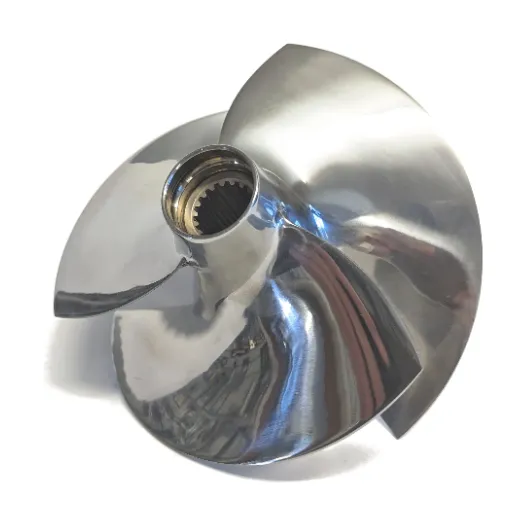
On the one hand, stainless steel impellers offer more durability, wear resistance, and better performance, while aluminum is lighter, less expensive, and less durable.
Impact on Durability and Weight
Impeller evaluation depends much on durability and weight respectively, as these concepts may significantly influence overall performance for a long time. Stainless steel is also all time known for durability, making it one of the higher suitors in any environment—industrial or otherwise—which holds high standards for the resistance to wearing due to corrosion and cavitation, and hit it anywhere above the pass marks’ longevity. These impellers are extremely well suited for scenarios where abrasion, or high pressure is the crux; however, better resistance to corrosion attracts corrosion anyway, to maximize weight. In every set-up, maximizing resistance is degrading efficiency and may expect faster and shorter life, the tradeoff of the extra weight.
Aluminum impellers, in the meanwhile, are an excellent choice, being lightweight consequentially. In applications where intensive agility or flexibility is required, such as recreational or less-demanding ones, these impellers are highly efficient. Being less expensive, aluminum impellers have the disadvantage of durability. They are more susceptible to wear, corrosion, and cavitation decay through their entire lifetime, leading to higher maintenance costs and long-term ineffectiveness. Possible solutions offered by manufacturers may include the use of coatings or treatments, but they may not effectively battle aluminum’s inherently low-range properties.
⚖️ Choosing the Right Material
Except in applications like industrial or high-performance, where providing durability and efficiency is highly necessary, industrial or high-performance environments usually require the significantly more expensive and heavy stainless-steel variety. Aluminum strikes a middle ground and provides for more cost-effective functionality, which is particularly important for settings where weight and price are a better consideration over durability. It is expected that when these areas have been taken into consideration, individuals can choose the best impeller material to satisfy the performance, maintenance, and cost considerations of operation.
Performance Considerations
During the assessment of performance characteristic of an impeller, there are numbers of variables that are highly influencing the pump’s efficacy, effectiveness, and reliability. Among all, the very first and essential one should be the hydraulic efficiency that will see the whole energy input is effectively transformed into useful work with as minimum loss as possible. The design itself would work as far as how to maximally transform the energy but reduce turbulence and cavitation inside the pump. In particular, cavitation causes surface damage to impellers hence rendering the impeller’s performance inoperative and resulting in maintenance costs. Therefore, effective selection of impeller geometrical features and material is the way of guaranteeing the maintenance of high efficiency and hence eliminating operational interruptions.
An equally significant factor is the operating environment. For instances, impellers used for industrial applications, such as chemical manufacturing or wastewater treatment, must handle a wide variety of fluids, including those that are abrasive, viscous, or corrosive. The performance of the impeller in such harsh conditions is determined by the material composition and the coating. A modern approach has introduced wear-resistant coatings and advanced composites that provide durability at an efficiency point. With proper awareness of the particular conditions of application, it allows the impeller to perform at its best even in harsh conditions for prolonged periods of time.
Furthermore, the speeds of rotation and pressures set for the pump system have to be in tune with the ability of the impeller to sink or swim. The need to work at speeds exceeding recommendations correlates with stress, vibration, and heat that gives rise too nearly failure of operational and life cycles. Computational Fluid Dynamics (CFD) has established itself as a very powerful tool for predicting impeller performance under a wide range of operating conditions. For flow visualization and effectively pointing towards inefficiencies or wear, these simulations are very much the eyes of the engineer to design improvements. Any manufacturer that relies upon smart technologies such as these is in a perfect position to produce impeller designs that easily meet and outstrip their operational requirements, resulting in superior performance, reduced energy input, and enhanced reliability.
Maintenance Tips for Jet Ski Impellers
Inspecting for Damage
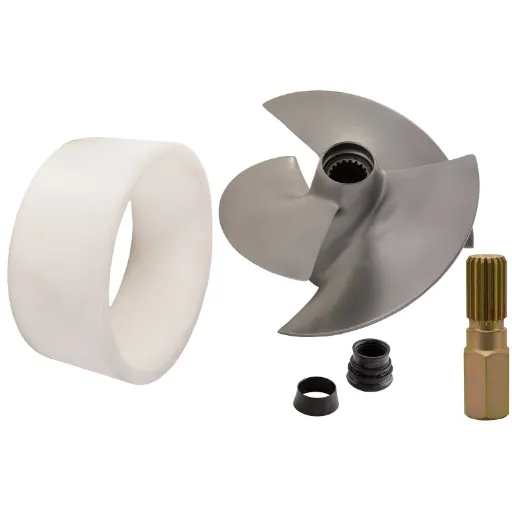
It is important to regularly inspect the impeller of your jet ski to maintain its performance potential and prevent further destruction that would only cost you a fortune. Visually inspect the impeller for any visible signs of damage, such as cracks, dents, or bent blades. These problems can severely hamper the flow of water and substantially decrease the efficiency of your jet ski. If the impeller looks dirty or jammed with debris, it requires cleaning with special care. The marine environment often introduces sand, seaweed, or small pebbles that slowly seep into the impeller causing them extreme wear and need to be shoveled out from the cavity.
Yet another crucial measure would be to investigate any abnormal clearance between the impeller and the wear ring. This would suggest wear of either the ring or the impeller or misalignment, meaning there is a loss of water impulsion power and consequently lower performance. The clearances would have to be checked with a feeler gauge, and these would then be compared against the manufacturer’s specifications. If the clearance is beyond the recommended limit, it may be necessary to change the impeller or wear ring. By checking these two components carefully, you can be rest assured that your jet ski will respond in the best way possible under tough conditions.
⚠️ Warning Signs
Do not neglect vibrations or uncommon sounds during operation as they are early signs of propeller damage. Large mechanical vibrations might point to imbalance in the jet ski, whereas grinding/rattling sounds could signify that an impeller housed with foreign material is causing the vibration. Due to its grave consequences, any perceptive observer will exclude these and similar issues. Timely action is necessary to prevent damage and secure the safety of its use. Through proper maintenance processes with periodical observations being executed, you can escape damage to your inexpensive but still amazing impeller, plus maintaining and permitting flawless movement while under water.
Cleaning and Debris Removal
It is very important to clean and remove debris from the jet ski’s impeller in order to maintain ultimate performance, as that impeller may get something within it that can be problematic over time, and small debris from seaweeds, sand, or even fishing lines may keep getting stuck in the housing, hindering the efficiency and risking further wearing or damaging. Always start by turning off the ski and storing it safely out of the water. With a flashlight, scan the impeller area visually so that litter is more visible, and take away in a careful and thorough manner all litter that has been seen. Long-nose pliers or a plastic tool can be helpful for extracting items in trickier places.
🔧 Maintenance Checklist
- Turn off the jet ski and secure it safely out of the water
- Use a flashlight to visually inspect the impeller area for debris
- Remove all visible debris using long-nose pliers or plastic tools
- Flush the system with fresh water to remove salt and small particles
- Pay special attention to saltwater operations—salt buildup causes corrosion
- Avoid shallow waters with heavy vegetation to prevent debris accumulation
More vigorously cleaning the impeller section through freshwater flush will help pull out small particles that may not be immediately recognizable. Integrate a flushing hose aiming to eject fresh water through the ski to scrub out everything, salts being coming untied to sand and dirt. This is most important for those who operate their skis in saltwater bodies, as salt accumulations will cause corrosion of the system over time if not flushed out. Keeping this system fresh will prevent any such problems and will increase the enjoyment of the race.
Adding an often clean impeller to your maintenance regimen lengthens the useful economic years of your jet ski and gives the promised performance. Being most vigilant toward preventing trash buildup helps you steer away from shallow water areas with heavy vegetation or trash-laden waters, for instance, if an alternative route were available. By adopting early caution measures along with regulating upkeep, one would drastically lower the chance for clogging and look forward to an exciting experience.
Identifying Signs of Wear
Recognizing the early signals of wear like those on a jet ski can very well demand expensive repairs and hamper efficiency in the long run. The first early sign to watch for is a drop in speed or power. When your watercraft is not assuming its usual top acceleration or appears to barely accelerate itself, its signs definitely show an impeller wearing, pump system, or engine parts along with it. Listen attentively to odd sounds such as grinding and whining—very often, those are indications of bearings, loose parts, or a damaged seal.
Another indicator of wear is increased vibration or instability during use. If your jet ski seems less smooth while on relatively calm waters, it could be a sign of trouble with the hull, ride plate, or steering system. Careful inspections need to be carried out periodically on the exterior for a red flag of visible damages: cracks, corrosion, or chipped paint, which would hold back the substantial parts of the ski. Provide a quick check for any leaks within the engine bay. These leaks might indicate that some of the seals and gaskets have begun to deteriorate and become nonfunctional.
🔍 Key Wear Indicators
- Performance Drop: Reduced speed or poor acceleration
- Unusual Sounds: Grinding, whining, or rattling noises
- Increased Vibration: Less smooth operation in calm waters
- Visual Damage: Cracks, corrosion, or chipped paint
- Leaks: Fluid leaks in the engine bay
- High Fuel Consumption: Unusual increase in fuel usage
Another vital thing to check is the fuel economy. Unusual high fuel consumption rates indicate other issues in the engine or fuel systems such as fuel injectors clogged by dirt/additives or poor compression. Regular maintenance work is necessary to avoid overlooking such defects and monitoring the behavior of the vehicle. When the history has added up over an extended period of time, a fault will also carry-down into other sections. This will assist in rectifying the problems before they get worse and may even increase the life of the watercraft. Be aware of the suggested manual of maintenance policies.
Innovations in Impeller Design
New Materials and Technologies
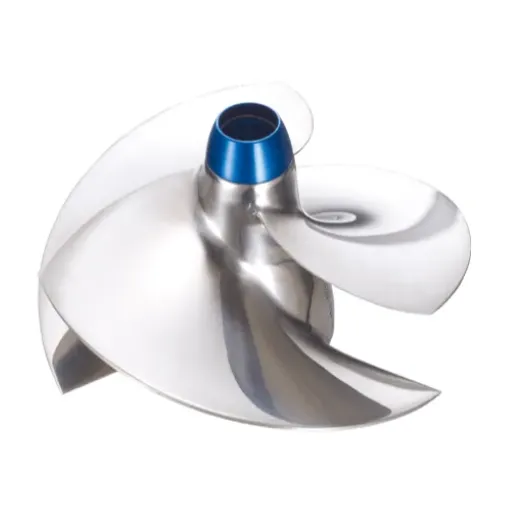
Backed by modern materials and technology, jet ski manufacturers have revolutionized the design of the impeller with advanced performance and increased durability. The use of composite materials is one of the biggest steps forward that operators have taken. The same elements—aircraft-grade fiberglass composites, including carbon fibers and reinforced polymers—provide the stronger reinforcement of composite material, providing substantially reduced weight. Consequently, these lightweight materials overheating development, improved acceleration, better fuel efficiency, and lesser engine wear, extending the life of the entire system. As added protection against the oppressive sea-water environment, such as in saltwater impellers, there is always the inclusion of corrosion-resistant alloys, such as stainless steel and titanium.
🚀 Advanced Technologies
- CAD (Computer-Aided Design): Simulates real-world conditions to optimize impeller shapes for maximum efficiency
- 3D Printing: Enables rapid prototyping and customization for specific jet ski models
- CFD (Computational Fluid Dynamics): Predicts and eliminates cavitation and vibration issues
- Hydrophobic Coatings: Reduces underwater drag and prevents debris accumulation
- Thermal Protection Treatments: Prevents warping under high-performance conditions
CAD and 3D printing play a significant role in product development by the harmonic integration of these two computer-aided technologies. In the CAE environment, CAD modernists are able to simulate the actual configuration in a near-reality condition and modify the shapes of impellers for maximum efficiency against cavitation and vibration issues, paralleled with 3D printing promising impeller rapid prototyping and customization while adjusting design to either ski jet models or usage scenarios. All these aspects underline an integrated and detailed-manufacturing setup minimizing cost, isolated from any discrepancy, ensuring optimum performance as additives.
Just the same, developments in the making of paints and surface treatments have also further improved the durability, efficiency and other characteristics of modern impellers. Specialized hydrophobic coatings bring down the drag underwater as going along the impeller face, so now water flows much more freely. As a secondary effect, they avoid accumulation of debris, algae, and other sediments, thus keeping impeller performance at its current level. Thermal protection treatments are all the more used to save the ‘propellers’ from harmful heat, so that they do not warp or sustain any damage under high-performance conditions. The resulting innovations in materials and technology, therefore, raise the bar for design, making jet skis even more reliable and versatile both for recreational and competitive use.
Trends Shaping Jet Ski Performance
The performance of jet skis has been impacted by developing trends in engineering, sustainability, and technology and has undergone continuous improvements. Electric propulsion is the most significant development in these context, and it not only helps to keep greenhouse gases low but also operates more quietly and requires fewer maintenance complains than the traditional, gas-based systems. Increases in capabilities of the electric jet skis have been brought along in a big way, thanks, to technical advances in battery systems such as solid-state batteries yielding set energy densities for long ride hours.
📊 Emerging Trends
- Electric Propulsion Systems: Lower emissions, quieter operation, reduced maintenance
- Smart Technology Integration: GPS navigation, real-time performance analytics, mobile app connectivity
- Safety Features: Automated crash reporting, emergency alert systems
- Advanced Materials: Lightweight composites, nanomaterials for improved weight-to-strength ratios
- Eco-Friendly Manufacturing: Sustainable materials and production processes
One more significant shift is the incorporation of smart technology amidst jet ski design. GPS navigation systems, the analyses of real-time riding experiences, and mobile app connectivity have started letting riders tap into about any kind of data for a sharpened in-the-moment user experience while out in practice. Features including automated crash reporting as well as fast-exit emergency alert are being abaft engineered to maximize new security to watercrafting enthusiasts.
Moreover, advancements in materials technology, such as the kayak industry’s innovation in providing superior speed and agility, obfuscate the extent of improvements in a hull made possible by nanomaterials. Hulls and other components have used lightweight composites and nanotech materials to enable significantly optimized higher weight-to-strength ratios and ensure advanced energy-management practice to turn the best design results. Passing the point where eco-friendly materials start to kick in, the emerging multitude of sustainability shifts in recreational watercraft production is providing more significant momentum for these boats. These new improvements ensure that the modern Jet Skis perform excellently and cater to the demands of cleaner, calmer and more efficient means of fun transport.
Future of Impeller Design
Revitalizing the performance, economy, and eco-friendliness of individual floating boats, the future of jet impeller design remains as a promise in performance. The engineers are now engaged in attaining excellence in impeller geometry that would offer extraordinary calming for cavitation, smooth riding effects, and enhanced propelling efficiency. Computational fluid dynamics modeling has typically been very important for optimization of flow mechanics as well as development of innovative shapes for the turbine blades to achieve the best possible water displacement. This revolutionary shift does not merely pitch increased speed, of course, but additionally suggests low wear and tear on the impeller parts, yielding increased life and trustworthiness.
Among other significant design aspects of impellers are advanced materials. Lightweight composites and high-strength alloys, including titanium and carbon-fiber-reinforced polymers, are being considered for better durability, yet keeping the weight to a minimum. These materials have excellent resistance to both corrosion and high-cycle fatigue and are therefore particularly suitable for marine applications. Also, the integration of 3D printing technologies opens endless possibilities for crafting intricate impeller construction, likewise benefitting manufacturers in maintaining tight tolerances and working up bespoke profiles tailored to specific jet ski models.
🌍 Sustainability Focus
Sustainability, slowly converting the paradigm in impeller engineering development, is favored by some manufacturers. Greener manufacturing processes and materials are being sought by them in impeller manufacture in order to mitigate the immense ecological impact historically inherent in impeller manufacture. Designs now being evolved emphasize the reduction of unwanted aquatic noise and energy utilization. In response, the environmentalism lobby is prompting the impetus behind more demanding environmental regulations and a new spell, when it does not involve a fantastic array of tailor-made, pragmatic, and cost-effective alternatives but is all-out energy-saving. Talking new power boat species is like completely breaking away from the old to ensure all new marine activities coexist alongside the old ecological system.
References
- 📄
Electrifying a Jet Ski: Designing & Manufacturing an Electric Jet Ski
MIT DSpace – discusses the design and manufacturing of an electric jet ski, including details about the impeller drive shaft. - 📄
Innovating the Electric Jet Ski
Digital WPI – covers mechanical design and drivetrain components, closely related to jet ski impeller systems. - 📄
Underwater Jet Propulsion Module
DigitalCommons@URI – discusses impeller design, cavitation, and thrust in underwater propulsion systems. - 📄
Yakski: An Electric Waterjet Propulsion System
University of Virginia’s Libra ETD – explores impeller design concepts for waterjet propulsion systems, similar to jet ski engines. - 📄
Click here to read more.
Frequently Asked Questions (FAQ)
❓ What is jet ski impeller design and why does it matter?
In simple terms, it refers to the geometry and characteristics of the impeller, which is what propels water into the personal watercraft (PWC) pump. A well-designed impeller will give power, convenience, and not impart cavitation. To optimize these, some contributors are blade shape, leading edge profile, pitch, and the upstream flow interaction. The impeller pitch should be set up such that the jet ski will accelerate, hit top speed, and consume less fuel while still maintaining wear at bay with smooth blade edges.
❓ How does the leading edge and edge profile affect performance?
Leading edge profile is an interesting subject ahead of leading edge angle in this type of impeller design; whereas it is the point of first contact surface of the blade with the water; in plain water. Too sharp of a leading edge consumes the flow too quickly and causes cavitation. Not so sharp edge design enhances blade life and gradual acceleration. In between, a lousy leading edge profile will eat away power and give lots of initial pull and acceleration. This is where design considerations for the impeller start to be looked at between immediate response and long-working properties.
❓ What is an impeller pitch and just how do different pitches affect handling?
Impeller design does not cease to figure out the pitch of the impeller. The pitch is the angle and determined distance between each churn of the impeller per revolution. Differences in pitch affect the overall acceleration and top speed. A pitch that is high and/or long is known for improving the top speed at the expense of low-end acceleration, and a pitch that is short does the reverse—supporting that at the cost of top speed. You may observe choosing the best pitch for a jet ski impeller design may represent a reasonable compromise based on the intended use—so are you going to race it, tow some recreational riders, or just do some casual ride up and down a local lake?
❓ Can just one impeller design be used for all pwcs and riding styles?
No,—no single impeller will match all pwcs because hull design, engine patches, and pilot weight fluctuate. Other facets a jet ski impeller design should consider are intake timing, engine power curve, and intended purpose. Manufacturers make various blade entries fit with a less aggressive or more aggressive profile, diversified cuts at the leading edge, and specs for pitch should fit particular needs.
❓ How does intake condition interact with impeller performance?
The intake is what brings water into the pump; it has to be free from any obstruction to keep the flow stead and avoid cavitation. An impeller with a smooth blade profile works better with a well-designed intake. If the intake is damaged or is clogged, then it does not matter how good the impeller design for the Jet Ski is; it will not perform well in the long run due to poor acceleration and decreased efficiency.
❓ What testing techniques validate impeller designs?
Testing methods for jet ski impeller design include sea trials, dyno testing, and computational fluid dynamics (CFD) simulations. Sea trials provide accurate information on performance because they involve data such as acceleration and top speed; dyno testing gives concrete figures for thrust and power uptake; and CFD develops blade shape, leading edge, and pitch further before the creation of physical prototypes. A combination of these testing processes results in rapidly defining the most proper design.
❓ When should I choose a less aggressive impeller versus a more aggressive one?
In general, the less aggressive an impeller, the greater its durability, ease of throttle control, and stable tow—ideal for rec. riders and heavy loads. An aggressive impeller delivers a quick throttle response and quick acceleration, which is more suited for racing. Jet ski impeller design must cater to these needs, while having to a certain extent—short. E.g. some loss of acceleration to gain in top speed.
❓ How do impeller materials and finishes affect their life and performance?
The type of material and finish determines the impermeability to wear and the surface smoothness; stainless steel offers longevity and maintains sharp leading edges and pitch better than aluminum with a higher cost at the same time. A shiny finish does away with the tendency to create turbulent flow around blades, making the impeller more efficiently propel water. Potential jet ski impeller design considerations include considerations related to materials, treatment of the blade edge and some form of finishing to maintain durability and consistently increased performance.