The selection of the best propeller for your Johnson outboard engine can make you feel lost among the numerous options available. Among the various alternatives, Evinrude and aluminum propellers are two of the most common ones, with each having its pros and cons. If you are a hardcore boater who is after getting the best performance out of your machine or a neophyte who is trying to master the basics, then the differences between these two options are going to be the deciding factor in your choice. This guide will certainly explore the necessary factors to pass through, such as durability, performance, and, of course, different boating needs, and thereby, you can easily locate the right propeller that will keep your experience uninterrupted.
Understanding Johnson Outboard Propellers

What is a Johnson Outboard Propeller?
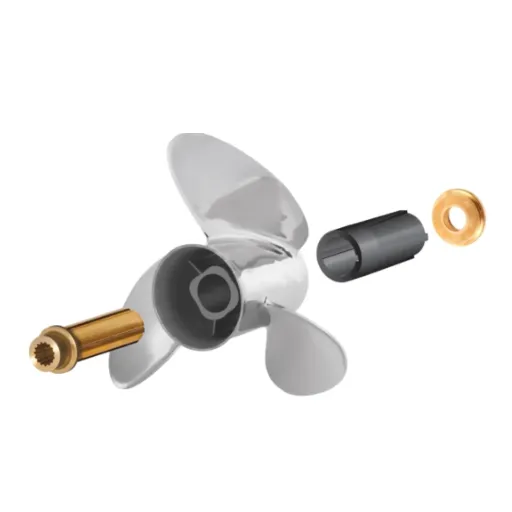
A propeller for Johnson outboard motors is an important part made only for Johnson outboard engines to get the boat through the water with minimum resistance. It’s operational by changing the engine’s power into thrust thus the boat is moved forward or backward according to the rotation direction. Besides, these props come in a variety of sizes and materials to suit different boats and water conditions and thus performance can be optimized.
Key Benefits
Compatibility with Johnson engines is one of Johnson outboard propellers’ main advantages making operation and reliability really smooth and no problems at all. They are meant to provide reliable and steady outputs under all conditions like leisurely rides on lakes, angling in shallow waters, or even during storms. Choosing the appropriate propeller for your Johnson engine is determined by a number of factors including the weight of the boat, horsepower of the engine, and usage plans. The right propeller will not only ensure maximum speed and fuel efficiency but will also lessen the burden on the engine.
Moreover, Johnson outboard propellers are made of such materials as aluminum and stainless steel that can endure harsh conditions. Aluminum propellers are light-weight and affordable thus suitable for occasional boaters, while stainless steel props are tough and anti-corrosive thus ideal for high-performance or extreme environment needs. A Johnson outboard propeller will significantly contribute to the longevity and effectiveness of your boating system if it is taken care of and maintained properly.
Types of Johnson Propellers
Johnson outboard propellers are of different kinds, and each type is designed according to the various boating standards and conditions. The propeller types mainly consist of propellers made up of two materials; aluminum and stainless steel. For daily use, aluminum propellers are the most preferred type because they are economical, lightweight and suitable for leisure activities. Conversely, stainless steel props are the biggest users in the market because they can stand up to the most demanding situations and corrode the least; hence their usage in high-performance areas or places with challenging conditions.
Blade Configuration
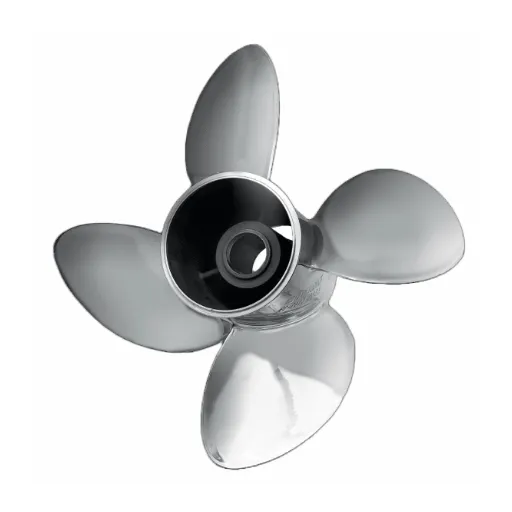
The number of blades on the propeller is another aspect to discuss. Three-blade propellers are the standard choice, and they are the ones that combine speed and efficiency in the best manner. They are suitable for almost any general-purpose boating needs. Four-blade propellers are for those who are looking for better handling and acceleration as they can provide grip and performance enhancement during rough water conditions or when towing. The right blade configuration will always depend on the planned use and specific requirements of the boat.
Pitch and diameter options are the other characteristics that distinguish Johnson propeller types. Pitch is the term used to indicate the distance a propeller pushes through water in one complete turning movement, and thus, it has a direct impact on the speed and efficiency of the propeller. A lower pitch is recommended for heavy loads or watersport activities, while a higher pitch is the best to use when speed maximization is the goal. Diameter, which is the measurement of the circle formed by the blades at their tips, is another factor affecting performance; larger diameters usually cope better with the roughest or heaviest waters. The wide variety of options available may make it seem difficult to choose the propeller type that suits you best, but actually, it is just a matter of taking into account your boat’s specifications and your activities’ requirements.
Key Features of Evinrude Johnson Outboards
Evinrude Johnson outboard motors are considered to be the kings when it comes to power, high technology, and dependability. One characteristic that marks them is efficiency in fuel consumption, which enables the boat owners to cut down on costs and lessen their harm on the environment. The efficiency is the result of the utilization of advanced engineering technology that guarantees the complete burning of fuel and a reduction of emissions. The outboards are perfect for those who want the power and at the same time, the green aspect in their marine engines.
Durability
Built to fight against tough marine environments with corrosion-resistant materials and solid construction for both freshwater and saltwater conditions.
User-Friendly
Sophisticated electrical management systems ensure smooth and precise handling, making navigation easy even in small spaces.
Maintenance
Low maintenance requirements combined with great warranty options provide hassle-free boating experiences.
Selecting the Right Propeller for Your Johnson Outboard
Factors to Consider When Choosing a Johnson Propeller
Choosing the right propeller for your Johnson outboard motor is very critical to take the most out of it in terms of performance, fuel efficiency, and durability. When selecting the propeller some considerations are given below:
- Type of Engine and Power:
The power and specs of your Johnson outboard mainly determine the appropriate propeller for your engine. Thus, matching the propeller’s pitch and diameter is a must to have the best performance possible.
- Usage of the Boat:
The usage of your boat whether for fishing, water sports, or just relaxing affects the choice of the propeller. High-pitch propellers would give better maximum speed while low-pitch would deliver better pulling and powering when towing or carrying heavy loads.
- Propeller Alloy:
Propellers are made mostly from aluminum and stainless steel. Aluminum propellers are inexpensive and light, they are good for non-serious boaters, while stainless steel is more expensive and suitable for high-performance requirements due to its long lasting nature.
- Number and Shape of Blades:
The thrust and speed are affected by the number of blades and their shape. For instance, a three-blade propeller gives faster turning, a four-blade propeller provides smoother and better handling at the same time.
- Water Conditions:
Think about the water’s depth your boat is likely to operate at and the debris that might be in the water. Stainless steel, because of its stronger property, is the better material choice for shallow waters or areas where there are likely to be obstructions, aluminum is however good for deeper water with not much debris.
Considering these aspects together with your outboard manual or manufacturer recommendations will lead you to a perfect propeller for your Johnson outboard thus increasing its functionality.
Comparison of Aluminum vs. Stainless Steel Propellers
Aluminum propellers come with a lower price tag, weigh less, and allow some bending but are also less lasting, whereas steel propellers are more expensive but give better performance, longer life, and higher efficiency.
Best Johnson Propellers for 15-35 HP Engines
In the process of choosing the perfect propeller for Johnson 15-35 HP outboards and boats, it is imperative to take into account parameters such as the type of boat, the usual water conditions, and the performance characteristics that are wanted. For aluminium propellers, they give the best price-performance ratio, the lightest in weight and the most convenient for the general recreational use and the cleanest water areas, so they are the most common and best option for use with small engines in this power range.
Top Recommendations
- ★
Michigan Match 3-Blade Aluminum Propeller: Dedicated to Johnson engines with excellent thrust and efficiency balance for all-around selection. - ★
Turning Point Hustler Stainless Steel Propeller: Higher durability and best performance, strong and fuel-efficient especially for demanding conditions or heavier loads.
Moreover, the pitch of the propeller is another major factor that directly influences the performance of the engine. Generally, the lower pitch propellers are preferred for boats that need more power for quick planing, whereas the higher pitch ones are suitable for cruising at higher speeds. Always try to have the chosen propeller with the engine’s OEM specifications to avoid unnecessary strain or energy loss.
Performance Tips for Johnson Outboard Propellers

Optimizing Speed and Efficiency
To get the maximum speed and efficiency out of your Johnson outboard propeller, you need to take into account a variety of factors which are very delicate and intricate. First, you will need to determine the right propeller pitch that matches your engine’s horsepower and will be suitable for the specific use that you have planned. The propeller with lower pitch will be more appropriate for the activities that will require strong acceleration, such as towing or carrying heavy loads, while a higher pitch propeller will be more effective for the performance at the top speed on the open waters. You should regularly check your propeller and keep it in good condition so as to prevent any damage or wear that might lead to decreased efficiency.
💡 Pro Tip: RPM Range
It is very important to know the approximate RPM range of your boat. Operating the engine in this range will prevent it from being overworked, which can result in wasting fuel or even causing the engine to break down. The adjustments of the trim are also very important; if you are properly trimming your engine, the speed and economy of the fuel will be significantly improved and at the same time, the drag will be greatly reduced.
Additionally, you should keep in mind that other factors, such as the condition of the water and the weather, also have a say in performance. Smooth and calm water is more efficient than turbulent or choppy water. By being familiar with the most recent methods and information regarding propeller performance, you will be able to make smart choices that will allow you to get the most out of your Johnson outboard engine. Doing research and gaining real-world experience is the way to go if you want to have the best speed and efficiency balance overall.
Understanding Propeller Pitch and Diameter
The propeller pitch and diameter greatly affect the performance and efficiency of your Johnson outboard engine. The propeller pitch indicates the distance it would travel theoretically in one complete revolution with no slipping. Usually, a higher pitch would lead to a higher top speed, but at the same time, the engine would be under less power and intended use. Therefore, it is very important to negotiate the pitch with the engine’s horsepower and intended use.
Pitch
Distance propeller travels in one revolution. Higher pitch = higher top speed but less acceleration. Lower pitch = better acceleration and heavy load handling.
Diameter
Blade circle measurement. Larger diameter = better thrust for heavy boats/rough conditions. Smaller diameter = suited for lighter boats/high-speed applications.
Taking propeller pitch of 17 inches and diameter of 13 inches as an example, such a prop would be perfect for moderate loads and general use. On the contrary, a higher pitch, say 19 inches, would be geared towards speed for smaller, lightweight crafts. By scrutinizing such data and taking any new insights or recommendations into account, you will be able to adjust your selection process to your boating needs and conditions perfectly thus achieving a perfect mix of speed, thrust, and longevity.
Choosing Between 3-Blade and Other Designs
With the propeller selection, the blade number can be a decisive factor in performance, dictated by your specific boating needs. The timeless and classic 3-blade propeller is frequently the first to be chosen because of its good all around performance characterizing it with speed, effectiveness, and good steering being the main virtues. This configuration, in fact, is not only suitable for universal use but also extremely reliable for recreational boats operating in a range of conditions.
| Blade Type | Best For | Key Advantages |
|---|---|---|
| 3-Blade | General-purpose recreational boating | Speed, efficiency, good steering, universal reliability |
| 4-Blade | Heavy boats, rough waters, towing | Stronger thrust, quieter running, better acceleration, enhanced grip |
| 5-Blade | Specific high-performance applications | Maximum stability, superior control |
Every setup has its pros and cons, thus, realizing the exact needs of your craft and the water tempers it meets will be the factor driving your choice. Eventually, personal trials and evaluations mingled with expert advice will be the key to selecting the suitable design that will enhance your boating experience.
Maintenance and Care for Johnson Outboard Propellers
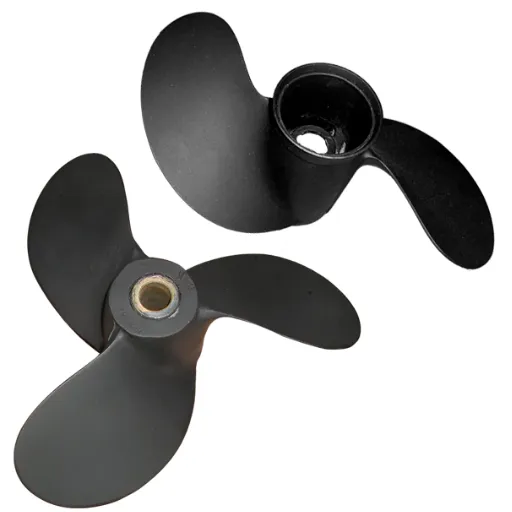
Regular Maintenance Tips for Aluminum Propellers
✓ Inspect for Damage Regularly
Aluminum propellers should be regularly checked for nicks, cracks, or bends at least once a month. Performance and fuel efficiency could be adversely affected even by small damage. Since aluminum is less strong against saltwater than stainless steel, you should especially watch out for corrosion or wear.
✓ Clean the Propeller Frequently
Take away any rubbish like fishing lines, seaweed or barnacles that might be stuck around the propeller hub. You can use a soft brush or cloth and mild soap to gently clean the surfaces of the blades without leaving scratches.
✓ Grease the Propeller Shaft
To stop rusting and to have a pleasant silent working, put marine-grade grease to the propeller shaft during regular inspections. This also makes it easier to take apart the propeller for repairs or replacements when needed.
✓ Check Fasteners and Hardware
Make sure that the propeller nut and all the other related parts have been very tightly secured. Components that are not properly maintained may lead to very annoying vibrations, hence making the propeller and engine susceptible to further wear or damage.
✓ Avoid Shallow and Rocky Areas
Although aluminum propellers cost less, they are still the ones that would suffer most from injuries as a result of hitting rocks, sandbars, or submerged debris. If you move with care in shallow or rocky areas, you might just add some extra months to the life of your propeller.
✓ Store Properly During Off-Season
Make sure to keep the aluminum propeller during off-season, for cleaning as well as inspection, if you are going to store your boat during winter. Store it in a dry, cool location to avoid rusting and subsequent damage.
Following these maintenance tips will not only make your aluminum propeller last longer but also ensure that your Johnson outboard engine will always be performing at its best. Proper maintenance will give you both reliability and efficiency which will ultimately save you time and money in the long run.
Identifying and Troubleshooting Common Issues
Johnson outboard engines’ aluminum propellers might face problems even after proper maintenance. Early identification of the common houses and dealing with them properly can, indeed, avoid the damage beyond repair and guarantee the peak performance. The following lines illustrate some of the most recurrent issues along with their effective troubleshooting methods.
🔧 Excessive Vibration
Problem: The vibration that exceeds the normal range is usually considered as the main signal that one or more of the blades of the propeller has been bent or damaged. Such a phenomenon may happen due to accidental hit with underwater objects like rocks, debris, or sandbars.
Solution: Conduct a thorough inspection of the propeller blades for visible evidence of deformation or cracks. If it is just a minor damage, you can think of fixing the blade, otherwise, it is better to buy a new one.
⚡ Reduced Speed or Power Loss
Problem: Power loss or inability of the boat to attain its normal speed indicates that the problem is caused by propeller slip or wear. Propeller slip is when the propeller cannot get hold of the water properly. This is often the case when there is erosion or cavitation damage. Likewise, worn or rounded edges on the blades may also be the reason for the decrease in water propulsion.
Solution: Examine the fit between the propeller and hub, look for wear on the blades, and confirm that there is no fishing line or other debris stuck around the shaft. Replace the worn components as necessary.
🔥 Overheating Engine
Problem: Sometimes, an overheated engine could be the result of a problem in the propeller. A propeller that is too big or has the wrong pitch could be the source of the engine’s overheating due to the stress it puts on the engine.
Solution: Check whether the propeller meets the manufacturer’s specifications and is, therefore, suitable for your Johnson outboard engine. It would be a good idea to switch to a propeller with the right pitch and diameter so as to harmonize and lessen the engine’s burden.
By recognizing and tackling these frequent problems, you will be able to keep your propeller’s output and even extend the life of your Johnson outboard engine. Scheduled inspections along with quick repairs are vital in not only cutting down on expensive replacement but also providing an uninterrupted, trustworthy waterborne experience.
When to Replace Your Johnson Propeller
⚠️ Replacement Indicators
- 1.
Visible Damage: Change your Johnson propeller when you see obvious damage signs like cracks, bends, or chips in the blades. These defects not only harm the performance but might also cause vibrations and engine stress. It’s very important to fix these problems quickly to keep things from getting worse or to save on repairs. - 2.
Performance Drop: Another reason to change your propeller is if there is a significant performance drop, for example, a reduction of speed or trouble keeping the right RPMs even when the engine is working perfectly. This might suggest that the propeller is worn out, cavitating, or that the pitch of the propeller is not suitable for your boating needs anymore. A propeller with a better pitch can lead to both efficiency and fuel economy gains. - 3.
Changed Boating Needs: Think about propeller replacement when your boating needs change. A different propeller design may be the best for the new water conditions if you switch to heavier loads or other waters. It is always wise to ask an expert who can help pinpoint the right outboard engine and pumping needs for you to ensure a hassle-free and relaxed water experience.
Upgrading Your Johnson Outboard Propeller

New Innovations in Propeller Technology
The recent innovations in propeller technology are completely reshaping the boating industry regarding efficiency and performance. One of the most significant changes is the use of composite materials in propeller making, which are gaining their popularity due to low weight combined with high strength, thus offering the benefits of long life and also less fuel consumption. Furthermore, the producers are using sophisticated hydrodynamic designs, which facilitate the passage of water and increase the amount of thrust, thereby improving the overall efficiency of the engine at the same time.
🔬 Composite Materials
Low weight combined with high strength, offering long life and reduced fuel consumption for modern boating needs.
📱 Smart Propeller Systems
Sensors and digital connectivity enable real-time monitoring of RPM, speed, and fuel efficiency for optimal performance adjustments.
🔧 Modular Systems
Easy-to-customize blade designs that adapt to changing conditions without replacing the entire propeller – versatile and cost-effective.
All these amazing new technologies are making the choice of the right propeller one not only of the performance aspect but also of the selecting of the technology that comes along with the latter and hence it is the way to maximize efficiency and adapt to the technology in marine engineering that is emerging.
Benefits of Upgrading to a High-Performance Propeller
The installation of a high-performance propeller on a ship has many advantages, such as better efficiency, and it can be considered as one of the most critical operating costs that will be reduced. The following five benefits describe the reasons for the upgrade with several details:
⛽ Improved Fuel Efficiency
High-performance propellers are manufactured through the use of different technologies which reduce drag and improve the efficiency of the propulsion process. Thus, there is a great consumption of fuel, and research indicates a reduction of up to 15-20% in fuel consumption in some cases compared to the standard propellers.
🚀 Enhanced Speed and Acceleration
The new design of the high-performance propellers allows very fast water to pass through them without creating bubbles (i.e., cavitation). These vessels typically witness a quicker rise in the speed rate and a better maximum speed, both of which are very important for commercial as well as recreational activities.
🌍 Reduced Environmental Impact
High-performance propellers are a boon to the marine industry in terms of being eco-friendly. They help the industry in terms of meeting the already available and upcoming environmental regulations, which by doing so, the ships reduce their carbon footprints.
🛡️ Increased Longevity and Durability
High-performance propellers made of stainless steel or advanced composites are highly resistant to wear, corrosion, and damage. The longer life of the propellers translates into lower maintenance costs and longer operational periods.
⚙️ Customizable Designs for Specific Needs
High-performance propellers can be made according to the specific needs of the ships and the types of operations. If the focus is on speed, load capacity, or maneuverability, the option of custom-making ensures that the best performance will be achieved in the different situations.
The purchase of a high-performance propeller not only boosts the performance of a ship but also corresponds to contemporary requirements for efficiency, sustainability, and cost management.
References
- Johnson Outboard Motor Service Manual – This document provides detailed information about Johnson outboard motors, including their components like the propeller.
- Johnson Outboard Torque Specs – This resource outlines critical specifications, such as the torque range for propeller nuts, which is essential for proper operation.
- Final Report, Part 2 – Outboard Motors (EPA)– This report includes technical data on outboard motors, such as crankshaft and propeller shaft power points, and emissions data.
- Click here to read more.
Frequently Asked Questions (FAQ)
❓ What exactly is a Johnson outboard propeller?
Basically, a Johnson outboard propeller is a most desired and completely functioning shaft of an outboard motor built by Johnson. It pretty much propels the boat. The sizes and material composition of these propellers deviate from different outboards and include aluminum and stainless steel.
❓ What is the suggested propeller size for my Johnson 15-hp outboard motor?
The suggested diameter of the propeller for a 15-HP Johnson is usually within the range of 9.9 inches to 15 inches taking into account the make and use of the boat. Nevertheless, one may wish to consult with the manufacturer or dealer for best results.
❓ Can I use a Solas propeller on my Johnson outboard motor?
Most Johnson motors might be suited to the Solas propellers, which are known for the superior performance and reliability. However, always crosscheck model compatibility to get a confirmed fit for a particular motor.
❓ What is the difference in propeller requirements between a 15 hp and a 35 hp Johnson outboard?
The primary difference lies in the propeller’s required size and pitch. A 35hp Johnson outboard usually requires themselves to be larger in size and therefore higher-pitched in order to complement the horsepower for maximizing the efficiency and performance of the motor.
❓ Is purchasing a used propeller for a Johnson outboard to save money advisable?
The purchase cost can be effectively minimized if a used Johnson propeller is purchased. At a tight budget for boating, there could well be substantial savings. But always ensure that the propeller does not have any worn marks or any injury that could be deemed as insignificant to its proper working with the outboard.
❓ What are considerations for replacing a propeller on an OMC outboard motor?
When replacing an OMC outboard motor propeller, the considerations that become important include brand compatibility, propeller size, pitch, and propeller material. One would want to ensure that the replacement propeller conforms to one’s engine’s specifications, thereby providing optimal performance and fuel efficiency.
❓ How can a new propeller assist in enhancing performance for my Johnson outboard?
Upgrading to a more suitable Johnson outboard propeller will increase performance measurements on your engine, such as acceleration, top speed, and fuel efficiency. The caliber affects adhesion by which the size and pitch of material are guided, within stainless steel-the top of the material changing engine performance.
Ready to Optimize Your Boating Experience?
Choosing the right Johnson outboard propeller is essential for maximizing performance, fuel efficiency, and durability. Whether you opt for aluminum or stainless steel, understanding your specific boating needs and water conditions will guide you to the perfect choice.