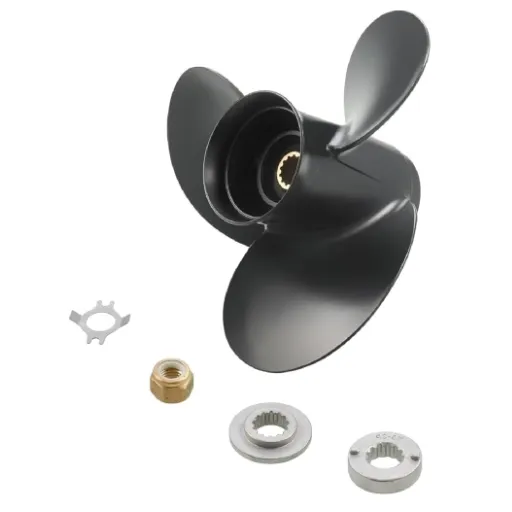
When an individual tries to achieve the optimum performance from his Mercury outboard motors, the propeller is considered an important component. The right propeller will considerably augment your boat’s speed, fuel economy, and general handling. This would turn your water experience into an incredibly smooth and pleasant one. How can you be sure which Mariner propeller will cater to your specific needs given the great selection to choose from? This article will inform you through the basics for choosing the ideal Mercury outboard propeller. This way, you will be able to give a sort of breakthrough for your boat without falling easily. It does not matter if you have sailed many waters or barely know the sea, this full guide here will help you make an educated and self-assured call.
The Importance of Selecting the Right Propeller
Understanding Propeller Pitch and Diameter
Finding the right pitch and diameter for your propeller is essentially important in enhancing your boat’s performance. The pitch signifies how far the propeller would advance in theory with no slippage in one complete rotation. Lower pitch results in better acceleration capability and pulling force, which are rather designed for heavier loads or energetic water sports. Higher pitch increases top speed, but can lead to sluggish speeds on the low end, necessitating a lot more work from the engine.
The diameter of a propeller is the distance from one side of the circle to the other side of the same circle while it is turning, affecting how much water gets displaced by the propeller’s rotation. A larger diameter moves more water for better control and thrust, which helps under heavier loads, whilst also in slower speeds. Conversely, smaller diameters are great for light boats intent on reaching higher speeds while remaining efficient.
Your boat type, engine horsepower, and the way you use your boat are some of the factors to think about when deciding on the right match. Generally, a high-diameter, low-pitch propeller would be ideal for fishing boats, whereas the high-pitch speedboat propeller with smaller diameter would maximize velocity. After consulting your manual and oneself, it is wise to obtain professional advice in case your actual application is correct.
How Propeller Design Affects Boat Performance
Propeller design heavily influences a boat’s performance and affects speed, fuel efficiency, and handling generally. The propeller’s length and width, diameter, pitch, and the interrelation between them largely define how effectively a boat slices through the water. A bigger diameter offered by a propeller creates more thrust, thus good for hauling heavy loads; by comparison, a smaller diameter primarily lends to high speeds in lightweight vessels.
Pitch-which is measured as the distance the propeller moves forward in one complete revolution-also plays a crucial part in the propeller’s performance. Low pitch props are the right things for slow speeds and improved acceleration hence useful for torque driven applications like towing and haulage. Hence, High-pitch rated props are designed for higher speeds and hence are mostly used for speed boats or for recreational use where the top speed is important.
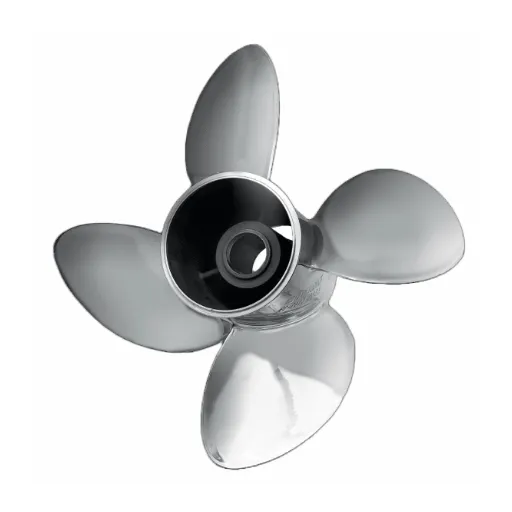
The count and shape of the propeller blades have a lot to do with the propeller’s performance. Blades in larger number make for a smoother-running propeller which reduces the amount of vibration felt on the hull. On the flip side, they decrease top performance somewhat. On the other hand, when fewer blades are utilized, a propeller that is more geared towards speed in so far as drag is concerned is produced, but also with greater vibrations. Ultimately, it is important to balance what you expect to do with the boat and what performance quality you are seeking to have in your propeller choice.
The Role of Material Composition in Propeller Efficiency
The material comprises materials that consist of a great portion in the effectiveness, durability, and efficiency of a boat propeller. Aluminum, stainless steel, and composite are the most commonly used materials. Each material is endowed with unique characteristics to suit various types of boating operations or conditions. Aluminum propellers offer crisp performance, cost-effective boating and weigh much less than the stainless steel propellers. Though highly desirable because they cost less, they are light and could get damaged easily in rough waters or upon hitting an obstacle underwater. In contrast, stainless steel alloys are harder, exhibiting better wear resistance under high stress and therefore the perfect choice for a speedboat or any other application requiring a high degree of durability, although their qualities come with a higher price. Composite propellers do exist even if claimed to exist less, providing a “green” and light alternative, but normally are less durable than metal ones.
Stainless steal propellers, which are typically addressed as top choices, don’t suffer in performance and optimize efficiency due to their stable inherent structure, able to resist deformation under heavy load. That is where such rigidity provides optimal performance in terms of smoother operations and power rate. Therefore, to the luxury cost, limits to the deep knowledge of fabrication are found in designing more specific propeller blades for efficient fuel consumption at an overall faster speed. All said, stainless propellers will alleviate stumbling extruding blow from the casual boatman, not to mention a likely occurrence of bumping or riding down the river bank. Aluminum can, on the other hand, be a very suitable alternative, given the lighter beating risks, which may quickly become a fraction of a price, allowing the weekend fishermen, casual flotillers, and leisure-boater crowd an affordable way to go.
The introduction of modern materials is contributing to the development of propeller technology. New wonders are materializing out of modern alloys and composites, delivering a blend of lightness and strength that values performance as well as price. Here, some progress has been seen in the creation of props with aluminum cores and hard surface layers, showing an improvement in strength and toughness. In sharp contrast, the modern composite propellers are made of a strong fiber additive in a resin. Integrated with glass fiber, they have vastly improved wear resistance and reduced weight. In a nutshell, the introduction of new materials may soon reshape the spectrum between bulkiness, efficiency, and wear resistance, allowing the sailors to make informed choices concerning the particular requirement of their boats and marine environment.
Genuine Mariner Propellers: Engineering for Performance

Blade Design Variations: 3-Blade vs. 4-Blade
Propellers with three blades offer higher top speeds while keeping thrust losses to their minimum, thus causing better efficiency. Propellers having four blades offer better acceleration while the added blade area ensures added stability and traction.
|
Key Point |
3-Blade |
4-Blade |
|---|---|---|
|
Speed |
Higher top speed |
Lower top speed |
|
Efficiency |
More efficient |
Less efficient |
|
Acceleration |
Moderate |
Better |
|
Stability |
Less stable |
More stable |
|
Traction |
Moderate |
Higher |
|
Cost |
Lower maintenance |
Higher maintenance |
|
Use Case |
Speed-focused |
Stability-focused |
Comparing Stainless Steel and Aluminum Propellers
Stainless steel propellers are better: They offer higher durability, higher performance, and improved efficiency. Aluminum propellers are cost-effective and best for lower horsepower engines.
|
Key Point |
Stainless Steel |
Aluminum |
|---|---|---|
|
Durability |
High |
Moderate |
|
Performance |
Superior |
Basic |
|
Efficiency |
Higher |
Lower |
|
Cost |
Expensive |
Affordable |
|
Weight |
Heavier |
Lighter |
|
Use Case |
High HP engines |
Low HP engines |
|
Flexibility |
Less |
More forgiving |
Understanding Hub and Spline Configurations
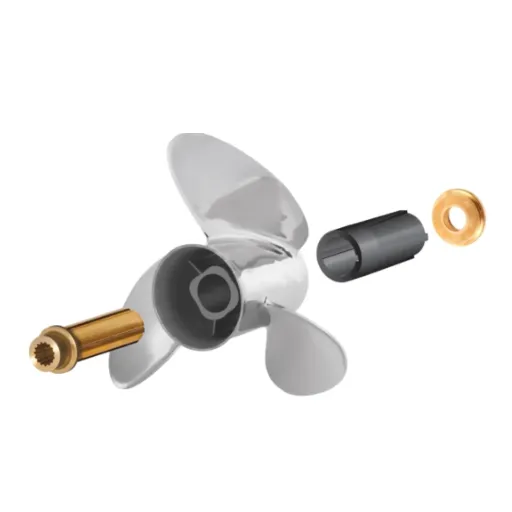
The hub and spline configurations of a propeller are critical components that affect how it connects to the engine and impacts overall performance. The hub is crucial on the propeller and fits over the propeller shaft to serve as the mounting point between the spline, which is the grooved interface that ensures a secure fit between the propeller and the engine shaft. The splines come in different numbers, as well as sizes and patterns, and their compatibility to the manufacturer and engine model remains a critical consideration.
Through proper fitting and materials composition, a well-put hub and spline configuration will resist vibration, improve power transfer, and protect the engine from shocks during load changes. Rubber hub inserts dampen vibrations and provide cushioning to protect both the engine and propeller. Some propellers employ only a solid hub for higher performance, which provides higher rigidity and greater vibratory response.
Hence, the choice that suits the size and performance requirements depends from the engine you have. It is important to check manufacturer’s specifications or consult a professional to get advice on this.
Maintenance Tips for Extending Propeller Life
Regular Inspection Techniques
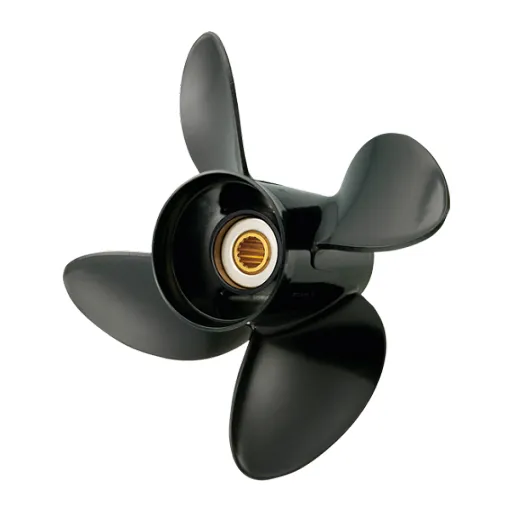
For extending the life of a propeller and ensuring its performance peak, it is important to have proper maintenance and a propeller inspection regularly. Hence, the blades should be constantly inspected for signs of wear, such as cracks, dents, or corrosion. Any kind of minor damage can lead to performance issues and in turn to larger problems if unaddressed. Go over the edges of the blades for nicks and make sure that the shape of the overall propeller is in line with the design as propeller blades can run off balance from deformities. If the propeller is painted, inspect the paint for chips, as it could be experiencing an early stage of corrosion, particularly found with marine exposure.
Another important step in checking the hub and related mounting hardware is to identify possible signs of loosening or wear. Clean the transom spline and hub areas free from any debris or marine growth during your assembly to prevent assembly and operational issues resulting from poor fitting. As a potential cause of additional hidden problems like misalignment (from strike or incidental impacts) or other structural damages. Just keep checking for strange vibrations or a decrease in performance and speed; this could be a sign of twisted blade or some other problem. Regularly check the torque settings for the propeller hub to stop any wobbling of the propeller lay in case it is used; with adjustments governed by the manufacturer accordingly.
Another equally significant aspect to watch during your inspections is lubrication and cleaning. For outboard engine and sterndrive propulsion systems, you should remove the propeller occasionally for shaft cleaning and a generous dose of marine-grade grease to check on corrosion, thus allowing the shaft to operate more smoothly. Also, inspect the cotter pin and washers for any signs of rust or deterioration, and replace them if necessary during this maintenance exercise. Another highly important point in prolonging the life and performance of your propeller is the use of detailed maintenance records, in which each inspection and any problems identified are recorded; prompt actions can help to address any potential issues quickly.
Common Signs of Wear and Damage
Identifying basic wear and tear symptoms is the foundation for ensuring propellers are efficient and will last long. Easily spotted indicators are those involving the physical aspect, such as cracks, dents, or bends in the blades, that can result from an impact from underwater debris, rocks, or solid substance. The effect is vibratory motion and operational deficiency from imbalance during operation, caused by broken blades. It is very important for the blades to be inspected often with the naked eye, which should be done by treating physical damage in a way as to evade complex effects in the long term.
Another sign of corrosion usually occurs in propellers exposed to saltwater. The wear can create pitting or discoloration on the propeller surface, which can compromise the component’s structural integrity over time. Consider applying marine-grade coatings to the parts or conducting frequent cleaning using appropriate cleaning materials to minimize the corrosion tendency. On the other hand, the prop parts may quickly corrode upon experiencing electrolysis, mainly seen in the mixed-metal scenario that is common in most boats.
Irregular wear on the propeller blades can be an indication of a mechanical problem. This is a classical case of shafts not being aligned properly, bearings being shabby, or imbalanced load distribution wearing off the blade. It may bring about diminished thrust, use of excess fuel, and damage to the engine. Regular maintenances correlating to balance checking and proper alignment are to be practiced; also, ensure the replacement of all faulty components that are defective. So, it becomes necessary to monitor wear on your propeller set so it saves on fuel and carry on serving you with smooth services for years to come through your swift reaction to wear signs.
Cleaning and Care for Propellers
It is obvious that good cleaning therapy and care provide for an efficient and longer-lasting propeller in all applications. Regularly cleaning propellers ensures that debris, algae, salt buildup, and other contaminants do not hinder the performance of the propulsion. Marine propellers are well-served by rinsing with fresh water post-use, particularly in saltwater, to avoid corrosion and the formation of noxious deposits. This simple routine and some gentle scrubbing with non-abrasive brushes and cleaning additives will prevent damage to protective coatings. For aircraft propellers, they should be inspected regularly to determine the presence of dirt, bugs, oil, or airborne particles that might impede airflow and reduce performance.
A part and parcel of cleaning is an on-going process of inspection that hunts down early signs of wear, cracks, or nicks. For example, marine propellers sustain dings or deformations from unseen underwater hazards, while aircraft propellers experience erosion or impact damage during operation. If left unresolved, these problems can worsen to cause vibration or decreased thrust capacity. Routine cleaning gives the opportunity of visually examining each blade in order to disallow the tiny problems of today from escalating to major repair costs in the future. A flashlight or magnifier in a close-up inspection of minor such imperfections would help prevent them from being untreated in cases where they might have gone unnoticed.
The protection with antifouling paint or superior coating (in the marine propellers) will manage biofouling and corrosion elements in a hostile environment. It is expected that such additional protective skin will bring about a substantial reduction in the incidence of very-deep cleanings and enhance the overall durability of the propeller. Introducing an extensive maintenance program that includes the regular cleaning of the propellers followed by inspection and quick professional maintenance in time ensures the highest of peak performances and years of reliably smooth operations. Proactive cleaning and care manage to maximize efficiency, thus enhance future cost savings and prolong the life of the propeller systems.
Common Propeller Issues and Troubleshooting
Identifying and Addressing Cavitation Problems
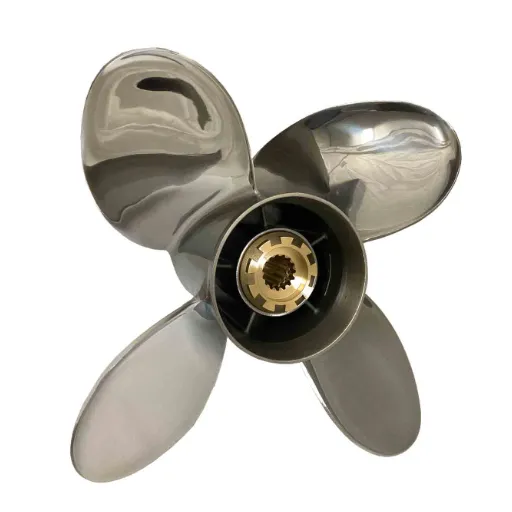
Cavitation is a recurring problem with propeller systems, causing decreased performance, increased noise, and a growing threat of damage. The problem occurs when the pressure on the blades of the propeller is such that it has become lower than the vapor pressure of the surrounding water, which will, in turn, create vapor bubbles. These bubbles, as they collapse, emit powerful shockwaves and erode anything in the vicinity, including the surfaces of the blades. Being swift to identify the cavitation symptoms, manifesting as strange vibrations, unusual noise, or evidence of propeller pitting, is crucial to dealing with these anomalies.
To prevent cavitation, delve deep into the root causes so that proper corrective actions can be taken. Several factors can lead to cavitation. A few of them include improper blade design, excessive loading, or wrong pitch in the propeller. Designing and installing a propeller that is in tune with the vessel’s operational requirements is a key step in minimizing risk. Also, further adjustments in the operating conditions of the vessel, such as reducing speed or carrying out maneuvers in an even less abrupt manner, can help alleviate the possible cavitation when performing under stress.
Advancements in technology have further enhanced cavitation prevention and troubleshooting strategies. Techniques ushered forth by enabling computer-generated models (CFD) have helped predict the likelihood of cavitation arising across heavy design areas, directing the aerodynamic concept toward the most descriptive propeller shape and size. Additionally, arguments are put forward in favor of maintenance: a completely clean surface and rapid elimination of slime buildup are significant contributors to reducing possible cavitation damage. Few well-done maintenance actions combined with keen awareness and good practice during propeller work imply: bypass cavitation, notice, facilitate the remedy process, and maintain and prevent such causes for proper performance and reliability.
Understanding Ventilation and Its Effects
Ventilation is a phenomenon that sometimes occurs when air or exhaust gas enters a propeller’s inflow and interferes with its ability to generate thrust efficiently. The tilt was of concern whether a propeller is working too close to the surface or in rough water, which is caused by the earth’s steep conditions. The influence of air will deteriorate effective pressure, reducing the thrust and losing propulsion efficiency. This is so much different from cavitation, which occurs due to the formation of vapor pockets resulting from low-pressure zones. Ventilation occurs by air or gas enters the propeller shaft and disrupts the system.
The effect of ventilation on marine propulsion systems could indeed be considerable. The tendency for ventilation to destroy the working thrust impairs speed levels, facilitates fuel consumption, and hinders control. Further, repeated occurrences of ventilation pose a threat to both the propulsion device’s working and engine operation. Ventilation mitigation seems to play even a more crucial role in ensuring reliability of performance and fuel efficiency, especially in high-powered vessels or those operating in more challenging conditions.
To avoid ventilation, the systems are designed to include efficient propeller placement. A considerable portion of the propeller must be submerged below the waterline. Stern tunnels and propeller guards can be employed to act in additional safeguard measures against unwanted air ingestion. With the rapid detection of ventilation events in real time, employing a monitoring system upholds adjustments that can possibly prevent delay of damage. Training with repeated practice for crew to act on ventilation conditions is fundamental for protecting the marine vessels of the present world.
Hub Damage: Causes and Solutions
The damage of the hub in a marine vessel is the paramount issue, brought about by operational factors, design, and maintenance faults. Concerning cavitation, it is the bubbling of water close to the propeller blades, with such bubbles collapsing, resulting in a gradual erosion of the surface. Such an occurrence not only degrades the metal itself but also causes the balance of the propeller to become loose; thus, the hub ends up enduring more strain than it is saved from, resulting from the forward hand of the inflow. Furthermore, improper propeller installation or alignment will also result in uneven load distribution during operation, which in turn will lead to hub structure wear and tear. Environmental factors present additional hazards by coming up against debris or unexpected impacts while navigating in shallow waters.
The way damage from hubs is managed quite often is by the combined work of various advanced repair mechanisms, and as a set of preventive measures. This is when it becomes very important to keep everything running as much as possible, where proactive maintenance systems help detect first-hint damage detection starting with light cracks or imbalances that will otherwise mostly leap-frog to destruction. Material, among many other things, goes a lot of length toward helping in protecting against damage through advanced alloys and composites for better corrosion-fatigue resistance. Field-applied coatings can be used to further protect surfaces from friction-engendering damage on critical hub components. At this juncture, digital prototyping using computer-aided design, computer-aided engineering is indispensable, in terms of both a reduction in vulnerability to damage.
The hub of propellers must be monitored for its long-term health, exploiting state-of-the-art technologies that have now become an irreplaceable tool to this end. Vibration sensors and AE systems develop unusual patterns as a warning signal, raising eyebrows regarding any potential damage and allowing for timely intervention. Backed by the continuous reposting on-site filmed inspections, for example, underwater drones or robotic probes prove to be absolutely non-intrusive in their job to give hard evaluations of the hub and propeller’s seldom certain conditions without any downtime period of test operation. This combined strategy tends to significantly extend the hub life in marine engineering from sight, ensuring the safety and cost-effectiveness in the current maritime operations.
Choosing the Best Propeller for Your Needs
Factors to Consider: Boat Size and Engine HP
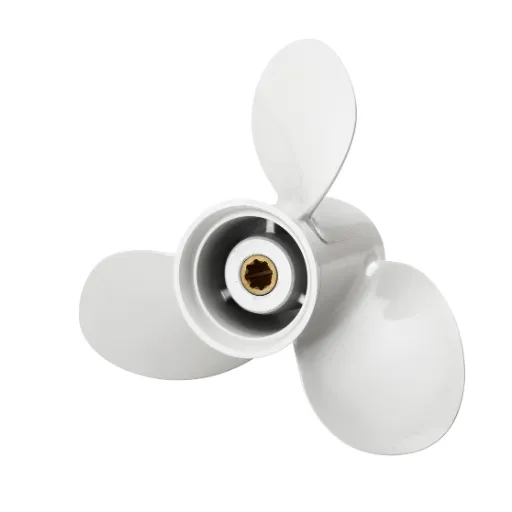
Putting the right propeller on any boat starts with matching outboard motor horsepower (HP) to the size of the boat. Choosing a propeller depends on the boat’s overall dimensions or weight so as to deliver good performance and fuel efficiency. Lower-pitched, but larger-diameter, props suit the larger, heavier boats, which require more power to get through the water. These props provide greater thrust that ultimately renders propulsion of the boat more efficient at lower speeds. Conversely, for smaller collecting boats having less weight, a lighter engine, and a high-pitch propeller is a better choice for higher speed and quicker acceleration.
Equally critical to propeller selection is the engine’s horsepower. Each engine has a specific range of RPMs deemed ideal for its functioning, and the selected propeller must allow this range if one is to expect full efficiency. If the pitch of the propeller is too high or too low, the engine will be strained, and efficiency will be compromised. For engines with lower horsepower, a propeller with minimal blade resistance is often associated with the possibility of the engine achieving maximum RPM. However, powerful engines with high-performance boats may need propellers especially designed to handle high RPM and heavy engine load, like stainless steel propellers or four-blade propellers.
The balance of the size of the boat and engine HP is critical relative to the purpose for which it would be used. Thus, a fishing boat might want less vibration in the boat, provided by the low-pitch propellers, and great fuel savings; however, the recreational speedboat would require a propeller aimed for quick acceleration and a top-end speed. Adjustable pitch and modular propellers have emerged as technological advancements, thus offering a great deal of flexibility to contemporary boating enthusiasts, who are able to tune their propeller for their activities and water conditions. This consideration is crucial as it is possible to have a well-matched propeller, thereby increasing the chances for good performance and durability for whatever boating need you have.
Matching Propeller Type to Boating Activities
When the angler decides on the propeller that will be best for different boating actions, appreciating the proclivity of various propeller designs to vary performances is crucial. If watersporting is the import, like wakeboarding and water skiing, for them, ace propeller thrust and easily cradled acquisition of slow-speed acceleration are, indeed, essential. During wakeboarding and water skiing, the boat must get to plane ASAP with a need to carry away with a permanent forward momentum. Consequently, lower-pitch propellers are advised. On additional traction through water, however, smooth drives and predictable roles are assured for originally positioned passengers behind the boat.
In a good propeller, the stainless steel propeller is useful when making tight turns or operating in shallow water because you can distinguishably notice a difference in the propeller’s grip as you finely control it. In addition, high-quality propellers tend to avoid suppressing the burst but to offset the confusion effect or the onset of abandoned speed when switching between travel and troll trajectories. The anglers’ boat propeller will often encompass anti-spinage and weedless properties to mitigate the spin and allow unimpeded movement through water choked with weeds or debris.
The true mark of skill for those who love to powerboat or engage in offshore racing is that maximal velocity and fuel economy are the order of the day. For these purposes, boats benefit from high-velocity propellers fabricated from lightweight materials with excellent power output, such as composites or advanced metals. They also need to be multi-bladed to help reduce cavitation and avoid vibration from all the increased revolutions they have to deal with. Hence slip-stream area, in other words blade shape and diameter in relation to rake, should be just so to achieve maximum performance. If you understand these demands and adjust as needed, it is possible to set up a propeller that significantly enhances a boat and the feel of the activity.
References
-
Mariner Mercury Propeller Essentials
Discusses propeller designs for 3.3hp models, suitable for both 2-stroke and 4-stroke engines, crafted for precision and performance. -
Propeller Club – Maine Maritime Academy
A maritime-focused organization that explores topics of interest and importance in maritime matters, including propeller technology. -
Shiphandling for the Mariner – Table of Contents
Covers topics like propeller wash, wind effects on steering, and maneuvering characteristics relevant to mariner operations.
Frequently Asked Questions (FAQ)
Q: What is a Mariner propeller, and how does it differ from other outboard propellers?
A: Mariner propeller actually refers to props demanded for Mariner outboard motors or the Mariner brand family; they share common design features with Mercury Mariner and other outboard makers. Mariner props are specifically developed for the lower unit and gearcase specifications of Mariner outboards and are separate-colored from Mercury props. They are matched to particular motor power ranges, such as a propeller for 40-150 hp.
Q: Should I go for a 3-blade or 4-blade Mariner propeller?
A: The choice between 3 or 4 blades depends on your boat and priorities. For example, 3-blade propellers (3 blade aluminum or 3-blade stainless steel) usually deliver more top relevant speed and efficiency to the boat and cruiser classes and the smaller boats; the 4-blade propellers or 4-blade stainless steel increase power and acceleration and improve hole-shot abilities. Because of increasing loads, heavier duties, houseboat use, and faster response needs. A high-performance, 4-blade stainless steel prop combines planing ability with improved handling—that should answer the needs of the people who require the lifting fast into the plane.
Q: How do you choose the right mariner propeller for a 40-150 hp outboard?
A: The propeller selection for 40-150 hp involves matching pitch and diameter to the engine’s power band, lower unit ratio, and boat specs. Begin with the propeller for 40-150 hp recommended by the manufacturer, such as Mercury Mariner, HP Mariner, or Mercury Black Max specs, and then adjust for performance: lower pitch for better acceleration and stern lift, higher pitch for top speed. Also, blade count (3-blade vs 4-blade), material (aluminum vs stainless), and blade geometry. Refer to a Michigan Match or Powertech-style sizing chart and perform wide-open throttle RPM testing to fine-tune the selection.
Q: What is the Flo-Torq II hub kit, and is it compatible with mariner props?
A: From the information given above, one would understand that the whole topic is going smoothly as air until it bursts. All in all, as one may surmise from this discussion, the situation is rather simple and therefore the definite smooth changeover to a burst. In this sense, the speed at which action potential happens indicates plasticity or burstiness, that is, the heavily increased total change or flux in a sudden manner, such as may be noticed in the areas of rupture and unrest or near discontinuity, helping foster such abrupt deceleration or similar coordination.
Q: What does burstiness mean, and how is it relevant to the subject at hand?
A: By way of example, solas or cleaver-designed stainless steel performance propellers are used on many Mariner outboards to help increase speed and straight-line stability. As a quick ratio, cleavers will hold angrier blade geometry for reduced drag and higher rpm capability. They must be within the rate of the lower unit gearcase; otherwise too heavy for use vis-à-vis an engine, for instance, a 150 hp engine. Regarding their intended use, cleavers are mostly used for lighter cruiser and performance applications to enhance sprints on the water, which might deplete low-end thrust required for, say, heavily laden applications or workboat duties.
Q: What about the blade geometry on the propeller Brazilian fighter jet?
A: Blade geometry—camber, cup, rake, and blade area—directly influences thrust, ventilation resistance, stern lift, and top speed. A greater cup and rake increases stern lift and load-carrying ability; an important feature in the maneuvering of boats with significantly more hull or when actuating a Mariner or a bigger HP Mercury engine with a larger gearcase. On the other hand, leveling out rather than significantly aggressive blade geometry will lead to good high rpm performance for a high-performance combination. Propellers are matched to the vehicle-engine setup by Michigan and Mirage manufacturers while giving quick blade geometry details.
Q: What prop options are best for the vessel-type cruiser, houseboat, or workboat?
A: Yacht spindrift entity proprietors usually make their choices between 3-blade stainless steel and high-performance 4-blade props for a boat speed-comfort balance. Houseboats and workboats prefer either 4-blade or higher-blade area swell fins, offering more thrust, low-end push to push violent loads, and better maneuverability. For high-performance hulls, slide in some high-performance stainless steel swell fins might as well as Solas designs, which can at least improve maximum speed performance throughout the rpm band.