Choosing the proper propeller for your Mercury 60hp engine is key in transforming your boating experience. Whether yearning for more speed, smoothness, efficiency, and stability, a good propeller unlocks all restrictions on the motor and causes it to work optimally on water. But what propeller to grab, with so many selections available? In this comprehensive guide, I will take you through a detailed discussion on the factors to consider when buying a propeller for a 60HP outboard such as Mercury. Different options available together with the advantages for your boat type are what needs careful evaluation.
Understanding Propeller Basics
What is a Propeller?
A propeller is a rotating device that generates thrust to propel a boat along the surface of water. It is installed to directly connect the engine power with forward and reverse direction, making multi-level propulsion possible. These moving blades cut through the water with varying pressures to control the movement of a vessel, creating flow. This process is essential for navigation and resultant performance on the water.
A propeller’s design largely dictates its behavior on a boat. Several factors play an important part, including the number of blades, the diameter of the propeller, the pitch of the blades, and the material. The pitch can be defined as the distance the propeller would move forward if it were pushing against a solid surface in one complete revolution. Generally, a higher pitch is favorable for speed, whereas a lower pitch favors power engagement and acceleration. Materials like aluminum or stainless steel, depending on type, directly affect the life and performance of a propeller.
💡 Key Insight: You want the right propeller for a Mercury 60 HP engine to balance speed, power, and fuel efficiency. An inappropriate propeller can give you unintended performance, extra fuel consumption, and possibly engine strain. Choosing a propeller that matches the specific characteristics of your boat’s type, use, and load will give you the best boating experience.
How Propeller Pitch and Diameter Affect Performance
Understanding the pitch and diameter of a propeller becomes an essential step influencing performance where speed, acceleration, and engine efficiency are of consequence. Pitch is the distance a propeller moves forward with each rotation, while diameter is the total width surrounding a propeller. Picking the right combination ensures the engine runs in the RPM sweet spot, balancing power with fuel consumption.
A propeller with higher pitch that moves the boat farther per revolution needs more engine power, making it best applied in applications where it could reach a greater top speed. However, a propeller running with far too high a pitch would retard the boat’s acceleration and overwork the engine. Meanwhile, a propeller with lesser pitch could serve much better in acceleration; its best use would be in heavy loading and towing rather than limiting itself in terms of top-end speed while leaving the engine under-stressed.
It is also imperative to note that diameter on propellers is associated with water pressure and performance level. Larger-diameter propellers are generally more appropriate for smaller engines and boats requiring substantial thrust at lower speeds, while smaller-diameter propellers suit high-horsepower applications better. The general philosophy is that choosing the right combination of propeller size and style makes the greatest thrust at low slip in the water, considering your specific application.
Types of Propellers for Mercury Outboards
When selecting a propeller for your Mercury outboard, the choice is largely based on your boating needs and the specific performance goals of your vessel. Mercury offers numerous different types of propellers for different applications, including aluminum and stainless steel. Aluminum propellers are generally cheaper, lightweight, and a good choice for casual boaters who might not be overly concerned about performance relative to price. Stainless steel propellers are the sturdier alternative and perform better at higher speed levels, thus not disappointing serious boaters or performance enthusiasts.
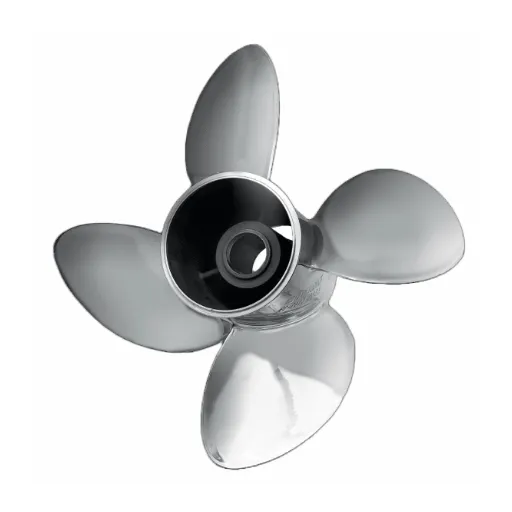
Another consideration is blade count. Generally, Mercury outboard propellers come with either 3 or 4 blades. A three-bladed propeller has higher top speed and efficiency, which is good for boats that run faster. The four-blade propeller provides more bite and better handling, though it might slightly reduce top speed, making it ideal for water sports, rough water, or heavily loaded boats. Knowledge of these options will help you select the right propeller for your marine activity.
Mercury also offers innovative propeller designs for specialized applications. For instance, there are design features for some models that cup the propeller blades to provide better grip in the water under heavy load conditions or for sharp steering. There are others optimized for fuel economy or low cavitation to minimize propeller noise and improve performance. By thoughtfully analyzing your requirements—speed, power, durability—you can identify which Mercury propeller best balances with your boating adventure.
Choosing the Perfect Propeller for Your Mercury 60HP

Factors to Consider: Pitch and Diameter
⚙️ Important Factors to Evaluate
When shopping for a propeller for a Mercury with a 60 HP engine, understanding the pitch and diameter is crucial for suitable performance. The diameter of a propeller refers to the distance across the circle formed by its rotation, measured from the distance across the tips of its blades.
- Larger Diameter: Usually better for slow and heavier boats because of increased control and thrust at low speeds of travel.
- Smaller Diameter: Does well for lighter and faster boats that need quicker acceleration and can grow in speed more rapidly.
- Lower Pitch: Better acceleration, pulling power, and suitability for water sports activities or hauling heavy loads.
- Higher Pitch: Designed primarily to offer speed, efficiency with a higher RPM scale, and better fuel efficiency for longer cruising times.
Maintaining the delicate balance between propeller pitch and the matching operating range of your engine will be the key to unlock the full potential of your Mercury 60HP.
Proper selection of pitch and diameter combined with factors such as the number of blades and materials for the blade can fine-tune performance even more. For example, stainless steel propellers are very sturdy and offer high performance but with slightly more weight. Aluminum ones, being light, are cheaper as well. Your combination of knowledge in this regard and the performance requirements of the boat will allow you to select one aimed toward enhancing speed, maneuverability, and sustainability in different water conditions.
Right-Hand Rotation vs. Left-Hand Rotation
Right-handed propellers rotate clockwise and left-handed ones rotate counterclockwise, which affects steering, thrust, and handling characteristics.
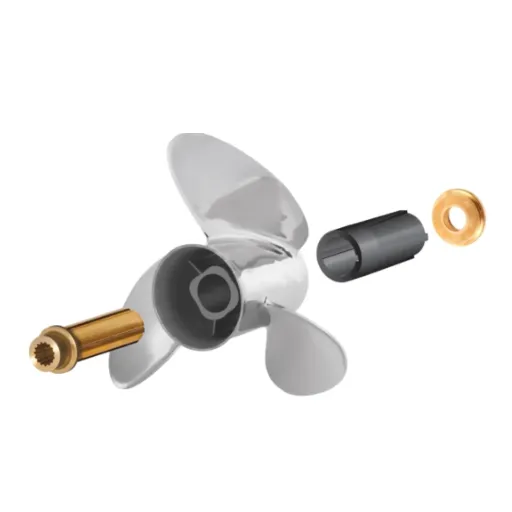
Material Choices: Stainless Steel vs. Aluminum
Stainless steel propellers are expensive, superior in performance, and long-lasting, while aluminum propellers are inexpensive, lightweight, and moderately durable.
Benefits of Upgrading Your Mercury Propeller

Improved Fuel Economy
Upgrading your Mercury propeller can result in a significant reduction in operational costs while increasing performance. Here are five basic points that guide you toward such a decision:
- Increased Efficiency: With an advanced propeller of the highest specification, your engine and hull work at maximum efficiency, utilizing the least power to propel the boat, consuming the lowest amount of fuel per mile.
- Optimal Pitch Configuration: The correct prop pitch for your specific Mercury propeller model should allow the engine to work at maximum RPM while keeping fuel-guzzling engine high-revving ratios at desired optimal levels.
- Lightweight Materials: Modern propellers designed from stainless steel or aluminum offer designs that overcome resistance due to improved weight-to-force relationships, enhancing propulsion.
- Faster Planing: The most efficient propellers let the boat rapidly reach planing speed and stay on-plane, significantly reducing fuel consumption.
- Decreased Cavitation: Improved design helps minimize cavitation, reducing energy losses and contributing to improved fuel economy.
The fuel efficiency gain is a crucial highlight; the investment in upgrading propellers offers an impressive long-term payback that is very reasonable.
Enhanced Hole Shot and Acceleration
Modifying your boat propeller will substantially improve the hole shot along with enhancing acceleration overall. Here are several crucial points about the improvements:
- Optimized Blade Design: Designs that provide more thrust from standstill make better acceleration possible.
- Lighter Materials: Use of lightweight materials, like aluminum or composite materials, cuts down on rotating mass and enables speedier reaction times.
- Improved Ventilation System: Better ventilation reduces water resistance, resulting in a more efficient hole shot.
- Adjustable Blade Pitch: Some improved propellers feature various pitch settings for fine-tuning thrust and performance.
- Enhanced Grip on Water: Advanced designs with high geometry standards guarantee good hold, with quick and accurate acceleration even while heavily loaded.
These collective improvements allow for quicker transition from idling to planing speeds, increasing responsiveness and overall operational efficiency for a wide range of boating applications.
Better Handling and Stability on Water
Recent propeller construction and technological progress in boating enhance boat handling and stability, improving boating pleasure and safe navigation through various water conditions. Here are five logical arguments in favor of improved handling with better stability:
- Hydrodynamic Blade Design: Refined blade lines and angles minimize hydraulic resistance for smoother and more controllable motion.
- Cavitation-Resistant Coating: Advanced coatings eliminate cavitation turbulence, leading to steady propulsion under full throttle.
- Anti-Vibration Structures: Improved materials and structural design attenuate propeller vibrations, resulting in better boat handling and safety.
- Drive Force Balancing: Thrust distribution innovations offer reduced resistance and improved directional control, overcoming steering problems.
- Increased Load Adaptability: New propellers deal with different loads more effectively and maintain equilibrium amid varied conditions such as heavy cargo and choppy waters.
Each of these enhancements ensures more reliable performance while providing considerable improvement in the whole boating experience.
Top Propeller Options for Mercury 60HP Outboards
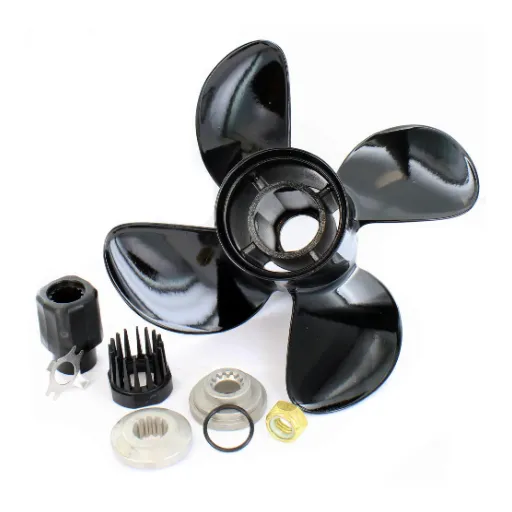
Best 3-Blade Propellers
🔷 Mercury Black Max Aluminum Propeller
The Black Max is known for its longevity and power, becoming many Mercury 60HP outboards’ first choice. The durable aluminum construction of the blades ensures terrific acceleration with strong top-end speeds. With a pitch rating of 13″, the propeller provides versatility in propulsion, balancing pitch efficiency with power.
🔶 Turning Point Hustler Series
The Hustler series propeller is reasonably priced, and its durable construction makes it an immediate choice. The propeller features a robust four-blade system with a larger center-hollow vented design. They operate at cooler temperatures, which contributes to durability. Planing is fast and good, and the boat retains an excellent level of stability.
🔷 Vortex XHS Aluminum Propeller
Vortex XHS is a very adaptable propeller due to an exchangeable hub system which proves beneficial when pairing with Mercury outboards. Thanks to the propeller’s stiff structure and the optimized shape of its blades, mid-range performance and acceleration have considerably improved, while its salt corrosion-resistant coating promises longevity.
Each propeller is suited to improving operation and reliability of Mercury 60HP engines, offering variations based on specific use. Depending on the requirements of your watercraft, selecting the appropriate propeller will achieve favorable output and allow you to explore the waters efficiently.
Comparing Different Pitch Options: 19 vs. 24
A 19-pitch propeller maximizes acceleration and develops the most possible grip between water and hull. A 24-pitch propeller allows for the fastest top speed, but with reduced acceleration at your disposal.
Evaluating the 14-Inch Diameter Choices
When considering 14-inch diameter propellers for Mercury 60HP engines, it is crucial to evaluate how this size influences performance characteristics, such as thrust, efficiency, and versatility. A 14-inch diameter propeller can be positioned at the point where force transfer and smooth operation are at their best. This diameter becomes particularly effective with boats from the midsize range, where needed displacement can come into balance without loading the engine too much while achieving good propulsion and maintaining an acceptable level of fuel consumption.
Having a larger diameter invariably implies that the propeller can work on more water, thus providing an increase in thrust and a stronger degree of boat maneuverability in various water conditions. However, setting up the 14-inch diameter appropriately with the right pitch transforms the performance and adapts it to boating activities that include, among others, cruising, fishing, or water sports. Appropriate configuration leads to the engine running within the recommended RPM range, increasing efficiency and avoiding unnecessary strain.
📊 Professional Tip: By testing various pitch options with 14-inch diameter propellers, mechanics can fine-tune engine performance specifically to meet particular needs. Detailed analysis of technical specifications and usage scenarios guides you in making an informed decision that ensures optimization of the Mercury 60 HP marine engine’s performance on water.
Maintenance Tips for Your Mercury Propeller
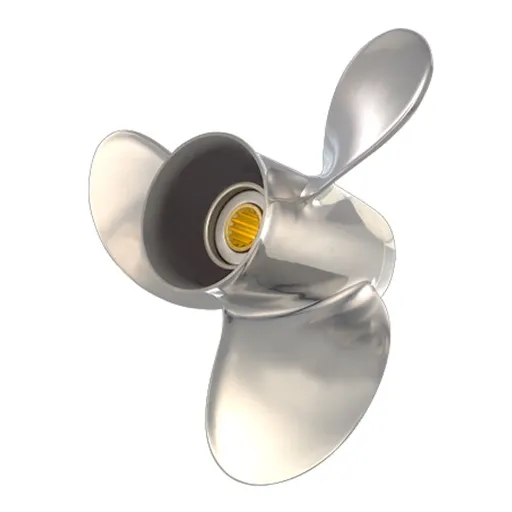
Regular Inspection and Cleaning
Responsible Mercury propeller care begins with regular inspection to ensure optimal condition. Start by checking for visual damage to the propeller such as dents, cracks, bends, or anything else that affects propeller performance. Keep an eye on the blades to avoid any imperfections, which may lead to the engine losing capacity, causing drag and vibration. Moreover, check for fishing line or other accumulation around the propeller shaft, since this wear will initiate deterioration of the seals, which can lead to expensive repairs down the road.
🧹 Essential Cleaning Checklist
- Rinse After Each Use: Clean propellers after each boating excursion by rinsing with fresh water to wash away salt, sand, and other residues.
- Use Proper Cleaning Supplies: Apply a boat-safe detergent and soft brush to clean the surface without scratching.
- Apply Protective Coating: Use a corrosion inhibitor to prolong the life of the propeller, especially in saltwater environments.
- Check Hub and Spline: Look for proper lubrication and erosion. Apply marine-grade grease to ensure smooth operation.
- Prevent Rust: Regular maintenance prevents unexpected breakdowns and ensures your time on water remains trouble-free.
Regular maintenance not only keeps the engine performing in tip-top shape but also avoids the need for unexpected breakdowns, ensuring your time on the water remains unfettered. Maintain these principles consistently for a propeller and engine that runs as well as the first day delivered.
Storage and Care to Maximize Longevity
Storing a Mercury 60 hp engine and its propeller properly and maintaining them is essential for their longevity and optimal working condition. When preparing your engine for storage (off-season), start by flushing the cooling system with fresh water to remove salt, sand, and other debris that may have accumulated. Salt buildup can cause corrosion and badly damage internal components, especially when left over an extended period of time. Ensure that all excess water is cleared out before storage in cold climates; this prevents any freezing, leading to a possibility of component cracking.
🔧 Storage Best Practices
- Add Fuel Stabilizer: Use a quality fuel stabilizer to prevent fuel degradation and moisture interaction while addressing phase separation caused by ethanol in modern fuels. For fuel-injected models, run the engine briefly to distribute the treated fuel throughout the system.
- Change Oil: Check the oil and execute an oil change if needed. Fresh oil prevents dirt from damaging the engine during storage season.
- Inspect Spark Plugs: Check the spark plugs and replace them if they’re worn or fouled before using the engine again.
- Proper Storage Location: Store the engine and propeller in a dry and secure place, away from external elements. Cover the powerhead with a waterproof yet breathable cover for protection against moisture while providing air circulation.
- Trailer Positioning: For boats on trailers, position the boat evenly and remove the hull drainage plug so water doesn’t accumulate.
Such storage and preventative measures, coupled with regular inspection and maintenance activities, maintain an efficient engine, extend its lifespan, and ensure a safe, pleasurable trip on your next boating adventure.
When to Replace Your Propeller
Knowing when to replace your propeller is crucial for maintaining optimal boat performance and protecting your engine. Here are the key indicators that it’s time for a replacement:
⚠️ Warning Signs for Replacement
- Performance Decline: If your boat struggles to reach normal speeds or feels slow off the mark during power-ups, it often indicates blade damage or wear and tear.
- Visible Damage: Bent or chipped blades are clear signs for replacement. Even a hairline imperfection in the blades will reduce efficiency and stress the engine unnecessarily.
- Changed Boating Needs: If you’ve been switching between cruising and towing watersports enthusiasts, the old propeller might require a new pitch or material to better suit your activities.
- Vibration or Noise: Unusual vibration or odd noise from the propeller area often indicates that the propeller is unbalanced or damaged.
- Efficiency Upgrade: Upgrading to a more efficient or specialized propeller will enhance the experience while keeping the engine running correctly.
Frequent checks and maintenance can greatly help decide when it’s time to replace your propeller. Address issues promptly to mitigate any possible further effects on the engine, promising you a smooth ride ahead.
References
-
2015 Mercury 90 Hp Repair Manual
This document includes details about Mercury outboard engines, including prop shaft removal and other technical specifications. -
Black Diamond 14 X 10 RH 3 Blade Propeller | QuickSilver
This source provides information on engine applications, including Mercury/Mariner 40-60 Horsepower Bigfoot engines. -
Mercury Outboard Torque Specifications
This document outlines torque specifications for Mercury outboard motors, which may include relevant details for the 60hp model. - Click here to read more.
Frequently Asked Questions (FAQ)
Q: What should I consider when selecting a propeller for the Mercury 60hp 4-stroke engine?
When considering a Mercury 60hp prop for a 4-stroke outboard, remember blade count (3-blade vs four-blade), pitch options like 14, 15, or 21, and whether you need a performance stainless or an original aluminum finish. Four-stroke engines often benefit from hubs like Flo-Torq hub kits to protect the gear case and improve value by reducing wear. Match the prop to the weight of your boat and intended use to enjoy the best performance and stock availability from Mercury Marine dealers.
Q: How do I choose between a 3-blade and 4-blade propeller for my 60hp engine?
The 3-blade Mercury 60hp prop usually provides more top-end speed and better fuel economy, while a 4-blade or high-performance stainless prop delivers better acceleration and improved load carrying capacity, along with enhanced thrust control for heavier boats or watersports. When deciding between original or stainless finish, check the gear ratio to select the right brand and blade count for stellar performance of your Mercury Marine motor.
Q: Are Flo-Torq hub kits necessary for my Mercury 60hp propeller?
A Flo-Torq hub kit is essential for most Mercury 60hp props due to their shearable or rubber insert that provides protection for gears and the engine from shock loading. These hub kits are available for numerous prop models and prevent performance issues, vibration, and maintain gearbox integrity—especially important if operating in debris-laden waters or running with a heavy load or command thrust style prop.
Q: What do pitch numbers like 14, 15, 21, and 26 mean for Mercury 60hp propellers?
Pitch numbers indicate the theoretical distance (in inches) the propeller would move forward in one complete revolution. Lower pitch numbers (14-15) provide better acceleration and are ideal for heavy loads and watersports. Higher pitch numbers (21-26) increase top speed but reduce acceleration. Choosing the wrong pitch can lead to decreased performance, increased engine burden, fuel waste, and excessive wear.
Q: How does gear ratio affect propeller selection and overall performance?
The gear ratio determines the effective RPM at the prop for a given engine speed. A lower gear ratio may demand propeller pitch alterations to achieve optimal RPM. When selecting a Mercury prop for a 60hp engine, ensure that the propeller pitch and blade count align with your engine gear ratio to meet RPM requirements. Any mismatch can lead to decreased performance, increased burden, fuel waste, and excessive wear.
Q: What maintenance is required to retain the performance and value of a Mercury 60hp propeller?
Routine checks for nicks, dings, and prop balance will support optimal performance of your Mercury 60 hp propeller. Rinse with fresh water after each use, check the hub kit and gear area regularly, and repair any finish damage on performance stainless props to prevent corrosion. A well-maintained original or top-quality stainless prop will retain value and keep the prop performing optimally over different periods.
Conclusion
Selecting the right propeller for your Mercury 60HP outboard engine is a crucial decision that significantly impacts your boating experience. From understanding the basics of pitch and diameter to choosing between aluminum and stainless steel materials, each factor plays a vital role in optimizing performance, fuel efficiency, and overall satisfaction on the water.
Whether you prioritize speed for cruising, power for towing, or versatility for various water conditions, there’s a propeller configuration that meets your specific needs. The investment in upgrading to the right propeller pays dividends through improved hole shot, better handling, enhanced fuel economy, and increased longevity of your engine.
Remember that proper maintenance—including regular inspection, cleaning, and appropriate storage—is just as important as selecting the right propeller initially. By following the guidelines outlined in this comprehensive guide, you’ll ensure that your Mercury 60HP engine operates at peak performance, delivering countless hours of enjoyable and reliable boating adventures.
For the most accurate propeller selection and technical specifications for your specific boat model and usage requirements, consult with an authorized Mercury Marine dealer or marine specialist. They can provide personalized recommendations based on your unique boating needs and local water conditions.