Having the best propeller installed in your Mercury vessel is instrumental to experiencing the peak performance one can get while also ensuring smooth rides under reduced stresses. Whether you are an ardent angler, watersport enthusiast, or a relaxed cruiser, the prop has a considerable role in fixing speed, fuel economy, and handling. The feature discusses the importance of selecting the perfect Mercury boat propeller and useful information to help you make the most of your boat rides. From thorough understanding of such vital aspects as pitch and material to narrowing choices down by activities, we’ve got you completely covered. Enjoy the ride in your newly required boating wonderland!
Understanding Mercury Propellers
What Makes Mercury Propellers Unique
Mercury propellers are designed with ultra-fine precision patents for very fine and particular tasks, utilizing materials of the highest quality and on numerous and innovative designs catering to the vastest and broadest range of boating uses. Produced by Mercury Marine, these propellers are manufactured with constant technicalities as the most innovative substitute to supply not only high performance and durability but also all types of boats with many different applications outside the competitive marine arena. Whether being aimed toward speed, maximum fuel efficiency, or best maneuverability, Mercury propellers will give diverse solutions to match subjects of different performance styles.
The one thing that stands bright about Mercury propellers is their wide range of models designed purposefully for various boating uses. Since some are designed with acceleration and low-end power for the watersports-minded individuals, others are intended for high-speed cruising and fuel economic sailing. In differing-pitched designs with lesser weight, Mercury makes the choices stainless steel or aluminum to suit one’s specific needs like strength or economy. Advanced hydrodynamic design creates the selzer effect that enhances above-the-water drag and low speed torque and efficiency of these propellers.
Mercury propellers are well known for their compatibility and versatility; their design allows them to fit many Mercury outboard and sterndrive engines, so boat owners can easily find a prop that will fit with excellent results. Such propellers combine the practicality and reliability features in the advances embedded within the Flo-Torq hub. Innovativeness, quality, and any such versatility bundled together in a propeller have made Mercury propellers truly in a class of their own in the world of offshore boats.
Key Features of Mercury Propellers
Mercury high-performance propellers are constructed from premium materials and built to last. Their sound designs allow for reduced drag, thus rendering them more energy efficient and in turn making the transition in water smoother. Being miser in fuel usage further magnifies the boat’s speed, leaving little strain on marquees for boat fuel.
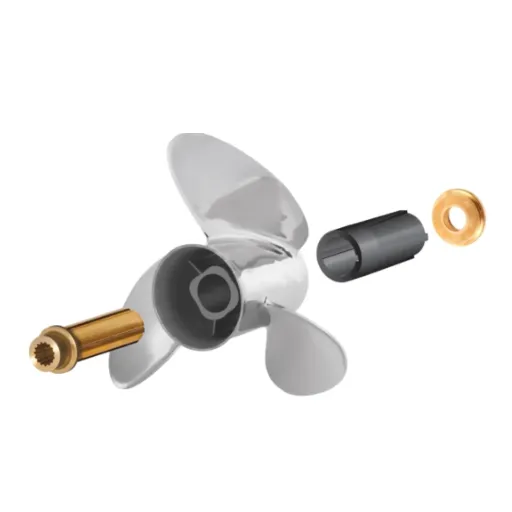
Another fascinating aspect of Mercury’s greatest propellers is their Flo-Torq hub system, which allows for added protection of the engine and the propeller. In case of propeller strike, the engine will be shielded from destruction by its shock absorbance. This system, coupled with the quick-swap feature of the hub system, results in almost no maintenance for the users.
Mercury propellers can fit into an extensive list of engines making them extremely versatile. Designed to be fitted in anything from a recreational boat to high-performance watercraft, these propellers are capable of serving diverse purposes. Whether the need is speed, fuel efficiency, or durability, Mercury’s state-of-the-art designs, along with their sturdy construction, make a very good propeller for nearly any boating machine. Their adaptivity and unique customer satisfaction levels have, amongst other achievements, made them an established name in Marine.
Benefits of Using Mercury Boat Propellers
✓ Improved Maneuverability
Formulated in a manner to enhance boat performance is the Mercury propeller, which translates into increased maneuverability, as well as acceleration, top speed, and fuel efficiency. These propellers are best meant on numerous fronts, including casual cruising and competitive boating.
✓ Extreme Power and Dependability
Mercury provides high-quality levels of industry material, for instance with stainless steel and modern alloys, which gives propellers a high degree of resistance against corrosion and wear, ensuring a long run at high consistency.
✓ Fuel Management Strategy
New inventive designs along with stringent engineering specifications guarantee decreased drag and stunning propulsive efficiency-value characteristics that would significantly decrease fuel consumption monies.
✓ Versatility
Different docks cater to an array of Mercury prop design choices, thereby offering an adequate amount of all types of shifted needs, from boat dimensions and engine varieties to specific uses. Any boat demanding a prop for anchoring or for a high-speed cockpit could find it with any Mercury component.
✓ Improved Control
Mercury propellers are designed to bring about better handling and control even in the most adverse conditions. Greater responsiveness for smoother turns, sharper throttle quickenation, and ultimate docking precision, which boosts boating confidence on water.
Types of Mercury Boat Propellers
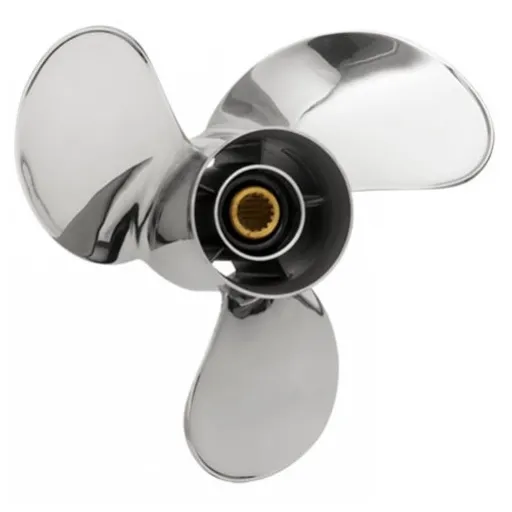
Outboard Propeller Options
Mercury has an extensive selection of outboard propellers for a range of boating scenarios. Products in the range are the following:
Aluminum Propellers
Designed for lighter use and casual boating, aluminum propellers are an economical and lightweight option in propellers with smaller engines. When it comes to the recreational side, they ford your activities over a variety of heavy waters.
Stainless Steel Propellers
Further in all respects, stainless steel propellers have a long life and provide tremendous strength for high-performance applications. Superior to alloy alternatives, they have better resistance to damage, and greater efficiency, speed, and comfort.
Four-Blade Propellers
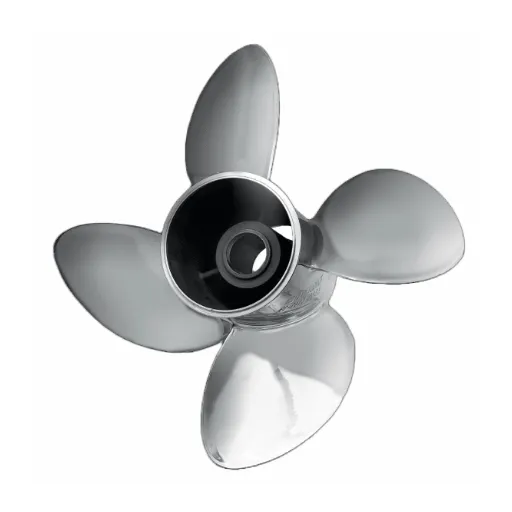
Four blades improve acceleration, help hold a plane longer at lower speeds, and maintain an increased grip. They are best for the watersports-savvy people or to counteract a steady ride over more rugged waters.
Three-Blade Propellers
A three-blade propeller performs at full speed and is generally pursued by boaters racing against speed and efficiency. The three blades are also very smooth and easy to work with over a series of engine types.
High-Performance Props
Whereby high-performance propellers promise the highest speeds as well as the highest precision. It is highly advisable for racing boats requiring acute handling and maximum air at escape speed.
Outboards by Mercury have been engineered to ensure a good balance of efficiency, durability, and reliability, thus catering to those boat owners whether they be recreational or professional.
Choosing Between Aluminum and Stainless Steel
Regarding outboard propellers, Aluminum props are great for budget-minded use and may be fine for some purposes. Stainless steel props work best with speedboats and applications with high demands, as well as for longer service life and better performance.
Specialty Propellers for Specific Needs
Propellers can be tailored to fulfill a wide range of user requirements ranging from regular boating to professional seafaring. These would include options for the most innovative materials and engineering technologies to make long-life, high-growth, and long-lasting profiles really efficient and durable within a strictly specialized working environment. Diverse propeller designs offer different speeds, agility and heavy-duty operation to ensure impressive time and joy. Hence, racing propellers are tuned for maximal speed and acceleration, while work propellers are made to carry out with the extreme thrust and power needed to push heavy loads.
Operating conditions play the predominant part in choosing specialty propellers. Stainless steel is the most commonly used material for modeling props specifically meant for saltwater, for its great corrosion resistance and strength. Deep-water throwers may want a special propeller with weed cutting technologies, larger robustness or more predictability to endure underwater impingement of marine debris, etc. These navigation conditions and vessel settings make fairly elective the pitch, diameter, blade count, and blade geometry of the propeller. Specialty props undertake highly stringent performance testing to verify the ability of these tools to stand the extreme operating conditions.
In various propeller technologies, developments have been made over the years such as implementations of variable-pitch propellers to encompass flexibility in adjusting blade angles so as to fully work best in different sets of conditions. However, propellers made of composite materials attempt to address the pure performance versus the cost benchmarks. Computerized-numeric-controlled (CNC) high-performance propellers push accurate trends to the brink, enabling the thrill seeker to get the most thrust and accuracy. All three elements, along with top-of-the-line maintenance and surveillance, must ensure that the custom-designed propellers meet the requirements of the modern shipping industry. The longevity of these propellers will thus be ensured for their length-time use.
Selecting the Right Prop for Your Engine
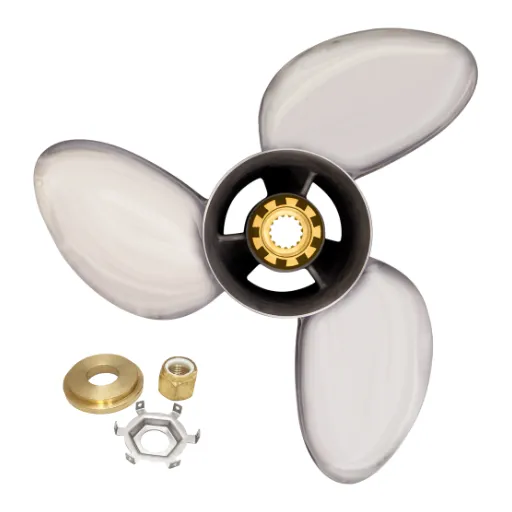
Understanding Engine Compatibility
It really does require people to appreciate the capabilities of the engines while trying to match the propeller to a particular sick engine. This is a delicate matter when it comes to propeller design, considering several other factors such as engine output, wind-up time, and reduction ratio, as these determine prop size, pitch, and material, in turn providing optimal maneuvering. The key is to make sure that one picks up the propeller that would pose the lowest amount of extra stress on the component and add to fuel burn while maximizing power.
It is just as important to consider the boat along with its intended use. For example, yachts built for sports and great speed will ideally come with a prop of a high pitch to ensure rapid acceleration. On the contrary, workboats and cruising vessels seek a prop providing the thrust desired for low-speed, thereby putting variable-pitch or modern composite types in the absolute best condition to adapt to any environment for all sorts of users. This should have been the main idea: nothing of all the over-budgeted ice-core-reading stuff regarding engine compatibility could ever be of any help in real-life situations faced by the vibrating hulla-hulla boat.
Engaging your engine manufacturer or marine propeller expert is a crucial step towards getting sound advice to help make a decision. They can recommend the optimal choice for your engine, and will provide useful info like the RPM and fuel economy. Most propellers at present are available in very reliable models because of the CAD design and elaborate testing for hydrodynamics while being manufactured. At marine conditions, the right prop matched with the engine provides optimum output and enhances its longevity at the same time.
Factors to Consider for Optimal Performance
⚙️ Key Factors to Consider
- Pitch and Diameter: Critical requirements that directly govern speed and thrust levels. Propeller pitch equates to the distance the propeller can theoretically travel in one full rotation, while diameter is the size of the propeller.
- Material Selection: Choose between light-weight and cost-effective aluminum or heavy and stress-proof stainless steel at either end of the propeller material spectrum.
- Blade Count: Three blades achieve top speed, while four or five blades provide faster hold with quicker planing.
- Fuel Economy and RPM: Select engines with mechanisms to make them more efficient on fuel over extended periods, ensuring optimal fuel usage within the chosen RPM range.
Common Mistakes When Choosing a Propeller
⚠️ Mistakes to Avoid
Ignoring Operational Requirements: Among the most frequent propeller-selection mistakes is paying less attention to the actual operational requirements of your boat. Factors such as boat size, its weight, and the kind of service leisurely cruising, fishing, maximum speed play a great role in deciding on the right propeller.
Choosing Based on Price Alone: Buying a propeller driven purely by the perceived lower cost is another mistake that people frequently commit. The use of economy propellers ultimately increases fuel consumption in the engine and also shortens its life; in the end, greater cost is brought on.
Mismatched Pitch and Diameter: Overlooking the adjustment of the diameter and pitch of the propeller against the power output and RPM range of the engine. These mis-placement stresses the engine hence all in all failing to contribute to any environmentally friendly operation and increasing one by one measures of wear and tear on the engine components.
Ignoring Environmental Conditions: Misjudging the environmental conditions, such as water salinity, temperature, or depth, may lead to wrong material, or blade counts. Corrosion and or inefficient use may, therefore, be the cause.
Neglecting Regular Inspection: The inability to inspect the regular referrals and performance monitoring of the propellers. Most efficient propellers need constant visual inspection of wear and tear, because lack of attention will readily compromise their efficiency and safety once any of the hitherto neglected problems begin to play ball.
Maintenance Tips for Mercury Propellers
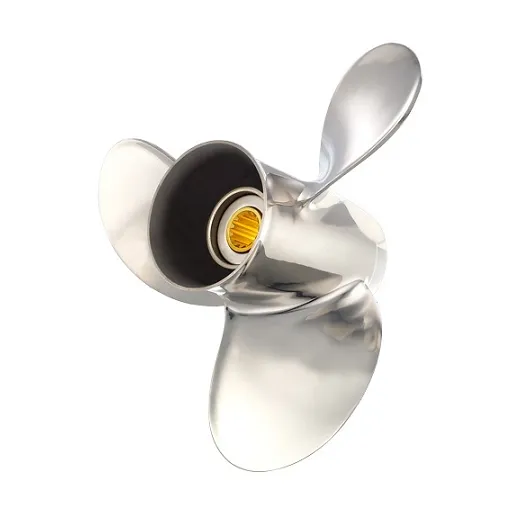
Routine Inspection and Care
The propeller of any Mercury product should be checked on a regular basis so that it functions optimally. Check out the blades for any damage, cracks, warping, or deformation. All these can affect the balancing of the propeller and ruin its performance. The other thing to consider is to inspect the blades. Even a small notch or a chip may give birth to cavitation, letting power escape through it. Lastly, one should just have a quick look at the hub’s area for any wear or corrosion that could destroy its integrity. Such checks should also be done after time to time or definitely after having moved through rough waters full of detritus.
Periodical maintenance entails completely cleansing the screw after each use. Saltwater enriched regions will most probably guarantee any presence of some corrosion as a leftover from any potential accumulation, whereas freshwater locations will always have some or the other dirt that will accumulate with the gradual passage of time. Combining a soft dry-cleaning brush with a well-dissolved cleaning solution loosens the accumulated dirt from the blades and hub. Under no circumstance should any abrasive materials, such as steel wool, be faced against the prop, which would make the prop all the more susceptible to further wearing and tear or even damage. Dry the prop completely after every cleanup to deter any future risk of moisture build-up.
Sustainment is determined on how well the propseller is maintained. Consistent lubrication of the hardware is paramount for the prop to last for the years to come. Make sure you follow the lubrication schedule to save the shaft from rust and to run smoothly. Make sure the castellated nut is properly secured and inspect the cotter pin for wear. Replace it if it is bent. The motor has a very lengthy life span, which can do the job for most applications if properly maintained by the concerned person and the initial expensive application handling should be maintained.
Cleaning and Protecting Your Propeller
🛠️ Maintenance Checklist
- Regular Cleaning: Wash the prop constantly and the surrounding parts, especially when encrusted with salt corrosion or dirt. Use a good prop wash to clean its surface smoothly.
- Apply Anticorrosive Sprays: Use anticorrosive sprays that limit detrimental reactions like rust and other forms of wear. Consider the type of propeller material for greatest impact.
- Marine-Grade Protective Coatings: Apply protective spray coatings that act as a barrier against moisture or harsh agents from the water, especially in high salinity conditions.
- Proper Storage: For boats moored on water, cleaning the prop is vital to prevent algae buildup or barnacles. Cover props of boats on trailers or dry docks.
- Store in Dry Location: If separated, make sure to store it in a serene and dry area away from moisture prone to impose an injury on it physically.
When to Replace Your Propeller
The first point of call when performance or efficiency dips is to consider replacing the propeller at once. An obvious sign might be that under identical RPM conditions, the boat seems to be running slower than formerly or face trouble during accelerations. This signifies that the propeller may be in worn condition or unnecessarily damaged. Moreover, apparent signs of damage indicate the need for immediate replacement to enhance performance and prevent the engine from further harm.
Added to that, there may also be increased vibration noticeable when the boat is in motion. Extreme vibrations would suggest that the propeller needs a rebalancing or that it is scratched or cracked from debris or collision. Since the propeller is causing further damage to different parts, working a ship under this condition is not only ineffective but in fact has some serious reparations to be made over other components.
One more thing that comes to my mind when boat usage requirements change is to change the propeller. All forms of recreational activities for pleasure or cruising on water or freshwater and times where fishing and water sports grow bigger will induce-and have done much potential reduction for a piece of metal, playing understandably with changing various propeller characteristics such as pitch or material. Many times, the best bet will be to know the warning signs and just replace the propeller any time needed. This will keep the boat running smoothly at all times over time and even protect it by guaranteeing good performance along the way.
Improving Boat Performance with the Right Propeller
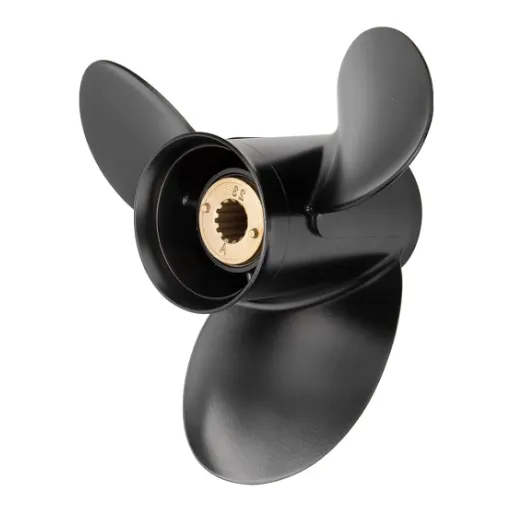
How Propeller Design Affects Speed and Efficiency
Propeller design is a vital factor in determining a boat’s speed and efficiency. A change in blade shape, pitch, diameter, and the number of blades changes the reaction of these propellers to water. For instance, a propeller with higher pitch will travel farther with each turn and that way increase speed while making performance worse under heavy loading and accelerating. In contrast, a propeller with a greater diameter will push more water, which may be good for heavier boats but may slow down the top speed a little bit.
The choice of material has allowed propellers to enjoy augmentation of both strength and endurance. Stainless steel propellers, thus, remain significant for their immense strength and durability; aluminum propellers are for lightness and affordability. Moreover, with new designs such as more heavily cupped blades and a mariad of almost-weedless propeller selections, escalating rough waterline conditions will find an easy opportunity of finery.
Shipbuilders and marine experts have emphasized the importance of matching your propeller to your engine and intended cruising as close as possible because of the effects of wind and current and ship’s balance calculations. Provided scenarios indicate that, for such kind of commercial boats, driven at merely a handful of its geared-up speeds-a harbor SWATH and a pontoon ferry, respectively-typical propulsion can cause an increase in fuel consumption of more than 10% of its total owing to an error in the overall choice of propellers, while faster speeds once made possible eat up more fuel. Therefore, always consider investing in that sole edge of knowledge over specific propeller specifications that can save fuel for you, enhance performance, and modify vessel attributes to your personal boating requirements.
Adjusting Propeller Pitch for Better Performance
Boat performance has been dramatically interconnected with propeller pitch which refers to how far the hook or distance the blade would apply once revolving. Setting pitch, as it were, can profit the crafts when programmed for maximum speed, fuel economy, or engine life in deference to different boating conditions. Basically, a high-pitch prop is the kind that would affect more distance per revolution but is excellent for top speed because the trade-off is that it would take more engine power and might jeopardize acceleration. On the other hand, a low-pitch prop allows snappier acceleration and would often make sense for pulling sorts of activities that require prolonged reps, like water skiing or wakeboarding-though typically at the cost of top speed.
💡 Performance Tips
- Propeller construction today allows for remarkable leeway in manufacture to give the vessel a performance-based framework replete with multiple variable features, depending on choice.
- Opting for moderate pitch variations during drag trials has shown beneficial application in helping a vessel tailor her performance.
- Shaving just one inch off pitch could subtract about 4 to 6 seconds from the time it takes for a vessel to speed up, thereby pointing more toward berthing and negotiating through narrow waterways.
- As the propeller liaises with engine analytics, it will uphold the set engine RPM within range and amend in case there are developing trends in RPM out of suggested.
Henceforth would be the efforts that boat owners and marine technicians enact to predict the performance of numerous configurations. Such efforts include actual testing and software simulation tools. The actual data generated from the sea trial test will show the effect on terms like fuel consumption, rpm, and thrust output to help evaluate certain pitch modifications. With full-time maintenance and professional guidance, the propeller would be kept in top-class condition, thereby complimenting the boat’s end goal of fuel-efficiency and fun.
References
-
Massachusetts Institute of Technology (MIT): Design and Numerical Analysis of an Unconventional Surface-Piercing Propeller – This thesis includes contributions from Mercury Marine and provides detailed propeller data and analysis.
-
Worcester Polytechnic Institute (WPI): Multi-Domain Vehicle Concept for Detecting Oil-Based Water Pollution – Discusses propeller functionality in various mediums, which may provide insights into propeller design and performance.
- Click here to read more.
Frequently Asked Questions (FAQ)
Q: What are the main advantages of using mercury boat propellers in consideration of my outboard or sterndrive?
A: Mercury boat propellers are made to match the line of Mercury engines to offer all-out performance, fuel economy and handling. Whether you select a Bravo sterndrive propeller or go for the outboard model, the brand gives accent for durability, digitalizing and matching the designs, and has stresses that give less cavitation and more acceleration.
Q: How do I know the recommended size and pitch for mercury boat propellers?
A: Choosing the right size and pitch all depends on how much your boat weighs, how many horses your engine churns out and how you use the boat. Feel free to peruse Mercury’s propeller selector charts or email us and ask for a recommendation. Factors like enertia, load and characteristics of Bravo One series will affect whether you should go with the smaller pitch for quick acceleration or the higher pitch for outright top speed.
Q: What is the difference between Bravo, Bravo One and other Mercury propeller models?
A: The Bravo brand is a heavy performer and durable family of Mercury propellers, particularly the stern drive. Bravo One is like a select lower unit or single-prop design optimized for a group of sterndrives. Weight of other models make certain trade-offs; indeed, one would be an eye on top speed, while some opt for durability, while some go in for hole shot; hence, there is a range that should match your brand-new Mercury propeller to your engine (or layout) and your style of boating.
Q: How does propeller design affect fuel consumption and acceleration inertia?
A: The size, pitch, and diameter of propeller blades impact fuel economy and the moment of inertia when accelerating. A well-matched Mercury boat prop reduces drag and consumption at cruising RPMs. Picking a prop with too large a pitch puts more load and moment of inertia on an engine, which squeezes and increases the acceleration that the boat may be looking for, so you simply get less efficiency.
Q: What should I expect with regard to pricing and maintenance with Mercury boat props?
A: Pricing will depend on the model, material such as aluminum over stainless steel, or whether it is a member of the performance line, like Fury, or the standard Bravo range. Stainless models priced costlier with digital match cost more not only due to greater longevity but also for improved performance. Free maintenance guarantees dings, hub wear, and balanced blades, which is essential to protect your investment and maintain efficiency.
Q: Can I get a Fury or other performance prop on my existing Mercury setup?
A: Yes, many situations occur where one or the other must be upgraded to Fury or similar higher performance propellers for better acceleration or faster top speeds. Your engine hopping and changing gears will need to be ensured for compatibility; simply ring us wherever you are somewhere, at any time, and under any circumstance, or seek guidance on fitment, gear case compatibility, and possible trim adjustments to maximize these gains.
Ready to Maximize Your Boat’s Performance?
Choose the right Mercury propeller today and experience the difference in speed, efficiency, and control on the water. Your perfect boating experience awaits!