The outboard propellers are the nobodies that give power and efficiency for gliding over the water with ease. If you are an avid boater or just embarking on your maritime journey, it is important to know the significance of choosing the right propeller in order to get the best performance from your boat. Offering the full range of choice to meet various boating requirements, Mercury boat props are well-known for their innovation and quality. Consider this your comprehensive step-by-step guide to all things Mercury outboard propellers, empowering you with the right information to lead your choice-making process to enhance your boating experience.
Understanding Mercury Propellers

What is a Mercury Outboard Propeller?
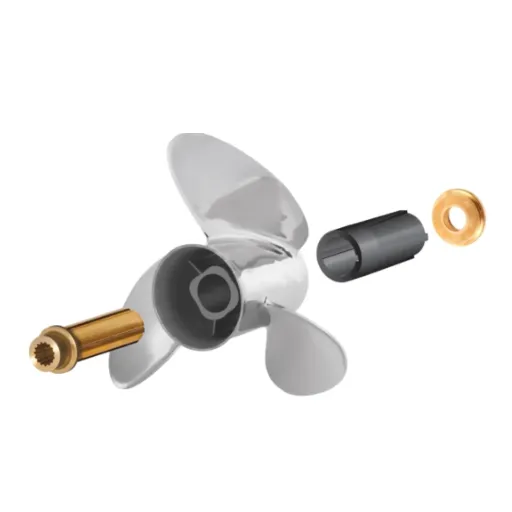
The Mercury outboard propeller is fitted to the boat engine and translates engine power into thrust to push the boat through water. Mercury propellers are designed for maximum performance, efficiency, and durability, with options available for various engine types, water conditions, and boats’ requirements.
The propellers are manufactured in different materials, aluminum and stainless steel most commonly, to meet various durability and price needs. Aluminum propellers are lightweight and much cheaper, hence favoring casual boaters. On the other hand, stainless steel has the best strength and performance, which is advantageous in speed and other strenuous uses. Moreover, Mercury propellers come in different sizes and blade configurations, affording the boater tuning arrangements for best speed, acceleration, and fuel economy.
Mercury outboard propellers adopt technically advanced techniques, with blade designs and coating materials with specialized features to maximize their efficiency and minimize wear over time. With the right propeller for your boat and mode of use sporting good control and better performance, the enjoyment is guaranteed: smooth and reliable boating.
Types of Mercury Boat Propellers
There is a wider range of boat propellers offered by Mercury to suit the wide-ranging boating needs, activities, and types of vessels. Each has been designed, considering features for improving performance, durability, and efficiency.
🔧 Aluminum Propellers
Aluminum propellers find high demand with the recreational boating community because they are less expensive and more versatile. They offer lightweight protection against corrosion and are generally “everyday” usage, making aluminum also suitable for leisure boating or fishing trips.
⚡ Stainless Steel Propellers
The more hardened and maximized performance-providing propellers are the stainless-steel ones. These remain resistant to damage and deformation in such strong conditions that they make almost the best choice for speedy boating or rough-water navigation. Many feel they offer a better propulsion efficiency than aluminum propellers.
🌊 Four-Blade and Five-Blade Propellers
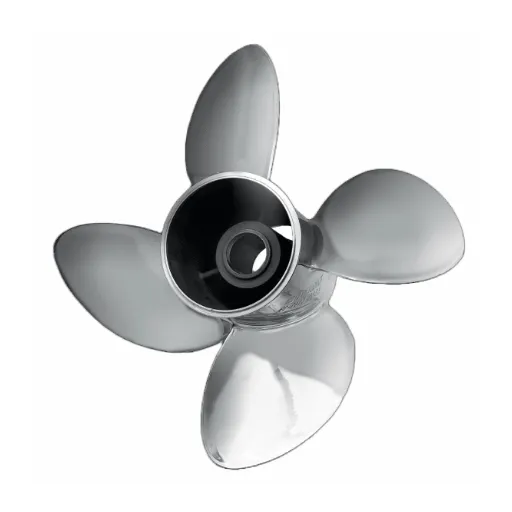
Because of their four blades, these propellers have the ability to accelerate better, give smoother handling, and perform perfectly well in the midrange; hence, an exemplary choice for water sports or a heavy load. Five-blade propellers are meant for high-performance speedboats, with speeding, efficiency, and quietness on top of the priority list.
💡 Pro Tip: Get the right kind of Mercury propeller for your particular boat and use to enhance fuel economy, improve handling, and give a pleasurable boating experience. While making the selection, always bear in mind an engine power, hull type, and typical activities of the boat.
Key Features of Mercury Marine Propellers
Mercury Marine propellers are developed through advanced engineering processes to provide performance across diverse boat types. Some of their most notable features include the superior craftsmanship that ensures durability and trouble-free working, even under strenuous situations. The thrust-forceful centrifuge blade designs favor maximum boat performance while requiring little energy. These are innovative and help improve thrust and fuel economy.
The other key feature is a wide variety of materials and finishes that Mercury provides. Stainless steel types, for instance, provide extra durability; meanwhile, aluminum types tend to be lightweight and cost-effective options that can be customized for different needs. Several choices include corrosion-resistant finishes, which makes them usable in both freshwater and saltwater environments. These materials and finishes will help the propellers last and perform well while resisting damages.
Mercury propellers are offered in a wide variety of sizes and styles suited to different types of engines and boating activities. Mercury provides tailored propellers for water sports, cruising, or fishing aimed at conforming to the specific requirements of your boat. This flexibility ensures that each boater can find a product that matches their precise needs and compliment their entire boating experience.
Selecting the Right Mercury Prop for Your Boat
⚙️ Factors to Consider
Boat Size and Engine Horsepower
While selecting a Mercury propeller, two things become important to consider: the size of the boat and the engine horsepower. The weight and size of the boat play a considerable role in the kind of propeller that will best function. The larger the boat, the bigger the diameter and pitch of the exterior they will need to push it properly; on the other hand, smaller and lighter boats can perform at their best with a smaller and more response-driven design. An Efficient match between your propeller and your boat size will warrant that the job is done well without taxing the engine.
Engine horsepower is of equal importance in the selection process. The power output of your engine will determine its capacity to take different propeller sizes, pitches, and numbers of blades. Higher-horsepower engines can accommodate a greater variety of propeller choices, including those built for high-speed and towing applications. However, lower-horsepower engines might need propellers that rate fuel efficiency and torque to ensure smooth handling and power transfer. Selecting an appropriate propeller for your given HP rating will help in performance improvement as well as offering longevity to the engine by eliminating wastage due to wear and strain.
Bottom Line: By considering both aspects about the boat size and horsepower of the motor, one can earn a truly balanced set-up for her or his exact closet in boating. In the long run, an apt Mercury propeller shall not only increase acceleration but speed and fuel economy also, thus making every trip on water a pleasure and a smooth one to carry on.
Choosing Based on Intended Use
Choosing a Mercury propeller depends largely on the intended use of a boat, because each sort of operation places different requirements on its performance.
- 🎣 Fishing:
A fisherman’s priority usually rests on precision and control. Working in shallow or tight waters usually requires a prop offering the best low-speed handling and thrust, and, therefore, should not have too much pitch.
- 🏄 Watersports:
Watersports wakeboarding or tubing usually demand good acceleration and can hold constant speed. Therefore, the hole shot is the slight pitch of the propeller that lets a boat rapidly pull skis or tubers out of the water and tow at constant speeds.
- ⛵ Cruising:
If cruising is your main concern, go for a propeller that offers fuel efficiency and smooth action for longer distances. The high-pitched propellers generally allow for better top-end speeds, greater fuel efficiency on long-distance cruising. Anyway, knowing exactly what your boating activity focuses on will go a long way in narrowing the options for the perfect propeller capable of giving you that extra ideal performance on any venture that you intend to embark upon.
Assessing Water Conditions for Optimal Performance
One needs to understand the state of water to set a boat for its best performance. The depth of water, temperature, the salinity level, and the currents all contribute significantly in determining the boat’s performance. Shallow waters may demand special propeller designs to avoid damage; in fact, in deep waters, there are really no performance implications at all. The warmer or cooler conditions enormously tend to affect water density and, in turn, influence the motion of a boat across water.
🌊 Water Condition Considerations:
- The calm waters lead to higher speeds and better fuel efficiency because there is little resistance on the hull. In contrast, in rough waters with big waves, adjustments will be necessary for stability and security.
- Most boats for rough waters will have hull shapes or propellers designed for stabilization and control so as not to stress the engines. When you know how currents flow in your waters of interest, you can also figure good routes for efficiency and less fuel consumption.
- Salinity is especially important on vessels operating in salt water. Increased salinity levels can promote corrosion of propellers and such other elements of the boat if maintained poorly. Selection of materials like stainless or composite for the propellers helps to avoid such problems.
Another of common-sense measures would be to keep them clean and apply antifouling coatings, preventing such damage in the long run. Taking care of and preparing for such environmental issues would help maximize the performance, life, and safety of a boat in whatever conditions it faces on water.
Advantages of Upgrading to a High-Performance Mercury Propeller

Boosting Speed and Acceleration with a High-Performance Prop
When a Mercury high-performance propeller is fitted to a boat, the whole technical ability of the boat to reach its best performance, speed, and acceleration might ultimately depend on the interactors in this setting. Made with top technical engineering and cutting-edge material properties, the propellers cut down on drag while thrusting the boat with maximum force, allowing smooth and fast navigation through water. Advanced design features let the propellers put to good use their blade designs and higher rake angles to secure better handling, with the downside being that cavitation will be mitigated, while better gripping is obtained even in rough waters. For an edge in performance from either competition or just recreation, high-performance propellers will always be the first step.
🚀 Key Performance Benefits:
A major merit of the high-performance propeller is the conversion of hole shot speed of a boat: the very rapid acceleration from a standstill to planing speed. For this purpose, careful selection of pitch of blades and their surface area is paramount for instant and efficient propulsion. Mercury high-performance props are able to address a variety of boating requirements, such as cruising, watersport, and racing. Hence, it operates every boat to its fullest potential. The proper propeller will allow an engine to work within the outside RPM range while keeping it from exerting itself—and that in turn will cause improved fuel economy and top performance.
Made from highly durable high-grade stainless steel for demanding sea environments against saltwater corrosion and merciless debris. For instance, research and tests have shown stainless steel propellers last about five times longer than aluminium ones, thereby giving better value for money over time. Apart from increased speed and acceleration, upgrading to a Mercury High-Performance propeller offers more durability and a longer lifespan—the perfect choice for avid boaters. Whether cruising through calm waters or hitting through aggressive waves, these props always give that swift and fiery feel.
Improving Fuel Efficiency through Propeller Choice
Fuel efficiency, a focal point for all boaters, must be considered since it impacts the costs of operating and the environment at the same time. The propeller is very important in this respect for fuel optimization. When paired with the appropriate propeller, the engine runs in its ideal range of RPMs, thus performing without strain and needless use of fuel. Materials of the blades, diameter, pitch, and number of blades all influence the efficiency of a propeller in converting engine power into forward motion.
💰 Fuel Efficiency Enhancements:
- Stainless steel propellers provide a great deal more rigidity than those made of aluminum, which results in the blades flexing less at high speed, resulting in better thrust performance.
- Some manufacturers also make use of pinpoint blade designs so that drag is kept to a minimum, while propulsion efficiency is maximized.
- Thanks to the engine performance monitoring systems coupled with these propellers, boaters are now able to obtain better mileage and eventually keep fuel consumption expenses at a low.
Taking a propeller top-speed maximization approach must always marry with regular maintenance checks and proper habit formation while boating. Cleaning the propeller off marine growth, keeping the boat off being jittery from overload, and practically maintaining constant speeds will definitely take the notion of efficiency even higher. If such is the brownie point, then a high-performance propeller will be a worthy investment to bring in savings and protect the environment, alongside it, for the boat owner who wants utmost efficiency in managing his/her gains on the water.
Enhancing Overall Handling and Maneuverability
Handling and maneuvering are quintessential for a safe and smooth boating experience. The performance of a boat changes with various factors that include design, dimensions, and weight of the boat together with the efficiency of its steering systems. With an upgrade to better means of steering, say hydraulic or electronic, the boat might pick up a higher response in different water environments and ease steering. Conversely, a good distribution of weight on the boat, with a balanced load, will further lessen drag and stabilize the boat for smoother navigation.
The other major variable for better maneuverability is the choice of the right propeller. A precision-performance propeller could allow a boat to react quickly to steering inputs in a confined space or docking situation. Variable-pitch propellers, especially, are great in that they confer the ability to vary propulsion according to the speed and water conditions. This gives the boat operator a little more leeway for fine adjustments. In addition, boaters can also adjust the trim so as to maximize performance. Trimming the engine correctly could raise either the bow or stern and affect how well the craft cuts through water at various speeds.
Advanced navigation and stability technology can truly revolutionize the control that a boater feels over their vessel. GPS-based autopilots, gyroscopic stabilizers, and bow thrusters give fine precision and assistance in steering, especially in rough waters or cramped marinas. Gyroscopic stabilizers, in particular, reduce rolls by resisting wave motion, which provides for a much smoother ride. Meanwhile, the regular inspection and maintenance of rudders, thrusters, and other control systems must be done to ensure the best performance for a long time. These will very much complement each other by improving maneuverability while guaranteeing utmost safety and comfort to everyone aboard.
Maintenance Tips for Mercury Boat Propellers
🔧 Essential Maintenance Checklist
Proper Cleaning Techniques for Longevity
First and foremost, you need to take care of Mercury boat propellers to increase their durability and performance. Sometimes, it may need cleaning to prevent corrosion, accumulation, or damage from debris or marine growth. Start by taking off the propeller from the boat so you can reach all the surfaces. Next, clean the propeller with warm-soapy water using a soft brush so as not to rub against the finish. Do not use aggressive cleaners or abrasive tools that might strip away the finish or the metal itself.
- After washing, inspect the propeller for signs of wear or damage like cracks, dents, or chipped edges, as these imperfections can severely reduce efficiency and increase fuel consumption.
- Applying a reputed marine cleaner could work wonders if the marine growth, like algae or barnacles, stands tough against removal, dissolving it without hurting the material.
- Apply a protective wax or anti-corrosive spray to prevent saltwater and environmental degradation once washed. This protection layer may inhibit rusting and may make cleaning easier later.
Inspection for Damage: What to Look For
Regular inspection of your Mercury boat propeller is essential to identify any potential issues that may hamper performance or pose a threat to safety. Begin by giving the propeller blades a thorough visual inspection and check for damages like cracks, chips, and distortions. Even a slight imperfection is enough to throw off the propeller’s efficiency and cause vibrations to occur or loss of momentum.
Storage and Installation Recommendations
- Clean the prop carefully to forbid any dirt, salt, or marine growth from scattered formations in corrosion or deterioration.
- Wrap propeller in a protective cover or padding and store in a dry area with a climate-controlled setting to make it moisture-free.
- Apply lubricant during installation to decrease friction between metal parts during assembly.
- Double-check that the cotter pin or locking mechanism is installed correctly so that it cannot become undone during operation.
Comparing Popular Mercury Propeller Models

Material Considerations: Aluminum vs. Stainless Steel
Propellers made of aluminum are lightweight and affordable and good for casual boating activities; stainless steel propellers are sturdy and efficient and recommended for high-power uses.
Choosing the Right Pitch: Understanding Propeller Pitch in Performance
The choice of the correct propeller pitch depends greatly upon boat performance. Pitch is understood as the distance a propeller moves forward in one complete revolution, without any slippage. Low pitch propellers offer more power and acceleration—these being great features while water skiing or towing. High pitch propellers, on the other hand, offer a better top speed, besting for quick top speed over long distances.
🎯 Performance vs. Intended Use:
- If you are constantly working at higher speed, then a higher pitch propeller will be more efficient for the higher RPMs.
- For situations that need more low-speed torque, like heavy loads or watersports, a lower-pitch propeller should be preferred.
- Other considerations include the horsepower of the engine and weight of the boat.
💡 Expert Advice: Give first priority to testing and adjustments for the best pitch for your boating requirements. Checking engine RPMs and performance during the sea trials is how you verify if the propeller pitch is apt to your requirements. Proper choice and adjustment of the pitch go a long way in improving performance, while also bettering the longevity and efficiency of your boat’s engine.
References
- University of Wisconsin-Milwaukee – Mercury Rigging Guide: This guide provides detailed information on Mercury Marine rigging, including propeller specifications and mounting instructions.
- Academia.edu – Series of Posters on Mercury Marine & Outboard Marine Corporation: A series of academic posters discussing Mercury Marine propeller guards and related legal cases.
- New York State Division of Military and Naval Affairs – Mercury 150 FourStroke Manual: This manual includes information on propeller materials and their applications for Mercury Marine products.
- Louisiana Wildlife and Fisheries – Stainless Steel Propeller Specifications: Details on stainless steel propellers designed for mid-range horsepower boats, including compatibility and performance.
- NOAA – Outboard Motor Lower Unit Overview: Explains the function of outboard motor components, including propellers, and their role in boat performance.