Propellers mean everything for performance and lifespan of your Mercury outboard motor. Whether you’re a beginner or seasoned sailor, understanding propeller choice, installation, and maintenance is of paramount importance. This comprehensive guide removes some of the mysteries, answering your key questions to help you achieve top-notch boat speed, handling, and fuel consumption. Expert advice and practical tips will keep your Mercury outboard running breathtakingly in every boating adventure.
Understanding Mercury Outboard Propellers
What is a Mercury Outboard Propeller?
The Mercury outboard engine, through its propeller, translates engine power into thrust for the boat’s locomotion either forwards or backwards upon the water. This process involves rotation of blades at different speeds, pushing water and generating the desired force to propel your vessel in the right direction.
A propeller is specially designed to enhance its performance based on such factors as boat type, engine power, and water conditions. Different propeller sizes, materials, and designs are available to accommodate various applications within Mercury. This flexible approach ensures that boaters have the right prop for their specific application. Aluminum and stainless steel are the commonly used materials, with aluminum as a cheaper option and stainless steel offering superior durability.
⚠️ Important: Selection of the correct Mercury outboard propeller is vital to efficient engine operation, achieving maximum speed, and offering responsive handling. The wrong propeller can easily become a nuisance by overloading the engine, bringing performance levels down, and consuming more fuel.
Types of Mercury Outboard Propellers
Mercury outboard props come in various types and materials designed for varying nautical demands. Most are built in aluminum and stainless steel. Aluminum propellers are lighter and more affordable, considered ideal for recreational and leisure use, while stainless steel ones offer better durability and performance, encouraging faster speeds and burning less fuel, making them excellent selections for high-performance or long-term deployment.
Mercury also provides a variety of propeller styles that best fit the activities in which powered boats are engaged:
- Three-Blade Propellers: Offer a good all-around balance of speed and thrust, well-suited for most boating conditions
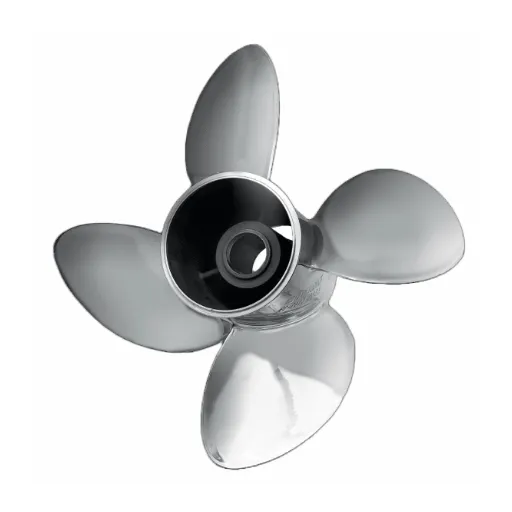
- Four-Blade Propellers: Provide more control and performance under challenging boating conditions, especially popular when towing or navigating large seas
- High-Performance Options: Special propeller categories that ensure maximum speed and precision in racing or specialized marine applications
Benefits of Using a Mercury Propeller
✓ Improved Fuel Efficiency
Mercury propellers optimize fuel economy by reducing drag and allowing better propulsive performance. Stay out longer while saving on gas.
✓ Increased Boat Power
Mercury propellers ensure faster speeds, quicker acceleration, and easier handling. Perfect for cruising, fishing, and water sports.
✓ Long Lifetime
Made with stainless steel and aluminum to confront harsh maritime environments, ensuring prolonged service even under demanding conditions.
✓ Enormous Selection
Mercury propellers come in a plethora of options, tailored to boat types, engine speeds, and water conditions.
✓ Cutting-Edge Technology
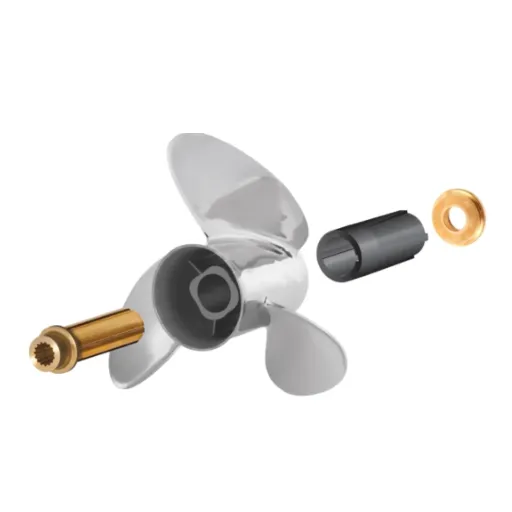
Featuring impressive designs like the Flo-Torq system that reduce noise and vibrations, ensuring smooth, seamless operation.
Choosing the Right Mercury Propeller for Your Boat
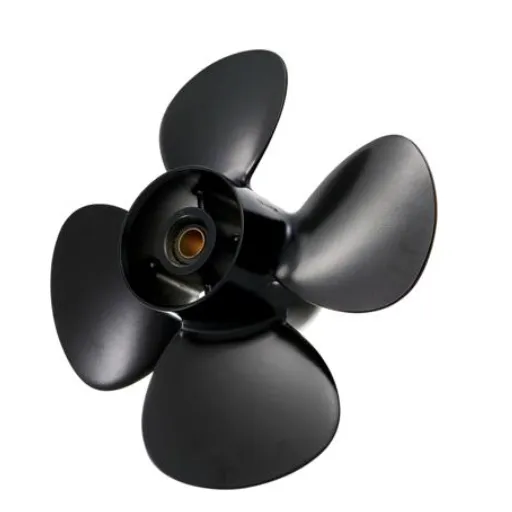
Factors to Consider When Selecting a Propeller
🚤 Type of Boat and Usage
Consider the kind of boat you own and its intended usage. Fishing boats used for trolling require propellers with more thrust for low-speed cruising, while boats designed for maximum speed require propellers with faster acceleration capabilities.
🔧 Material
Propellers usually come in aluminum and stainless steel. Aluminum is lightweight, more affordable, and best for light to moderate use. Stainless steel is more durable and delivers better performance, particularly in extreme conditions, but costs more.
📏 Pitch and Diameter
Propeller pitch measures how far a propeller advances in one revolution, while blade diameter is the overall width of the blade circle. Getting the right pitch and diameter for your engine’s power and speed requirements is crucial.
⚙️ Number of Blades
A three-blade propeller offers a good balance between speed and efficiency, while four to five-bladed propellers provide better grip, improved handling, and a smoother ride, preferred for watersports or heavy loads.
⚡ Engine RPM Range
It is extremely important that any propeller operates within the recommended RPM range of the engine. Operating outside this range experiences performance loss, excess fuel usage, and detrimental engine wear.
🌊 Water Conditions
Consider the type of water conditions you’re likely to face. Testing waters or waters with debris require more heavy-duty propellers, while calmer waters can be navigated with lightweight speed-focused propellers.
Understanding Pitch and Diameter
Pitch and diameter are two critical specifications to consider when choosing a propeller for your boat. Diameter refers to the circle formed by the rotating blades, playing a remarkable role in generating thrust and power. Larger diameters usually generate greater thrust, ideal for larger boats or operating under severe circumstances. Smaller diameters are generally preferred for lighter boats since they allow smooth acceleration and high speed.
Pitch refers to the distance the propeller would travel in one full rotation if there were no slippage. Higher pitch increases speed but requires more engine capacity. Conversely, lower pitch propellers provide good acceleration and are suited for watersports, towing, or carrying heavy loads.
💡 Pro Tip: The selection of proper pitch and diameter should establish a balance based on your boat’s weight, engine type, and desired performance. Combining this knowledge with Mercury’s latest advances will equip you to make the most efficient choice.
Comparing Aluminum vs. Stainless Steel Propellers
Aluminum propellers are cheaper, lighter, and easier to repair, but less durable and not as efficient. Stainless steel propellers are more expensive but have a reputation for being incredibly tough with high efficiency and fuel economy.
| Key Point | Aluminum | Stainless Steel |
|---|---|---|
| Cost | Low | High |
| Durability | Moderate | High |
| Performance | Basic | Superior |
| Flexibility | High | Low |
| Weight | Light | Heavy |
| Repair Ease | Easy | Difficult |
| Top Speed | Lower | Higher |
| Fuel Economy | Moderate | Better |
| Environment | Calm | Abrasive |
| Usage | General | High-performance |
Installation of Mercury Outboard Propellers
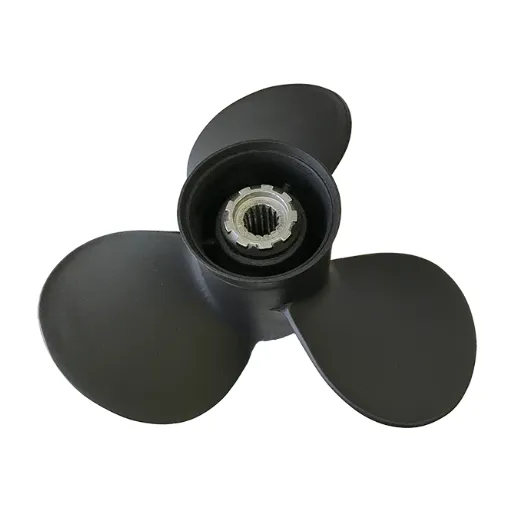
Step-by-Step Installation Guide
Proper installation of a Mercury outboard propeller is essential to ensure the best performance. Follow these steps to securely and effectively install a new Mercury outboard propeller:
Step 1: Preparation and Safety
Start by turning off the engine and ensuring the working area around the propeller is secure. Put on protective gloves to protect your hands from sharp edges, while gathering all required tools like socket wrenches, pliers, and grease.
Step 2: Removing the Old Propeller
Straighten and remove the cotter pin from the propeller shaft using pliers. Next, loosen the nut at the propeller’s base with a wrench until the propeller spins freely. Once loose enough to be twisted off by hand, remove the nut altogether, then the old propeller will slide off the shaft.
Step 3: Inspecting the Propeller Shaft
Inspect the propeller shaft for any damage, wear, or foreign particles. Clean the shaft using a dry cloth before applying a light coat of marine grease to prevent corrosion and allow easy installation of the new propeller.
Step 4: Installing the New Propeller
To avoid scratching the nylon drive bushing, line up the new prop on the shaft and slide it carefully into place. Install a new thrust washer if appreciated for its excellent capability to absorb play between prop surfaces.
Step 5: Securing the Propeller
Fit the nut onto the shaft and tighten with a wrench. Tighten appropriately without over-torquing, which might crack the nylon bushes. Once securely tightened, use a new washer and split pin to secure the nut. Rotate the propeller by hand to verify it doesn’t bind before starting the boat.
Common Installation Mistakes to Avoid
❌ Using the Wrong Tools
Using unsuitable tools results in improper propeller mounting or damage. Ensure you have the correct tools, including the right-size wrench, socket, and torque wrench.
❌ Skipping Hub Inspection
Failing to inspect the propeller hub for cracks, wear, or damage can lead to operational and mechanical issues. Always check the hub before installation.
❌ Incorrect Tightening
Overtightening or undertightening causes propeller wobbling or drive shaft stress. Torque as recommended by the manufacturer.
❌ Neglecting Lubrication
Regular greasing of splines with marine grease is essential. Skipping this causes corrosion and difficult removal.
❌ Improperly Secured Cotter Pin
Double-check that the lock or cotter pin is properly secured to prevent the propeller from getting loose during engine operation.
Tools Required for Installation
🔨 Rubber Mallet
Helps press the prop gently into place without causing harm
🔧 Propeller Wrench
Provides the right grip on the prop nut for tightening
✂️ Needle-Nose Pliers
Perfect for holding the cotter pin during installation
🛢️ Marine Grease
Ensures threads never rust or jam under all conditions
⚙️ Torque Wrench
Specialized for tightening to manufacturer’s specifications
🧻 Shop Towels
Keep the work area clean during installation
Maintaining Your Mercury Outboard Propeller
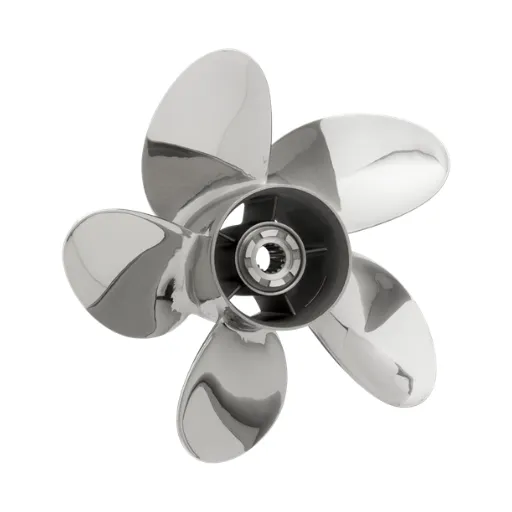
Regular Maintenance Tips
🧹 Cleaning Marine Debris
To prevent galvanic corrosion or excessive strain on the engine, remove any marine debris, fishing line, or vegetation wrapped around your propeller shaft after each use.
💧 Lubrication of Propeller Shaft
Apply marine-grade grease on the propeller shaft as needed to prevent corrosion and ease removal for the next time. This is particularly crucial when working the motor in saltwater, which accelerates corrosion.
⚖️ Balancing the Propeller
An irregular, unbalanced propeller causes outboard engine vibration, decreasing its life. Do proper balancing using a propeller balancing tool or check frequently with your mechanic.
🛡️ Inspecting for Corrosion
Repeated exposure to salt water leads to propeller corrosion. Always rinse the propeller with fresh water after a saltwater run. Spray the propeller with anti-corrosion spray when reusing your boat.
✅ Check Proper Installation
Ensure everything is done properly as per Mercury’s instructions. Tighten the propeller nut and secure it using a cotter pin for the least chance of accident or operational malfunction.
💡 Maintenance Tip: These routine checks and tips will work wonders in making your Mercury outboard propeller last longer and help keep it in top shape for every water outing.
Identifying and Fixing Common Issues
⚠️ Propeller Damage or Wear
Chips, cracks, or bent blades can greatly hinder the performance of your Mercury outboard motor. Be on the lookout for signs of damage on the propeller. Minor damage may be fixed by cutting and finishing the blades, but significant damage generally requires professional repair or complete replacement.
⚠️ Cavitation Issues
Cavitation results from air bubbles forming around a propeller, diminishing its efficiency and causing shaking. Air bubbles may be caused by improper propeller installation, incorrect pitch, or damaged blades. Regularly check for fitment issues and ensure the propeller adheres to manufacturer’s specifications for your Mercury engine.
⚠️ Loss of Speed or Thrust
If your output speed or thrust is affected, a spun propeller hub could be responsible. This happens when, after some impact, the rubber hub in the propeller slips. To repair this, replace the propeller hub with a technician or use a hub repair kit if damage is moderate.
⚠️ Vibration While Operating
Excessive vibration indicates an imbalance caused by foreign material like debris, fishing lines, or shaft foul-ups. Remove the propeller, clean it significantly, and clear out any tangles that can cause misalignment or damage.
⚠️ Overheating Engine
A worn-out propeller puts extra load on the motor, causing it to overheat. Look for seaweed or anything significant hindering smooth spinning, and check if pitch and diameter are suitable for the motor power.
🔧 Important: Addressing these common propeller-related issues quickly increases the performance and longevity of your Mercury outboard engine.
When to Replace Your Propeller
Your propeller needs replacement when it starts giving continuous performance issues after maintenance has failed to fix them. For example, if your boat is unable to reach its usual speed or has poor gas mileage even after routine care, this signals that there’s an issue with the propeller requiring replacement. Severe damage like chips, cracks, or dinged blades necessitates immediate change, as they compromise both safety and performance.
Signs You Need a New Propeller:
- 🔴 Engine RPM Changes: If RPM no longer matches the original application, the propeller is likely no longer compatible with your motor
- 🔴 Boat Modifications: If you’ve changed anything in the boat, such as adding weight or changing its purpose, you’ll need a different propeller for optimal performance
- 🔴 Age and Material Wear: Propellers wear out with time and use, even with proper maintenance
- 🔴 Upgrade Considerations: If your aluminum propeller has survived few seasons of brutal use in rough waters, consider upgrading to a stainless steel propeller for proven resilience and better performance
Right-on propeller maintenance keeps your Mercury outboard engine running nicely and lets you enjoy trouble-free boating.
Optimizing Performance with Mercury Outboard Propellers
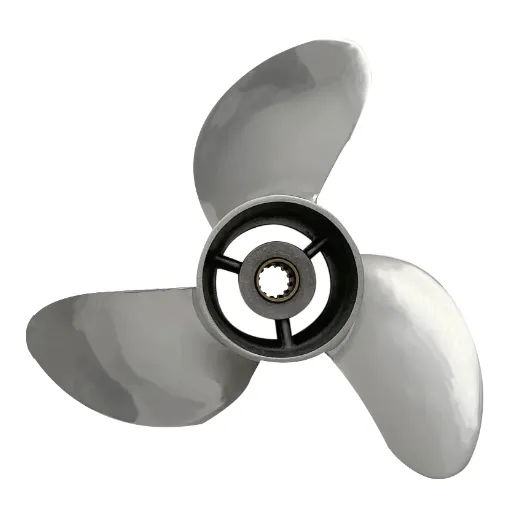
Performance Tuning for Your Boat
Optimal performance is a function of a perfectly matched propeller within a vessel. The crux of the matter lies in the propeller you choose for your needs. Various factors such as pitch, diameter, material, and number of blades affect your boat’s speed, fuel economy, and handling.
For example, lower pitch propellers excel at quick acceleration and response, working like a wonder for skiing and load carrying, while higher pitch can be a challenge requiring more engine power. Bear in mind the propeller material: while aluminum is a more economical and lighter option, stainless steel promises incredible longevity under severe conditions.
⚡ Performance Optimization Tips
- Monitor engine RPMs to ensure the propeller balances against the engine properly
- Operate safely within the recommended RPM range set by the manufacturer
- Experiment with different propellers after testing to see improvements in boat feel and water performance
How Propeller Selection Affects Speed and Fuel Efficiency
The propeller plays a significant role in your boat’s overall performance in terms of both speed and fuel efficiency. The selection of the right propeller depends on numerous considerations such as boat type, engine power, and intended usage. A well-matched propeller allows the engine to operate within its optimal RPM range and provides more thrust without undue stress, assisting in achieving desired speed while prolonging fuel economy over time.
For example, larger dimension propellers provide higher thrust, making them perfect for heavy loads or boats actively involved in tow activities. Conversely, high-pitch propellers give your boat high speeds; however, they demand more power from the engine, which can put fuel economy at a disadvantage. If propeller specifications are closely analyzed with reference to your boat’s specific demands, you can get the right amount of speed while maintaining fuel economy.
💡 Pro Tip: Use propeller calculators and performance-tracking apps to gain unique perspectives. This data-oriented approach, combined with testing, will help you discover how propeller selection directly influences your boat’s performance both on the water and at the fuel dock.
Using Performance Enhancements like the Spitfire and X7
Refining your boat’s potential through advanced propellers like the Spitfire and the X7 can greatly elevate its level of performance. These performance-driven propellers are crafted with the latest advances to increase the boat’s speed, handling, and fuel efficiency.
🚀 Spitfire Propeller
A four-blade propeller that uses its unique design to provide proper acceleration and stability, making it the most suitable choice for many types of boating situations.
⚡ X7 Propeller
Stands out for durability and precision, with the finest attributes due to the high-performance nature of the environment. Relied upon in the boating industry for enhancing performance without compromising reliability.
The full potential of these functionalities will be realized through real-time analytical data. By using performance trackers or calculators, you can make precise adjustments based on your boat’s specific requirements. Real-world testing and tracking give objective feedback to verify if the propeller is meeting your performance desires, whether enhancing speed, better handling, or mileage efficiency.
Time and money are saved by virtue of integrating these high-level tools. Decision support analytics enable you to avoid trial and error that could result in wasted fuel and unnecessary wear and tear on your vessel. Thus, with top-class modern performance propellers like Spitfire and X7, together with guided performance insight, your boating journey is no longer subjected to uncertainty and guarantees confidently backed-up results. This overall approach suits dedicated pleasure boaters who enjoy a finely tuned experience, maximum efficiency, and long-term dependability on the water.
References
- Hydrodynamics of Surface-Piercing Outboard and Sterndrive Propulsion Systems – Study conducted by Mercury Marine on the hydrodynamics of outboard and sterndrive propulsion systems
- Design and Numerical Analysis of an Unconventional Surface-Piercing Propeller – Research involving contributions from Mercury Marine, analyzing propeller designs for enhanced performance
- Interaction of Outboard Motors with the Aquatic Environment– Report examining the interaction between outboard motors and aquatic environments, including the effects of propellers
Frequently Asked Questions (FAQ)
❓ What is a Mercury outboard propeller, and how is it different from a general boat propeller?
A Mercury outboard propeller is a prop specifically built and often factory-tuned for Mercury Marine motors and Mercury boat applications. Mercury propellers—aluminum and stainless, which may be 3-blade or 4-blade and inclusive of models for specific Mercury drive configurations—are definitely superior in accelerating performance, maximum speed, and gas economy for any runabout, bassboat, or offshore craft than generic boat props.
❓ How do I know what diameter and pitch fits my Mercury outboard propeller?
The correct diameter and pitch (e.g., x 17, x 14, x 21, x 22, x 24) depend on your boat type, horsepower, load, and usage. Use a propeller guide or consult a professional to narrow your Mercury propeller options: 3-blade means faster speeds and better fuel efficiency; 4-blade offers excellent hole-shot for heavier loadings. Adjust pitch and diameter to attain the correct RPM for your particular Mercury engine at full throttle.
❓ What are the differences between 3-blade, 4-blade, and stainless propellers?
Three-blade propellers provide higher top-end speed and are more fuel-efficient, while four blades provide quicker acceleration, improved handling, and greater load-carrying capacity—ideal for bass boats or offshore applications. Stainless 3-blade propeller brands like Solas and Michigan Wheel offer a higher level of strength and durability compared to aluminum 3-blade or aluminum 4-blade OEM-style props. Mercury and Quicksilver-branded propellers including the Fury, Enertia, Enertia Eco, and X series (X 21, X 17) are especially tuned for Mercury outboards and sterndrives.
❓ Can a Bravo Three or Bravo One prop be utilized on my outboard or sterndrive?
Brand names Bravo One and Bravo Three are propeller series for MerCruiser/sterndrive, selected for inboard/sterndrive configurations, not outboards. However, some sterndrive applications or systems paired with Mercury might use the Bravo. For outboards, choose propellers designed specifically for outboard propeller design and hub identification. Selecting one appropriate for your Mercury engine and drive ensures proper propeller size and pitch.
❓ What parts are involved in propeller installation, such as hub kits and spline options?
Popular hub and spline options include the Flo-Torq II and SSR hubs, with 13-spline/13-tooth sets or barrel-nut-drive sets based on OEM parts numbers like 865436A03 and 835257K6 for specific models. Note whether your engine requires RH (right-hand) or LH (left-hand) rotation. Select the propeller style that meets engine shaft requirements correctly (i.e., hub kit) to maximize outboard propeller speed performance and compatibility with Mercury and Mariner lower units, ensuring you don’t damage hub components.
❓ Should replacement be of original Mercury OEM propellers or aftermarket Quicksilver?
Mercury OEM props or those with the Quicksilver tag are dependable, having factory-matched performance, and particularly emphasized for their warranties and compatibility with engines. Aftermarket performers such as Solas and Michigan Wheel can provide better performance for the price if you know what material you prefer. Look for engine compatibility including seal or hub size, shaft spline sizes, rotation, and blade count. For most Mercury owners, blending with OEM or OEM-equivalent props retains the intended engine impact.
❓ What factors distinguish propeller maintenance and repair in Mercury outboard propellers?
Inspect for any dents, bends, corrosion, and extra wear on the hub. Check for pitch wear and guarantee the propeller is properly torqued to 13 teeth or spline, whichever may apply. Replace any damaged propeller as soon as possible, especially for aluminum or stainless models, to avoid vibration that may damage lower units. For stern drives, confirm compatibility with Mercruiser and Bravo components. If in doubt, request help from an expert or certified Mercury Marine sales technician for advice and proper installation.
Conclusion
Understanding propeller selection, proper installation, and regular maintenance ensures your Mercury outboard operates at peak performance. Whether you’re cruising calm waters or tackling challenging conditions, the right propeller makes all the difference in speed, fuel efficiency, and overall boating enjoyment. Follow this guide to maximize your Mercury outboard’s potential and enjoy countless trouble-free hours on the water.