When embarking upon the deep seas, the jargons and terminologies of the sea become paramount, as their use ensures that one can comfortably and safely navigate the waters without experiencing any barriers in communication. The term “port” and “starboard” are among the very basic but vital requirements one must know when it comes to the sea. Why, however, are they termed in such a way as opposed to simply saying left and right, and how is it also that one can avoid any confusion occurring between them? Whether you are an experienced sailor or simply someone in whom the seas have only recently sparked interest, this guide will reveal the backstory, history and importance of port and starboard, so there is no miscommunication on board a vessel.
The Importance of Nautical Terminology
Why Mastering Nautical Terms is Crucial for Safety
It is imperative to gain competence in sea talking to avoid any possible disaster or misreading since effective communication is considered one of the important skills for safe passage. Rather than directions such as left or right, which again could mean different things to different crew members, the phrases ‘port’ or ‘starboard’ have fixed positions and are unambiguous. The need for uniformity increases during time sensitive situations such as emergencies where timely and effective response is needed since it reduces the chances of mis communications which are potential accidents.
In addition, some knowledge such as how to speak in sea language helps organize actions with other ships, the coast, and rescuers. Phrases such as astern, abeam or underway are used to quickly give important information and in all ships everyone knows what they mean. Absence of such language, instructions may be misconstrued hence a fender bender or an operational delay in the most critical business.
In the end, a profound grasp of these terminologies increases the understanding of a passenger’s environment while traveling on a ship. The right words help in deciphering how to use navigation maps, maritime law and recognizing specific tools. This understanding keeps the ship and laurels the people alive but also makes the ship stick to norms and helps in the effective and safe execution of margänge negeri. This definition allows them to harness the potential of amicable cognition in terms of superiors, subordinates, and other groups knowing them and being able to appropriately, ready, and resourcefully respond to any given issue.
Effective Communication at Sea
Adopting effective communication measures helps in safeguarding the crew, managing the operations efficiently and disseminating of information as well as achieving coordination in the sector of maritime. This means that it is quite the transmission of information between crews, ships and land-based facilities. Structures conveying the information at the sea include; speech, simple outlines and body languages such as signs or figures. When the lucidity is taken, into account it minimizes cases of misunderstanding and errors so the procedures can take a smooth run and the end results are safe.
One of the main devices of communication at the sea is the compulsory application of a single maritime language and is universally understood which is the English language these days as per norms of MARPOL. Some of the components that make up such a structure includes the use of SMCP in which a restricted number of set phrases are introduced to enhance communication. Particularly in most cases when incidents develop, they are very important in improving the ways of communicating ie messaging in terms of accuracy and speed and hence changing casualties maybe.
Moreover, in modern times, there is an inclusion of communication technologies, for example, radio and satellite systems, which are significant in ensuing connectivity between vessels and maritime authorities. These mechanisms are however operated properly and standard communication protocols are always followed for effective exchange and reception of information. The use of tried and tested means combined with the new technology helps the crew increase their level of awareness regarding the surroundings and handle complex operations at the port vs starboard side more effectively.
Navigational Challenges and Solutions
Possibilities of navigation are of great concern in any sea practice since hardly avoidable weather, technical and human factors are all variables at play. None of the areas or objects may be seen because of fog, clouds or rain, and there may be a risk of collisions due to the absence of viewing and an enhanced speed of shipping currents together with the wind. The operation is further complicated in closed or busy sea zones due to the traffic, implying that every step has to be calculated precisely in order to avoid crashes. Extreme readiness of the crew along with advanced technology or system is fundamental under these conditions, where crew training and equipment reliability are in safety and productivity.
In order to meet these difficulties, it is necessary to make use of all the available modern means and control rules. The progress of technology in this field is apparent with such patterned tools like GPS, radar and Electronic Chart Display Information System (ECDIS), which all offer real time means for navigation that help chart out the course perfectly and anticipate the dangers present in advance. Weather conditions and tidal effects can be monitored with automatic systems to aid in forecasting a change or drift with time. By ensuring regular maintenance is carried out, navigation related equipment will keep performing at its best and therefore eliminate any possible breakdown of the mechanical units.
Furthermore, it is also worth noting that proper training is an important factor in addressing the challenges of directions of sailing. Practicing drills, engaging in simulation, and attending courses on professional development ensures that the crew members are well-versed and equipped to handle situations that come their way. Furthermore, communication is important as well because it is only through coordinating the actions of the crew, the other vessels or the port authorities that casualties can eventually be avoided. Enhancing technology, developing comprehensive training programs and applying effective communication techniques can help the shipping industry solve the navigational issues and enhance safety and efficiency in its operations.
Fundamental Differences Between Port and Starboard

Defining Port and Starboard
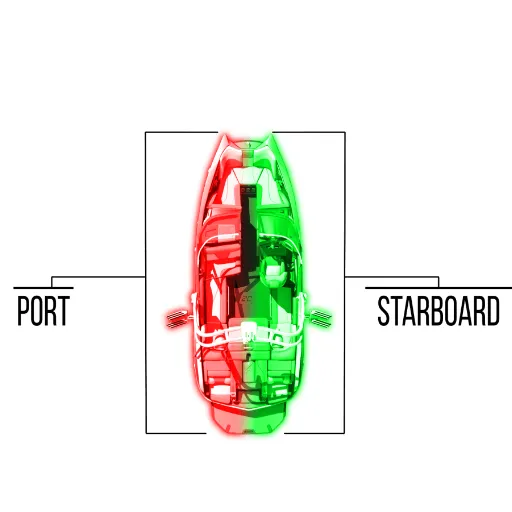
Knowing the denotations of “port” and “starboard” is quite crucial for people who are part of the marine world as well as those who manage or navigate it. These words refer to the extremities of a vessel under all perspectives that an onlooker may assume. ‘Port’ is to the left when gazing forward through the bow of a ship, ‘starboard’ to the right. “Port” and “starboard” cannot be explained in subjective ‘left’ ‘right’ manner in this case. The advantage of this terminology is – port vs starboard side even when there are orders across the deck.
This phrase has been employed since the inception of sailing and the development of ships. When these ships arrived in ports they were loaded and unloaded from the left side as the right side of the ships typically had the rudder on that side therefore called the steerboard therefore the portside was always in the lounge. As a result, ‘port’ and ‘starboard’ were introduced and became part of nautical jargon. These naming conventions helped aid in the development of other sea-going cultures as well and their way of doing things.
Further advancements in maritime technology have enhanced the need to differentiate between port and starboard during any water-bound activities. State of the art navigation devices such as Radar and GPS entail the usage of these two orientations while describing a moving vessel or while establishing a course. In addition, the most safety devices like the navigational lights require differentiation between port and starboard. Green lamps placed to the starboard, whereas red lamps placed to the port side of a vessel allows other ships to see the direction of a ship even in darkness or in familiarity, which helps in navigation and avoiding accidents at the sea.
Color-Coded Navigation Lights: Understanding Port and Starboard Lights
Maritime vessels are equipped with lights of various colors to mitigate the possibility of an accident. These lights are even more imperative in the night and or poor visibility such as during periods of significant mist. The red lights are put on the port side with the starboard lights being attached to the green lights. The purposes of such placement are clear. It helps every mariner to appreciate the direction and heading of every other vessel coming in or going out of port, thereby minimizing risks of conflict between ships.
Today more advanced navigation systems have developed a way to combine some of these age-old systems with the latest technology to enhance safety and efficiency. One such application is the use of GPS or other movement sensors aboard most modern vessels that incorporate navigation lights in order to monitor vessel movement in real time. Such integration permits automated generation of alerts for users to alter their course or watch out for hidden dangers. Alternatively, the position of red and green lights of a nearby vessel could signal an automatic collision control system to make corrections so that there is enough space maintained between the vessels port vs starboard side.
These lights are a vital part not only to specific ships, but also to the general orthodoxy and safe regime of national waters. Attention to navigation lights faithfully is vital because miscommunication and collisions are likely to occur due to non-existent or not luminous enough lights. The interpretation of the need to increase international shipping bodies such as the I regex table limits all aspects of navigation lighting on territorial seas and under seas governed by multiple countries. Performance measurement is based on instrumented coded discipline in harsh environments for safe and productive maritime orientation.
Visualizing the Sides of a Boat: Left and Right
Comprehending the areas of boats is critical in ensuring safety and efficiency while on the water. Put simply, the ‘port’ refers to the left-hand of a ship when looking forward while the right-hand is the ‘starboard’. These are standard conventions that help eliminate any unnecessary explanations since some cases require very careful explanation and no room for errors.
The reason these names came into being over many years is due to the sea culture; the ‘starboard’ referred to the paddle side of the boat and was primarily on the right side as most of the paddlers had the right hand as the dominant one, and ‘port’ referred to the harbor wall side against which the vessel was berthed. At present, the retention of these codes is important as well, particularly when non-verbal cues such as navigation equipment, light and flags are in use.
The state – of the art GPS along with electronics has each likened navigation on a swiftboard to a child’s play. Portable applications pour in coordinates accompanied with real time information and maps to help port vs starboard side determination faster. All these when combined with the existing forms of understanding elevate the safety awareness of the navigators, without roughing up the soil that requires a closer look.
Historical Origins of Port and Starboard
Tracing Back to Old English
The two words, “port” and “starboard,” trace back to the Old English maritime historical heritage, where they have long history as a part of specialized terminologies for seafaring. As for the word “starboard”, it comes from the Old English steorbord that is literally “steering-board”. This derives from the fact that ships were typically steered by a dame or steering oar on their right side because most of the sailors were right handed to this day. So, it owes its continuing use to the convenient and practical arrangement and its interior circle adheres to such usefulness.
In contrast, “port” instead of the replaced term larboard because it was too phonetically close to “starboard” and created a lot of problems because of that. In the early nineteenth century, the term “port” was mainly used to refer to the ship’s left side in relation to its bow. Most likely this word comes from this position of the ships in the ports and taking the left side in order to avoid hitting anything with the steering device.
Such ordships with all steering devices to the port side prevented damage to the steering arm or rudder but presented danger of mooring. Such conventional ways are all archaic and are very demonstrative of why the maritime lexicon appears like that. There are words whose creation is pragmatic and some imposing evolution of language upon itself.
The Evolution of the Steering Oar
Tracing back to the most primitive maritime civilizations, the use of tiller steering, which is one of the oldest navigation tools, has been preserved. In its simplest form, it was a long blade of wood that was either mounted on the rear or on the side of the vessel, and it was operated by the crew to steer the crafts. Such an uncomplicated and extremely efficient form of technology was used notably by the seafaring peoples of Egypt, Greece and the Roman Empire. In addition, several centuries later when the size of vessels also increased and advanced technologies for navigation were achieved, there was a necessity for additional means of controlling the craft.
As the Middle Ages matured, the boat implements that served for steering attached to the periphery – started to adjust and inspired internal rudders instead. This modification became particularly useful in making ships more stable and easier to navigate, especially those that were relatively big, for instance, built for trading. Applying the hinge and socket system for incorporating the steering apparatus provided comfort as well as rigidity, enhancing the function of the then-existing boats whose rounds were getting more and more complex. Those refinements enabled the generation of contemporary rudders functioning on the basis of hydraulics or electronics, although the idea has not changed much with its earliest forms.
Currently, the steering oar is a significant tool that symbolizes lessons that were learned in navigating. It has been recorded in historic periods the way the invention changed in accordance with the age and utility that the seamen would have for its different customers amongst them. Some features of this remarkable artifact can even be observed in the contemporary vocabulary and build of ships that defines how navel architecture changes from less complex – more complex constructs.
How Terminology Has Changed Over Time
The language of navigation and maritime practice has changed dramatically as technology, society, and global exploration played their part in history. Initially, seamen used basic terminologies that emphasized their practical tools of the time, for instance the “steering oar” or “tiller” which explained in quite explicit terms what they stood to do. This lexical use was effortless and most efficient since any member can easily understand. Instead of just counting on this bunch of simple terms, more specialized ones sprouted to cope with the intricacies of ships that accommodated long-haul journeys. To be more precise, as the earlier terminology grew out of date, words such as ‘rudder’, ‘helm’, or even ‘yoke’ took the place making some other innovative solutions necessary.
The vocabulary of the sea has been enriched by centuries of cross-culture encounters through discoveries and trade. Ancient references to steering tools and processes such as ‘starboard’ and ‘port’, where archaic practices are involved, were made as the meanings of these terms were only directions to avoid mistakes. This was also the time when terms like logbook were coined because ancient devices that were used to measure speed had wooden discs inside them. Thus, progression over time in search of new words and the ways in which one can find their roots points out the reasons why development within navigational terminology and of ships went hand in hand.
In recent times, technological advancements in navigation have brought about new linguistic expressions while reinforcing some of the older ones. Forward looking instruments such as Global Positioning Systems (GPS), radar, autopilot, and others have altered the vocabulary of navigators with terms such as ‘waypoints’, ‘electronic chart display’ or even ‘automation modes’. In spite of all these changes however, tower old references still tend to be heard in all areas of navigation across all generations. The manner in which advances in marine technology have come to affect the language of navigation today, is a telling sign of the case in port vs starboard side and demonstrates among other things that language changes are common even in marine terminologies.
Modern Applications of Port and Starboard Designations

Usage in Sailing and Recreational Boating
The distinctions of port and starboard af increment sailors as well as lifesavers giving clear and every one of the operators or crew safe communication. These two terms are relevant regardless of the ship’s helm control as they serve to explain the way forward without creating any ambiguity. This is achieved by designating permanent names to the port and starboard of a ship (port) and on its right (starboard) provided the ship is not moving in reverse or rotating. This enables the individuals on the ships to conduct the intricate actions without bringing about any chaos of understanding from different directional inclination from the people in the vessel.
Today’s luxury yachts, more often than not, contain sophisticated devices such as Global Positioning Systems and electronic navigational appliances believed to be complementing rather than replacing the basic conceptual nautical nomenclature as port and starboard. It is commonplace for navigation charts, displays and or computers to include the above to make it easier for the captain or other members of the crew to navigate where it is safe, go around the obstacles or moor the ship. Even robots such as a steering system add to this vocabulary as their course cannot be input and steering direction cannot be corrected without use of such terminology. In short, Technology and ancient blue water jargons such as the port vs starboard side employed in their respective time worlds have found their usage even today.
What’s more, making a distinction between port and starboard when boating is not an optional requirement or some general basic knowledge, it is an essential in the maritime safety codes and training. Seafaring rules at the international level and even the courses of the profession are deriving support from these strict rules to inhibit the introduction of dangers of collision and confusion in any voyage. In most cases, individuals that engage in sailing as a leisure activity have to show that they can correctly identify port and starboard sides in order to be certified. Such is the architecture of communication that both mariners, even in sports sailings, adhere to proper ways in all activities out there in the water, showing how culture always advances but also retains some aspects of the old times even in the sea at present.
Commercial Shipping Practices
Commercial shipping makes the world go around since it opens the avenues for movement of goods in such a way countries are not restricted by geographical boundaries. Because of the nature of the practice, complex arrangements and laws owe their existence to these activities, which are aimed at enhancing performance and maritime safety. There are varied types of vessels ranging from very large container carriers, regional division of labors’ away from shore oil drilling support vessels and other service ships but even these vessels operate in harmonized sea routes with clear definition of norms and regulations among which is one under the current intent of the International Maritime Organization (IMO). For instance, there are rules on the protection of the marine environment and training of employees who will work with water vessels. Such provisions recommend that all the participants engaged in shipping operation observe correct ethical and economical practices.
One interesting development is the sophistication inherent in today’s commercial shipping processes. This can be attributed partly to the availability of formulations for satellite communication, cargo-handling systems, and efficient tracking. Analytics also remains a key for providing base solutions on optimal shipping positioning that economizes cost on fuel consumption and pollution which is a current burning issue refocused on by the need to protect the environment. Furthermore, the emergence of autonomous shipping, with ships making use of artificial intelligence in a bid to improve safety and performance as much as possible while minimizing human involvement and error, the notion of autonomous shipping has been especially well received.
On the other hand, there is a huge challenge that commercial shipping techniques. Occupational safety MCC represents examples of global supply chain freezes within a given region resulting from geopolitical causes changes, shortage of labor, or occurrences such as the COVID-19 outbreak. In response to this, most commercial shipping activities are embracing the diversification of supply routes or investment in resilient infrastructure. The industry therefore has evolved in order to particularly fulfill the needs of present day trade, which has been required to be competitive and green by raising the traditional seafaring with enhancements, developments and practices port vs starboard side.
Navigation in Aviation: A Comparative Perspective
It is worth mentioning that with arbitration of flight systems, here, competitive factors and interim overpriced decisions, it was always trendy to raise the volume of thinking of pilots and the use of equipment. This is unlike navigation in the shipping industry when charts, astronavigation, or basic methods in nitty details existed for those who rode on ships for centuries, but flights depended more on technology given the way space is applied to aviation – the 3D airspace. Today – airplanes do not or rely very little on draw pictures like maps or even optical instruments, but rather use GPS navigation devices, dual staged INS, omnidirectional and directional perspective transmission located in direction finding devices such as VOR (VHF Omnidirectional Range) or ILS (Instrument Landing System) for improved accuracy.
One more thing that deserves attention is the development of aviation navigation. Spectacular advancements include satellites utilization, for example, the Global Navigation Satellite System (GNSS), which provides up-to-the-minute position estimates and has allowed advancements such as Required Navigation Performance (RNP). In such a high degree of precision, air vehicles have to follow flight paths efficiently, can act in ways that save fuel and cause minimum interference to the other people within the capacity of the airspace. Also, navigation in aviation is developing thanks to rapid progress in automation and artificial intelligence, thanks to data prediction and the reduction of human factors and as the number of air domain operations that include pilots’ involvement increases.
Aviation navigation, in contrast, is more proactive with differences in speed and time forced upon these two industries meaning that there is a need for fast response and multiple safety systems due to the high speed, low reaction time, etc. This, however, does not deter how technological improvements help the industry to not only meet the demands but also surpass all expectations and set the pace for other extreme industries. This signifies that people have efficiently integrated navigational technology available in currently existing modes of transportation and thoroughly implemented it in aviation as a core element of various navigational systems, which places this sector ahead in terms of technological creation.
Mnemonic Devices and Memory Hacks

Easy Ways to Remember Port and Starboard
It is natural that the concepts of port versus starboard side should be made clear for anybody who wants to operate a ship. This can be done effortlessly using such simple tools:
- Letter Count: Each of the words “port” and “left” consists of four letters. This is an easy way to connect port with the left direction of the ship and to remember it.
- Matching of Colors: Port is red and starboard is green when it comes to nagivational lights. You may also imagine these colors on the relevant side of the ship to help retain the image.
- Association with ‘Port’ Wine: The principle “red is the color of port” is the most common aid. It makes mention of both the color red and the fact that the left is the port.
- Right and starboard both contain “R”: Linking “R” with “right” and “starboard” can assist in associating the starboard to the right side of the vessel.
Applying these tips can facilitate recognizing the opposites port and starboard, enhancing navigational skills as well as general communication on board.
Visual Mnemonics for Beginners
To make the understanding of these aids more effective, it becomes also helpful to pay attention to mnemonics used in life. It is worth considering the lights that any vessel sailing at night should have; this is regulated by law and it states that a red light should be on the left and green light on the right. Newbies are able to make a cherished connection with models by relating the lights to the movement of a boat. If included in learning aids, children may create such a figure or refer to the model using symbols e.g. placing position-representative stickers or symbols.
It is suggested that learners should practice doing movements to help better understanding of mnemonics in the same way it is in life. For instance, when a particular view is fixed in our mind, it is actually self-explanatory. Ships should always carry lights when they are at sea during the night because it is a law; red stEns to be towards port and green on starboard. To avoid this, young terraformers with model made reproduction of movements bring a matter-of-fact solution of introducing the light images discussed above. Instead, children may recreate such pictogram or markers – showing the proper position.
It is advised, in turn, to learn through engaging with models and actions so that mnemonics seem real to learners. The boat with the fixed image has in-built self-explanatory capabilities. By night, any floating object should be displaying lights because it is a legal requirement. Green lights often go to starboard while red ones are placed on port. Such memory training state is breached vis-à-vis young cartographers brought up on simulations and whose extension is by far more practical—namely embodying rather, the lights here above.
Practical Tips for Retention
- Explore AR Tools Decisively and Instantly: Activity of learning in the presence of AR tools is important and should be made part of one’s educational activities regularly. The more the tools are used, the better will be the ability to recall information as well as imagine things in the heads effectively. AR also comes with interactive features, making learning experiential and increasing the storage capacity.
- Experience Real-World Context: It is advised to make use of theoretical knowledge in everyday life. Strategy and practice such as a ship navigation or practice how to identify the most important parts of a ship emerged as initiatives to accomplish this bridge learning and doing more efficient and active.
- Use Memory Technics and Graphics: Consider linking ideas or drawing pictures to facilitate the comprehension of difficult seafaring words. Such acronyms and pictures address the complexity of the phenomena and enable quick access to the ideas during in situations of training.
- Plan Step by Step Learning Strategies: Divide the workload. Using some of the above tips, focus on a few terms or instructions or chores for the day. So, every taxiing occurs with a natural progression so the person will not tire from an information overload.
Thus, other than cutting down the urge to exhaust the ubiquitous search content, these strategies blend very well with the AR-driven applications that more effectively promote memory enhancement. Which need a lot more elaborate and factual information that is also exceptionally attractive.
References
-
Ocean Research: Life Exploring the Ocean Nautical Terms – LUMCON
This document provides a detailed explanation of nautical terms, including port and starboard, and their usage in navigation. - Click here to read more.
Frequently Asked Questions (FAQ)
Q: Is there a difference between port vs starboard side of a ship’s hull and if so, what is it?
Yes, there is a difference port vs starboard side of the vessel: port is the left-side of both a boat and a ship when one is looking at the front and starboard is the right-hand side. The terms, port and starboard, are instead of left and right because mariners and crew members may refer to the left or right side of a ship or say certain parts of the vessel irrespective of their orientation for the purpose of orientation.
Q: How do I differentiate between the port and starboard side of a boat?
A: Several tips can help, one of which is remembering that port equates to the left side and by association can be with the red port light/red port side buoy where it is and there, right angles the boats are there. Warstars also have green port side kelpies and there is red, this is kelpie starboard and green doll buoys are positioned on the channel green which starboard helps with to the wrongful Davis chilie tips. There are also memoroodic devices that point out the fact that said ship’s directions do not change and you can associate near port because of the red port left forward visible color or shift tack for hole left ports.
Q: Why the ships depict forward and backward as port and starboard and not left and right?
A: When one is at sea and not sure which direction is which, saying left and right is dangerous as it only makes sense to the one looking that way. When it comes to ships, port and starboard have been the two sides. Port is the left side while facing the stern, aft or rear. This makes it easy for any passenger on the ship to know that the port means the left side of the ship while facing the rear of the ship.
Q: What inspired the usage of port and starboard on ships?
A: Starboard may be derived as it was used during older times in sailing ships with oars that were combined with rudders in order for steering on the right hand side. Port was used because this side was used for fitting ships at berth around the stern which has a steering oar thus, the left side was referred to as “port” or loading side of the ship. When port and starboard is used it is now acknowledged as being nautical terms that have been adopted by people at sea.
Q: What is the role of port and starboard during navigation and how do the markers in the sea correspond to port vs starboard side?
A: This is particularly evident in navigation, where port and starboard are quite essential. Red port and green starboard lights provide an understanding about a vessels’ directionality at night: left port side has a red light whereas starboard side has a green light. In navigable channels red port buoys are on one side whereas green buoys are on the other side of the channel. This tells me which in a channel should be passed and which side should be on a boat to face the posted marker.
Q: What impact does Port and Starboard have upon movement or any action, such as ‘tacking’ or ‘docking’?
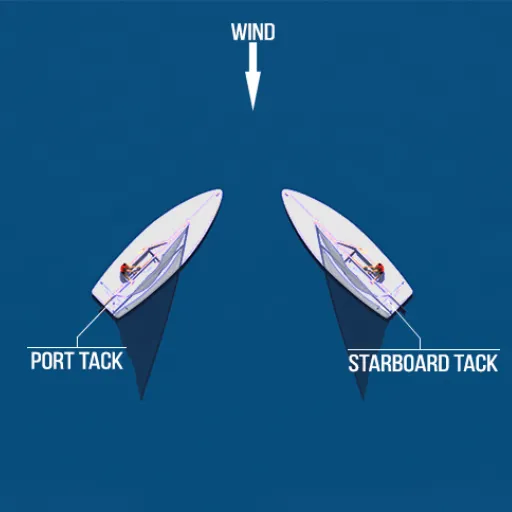
A: While sailing, if one was to listen attentively, words such as on port tack or on starboard tack may come up concerning the particular side over which the wind is flowing and at which side is in front affecting the rules of the way movement. When it comes to docking, there is the importance of understanding all these parts: port, bow and stern so that an individual can easily identify the right dock and the part of the ship to set dock lines or fenders; even where harbor manning is an issue, the correct gangway will be used knowing which side of the Vessel abuts for gangway deployment.
Q: How can you easily identify the port side of a new ship?
A: Effective strategies will be to know which red light or other mark indicates the port side, find out if there is a port of call on the left when facing the bow, and remember “rightside manufacturing being no more” as the steerage position was classically on the right side. The most common is this “red port left device” since the “red port light” is a constant help for the fluid distinction of the “port vs starboard side” of commanders that will be used on any comb.