One of the effective ways of enhancing the horsepower of a boat running on a 90 hp Yamaha engine is choosing a different propeller. It might be only for better fuel consumption, light easy movement, or fast speed. On the other hand, it will enhance the boat performance in the water, depending on the selected propeller. However, considering many available options, how can one be sure to pick the best prop? This piece of information weighs in on what is involved in choosing the appropriate prop for 90 hp yamaha outboard motors so that one is not left in the gray areas during the decision making process.
Introduction to Yamaha Outboard Motors
Importance of Selecting the Right Prop
Selecting an appropriate propeller for a Yamaha outboard motor is important for maintaining the best possible performance and energy use. A compatible propeller may improve the vessel’s velocity, fuel economy and mobility which makes it possible to leverage the engine’s capability. Conversely, a wrong prop may mislead and give poor output, excess use of fuel and in the worst case scenario, may affect your motor over time hence is a very delicate decision that one can afford to mishave as a boater.
The characteristics that are most significant about a propeller are the diameter, shape and composition. Diameter is the outline of a circle drawn by the blades in motion, whereas shape is the displacement of the water caused by the propeller in one revolution. A less pitched propeller can enhance the acceleration and loading ability of the boat, while a more pitched propeller helps the boat achieve more maximum speed. The selection of material used – which is usually between aluminum and steel – determines how long the propeller would last and its price. Aluminum props are less expensive than steel props and weigh less as well however, steel props provide higher performance and longer durability (the latter being more relevant in terms of higher powered engines).
All these points suggests that it is important to read and understand the specific needs of each boater when considering new propellers. For instance if it is cruising fishing or water sports,ain to different areas of the propellers. The best way to achieve those aims is to use the guidelines and tools provided by manufacturers such as Yamaha on how to select a suitable prpeller in order for compatibility with the engine and the conditions of watercraft. On the other hand consulting with a dealer for this prop for 90 hp yamaha or practicing selections through the web from Yamaha also assures that the goals are met in terms of performance balance and lasting serviceability.
Overview of 90 HP Yamaha Outboards
Built in a wide range of options in terms of so the 90 HP Yamaha outboard engines has been exceptionally dependable, efficient with comfortable and ergonomic levels of outboards. These outboards cater for enthusiasts as well as professionals as they make a great medium power option. Whether you are fishing, getting out on the water for your regular cruise or planning waters sports, any of the 90 HP yamahas will give you the peace of mind and usability that few others can offer in boating.
The engineering of the 90 HP Yamaha outboard is one of its special characteristics. The engine has a construction that enables it to operate smoothly and quietly, making cruising pleasurable. With a good understanding of the optimal injection, the system of transmission avoids excessive consumption by enhancing the power under widely varying conditions. In addition, this model of engine is ease free and has straight forward user guidelines and minimal servicing.
There is a 90 HP Yamaha outboard which incorporates controls and features designed to help its users easily operate the engine. The unit also makes use of Yamaha’s digital features, inclusive of variable trolling RPM controls, promoting enhanced controllability. Regardless of how tranquil the sea is or how rugged the coastline is, the 90 HP outboard is customizable to the needs of its users since it has a high level of dependability. Such an engine still stays very popular among the fans of simple yachting due to Yamaha’s good brand image.
Types of Props for Yamaha Outboard Motors

Aluminum Propellers
Yamaha outboard customers frequently opt to use aluminum propellers because the latter are competitively priced, more robust and perform well, all at the same time. Usually these kinds of propellers are lighter than the steel ones in order to use for small boats or reduce costs. These props are made from high durability and low corrosion aluminum alloy, ideal for inland waters. Furthermore, their light weight ensures that the engine is working at less of a strain, thus possibly decreasing_pressure on fuel consumption.
The Propellers made out of aluminum have many benefits and among them being the fact that they take up shock more easily than harder metals. This is a very useful trait especially if one has recurrent uses in low water levels and places with unnecessary objects that are within the water. This will instead of inflicting a lot of damage to the propeller’s arm or causing the gear case to collapse, the aluminum propeller will bend at the locations or become chucked. For that reason, this is one feature that can cut me back on costly repairs yet there is still a steady expectation of using that prop for 90 hp yamaha out in the water for long.
Nevertheless, as aluminum propellers are designed, it is a little less effective as compared to stainless steel in case of high rates of performance for speed, or for load bearing towage properties. However, such solutions are very useful for such activities as fishing and cruising, which are leisure flavored; change of a boat part or aluminum propeller in particular shall be considered with consideration of the cost factor besides its efficiency. According to Yamaha, all types of props are available, i.e., stainless steel, however, all these have a single thing in common, that is in form of the movement, the number, and the position of the blades attached to the hub vary from outboard ranging in this technology. Whichever way you fall, a beginner or an advanced ‘boater’, a good choice of an aluminum prop will guarantee the performance of your yamaha motor without burning a hole in your pocket.
Stainless Steel Propellers
Propellers made out of stainless steel are famous for corrosion resistance, increased efficiency and improvement in the performance of the vessel sparing even in the most unfair weather conditions. These types of propellers are made using high-quality stainless steel alloys which make the propellers much stronger than the blades made out of aluminum. Such blade strength enables the making of thinner blades with less drag and a subsequent increase in efficiency. This additional strength also makes them resistant to corrosion even in environments where saltwater is present thus making them serve for a longer period.
Advanced engineering principles along with the latest technologies have been used to complement propellers made out of stainless steel which offers improved performance, enhanced acceleration, and top speed increased. As a result, such propellers are very much preferred particularly by avid boaters who are after speed. Stainless steel propellers from Yamaha come in different shapes and mechanisms to suit different purposes or activities which require the use of boats like pleasure and sport, and even workboats.
Utilizing the most recent data and governing principles of hydrodynamics, Yamaha provided its customers with optimization tools that assist in selecting the most fitting stainless steel prop for a specific outboard motor and vessel. Yet while this higher upfront price is incurred, the resistance, and propulsive characteristics of stainless steel propellers parallelets this benefit over the span of time boating thus becomes a worthwhile activity with investment.
Three-Blade vs. Four-Blade Props
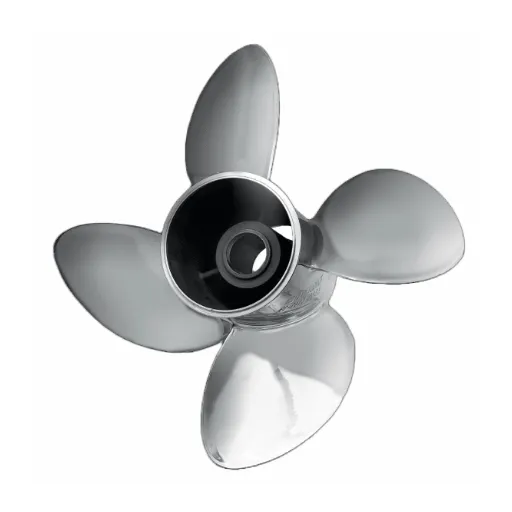
Three-blade props offer speed and efficiency, while four-blade props provide better control and stability.
|
Key Point |
Three-Blade |
Four-Blade |
|---|---|---|
|
Speed |
Higher top speed |
Moderate speed |
|
Efficiency |
Better fuel economy |
Slightly less |
|
Control |
Moderate stability |
Superior stability |
|
Acceleration |
Faster hole-shot |
Smooth acceleration |
|
Load |
Light to moderate |
Handles heavy loads |
|
Use Case |
Speed-focused |
Stability-focused |
|
Water Type |
Calm waters |
Rough waters |
|
Durability |
Standard |
Enhanced |
|
Cost |
Lower |
Higher |
Factors to Consider When Choosing an Outboard Prop

Material: Aluminum vs. Stainless Steel
Aluminum props are affordable and lightweight, while stainless steel props are durable and performance-focused.
|
Key Point |
Aluminum |
Stainless Steel |
|---|---|---|
|
Cost |
Lower |
Higher |
|
Weight |
Lightweight |
Heavier |
|
Durability |
Moderate |
Superior |
|
Performance |
Standard |
High |
|
Corrosion |
Freshwater-friendly |
Saltwater-resistant |
|
Impact |
Absorbs better |
Less forgiving |
|
Speed |
Moderate |
Higher top speed |
|
Load |
Light to moderate |
Handles heavy loads |
|
Use Case |
Casual boating |
Performance-focused |
Pitch and Diameter Specifications
The ability to select the appropriate prop for 90 hp yamaha or any other engine would depend on the knowledge of the diameter and the pitch. The diameter is that length which encompasses the circle that has been fully created by the turning blades of the propeller. Heavy and power-guzzling boats would require wider diameters for easy movement on water, while very light and sleek boats would require narrower diameters. The pitch on the other hand, refers to the distance that the blades would move for every turn of the blades if there was no slippage in the water. A bigger pitch will give more speed but this may damage the engine if it is not well fit to the structure of the boat.
The right equilibrium between blade’s diameter and pitch results in maximum efficiency. Boats used for certain carrying functions such as towing water skiers or wakeboarders, often deploy lower pitch propellers in order to accelerate and pull efficiently. On the other hand, powerboats used for general cruising speeds would require higher pitch propellers to effectively reach high speeds. Mating these figures with the horsepower of the motor, as well as its application, whether salt waters or fresh waters, allows for proper use without compromising lifespan or fuel economy. The appropriate prop for 90 hp yamaha given such considerations can be located.
Notice that besides the propeller fitment and usage information there are other factors namely; boat type and engine displacement. In the present age several companies produce tools that assist in determining the best propeller dimensions. They help one to obtain the optimal size of prop depending on the kind of boat, purpose and engine in question. A number of control measures have been introduced without neglecting the Flower pattern of development each beam size requiring a different propeller diameter and a specifically selected pitch different for every rpm that the engine is expected to turn, hence enhancing the safety and the performance to the maximum level possible.
Maximizing Performance with the Right Outboard Prop
Adjusting Pitch for Optimal Speed
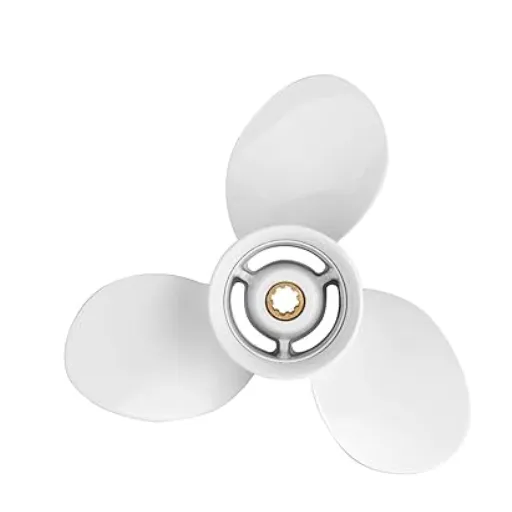
Nang, instrument of boat velocity as well as performance of the boat is the influences by the pitch of the prop. Extreme more poor conditions such as fishing and water skiing, demand more control and acceleration, which means that the lower pitch propeller enables more RPM in much shorter duration and faster. In contrast, a high pitch propeller causes the engine to achieve lower RPM however enhances the potential speed of the boat particularly when cruising for speed.
It is important to understand the optimum relationship between the pitch and the power of the propeller. Take for instance, a very high propeller pitch might load the engine too much and hence make it inefficient. At the same time a smaller pitch would take the engine to its maximum revolutions per minute without any benefit. So most manufacturers recommend specific pitch ranges accompanied with the specific engine models for adjustment purposes.
Online pitch calculators, performance guides, and other resources enable boaters to carefully set pitch to suit their needs today. There are such tools that consider the boat’s weight, hull, engine power, etc. to recommend the right pitch configuration. With such information and a practical test, besides the assistance of prop manufacturers and prop specialists, one can adjust the tuning accurately without the errors that would have been occasioned by general or inaccurate search results.
Testing and Fine-Tuning Performance
Testing and fine-tuning should not be overlooked by any serious performance-oriented person. After performance calculator or guides have shown what should be the steepness of the pitch, then testing in reality must be carried out. This is achievable by taking the boat into the water under normal operating conditions. The practical testing of the boat allows the judgment of how well the settings of the propeller meet the boaters’ expectations. While doing the tests, it is imperative to pay attention to fuel economy, speed acceleration, maximum speed or engine revolutions since those are the performance indicators. This approach allows for practical adjustments that suit the particular case.
The efforts do not cease after only pilot tests, unless the subject’s intent is general overview testing. Even sport boat rig performance developement is a cyclic tenure: boaters check the rig, recaliberate, and then re-check and recalibrate until good results. Such changes could mean changing the angle of the blades, weight balancing, or even different props in case other choices exist. Finding prop specialist or consulting fellow boaters of experience is also useful. It is this very testing and tuning that performs the effective, safer and more pleasurable driving.
Common Mistakes to Avoid When Buying a Prop
There’s a lot to consider when you’re making a decision on a propeller for your boat and ensuring satisfactory performance over time; here are some of the key common mistakes every buyer should avoid. The most common one is the omission of consideration of the boat’s engine horsepower and the propeller specifications. Overlooking the guidelines concerning the propeller diameter, pitch or material in relation to the engine, might lead to poor performance, loss of fuel economy or in some cases even failure of components. Ensure that you go over the engine guide book or ask someone who knows better regarding the prop for 90 hp yamaha before getting one.
One common mistake that many people overlook is considering the cost over the quality. For instance, one can easily be swayed to buy an affordable prop for 90 hp yamaha instead of the more expensive ones because, in most cases, or at least sometimes, cost is a quite important factor, otherwise, in this case, constraints would not determine one’s choice. However, when this occurs, the compromised material or structural integrity may change the way a propeller acts and may render it useless for a longer period than exclusion of the use of weakened propellers is possible and practical. Assembling a nice quality prop made from the right materials such as SS and aluminum would give better performance and save cash in the end. It is advisable to research on the most reliable brands and gather consumer reports before making any decisions.
Finally, a common misconception amongst boat owners is considering the effect of boat usage and environment on their choice of prop. For instance, a calm wake that works for water-skiing may be different from a slow troll for fishing or possibly a high-speed run across a vast waterbody. In addition to that, the level of water body and salt in it are other factors that should be considered when choosing a propeller. For example, a prop for 90 hp yamaha, made out of stainless is perfect for the pelagic conditions because of its ability to withstand rust. When you define the main objectives of navigation and the mode you want to operate in, it also helps you pinpoint the appropriate propeller and facilitates a comfortable voyage.
Maintenance Tips for Your Yamaha Outboard Prop
Routine Inspections and Care
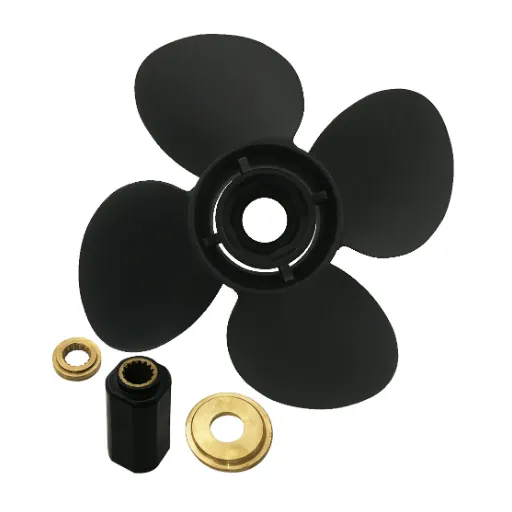
It is also useful to perform inspections on a regular basis so as to ensure proper operational condition and performance of your Yamaha outboard propeller. This is important because it is where one can detect damages such as chips, cracks, or bending that may lead to what is known as unbalanced running on the water. Also, do not forget to inspect the propeller hub for wearing off, which forms a greatly important part in the suppression of vibrations and drivetrain safe keeping.
The propeller should be cleaned at regular intervals so as to prevent or remove marine growth, trash, and fishing lines components that may have been displaced so far in the operation of the propeller. There is a possibility of spray working against corrosion which will help to prevent the prop for 90 hp yamaha from rusting and salty effects that are prominent when operating a boat on seawaters. Don’t forget to go around the propeller to confirm if the installing nut is well in place and if necessary wear and tear on the key and cotter pin is present.
There also arises the need of taking off the propeller from time to time to check for any fishing lines or debris that has managed to coil around the shaft. Most of the time, neglecting this integral step ultimately leads to the ruination of the seals leading to the leakage of gear oil. During the assembly, lubricating the propeller shaft utilizing marine grease assists in hindering rust formation as well as enabling the propeller to move freely.All these habits if well sustained does help users extend the proper working life of their watercraft by an appreciable period while providing dependable service no matter how rough the waters can get.
Storage Practices for Longevity
Proper storage is essential when it comes to prolonging the life of your Yamaha prop’s performance. First, eliminate any salt, debris or marine growth by washing the propeller and its surrounding surfaces, as these substances become corrosive over a period of time. Most importantly, let the propeller dry out completely before keeping it away, as the minor amount of moisture left inside can cause rust and deterioration to set in more rapidly.
A protection layer of marine-grade grease on the propeller shaft is advisable in case the prop is intended to be stored for long. The attached prop is to be coiled and kept in a well cleaned and dry case. Preferably, with a surrounding protective cover that is soft and capable of absorbing moisture; or better still in a case that has padding so as to remove the possibility of the blades getting any hurt.
The best way to protect your boat and propeller is to ensure they are stored in temperature-controlled surroundings to keep them from the adverse effects of temperature extremes. Both cooling and overheating can lead to metal distortion which can affect the fit and balance of the prop. When the storing period is over one needs to check if there are any deteriorations in the stored propeller as might be used at the start of the new boating year. When these measures are taken, it goes a long way to preserving the state of your Yamaha propeller for further use and the risk of damage is minimized.
When to Replace Your Propeller
There are various factors that indicate the replacement of a propeller as it no longer functions effectively. As a matter of fact, I consider seeking any external damages, such as fractures, distorted blades, or substantial rusting. Any visible damage to the propeller that alters its balance, its shape or construction should also be considered as there is a decrease in efficiency and further to avoid damage to the engine.
A further consideration is the noticeable decrease in the performance of the boat. If there is difficulty in getting my boat up to speed or achieving proper fuel consumption, it might signify that the prop is not as functional why it used to be. Yet another instance is where I note the boats unusual vibrations, these could mean that the propeller is off balance or displacement and so I would check it and replace it if in need.
Finally, it becomes necessary to assess the propeller whenever there is a change in boating behavior and performance requirements. For instance, changing to a different pitch or material propeller may become imperative if one has intentions of carrying more weight or requires better acceleration. This way, one remains alert to these signs and ensures a well-suited prop for 90 hp yamaha prop for safe and pleasant boating.
Frequently Asked Questions (FAQ)
Q: Which prop for 90 hp Yamaha is best for general use?
A: I would recommend a three-blade stainless-steel propeller for a 90 hp Yamaha outboard as this combination does well overall and is often very durable. The normal balanced acceleration and top speed along with fuel economy and within limits an OEM prop is generally a 3 blade prop and some cases a 3 blade performance prop. While cruising with an average weight of load and when speed is within limits, preferably apply the prop with pitch like 13.5 in order not to lose rpm and cause more fuel burn but still gives good hole shot and cruise performance.
Q: How do I choose the right pitch and diameter for a prop for 90 hp Yamaha?
A: The choice of a propeller is made based on the type of craft, the position of the engine, and the usual operation weight. The former increases acceleration and hole shot power, while the latter increases the maximum potential speed. You can check out yamaha’s range of propellers from Yamaha’s site through the dedicated web application provided or the Yamaha’s propeller selection guide. This is the regular progression that many starter marine enthusiasts go through, beginning with the factory-issue three blade or stainless-steel props and experimenting with plus or minus one inch or one and a half inches in respect to the pitch. Look at wide-open throttle. Do NOT exceed the RPM range or else you may overload the engine.
Q: Is it alright to fit a 90 hp yamaha outboard with a favorable aluminum prop?
A: Absolutely. Aluminum propeller is one of the most inoperative and convenient options that boaters can use; it is lightweight, non corrosive and there is a balance between outlay and benefit in its implementation. There are few problems with using an aluminum prop in such cases as leisure boating with no loads, however, for more aggressive boating where larger offshore boats are used or there is a need for more top end speed and strong gears, stainless steel three blade propellers or performance propellers are recommended.
Q: I look at prop for 90 hp yamaha motors. Which is better, the RH rotation, or the LH rotation?
A: In the case of RH, it is a right-hand rotation; i.e., the direction of rotation of the shaft is in the normal direction of most of the Yamaha outboards. Rotation is the direction in which the propeller spins as it relates to the engine. In most cases however, do not forget to choose the proper RH or LH prop that fits your engine. 90hp Yamaha outboard – most often they are used RH props. If they are mismatched rotation, performance, ventilation and thrust stability will be compromised.
Q: In your opinion, is it worth buying stainless-steel prop for 90 hp yamaha engine?
A: Aluminum props will bend under load and rpm while stainless-steel props are rigid and high strength. These props bite well, more lift, and better acceleration than aluminum under similar conditions. For stainless-steel is preferred over aluminum prop for speed concerned and for heavy setting.
Q: Should I design it to fit a piece of furniture without any additional fixtures or should I come up with an elegant detail that is just necessary?
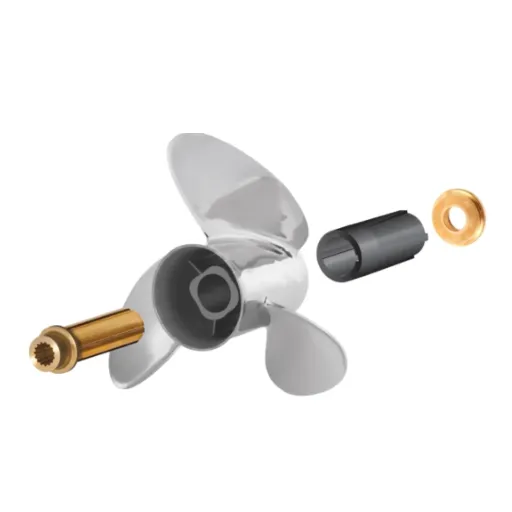
A: The majority of Yamaha manufactured propellers are constructed to install with ease and with no additional components on the typical spline and engine set-up for Yamaha outboard engines. Other students may require specific hub or spline conversion hardware for performance propellers – for example, call 6E5-45949-00-00, cross-check that propeller design accommodates that order number. Some even come as O. E. M. units with standard hardware installation.
Q: When buying a prop for 90 hp yamaha, how does a propeller with four blades compare to a three blades propeller?
A: With four blades, the prop will bite better and turn easier, while cutting through wakes is smoother, quieter and the ski boat depths commuter will be faster even at full load, which overall will com in handy when tying in to larger currents. The three – blade perform better for top end speed and slightly enhance rpm balance in cruising. Assemblably, for boats that planed and need accelerating, use four made balcony, Portable and for light weight boats three or a performance design.
Q: If I use a different one, will it help control fuel rate and how about the behavior of the momma yamaha and 90 running gears?
A: Allow me to answer that. Yes, using the correct propeller enhances fuel consumption, smooth planning out of RPM, and eases engine load. An appropriately sized propeller limits cavitation loss and enables a more efficient power transfer thus enhancing MPG cruising and extending the lifespan of the engine. Such factors to consider include propeller blades’ number, propeller’s pitch and also construction material; whether stainless-steel material or aluminum centers are more efficient in terms of utilization of fuel, pull off and the maximum rpm of the YAMAHA engine.