Outboard engines are truly the heart of your boat’s propulsion system, with propellers being the driving force. The right propeller will make the difference in any activity you engage in—whether you’re cruising in calm waters, enjoying a quiet fishing day, or racing under the powerful blast of open waters. This article will describe in detail the role of propellers in boat performance and how the best propeller can be chosen according to your specific needs. Whether you require more speed, fuel economy, or functionality, you are at the right place. Get ready to unleash the full potential of your boat!
Understanding Outboard Propellers
The Role of Propellers in Outboard Motors
For outboard motors, propellers are pivotal instruments in harnessing a boat’s engine horsepower to propel itself forward or backward. They utilize the blade surfaces’ design and the resulting energy to convert combustion energy into motion that effectively transports vessels through a myriad of water conditions. Outboard motors would be unable to carry out one of their primary directives—moving the vessel—without a propeller.
The design of a propeller has a significant influence on the speed and fuel efficiency of a boat, as well as its overall performance. What matters most is how effectively a propeller interacts with water; factors such as diameter, pitch, and number of blades all play crucial roles. A more extensive propeller may displace more water and thus deliver more thrust; however, a higher-pitched propeller may achieve greater speeds and better suit your needs. The key is to strike a balance between these variables for optimal performance.
Key Insight: Understanding the functioning of a propeller means understanding the effects of certain factors like water depth, loading, and usage scenarios. The correct propeller for a craft results in smoother handling, avoiding overloading the motor, reducing fuel consumption, and thereby enhancing fuel efficiency. It is incumbent upon boat owners to maintain the propeller properly, as a neglected propeller will show its age within a few operations. Getting the right propeller for your boat and applications can transform your boating experience significantly.
Common Types of Outboard Propellers
Outboard propellers come in various types to suit different boating needs. The most common types include three-blade, four-blade, and stainless steel propellers. Each type has specific characteristics that enhance performance in certain environments, creating a balance between the application at hand and the speed of the boat.
Three-Blade Propellers
Three-blade propellers are considered the standard for average recreational boating. They offer a balanced performance in terms of speed and efficiency across various water environments, making them ideal for general boating applications.
Four-Blade Propellers
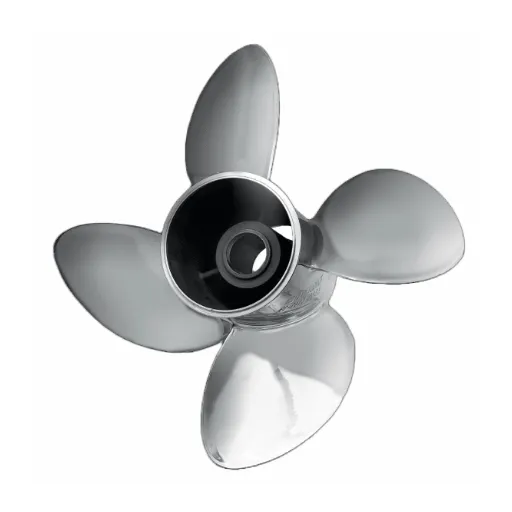
Four-bladed propellers are built for superior maneuverability and stability, especially in rough waters. They produce optimal thrust and possess a consistent level of power, rendering them appropriate for water sports and situations where the boat is carrying an unusually heavy load. Although they may not perform as well at high speeds, these propellers more than make up for it with better handling and fuel economy.
Stainless Steel Propellers
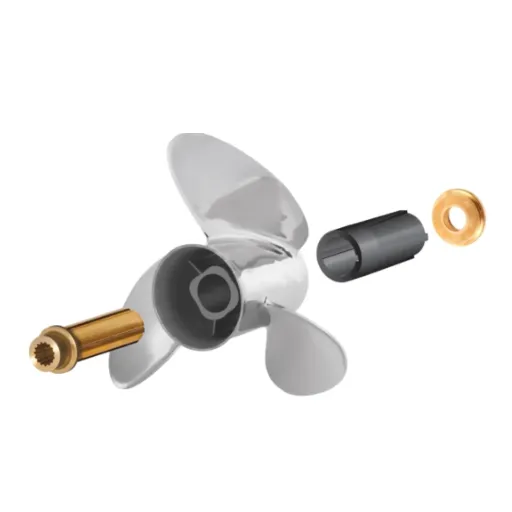
In comparison to aluminum propellers, stainless steel props are very strong and efficient. They are less susceptible to damage and withstand impacts better, making them reliable for longer-term use in harsh environments. While slightly more costly, they are worth the additional expenditure for serious mariners who need performance and longevity.
Which outboard propeller to choose will depend on the type of boating activity, water conditions, and engine type. Knowledge of these factors will empower you to select the ideal prop for that desirable increase in boat performance.
How Propeller Design Affects Boat Performance
The attribution of propeller design to improved or degraded functionality is closely tied to aspects like speed, fuel efficiency, and handling. The material from which the blades are made, number of blades, pitch, and diameter are all determinants of how efficiently engine power is transformed into thrust. For instance, a larger diameter propeller may push more water, which can equate to more thrust, while a smaller diameter one boosts speed in some situations.
The number of blades also matters, with three-blade propellers being favored for best all-around performance by the average boating enthusiast. Four-blade propellers may offer a bit more thrust and slightly better handling, especially in rough water conditions or when towing under load. The pitch of a propeller influences how efficiently the boat moves per full rotation. Propellers with low pitches are designed to supply the boat with maximum thrust for accelerating, while propellers with higher pitches are better suited to run the boat at higher speeds.
⚠️ Important Consideration: The suitable prop choice for your boat depends on its purpose and the waters it sails in. Therefore, you should bear in mind the load, water type, and speed performance outcomes when picking a prop. Be certain to choose a prop that is in line with your engine’s specifications to enhance performance and durability. Being able to make the best prop design choice will contribute to a great improvement in your boat’s performance.
Choosing the Best Outboard Propeller
Key Factors: Pitch and Diameter
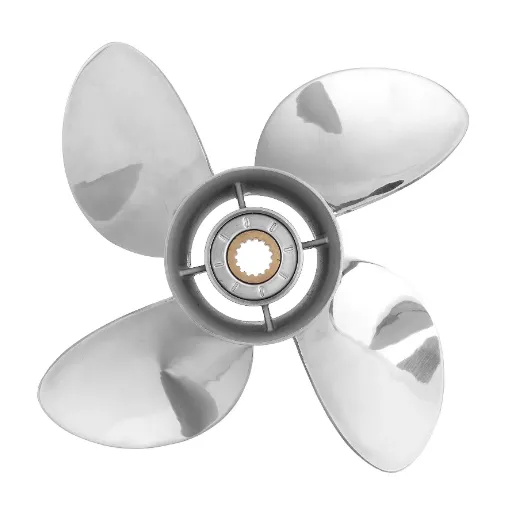
When it comes to selecting an outboard prop, pitch and diameter play a significant influence on overall performance and energy efficiency. Diameter refers to the overall size of the propeller circle, defined as the width from blade tip to blade tip. A larger diameter will lead to more thrust, therefore making it suitable for heavier boats or those needing extra power in rough waters. Smaller diameters are usually intended for lighter, faster watercraft.
Regarding pitch, this is explained as the propeller’s distance traveled in one rotation (without slippage), which directly affects speed and engine workload. A lower pitch allows for better acceleration and pulling power, making it ideal for towing or pulling heavy loads. Meanwhile, high pitch provides greater speed but may strain the engine if it is underpowered for the boat.
✓ Pro Tip: It is crucial to balance pitch and diameter for your propeller to match your boat’s engine and intent. For example, considering your engine’s RPM range and the type of conditions you boat in usually will help you choose a propeller that minimizes fuel consumption to the maximum extent while providing outstanding performance. Knowledge of these mechanical workings paired with research and consultation from trade professionals can result in a well-informed decision for the benefit of boaters.
Material Considerations: Aluminum vs. Stainless Steel
In the selection between an aluminum propeller and a stainless steel propeller, it is crucial to consider the characteristics that make both types unique. Aluminum propellers are known for their affordability and lightweight design, making them helpful for people with limited budgets or dealing with smaller engines. Most aluminum propellers are sought after by boat owners because they require minimal effort to repair, but under storms and stressful impacts, they may wear out more quickly.
On the other hand, stainless steel propellers have remained historically famed for strength and performance. Less prone to deformation in tough conditions, they provide ample resistance and great acceleration. Stainless steel propellers undergo myriad adverse conditions such as saltwater erosion, which really makes them a distinct choice. However, stainless steel propellers are heavier and more expensive to buy and may not suitably fit into affordable budgets or meet the requirements of all boats.
Simply decide whether aluminum or stainless steel works for you based on your boating habits, engine setup, and the kind of waters that you usually frequent. Each material has its strengths, and thorough consideration of these aspects will help make a good choice.
The Impact of Blade Count and Configuration
The blade count and the way it is set up make a difference to performance. Generally, propellers may be designed with anywhere from three to five blades; this is done for various purposes and performance levels. Three blades offer the usual pick for someone who wants something middle of the road between speed and efficiency, and perform well for general boating where you would like moderate speed, fuel economy, and that touch of stability. Four-blade propellers provide a better rate of thrust and make for a much smoother ride.
Blade configuration, consisting of pitch, rake, and cupping, is equally significant. When a propeller is marked with a pitch value, it indicates the distance that it will travel in one full revolution—higher pitch produces more speed but requires higher engine horsepower, while lower pitch allows better acceleration and handling. Rake is a measure of how much each blade leans backward, where raising the rake increases lift and performance in certain hull types. Lastly, cupping gives the blades a slight bite that reduces ventilation and increases grip, particularly while cornering or in rough waters.
Choosing the Right Configuration
- → For Speed Enthusiasts: A three-bladed propeller with good pitch and rake can be the right choice.
- → For Stability & Towing: A four-blade propeller with deep cupping may be the right way to go.
- → For Rough Waters: Four-blade propellers with proper configuration offer superior handling.
The appropriate blade count and design is more specifically determined by the particular applications and suitability for various boats. Understanding these issues will help make valuable selections of the propeller to give the best overall performance and efficiency of the propeller-hull-engine combination.
Performance Analysis of Popular Propeller Types
3-Blade vs. 4-Blade Propellers
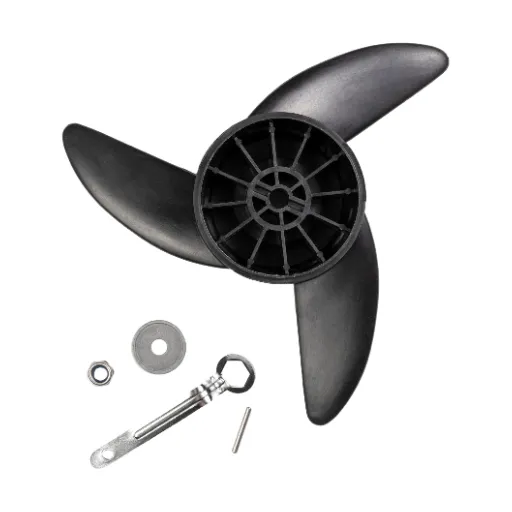
This comparison highlights where the 3-blade advantages start coming into play and where 4-blade props solve vibration and noise problems—particularly for some high RPM engine applications.
How Different Propellers Affect Speed and Fuel Efficiency
The selection between a three- and four-blade propeller is crucial in determining both speed and fuel efficiency. The three-blade propeller has traditionally been rated best for top-end speed because of the less drag it creates, especially due to its lightweight construction. This implies more efficient engine operation at higher RPMs, making it ideal for activities requiring high speed, like racing or quick traveling.
On the flip side, a 4-blade propeller usually provides better fuel consumption at common speeds. The additional blade gives a boat greater surface area to grip water better, accelerating in an even manner, which is specifically beneficial in choppy or rough conditions. The four-blade propeller is hence recommended for boaters who are looking for good fuel economy for long journeys or reliable performance in varied water conditions.
📊 Research Findings: Recent tests and case studies have pinpointed that optimal efficiency actually comes from good prop selection: precisely matching the pitch and diameter of the specific prop to the power of the engine and the weight of the boat. This includes taking all considerations and measurements into account when choosing a propeller that allows the engine to operate in its recommended RPM range. Proper balancing of all of these factors is essential to reduce fuel use and workload while maintaining the cruising quality users strive for.
Handling Characteristics of Various Propeller Designs
Different designs of propellers relate to the operation, speed, and overall performance of a boat. For example, three-blade propellers provide a good balance of speed and thrust and justify their usage for nearly any recreational or commercial vessel. Four-blade propellers offer better water grip, allowing improved performance at low speeds and making them perfect for watersports or heavy loads. Cupped propellers improve the water-moving thrust performance due to the blades’ slightly curled edges.
The pitch of the propeller also plays an important part in handling. With a lower-pitched propeller, the boat will take less time to get up to speed and is great for water-sporting or towing. Meanwhile, propellers of higher pitch focus primarily on attaining top speed. Variable-pitch propellers allow on-the-fly adjustments to the running gear system, enabling real-time operational decisions.
It is really important to tailor a propeller design to the exact application of the boat for fine performance and reliable handling. Continuous advancements in hydrodynamics and materials also enhance the durability and efficiency of propellers, satisfying current demands in marine engineering.
Maintenance Tips for Outboard Propellers

Regular Inspection and Cleaning Techniques
To maintain the best operating efficiency and protect it from damage, inspection and regular cleaning of the outboard propeller should be carried out routinely. Start by visually inspecting the propeller for dents, cracks, or excessive wear because such conditions can greatly affect efficiency and may lead to more problems. Check the hub for fishing lines, weeds, or anything wrapped around it as this contributes to resistance leading to property damage. These obstructions, if noticed, should be carefully removed while avoiding scratching the propeller blade surface.
✓ Cleaning Best Practices
- Use a soft cloth and warm soapy water to remove dirt, salt, and crud that has built up over time, especially in saltwater environments.
- Avoid any abrasive materials or harsh chemicals that might degrade the propeller’s finish.
- After cleaning, apply a thin coat of marine-grade oil or protective coating to keep it safe from rust.
- Always ensure the propeller shaft is straight and free from pitting.
- Any noticeable vibration while in use may warrant a balancing issue or hidden damage, requiring service to rectify the problem.
Regular maintenance is the best way to ensure that nothing goes wrong with the propeller and that its life is extended to serve you better on the water.
Signs of Wear and When to Replace
One may observe clear signs of propeller wear, which indicate that the propeller’s care or repair is quite overdue. Some of these warning signs include chips, cracks, or bends in the blades that can directly affect propeller performance and cause imbalance. Additionally, excessive corrosion can weaken the structural integrity of the propeller. A significant loss of blade material or thinning edges, for example, points to advanced wear.
⚠️ Warning Signs – Replace Your Propeller If You Notice:
- → Noticeable drop in top speed or acceleration
- → Excessive fuel consumption compared to the norm
- → Operating vibrations indicating balance problems or blade bending
- → Hub degradation or deteriorating rubber impeding proper power output
- → Visible chips, cracks, bends, or significant corrosion
Whenever a damaged propeller is even remotely compromising its functionality or safety, it is better to replace it at the earliest. A damaged propeller heavily strains the engine by sacrificing its balance. As the engine suffers on account of the prop, one could conceivably encounter many further damages that lead to unsafe boating conditions. Regular inspection, timely maintenance, or replacement when necessary guarantees reliable performance over time and extends the life of the engine. Newer materials and advances in manufacturing and design technologies also provide opportunities for upgrading to more efficient designs, yielding superior performance and fuel efficiency.
Best Practices for Storing Your Propeller
Storing your propeller properly is crucial to keep it in shape for maximum performance when needed. Clean off debris, dirt, salt, or any marine growth that could have settled on the propeller during use before storing it. The best advice is to use gentle soap and a soft bristle brush rather than harsh cleaning agents which could cause damage. Dry out the propeller completely to prevent rust development or corrosion through moisture. This is especially important for metal propellers, particularly aluminum and stainless steel.
📋 Storage Checklist
- Step 1: Thoroughly clean and dry the propeller after each use
- Step 2: Inspect meticulously for damages—any indication of nicking, cracking, or bending must be addressed before storage
- Step 3: Apply rust-proofing treatment or a film of light oil to metal propellers for long-term storage
- Step 4: Store away from humidity, heat, direct sunlight, or extreme cold weather
- Step 5: Use a protective cover or case to protect from dust, bumps, or scratching
- Step 6: Properly cradle the prop to avoid warping or stress on the blades
Minor touch-ups should be done immediately, and if major repairs are required, the best solution is to seek professional technical service. Implementing these preventive measures can extend the life of the prop and provide greater savings in terms of valuable time and money by minimizing maintenance and replacement costs. Proper storage ensures that you get more enjoyment from your boating adventures.
Industry Trends and Insights
Latest Innovations in Outboard Propeller Design
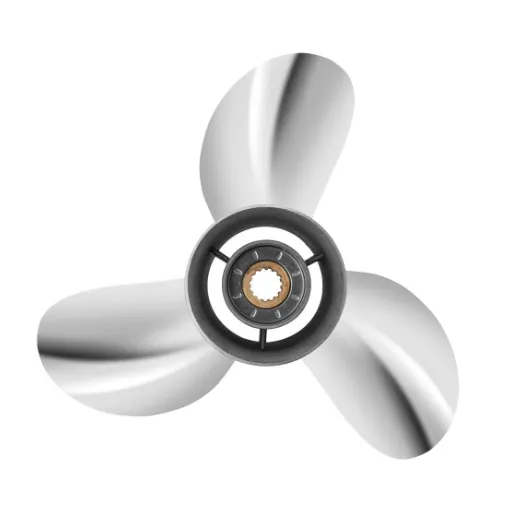
Recent enhancements in outboard propeller technology have improved the performance, efficiency, and durability of marine engines. This advancement is characterized by the use of more advanced composites that are lighter and stronger than traditional materials such as aluminum and stainless steel. These materials help lighten the propeller, thus improving fuel efficiency while being resistant to corrosion in marine conditions.
🚀 Cutting-Edge Innovations
- • Advanced Composite Materials: Lighter and stronger than traditional options, improving fuel efficiency and corrosion resistance
- • Adjustable Pitch Propellers: Allows boat operators to adjust blade angle according to different water and load conditions for maximum performance
- • AI-Driven Design Simulation: Engineers can create propellers with blades crafted to give maximum thrust with minimum cavitation
- • Noise Reduction Technology: Future designs focus on reducing noise for both ecological purposes and passenger comfort
Another significant advancement is the development of propellers with adjustable pitch. Boat operators are able to adjust the blade angle of the propeller according to different water and load conditions faced to achieve maximum performance in any situation. This adjustment benefits engine strain reduction and increases fuel economy.
The development of simulation tools in the AI domain has significantly driven innovation by enabling engineers to create propellers with optimized blade designs. A complete shift toward smarter, greener, and more adaptable technology is now underway, symbolizing the larger sustainability and efficiency push in the maritime industry. Ongoing research and development shall continue to promise brighter horizons for the future of outboard propeller technology.
Expert Advice on Selecting the Right Propeller
Choosing the right propeller for your vessel is crucial for optimizing its performance, fuel efficiency, and durability. Key factors that must be taken into consideration are the propeller pitch, diameter, and the number of blades. The propeller pitch defines how far the propeller moves in one rotation, affecting the balance between speed and power. A high pitch works best for quicker boats, while a low pitch is better suited for slower speeds with heavy loads. The diameter influences thrust and general performance, and thus should align with your engine’s power.
💡 Expert Selection Criteria
Blade Count Considerations: A three-blade prop generally provides better top-end speed, whereas four- or five-blade propellers offer increased acceleration and decreased vibration.
Material Selection: Aluminum combines affordability and adequate performance for recreational boating, while stainless steel offers sturdiness and power in the harshest possible environments.
Application-Specific Needs: Consider your boat’s primary application—fishing, cruising, or sports activities—and factor in environmental considerations such as noise reduction and eco-friendly designs.
Weighing up these influences enables an ideal choice to maximize performance and longevity. Consulting with experts and comparing specifications directly from manufacturers will help narrow down choices and answer questions about boat selection.
References
-
Outboard Motor Maintenance Tips
- Discusses propeller slip, cavitation, and motor mounting issues.
-
Hydrodynamics of Surface-Piercing Outboard and Sterndrive Propulsion Systems
- Explores the mechanics and hydrodynamics of outboard propulsion systems.
-
Basic Outboard Motor Maintenance
- Covers propeller pitch and engine performance optimization.
- Click here to read more.
Frequently Asked Questions (FAQ)
Ready to Optimize Your Boat’s Performance?
Choosing the right propeller can transform your boating experience. Consider your specific needs, consult with experts, and invest in quality to ensure years of reliable performance on the water.