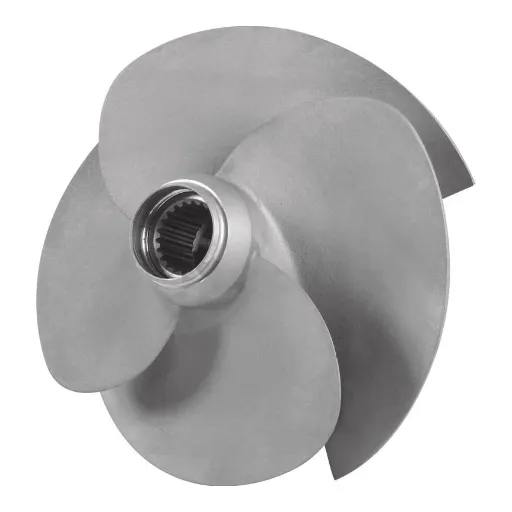
Whenever it concerns boosting the performance of a personal watercraft, every component plays a significant role—and the impeller is no exception. If it’s speed across water that you want, or relaxation when the going gets rough, then having the appropriate impeller is of great importance. Solas impellers are well-known for their design and high levels of engineering achievements, meant to fit Sea-Doo pumps perfectly. What is their function and why do they remain favorable to individuals that have these water rides? In this article, we’re going to teach you all about Solas impellers. We’ll look at the components, advantages and the reasons as to why Solas impellers would be an amazing addition to your Seadoo experience.
What is an Impeller?
Definition and Function
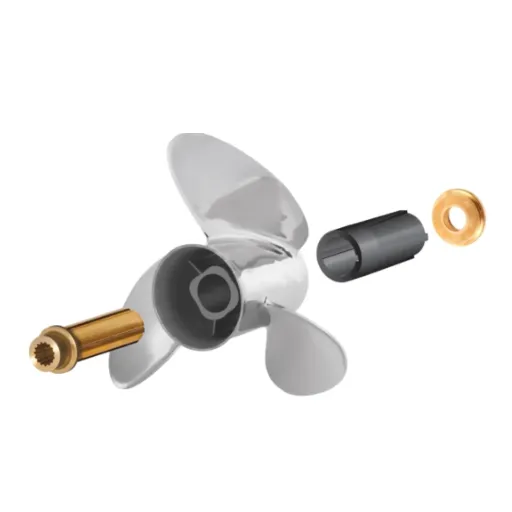
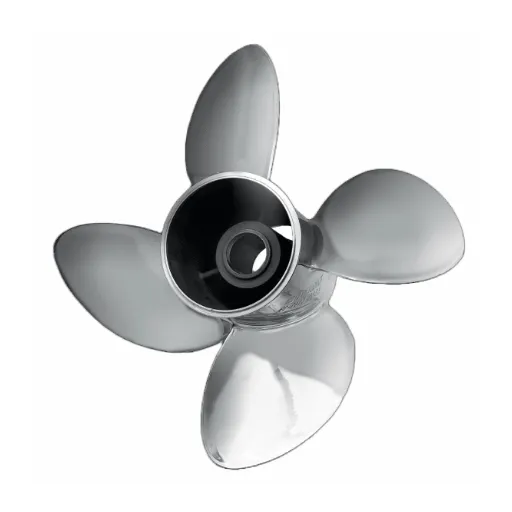
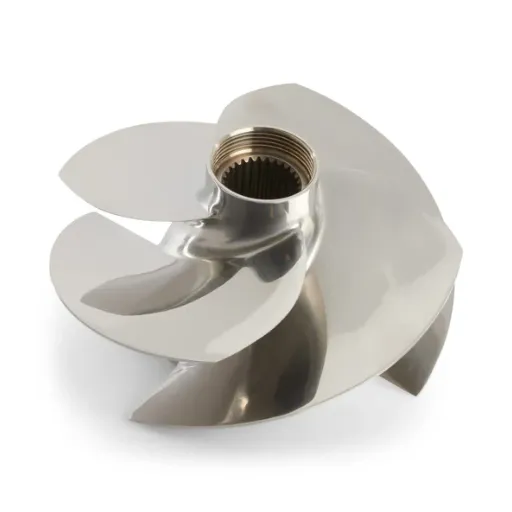
Impellers are an important component of a jet propulsion system like the Sea-Doo watercraft. They are basically a type of propeller that is housed within a pump unit. An impeller serves the purpose of drawing water into the pump and then expelling it with force through the nozzle, providing the jet thrust necessary for the watercraft’s propulsion. Unlike traditional propellers, impellers work within an enclosed system that covers them, increasing their effectiveness to suit fast-moving watercraft.
The shape of an impeller has a direct influence on how effective jet propulsion performs. The blades are designed to enable smooth water movement, reduce resistance, and ensure speedy takeoff. Stainless steel impellers like Solas design them to meet different specifications that include various water activities while still being the best in performance. This means impellers are not only important for speed but also for handling and fuel consumption.
💡 Key Insight: One of the highlights of Solas impellers is their intelligent design and the use of sturdy components that guarantee a long lifespan and optimal efficiency. These are made to fit Sea-Doo pumps for utmost performance, providing a boost in thrust and speed with adequate control for watercraft operators.
How Impellers Work in Sea-Doo Systems
Impellers are crucial components of the propulsion units of Sea-Doo watercraft. Their utility lies in facilitating motion by converting powerful engine rotation into forward thrust. This is made possible through a system where the impeller draws water into the pump and spins its blades rapidly, thereby producing thrust. Water is then expelled forcefully through the rear nozzle of the craft, allowing it to effectively travel across the water.
How well the impeller performs is very much dependent on how this component has been designed, primarily the angle, pitch, and material of the blades. Commonly, impellers with higher pitches are used to attain greater top speed, but lower pitched impellers are efficient in accelerating and providing low-range power. This flexibility means Seadoo watercraft can be configured to meet the various wants and riding preferences of consumers, ensuring each one has a good riding experience.
Additionally, models of Sea-Doo are equipped with impellers designed to minimize the undesirable effect of cavitation, which happens when air is sucked in, hindering propulsion. These models have impellers that counter this effect, focusing on maintaining the efficiency of the propulsion system. Regular maintenance, such as checking for debris or damaged sections, aids in keeping the seadoo impeller in the best condition, which is good for speed and handling.
Importance of Impellers for Performance
A performance watercraft’s driving components include impellers which must work as expected to give the desired power and efficiency. Impellers convert the rotational force of an engine into directed water flow, enabling the craft to carve and attain high velocities easily. The aim of a correctly operating impeller is to induce better accelerative forces and agility, which should be safe and fun, particularly while riding.
For optimal performance, impeller function more often than not requires maintaining water flow constantly, as this can avoid problems such as cavitation. If cavitation occurs, propulsion is reduced, and the impeller can eventually deteriorate, resulting in loss of performance. The Sea-Doo impeller is designed to limit this risk and offer desired performance in all types of water conditions. Damage to the impeller through foreign objects or wear is a risk which is countered by frequent examination and repair; otherwise, handling and efficiency may be impaired.
Acquiring a sturdy and well-designed impeller is advantageous to a watercraft in many ways. It provides better overall functionality as well as a longer service life. Dependable and efficient impellers tend to ease the engine load, save on fuel, and provide thrust and power when needed, no matter how demanding the ride might be. The advantage continues when speaking of upkeep of the seadoo impeller, which is one of the performance boosters.
Types of Sea-Doo Impellers
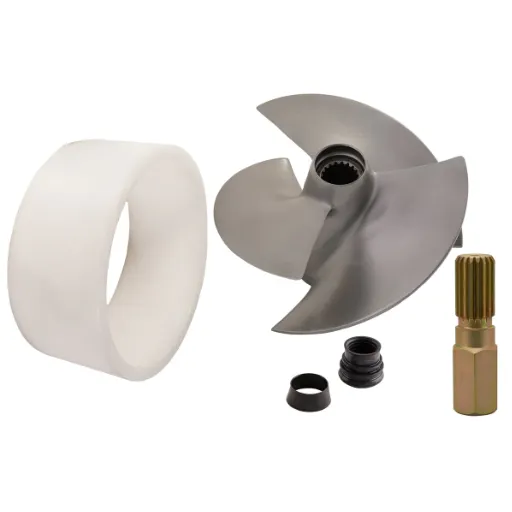
Solas Impellers Overview
Top of the range and very popular amongst buyers are Solas impellers, manufactured by a famous company specializing in various kinds of jet ski and boat engines. The seadoo impeller from Solas was first launched in 1988. Such impellers provide accurate performance across all conditions, as they are constructed of tough materials. That is why these watercraft impellers provide efficient running even under hard accelerations. This motor component has been insisted upon by many riders: utility users, race competitors, and anyone desiring superior acceleration, a higher top speed, and better fuel economy. It features balanced blades; hence, cavitation is minimized and vibration is also minimal, improving smoothness and extending engine life.
When it comes to Solas Impellers, one of the primary factors that distinguishes them from their competitors is the variety available for any specific level of performance requirements or machine. Low-end torque enhancing propulsion units, particularly useful for towing or thrust, can be chosen where the preference is speed on open waters. Frequently, it is the consideration of the latest techniques such as precision casting and CAD which ensure the manufacture of each impeller is focused on high levels of performance and dependability.
Solas impellers differ greatly also in their flexibility and customization possibilities. Some of the models have specially designed pitch for certain types of watercraft and rider’s style of riding. An example can be seen in the Concord Series, which aims at fast takeoff and cavitation reduction. On the other hand, Scat-Trak impellers are all about striking balances between speed and thrust. All these intricate options render Solas a very fitting choice for a Seadoo rider seeking to upgrade their machine to its utmost potential. Solas as a company has been around for quite some time, and due to its applications, it is regarded by most in the jet ski arena as a water sports company known for products which enhance the water experience.
Comparing 155 and 170 Series Impellers
The 170 Series impeller offers better mid-range performance compared to the 155 Series, which is also reliable and capable.
Race vs. Standard Impellers
Race impellers prioritize acceleration and thrust, while standard impellers focus on balanced performance and top-end speed.
Maintaining Your Impeller
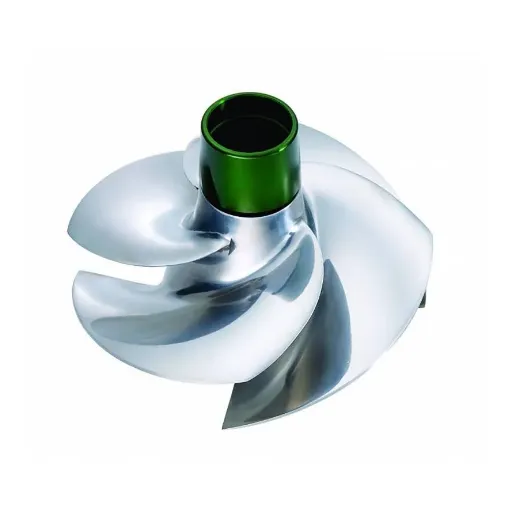
Signs of Impeller Wear and Damage
Checking signs of wear and tear, as well as damage of the impeller, is very important to ensure that performance does not suffer and the equipment is not compromised. One of the most common signs of impeller wear is a loss of performance, such as a reduction in acceleration, thrust, or top speed. This is most common when the blades of the impeller get blunt, bent, or even broken by hitting objects. Something else that can be a cause of concern is unusual vibration during operation or more than average noise, as it means the seadoo impeller does not spin properly and most likely got out of balance.
Visual inspection can also reveal damage. Observe if there are cracks, excessive corrosion, or pitting on the impeller blades, because those types of damage are capable of compromising efficiency and extending to major mechanical damages if left unrectified. Besides this, check the wear ring and the housing for any misalignments or ring marks which could be brought about by the rubbing movement of the impeller with its housing. It is usually a sign that some adjustments, repairs, or complete replacement will be needed for clearances to be restored.
⚠️ Important: Making sure to maintain and being proactive in noting wear and tear on impellers is key to saving costs and time in the future. If any damage occurs, follow manufacturer’s guidelines in replacing or fixing the impeller, and remember to always fit proper parts to avoid using the engine at less than optimal performance levels.
Step-by-Step Maintenance Tips
- Perform Regular Inspection of the Impeller
Check the impeller carefully to identify any cracks, deformation, or areas of wear. Touch the blades to ensure they are smooth and have no damages, because even small deformations can affect the equipment’s performance. - Properly Wash the Impeller
If there are any residues, sand, or other material obstructing the movement of the impeller, remove it under clean water and wash well. You can also use a soft-bristled brush to remove hard dirt without harming the surface. - Use Grease on All the Parts in Motion
After assembling the parts, apply an appropriate type of lubricant as instructed in the user manual. Lubrication lessens the resistance between contact surfaces and ensures smooth operation of the seadoo impeller under varying circumstances. - Look at the Housing and the Seals
Examine the area around the impeller and the housing to make sure there are no signs of damage on the various seals and housing. In good condition, seals maintain enough pressure and prevent water from spilling into the restricted parts of the equipment. - Replace When Necessary
In case the damage is too much and the impeller is compromised, change it to the same compliant part. Replacements should be done as scheduled; otherwise, it would compound and cause mechanical problems or lack of efficiency in the system. - Check Fluid Flows
Monitor the rate of flow in the system. Abnormal decline in performance is often associated with problems that affect the seadoo impeller and requires one to fix it while it is still fresh. - Ensure the Working Area is Clean
To minimize or avert problems, make sure that you operate such machinery in places where dust or sand doesn’t exist if possible. If that is not possible, the inspection and cleaning process must be enhanced by performing them after shorter periods of time to avoid wear due to grime. - Observe Manufacturer’s Instructions
You should always observe the maintenance intervals and procedures for cleaning and replacement as per manufacturer’s instructions. This allows proper functionality of the rotor as well as provides warranty protection.
These points must be followed with considerable insight to sustain the working condition of the seadoo impeller and avoid incurring costs in repairs and unnecessary shutdowns. Fitting normal inspections into the schedule guarantees optimal functioning of the system over time.
When to Replace Your Impeller
When it’s time for an impeller replacement is mostly determined by its state and how often it’s used. Usually, inspect the impeller for any damages like cracks, frayed edges, or significant distortions during routine service. In cases where these problems occur or changes in performance appear, especially if there is a reduction in flow, there is likely a need for impeller replacement.
Moreover, it’s important to follow the replacement schedules provided by the manufacturer. They take into account aspects such as the impeller material composition and the working environment, which may all contribute to its service life. Even if the seadoo impeller looks like it is still in acceptable condition, the safest course of action is to adhere to such instructions.
The situation calls for more frequent changing of the seadoo impeller if the machine is used in more extreme conditions, such as those with abrasive substances or high temperatures. Severe use speeds up deterioration to some extent, and therefore, it’s better to replace the impeller proactively rather than risk sudden failures or further damages to the system.
Service and Troubleshooting
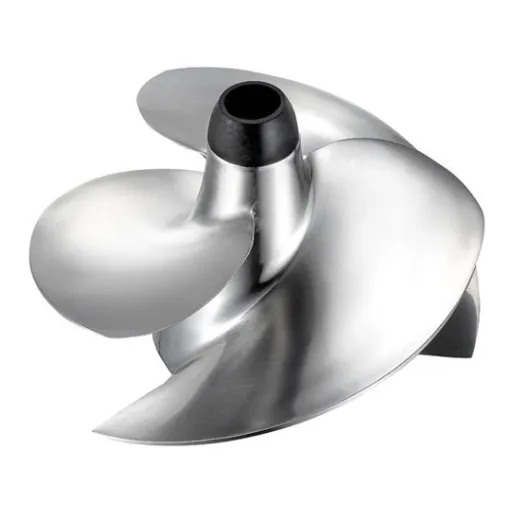
Common Impeller Issues and Solutions
Regarding the performance of an impeller, there are many commonly occurring problems that can be associated with the function of a seadoo impeller. Here are the problems and their respective solutions:
🔴 Cavitation
Problem: In cavitation, the impeller is surrounded by air bubbles because of low water pressure, which results in the loss of both thrust and efficiency of the system.
Solution: It is advisable to inspect the intake grate for clogs or damage. Ensure there are no cracks, dents, or deformations in the impeller blades. Another option is to equip the unit with a high-performance aftermarket impeller which will help in minimizing cavitation.
🔴 Damaged Impeller Blades
Problem: Rocks, debris, or even use over time can cause the impeller blade to chip or bend, causing vibration and poor performance.
Solution: Regularly check the impeller for any obvious damage or visible wear. If needed, replace the impeller and consider installing a debris screen to eliminate the possibilities of future accidents.
🔴 Corrosion
Problem: The seadoo impeller, after being in salty water for an extended period, can get damaged and start malfunctioning.
Solution: Always rinse the Sea-Doo in clean water after it has been in the sea and coat any metal parts with an anti-corrosion spray. Heavy-duty stainless steel impellers are quite expensive but they can resist corrosion better.
🔴 Misalignment
Problem: When any part is out of alignment, it creates vibration and premature wear on the impeller and the pump casing.
Solution: Check the impeller alignment and pump for any obstructions. As a compulsory measure, check and restore all misalignments to ensure proper operation.
🔴 Obstructions in the Intake Grate
Problem: If debris is caught in the intake grate, it may block the water flow to the impeller, reducing the seadoo’s performance.
Solution: Clear off the intake grate as often as you can, especially in areas with a lot of seaweed, sand, or debris on the beaches.
Taking these general care measures in advance and adhering to regular preventative maintenance for all necessary equipment will keep your seadoo impeller running at its peak, prolonging the fun and excitement of riding it.
Professional Service vs. DIY Maintenance
Professional service ensures thorough maintenance and early problem detection, while DIY maintenance is cost-effective but requires skill and tools.
Choosing the Right Impeller
Factors to Consider for Sea-Doo Models
In order to choose the correct seadoo impeller for a given Sea-Doo model, there are a few important considerations that need to be addressed to guarantee functionality and lifespan of the craft. To begin with, it is essential to consider the horsepower and practical RPM of the engine. For example, better acceleration and top speed would require a pitch that fits well with the engine’s power delivery. In most cases, steeper pitch impellers are meant for performance wave runners, whereas flatter pitch impellers help in improving low-end torque.
📋 Key Factors to Consider:
- Engine Power: Match the impeller pitch with your engine’s horsepower and RPM range for optimal performance.
- Usage Type: Determine how you’ll use the watercraft—leisure cruising, water sports, or racing—as each requires different impeller characteristics.
- Material Selection: Stainless steel impellers are more robust and hard-wearing than aluminum counterparts, and they fare much better in waters with debris or sand.
- Compatibility: Verify the seadoo impeller matches the intake housing and exhaust diameter of the nozzle to prevent installation problems.
Next, take into account how the watercraft will be used—leisure cruising, sports, or racing. For example, tow ski impellers would be different from speed-focused impellers. The choice of material also matters, with stainless steel impellers being more durable than their aluminum counterparts.
Finally, one should also verify the seadoo impeller matches the intake housing and the exhaust diameter of the nozzle to prevent problems during installation. Correctly matching an impeller removes the chances of cavitation as it maintains the water movement at all required amounts. Consideration of these aspects will not only enhance your seadoo experience but also help keep the equipment in place for a longer time.
Performance Goals: Speed, Efficiency, and Towing
Improving Sea-Doo performance for speed, fuel economy, and towing purposes requires evaluating the effect of any of these factors on other aspects of the vehicle. Many of these factors aim primarily to increase speed, which is made possible by the suitable implementation of different engine parts. The seadoo impeller is one of the primary components that will boost speed. The smaller the pitch, the faster the acceleration, which is useful for those who engage in recreational riding. On the other hand, racing or touring at high speeds will require a larger pitch to help attain higher top speed. It is also important to ensure that any enhancements to increase speed are done in tandem with ensuring that the craft does not become difficult to control at high speeds.
⚡ Performance Optimization Tips:
For Speed: Use a higher pitch impeller combined with engine enhancements to achieve maximum top speed on open waters.
For Efficiency: Maintain frequent service of the impeller and keep the pump housing clear to ensure optimal fuel efficiency and reduced engine load.
For Towing: Install a high torque impeller with lower pitch to deliver consistent power for pulling wakeboarders, skiers, or tubes.
Efficiency, in this case, refers to the ability to obtain the highest fuel efficiency and optimally operate the craft in all conditions. One of the primary concerns is the wear of the impeller, so every boater should ensure frequent service of the unit and keep the pump housing clear at all times, as its obstruction affects the performance of the pump. A seadoo impeller constructed to facilitate optimal water transfer with minimal resistance results in the use of less fuel and a longer engine lifespan. This is especially valuable for anyone engaged in cruising or long fishing trips.
When it comes to towing, torque is key. Whether hauling a wakeboarder, skier, or towing a tube, the high torque impeller delivers consistent power and provides enough punch to carry loads. Also, remember to enhance stability with trim tabs or ballast systems for enhanced towing capability. Pairing a durable impeller with suitable uses, especially for towing, provides that added security. With attention paid to these performance aspects, optimizing Sea-Doo for all essential purposes is possible so that speed and effectiveness do not come at the expense of towing ability.
Expert Recommendations on Solas Impellers
Solas impellers have a reputation for being some of the most accurately designed and highest performing propellers, which are widely used in the personal watercraft sector and towing sports. However, when selecting a Solas impeller suitable for a Sea-Doo, one should take into account the intended specific activity. As an example, for those whose primary interest is towing sports such as wakeboarding or tubing, the impeller shall have less pitch to enable low-end torque that is necessary to accelerate faster. In contrast, higher pitch impellers will be ideal for general recreation or cruise control, focusing on top-end speed and fuel conservation. Such diversity in Solas impellers ensures that there is a seadoo impeller for every level of performance necessity, whether it be regular use or specialized purposes.
Innovative dynamics of the latest Solas impeller models also enhance the durability of the equipment in question and its efficacy in use. The stainless steel used is of a high grade, which prevents it from corroding and enhances its performance span by making it endure the toughest of marine conditions. On top of that, Solas impellers feature designs aimed at limiting cavitation, which makes the experience much smoother and also improves control. Such features include variable pitch designs to further maximize usage of PWCs by facilitating them to operate at optimal speed and efficiency across all speed and load ranges. All these features make Solas seadoo impellers a wise choice for anyone looking towards powerful engineering and enhanced Sea-Doo performance.
✅ User Testimonials: Many users have switched to Solas impellers and reported significant improvement in thrust as well as reduction in fuel consumption, especially when other performance parts such as intake grates and ride plates have been installed. The use of data such as RPM and water conditions allows for informed decision-making that helps in selecting the best impeller for needed functions.
The use of a Solas seadoo impeller increases the output of the watercraft as well as the enjoyment of riding it, as it offers a smoother, more efficient ride, enabling all the fun aspects to be maximized.
Frequently Asked Questions (FAQ)
Q: What is a SeaDoo impeller and why is it necessary to have it in my PWC?
A: A SeaDoo impeller is the part that spins inside the jet pump to propel water. That specific part on the PWC—whether it’s a Sea-Doo GTX, RXT 260, RXP-X 255, or GTI SE 130—comes into play when acceleration, top speed, or handling is considered. An OEM SeaDoo impeller provides good performance improvement in different areas and is usually modified by jet ski users for enhanced results.
Q: How can I tell if the SeaDoo impeller needs to be changed on a 2008 Sea-Doo GTX or RXT model?
A: The SeaDoo impeller is due for an upgrade when there is a delay in acceleration, cavitation, vibratory shocks due to turbulence, or maybe damage to the hub or blades. In boats which are older, like 2008 Sea-Doo GTX, GTX 4TEC, RXT, and RXT 260, these problems can be associated with damage to the impeller. Look over the blades and see if there is any chipping, buckling, or if the hub is worn out beyond normal.
Q: What is the difference between OEM SeaDoo impellers and aftermarket ones such as Solas or Riva?
A: For Sea-Doo GTX, RXT, and RXP-X 255 models, OEM SeaDoo impellers are designed to be on par with factory standards, whereas aftermarket impellers such as Solas Concord can showcase different geometry and larger blade area, which may bring remarkable performance boosts in certain scenarios and applications. Riva and other performance brands might enhance thrust curves using more sophisticated means; however, they need to be certain of the hub and pump compatibility.
Q: Is it possible to install Solas and Riva impellers on the Sea-Doo RXP-X 255 and RXT 260?
A: Yes, there are numerous aftermarket seadoo impeller options that come in renowned designs for Sea-Doo RXP-X 255, RXT 260, GTX LTD IS 260, or custom applications. Always make sure that the impeller fits with the specification of the jet pump hub assembly, including the thrust requirements and the year of the model. Solas or Riva may have many solutions, but check whether the hub can be used with the impeller and whether the design and area of the blade are compatible with the engine and its purpose.
Q: What does “blade area and unique geometric blade design” mean for performance?
A: Blade area and unique geometric blade design refer to the physical dimensions—the thickness and span—of each impeller blade used. A larger blade or enhanced blade surface area engages more water, providing enhanced low-end thrust capabilities, while innovative blade layout techniques lower cavitation or reduce it entirely and improve overall efficiency.
Q: How do acceleration and top speed of a seadoo impeller change with the impeller’s pitch and hub size?
A: Tuning the pitch determines the volume of water that the impeller rotates in each turn of the main shaft. High pitch promotes maximum speed, whereas low pitch enhances acceleration. The hub must be the same size as the jet pump; otherwise, it would cause the jet pump to shake and potentially break. For high-powered crafts such as RXT-X 260 or RXP-X 260, it is best to properly match pitch and blade width to suit the engine.
Q: Is there an impeller suitable for all Sea-Doo engines, including GTX 4TEC and older models like 2008?
A: It depends on the purpose. The most up-to-date jet skis have engines such as GTX 4TEC with high-performance aftermarket impellers designed to decrease the effect of cavitation. Model year 2008 may not require any upgrades aside from factory parts. See specific instructions for the Sea-Doo GTX, Sea-Doo RXT, RXP-X 255, and GTX LTD IS 260 series, as they will feature the right models and objectives.
Q: Does the jet ski have a provision for upgrading the impeller to address towing or heavy loads?
A: Indeed, this is possible by installing an impeller that has larger blade surfaces or is more progressive in pitch. Such an impeller will increase the thrust generated at low speeds and make it easier to tow or bear the weight of a PWC, like an RXT 260 or GTX from Sea-Doo. Still, remember that such modifications can limit the maximum speed or require additional tuning for the engine to achieve the desired level of performance.
Q: Are impellers meant for SeaDoos compatible with Yamaha jet skis or Kawasaki, or does each company have unique products?
A: Even within a particular brand, there are different models, each with their own unique specifications regarding parameters such as jet pump measurements and hub standards. It is impossible to fit a SeaDoo impeller in a Yamaha or a Kawasaki and vice versa. Each manufacturer has different types of impeller designs specific to their models.
References
- Western Interstate Commission for Higher Education (WICHE) – Solas Seadoo Impeller Tools: Provides information on specialized tools required for removing impellers from Seadoo models with specific engine types.
- Click here to read more.
Ready to Upgrade Your Sea-Doo?
Choose the right Solas impeller for your watercraft and experience enhanced performance, better fuel efficiency, and an overall improved riding experience. Whether you’re into racing, towing, or leisurely cruising, there’s a perfect impeller waiting for you.