You bring your boat out for a peaceful trip on the water and everything goes smoothly, only to have your spirit dampened when your propeller fails. This is a particular case of spun prop hub which is common but very little known about as it leaves one immobilized or even leads to toxin fill up in an engine without much hint. This is information that is very useful for seasoned skippers as well as novices because one should not expect any inconveniences while enjoying the water and solutions to this problem should be at one’s disposal. In this text, you will find all the symptoms due to which a prop hub spins, the factors causing it, and solutions to the editor’s interventions. Do not allow yourself to be overcome by a small problem; that one is easy to fix. Better still, keep abreast of the knowledge of how to correct that common issue and more like in this case, how to troubleshoot it like an expert.
What is a Spun Hub?
Definition and Function of a Prop Hub
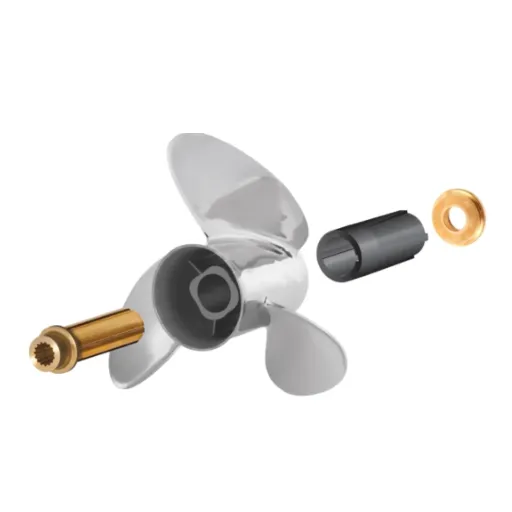
Every component in the marine propulsion system has a role to play, and a prop hub joins the propeller with the engine. It connects both elements enabling, transfer of energy from the engine to the propeller so that it can turn and create enough force to propel the watercraft. Without this hub, the linkage between the motor and the propeller physically detaches, thereby making the propeller system useless.
One of the most important functions of a prop hub is the ability to control and absorb the impact imparted on the propeller as it strikes objects. It protects the drive train and other parts of the drive system from damage, helping in prolonging of the machine’s lifespan. On most of these propellers, there is a rubber bushing, or any other heavy material, which is put on for purposes of easing such an impact when working.
Nevertheless, as the current state of the hub becomes “spun”, the bond between the working engine and the spinning propeller weakens. A hub can become spun when the rubber bushing inside a hub becomes defective or slips repeatedly. A hub that spins on a regular basis will require attention sooner rather than later if one intends smooth efficient activity. One of the usages of a working propeller hub which any boat owner or their representative should know is the how it works.
Common Signs of a Spun Hub on Your Boat
A spun hub is not difficult to locate in your boat, as it comes with and even causes some disruption to the boat. One of the most common and observed symptoms is that the boat all of a sudden cannot move. Despite the fact that the engine gets a normal or elevated number of revolutions per minute, the boat fails to move on or mesmerise the speed. The position of the engine and driving becomes incompatible given the movement of the boat and proves conclusively the hypothesis of a spun hub.
Poor performance under pressure is also another common noticeable feature. A very good example is if the boat is pulling a skier or carrying much load and the engine over-revs without corresponding acceleration, then it is most obvious that the hub is spun. Under such conditions, the propeller is unable to efficiently function since the power from the engine is not getting to it, hence the boat becomes too slow for performance purposes.
Finally, sounds or vibrations that appear foreign for the prop area are indicators that the hub is spun. If the hub moves within its housing, it may result in irregular contact or a gap that can be felt as a vibration or a ‘grinding’ feel. If any of these symptoms are present, it is highly recommended to check on the hub, and in need, help should be sought to fix repair or replace the hub so as to avoid other problems. When detected at the appropriate time, it makes it easier to operate the boat in a better way without harm.
Reasons Why a Hub Might Spin
A coupler could freely rotate because of wear and tear of parts over a period of time. Efficient utilization of the hub over a long period of time may lead to wear in the rubber elements which then causes frictional loss slippage. Optimal care and preventive maintenance can avoid serious wear.
Another possible reason is an unanticipated impact or load. For instance, when coming in contact or running over something hard such as rock or some hidden object, there may be enough energy to injury the hub and possibly to move it as well. This sort of impact often leaves the hub’s position compromised and as a consequence, it spins off or slips during the function.
Further, it may turn out that excessive heat may fail the hub. Elevated temperatures accompany especially at extended use at high speeds tend to weaken any adhesives or rubber in the hub. When this happens, the hub gets thrown from the prop as the adhesive fails, and it may be relevant to address more complex causes of what is called a spun hub. To avoid these concerns, temperature control, proper use and maintenance including periods of rest, and routine checks by an expert are a must.
Symptoms of a Spun Prop Hub
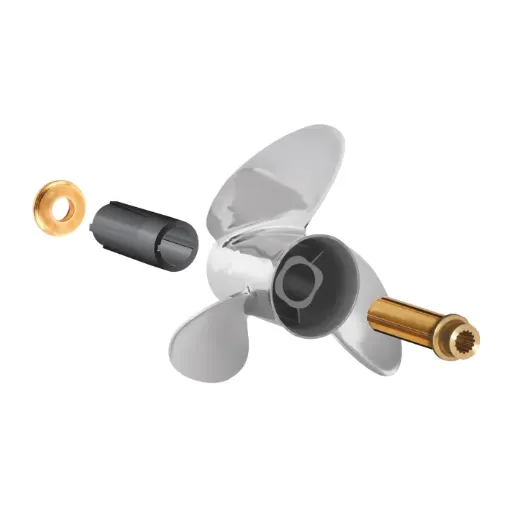
Loss of Power and High RPMs
One of the most typical signs that a prop hub has spun is that the engine RPMs are high but the power has dropped. This is because the engine and the propeller no longer have a tight connection due to the wearing or slipping of the rubber insert within the hub. This is to say that even though the engine is functioning, albeit slightly, the propeller is under no force due action of the engine. Boaters usually face this problem when they attempt to speed up but find that they can hardly move through the water as a result.
The challenge is often analogous to cavitation, in which a propeller rotates but does not engage with the water effectively and hence leads to surplus bubbles and low performance. On the contrary, the problem of hub slippage is not hydrodynamic but mechanical in nature. This can become more pronounced if nothing is done to rectify the problem because the hub will be further degraded until propulsion ceases altogether. An inspection of the propeller and hub components is advisable to look out for vulnerabilities and prevent a major failure in due time.
Recent statistics collected from marine experts and manufacturers show that existing detection systems can help improve the diagnostic of spun hubs more precise. Due to these systems, it is possible to monitor unbalancing engine parameters, for example, RPM and velocity and issue alarms when conditions become critical. These solutions have a lot of problems that affect the performance, especially when dealing with high-speed boats, which makes them vital to performance. Nonetheless, careful maintenance and scheduled examination of the grip on the propellers are the most effective means since dissolved rubber scan of a prop hub is prevented through such methods.
Unusual Noise from the Propeller
Strange sounds coming out from the propeller should never be ignored as they could point to some mechanical problems. This may include whine, tapping, scraping or even knocking noises depending on the problem that is causing it. Sounds produced can point to problems ranging from cavitation to some entanglement or jamming of debris in the propeller or worst the blades being dented. Specifically, cavitation looks at the low pressures which generate vapor bubbles in the area close to the blade and the bubbles bursting causes clang sound. Failing to pays attention to these noises may make the problem worse and affects efficiency and also could lead to more mechanical problems.
Additionally, infiltration of foreign material such as fishing line, seaweeds, and other dirt, especially if it clings on the propeller’s shaft or blades, is another source of noise. Integration of these materials in the propeller will lead to loss of equilibrium hence causing noise and vibration. Misalignment of the shaft and wearing of bearings can also enhance all these leading to inefficiency in a propulsion system. It undeviatingly follows that thorough inspection, cleaning of the debris before its inclusion, or checks for any mechanical wear and tear should be done in order to avoid these issues.
Innovative diagnostic tools and integrated monitoring systems play a major role in early identification and problem-solving of propeller noise issues. In most of these systems, acoustic detectors or vibration monitoring devices are employed to detect anomalies as they develop. Together with physical inspections and maintenance programs, these devices help determine the cause of such disturbing sounds which might deplete the vessel’s performance. Taking precautionary steps and seeking expert advice would, at the end of the day, ensure that the propeller and its components last longer without compromising the efficiencies of the vessel.
Difficulty in Steering and Handling
Poor steering response and general handling issues likely are the most common performance related concerns observed in a boat. While at sea, a ship that takes a lot of work to keep on course or pivots with no apparent reason is a typical example of a mechanical or hydrodynamic breakdown. A broken or misaligned propeller will invariably cause the ship to drift and will also reduce its stability on the water. This can be especially hazardous in situations where control is difficult, such as bad weather or confinement in a lean passage.
The propelling system of the watercraft is also one of the main factors that tends to affect the steering experience. Wearing out or distortion of the propellers creates an imbalance in the system making smooth cruising impossible due to such vibrations. Such vibrations may, in the long run, facilitate the accumulation of stress on the rudder or any other essential steering parts. It is necessary to check the hydropower, levers and linkage systems and note any anomalies, which should be corrected. Such risks are remarkably reduced by regular assessments of the performance of the ship and timely correction via chemical cleaning and maintenance.
Switching to contemporary navigation and steering systems may additionally improve the efficiency of a vessel. Current autopilots and electronic helms, as well as compound monitoring facilities, allow sailors to get instant reactions and exercise a fine degree of control which eases the burden of navigation on the crew over extensive distances. With the advancement of these new gadgets –so corrosive chemical cleaning is indeed not mostly required –and repair done especially on the medical equipment, or even without it, the vessel owner maximizes the utility of the marine vessel in question.
Diagnosing a Spun Hub Issue
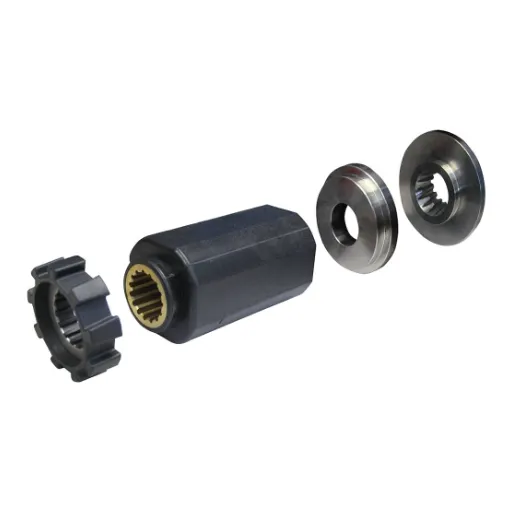
Visual Inspection Techniques
In order to successfully diagnose a spun hub problem, the first step is a visual examination of the suspected problem area. Examine the propeller hub carefully for any visible signs of damage like cracks, discoloration, melted rubber, or being out of alignment. Such damages usually indicate the hub’s structural failure due to heat or operational stress experienced over time. In addition, gaps between the propeller and hub, where none exist, may indirectly point to the rubber insert being worn or spun in the hub assembly. At this vital evaluation step, no detail is overlooked even with the aid of a flashlight and magnifier.
Another working strategy during visual inspection is to look for any debris or wear marks on nearby components. Looking out for a spun hub may also help as it provides a significant amount of friction and hence, produces distinct marks or residues. Removal of the propeller and observation for wear or damage on the splines can also help to distinguish the hub and the shaft engagement are effective ways. Careful chemical cleaning of the area around the wall is necessary to ensure that no oil, dirt, or grime can hinder the view and result in an incomplete assessment.
Contemporary diagnostic services and devices, as well as a visual review, are some of the elements that enhance one’s accuracy and productivity. For instance, the utility of high definition cameras or a boreoscopy is all about being able to make the image closer to the eyes in otherwise inaccessible parts, aiding in the diagnosis. In combination with professional judgment, high technology equipment allows determining with no doubts if it is only some nuisance or actual structural repair is in order. Details of the visual survey related to records and the results obtained from interpretation assist in the performance of the necessary repairs or changes on the propelling system of a vessel which is correction of anomalies that affect its operation.
Using Diagnostic Tools and Videos
The improvement in diagnostic tools and videos, along with real-time information from authoritative sources, facilitates the ability to problem-solve complicated mechanical scenarios. The modern visual gadgets, whether they be borescope or thermo -graphic cameras, allow examination of areas that would otherwise be missed with the naked eye. Using the data at hand and comparing it with current technical documentation: specifications provided by the manufacturers, maintenance procedures and wasted hours troubleshooting any issues are significantly reduced. In this regard, the synergy comes into play and the precision of method is achieved, and sound interpretation of facts is guaranteed avoiding the chance of any misunderstanding.
The improvement in diagnostic tools and videos, along chemical cleaning along with real-time information from authoritative sources, facilitates the ability to problem-solve complicated mechanical scenarios. The modern visual gadgets, whether they be borescope or thermo -graphic cameras, allergic examination of areas that would otherwise be missed with the naked eye. Utilizing the data at hand and comparing it with current technical documentation: specifications provided by the manufacturers, maintenance procedures youtube and excessive wasted hours troubleshooting any issues are significantly reduced. In this regard, the synergy comes into play and the precision of method is achieved, and sound interpretation of facts is guaranteed avoiding any misunderstanding.
It is always more informative to use reliable digital platforms enhanced with video information when trying to understand the behavior of machines than just general search words or the brief information about them. There are ready-to-use solutions embedded with artificial intelligence algorithms which allow capturing video data to identify defects and to produce the inspection reports relevant to that equipment. These diagnostic systems cater to facts, saving on time used, thereby wasteful in works of maintenance and repair decisions. The well-oriented innovative diagnostic algorithm will include all of these factors and follow them up. Far beyond and even more, approach is evidence based, for further steps to be executed.
Identifying Damage to the Propeller and Gear
Detecting any breakages in the screw gear or in any other part involves not only knowledge of the construction of the mechanisms and elasticity of materials deformation, but also features of the work of the mechanical engineering object that may point out the damage. It is essential to perform routine checks because a visual inspection might allow for detection of possible risks or hazards within the machinery. In particular, in the event of the propeller blades, there may be visible wear and tear, deformation of shape or even cuts and that would be a great warning. In particular, when it comes to the gears, the technical spec engineers search for any reasons like a tip broken out of wear tooth, too much concentrated wearing, or a layer of oil grown too thick. Such scenarios create an atmosphere that may indicate when a particular part demands repair or immediate replacement.
However, visual evaluations are effective when a problem is evident, but there are other measures in place. The inclusion of high-tech diagnostic equipment and the expansion of ‘scientific knowledge’ addresses those issues once hidden from sight. In such a case, its most straightforward application is the vibration and acoustic emission monitoring to search for new traces of gear irregularity or damage. For this purpose, users resort to digital tools like upgrading the Google search engine regulations in such a manner that a user does not search for key phrases and does not get usual banal lists and mayogenic reports, case studies, manufactures’ working guides to reach some conclusions.
Incorporated with present-day internet facilities, it is quite obvious that such advanced knowledge level increases effectiveness of pinning down faults and diagnosis of damages as well as helps in ensuring the health of the system over the years. Either way, in data-driven research-based practices, observation from the field can be integrated enabling the technicians to implement measures that address the problem before it occurs or grows bigger hence saving the systems. The traditional methods of inspection along with the latest technological developments is indeed a step ahead in efficiency and theory of maintenance of machines as well as their long lifespan.
How to Replace a Spun Hub
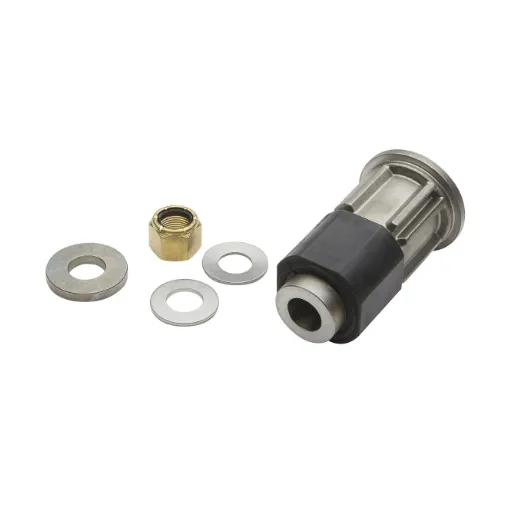
Tools Required for the Replacement Process
To accomplish a replacement of a spun prop hub, you may find the following tools and materials to be of importance.
- Socket Wrench Set–Used while unfastening and fastening the bolts in the course of removal and installation.
- Propeller Wrench – Necessary for removing and refitting the propeller to avoid damage.
- Grease and Applicator – Avoids rusting of the components and facilitates the fitting of the components.
- Replacement Hub Kit – Consisting of parts, provides the replacement hub and all the required parts.
- Rubber Mallet – It helps in positioning the new hub without causing any damage.
- Pliers or Snap Ring Pliers – Used to disconnect and reconnect circlips.
- Torque Wrench – Used for fastening all the bolts properly as per the model specification.
Refer to the hub manufacturer’s instruction for any extra equipment or steps that may be needed for an accurate and reliable repair.
Tips for Ensuring Proper Installation
- Thoroughly Clean All Surfaces – It is necessary to clean mating surfaces from dirt, grease or debris before starting the installation of the spun prop hub. This is because a clean surface offers better contact which helps minimise contact related problems.
- Check compatibility – Ensure that the replacement hub is of the same dimensions and configuration as the old hub. Without identifying the root parts may result in wrong positioning or even collapse.
- Torque bolts equally – In fixing the hub, a crisscross technique should be employed when tightening the bolts. This reduces the chances of warping or applying uneven pressure to components.
- Apply Lubricants Approved by the Manufacturer – Use appropriate recommended lubricants such as anti-seize lubricants, if necessary as per manufacturer’s instructions; this is so that everything will function without a hitch and to avoid rusting.
- Observe Torque Values – Tightening of bolts is achieved with a torque wrench to the manufacturer’s specifications. Fairly obvious comments about toggle under decisive stress, particularly male bolts becoming either over-compressed or insufficiently tightened.
- Assess the Hub After Fitting – When changing the lower unit of the smooth spun prop hub , twist or spin the hub to check for binding and abnormal noises or if the hub is turning.
This action will contribute to the stretch in the lifespan of the hub and assure correct and stable repair.
Preventative Measures and Maintenance
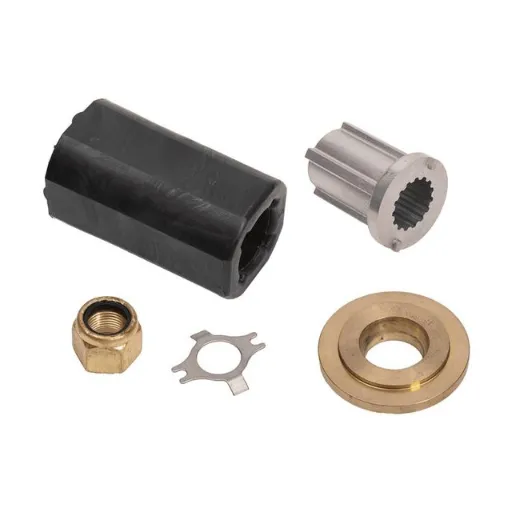
Regular Checks and Maintenance of the Propeller
Propellers are very important parts that need to be looked after and maintained regularly in order to avoid expensive repairs or poor performance. The first thing to check are surface damages such as cracks and dents or deformations in the blades. Such cracks and dents and deformations have adverse effect on the performance. Look for signs of wear and tear as well as corrosion particularly if you suspect a spun prop hub while the boat is used in salt water.
Also, make sure the blades are cleaned regularly to remove fouling, debris and any fishing line which may get entangled hence affecting efficiency. Ensure that the propeller is well fixed and there is no unnecessary movement of any mounting part. This is to reduce the chances of the propeller or any propeller parts from falling off when the boat is under power. The area around the prop as well as the adapter should be at all times under careful observation to note any signs of leakage or water condensation in case it is fitted with such.
Combining these measures with a careful introspection of maintenance checks prescribed by the manufacturer will serve to ensure equipment durability and functionality throughout its service life. Maintaining accurate records of the timings and frequencies of inspections and corrections will assist distress prediction and pre-scheduling of maintenance.
Understanding Design and Material Choices
Equipment design and material selection are central to how that equipment functions, how long it lasts, and how easy it is to work with. For example, corrosive-resistant materials like stainless steel, aluminium alloys, or advanced composites have been chosen to assure that the component functions unaffected by water, salt or heat that is common to some environments. Furthermore, lightweight materials aid in energy savings without sacrificing the structural integrity of the component, a requirement in today’s high-tech engineering.
Seeking new methods for redesign also includes, for instance, making individual platforms interchangeable, which not only makes repair or servicing easier but also reduces the complexity of operational requirements. New age techniques such as 3D molding and millwork are making production more efficient and error free thus decreasing losses in both Shapes and Materials. More Sustainability oriented materials where coming into application is not only pursued to achieve ecological goals but also helps in meeting the regulatory norms making manufacturing or operational process more environment friendly.
Together, all of these attentive design practices and honed expertise in materials science will allow firms to produce cost effective good quality solutions to deal with what industries are asking for today. It’s all about tailoring the design to fit the purpose and one step ahead, incorporating the latest advances in material engineering to achieve the design objectives and even more.nd leveraging cutting-edge material science for maximum efficiency and reliability.
How to Deal with Heat and Load Issues
For industrial systems performance to last, one has to control load and heat issues properly. Such factors include use of specialized materials Graphite, Copper or Phase change materials for heat transfer purposes, a spin prop hub. Application of exhausts, good heat sinks as well as arrangement in components helps to achieve adequate heat removal capacity.
On the other hand, it can be managed by the correct determination of the maximum stress which is transmitted into the structure, the choice of materials for the production of elements during the calculations, and the material of such elements ensuring that it is within the range of the elements that have the capacity to hold that much tensile stress or within the safety limit present. Structures subjected to repeated forces with rubber, composite and alloy systems can be used for improvement of their lifespan. Maintenance on a regular scale and with stress sensors, which provide immediate feedback on the levels of stress within a system, and thus ensure that it is totally used or overused.
From a statistical perspective, improvement in thermal interface material can enhance the heat dissipation capacity of thermal interface materials by approximately 30%, while thermal maintenance predictive analysis about the heat and load failure can reduce the downtime by close to 20%. All these technologies, in combination with data analysis, now make it possible to manage risks, improve effectiveness of operations and prolong the useful period of critical units.
References
-
Aircraft Propellers – Introduction to Aerospace Flight Vehicles
This resource from Embry-Riddle Aeronautical University provides an overview of propeller mechanics, including the role of the propeller hub in flight dynamics. -
Electrical Instrumentation of a Contra-rotating Propeller – MIT
This academic paper discusses the design and testing of propulsion systems, including the mechanics of spinning propellers, which can provide insights into prop hub functionality. - Click here to read more.
Frequently Asked Questions (FAQ)
Q: What exactly is a spun prop hub and how does its mechanism resemble or differ from other hub props?
A: A spun prop hub is also a hub prop designed to be strips within one another, however the hub or the prop head and sleeve is drawn and spun to form the entire hub in one piece. In contrast to theories in certain rubber hub types for some outboards to damp any shock, the spun prop has been seen to be more rigid and is often installed on boats that require adjustment or optimization of the plane surface. The issues related to lot more joint points in case of pressed hubs is totally overcome in spun ones.
Q: How do I ascertain whether or not my spun prop hub has been deteriorated or is in need of a change?
A: Effects of a bent or broken spun prop hub include vibration, either at idle or while accelerating, under and forward motion most importantly, peculiar sound emanating somewhere around the outdrive, distortion at the upper or lower part of the hub, and a propeller that tends to rotate freely on the sheath or shaft. The part should be checked even if it is new for potential press-fitting problems and any noticeable cracks. If during inspection it is discovered that the propeller wobbles or the propeller cannot be held in the neutral position, the spun prop hub needs to be replaced.
Q: Is it possible to fix a destroyed propeller hub or is it proper to always change it?
A: Cosmetic cases such as edges may be dealt with but, not so with a structural spun prop hub which is broken, torn rubber material (in the case of a hybrid design) or bent/ crooked sleeve would need to be discarded. This is the reason why most people press out their old hub and press in a new one because they know that the repairs will not last especially when throttling or changing the gear from forward to neutral or reverse.
Q: Is there a spun prop hub and a rubber hub synonymous as far as outboards are concerned?
A: Not really. A rubber hub relies on an elastic band to allow some amount of slip in case of shock, thereby not damaging the gearbox or the drive system. Most spun prop hubs are metal and do not have the same form of rubber absorption; there are a few spun prop hub designs that even have both the features built into them. The choice whether to use one or the other is more often than not if shock protection is required (use rubber hubs) instead of the rigidity accompanied with many spun wetted plane structures.
Q: Is there a difference in boat handling with and without a spun prop hub during transition from forwarding to neutral and reverse?
A: If you are wondering if replacing the spun prop hub would be fruitful in any way, the answer is yes, the hub is in good condition and engages the propeller all the time in forward, neutral or even reverse gear positions. In case the hub or sleeve has already lost its original shape or form and state, then when you shift gears, throttle response may not be immediate or the vessel may take time to plane. If this occurs and there is a problem of power not being carried forward effectively when speeds ranging from idle to high speeds are made, replace the hub as it may already be worn out or has other defects related to the gears shifts.
Q: What are the chances that the performance of a new boat can be enhanced by adding a spun prop hub?
A: Yes, a new boat’s performance may be enhanced by installing a suitable spun prop hub in combination with the correct propeller, as it will provide a good fit and correct drive transfer. However, this hub must fit the outdrive and the engine manufacturer’s specifications—the Mercury hub masters are different—and the diameter of the sleeve must fit the shaft size. It is possible to install the hub by pressing it at the dealers and check for proper alignment to prevent cavitation and binding of the prop at its base with hull of the boat.
Q: How should a spun prop hub be maintained to prolong its service life?
A: Maintenance activities focus on examining the hub for any play or wobble, corrosion or cracks in the hub head and sleeve, presence of any debris which can come in contact with the hub, and tightness of the nuts and washer in accordance with the manufacturer’s specifications. Ensure binding inside propeller hubs before use and re-check any latent damage especially after hitting an object or abrupt stopping of the vessel. Make sure that plastic bags or fishing line have no chances to get entangled because of their impact on the hub or outdrive.