A part of a vessel that is often forgotten, however, serves as one of the most important attributes of any boat, is the boat propeller, also known as a boat prop in short. It doesn’t matter if a person has extensive experience in sailing or about to do it for the first time, understanding what is a boat prop – how it operates and moves the boat – count a lot in this craft from productivity, and enjoyment perspective. This article will address some essential aspects of boat propellers, the working mechanism, different types of blades, and their applicable efficacy in relation to the speed and maneuverability of the boat. This will allow you to understand how do you go about selecting the appropriate prop or using the right device during an excursion at sea.
Definition of a Boat Propeller
What is a Boat Prop?
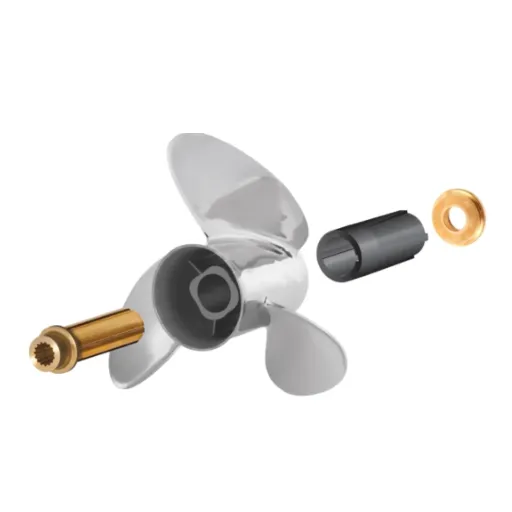
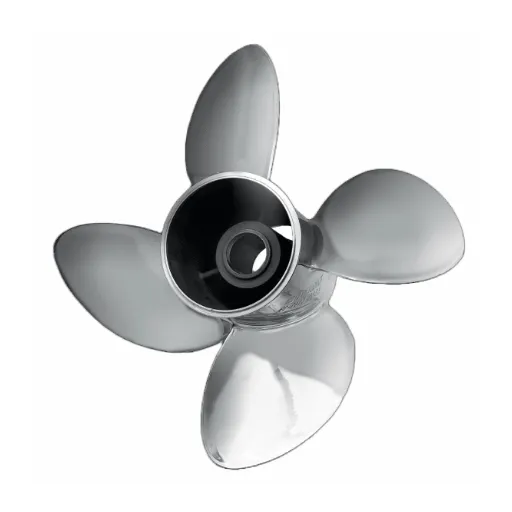
To obtain thrust, a boat propeller or simply “boat prop” as it is popularly known, provides the necessary thrust by virtue of its rotational energy. In other words, it creates thrust and propels the boat over the water. It comprises several blades joined onto a hub that is then linked either to the motor or the engine of the boat. As a result, when the engine turns the propeller, the blades which are bent to certain angles press themselves against the water allowing the boat to sail either forward or backward as the case may be.
Any given propeller’s dimensions, shape, and styling of mounting and accessories will all add up to how a particular boat will perform in a given water body. Elements such as the number of blades, propeller’s pitch (the space within which a single 360-degree revolution of the propeller can move), and overall diameter are also the elements to consider when looking at how well a propeller will propel a vessel. For instance, the propeller’s pitch affects the speed in which a certain vessel will move as the higher the pitch allows for more sped but needs more engine power than in low pitch. Similarly while less pitch in the propeller may be aerodynamic it enhances speed in the boats but more engine capacity may be incurred.
In summary, choosing the appropriate propeller is reliant upon the particular equipment for the vessel such as the engine, the application and the load. When the appropriate propeller matches the boat and its objective however, maneuverability of the vessel is generally protected from power drift or drop, fuel is more economical and the ideal speed of the watercraft is achieved.
How Boat Propulsion Works
The method by which an engine powers a boat is called the powerdrive, whereby the power of the engine is translated into a motion by the propeller. The engine produces energy and the energy rotates the propeller and the propeller pushes the water backwards. As a result of this backwards pushing action, a counteraction is achieved resulting in the forward propulsion of the boat. The diameter and architecture of the propeller blades, with special focus on the angle of the blades often called pitch, is very important in that it affects the performance of the boat in terms of how fast it can go, how much fuel it will consume and how the vessel can be navigated.
There are two types of boat propulsion systems that are widely employed. The first type is the outboard engine that is mounted on the aft or the back of the boat; it is composed of an engine, a gearbox, and a propeller all enclosed in a single casing. The other type of engine systems is the inboard engine; it is mounted inside the hull of the boat and it is fitted with a propeller shaft which propels a propeller in motion. There are different reasons for preferring either system, with the outboard engines being more user friendly while inboards providing better weight distribution and elimination of airborne noise.
With precise knowledge of how propulsion operates, one is able to choose the most effective setting for a vessel depending on its usage. For example, boats used for recreational speed boating would usually need a much high pitched propeller as opposed to that of a fishery vessel which instead would need a low pitched propeller for the size of the boat and the use of it for ease of acceleration and steering. Hence, there is a correlation between the design of the boat and the efficiency of the propulsion mechanism deployed in the boat and the usage of the boat will be expected to be at its best under such conditions.
Importance of a Boat Propeller
The propeller of any boat is important in a direct way as it influences many aspects of a boat such as speed, consumption, handling, etc. It is responsible for driving the thrust of the vessel by transforming the power and turning it into forward motion. Lack of a good and proper propeller with regard to design and variables will render a boat very difficult to steer.
Finding the best propeller based on your requirements helps your boat travel faster, more stably, and allows for greater maneuverability. For instance, a correctly paired propeller will maintain good acceleration and the best speed possible without straining the engine. On the other hand, a poorly chosen propeller may result in fuel wastage, slowdown, or even engine breakdown caused by over or under loading.
Just as crucial as regular usage however, is proper care of a boat propeller, which includes correct usage and repair. With damaged or even worn out propellers, vibrations may occur, usage will be less effective and operational costs will be higher. If you regularly check the propeller against the hat of any compression dent, chip and/or grown on metal, it remains effective and provides a safer and a more responsive navigation experience.
Different Types of Boat Propellers
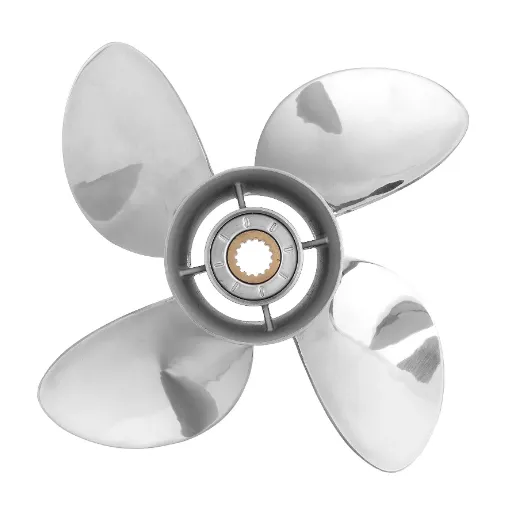
Types of Boat Props
In the marine industry, there are various types of boat propellers obtainable where each of them is designed to achieve peculiar performance characteristics as well as suit the needs of boaters. Some of the most common types include the following:
1. Turbines with Fixed Pitch
The most popular type of propeller is the one with a fixed pitch since it is simple and strong. The blades of the aforementioned prop are set to only one particular pitch, and they cannot be altered in any manner. The said blades are suitable for pleasure boats because they offer good working characteristics and do not require often maintenance.
2. Adjustable Pitch Propellers
These so-called propellers with variable pitch enable operators to adjust the propellers turning angle, thus making them more adaptable to different situations. The use of such propellers is mostly associated with powerful or special sea vessels, enabling great performance advances in terms of speed and fuel consumption depending on the required circumstances.
3. Hinged Propellers
Boat propellers with a folding or retracting mechanism consisting of one or multiple blades can usually be found on sail boats. The blades close down on themselves each time the propeller is not in use, which reduces the drag as it increases the efficacy of sailing. These are suitable for users who appreciate fast sailing and least friction.
4. Feathering Propellers
Feathering Propellers are accustomed to adjusting the blades to both forward and reverse without causing too much drag whenever the vessel is on the move. They are also very popular among long-distance cruisers thanks to their effectiveness.
5. Surface-Piercing Propellers
Surface-Piercing propellers working under high-speed boats are partially immersed above water to increase speed by reducing drag. Such a design is highly utilized among competitive motorboats and vessels which require performance enhancement.
6. Tunnel Propellers
These are most common on larger boats and ships as the propellers are fitted into the hull of the boat. This allows the propeller to function at shallower depths without losing the thrust and is very useful for such vessels due to their characteristics.
These various types of boat propellers help the boater or operator to select what is a boat prop that is most efficient of their applications and requirements thereby making boating more fun.
How to Choose the Right Type of Propeller
While determining the specific type of propeller, I pay attention to a few key determinants that are vital in ensuring that the propeller fits my boat usage. I begin by specifying the form and dimensions of my vessel because every vessel usually has its unique needs. For example, a basic fixed-pitched propeller might work better on a smaller recreational motorboat, whereas it may need a tunnel propeller on a bigger sized boat for effective shallow water control. Knowing whether or not the propeller matches off of the vessel also enhances its efficiency.
Afterward, I focus on the purpose of my ship. The propeller, irrespective of its purpose which may be fishing, high speed cruising or towing, has got to match the engine’s capability within the environment. I focus on very key aspects such as pitch and diameter which are specific depending on the speed and consumption of fuel and how the engine should behave. Lower pitches provide improved acceleration while vice versa does increase the achieving speed range. By doing so, I am able to use these concepts to achieve compromise between performance and efficiency.
In the end, I have to think about relevant environment and the way it affects maintenance of the vessel. My boating avocation involves shallow waters more often; therefore, I may prefer a propeller made from materials that are more robust and hard-wearing. In addition, I consider the cost and time of repairing the propeller or replacing it, when it becomes necessary to do so. In this way, I can also decide on the right propeller that will improve the efficiency of my boat and be efficient.
Materials Used in Boat Propellers
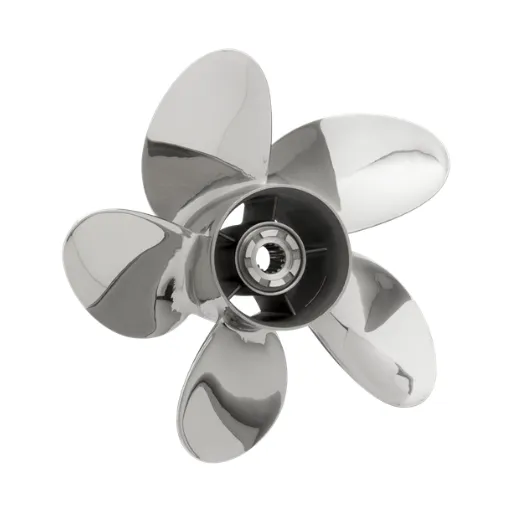
Aluminum Propellers
Aluminum boat propellers are very popular because they offer performance and durability at a lower cost than most other boat propellers or blades. These types of propellers are made from aluminum, which is cast to form the shape, which makes them inexpensive and equally easy to replace. Aluminum boat props for that matter are usually used for general boating purposes more so in fresh water and such offer great services at a very low cost.
To a large extent, they perform the same function as propellers when what is a boat prop is constructed in metal and rotated on the central hub. The advances in aluminum propeller technology for prop-craft have improved their strength, longevity and efficiency. High The new technologies in construction and applications such as improved casting procedures and some finishes also inhibit corrosion of the propeller and enable the aluminum props to work against minor impact damages. When it is a boat and working at a low velocity or no expectation for unseen force few people would present in steel propellers, aluminum would work perfectly on outboard or sterndrive engines.
Despite being well-liked, alliage propellers are not without shortcomings. In comparison to stainless propellers, their vulnerability to bending or cracking is much higher owing to excessive loads. Those who expect to operate boats in stern settings or desire maximum thrust should take into account other construction materials. Yet, when talking about the field of application that is used on a daily basis, they are worth the money because their performance is good.
Stainless Steel Propellers
Propellers made of stainless steel are well known for their long lasting sea faring capability. Stainless steel ones are preferred over other aluminium ones as these do not easily bend, crack or get damaged so they act as a better fit for sailors working under tough conditions or high speed boats. Elements that are tough and thick in nature make up the propellers of stainless steel thus remaining in shape for heavy usage thus delivering steady performance in rough seas.
Furthermore, stainless steel propellers are more efficient thanks to the fact that their blades are thinner hence can be designed more precisely than the case in the aluminum propellers. It promotes better water flow and reduces water resistance thus enabling the boat to accelerate efficiently and also achieve higher maximum speeds. For avid boaters who enjoin maximum propulsion and effective petroleum consumption, such is the case of bigger boats, sports boats, people who engage in water sports or even those who have to cover a lot of distance – stainless steel propellers are a must-have and a preference. Such improvement in performance has a positive impact on the choice of this type of product, despite its higher price during the first stages of purchasing since it may be used more often.
Boaters might traditionally consider stainless steel propellers expensive, but overall, they turn out cheaper because of their advantages. Since they are tougher, such propellers do not need changing every now and then, while this new type of propellers also helps to increase the power in propulsion, meaning efficient fuel consumption. However, with increased strength comes also increased risks – as they are less flexible once they make contact with an object, the likelihood of the propeller sure and drivetrain getting damaged is higher. Regular check-up and prudent handling are inevitable because otherwise one might miss out on making the most of what a stainless steel propel tems offer.
Comparing Propeller Materials
The most common propeller materials are composite/plastic, aluminum, stainless steel, cast iron, and copper alloys. Here’s a concise table summarizing the key points for each material:
|
Material |
Cost |
Strength |
Durability |
Repairable |
Usage |
Water Type |
|---|---|---|---|---|---|---|
|
Composite |
Low |
Moderate |
Moderate |
No |
Emergency |
Both |
|
Aluminum |
Moderate |
Good |
Average |
Yes |
General |
Fresh |
|
Stainless |
High |
Excellent |
High |
Yes |
High-speed |
Both |
|
Cast Iron |
Low |
Low |
Low |
No |
Small boats |
Fresh |
|
Copper |
High |
Excellent |
High |
Yes |
Large ships |
Both |
Propeller Maintenance
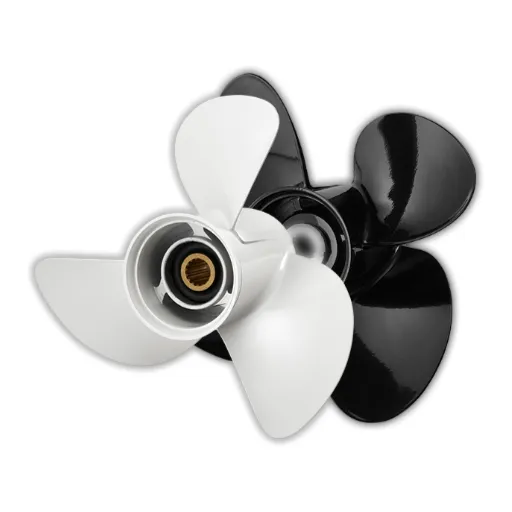
Importance of Regular Propeller Maintenance
It is crucially important to take a proper care of boat propellers as it impacts performance, conservation of fuel cost, and protection of one’s vessel. This is because as time passes by and a propeller continues to float and she and tears occur as a result of being struck by water all the time even in normal conditions. Therefore, conducting regular checks facilitates detection of problems like dents, cracks, and bends that can easily reduce the power of the engine when in motion or forcing the engine to work harder than necessary. It is also important to maintain the propeller so that the boat does not break down as frequently or whenever and does not require much cost to repair the boat in the long run.
Cleaning the propeller is an integral aspect of maintenance, especially for vessels in saltwater. Salt and marine organisms such as barnacles, and algae, may accumulate with time, causing corrosion and impaired performance. Cleaning thoroughly with fresh water immediately after use helps in avoiding both corrosion and construction. Further, pulling out the propeller shaft for inspection at least a couple of times during the season is advisable because lines or debris wound around it might cause a lot of damage and even imbalance the propeller. Smoothening of the shaft’s lubrication and changing out the propeller’s worn hardware are also necessary processes to lengthen the propeller’s serviceable span.
Another key element of maintenance is making sure that the propeller is properly balanced and aligned. An improperly aligned or unbalanced propeller can cause excessive vibration reducing the comfort when operating, or worse damaging the drive system. Propeller balance can now be accurately diagnosed using the latest technology allowing problems to be detected before it is too late. The importance of emphasizing and spending time on regular maintenance builds safety, reliability and keeps the boat in top condition which helps complete the purpose of enjoyable water excursions.
Common Maintenance Practices
Sailing vessels and other types of boats require proper maintenance for the purposes of assuring safety levels, extending the lifespan as initial costs are relatively high, and the ability to perform tasks efficiently. Here are some critical maintenance tips to remember:
- Regular Dusting and Cleaning – Make sure to wash the boat properly especially after using it, more so if it was used in saltwater or collection reactions because it tends to corrode metallic components. Also scrubbing the hull is advisable to help avoid the growth of algae and barnacles.
- Lubrication and Oil Change – Checking the level of engine oil and changing it at the appropriate time as advised by the manufacturer is also a vital aspect. Clean oil keeps the machine running and free from unscheduled expensive repairs.
- Examine the Propeller and the Shaft – Look over the propeller after every closet dive outing. Tending to dents, dings or even tangles early enough helps the mechanical part in question from further damage.
- Upkeep of the Electrical System – Always ensure that all the electric installations like the terminals that connect the battery power are properly and efficiently clean. Any protective measures such as the use of anti-corrosion sprays on the terminals will be advantageous.
- Fuel system maintenance – It is necessary to examine the fuel tanks and lines for any leakage or cracks, and worn-out parts should be changed. There is also the option of adding a fuel stabilizer to keep the system clean so that there will be no blockages.
- Hull investigations – Assess the hull for any cracks, blisters or any other form of damage. This helps because problems raised early don’t end up becoming complex.
- Follow the reading material provided by the Manufacture – It is advisable to keep an eye on the manufacturer’s model of specific designs and how they should be maintained.
Ongoing care of these practices, especially when coupled with the use of technology such as diagnostic equipment or corrosion detectors, provides effective, safe and cost-efficient operation of a boat.
Signs Your Propeller Needs Attention
Proper prop maintenance is essential to the efficient functioning of your vessel. Any apparent danger signals identified at an early stage will save you the unnecessary and expensive exercise of conducting repairs. Below are the important warning signs that your prop might require maintenance.
- Lack of Boat Speed or Power – In the event your engine is in tip top condition yet your boat gradually loses the speed it maintains or does not reach the desired power speed, this could indicate fault or a faulty work of the propeller.
- High Vibration Levels – A propeller with either deformation or distortion or excessive oscillation is characterized by a great deal of vibration while the craft is under way. This is uncomfortable and can cause other problems when left untreated.
- Damage Available – Damaged areas will include nicks, cracks, gaps, bent edges, tinges of corrosion on the propeller. Repairs or replacement will be needed. Even small damages disturb the flow of water and reduce performance.
- Bad Fuel Economy – This could be a common cause especially when your fuel economy suddenly drops. Faulty or a wrong size propeller can cause the engine to work harder which will consume more fuel.
- Cavitation – Cavitation could be the problem if some strange sounds are heard or if bubbles are detected around the propeller during the operation. It may cause the propeller surface to erode gradually.
- Inability to Change RPMs – If one finds it hard to keep the RPM at a constant level or speed up and down is delayed, when changing speed, it is possible it has to do with the pitch or the alignment of the propeller.
Ensuring the smooth and economical functioning of your propeller demands regular checks and preventive management. This is because detecting these symptoms in their early stages will help in avoiding stress breakdowns and make the navigation healthy.
Impact of Propeller Design on Performance

How Rake Affects Boat Performance
The rake of a propeller edge stands for the degree of the edge of the prop with respect to the central hub and is important for the performance of the boat in different conditions. A propeller having an increased rake is usually oriented towards the enhancement of lift that raises the boat bow. In high-performance boats or those that normally operate in shallow waters, for instance, it can be quite convenient, because it reduces drag and improves the maximum speed ability. Otherwise, lower rake has been optimally designed for use in boats that require a higher level of stability, for example, pontoon boats and workboats, as it provides better thrust at slow speeds, without the unnecessary lifting of the bow.
Among the positives of a steeply angled propeller is also the additional hydrodynamic efficiency that it lends to a vessel usually operating on or just below the surface; vessels with stepped hulls or the performance boats. With the use of high rake propellers, the bow is raised towards the air, leading to a reduced water wetting area of the hull and hence a reduction in drag. However, such a design is also self-sufficient enough to offer a lower trim angle and still be dynamic in the water when the boat speed is towards the higher end of the graph, which could be essential when operating in less than perfect sea conditions.
On the other hand, there are compromises to weigh in arriving at the optimum boat prop of a given boat. High angles of rake tend to increase steering wheel torque resulting in the boat being difficult to maneuver at least speeds. It may equally damage the engine if every other component such as pitch and diameter are not correctly matching the use of the vessel as it is designed to operate. For boats built for more comfortable cruising or towing, a lower rake angle is recommended as it drives more smoothly and steadily. The effect of the rake on a boat performance can enable boat owners to rationally select or alter propellers specific to their needs and desired performance.
Influence of Propeller Pitch on Fuel Efficiency
The pitch setting of a boat propeller is one of the key factors that determines its fuel consumption. The term propeller pitch denotes the theoretical distance a propeller moves forward in a single rotation. The pitch setting can sometimes be adjusted in other to optimize the engine load and speed, helping to decrease fuel consumption. The right selection of pitch helps ensure a boat operates at its range of highest effectiveness thus preserving fuel as well as cost. The following few sections detail data in detail how the fuel consumption of a vessel is impacted by propeller pitch.
- Low Pitch for Low-Speed Operations: The low pitch propeller is designed for those boats or vessels that run at slower speeds, like fishing boats and pleasure boats. This assists in the easier acceleration of the vehicle and causer mciwnace overload which helps when covering long distances.
- High Pitch for High-Speed Efficiency: For high-speed performance boats, high-pitch propellers are considered most suitable. They have enabled the boat to cover a greater distance for every engine revolution whereby fuel saveage is achieved during high-speed operation.
- Engine Rpm Matching: The right pitch choice ensures that the engine operates within the appropriate rpm range. Using that engine outside its range will lead to an increase in fuel consumption, together with unnecessary stress on that engine.
- The Effects of Over-Pitching: If the propeller’s pitch is too high, the engine will not perform to its potential, thus forcing the boat to waste energy and fuel.
- With Regards to Under-Pitching: An engine-propeller combination becoming under-pitched will increase engine revolution and thus fuel consumption rates which in turn will result to greater inefficiencies in long distances.
Choosing a propeller with the correct pitch plays a vital role in obtaining the optimal boat speed while minimizing fuel losses.
Understanding How Propeller Design Impacts Speed
Based on my understanding of propeller construction principles, it greatly affects the speed and performance of any vessel. Pitch, diameter, number of blades, shape of blades are the elements which more or less determine how well a propeller performs, i.e. how well it transforms engine power into thrust. Take a propeller with higher pitch. It will pass more distance per revolution, which equals more speed. However, it requires more engine power. A propeller with lesser pitch accelerates faster and performs well even with loaded boats, though it does not reinforce what is a boat prop.
The effect of blade area and form is also very pronounced. More blades would help dozens of propellers run greatly well in high seas but may also increase drag and therefore reduce the rated speed. Fewer blades can reduce the drag increasing the maximum speed, but it will come at the cost of reduction in the thrust at lower speeds. Some manufacturers have modified propellers to allow the water to stay on the propeller by cupping it; therefore increasing thrust and the maximum engine speed.
In recent times, the combination of physical testing tools and state-of-the-art aerodynamics simulation models – CFD – has enabled manufacturers to downsize these designs in the most efficient ways. With a combination of real-world trials and reality-based simulation models, boaters are able to find out exactly which type of propeller provides the most effective performance for the given factors of speed, economical fuel consumption and environmental conditions in which a boat operates.
References
- Massachusetts Institute of Technology (MIT): Provides an in-depth explanation of marine propellers as a standard propulsion mechanism for surface ships and underwater vehicles.
- New York State Division of Military and Naval Affairs: Offers a comprehensive guide on propellers, their function, and their importance in achieving optimal boat performance.
- California Department of Parks and Recreation: Discusses propeller safety and the potential hazards associated with their use.
- Click here to read more.
Frequently Asked Questions (FAQ)
Q: How is a boat propeller built and what needs attention when it comes to the propeller?
A: A boat propeller – this is what is a boat prop – consists of a rotating bladed structure that is placed on a prop shaft which transforms the engine power into thrust. There are features of the propeller which are important in making a prop which are the hub, the leading and trailing edges, the blade tips, the hub to edge extent. It is important to know the parts to consider when choosing a propeller, altering the prop spool or identifying causes of hopping or vibration related symptoms.
Q: Does the number of blades affect performance? How?
A: Propellers with three blades are popular and balanced in terms of velocity and fuel consumption, whereas propellers with four blades are optimal for boats with larger weights, their application includes enhancing or improving acceleration and performance at low revolutions. When it comes to using three-blade propellers in contrast to four-blade propellers, it all comes down to what you feel your priority is: top end speed or overall performance and the ability to tow.
Q: Would an upgrade of the prop enhance the performance of the boat as well as its efficiency in terms of fuel consumption?
A: Yes, there are ways that a new prop can improve the efficiency of the boat. However, this is only, as long as, it is the correct prop. If the propeller to be installed will eliminate slippage by minimizing the number of blades, the diameter, the pitch, and where necessary, utilize a stainless steel prop, equips the boat’s engine, one that enhances the friction of water, that will result in reduced fuel consumption. In great numbers, boats with suitable propellers achieve enhanced performance and reduced fuel consumption.
Q: In what ways do stainless steel propellers differ from other types of propellers used in boats?
A: Stainless steel propellers can be made thinner as well as stronger than most aluminum equivalent standard propellers, thus offering potential for more aggressive blade designs, enhanced strength, and often reduced drag, though improved speed and performance in particular. Standard Propellers, which typically are aluminum, are economical and easier to handle in case of impact but, may not be able to achieve the top end speed and total efficiency of stainless steel propellers.
Q: What effect does altering the number of blades such as, introducing 6 blades, have on top end speed and maneuverability respectively?
A: Increasing the number of blades within a propeller – for instance, moving from a three-bladed to a four-bladed or even a six-bladed unit – can often help to improve the performance of a boat by improving the grip of the propeller with the water, lowering the vibration levels, providing more low-speed power and handling; all of which assist the boat in moving more efficiently in load and harsh conditions. However, more number of blades results in a decrease in top speed or top rpm – it’s understandable since the drag is increased – therefore thinking about performance and economy in conventional sense is not going to work here.
Q: How can I know if I am choosing the correct propeller for my vessel and motors?
A: Selecting an appropriate propeller begins by matching the correct its specifications to the boat and horsepower (horsepower) rating engine, the target top-speed as well as the usual load. Looking at the range of operation speed recommended is imperative. Increase or decrease the blade count, modify the ‘pitch’ and material too where necessary. Performance through tests clumbing to upper rpms, slippage and general response of the boat gives information about the need to possibly increase to urge a different propeller hub, new propeller blades or change the propeller diameter in some instances..
Q: Factors that bring about slippage in propellers in what is a boat prop design and how can the same be resolved?
A: It’s called slippage when the propeller can’t use all the rotational power to move the vessel ahead and this is as common in boats with wonky pitch, nicked blades, or bubbling water around the prop. To minimize this phenomenon, the propeller aspect such as trailing edge bending, leading edge viability, bladed propeller aptness, or the right propeller for the boat for the given purpose is very useful. Along with proper boat care, proper propeller for the boat with respect to its performance enhanced to the boat engine power will also help in eliminating slippage and enhancing propulsive efficiency.
Q: How are noise and vibration the determinants of a propeller and its maintenance?
A: Noise and vibration are also produced when there is a wobble, a few broken blades, or an oversized propeller mounting hub in the propeller. If the right version of a prop, two blades, three blades, or four blades or a ducted prop is used, and well fixed on the propeller shaft, it cuts down vibration and discomfort. Preventive maintenance of a boat, checking blades for damage or out of shape, hub checking also helps to reduce noise and vibration but also helps in retaining efficient performance.