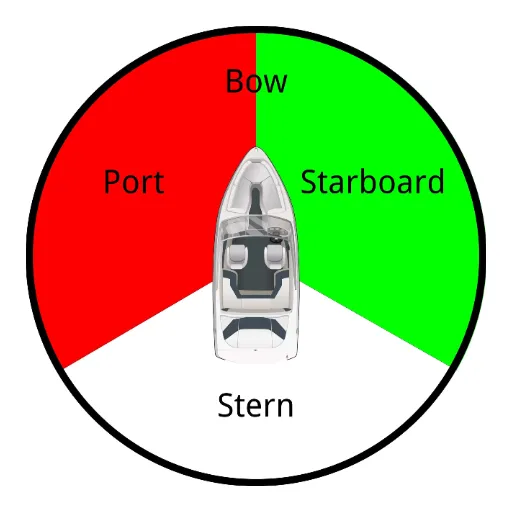
Boating is fun yet the understanding of how to navigate through the water requires the basic understanding of the onboard language. There are important things every sailor needs to understand, one of them is the position registers of port and starboard side. Such terms exist as points of reference when maneuvering or even in giving orders on a vessel. It matters not how competent one is with a boat or without; one has to understand port and starboard for any activity at sea to be carried out safely. This article will answer the question, what is port and starboard side, share where this terminology came from and its help in sea travel.
Understanding Port and Starboard
Defining Port and Starboard in Maritime Context
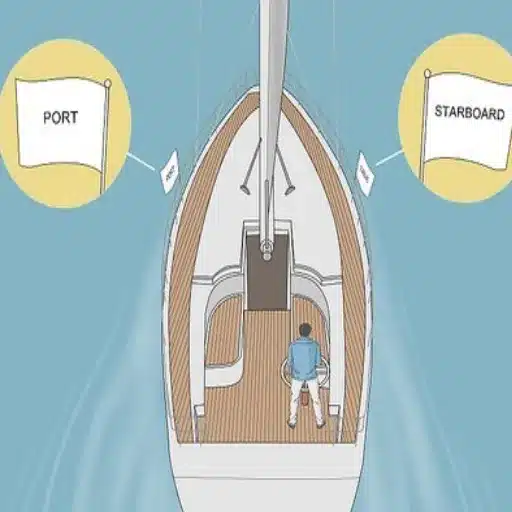
With regard to shipboard directions, the terms port and starboard are employed to refer to the left and right of the vessel respectively when positioned facing the forward side of the ship. In contrast, the terms “left” and “right” are capable of shifting depending on the direction a person is facing. This, however, is not the case with port and starboard which do not change with location within the vessel. This principle is key to maintaining a successful dialogue between crew and passengers on board.
The expression “port” is used to mean “the left side of the vessel,” and remembering it does not demand any special effort since, just like the word “left,” it also consists of four letters. More accurately, the left side carried the name “larboard,” but it was changed to “port” not to mix the word with “starboard” especially when people were talking loudly. The term “starboard” refers to the right side of the ship. It comes from old English usage where some of the ships had a lever on the right to steer them and the lever was called ‘steer board’.
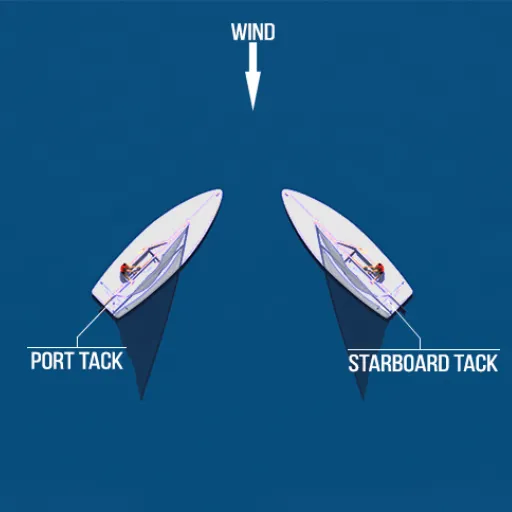
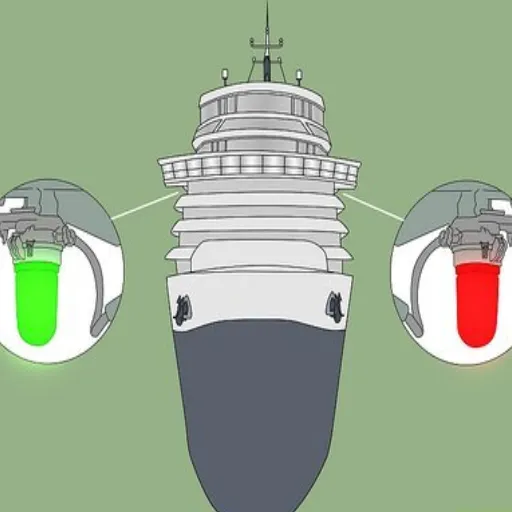
These identifications are important for collision avoidance, especially when other ships or structures are in close vicinity. For example, according to sailing regulations, when two boats meet, it is the one on the right side which shall proceed. In equal measure, port and starboard side illumination with red on port side and green on starboard side indicate which way the vessel is headed to the ships surrounding it in the area at night. Such conventions make navigation understandable and safe for everyone on the ocean and those around.
Why Use Port and Starboard Instead of Left and Right?
Using the commands, port and starboard, instead of the more commonly used left and right when addressing ships has given sailors a lot of rescue. As opposed to left and right sides which are likely to change depending on the relative movement of an individual, port and starboard refer to the same part of the ship regardless of the direction the individual faces that is the dedicated left or right side part of the ship as the person standing faces the bow. This sort of reduction in confusion comes in handy especially under stressful conditions that require clear and fast instructions like saying where we want to go or an emergency.
These mentions follow a long history and were prioritised for use because of security. ‘Starboard’ has its roots in the Old English language and the word ‘steorbord’, meaning the side of the vessel where the steering oar would be, can be found. “Port” is the altered name of an early term “larboard” (meant left side of the ship), it was replaced in use in the 19th century because, amidst noise “larboard” was too close in pronunciation to “starboard”, this could lead to confusion and even danger.
It does not matter what language the crew speaks on any vessel. Every ship in the world uses the words port and starboard because every one on the boat doesn’t need to be told ‘turn left’ or ‘turn right’. Using the words ‘turn towards the port’ in Australia means facing the same direction as ‘turn towards the port’ in Italy or Egypt. This is not just politeness, it is both a functional necessity and a deep rooted historical convention. Sailors are familiar with these terms and using them helps to enhance the safety and effectiveness of the tasks. On the other hand, it makes no difference to understanding what is port and starboard side of the ship.
The Importance of Standard Terms in Navigation
Consistent use of terms in the field of navigation including ‘port’ and ‘starboard’ are extremely important for preserving and conveying an unambiguous message at sea. There are very many cultures in the world with different languages; however, these terms can combine the work of a lot of different people in a span of a few hours and act towards a given purpose. In this way, terminology is crucial to ensure safe working conditions as sailors have specific words for commands which are easier to follow and thus do not cause mistakes or incidents
Moreover, when the situation becomes complicated in nature, there is an easier way to ensure the entire process of steering the ship, for example, navigating in tight spaces, busy corridors, overcrowded areas, and adverse weather, using the standard phrases. Using one set of terms on board significantly speeds up the decision-making process and quick reactions when the situation becomes worrisome. Such an approach helps to institutionalize international rules that regulate and safeguard seas and oceans.
In the end, the presence of unified terminology inculcates and embeds professionalism or readiness among maritime workers. This indicates a focus on international security policies and enhances the ease of instructing recruits into the crew. This global perspective of standardization within the fleet is what aids the operators in carrying out all the daily activities seamlessly which include; saving lives and ensuring the safe navigation of water interior of the globe with ships. All those present on the machine, for example, either need to know how to heave to and communicate it aloud, or what is port and starboard side which may differ from the type of vessel being utilized.
The Origins of Port and Starboard
Historical Roots of Nautical Language
Nautical terminology has its roots in the ancient civilizations that traveled extensively by sea, and thus had a need for strict language if one was to control the vessel in the open seas. These words also were invented thanks to the need of the first seamen for a unified maritime language helping them manage and address various perils found at the sea. Quite a number of these words for instance what is port and starboard side, originate from Old English and even Norse, as Europe was one of the earliest western powers whose ocean technology was highly advanced. In the case of ‘Starboard’ this is derived from the Old English ‘steorbord’, meaning the steering side of the ship, which generally was the right-hand side.
Over the period of centuries, as commerce increased and aircraft design improved, the language of the sea adapted and standardized over time. A technical term “what is port and starboard side” appeared in navigation because of obvious reasons. Simply the word “larboard” was replaced with “port” for the left and good side of the ship as it sounded very much like the “starboard” side, and this created all sorts of confusion during moments that would be critical. This change later gradually transitioned into the British Royal Navy to accommodate any directional classification issues that may arise in 19th century and was recommended and implemented in 1844. Such changes vividly illustrate the far-reaching evolution of seafaring jargons, which were refined over the ages by constant improvement and exhaustive practical knowledge.
Even in our modern times we have a stark reminder in the nautical language of how innovative and versatile humankind has been in overcoming the sea and it’s elements. These words are old fashioned and have been retained for hundreds of years because they are valuable even in this age. Modern seafarers stick to this vocabulary as a mark of respect to former sailors and also because it is paramount for international navigation. Terms such as these are still in practice because they have existed in connection with the development of seafaring. Sure what is port and starboard side now is an anachronism but what seafarer worth such sea salts would not know it.
Interesting Anecdotes Surrounding Port and Starboard
There is quite a captivating history of the terms what is port and starboard side and how they came about, or related to the history of sailing. The word “Starboard” actually originated back in the Anglo Saxon era, with the word “steorbord” referring to that side of the boat upon which the steering paddle would be placed. In most cases, the paddles were placed on the vessel’s right side because most sailors were right-handers. With time, this started to change, and it became the current term ‘starboard.’
Port, on the contrary, started being used instead of larboard as there were confusions arising in regards to the straboard pronanciaton of the latter especially around noisy lower decks. Port, being more distinct in sound, also acknowledged porting a ship on its left side to save the starboard steering paddle from getting any side bruises.
Until this day, these particular terms have prevailed, serving a practical and historical purpose within maritime culture. There is an illustrative pithy tradition of red and green lights for “navigation”, placed port and starboard respectively for collision avoidance during night-time operations. Pilots and navigators still rely on these well-understood signals to promote safety in the blackness of the sea and ancient wisdom includes pots to the advancement of technology. The terms have endured not just because of their history; they have endured because the world is untethered and once again involves ships.
The Evolution of These Terms in Maritime Culture
The phrases ‘port’ and ‘starboard’ date back to earliest times in the history of sailing when the ships’ shipping board was for guiding the vessels located only on one side of the vessel. The need for differentiation brought about these two terms where starboard and port were used for the right and left sides of the vessel respectively, with the left side being called the ‘larboard’. But as ‘larboard’ sounded too much ‘starboard’, it dropped out of use in favor of ‘port’. Eventually, it became standard terms in communication for orchestrating efficient and safe navigation, especially where clarity was required, say in foul weather or trafficked ports.
There have been significant changes in these terms over time due to developments in marine technology and globalization. For example, international treaties such as the International Regulations for Preventing Collisions at Sea (COLREGs) have helped to standardize the understanding and use of the terms port and starboard across nations. These notions are entailed within the recognized procedures globally along with many other practices in navigation such as the use of the green and red navigation lights.
In our modern age, even in the shipping industry, advancement of technology is highly embraced and integrated in safety and efficiency in various aspects without losing universal language as it has been throughout the time. Even as society has adopted the advanced navigation systems like GPS and automated collision detection there has always been a need to understand what is port and starboard side any vessel is facing. The Maritime Industry in incorporating modernizing technology has been able to maintain and expansively energize these definitions which is part of the historical tradition which has been present forever. Such evolution is enabled among other factors by application of novel technologies in maritime practices across decades starting with yachting enthusiasts and ending with sailors engaged in international trade.
Remembering Port and Starboard

Memory Aids for Identifying Port and Starboard
Sailors often use mnemonic devices in order to allow one to remember accurately especially which correspondences are made between port and starboard. For instance, one can remember that the words ‘port’ and ‘left’ both have four lettered spelling, hence, the port side is the left hand side as one looks forward to the bow of the vessel. In a similar fashion, the term starboard is used to describe the right hand side of the ship.
In addition, there is a link between port and the red coloured navigation light as well as starboard and the green light. To ensure that the ships follow the right course of navigation and incidences of ‘one-overlapping-the-other’ do not occur, the use of colors on the ships is introduced. In addition, it is worth mentioning that to ‘port wine is red’, which sets the port side lighting as a ‘red’ lighting.
Anyone who wants to utilize traditional methods in tandem with devices can use onboard navigation systems or augmented reality (AR) devices that can reduce what is port and starboard side of the screen adumbrations. Not only do such proposals help promote these ideas, but they are also in a sense handy for the users since they also serve as real life applications that can be reached out whenever needed. Such century old mnemonics, when combined with the twenty first century capitalization of twenty first century developments provides for the mariner both cocksure ness and security at the subjacent level.
Visual Aids: The Red and Green Navigation Lights
The presence of red and green colored lights on boats are the most crucial navigational tools for mariners. These visual navigational aids display the positions of a vessel, its orientation and its course easily and recognizably to people even during the night or in light-obscured situations. Red and green lights are installed on a ship’s port and starboard sides so that mariners can avoid each other without deviating from a planned route. From such a set of lights the relative position and relative movement of the ship can be easily understood without any confusion by the concerned sailor. All units that share the collective colors reknob the primary features of the watercraft nad ensure that the water ways are safe and properly managed.
In modern times people have attached these navigation lights for a sophisticated system for their functionality improvement. The primary light signals, which have been used for years, are fitted with AR technology and connected to control platforms to help ships better their navigation. As a case in point, the latter provides for an option for captains and crew to be alarmed when another vessel comes too close and the drawing needs to be adjusted. Another example is the beginning the launch of smart navigation lights which are equipped with sensors that make them automatically alter their light output depending on the given weather conditions and or visibility of the sea. The two, that is the traditional and modern technology, complement each other well in the sense that, this more developed form of nautical safety cannot ignore the customs.
The red and green light system is essential on all boats, whether they are personal or commercial. However, equipping the boat is not all that an organization has to worry about – every seafarer has to receive navigation training and understand how to use such aids in practice. To keep the safety of the mariners in the crowded watercourses, that is how the navigation industries encourage the use of many instruments and equip vessels. The traditional lights are one of those bright examples where traditions and modernity go together for the purpose of efficient transport around the world.
Tips for Crew Members to Keep Terms Straight
- Learn and Use Semantic Features: Go over comprehension checks for basic nautical terms and their definitions. Ensure that a glossary onboard is up to date for easy consultation, and promote discussion amongst the group in order to avoid misunderstandings.
- Make Use of Available Training Materials: Provide reading materials, tutorials or market programs that emphasize the use of sea and nautical terms. These ammunitions help in recall and also bring homogeneity among the cohort.
- Employ Graphic Organizers: Create annotated images, maps, and bulletins to list in simple terms what each object or space in the ship is or does. In case of emergencies, such interactive devices are likely to aid in remembrance as well.
- Engage In Active Practice: Get into scenarios where there are frequently used and even emergency terminologies, and where the correct usage of terms should be practiced. They provide a more healthy understanding and usage of the terminologies.
- Join Forces and Interaction: Promote the open exchange of ideas amongst crew members. Allow queries and discussions during meetings to clear any disputes and achieve alignment of all persons present.
- Be in Touch With the Changing Norms in the Industry: Observe the shifting rules of the sea and technological revolution. This will avoid any operational setbacks that would be caused by trying to brief the crew on new terminologies and procedures midway.
Practicing frequently along with the above tips, it is possible for crew members to learn the required maritime terminologies without having to fumble through operations.
Real-Life Applications of Port and Starboard
Using Port and Starboard in Navigation
Port and starboard are specific vocabulary from seafaring jargon which means, they are clarification points since they are about knowing which side of the boat one is on. This omission can cause confusion especially when every side is particularly important, for example when one is trying to dock, avoid a collision or when orders for such actions are given.
Nowadays, nautical directions are often incorporated in high-tech navigation equipment such as GPS, radar and electronic charts. Say for example, if a ship is navigating through a course, port or starboard indications are provided along the course of action relative to the ship, enabling its navigation in a turning or opposed direction as need be. Besides, all pilots concerns about any vessel existing around and until what distances permit, even where the vessels lie on waters, are taken care of by the automated warning systems and maps, which therefore lessen the number of problems associated with poor interpretation of what is port and starboard side.
It is extremely important that for the efficient work on the deck the words port and starboard are repeatedly used in orders and communications. This allows the whole team to know what exactly they are supposed to do whether it’s a matter of trimming the sails of a pleasure boat or taking the helm of a bulky vessel that is crossing traffic lanes under instruction. Integration of state of the art technology and traditional techniques greatly enhances safety and precision while navigating at sea.
Boating Safety Protocols Involving Port and Starboard
To sail safely is very important to uphold the sea navigation rules to avoid crashing with other ships. As far as safety on board is concerned, one practice that is usually done in the interpretation of the boats is for them to be called by their port and starboard sides. Port and starboard sides are the ones that are on the left and right sides of a boat facing, as a person in forward looking position, normally. This ensures that everyone knows what sides of the boat they deal with when working even other teams in some instances. As an approach it works to manage the potential of crisis easily, for example when everything is clear or when it is hard to see any clues. In case of a narrow passage with oncoming traffic, for instance, the most frustrating misunderstanding applies also, yet this is validated only by unambiguity of directions, such as “Turn to starboard,” in contrast with those clear yet vague instructions as ‘go right’.
These age-long norms have also been improved upon by 21st-century technology advances in marine navigation. These days, ships use Global Positioning System (GPS), radar, and Automatic Identification System (AIS) to extend the conventional ways of navigation using compasses and charts. They allow monitoring of a ship’s locations in relation to other vessels in a live picture, providing safer banning, judging correct navigation within the shipping lane upon arrival, and also making smart and more decisive turns in the event of a crisis. However, knowing how to steer clear of the port and starboard confusion is important, as the illustrative tools are subject to hindrances, sometimes rendering them useless.
Regular exercises and boarding procedures whereby safety is emphasized also contribute to turning these measures into a culture of safety. Regular drills are also conducted, during which the crews are given orders ‘to hold’ on the port and ‘secure to starboard’ conditions, for example, ‘in calm waters’ and ‘in rough waters’ respectively, are also practiced. Additionally, the ceaseless use of age-old and intricate definitions of what is port and starboard side and enhancing team dynamics with sophisticated instruments aims to enhance the safety effectiveness meant at managing nautical risks.
Conclusion and Call to Action

Reinforcing the Importance of Understanding Port and Starboard
Understanding what is port and starboard side is a basic knowledge in marine navigation, as well as operation. The terms denote the left (port) and right (starboard) sides of the boat when facing the bow and are a necessary element for the sake of safety and order at sea, as well as effective communication. By congealing such words, there is no room for misunderstanding, at least while referring to such important situations. This crucial knowledge becomes all-the-more relevant when caught up in stressful situations like docking, navigating in a busy port, or dealing with emergency situations.
Additionally, developments in mapping air routes on aeroplanes are seeing more of these ancient bearings integrated in the current systems of location and positioning. By enhancing this existing knowledge base with new generation tools, the time lag in decision-making is tremendously reduced. A good example centers on what is port and starboard side, a simple enough principle that optimizes human-system route planning and envisages easy handling of unexpected cases reaching a balanced viewpoint. This combination of the old and new traditions shows how they are both timeless and useful.
No matter how skilled a professional or a student is in the practices of the seas, it is always the bare minimum that they should know where their port and starboard is for all the crew members ‘as teamwork’. All training courses and operation scenarios require that everyone on the ship, for every possible task, who hears the word turns knows and does exactly what it means without a moment of hesitation. It is always in combination with technology that advances the safety of seamen ship, and practice that enhances its theoretical base. Since, in most cases, verbal or written dialogues are very important in putting out a fire due to the circumstances, the inculcation of these strategies is strongly emphasized in the contemporary shipping and navigation industry.
Sharing Personal Experiences with Port and Starboard
Personal stories as well, the best understanding of the importance of port and starboard, and why these terms have not been replaced in relevant areas. I was once on a voyage where these terms were used and helped avert an impending collision within a crowded harbor. It was near dusk with poor visibility conditions when all of a sudden “hard to port” was shouted across the length and breadth of the ship. Everybody without exception knew what to do, and responded quickly even to avert any further chaos. This created an awareness on how important such directional terms are, because in case where such strategies are implemented quickly, there is no room for error, and such directional words cannot be ambiguous.
Another unforgettable scenario was during a training that was carried out in a rough sea. When we were going through drills, with the waves pouring in, it was necessary to have practiced every movement with respect to port and starboard as instructed. The faith that all crew exercised in each other, in that particular environment, so that there would be no panic as to what is port and starboard side, made all the difference. Such terms aren’t merely sport’s terms. They’ll spell the difference between life or death for the crew. Dampened by adrenaline rushes, they somehow make impossible under normal circumstances, the warm up actions possible.
These days, along with the port and starboard tradition, there are technological innovations like GPS and waterways which help in enhancing the experience. Although our resources are highly sophisticated now, one thing that doesn’t diminish is the need to stand firmly to ensure that clear and proper communication on the ship is maintained. From my personal observations, I have realized that it is a very safe system of navigation and caution when there is a mix of the art of seamanship and the advent of technology. Proficiency in the use of the ideas of port and starboard is more than a craft, it is its foundation on which the jigsaw puzzle of the sea’s operations, poignantly stays and if I may say, grows based on these two different extremes – constant battering by the waves and innovation.
References
-
Ocean Research: Nautical Terms – Louisiana Universities Marine Consortium (LUMCON)
This document provides a clear explanation of “port” (left side) and “starboard” (right side) in relation to the front of the vessel. -
Nautical Term Glossary – Oregon State Marine Board
This glossary defines “starboard” as the right side of a boat when facing the bow and “port” as the left side, along with other nautical terms. - Click here to read more.
Frequently Asked Questions (FAQ)
Q: In the marine context, what is port and starboard side and how are these terms described?
A: Port and starboard refer to the nautical concepts of orientation in a vessel. In relation to the ship hull the two terms designates the left and the right hand sides respectively, so the port side is the boat’s left side, whereas the starboard side is the ship’s right side. These set positions within a ship eliminate any confusion arising from left/right, as these guidelines are set out in a general language of navigation and safety that all seafarer’s understand and aretherfore able to use to give precise instructions on position and motion.
Q: Where do the names port and starboard come from, how are they explained and is it true that they have roots in old English history?
A: The usage of the expression “starboard” traces back to the Old English, “steorbord”, which was the side of a ship equipped with a steering rudder or oar fitted on the right side (RHS) by default. It could only be launched, equipped and even sailed where there was a shoreline due to the gravity till the age of ships when there was the use of sails for propulsion. Most ports were on the left side of the vessel for that reason; and that legacy survived many modifications to culture and speech, hence straddle and other not so used terms.
Q: Can you tell me what is port and starboard side including lights on a ship why do they differ?
A: Port and starboard lights are two separate light segments that are a part of a ship’s structure on opposite sides, with the port light illuminated in red, while the starboard in green. The idea of port all red and starboard all green whereby all ships can be equally aware of their position in relation to other ships is essential at night and the purpose of this concept is incorporated under the anti collision or COLREGS rules.
Q: How do I know which is port and which is starboard. Is there any way to remember this phrase?
A: There is a well-known technique, which helps to remember: “red port”. Port is as simple as red port. In this case, imagine yourself standing up straight and facing forward (the bow). Therefore, since this is port, it is located on the left, and since this is starboard, it will be on the right. Yet another way to remember these nautical terms is based on the principle that port and starboard directions remain inapplicable to the position a person is facing, in other words, these directions never change. That is unorthodoxy, hence such terms being used for straightforward direction.
Q: In contrast to docking, when doing so, is it best practice to attach to the port side or starboard side?
A: Using the port side in case of approach or even the starboard side in case of departure is a matter dependent on the navigation orders of the port, tide, and the ability for safe docking, however, most mariners use the side labeled for berthing (a loading side) at any given dock. The same cannot be said of ports that one operates in; they are segregated by necessary portlet procedures, and light port and starboard light zones are mainly different not to cause accidents during procedure Japan entry and any other type of entry.
Q: What are the roots of, and what is port and starboard side, with regard to the ancient lamp and ruby glass?
A: In the past, ships had lanterns that were red on the left side and at times green or clear on the right side. This is the reason ships in the harbor used red lanterns to the left and white ones on the right when they were being docked at night. In some cases, the white light was instead to the front of the boat. It is for this purpose that the use of the port light and safe navigation with the boat has evolved into the use of red in port. This is also guided by the rules of navigation and sizes and shapes of navigation lights that cover all languages.
Q: What do using port and starboard instead of left and right bring to sailors — why do professions at sea employ these terms?
A: The terms port and starboard are used by sailors to make clear and unambiguous references because they do not require a person to orientate oneself stern or bow. It is for this reason that instead of the terms left and right these terms come into use among seamen to abate confusion while embarking on a certain course, aiding in navigation without collision and creating a language that is comprehensible to the crew and other vessels within the area of operation.