Once you step onto a boat, you will notice how there is a lingo that exists in the world of seafaring. One of the basic terminologies is ‘port’ and ‘starboard,’ which are crucial on the water in both communication and navigation. Definition of these terms is not only relevant to sailors or maritime personnel, but it is also a requisite to anyone who steps into a boat for either leisure or adventure activities. In this article, we will attempt to exhaust the meaning of port and starboard, the history behind the two terms, as well as the importance of the use of the two words in as far as communication or navigation at sea is concerned. Even if you’re just a beginner at boating, or just wanting to refresh your memory on boating jargon, this guide will instill the confidence for readiness the next time you’re on a boat and being asked to do something precise.
Defining Starboard and Port
What Does Starboard Mean?
Starboard refers to the right-hand side of a vessel if looking forwards, towards its bow. Such a directional term is important in that its consistency allows for unambiguous understanding between members of the crew and others in the maritime industry at all times.
Etymology: The word ‘starboard’ originates from the Old English and also Norse language. In the early centuries, a ship could not be steered except using a broad blade and wooden oar fitted on the right-hand side (most seamen are right-handed) of the ship. This oar which was used for steering was called a “steorbord,” which was later corrupted into the word starboard.
Knowing what is starboard on a boat is important for the appropriate operation of the boat. It is clear that to avoid mistakes and miscommunication while out at sea, it helps to know in advance how the course of a boat will be described and how actions will be executed. Whether it’s placing equipment in a designated place on the ship, preventing a clash of ships, or applying other navigational rules, starboard is essential in any marine operation.
The Right Side of a Boat
To the right of a ship is the starboard. Traditionally, it is seen in historical context as being on the right because before a single rudder at the center of the keel was invented, the propulsion of the sailboat had a large oar on the right-hand side.
For example, what is starboard on a boat is important in the course of events. As such on the sea, maritime norms and systems demand the use of “starboard” and “port” (where the latter refers to the left side) while referring to the directions of a particular object. In fact, it communicates the rules of navigation in any given water, dividing it into starboard and port sides, which ensures smooth and safe navigation.
Starboard position is important for internal functioning too, like finding locations or specifications or personnel. A good number of vessels and ships differentiate starboard to create better order and maintenance. For all mariners, amateur or professional, it is crucial to comprehend what is starboard on a boat and the correct use of the term.
Understanding the Starboard Side
A thorough grasp of what starboard on a boat is fundamental in order to maintain safety and communications while on board vessels. Starboard, basically, refers to the right side of the vessel by standing in front of the boat or looking towards the bow. It is a common term used in nautical language as it allows the crew and the operator to totally eliminate the confusion of where one is located or commands during operations.
⚠️ Critical Safety Information
Knowledge of the starboard side is ideally important for the purposes of collision avoidance, especially in the open seas. International marine laws, specifically the International Regulations for Preventing Collisions at Sea (COLREGs), have rules which deem the starboard side as the privileged right-of-way under some circumstances.
Key Rule: When two ships come across each other, the one on the port shall give way to the one on starboard. Such discipline ensures that traffic flow is managed optimally without causing any danger of collision as all actions are predetermined and standardized.
In addition, being able to differentiate the starboard side contributes to enhanced order and smooth operation while on board a boat. Boats are also commonly designed asymmetrically, with starboard sides being in a way reserved for the concentration of working equipment or lifeboats, or both. Regardless of whether it is recreational sailing or onboard duties, an awareness of what is starboard on a boat must be possessed by any seaman as it consequently improves safety, organization, and performance at sea.
Historical Origins of Nautical Terms

Evolution of the Term Starboard
The English word “starboard” is thought to have derived itself from a construction of the Old English words “steor,” which means to steer, and “board,” which is integrating the side of a boat. Historically, boats were navigated with the help of a steering oar, and since more than 90% of sailors happened to be right-handed, it was these oars that were mounted on the right-hand side of the boat. Hence, the right side of the boat is the steering side, and over time, it became the ‘starboard’ side.
The other side was called ‘larboard’; however, this word was discarded due to it sounding like another word that had the same implications—’starboard.’ ‘Port’ fit this role well as it ensured that ships were navigated clearly without any nuances during communication.
It is easy to spot the change in the meaning of starboard in examples of ship’s history and maritime culture as well. As boats have improved over the diversified causes and influences, a steering oar which was at the right was replaced by an ‘at the center’ conventional rudder. The change took place to determine the fact that the right-hand side being the starboard of the ship advances the meaning of starboard. More than that, the word starboard would have been used through many generations of seamen and ultimately became a recognized international analogous term for what is starboard on a boat.
Today, the word “starboard” does not only exist because of its historical importance but also because it plays an important role in ship safety and communication. In the contemporary maritime industry where ships and their navigational devices are very big and complex, it is important to understand directions. The International Regulations for Avoiding Collisions at Sea (COLREGs) refers to starboard quite often because it provides one of the fundamental rules governing the right of way. The continued use of starboard indicates that maritime traditions from hundreds of years ago remain relevant in modern-day sailing culture and practice even today.
Historical Usage of Port and Starboard
Port and starboard are terms that are rather old in the history of the navies, a necessity of most modern vessels still owing to the age of grace in navigation. Most ships before the present era of mechanical steering employed an elevated single-oar mounted at the right-hand side of the ship, since the majority of such crew were right-handed. This side was referred to as the ‘steering board,’ which in turn became ‘starboard.’
So as not to hinder the operation of the steering oar, a ship was docked to the other side, which got the name larboard. However, since in undesirable environments like rough sea conditions or war, where there is lots of sound, the pronunciation of larboard and starboard was too similar, people preferred to start using the word port to refer to larboard in the early nineteenth century.
Such modification introduced a clear distinction on what the left side of a vessel was called for the ease of communication and avoidance of any possible misunderstanding. ‘Port’ has been universally accepted and agreed upon in international maritime law and practice. The shift in terminology was important for sailors as the navigational axes referred to would be the same in all ships no matter where the sailor was facing. Commonality was required for effective navigation and such policy implementation ensured safe navigation in fleets that were not national or during allied operations.
Such notions are not just embedded in the ships and boats they pervade, but they are also embedded in other technological developments. For example, “port” and “starboard” as some sorts of coordinative index extended to air transport and space travel in order to promote maximum efficiency, which reflects the enduring significance of these terminologies. Furthermore, they are appreciated as the precious relics of seafaring even today because they reveal how the sailors of old, with great skill, sought solutions to the problem of signaling and controlling in large water bodies. Hence the references of “port” or “starboard” in relation to ancient history express how these aspects of navigation were guided by the necessity, care, and routine purposes of navigation for generations on end.
How Ships Use These Terms
The words ‘port’ and ‘starboard’ are important nuances in the everyday work of ships, helping to ensure communication without errors, especially in relation to navigation. One is bound to have a clear understanding in such a situation where there are so many people, especially those operating the ship and the medium who understands the terminologies used at such a crowded place of business. Port gives to the left and starboard to the right. This means that no matter what part of the boat one is seated at, everybody is clear with one instruction. Most particularly in crises, where immediate and precise reactions can help avoid accidents and collisions.
These enhanced concepts are embedded in the devices and practices employed by ships of the present era. For example, the vast majority of vessels ranging from small fishing boats to large container ships are fitted with electronic chart display and information systems as well as radar and GPS. These charting displays most commonly include indicators of port and starboard while displaying navigational information so as to assist the crew in making any decision. Moreover, port and starboard are also integrated into the signaling system; vessels have red lights on the port side and green on the starboard side to indicate the visibility of the vessel to others, especially at night or in poor visibility conditions.
Apart from steering the vessel through extraordinary winds and waves, the said words also play a key role in safety drills and proper loading/unloading of cargo. To that end, during loading/discharge operations on freight-carrying vessels, it would be more efficient to hear somebody telling passengers to go to a certain side of the ship or even to the lifeboats on the given side using the side’s name. The same terminology exists in the performance of cargo handling, where it defines the particular loading or unloading area in order to strike a balance during the operations. In addition, in order to meet the challenges of modern shipping and navigation, the antiquated words are not limited to rhetoric, but they are also woven into the maritime industry’s practice from the traditions to the modern days.
Distinguishing Starboard from Port

Mnemonic Devices to Remember Port and Starboard
Steering through the aquatic expanse of the sea venture necessitates the mastery of the operational terms on navigational directions, and these terminologies could be very informative on the clarity of the port and starboard sides of a ship. One basic and currently used tip is to match the lengths of words with their definitions such that longer words mean different things and shorter, simpler words mean other things.
💡 Memory Tips for Port and Starboard
Tip #1: Word Length Method
The shorter term “Port” has four letters and hence goes with the simpler word “left,” which also has four letters. In contrast, the longer word “starboard” corresponds with “right,” which consists of five letters.
Tip #2: Navigation Light Colors
A vessel showing port is required to show a red navigation light on the port side and a green light on its starboard side. To aid memory, “port wine” (which is red) can be associated with the port side. Green means “go,” which helps remember what is starboard on a boat.
Tip #3: Tactile/Physical Method
When steering a ship, a driver could use their senses to remember where each direction lies. Correlate the left hand with the left side of the ship with a red light marking on the port, and the right hand with the green light showing the starboard side.
In some instances, those color memories are really good not only for sailors but the passive passengers of the vessel for orientation and comprehension of such rather elementary details. Tactile aids can be very helpful to beginners when it comes to the navigation or maneuvering of a vessel. In this manner, there is no forgetting port and starboard in any situation, and at the same time, these techniques are applied into practice.
Easy Ways to Remember Left and Right at Sea
Learning the difference between the left (port) side of the vessel and the right (starboard) side is very important and should be done immediately upon setting out to sea. One practical approach is to remember that the words “Port” and “Left” both consist of four letters each. A similar approach is to match the color red with the port side light of the vessel, and green to the starboard side. This color differentiation is standard in international rules and therefore cannot be mistaken or cause any confusion because when such light is seen by another boat, it will be red or green, clarifying what is starboard on a boat.
Employing such mnemonic devices in conjunction with common activities helps better absorption of the concepts. For example, in the case of sailors, it might be practicing commands and the right maneuver by pointing to the respective side during trainings. The concomitant practice of imagination also helps. Use a ship visualization entering a port where the red port light is nearer to the left of the pier while the green starboard light is the one to the right. These rehearsals promote specific connections in the brain that help effective on-time actions during emergencies.
Today’s advancements further enhance this level of efficiency by providing devices such as electronic maps that afford current location and pointing devices. However, it is necessary to state that use of such instruments should not be allowed to stagnate concepts. Traditional and electronic aids preparation is such that seafarers are able to undertake any task, including small-scale boating and navigation to handling big ships in unfavorable conditions. Memory, hands-on skills, and electronic strategies offer navigators a satisfactory and effective grounding on how to maintain direction while at sea.
Fixed Locations on a Vessel: Port vs. Starboard
Port refers to the left side, and starboard refers to the right side of a vessel when facing the bow (front).
The Importance of Standard Nautical Terms

Safety and Navigation on the Water
When sailing, communication and the correct use of nautical phrases and actions are important, especially to enable a safe voyage. Every navigator, and even the crew, is always familiar with some basic directions and movements. This assures no complexity in the orders being given during work, for instance: “Port! Starboard!” These phrases become extremely important when challenge conditions are presented such as poor visibility, congestion, or emergency cases, and there is the risk of safe navigation loss.
The safety of movement along the world’s oceans is now ensured by the latest and most advanced forms of GPS technology, digital maps, and sonar. These devices give the sailors real-time information on their position in the sea, the depth of waters under the vessel, and any potential dangers that may hinder their movement. It is also possible to apply automated systems for collision prevention, route selection, weather prediction, etc. However, it helps to support basic concepts of seamanship and navigation rather than comprehensively take over. Therefore, sailors are expected to have some level of traditional skills in navigation, such as being able to use a compass, being able to read navigational maps, and reference other landmarks such as lighthouses and buoys in the event of any technical breakdown.
Maritime traditions met with modern advancements promote safe and efficient navigation on the sea. Other than the onboard devices assistance, technology such as Automatic Identification System (AIS) services are passive devices that help by monitoring the circumference for ships and giving position and identification data. Further, implementation of global maritime practices, especially those of the International Regulations for Preventing Collisions at Sea (COLREGs), also facilitates harmonization of the standards applied to ships. Application of old conventions in combination with the latest technologies and skills allow the seafarer to overcome the challenges of people and goods movement across the waters and maintain safety at the same time.
Why Use Port and Starboard Instead of Left or Right?
There’s a reason sailors still use the terms “port” and “starboard” in place of “left” or “right” while onboard a ship and sailing the high seas. As opposed to standing on land, one’s concept of positional direction on the ship does not change—port is always the left while facing the bow, and starboard is always the right. This becomes important, most importantly, during maneuvers that often tend to be very risky.
The origin of these names goes back to the times when steering a ship was done by use of an oar on the right side of the ship only. Consequently, the ‘steorbord’ or starboard side under consideration was for steering, and the ‘larboard’ or ‘port’ was for safely loading cargo. During the course of the 19th century, however, to avoid the confusion caused by the similar sounding, the name ‘larboard’ was changed to ‘port.’
In order to avoid confusion among the sailors, whether they are facing the front or the back, the terms port and starboard are used. Such speech also enhances global bearing safety by minimizing mistakes of people along with technological enhancements in navigation.
Impact on Maritime Communication
The employment of standardized nomenclatures such as “port” and “starboard” positively impacted sea communication by clarifying it, making it more effective in terms of lessening the number of errors made, and increasing the performance of ships. In conjunction with the developments in technology, such vocabulary further improves security in marine operations and also management. Some of the very notable effects on the conduct of maritime communication are as follows:
📊 Key Benefits of Standardized Nautical Terms
- Better Communication: The use of expressions like “port” and “starboard” is important because it makes sure that the message is conveyed as intended without much hassle of identifying who and what is meant.
- World-Wide Standardization: Such words are common across the globe and thus facilitate seamless communication, avoiding problems related to communication difficulties in international waters.
- Collision Avoidance & Enhanced Safety: Such terms help in the consideration of collision-free sea routes during the stages of difficult maneuvers, trouble situations, and appropriate measures of action are to be taken.
- Efficiently Managing Exploratory Operations: It is pretty simple and fast for navigators from all over the world to interpret tactical instructions, and that makes for faster and more efficient cooperation both within and outside the bounds of a ship.
- Advantages for Navigational Practice: Usage of ‘port’ and ‘starboard’ is an adequately effective practice, especially in today’s navigation systems and procedures, which harmonizes both the traditional and contemporary ways of working at sea.
These are the ramifications of the importance of the encouragement of effective and equal communication within the shipping industry, which essentially dictates its success and sustainability.
Lighting Colors Associated with Port and Starboard

Understanding Navigation Lights
In order to guarantee safe sea travel, use of navigation lights is of utmost importance, especially at night or when visibility is limited. It shows how vessels can manage to determine the position, dimensions, and movement or course of each other quite easily in order to avoid any incidences of collision. The ones that are frequently identified are port and starboard lights. The port side carries the red light, and the starboard carries the green light. These lights are located on the sides of the vessels forward, and each extends to an area of visibility of about 112.5°. This facilitates easy estimation of direction of other vessels around.
Port and starboard lights are not the only type of navigation lights. A clear light of a suitable intensity is inserted at the stern so that people within direct sight from the back of the boat can see the vessel. In addition, all the big vessels contain masthead lights that are high up in the superstructure, signaling that the vessel is going forwards or simply afloat. Those at anchor also decide to use a bright white light which is steady to inform other actors that they are not moving. These are all certain light fixtures external to the ship that are mounted and used to comply with maritime laws and especially regulations like the International Regulations for Preventing Collisions at Sea (COLREGs) and others.
The highly sophisticated lighting mechanisms have become more relevant in contemporary times, particularly the navigational lights. LED lights are quite advantageous as they acquire durability, utility in unfavorable weather, and are of low energy usage. LED technology has been engaged in creating modern navigation lights that do not require extensive wiring as they are controlled electronically. This intellectual spectrum of ideas includes the old and the new; navigation lights will still be equally important in facilitating the safe mobilization of vessels in different territorial boundaries.
Red and Green Lights: Port and Starboard
Vessels are equipped with navigation lights to ensure safety by improving clarity of the vessel’s position and course to surrounding vessels. The red light and the green light are two of the most important features on a vessel; the red light which is used to indicate the left side or port side of the vessel while the green light represents the right or the starboard side of the vessel. Such indicators are mounted in a manner that can be seen over a long distance, especially during the night or foggy weather.
Development of such modern undertakings has further improved the traditional messages by incorporating the use of LED lights for brighter and more efficient lighting systems. Red and green are now compliant with international standards for vessel navigation lights, such as the COLREGs (International Regulations for Preventing Collisions at Sea) that apply worldwide.
Modern Integration: These lights supplement the use of other navigational aids such as radar and GPS, which provide seamless and dynamic navigational information to the ship’s crew. For example, active regional positioning systems use port and starboard red-green lights to improve navigation and course plotting. These methods, even with advanced technology, confirm their inclusion in the relevant navigational tasks.
Importance of Lighting for Vessel Safety
In maritime operations, lighting is an integral factor, especially as regards sailing at night when visibility is limited. Navigation lights of utmost importance on watercraft include port (the red color) and starboard (the green color) used by vessels to inform other watercraft of their location, movement, and the distance from them. The presence of these lights ensures that watercraft do not come into contact with each other and that an ample area is retained in intensive traffic channels as well as in congested basins where vessels are not allowed to meet. Compliance with international standards in marine illumination, such as those set by the International Maritime Organization (IMO), is essential in navigating the world’s waters safely.
Recent improvements have enhanced the performance and utilization of navigation lights as state-of-the-art technological advancements have been added to these devices. There is now an increase in usage of LED-based lighting systems since they tend to be more durable, cheaper to power, and shine brightly. With technologies such as Automatic Identification Systems (AIS) and radars, the navigation lights allow more precise navigation in real-time as the mariners make patterns and change course in relation to the situation. It is a constructive blend of the old and advanced systems that directly minimizes what could go wrong on behalf of the people.
Additionally, these light systems are quite useful in case of emergencies or rescue operations; hence the importance of their uniformity and dependability cannot be overstated. The operational scope of the emergency lighting also provides searchlights and strobe lights and signals that provide localization of ships and aids ingress of the rescue units into the distressed vessels. For these components, coastal states and shipping companies should also budget for continuous repairs and upgrades of the devices in question for effective functioning of all vessels within the fleet. Having the correct lighting orientation with modern equipment therefore ensures that vessels are protected and provides an avenue for business continuity with the capability of transporting goods from ocean to ocean.
📚 References
- Louisiana Universities Marine Consortium (LUMCON): Describes “starboard” as the right side of a boat when facing the bow, along with other nautical terms.
- Oregon State Marine Board: Provides a glossary of nautical terms, including “starboard,” defined as the right side of a boat when facing the bow.
- Click here to read more.
Frequently Asked Questions (FAQ)
Q: What is starboard on a boat?
A: Starboard refers to the right side of a boat when facing the bow (front). Directions are always given with reference to a particular way, that is forward or any other direction. In this context, ‘starboard’ will stay the same no matter where you’re facing or what direction the speaker is giving the order from.
Q: What may help me in distinguishing the left from the starboard?
A: Someone who is looking at the front of the ship that is moving will observe the right side as being the starboard side. Another mnemonic is that port and starboard remain the same irrespective of the orientation of the vessel, and an approach of “starboard is right” will do better justice than using left or right.
Q: Explain the distinction that exists between port and starboard.
A: Port and starboard are ways of describing a ship on its two sides: port is the left side of the ship while starboard is the right side. The use of these terms in place of left and right is to give precision since port and starboard are historical terms and do not alter depending on the person’s orientation.
Q: Why do sailors use starboard instead of left and right?
A: Directions, when a sailor is on a moving ship, are generally needed; therefore sailors do not say ‘left’ or ‘right’ but use the terms ‘starboard side’ and ‘port.’ It is vital to ensure that the right set of terms is used, given that orientation can vary for different crew members and activities.
Q: In what language or culture is the word ‘starboard’ used?
A: “Port” and “starboard” are terms that have sailed into the English sea of words on the wings of sailors’ languages of the past. ‘Starboard’ looks back to the era when the steering oar was attached to the right side. The opposite of that side to which the steering oar was attached was ‘port,’ for in that direction boats could most hospitably lodge whilst at the quays.
Q: What is starboard on a boat in sailing terminology?
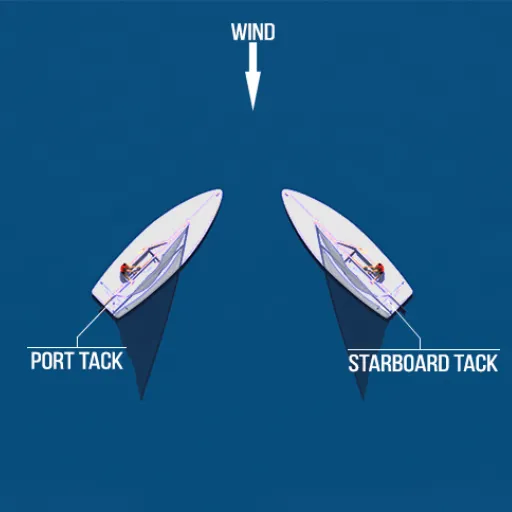
A: A starboard tack will have its windward side as the starboard one; just as a boat on a port tack will have the port side being the windward one. The distinction between port and starboard is crucial because it determines the priority of sailing vessels and how possible collisions will be avoided when both vessels are on the correct tacks.
Q: Is it possible for port and starboard to flip like left and right do by turning the boat around?
A: No, this wouldn’t be the case—port and starboard always remain the same. Port, like starboard, is not involved in activities that may cause the sides to change positions to the left or right; rather they are constant parts of the body of the boat. Whereas the people working the boat or riding it can come from whichever direction, the convention of the boat remains fixed.
Q: How does knowing what is starboard on a boat help during the loading of a boat, or working with different parts of the boat?
A: It is helpful to know the starboard for such processes as choosing which side to load on or for describing the location of the crew with certain gear or parts of the boat. While doing critical operations, using these two terms instead of left and right decreases disorganization as all participants know what they mean by the port side and the starboard side in their absolute and definitive manner.
Conclusion
Understanding port and starboard is fundamental to safe and effective maritime navigation. These time-honored terms have evolved from ancient seafaring practices to become universal standards in modern maritime communication. Whether you’re a seasoned sailor or a novice boater, mastering these directional terms is essential for clear communication, collision avoidance, and overall safety on the water.
The continued use of “port” and “starboard” demonstrates how maritime traditions remain relevant even as technology advances. From the red and green navigation lights to the sophisticated GPS systems of today, these terms form the foundation of nautical language that transcends national boundaries and ensures safe passage for vessels worldwide.
By learning and applying these concepts, you join a legacy of mariners who have navigated the world’s oceans for centuries, upholding the standards of safety, precision, and professionalism that define maritime culture.