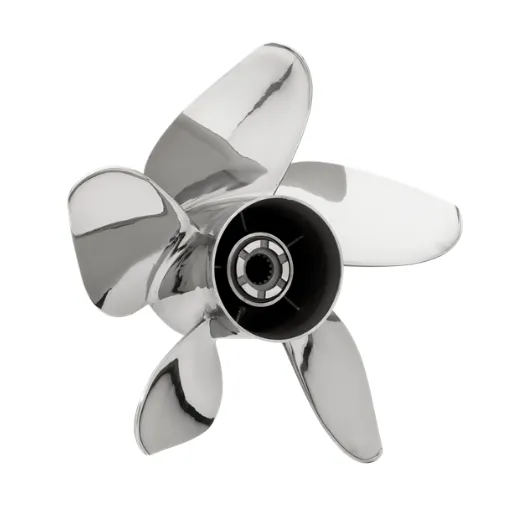
With the enhancements of performance and efficiency of your boat in mind, the most vital factor turns out to be the propeller. Yamaha boat props are highly durable, precisely engineered, and perform exceedingly well on water. Yet you have so many to choose from, and selecting the ideal propeller that would go with your specific outboard motor and align with your boating needs can discourage you. This article dives into the world of Yamaha boat props, discussing why they shine in the market and how one should look for the best one for their vessel.
Introduction to Yamaha Boat Props
Overview of Yamaha Propellers
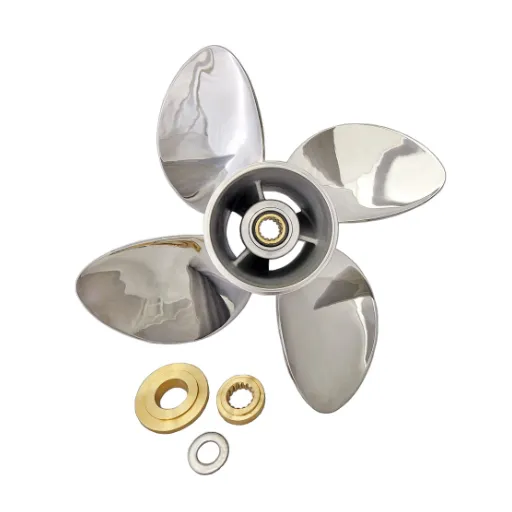
Yamaha propellers present the opportunity for vessels of any description to achieve the best possible performance, durability, and reliability on a variety of occasions. Yamaha Propellers, renowned around the world for precision and quality materials, are meant to supplement Yamaha outboard motors in providing the best output and efficiency and in ensuring maximum comfort of ride. Yamaha offers a range of options depending on your needs—whether for pleasure cruising, fishing, or water skiing.
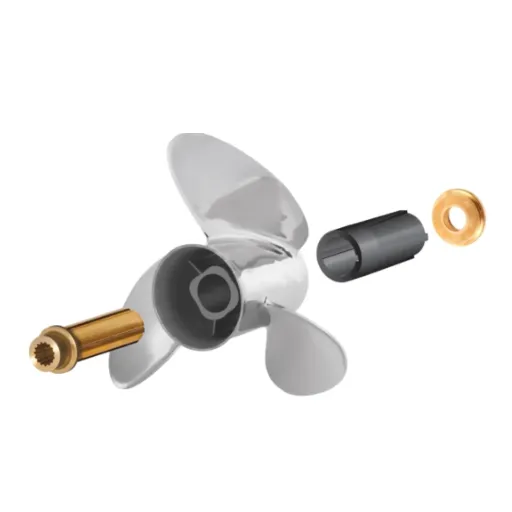
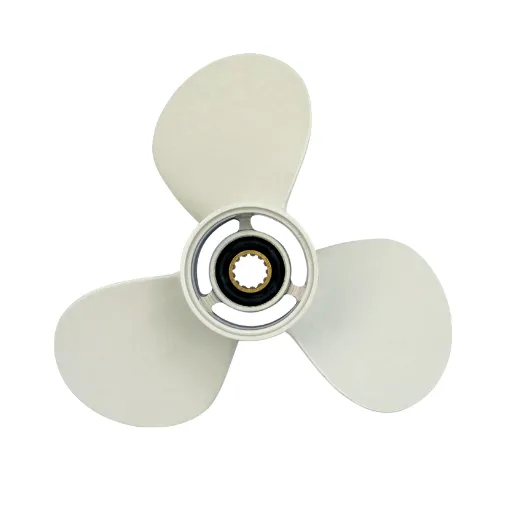
Designs and materials of Yamaha propellers stand out as one of its salient features. Aluminum propellers are lightweight, economical, and best for general-purpose applications; stainless steel ones are more durable, better at resisting damages, and hence suitable for high-performance or heavy-duty duties. Yamaha also manufactures higher styles like Saltwater Series or EXs that target specific conditions—those for saltwater boating or high-speed applications.
Picking the right Yamaha propeller depends on the type of your vessel, the horsepower of the motor, and the precise performance desires. Being mindful of aspects like pitch, diameter, and material will enable you to pick a propeller to complement the boat for speed, fuel economy, and handling. Yamaha’s full array means that there is the perfect prop for every boating purpose—boosting the hull’s acceleration, maximizing fuel economy, or steering through challenging waters.
⚠️ Importance of Choosing the Right Prop
Using proper propellers is important to ensure that your boat performs well and efficiently. The five key factors really affecting your boat’s speed, acceleration, handling, and fuel consumption are: prop speed, prop acceleration, prop handling, prop fuel consumption, and so on. To prevent unnecessary stress or damage on the motor, it has to be fully operational at its designated prop RPM range.
This path taken by the boat would be smoother with better fuel economy that, in turn, would save money. Good experience might procure good propeller control and maneuverability, which allows the unpleasant prop carrying off a cruelly bad name of lowered speed and fuel economy and possible mechanical problems with time.
A boat propeller is a critical component, and many types exist. They are generally classified according to pitch, diameter, blade number and shape, material, and decorator finish. Yamaha propellers are manufactured to satisfy a comprehensive range of needs and conditions, thus ensuring that it is easy to find an exact fit for your boat. Consider the boat’s size, use, and strength of the motor when choosing a Yamaha prop, as performance, reliability, and enhancement of the boating experience are guaranteed.
Types of Outboard Propellers
An outboard propeller has many types, each suitable in different cases and boating needs. The three major types are those made of aluminum, of stainless steel, and composite types.
🔷 Aluminum Propellers
The most common aluminum propellers are due to less cost and light weight. They are fine for recreational boaters and give good performance under normal conditions. They are less durable than propellers of other kinds and get worn out faster in rough situations.
⭐ Stainless Steel Propellers
Stainless steel propellers offer the best durability and are for those who want peak performance. They resist damage better from debris or impacts and give better acceleration and top speed compared to aluminum. They are more expensive, but they prove to be an excellent investment for heavy or high-performance use due to their longevity and better pace.
♻️ Composite Propellers
The composites propellers are light and corrosion resistant and less expensive. They are usually employed as backups or for light boating activities. While not as strong as stainless steel, they are generally more durable than aluminum and thus provide a good compromise for general use.
Your choice of which type of propeller to use will depend on your particular boating needs and how often you use your boat. Such considerations ensure better performance and efficiency on the water.
Understanding Yamaha Propeller Design
Key Features of Yamaha Propellers
Yamaha propellers are designed with precision engineering to offer superior performance and durability to all vessel types and water conditions. Its key features are:
- 🔬 Material Innovations: Yamaha propellers are manufactured with first-grade materials such as stainless steel and aluminum that offer long-lasting resistance to corrosion. Stainless steel propellers provide greater endurance and performance under high-pressure conditions, while aluminum is a lightweight and economical substitute.
- ⚙️ Advanced Geometry of Blades: Every propeller is designed with advanced geometries of blades that maximize thrust and fuel efficiency. The design reduces cavitation and permits smooth acceleration, thereby translating into improved overall performance.
- 📏 Variety of Sizes: Yamaha propellers come in a variety of size, pitch, and styles to fit the diverse engine and hull designs. This varied range design enables boat owners to pick a propeller that would fit their unique requirements, including speed, towing capacity, or fuel efficiency.
- 🔇 Exclusive SDS Technology: Yamaha’s Shift Dampener System (SDS) alongside shifting decreases vibration and noise, giving a quieter and enjoyable experience for boaters. This feature comes especially handy if shifting gear often in shallow waters or high-traffic territories.
- 🛡️ Corrosion Protection Coatings: Yamaha has taken a further step by integrating proprietary corrosion-resistant coatings to provide durability to the propellers, even under saltwater conditions. These coatings help reduce the effects of harsh marine environmental conditions on the propeller, thereby increasing the lifespan of the propeller.
Those included features represent Yamaha’s commitment to innovation and quality—while addressing the unique demand of today’s boat lovers. If chosen correctly and well maintained, Yamaha propellers represent the best investment for any boat in need of good performance worthy of a warranty.
Material Comparisons: Aluminum vs. Stainless Steel
| Key Point | Aluminum | Stainless Steel |
|---|---|---|
| Weight | Lightweight | Heavier |
| Strength | Lower strength | Higher strength |
| Cost | Cheaper | More expensive |
| Durability | Less durable | Highly durable |
| Corrosion | Good resistance | Excellent resistance |
| Thermal Conductivity | Higher | Lower |
| Applications | Lightweight uses | Heavy-duty uses |
Propeller Sizes and Pitch Explained
When choosing a propeller, an understanding of the design and pitch will position a good-bad boat performance. Propeller size is usually given in two numbers: 14 x 19. The first number is the diameter, which is the distance across the circle made by the rotating blades in inches. A larger diameter propeller is generally used on slower boats requiring high thrust; smaller diameter propellers are for higher-speed boats.
The next number after size is the pitch of the propeller. This is the distance the propeller would travel in one revolution assuming it was turning in a solid medium like water with zero rate of slippage. The higher pitch propellers make for higher speeds but also somewhat decrease acceleration; conversely, propellers with low pitch generally increase thrust and acceleration and are great for towing or heavy loads.
⚠️ Important: While determining the propeller size and pitch, we must match your choice with the rated power and intended use of the engine of the boat. An incorrect propeller size results in either the over-revving of the engine or under-performance of the engine, which adversely affects fuel efficiency and even eventually destroys the engine. Always discuss with the boat or engine manufacturer as to the recommended propeller, and if possible, try to ascertain the best-fit propeller through sea trials, given your particular set-up.
Benefits of Using Yamaha Outboard Props
Enhanced Performance and Speed
Unmatched performance and speed come from Yamaha outboard propellers for the average boater. These five benefits are an overview of how Yamaha props assist in elevating one’s boating experience:
- 1. Thrust can be Optimized
The thrust produced by the Yamaha propellers is optimal so that one can accelerate faster and obtain impressive top speeds. Their blade designs are innovative, so they eliminate drag and enable the boat to simply glide over the water surface.
- 2. Advanced Material Construction
Constructed with strong materials, such as stainless steel or aluminum, these props resist corrosion and rust even on the inside. A lot depends on how well they will perform when subjected to tough marine conditions.
- 3. Fine Pitch and Diameter Behind the Choice
Yamaha has a huge choice of pitch and diameter in order to give boaters the options that best suit their engine and water conditions. In other words, it would give you that peak performance customized to your needs.
- 4. Less Fuel Consumption
Yamaha props guarantee the required flow of water and prevent slippage to ensure maximum fuel efficiency. Less fuel is consumed during every trip and hence, more money is saved over time.
- 5. Superior Cavitation and Ventilation Control
These props have features that reduce cavitation and allow better ventilation control, which results in smoother operation and less potential damage to the engine. This, in turn, affords a consistent, smooth-boating experience.
By concentrating on these performance-oriented attributes, Yamaha outboard props will give an improvement in the speed and efficiency of your boat while maintaining durability and reliability.
⛽ Fuel Efficiency Considerations
Fuel consumption is perhaps the foremost consideration when choosing an outboard propeller, as it directly affects operations costs and the overall performance. Keeping fuel economy in mind, Yamaha outboard propellers are designed with an eye on every phase of propulsion. Here are five points or features that affect fuel economy:
✏️ Tailor-Made Blade Design
Yamaha propellers have advanced blade geometry to reduce drag and enhance thrust so that less energy is required and good fuel economy is attained.
🌊 Better Hydrodynamics
The design of the props takes water resistance into consideration, providing the boat with an advantage as it glides through the water with less engine power and fuel consumption.
⚡ Better Pitch and Diameter
An optimally balanced pitch and diameter guarantees that the engine is working within its prime rpm, thus not wasting fuel unnecessarily.
🔧 Precision Manufacturing
Yamaha props are made with the best quality and technology to guarantee consistent service, avoiding fuel-wasting inefficiencies caused by uneven operation.
💨 Cavitation and Slippage Reduction
Yamaha has designed the props to reduce cavitation and slippage so that more of the engine’s power can be put to work on forward propulsion, thus, saving fuel on every run.
With these in mind, it is clear how outboard Yamaha props focus on achieving top fuel efficiency without compromising on speed or durability and performance.
🚤 Towing Capabilities
Few things in this world are better suited to towing underwater sports with Yamaha outboard propellers, so heavy for whatever uses. It is something that best performs under harsh towing conditions. Here are five things demonstrating Yamaha’s ability for towing:
- 💪
Maximum Torque: Yamaha props impart increased torque at lower speeds to smoothly tow water skiers, wakeboarders, or tubes. - ⚖️
Increased Weight Management: These props encourage stable performance even when heavy loads such as fishing equipment or large inflatables are being towed, thus maintaining speed and controlling hand. - 🚀
Fast Acceleration: Being made of durable materials such as stainless steel, Yamaha props are made to resist the added towing stresses without shortening their working life. - ⛽
Fuel Consumption While Towing: Despite the increased requirement of the engine, Yamaha props remain highly fuel-efficient, thereby making their services economic even in long towing sessions.
Such thoughtful design features render Yamaha outboard props guaranteed for all towing activities, whether recreational or commercial.
Choosing the Best Yamaha Propeller
📋 Factors to Consider When Selecting a Prop
Many things must be looked upon while selecting a Yamaha prop because it has to be just right concerning performance and efficiency for a given purpose.
🔧 Engine Type and Horsepower
Incompatibility in propellers depends upon engine type and horsepower rating of your Yamaha outboard. Choose a propeller that is rated for the power output of your particular motor for dependable and safe performance.
🚤 Boat Type and Usage
Different boats call for different types of propellers. Whether you have a bass boat, pontoon, or offshore fishing craft, choose a propeller that meets the principal interests of your boat, be it speed, towing capability, or fuel efficiency.
📏 Pitch and Diameter
A propeller’s diameter and pitch are among the most important performance characteristics. The lower the pitch, the higher the initial acceleration and pulling power, ideal for towing; however, a high-pitch one will allow for speeding at the top end. Diameter should be chosen to match the engine size for balanced operation.
🔩 Material
Props come in aluminum and stainless steel varieties. Aluminum propellers are cheap and light, so they are favorable for basic recreational uses. Stainless steel propellers, on the other hand, should be a choice for much strength and extra performance, especially if the operating speeds are high or the exposure to harsh conditions is ongoing.
⚙️ Number of Blades
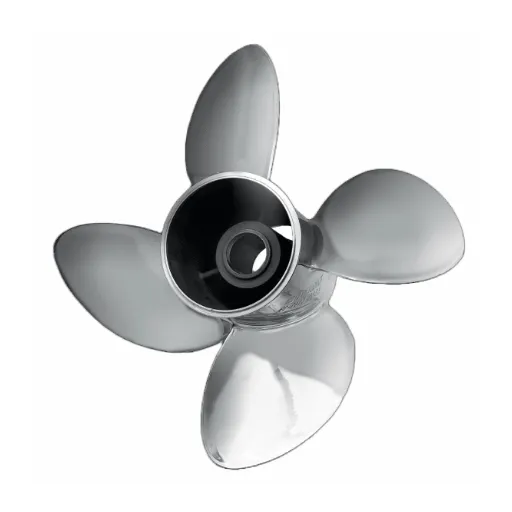
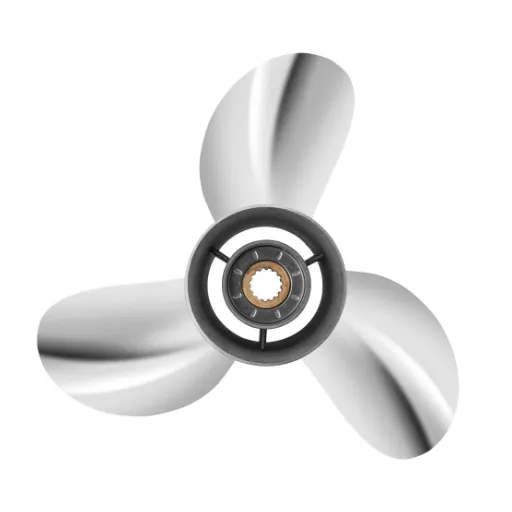
Most propellers have 3 or 4 blades. A 3-blade prop is more suitable for fast top speeds and open-water applications, whereas a 4-blade prop is more maneuverable and offers better acceleration and smoothness under load or towing.
🌊 Water Conditions
Consider your typical water conditions. If shallow waters full of debris are ahead, a high-rake prop with special design features can stave off any possible damage and improve performance.
🎯 Performance Goals
The speed target, fuel economy selection, towing power-demands, and so on, are relevant for guiding selection. Yamaha offers a range of specialized props to meet these targets.
✅ Pro Tip: Take into consideration all above and use Yamaha’s latest prop selection recommendations to ensure the very best performance for your boat in all conditions.
🔗 Matching Props to Your Outboard Engine
Choosing a propeller for your outboard motor is really important when your boat is asked to perform at its highest capacity. The propeller then becomes one of the critical links between the power generated by the engine and the water, converting torque into forward movement. For the matching of the correct propeller to an outboard engine, considerations such as engine horsepower, gear ratio, and type of hull design are usually made. Yamaha propellers come in all sorts of variations to fit their outboards so that they can be compatible and, thus, offer the best application performance.
An important factor among the considerations is the pitch, which is how far the propellers move through the water in one complete revolution. A lower pitch is considered to produce better acceleration and pulling power, being suitable for towing or heavy loads; whereas a higher pitch goes in favor of top-end speed. Needless to say, changing the diameter, these being measurable as the distance across the circle the blades make when rotating, is one importance. If chosen from the diameters specified for your outboard, better balance will be held, and less wear take place over time.
💡 Helpful Resource: Yamaha made selecting a propeller easier with a few simple tools like their Prop Selector guide, which is designed to aid boat owners in making data-driven decisions. After some research, and with Yamaha having the widest-prop solutions at your disposal, you can tweak your boat performance, be it for recreational pleasure, fishing, or professional work, assuring that while on water, the boat would prove dependable and satisfying.
Maintenance Tips for Yamaha Boat Props
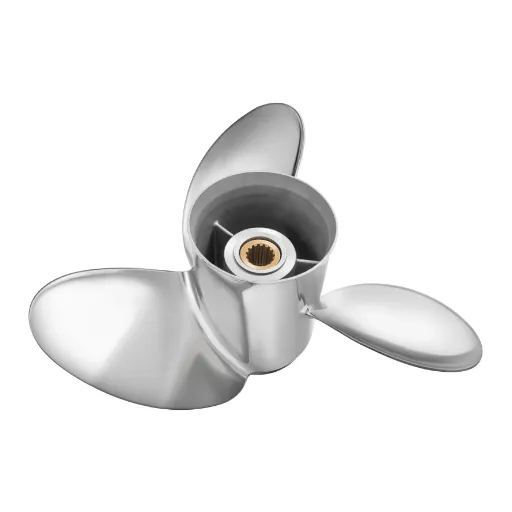
🧽 Cleaning and Inspecting Your Propeller
Cleaning and inspecting should be performed regularly to get the very best out of the impeller used in a Yamaha boat, ensuring long life. First, the propeller should be taken off from the shaft enabling one to check for any signs of wear or damage to either the propeller or the prop shaft. It is usually best to wash the dirt, algae, or barnacle buildup from the propeller blades using a soft brush or cloth with just mild detergent. Avoid chemicals that might degrade the finish or the materials of the propeller. Being thoroughly clean will make it run smooth and keep it from needlessly putting strain on the engine.
⚠️ What to Look For During Inspection:
- Chips, cracks, or bends on the blades
- Balance and efficiency issues
- Signs of wear or corrosion on the hub system
- Worn-out hub that may slip or lose power
After thoroughly cleaning the propeller, look for chips, cracks, or bends on its blades—the balance and efficiency can be affected by these. Even those tiny imperfections cause vibrations, reduce the fuel efficiency, and over time, could also cause damage to the engine. Look also for signs of wear or corrosion on the propeller’s hub system, since a worn-out hub may slip or lose power. In case of any damages or irregularities, consult a marine technician or local Yamaha dealer about repair or replacement options.
Another vital part of propeller maintenance involves inspecting the propeller shaft and greasing the splines. Whenever possible, remove any debris, fishing line, or other materials that may have wrapped around the shaft, as these can cause serious damage to the seals with time. After cleaning the shaft, apply marine-grade grease to the splines before reassembling the propeller. This lubrication will help prevent corrosion and aid in facilitating easier future removal. Following such preventive measures, along with keeping yourself updated with expert advice and detailed online resources, will help maximize your boat’s performance and ensure trouble-free adventures on the water.
🛡️ Preventive Measures for Prolonging Prop Life
Maintenance is most certainly the way to get the longest run from your propeller and generate the most efficient operation for your boat. Start by examining the propeller frequently for any signs of wear, denting, cracking, or bending. Such damages tend to affect the performance of your boat, and if left undetected, can give way to a more serious mechanical failure. After use, remove the propeller and check for fishing lines or other debris wrapped about the shaft, which can injure the seals that protect the gearbox. Cleaning it with fresh water still helps avoid corrosion and buildup, particularly if the boat is subjected to any kind of saltwater operation.
⚖️ Balance Check
Ensure that your propeller is well balanced. If not aligned or balanced properly, it works out vibrations that ultimately stress the other parts of the boat, such as the engine or transmission.
🎨 Protective Coatings
Consider protective coatings as one more level of defense against corrosion and marine growth. Anti-fouling paints ensure that barnacles and algae do not adhere to the surface.
🏠 Proper Storage
Decrease the exposure of the propellers to unfavorable elements by hauling boats out of the water or storing them somewhere dry whenever not in use for prolonged periods.
Another key preventive measure is to ensure that your propeller is well balanced. If not aligned or balanced properly, it works out vibrations that ultimately stress the other parts of the boat, such as the engine or transmission. You could also observe heavy fuel consumption or share poor performance incidence. Always consult an expert every now and then or even go ahead to make checks of the balance and alignment of the propeller using a special set of tools. Should any severe damage be identified, immediate repairs or full replacement of the propeller would be a must, as allowing time to pass would only compound the costs and issues.
✅ Bottom Line: With proper maintenance, quality paints, and changes in marine technology, your propellers will remain in top working condition—a great recipe for smooth and safe boating.
🔄 When to Replace Your Propeller
Generally, a propeller replacement starts to come into consideration in cases where performance is noted to decline. If the boat cannot hit the usual speed or if fuel consumption unexpectedly goes up, that’s often an indication of a damaged or worn-out propeller. But it’s not only diminished performance that can be signs of damage: those strange little vibrations felt through the helm while at full throttle actually ask for an explanation. They might be generated due to the various imbalances caused by dents, bends, or other forms of physical damage to the propeller blades.
🚨 Signs It’s Time for Replacement:
- Performance decline: Boat cannot hit usual speed or fuel consumption unexpectedly increases
- Vibrations: Strange vibrations felt through the helm at full throttle
- Visible damage: Cracks, corrosion, or serious deformation of the blades
- Minor damage accumulation: Little nicks or chips that cannot be repaired anymore
- Changed needs: Propeller no longer serves specific boating activities due to engine changes or load weight
I usually check for signs of wear, such as cracks, corrosion, or serious deformation of the blades. These are the things that, over time, diminish the working capacity of the boat, influencing safety. When there is minor damage like little nicks or chips that cannot be repaired anymore, it is time to purchase a new propeller for smooth-running operation.
I also put into consideration if the propeller would again serve my own specific needs in particular boating activities. This may change with engine types or load weight, necessitating a change in model or material of propeller. The proactive mindset toward replacement fosters not just maximum performance but best experiences on the water.
📚 References
- Northwest Technical Institute – Yamaha Rigging Guide
This guide provides detailed information on Yamaha propellers, including considerations for pitch and diameter to optimize performance. - Stanford University – Hopkins Marine Station: Outboard Motors
This resource discusses Yamaha outboard motors and their compatibility with various boat sizes, offering insights into proper usage. - Automotive Training Center – Marine Engine Technology
This source explains advanced marine engine technologies, including Yamaha’s use of contra-rotating propellers for enhanced efficiency. - Click here to read more.
❓ Frequently Asked Questions (FAQ)
🚤 Ready to Enhance Your Boating Experience?
Choose the right Yamaha propeller today and unlock your boat’s full potential. Whether your criterion is speed, fuel efficiency, or just pure reliability, Yamaha has the perfect prop for your needs.