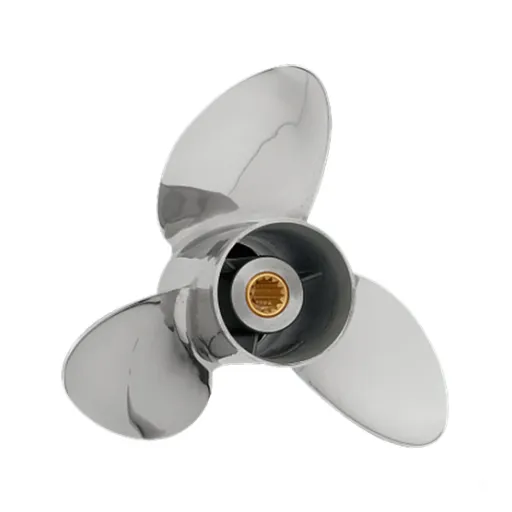
The propeller selection for your Yamaha F25 outboard is a vital factor in the performance maximization, fuel consumption, and overall satisfaction of the boating experience. If you are a professional sailor or a beginner, picking the right prop can significantly impact speed, fuel efficiency, and maneuverability. Yet, considering the numerous possibilities, which one could be the perfect match for your boat and requirements? This manual will dissect the key points, guide you through the considerations, and give you the power to make a knowledgeable choice. Prepare yourself to reveal the complete power of your Yamaha F25!
Understanding Propeller Basics
What is a Propeller?
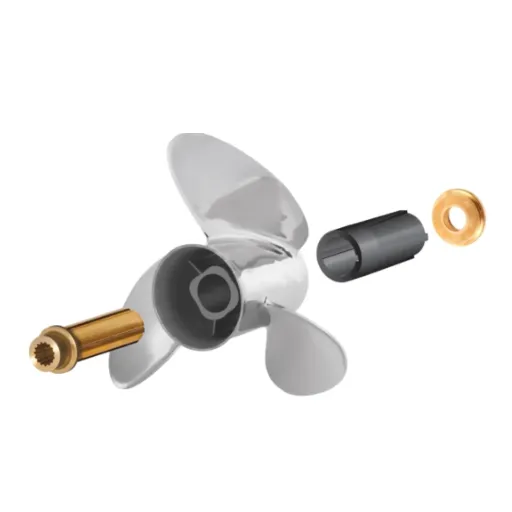
A propeller is basically a device that is used to push boats through water by converting engine power into thrust. It’s made up of spinning blades around a center hub, which creates a pressure change that makes water go back and thus the boat forward. In fact, the whole thing is based on lift and drag principles just as an airplane wing does in the air.
Propellers can be found in various sizes, shapes, and number of blades according to the specific boats and performance needs they are intended for. The pitch which is the distance a propeller travels forward in one complete turn depending on the speed and efficiency of the engine plays an important role here. A propeller with a lower pitch gives better acceleration and is suited for heavy loads whereas the opposite is true for a higher pitch which provides more speed but less power.
💡 Key Insight: If you have a Yamaha F25 and intend to buy a suitable propeller for it, it would be very important for you to think about your usual boating activities such as speed, towing capacity, or fuel consumption. Putting into consideration the propeller’s material, diameter, and pitch in relation to your engine and boat’s specifications would ensure the best performance and also prolong the life of both the propeller and the engine.
Types of Propellers for Yamaha Outboards
The selection of a propeller for your Yamaha outboard is a critical decision, and thus it is essential to properly understand the kinds of propellers offered and their influence on your boating experience. Yamaha has a full assortment of propellers that are meant to fine-tune performance according to various activities and conditions.
Aluminum Propellers
Lightweight and cheap aluminum propellers are good for very casual boating. These propellers are most appropriate for boats with a slow pace, giving a bit of everything in terms of performance and price. They are durable, but may lose material faster than stainless steel propellers when subjected to heavy use or harsh conditions.
Stainless Steel Propellers
Propellers made of stainless steel are very strong and give great performance, especially when the conditions are hard. For instance, they are certainly among the best choices for high-speed boats or heavy loads, because they not only provide nice quickness but also save on fuel. Their price is higher than that of aluminum, but when their longevity and improved performance are considered, the cost is worth it for the dedicated boaters.
Specialty Propellers
Moreover, Yamaha has specialty propellers that are particularly made for specific tasks like towing or achieving maximum speed. For example, Yamaha’s Reliance series is great for mid-range applications, on the other hand; the Saltwater series is made to resist rust in salty waters.
⚠️ Important: The appropriate type of propeller depends on what you want your boat to do, and that could be pretty fast, carry a lot of weight or simply last for a long time. Just make sure it is compatible with the engine model you have and take Yamaha’s advice for the best outcome.
3 Blade vs. 4 Blade Propellers
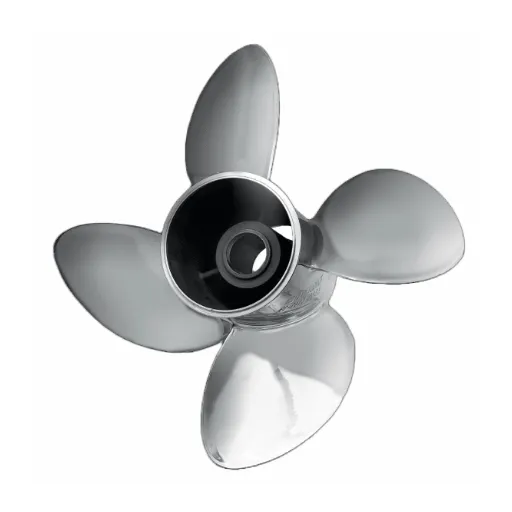
Three-blade propellers will have a tendency toward higher speed and thus operate with maximum efficiency to cater to such ends. Four-blade propellers will benefit differently by offering both control and stability while making it a point to generate very low vibrations in the process.
Choosing the Right Prop for Yamaha F25

Factors to Consider: Boat Type and Engine Capacity
Choosing the right propeller for the Yamaha F25 is first of all depending on your boat type and engine capacity. Propeller performance is greatly affected by the size, weight, and hull design of your boat. To put it simply, a 3-blade propeller might be the best choice for your light boat as it provides higher speed and efficiency. Heavy boats, in contrast, frequently gain stability and improved load-carrying capacity from a 4-blade prop.
Engine capacity is another major factor affecting the choice of the propeller. The Yamaha F25 is a lightweight, mid-range power engine that is very versatile in its application. However, to achieve its best performance, the propeller pitch and diameter must be suitable for the engine’s rpm range. The installation of a correctly selected propeller will allow the engine to deliver maximum thrust without producing excessive rpm or sacrificing power, thus achieving better fuel economy and longevity.
✓ Best Practice: Giving thorough analysis and using performance data to justify the selection your propeller according to these factors ensures that you are getting the best out of your boating, whether you are going for nice cruising, practicing water sports, or heavy-duty utility. Always refer to the manufacturer’s specifications and think about a propeller size that is specially made for your needs.
Understanding Propeller Sizes and Pitch
In the process of choosing a propeller, one should consider the key aspects of the propeller size and pitch to enhance the boat’s performance optimally. The size of the propeller is generally expressed through two numbers combination, for example, 14×19. The first number denotes the diameter, which is the width of the circle described by the rotating propeller, and the second number refers to the pitch, which is the distance, theoretically, that the propeller would move forward in a complete rotation.
Understanding Pitch Impact
- Lower Pitch Propellers: Pull more and create less speed, most suited for towing and heavy loads
- Higher Pitch Propellers: Used to produce greater speed at higher RPMs
- Selection Strategy: The right size and pitch selection will give you a choice of acceleration, top-end speed, or fuel efficiency, depending on your boating activities
For example, a high-pitch propeller would be excellent for water sports, whereas a low-pitch propeller might be more appropriate for fishing or utility work. Advanced tools and resources such as performance calculators and manufacturer databases are already available today to give you more comprehensive data on propeller sizing than ever before, thus making your choice based on accurate data instead of common recommendations. Basing your decision on these tools and with the help of an expert will only make your propeller choice more precise and thus operating in a safe and efficient manner that is specifically tailored to your needs.
Material Matters: Stainless Steel vs. Aluminum Propellers
On the one hand, stainless steel propellers are known for their excellent durability and performance, whereas on the other hand, aluminum propellers are cheaper and easier to fix.
Optimizing Performance for Specific Uses
Best Propeller Choices for Fishing
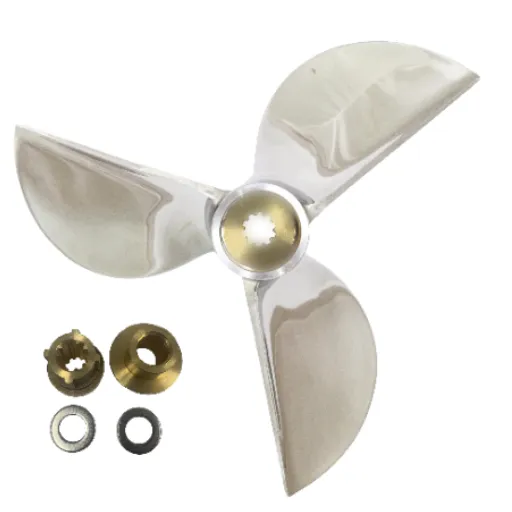
It is very important to have a full understanding of the particular conditions and requirements of your activity when it comes to the selection of the best propeller for fishing. Stainless steel propellers are the most preferred ones for anglers who work in high-performance situations like passing through rough waters or using very powerful engines. These props are excellent in terms of durability and speed which means they can be used to quickly and accurately reach far-off fishing spots. However, their inflexibility and high price might not be applicable to groups with different budgets and different fishing patterns.
Aluminum propellers, on the other hand, best fit the description of the general fishing use, especially in the case of calmer waters and boats equipped with lower horsepower engines. They are a cheap option and offer a repairable nature which should be seen as a significant advantage for the case of shallow area navigation where there are a lot of obstacles. Moreover, their light weight and flexibilities are their advantages that they can apply to a whole range of fishing conditions.
🎣 Fishing Tip: At the end of the day, the choice of propeller will depend on the prevailing factors such as water conditions, the power of the engine, and how often one goes fishing. Matching the type of propeller to your fishing goals will result in better performance, lower fuel costs, and an increase in the overall enjoyment of your time on the water.
Propellers for Water Sports and Recreational Use
In the case of water sports and recreational boating, the propellers have a vital function to perform in the performance optimization of wakeboarding, waterskiing and tubing. Usually, the propeller for the water sports will be that one that has the capability to increase the power of acceleration and pulling rather than a propeller with a high-end speed. The four-blade propeller is the one mostly liked for its perfect grip in the water and as a conductor of strong and steady thrust at low speeds—critical when the towing of watersport fans is done. Also, these propellers provide the best maneuverability and stability, and that is very helpful in situations where one has to make sharp turns or in case the water gets bumpy.
The Performance of the propeller is largely dictated by its pitch and diameter. A propeller with a low pitch gives the advantage of faster acceleration and great pulling power, thus, the perfect moment for the skiers or wakeboarders to be up and out of the water quicker. Conversely, in the case of some materials, such as stainless steel, they are often suggested for their long-lasting nature and that is why they are most commonly used in very busy areas, besides their efficiency that makes them the best choice also in terms of performance.
Latest Developments
The latest developments in propellers technology, such as the introduction of adjustable pitch designs and special coatings for drag reduction, have significantly improved water sport experiences. Well-matched boat and motor combinations, together with, the right propeller selection, will create a setting that is safe, fun, and performance-oriented for all the recreational activities.
Adjusting for Different Water Conditions
Operating a boat effectively under different water conditions necessitates careful consideration of the vessel’s adjustments and equipment changes, particularly the propeller. For instance, the use of a propeller with a higher pitch in shallow waters is common practice to avoid damage from hitting debris or strikes on the bottom. Conversely, deep or open waters permit the use of low-pitch propellers that provide faster top-end speed, thus adjusting the performance of the vessel for long-distance cruising or water sports. By adjusting the propeller according to the water’s depth and type, boaters get to experience safer and more efficient navigation.
🌡️ Temperature & Density Considerations
Apart from that, water temperature and density also influence performance adjustments. The colder water, which has a higher density, creates more resistance than the warm water, and this can influence the thrust and efficiency of the propeller. To balance these changes, boaters may need to either alter the engine performance or consider propellers that work well in specific temperature ranges if they often operate in extreme climates. Such changes not only make the vessel more responsive but also help in saving fuel and lessening the wear and tear on the engine.
Tidal and wave conditions are finally the most demanding when it comes to propeller performance. In case of choppy or turbulent water conditions, propellers with better grip or those that are designed to minimize cavitation may be chosen. Cavitation, which is the generation of bubbles around the propeller blades, can lead to less efficient propulsion and even damage the blades eventually. The use of the correct propeller for severe environments in the vessel assures stability, better control, and the longevity of parts, all of which lead to a more enjoyable and secure boating experience. Adjusting to varying conditions in this way assures an all-rounded efficiency and safety approach in different waterways.
Common Issues and Troubleshooting
Identifying Performance Problems with Your Propeller
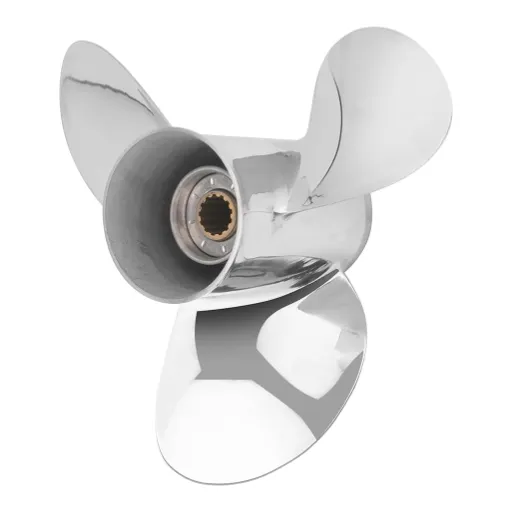
Following problems with the propeller of your boat, the efficiency may go down, the boat’s speed may get limited, and the maneuverability may become difficult on the water. While a damaged propeller can still lead to one of the most common signs of propeller issues that is the excessive engine RPMs with little corresponding speed gain, often caused by cavitation, and so on. Cavitation is the process where the blades get surrounded by air bubbles and this hinders their interaction with the water, meanwhile, damage in the form of bent, chipped, or corroded blades can greatly reduce thrust. These visible problems not only cause performance reduction but also increase the load on your engine, which can lead to long-term damage if not taken care of.
⚠️ Warning Signs to Watch For:
- Excessive Engine RPMs: High RPMs with little speed increase
- Vibration Issues: Strange vibrations or sounds during operation
- Poor Fuel Economy: Unusually high fuel consumption
- Reduced Thrust: Bent, chipped, or corroded blades affecting performance
Another indication of propeller problems is the vibration or strange sounds coming from the engine while it is operating. This may be the case of imbalance in the propeller, which could be as a result of debris caught on the blades, blade deformation, or poor installation. An imbalanced propeller disturbs the rotation which in turn affects the steering control and may result in expensive repairs. Thus, it is better to deal with these issues quickly to avoid more problems and to make boating safer.
Last but not least, poor fuel consumption usually suggests propeller inefficiency. If your fuel usage is really high for normal operations, it might mean that the pitch or diameter of the propeller is not suitable for the vessel’s load or that the area is not perfectly used. Looking into the specifications of your propeller and thinking about getting a different one that is tailored for your boating needs can really help in reducing fuel cost. To keep the propeller issues at bay and thus maintain the boat’s peak performance, regular inspections, correct maintenance, and experts’ advice are all a must.
Common Repairs and Maintenance Tips
Taking good care of your propeller and giving it the right amount of attention can not only prolong its life but also improve the performance of your boat. One very important maintenance practice is to routinely monitor the propeller for damage that can be in the form of dings, cracks, or deformed blades which are the results of either debris or unintentional blows. Taking care of these problems at the earliest possible time safeguards the propeller and engine from further damage.
🔧 Essential Maintenance Checklist
- Regular Inspections: Check for dings, cracks, or deformed blades before and after each trip
- Vibration Monitoring: Address any unusual vibrations immediately through rebalancing or component replacement
- Shaft Alignment: Regularly check propeller shafts for alignment problems to minimize early wear
- Thorough Cleaning: Remove marine life, barnacles, and corrosion using soft brushes and ocean-friendly cleaning products
- Saltwater Care: Rinse propeller with fresh water immediately after saltwater use to minimize salt buildup
- Hardware Check: Ensure propeller is tightly attached to shaft and inspect hub assembly for wear or damage
Another repair that is frequently done is the one related to sick vibration which could be a sign that your propeller is either out of balance or incorrectly placed. Rebalancing or changing the defective parts can bring back the silence once more. Propeller shafts should be regularly checked for alignment problems to minimize the chances of early wear.
At the end of the day, make it a point that the propeller is tightly attached to the shaft, and check-up hub assembly for any signs of wear or damage. A hub that is degraded can lessen the effectiveness of propulsion, and should, therefore, be replaced when the need arises. Through the combination of constant checks, prompt repairs, and correct cleaning, you will be able to keep the performance at its best and also prolong the life of your propeller.
When to Upgrade Your Yamaha Propeller
I usually take the time to think about my Yamaha propeller’s upgrade when I see considerable drop in performance or efficiency. If my boat is not reaching its maximum speed anymore or the engine sounds overworking to keep the normal performance, these are the very first signs that my present propeller might need a change. It is not only damage, like cracks, bends, or rust, but also poor performance that shows the propeller should be replaced with a better one.
🔄 Upgrade Considerations
Another important issue is when I change my boating lifestyle. For example, if I begin towing water skiers, or carrying heavier things, I would need a prop designed for more low-end torque. On the other hand, if I am after higher top speeds for faster travel, then getting a prop that is suitable for high RPMs becomes a smart thing to do. Making sure the prop is compatible with my engine and usage not only enhances my boating experience but also helps me to get the most out of it.
I also believe that it is worth it to switch to a better material, like stainless steel, if I have been using an aluminum propeller that needs to be more robust. Stainless steel props are considerably stronger than their aluminum counterparts and often allow for better performance too. In short, the process of upgrading my Yamaha propeller is all about making it fit the boat’s specific needs and my personalized boating goals, while still considering safety and efficiency.
Maintenance and Care for Your Propeller
Cleaning and Inspecting Your Propeller
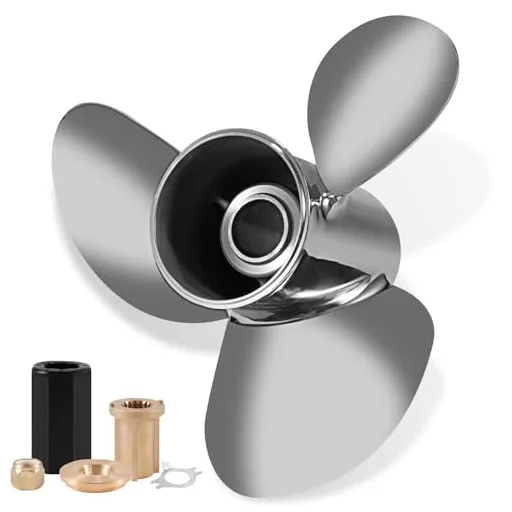
The regular upkeep and checking of your propeller are of utmost importance for the maintenance of its performance and the prolongation of its life span. So, to clean the propeller, the first step is to take it off the boat so that you can have complete access to all the parts. Then, take warm, soapy water, and with a soft brush, scrub any dirt, barnacles, or algae that may have stuck there during use, and come off easily with the help of a marine cleaner that specializes in this type of cleaning. Do not forget to rinse the propeller generously with clean water before reattaching it to the boat and ensure that it is completely dry.
🔍 Inspection Focus Areas
- Blade Condition: Look for cracks, nicks, and bends in the blades
- Edge Integrity: Focus on blade edges where wear is most severe
- Hub Area: Scrutinize the hub for signs of damage or wear
- Hardware Check: Inspect nuts and washers for corrosion or loosening
- Professional Assessment: Contact professionals for repairs if damage is found
As you are cleaning the propeller, inspect it for any signs of damage or wear. Look for cracks, nicks, and bends in the blades; even a few unwanted imperfections can affect the boat’s fuel consumption and performance. The edges of the blades and the hub area are often the places where wear and tear happens in the most severe form, so they need to be the focus of scrutiny during the inspection. In case of any damage, it is advisable to get hold of a professional and have the propeller either repaired or replaced quickly, so that no more issues arise.
💡 Pro Tip: Put marine-grade grease on the shaft before putting back the propeller to avoid rust and to make it easy for you to detach next time. Periodic maintenance or care will be of great help in preventing expensive repairs, and also, in this way, you can always have an enjoyable boating experience through smooth and efficient performance.
Storage Tips for Your Yamaha Prop
It is very important to properly store your Yamaha propeller during the inactive periods to keep it in good condition and to maintain the performance. First of all, clean the propeller very well to get rid of all salt, marine life, and dust, since they can cause corrosion or the propeller can be damaged over time. Rinse the propeller with fresh water and a mild detergent and make sure that you give special attention to the areas that are hard to reach. After cleaning, it is necessary to dry the propeller completely before going to the next step since any moisture present can lead to rust and also affect the quality of metal parts during storage.
📦 Proper Storage Steps
- Clean Thoroughly: Remove all salt, marine life, and dust with fresh water and mild detergent
- Dry Completely: Ensure the propeller is fully dry to prevent rust and metal degradation
- Inspect for Damage: Check for cracks, bent blades, cavitation burns, or other impairments
- Apply Protection: Use marine-grade anti-corrosion spray or lubricant for moisture defense
- Store Properly: Keep in a cool, dry location away from heat, humidity, and bright light
When the propeller is clean and dry, check it for any signs of wear, damage, or imbalance. Find any cracks, blades that are not straight, cavitation burns, or any other impairment that could lead to a repair or replacement. Fixing these problems prior to storage will make your propeller ready for use in top condition when you next require it. Moreover, applying a protective coating, such as marine-grade anti-corrosion spray or lubricant, will offer an additional layer of defense against the moisture and environmental elements.
And lastly, pick up a suitable storage area for your Yamaha propeller. Keep it in a place that is not hot, humid, or bright so that it will not deteriorate over time. It is also recommended to pack the propeller in a case or use wrap-around plastic for dust, impact, and accidental scratches protection. Keeping to these storage habits, you can increase the life span of your propeller and also have efficient performance for many more boating seasons.
Extending the Lifespan of Your Propeller
The propeller of your Yamaha may last in the best condition for a long time only if proper maintenance is done. Check the propeller for any damages such as cracks, dents, or excessive wear before and after each trip. Even slight problems can worsen over time, making your boat less efficient and possibly even damaging other parts like the engine. Salt, algae, and other dirt can accumulate and cause corrosion or poor performance, hence regular cleaning is very important. Always use fresh water and mild detergent to clean the propeller surface and refrain from using harsh chemicals that might compromise the propeller material’s integrity.
⚙️ Balance & Alignment Importance
Balancing and alignment are usually neglected aspects of propeller maintenance, but they are critical to smooth operation. A propeller that is not balanced can create vibrations, tire the engine, and cause uneven wear. Thus, if you feel strange vibrations during your drive, it could be that your propeller needs a professional check-up and a balance to be performed. Then make sure that the propeller is attached to the shaft tightly, but don’t overtighten, as this may cause threads or other damage.
Keeping a spare propeller onboard is a wise precaution, which will save you from delays or setbacks on your boating adventures. A well-maintained spare propeller can keep you on the go while you make the repairs needed if your main propeller is damaged or unusable. Do not forget to inspect and maintain the spare propeller as well so that it is ready for use when required. By executing these steps and getting periodic professional assessments, you can guard your investment and have a trouble-free boating experience whenever you go out on the water.
The propeller selection for your Yamaha F25 outboard is a vital factor in the performance maximization, fuel consumption, and overall satisfaction of the boating experience. If you are a professional sailor or a beginner, picking the right prop can significantly impact speed, fuel efficiency, and maneuverability. Yet, considering the numerous possibilities, which one could be the perfect match for your boat and requirements? This manual will dissect the key points, guide you through the considerations, and give you the power to make a knowledgeable choice. Prepare yourself to reveal the complete power of your Yamaha F25!
References
- Yamaha Marine Engine Systems Hot Sheet – F25
The official Yamaha hot sheet for the F25 outlines key specifications and features of the F25 outboard engine (including standard propeller fitment). - Yamaha Outboard Application Charts (PDF) – Propeller Reference Guide
This guide lists propeller size, style, material, and application data for Yamaha models including the F25, offering detailed spec matching. - How to Choose the Perfect Yamaha F25 Prop for Optimal Performance (BuyPropeller.com)
This article provides practical advice on diameter, pitch, material and performance considerations when selecting a prop for the F25. - Propeller Aerodynamic Design and Optimization (Research Paper)
Although not Yamaha‐specific, this paper lays out fundamental propeller hydrodynamic principles that apply to outboard propeller selection, including those for the F25.
Frequently Asked Questions (FAQ)
Q: What is the best propeller for a Yamaha F25 engine?
A: The Yamaha F25 engine’s finest propeller turns out to be a stainless-steel 3-blade prop in most cases. These types of propellers allow for maximum performance to be achieved and dependability even in the most difficult settings.
Q: How does propeller size affect performance on boats using a Yamaha F25?
A: The diameter of the propeller has a considerable influence on the performance of the boat, as it determines the smoothness of the ride, the speed, and the amount of fuel consumed. A larger diameter leads to better low-speed maneuverability and quick acceleration while a smaller prop may do the opposite, i.e., improve max-speed and decrease slippage in loaded conditions.
Q: What is the advantage of using aftermarket Yamaha F25 propellers?
A: The benefits from aftermarket Yamaha F25 propellers are frequently seen as better ventilation and handling. This kind of product can be made to order for a specific function, like a pontoon boat, and also provide the opportunity for fine-tuning of performance.
Q: What is the role of the shift dampener system (SDS) in Yamaha F25 propellers?
A: The shift dampener system (SDS) in Yamaha F25 propellers takes on the function of quieter ride and cuts down on vibrations when changing gears. The feature not only adds to the comfort of the riders but also indirectly prolongs the life of the drivetrain by lessening wear on the parts due to smoother transfers.
Q: Can I use a left-hand propeller with a Yamaha F25?
A: In fact, the left-hand propeller can be selected for the certain cases along with the Yamaha F25 engine, but it is important to establish compatibility depending on your particular configuration. Licensed right-hand props are usually majority in the market but there are some cases where the left-hand ones can be advantageous.
Q: What is a talon propeller, and how does it benefit the Yamaha F25?
A: A talon propeller is manufactured to give you an excellent grip and to control your boat even in really bad waters. For instance, the Yamaha F25 experience with the talon prop can be much faster and more stable thus the fun factor even in difficult boating conditions will be high.
Q: What maintenance tips can improve the lifespan of my Yamaha F25 propeller?
A: Cleaning the propeller, checking for bent blades, and mounting the engine properly are some of the regular maintenance jobs that can considerably elongate the life of your Yamaha F25 propeller. Moreover, inspecting for slippage and ensuring proper spline fit will go a long way in preventing performance issues.
Q: How can I achieve peak efficiency with my Yamaha F25 prop?
A: You need to make sure that the Yamaha F25 prop is perfectly suited to your engine and boat type in order to achieve peak efficiency. Factors such as pitch and diameter adjustment as per load conditions and intended use, together with consideration of factors like ventilation and quick acceleration, will all contribute to optimizing performance.
Q: What are the benefits of using a stainless-steel propeller for the Yamaha F25?
A: Toughness, availability of handling capabilities, and fuel consumption reduction are among the advantages that stainless-steel props deliver to the Yamaha F25. Moreover, they are smoother to ride on, and it is very unlikely that they will suffer damage when compared to aluminum props thus the latter are perfectly suited for tough situations.
Final Thoughts
Selecting the right propeller for your Yamaha F25 outboard is essential for optimizing performance, fuel efficiency, and overall boating enjoyment. By understanding the basics of propeller mechanics, considering your specific boating needs, and maintaining your propeller properly, you can ensure years of reliable service and enhanced performance on the water. Whether you’re fishing, enjoying water sports, or cruising, the right propeller choice will make all the difference in your boating experience.