Optimizing your Yamaha F60 outboard motor boat’s propeller choice is a significant factor in performance, fuel consumption, and handling aspects. The wide range of available options might make it a bit difficult to find a suitable one, however, it is not the end of the world. The current guide will show you through the process of picking the right prop for your Yamaha F60. Whether you are a trail-tested sailor wanting to sharpen your expedition or a newbie wanting nothing but the best from your gear, the article will assist you with the necessary knowledge and tricks for a smart choice. Let us see in what ways the appropriate prop can boost and transform your leisure time on the water!
Understanding Propeller Basics
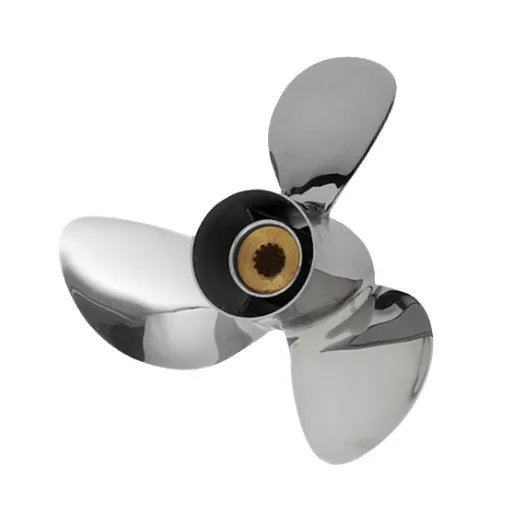
How Propeller Design Affects Performance
The propeller design has a very crucial role in determining the performance of the Yamaha F60 and has effects on speed, efficiency, and engine stress as well. The propeller’s diameter, pitch, and blade count which are the most important factors, determine the extent to which the propeller can push water to move the boat. A properly matched propeller ensures that your engine runs at the recommended RPM range, thus optimizing both power and fuel economy.
⚙️ Key Design Elements
- Diameter: The total area covered by the propeller rotation. Larger diameters are usually more efficient in developing low-speed thrust and are therefore suitable for heavy boats.
- Pitch: The distance traveled by a propeller in water with each revolution. Higher pitch allows for greater speed but might slow down the boat at start, whereas lower pitch facilitates easier starting at the expense of maximum speed.
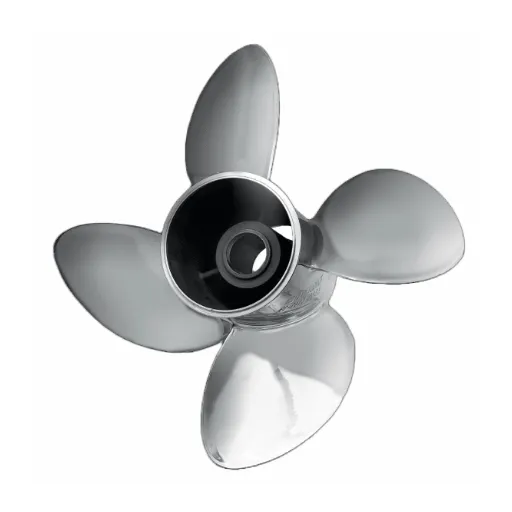
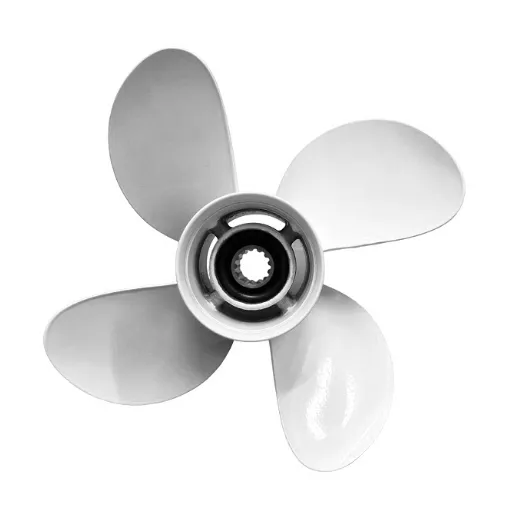
- Blade Count: Three-blade props usually provide a gain in speed and efficiency, while four-blade props offer better thrust and smoother operation for water sports or rough conditions.
Diameter and pitch regulate together the acceleration and top speed. Picking the appropriate pair guarantees equal performance according to your boating needs. To get the best performance out of your Yamaha F60, you need to consider the propeller’s design and match it with your intended usage giving priority to fuel efficiency, speed, or handling as per your requirement. Trying out different props and following Yamaha’s recommendations will make sure that you have the right fit for your setup.
Types of Propellers for Yamaha Outboards
Choosing a propeller for your Yamaha outboard requires you to learn about the different types, and benefits matrix. Generally speaking, Yamaha propellers can be classified according to their material, blades, and end-users.
Materials
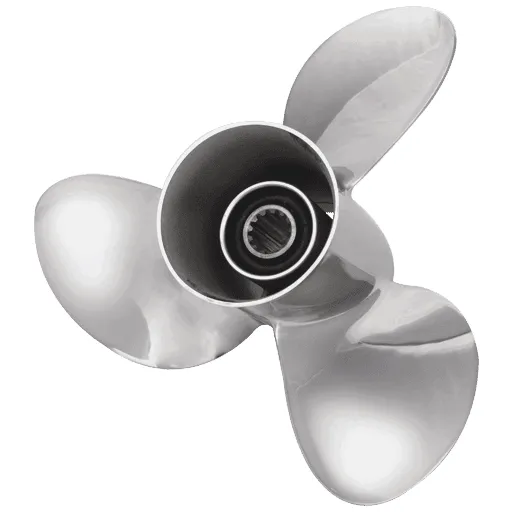
Usually, Yamaha propellers are made of either aluminum or stainless steel. Aluminum ones are a very inexpensive and under-weight option for general usage. Being lightweight and easy to work with, they do the job for casual boating and light applications. However, if you are looking for something that is more robust, then stainless-steel propellers are the answer. They are not only equipped with a longer lifetime but also have a better performance for higher speeds, heavier ships, or tougher environments. Thus material selection won’t be difficult if you analyze your boating style and financial limits.
Blade Types
There are both three- and four-blade propellers on the market. Three-blade propellers are the standard option, showing off speed and fuel efficiency in almost equal proportions. They are suitable for most leisure boating operations. On the other hand, a four-blade propeller can allow operations where control and smoothness of movement are more important than speed. The towing of water skiers and navigation through choppy waters are examples of such applications because of the thrust and stability that a four-blade propeller has.
Unusual Forms
Besides conventional propellers, Yamaha has also come up with different shapes of propellers that are specially designed for distinct functions. Their “Saltwater Series” is one of these designs which focus on prevention of corrosion in salty water, whereas the high-performance models are all about achieving the highest speed and quickest acceleration. Apart from that, Yamaha also has specific propellers for larger vessels, pontoons, and even heavy-duty commercial applications. Checking these options is a great way to determine what will be most compatible with your boat and activity.
The selection of material, blade design, and technical requirements helps you in getting the best propeller for your Yamaha outboard that leads to maximum performance. Always keep Yamaha’s recommendations in mind and test the propeller under real-life conditions to get the desired results.
Types of Propellers for the Yamaha F60

3-Blade vs. 4-Blade Propellers
Three-blade propellers are characterized by their maximum speed and efficiency, whereas four-blade propellers are more suitable for applications requiring fast acceleration, stability, and better load handling.
Material Choices: Aluminum vs. Stainless Steel
Propellers made of aluminum are the best option for a boat if the owner wants something that won’t break the bank and will not add significant weight. On the other hand, stainless steel propellers provide much longer life, better performance, and greater efficiency.
Overview of Solas Propellers for Yamaha F60
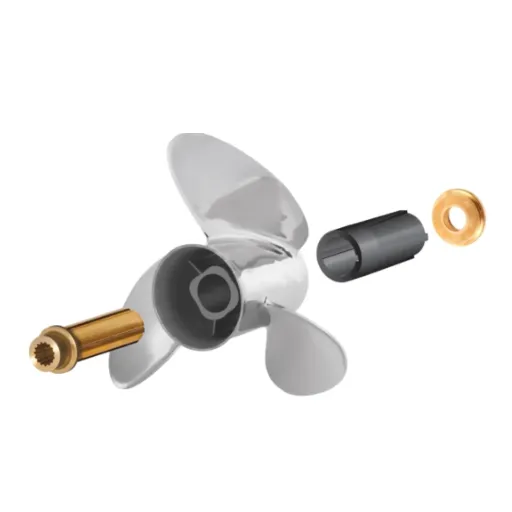
Solas propellers are admired for their great performance, long-lasting, and high-quality engineering, which makes them a very good option for Yamaha F60 outboard. The propellers are made with the latest technology and innovative materials, resulting in the best possible thrust and efficiency in the water. Solas has several models which are specially made to correspond with the power traits of Yamaha F60, thereby providing smooth acceleration, better fuel economy, and no vibration at all.
🔧 Solas Advantages
- Both aluminum and stainless steel options available
- Patented blade geometry for improved water flow
- High-precision manufacturing process reduces cavitation
- Designed specifically for Yamaha F60 power characteristics
- Suitable for recreational cruising, watersports, and fishing
Solas offers Yamaha F60 both aluminum and stainless steel propellers, where each caters to different requirements. Aluminum ones are lightweight and cost-effective, therefore being the best option for casual boating and standard performance. Conversely, stainless steel variants are durable and capable of providing excellent performance even with heavy loads or during challenging conditions, thus being the most preferred by the advanced handling and speed-loving boaters. It is always good to consult size charts and recommendations from Solas to find the right one for your specific setup.
Critical Factors for Propeller Selection
Matching Pitch and Diameter to Boat Type and Load
In selecting both pitch and diameter of the propeller correctly, the whole operation would not be speed, power and efficiency problems altogether with your boat. The pitch is the distance of the boat going forward during the propeller’s complete rotation, while the diameter equals the total width of the circle created by the propeller’s rotation. For the fast and lightweight boats like recreational watercraft, a higher pitch propeller could possibly make the engine run at its best RPMs by improving the speed. On the contrary, if the boat is working with heavy loads, a larger diameter and lower pitch propeller give the necessary torque and thrust to make the operation easy and smooth without any strain.
⚠️ Common Mistakes to Avoid
- Too high pitch: Engine struggles at low RPMs and may be overworked
- Too low pitch: Limited top speed and potential cavitation on overpowered engines
- Ignoring boat weight: Propeller must match total load including passengers and gear
- Overlooking intended use: Fishing, watersports, and cruising have different requirements
Choosing the wrong pitch and diameter might end up with engine inefficiency, loss of power, or wear and tear that is more than even normal. When your decision-making comes, it is best that you consider the weight of the boat, its horsepower as well as the planned activities.
Moreover, online tools and resources can help in predicting more accurately and thus lead you to better propeller performance via the utilization of them as your choice-booster. The sophisticated online calculators and databases usually permit entering of factors such as engine power, transom height, and hull design, thus yielding personalized suggestions for pitch and diameter. When you bring these insights together with the reliable knowledge from professionals like Yamaha, you will be able to make very well-informed modifications that can take full advantage of your boat’s versatility in different situations, at the same time ensuring pleasant rides, fuel savings, and longer engine life.
Understanding Blade Design and Its Impact on Performance
The composition of a propeller’s blade is one of the leading aspects that determine the performance, efficiency, and handling of a boat. The design of the blade includes various factors like thickness, contour, length, angle, etc. to mention a few, and each one plays a specific part in the propeller’s interaction with the water.
Key Blade Design Elements
Blade Rake
Blade rake defines the extent of the blades’ tilt concerning the hub and it affects the lift of the bow and the total hydrodynamic efficiency. Usually, the higher the angle the better the performance in rough water conditions and high-speed vessels because the hull lift is kept high and drag is reduced.
Cupping
Cupping, which is in effect a curl at the trailing edge of the blade, makes the propeller more water grippy and prevents the blade from slipping, which means better thrust output and better fuel economy through reduced gas consumption.
Number of Blades
A propeller with only a minimal number of blades (two or three) will usually produce a higher maximum speed because of the less water drag. However, less smoothness in operation and less pulling power might be the price paid for it. Four or five-blade props will usually be recommended for heavy boats or situations where quick acceleration and decent mid-speed cruising are desired. These setups produce a quieter and smoother ride, which is perfect for the most demanding comfort situations.
Additionally, the latest inventions and discoveries in materials and manufacturing have turned the very nature of propeller blades into a revolution by blending the technology of today into the designs of the future, which brings about higher performance and reliability. The steel for example has doubled the strength and lifespan of the aluminum when used in marine propellers while CAD has made possible the exact engineering which takes hydrodynamic efficiency to the maximum. Through the use of modern blades and professional consultation, the boating community can reckon with a faster, more economical, and longer-lasting engine that keeps the boating experience reliable and delightful no matter the circumstances.
Impact of Propeller Choice on Boat Performance
Top-End Speed and Fuel Efficiency
The propeller used by a boat is one of the most important elements that influences its maximum speed. A well-matched propeller allows the engine to function within its optimal RPM range, thus, providing the boat with the highest speed possible and at the same time, reducing the motor’s strain. Propeller designs have transformed over the years and now they almost always include stainless steel, which is a material that is much more resistant to wear than aluminum at high-speed spinning thus making it a serious contender for big setups. Still, selecting the proper pitch and diameter is a key part of the process. For example, an excessively pitched propeller can result in reaching a higher maximum speed but will adversely affect the boat’s acceleration and might also lead to engine laboring.
💡 Fuel Efficiency Tips
- Choose cupped or high rake blade designs for better water flow and less resistance
- Four-blade propellers can improve fuel economy at low speeds through better load distribution
- Match propeller type to your specific boating activity (fishing, water sports, or cruising)
- Test various configurations to find the optimal balance for your needs
- Consider variable pitch propellers for maximum versatility
The selection of the propeller has also a decisive effect on the fuel economy, especially when the trade-off between the engine power and the boat’s cruising speed is concerned. New blade types like the cupped or high rake designs not only flow the water better but also create less resistance thus resulting to less fuel being consumed over a longer period of use. Although dual or four-blade propellers are slightly less efficient in terms of resistance, they can still be advantageous from the point of view of fuel economy when operated at low speeds, as they will distribute the load more uniformly.
The latest breakthroughs in variable pitch propellers and computer blade tip designs have made performance and efficiency even better. These state-of-the-art solutions give the boaters the opportunity to customize their setups by changing the load, the water’s salinity, and even the weather. Besides, the analysis of data obtained from online reviews and performance benchmarks serves as a good guide for the decisions made, thus guaranteeing the saving of fuel on that particular trip without compromising the peak speed.
Acceleration and Hole Shot Analysis
The power which the propeller delivers to the water is the key point in the evaluation of acceleration and hole shot performance. The definition of “hole shot” includes the ability of the boat to accelerate from a complete stop to planning speed without delay. Applications such as water skiing, where quick acceleration can determine the pleasantness of the experience or the opposite one, make this especially important. The performance of a propeller is determined by several factors, including pitch, diameter, and design. A lower-pitched propeller usually gives the quickest acceleration, thus the vessel reaches planning speed earlier, while the high-pitched propeller is one that can reach the maximum speed but takes longer to get there.
Testing and Measuring Acceleration
The assessment of hole shot performance could be done by doing the testing of different propeller designs on the same conditions. As an example, the testing might include the comparison of stainless steel propellers and aluminum ones in terms of trends in that very up-and-down field. Being stiff, stainless steel allows very thin blades, which means better hydrodynamics and faster acceleration.
With the development of diagnostic tools, the real-time data collection has become more common making the boaters able to measure such parameters as time-to-plane, engine RPM, and torque delivery. These metrics help uncover the most ideal configuration for acceleration-centric performance with no-imposing it on fuel economy.
The trend of searches lately shows that combining GPS speed monitors with smartphone apps can offer in-depth views of acceleration metrics. Besides, the information received through this method of data collection can be matched with the ones given by the manufacturers as well as that by the users thus allowing the boaters to avoid the anecdotal information thatis very common in text-based searches. This, finally, leads to more accurate understanding of how a certain propeller adjustment can help in boosting acceleration and hole shot, making it easier to fine-tune your boat for any need.
Handling Characteristics and Sea Performance
Data precision and reliability are the most important factors in evaluating a boat’s sea performance and handling characteristics. Several factors, among them the hull design, weight distribution, engine power, and the propeller configuration, influence a boat’s handling. Veritably, turning ability, water grip at different speeds, and overall responsiveness play a big role in the experience especially when the sea is difficult. Data obtained through tedious manual collection plus the latest manufacturer and user expert information—verified—combine to give boaters a very good understanding of the vessel’s behavior on water.
📊 Modern Performance Monitoring
The real-world sea performance gets mirrored in the analysis quite accurately when the latest tools and resources like advanced telemetry and performance monitoring systems are used along with the online data which is credible. These technologies are capable of measuring key metrics such as:
- Speed variations in different conditions
- Fuel efficiency across various loads
- Load-handling capacity
- Performance in different weather and water conditions
Eliminating potential misinformation usually associated with phrase-based Google searches is, however, one notable consequence of integrating data from accurate sources. Boaters no longer have to rely on subjective interpretations but are empowered by factual insights to make data-driven adjustments.
The merging of precision tools and verified information leads to the development of an improved method for attaining optimal sea performance. Boaters receive the reports, simulations, and step-by-step guidelines generated by these systems that contain the practically applicable recommendations to solve anything from cornering ability’s optimization to rough seas’ stability provision. This method eventually becomes a way for boaters to adjust their gear and handling strategy, thereby the whole process of boating becoming smoother, safer, and more enjoying.
Maintenance Tips to Extend Propeller Life
Routine Inspection and Cleaning
In the case of a boat propeller routine inspection and cleaning, I have discovered that regularity is the factor that provides and supports durability and performance. I intend to do it on a daily basis to see the propeller and to spot the very tiny dents or bends that can, in turn, affect the efficiency and create unnecessary strains on the motor. Besides these, I also have a habit of checking for fishing lines or other debris that might have gotten tangled around the propeller because, if the bindings are left unnoticed, they can cause the seals to break.
🧽 Cleaning Best Practices
- Use mild soap and water: Mix gentle soap with warm water for effective cleaning
- Apply soft-bristle brush: Gently scrub to remove dirt, salt, and algae without scratching
- Rinse thoroughly: Always rinse with fresh water to prevent salt or chemical buildup
- Check hardware: Inspect screws and nuts for tightness and corrosion
- Apply protective grease: Use marine-grade grease on fasteners to prevent rust
When it comes to the propeller cleaning, my go-to method is soap mixed with water and a soft-bristle brush. With this, all the dirt, salt, and algae will be wiped off the propeller, while at the same time, there will not be any scratches on it or any damage done. After I am done cleaning it, I always make it a point to rinse it off with fresh water and not to let salt or chemicals stay on the surface, as this could lead to rust. This little extra procedure is what helps to have a propeller that works perfectly, plus its life span is so much longer.
Moreover, I am very careful with the screws and nuts that hold the propeller in place; I always make sure they are tight and not corroded. If necessary, I put a little bit of grease on to stop the area from rusting and to make the movement easier. Application of these procedures does not only relieve my worries but also increases the total efficiency of my boat. I also get to be in a position where I can have a safe and fun sailing experience because every now and then I am doing inspections and cleaning which reduces the chances of sudden damage to the boat and I am always ready for the next voyage.
Dealing with Common Issues: Ventilation and Cavitation
Boat propeller performance can be compromised by the two main problems of ventilation and cavitation, but knowing them along with seeing them through can keep the boat going smoothly.
Ventilation is a phenomenon when air or exhaust gases get mixed with the water being propeller-ed and it results in the propeller losing its grip on the water. This happens, mostly, when the propeller is very close to the water surface or the hull or the propeller itself has lost its integrity. Among the typical remedies are checking and adjusting the engine height, preventing propeller exposure by avoiding sudden sharp turns, and monitoring for signs of damage or wear.
Cavitation is the opposite; it is when water pressure around the propeller blades drops and vapor bubbles form. These bubbles can implode causing pitting or damage, which ultimately leads to the reduction of efficiency. The factors that can bring about cavitation include improper propeller specification, the blades being damaged, or the boat operating at speeds not suited for the propeller’s specifications. Addressing cavitation usually means propeller selection according to the boat and load, repairing or replacing damaged blades, and polishing the propeller to make it smooth and clean.
Through constant checks and maintenance of the propeller, together with immediate fixing of the problems, you will be able to reduce the loss of the performance, avoid expensive repairs, and keep your boat running smoothly in any conditions.
Repairing Physical Damage on Propellers
Dents, cracks, and bent blades are examples of physical damages that can considerably impair the performance and efficiency of a propeller on a boat. The initially critical step to assess the situation is to find out the degree of the damage. Usually, the minor ones, such as small nicks and surface abrasions, can easily be dealt with by filing and smoothing the affected area. It is possible to get specialized tools and materials that will help in restoring the surface of the propeller and proper balancing will also be ensured.
⚠️ When to Seek Professional Help
If the damage is more serious, that is, if the blades are heavily bent or broken, then it will be necessary to call for a professional repair service. Technicians operate with high-end methods, welding, or reshaping, to get propellers back to their original state.
- Heavily bent blades requiring reshaping
- Cracks that compromise structural integrity
- Multiple blades damaged simultaneously
- Damage to the hub or mounting system
Digital balancing equipment is one of the modern technologies that can assure the repaired propeller works at its best and does not produce future vibrations or inefficiencies. Damaged propellers should be repaired or replaced quickly to avoid complications in the mechanism. A propeller that is not working well will cause engine strain, which in turn means more fuel consumption and an increase in operational hazards.
Regular inspections are very essential to spotting the very beginning of wear and tear, as well as physical damage. Through combining routine maintenance, professional expertise, and modern repair tools, boat owners can not only prolong the life span of their propellers but also keep them performing at their best in the water.
References
- Phoenix Medicinary: Yamaha OEM F30, F40, F50, F60 Propeller– Details specifications and compatibility for Yamaha F60 propellers.
- City of Columbus, Georgia: Yamaha Boat Motor and Accessories– Includes pricing and details for Yamaha F60 motors and propellers.
- Kingman Collections: ARKDOZA Aluminum Alloy Propeller for Yamaha 30/40/50/60HP – Provides product details and compatibility for Yamaha F60.
- Click here to read more.
Frequently Asked Questions (FAQ)
Key Takeaways
- ✓ Propeller design (diameter, pitch, blade count) significantly impacts performance and fuel efficiency
- ✓ 3-blade props excel in speed and efficiency; 4-blade props offer better thrust and stability
- ✓ Aluminum propellers are cost-effective; stainless steel offers superior durability and performance
- ✓ Match pitch and diameter to your boat type, load, and intended use
- ✓ Regular inspection and cleaning extend propeller life and maintain optimal performance
- ✓ Address ventilation and cavitation issues promptly to avoid costly repairs