Making the right choice of propeller is the key to excellent performance and efficiency of your boat. Propellers significantly affect the speed, fuel consumption, and handling, thus being a very important factor for every boat owner who has to choose them very carefully. Yamaha’s stainless steel propellers are becoming the number one choice for many thanks to their exceptional durability, accuracy, and performance in different water modes.
Understanding Propeller Basics
What is a Propeller?
A propeller is an apparatus that moves a vessel in the water by turning the power of the engine into thrust. It has a central hub and blades that are meant to rotate and do the water movement, thus driving the boat either forward or backward. Propellers are necessary for regulating a boat’s speed and direction and thus they are a very important part of every watercraft.
The dimensions, configuration, and the number of blades on a propeller determine its effectiveness and performance. To illustrate, a propeller with fewer blades may give higher speed and less fuel consumption, while one with more blades can provide quiet operation and mighty thrust even in difficult situations. The material used for manufacturing a propeller is also a factor; stainless steel, for example, is usually the material of choice for Yamaha propellers because they last longer and resist damage.
Correct propeller selection consists of pairing its features like pitch and diameter with your outboard motor and boating requirements. This would lead to the most efficient performance, low fuel consumption, and most notably a more pleasurable boating experience whether it is cruising, fishing, or playing on the water.
Key Components of Boat Propellers
Boat propellers are pivotal in the process of transforming engine power into motion through water. Familiarity with their essential parts will make you capable of picking the right one for your boat or repairing the existing one.
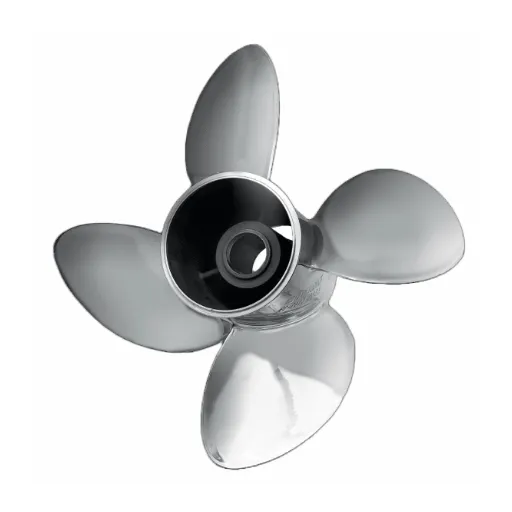
- Blades: The blades are the most visible and largest part of the propeller. They are the ones that the water pushes against to create the thrust. A propeller typically has between three and five blades, the more the smoother the performance but the less efficient at the same time.
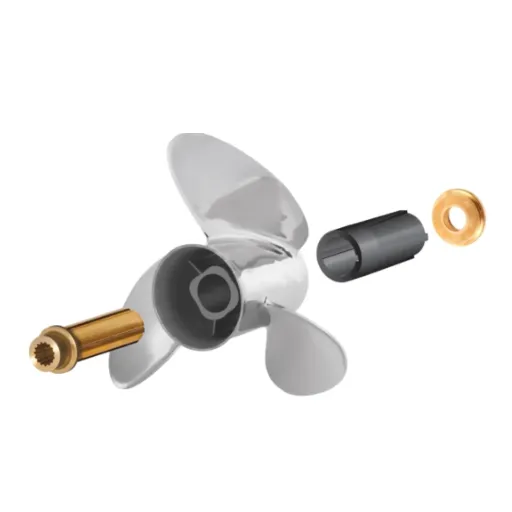
- Hub: The hub is the main part of the propeller located right at the center that is directly connected to the boat’s engine through the propeller shaft. It is the power source that passes the engine power to the blades for the creation of motion.
- Pitch and Diameter: The pitch is the distance that a propeller would ideally cover in water in one full turn and the diameter is the size of the circle circumscribed by the propeller blades. They both play a major role in the overall performance and engine compatibility of the propeller.
With a good understanding of these components, the user of a boat can make sure that his/her choice with propellers is optimized in terms of the effect, speed, and life. It is always good to pick a propeller according to your engine’s params and your usual water sports for the top-notch output.
How Propeller Design Affects Performance
The performance of a boat is greatly affected by propeller design; speed, fuel consumption, and maneuverability are all influenced by it. The design factors, such as blade count, pitch, and diameter, directly determine the efficiency of the propeller in producing thrust from the engine power. Properly designed propeller not only gives the best performance but also lessens the engine work.
The number of blades influences efficiency and smoothness at the same time. Generally, fewer blades lead to higher speeds because of lower drag, and more blades enhance the balance and stability, particularly for larger boats or choppy waters. The same goes for the pitch, which is the distance that the boat moves forward with each turn of the propeller, this similarly affects acceleration and speed. A lower pitch gives acceleration whereas, a higher pitch gives the top speed.
The next factor is the diameter or the size of the circle made by the propeller, it has an influence on thrust. Thrust and low speed performance can be complemented with larger diameter propellers, while smaller diameter propellers are used for high-speed light boats. It involves good judgment to make the right decision to balance these design aspects according to the boats and their uses to get the best performance and efficiency in water.
Yamaha and Its Propeller Offerings
Overview of Yamaha Boat Props
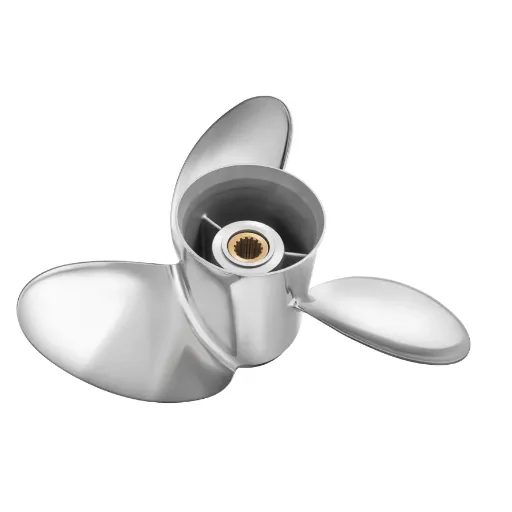
Yamaha has long been recognized as a manufacturer that produces top-of-the-line boat propellers that give the best performance in marine applications. The props are made with the utmost care to guarantee long life, great efficiency and dependability, hence they are the choice of both recreational and professional boaters. Yamaha presents a large selection of different types of propellers to go with their outboards, which can be used in different ways such as fishing, cruising and water sports. The compatibility and advanced engineering of Yamaha props assist in the maximization of engine power, fuel efficiency and total vessel performance.
The application of state-of-the-art materials like stainless steel and aluminum is one of the key characteristics of Yamaha boat propellers. Stainless steel props are extremely tough and more resistant to destruction from underwater trash, thus they can be used for high-performance applications. In contrast, aluminum props are lightweight and economical and are usually found in small boats or with new boat owners. Some of the most advanced and performance-driven propellers are manufactured by Yamaha and come with various blade designs like Talon and Saltwater Series which are specifically created to increase thrust, minimize air-in-waters and make operation in different water conditions smooth.
✨ Advanced Technologies
Yamaha’s cutting-edge technologies are also an advantage to its propellers. For example, the Shift Dampener System (SDS) muffles shifting noise and vibration, thus contributing to the pleasure of the whole experience while preventing the drivetrain from wearing. Besides that, Yamaha has a huge variety of sizes and pitch options which means that all customers can get the exact propeller that will suit the performance characteristics of their boat best.
Popular Yamaha Stainless Steel Propellers
Yamaha’s stainless-steel propellers are a labor of love and technical expertise, the result of great craftsmanship. They come to bear in strong marine and ocean currents—one of the most challenging environments to work with—since they are made to last and perform well in every aspect of boating. They are corrosion-resistant and have excellent lifespan even in saltwater and freshwater adventures, thanks to their precision-engineering capabilities.
🌊 Saltwater Series II
The Saltwater Series II propeller is a dream come true for high-powered offshore boats, it gives the ultimate acceleration and maximum speed. Its big diameter and brilliant blade design create maximum thrust and efficiency, especially in turbulent waters. This series is always the first choice for fishermen and offshore lovers who want to be assured of power and reliability.
⚓ Reliance Series
The Reliance Series propeller is made for medium-sized craft and delivers superior control alongside and fuel economy. It gets fewer hooks and a smoother ride which is perfect for family gatherings and towing activities due to the polished surface and progressive angle overturns.
🛥️ Talon Pontoon Series
Yamaha’s Talon Pontoon Series targets specifically pontoon boats, and besides the pointedness of the maneuver they aim to acquire the performance at low speeds and stillness of the riding. The open design plays a double role of bearing the burden of heavy loads and the reduction of vibration so a smooth ride can be enjoyed by the people on board.
🏆 Pro Series
The Pro Series propellers are destined for bass and bay boats, being characterized by their fast planing and precise handling. They are perfect for the competing anglers and the fastest boaters who want to take the sharpest turns with the least time lost in terms of responsiveness and acceleration.
Comparison with Other Brands
Choosing the Right Prop for Your Outboard
Factors to Consider: HP and Engine Type
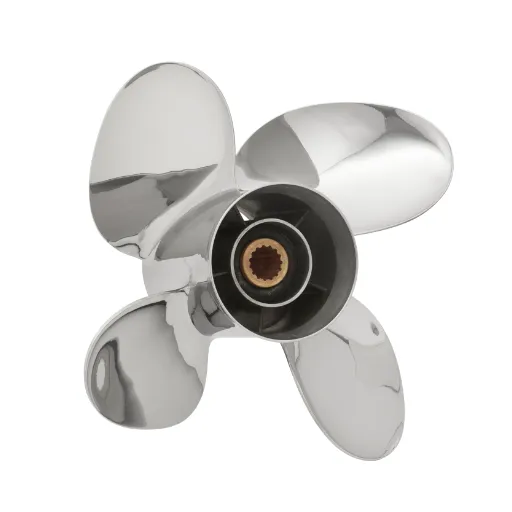
Choosing an appropriate propeller requires a detailed knowledge of the outboard motor’s horsepower (HP) and its type. The horsepower of the motor has a major influence on the propeller size and pitch that must be used, thus allowing optimal performance without straining the engine. For instance, engines with high horsepower usually go with large diameter or low pitch propellers to dissipate the extra power while the smaller and lower HP engines necessitate small diameter propellers for efficiency.
⚠️ Important Consideration
The type of engine is a key factor. The torque characteristics of two-stroke and four-stroke engines differ resulting in different propeller choices. The two-stroke engines usually need props suitable for high RPMs while the four-stroke engines are able to use the propellers with greater focus on the mid-range performance.
With the help of the latest data from reliable sources, you can determine the exact specifications of a propeller that will fit the outboard system, thus helping you to steer clear of the overly simplified, phrase-based results of online searches. Instead, research, in this case, should utilize compatibility charts and the technical resources of manufacturers such as Yamaha, Michigan or others that will be based on your engine’s specific requirements. The right choice guarantees hassle-free operations, less fuel consumption, and overall boating joy.
3-Blade vs. 2-Blade Propellers
Three-blade propellers are characterized by their quietness, better performance in climbing and also the smoother operation. However, the 2-blade propellers are superior in speed and efficiency.
Stainless Steel vs. Aluminum Propellers
Stainless steel propellers provide ultimate durability, performance, and efficiency at the same time whereas aluminum propellers are less expensive, more lightweight, and easier to fix.
Performance Characteristics of Stainless Steel Propellers

Speed and Efficiency Benefits
Stainless steel propellers have lots of advantages when it comes to speed and efficiency. These factors make them a common choice for a boat’s performance enhancer. The following are five of the main benefits:
- Higher Speed: One of the main advantages of using stainless steel propellers is their rigidity; they can withstand very high stress and retain their shape, which allows them to let the boat go faster at the end than the aluminum chosen.
- Great Acceleration: Stainless steel propellers are made with very good precision and have sharper edges, thus they are able to provide the runner with the fastest acceleration; this is especially important when skiing or fishing in places where the fish is lively.
- Lower Fuel Consumption: The strength of the propellers to limit flexing and the proper angle of the blades help to reduce the losses in the fuel used by giving a more efficient thrust through the power generated.
- Greater Performance in Bad Conditions: The hardness of stainless steel and its resistance to breaking position the propeller as a perfect partner in the enacting of speed and power in the rough waters or during the tough guiding maneuver.
- Specific Performance Design: Stainless steel permits even more complex and custom-made blade designs, which result in better control and performance that is specifically adapted to the boating application.
These advantages highlight the fact that stainless steel propellers are the preferred option for those boat owners who are after propulsion solutions that are both dependable and high-performing.
Durability and Maintenance Considerations
Stainless steel propellers are recognized as very durable materials, as they are much less susceptible to abrasion, rust, and impact than the aluminum ones. They are specifically designed to endure the severe marine conditions for a long time, including saltwater, and the latter can be very corrosive to other materials. This ability makes stainless steel the best choice for boaters who want long-term value and performance.
🔧 Maintenance Best Practices
Regular maintenance is a must for the propeller to be at its best all the time. It is advisable to check the propeller from time to time for any dings, cracks, or wear that may affect its performance. Moreover, washing the propeller after use—especially if it has been used in saltwater—will help to keep marine debris and corrosive residues from building up. Besides, applying a protective anti-corrosion treatment can give the propeller an extra layer of defense against environmental damage and thus, can make it last longer.
Stainless steel, when coupled with a proactive maintenance routine, gives boat owners the confidence of having reliable propulsion and a prolonged service life which, in turn, guarantees peace of mind during each trip.
Impact on Fuel Consumption
The properties of the material and the design of stainless steel propellers can have a great influence on a vessel’s fuel consumption. Here are five points on how stainless steel propellers are connected to fuel efficiency:
- ⚡
Hydrodynamics On The Rise: The drag in water is very low with the precise and smooth design of stainless steel propellers, which results in very efficient movement and consequently less fuel being used. - 💪
Strength and Durability Under Heavy Load: The strength of stainless steel material helps to resist deformation even when the propeller is subjected to heavy loads and high speeds. This consistent performance leads to optimal fuel consumption over the lifespan of the propeller. - 🚀
Efficiency In Acceleration Enhanced: The sharpness of the stainless steel propeller edges allows the faster and more powerful operation of the engine, hence using up less fuel in the process. - 🎯
Blade Shape Optimized: Stainless steel blades as compared to aluminum ones are made with superior precision. This precision leads to uniform thrust output, thus power is not lost and fuel consumption is lower. - 💰
Lower Maintenance Cost Over Time: Due to their wear resistance and also ability to withstand the environmental damage, fewer repairs and replacements are required. A propeller that is well maintained ensures the engine runs at its best thus preventing over-fuelling that is caused by inefficiencies.
All these points indicate that the stainless-steel propellers are a great investment for boat owners who want to cut down on fuel costs and at the same time adopt a more environment-friendly approach.
Maintenance and Care for Yamaha Stainless Steel Propellers

Routine Inspection and Cleaning Tips
Yamaha stainless steel propellers require regular maintenance to guarantee their longevity and high performance. The first step is to inspect the propeller visually for any damages such as nicks, dents or bending of the blades. Even little changes can greatly reduce performance and increase fuel consumption. Besides, it is important to make sure that there are no fishing lines or any other kinds of debris stuck around the propeller shaft, since these can cause seals to wear out and let water into the system which would, in turn, be detrimental to the engine.
🧼 Cleaning Process
When prop cleaning is performed, it is necessary to take it off the boat first in order to clean it thoroughly. A soft brush and a mix of mild soap and warm water can be used for cleaning dirt, algae, and salt deposits off. Avoid using aggressive chemicals or abrasive materials as they can ruin the condition of the stainless steel. Rinse the prop with fresh water after brightening and then dry it completely not to let the water spots or corrosion form. Sometimes it would be a good idea to apply a protective coat like marine-grade wax on the stainless steel prop to increase its resistance to rust and to keep its shiny look.
Routine care should involve examining the propeller hub and mounts as well as the propeller itself. Propeller nut should be sufficiently tightened using a torque wrench for making adjustments accurately according to the manufacturers’ specifications. Application of waterproof marine grease on prop shaft before reinstallation not only stops corrosion but also makes future removal less of a hassle. Regular inspections and cleaning habits adopted by boat owners will, in turn, lead to the optimizing of the performance and prolonging the lifespan of Yamaha stainless steel propellers.
Repairing Damage: When to Replace vs. Fix
Always the first step in the repair process of a Yamaha stainless steel propeller is the evaluation of the problem’s severity. A professional service for propeller repair can often deal with dings, bends, or scratches which are minor conditions. These kinds of damages generally do not affect the strength of the propeller and the repair costs are much lower than the replacement costs. By just having an unbalancing that is very slight, or if the damage is just superficial, repairing the propeller would be cost-effective and the performance would be sustained.
✅ When to Repair
- Minor dings and dents
- Surface scratches
- Slight unbalancing
- Superficial damage
- Cost-effective option
❌ When to Replace
- Visible cracks
- Extensive corrosion
- Structural damage
- Repair cost equals replacement
- Safety concerns
On the other hand, there are times when the propeller has to be changed no matter what. In situations like when the propeller gets cracks, or extensive corrosion occurs, or when the issue is that the propeller is no longer structurally sound, replacement would be the way to go. A propeller that has gone bad could potentially harm the engine and the boat as this could give rise to unwanted vibrations, losing the efficiency of the engine and even damaging it. Moreover, if the repair cost is nearly the same as or higher than the cost of a new propeller, then it is very likely that replacing it will be the more practical and the most reliable solution.
So, it is always the balance of the cost-effectiveness and the safety and performance considerations that finally determines whether to repair or replace. Being vigilant through the practice of conducting inspections regularly is the way of making sure that minor problems are caught early enough so that they can be fixed on time and prevent the occurrence of further damage. When in doubt, always seek advice from a professional so that the Yamaha stainless steel propeller is functioning at the best, thus providing both durability and a good boating experience.
Storing Your Propeller Off-Season
You need to make sure the Yamaha stainless-steel propeller is properly stored during the off-season to keep it for a long time and maintain its performance. Start with the cleaning of the propeller and get rid of any salt, algae, or garbage that might have piled up during the time of use. A mix of mild soap and water will do for the cleaning, and you are allowed to use a soft brush for scrubbing the surface gently to avoid scratches. Propeller cleaning is over when one is sure that it is completely dry, as moisture may lead to corrosion or rust. Stainless steel is rust-resistant to a great extent, but if moisture is left on the prop, it may still cause surface blemishes over a long time.
📋 Off-Season Storage Checklist
- Clean thoroughly with mild soap and water
- Dry completely to prevent corrosion
- Inspect for damage (nicks, dents, cracks)
- Apply corrosion inhibitor or marine grease
- Store in cool, dry place away from sunlight
- Use protective case or cushioned material
- Remove from boat during long-term storage
After having cleaned and dried, the prop needs to be examined for damage in the form of nicks, dents, or cracks. Fixing these problems quickly can save you expensive repairs in the future and make sure the propeller is ready for use when the boating season starts again. If you notice any damage, then you may seek help from a professional technician for the repair or replacement of the propeller. What’s more, applying a light coating of corrosion inhibitor or marine grease on the surface and hub of the propeller is a good idea to give the propeller an extra layer of protection during storage.
Lastly, the propeller should be stored in a shaded, dry place, away from the sun and dampness. Do not leave it on the boat for a long time when it is not in use, as it will be vulnerable to going bad because of the elements. It is better to keep the propeller in a special case or wrap it in a cushioned material so that scratches or impact damage do not occur during storage. If you take the above-mentioned precautions, your Yamaha stainless-steel propeller will be in great condition and ready to perform when you next go boating.
References
-
University of Rhode Island – Digital Commons: This source discusses propeller technology and includes references to Yamaha products in the context of underwater jet propulsion.
-
IEEE Xplore: This paper highlights Yamaha’s technological advancements and the use of stainless steel in drone and propeller applications.
-
Google Books – The Complete Idiot’s Guide to Boating and Sailing: This book provides insights into boating technologies, including Yamaha’s contributions and stainless steel propeller components.
- Click here to read more.
Frequently Asked Questions (FAQ)
❓ What are the benefits of using a Yamaha stainless steel propeller?
Yamaha stainless steel propellers are characterized by durability, performance, and efficiency. They are also highly resistant to corrosion and can, therefore, operate in both freshwater and saltwater without problems. Their shape also contributes positively to speed, fuel economy, and overall maneuverability thus giving the boat a more pleasant experience.
❓ How does a Yamaha stainless steel propeller improve fuel efficiency?
Yamaha stainless steel propellers are made with the utmost care to ensure that they have the least possible drag while producing the maximum possible thrust. Therefore, this kind of propeller leads to reduced fuel consumption since the engine will be running highly and efficiently, particularly at peak speeds or when fully loaded.
❓ Are Yamaha stainless steel propellers suitable for all types of boats?
Certainly, Yamaha stainless steel propellers are very adaptable and can be employed on a variety of boats from fishing boats to speedboats to pontoons, etc. Nevertheless, it’s important to select the right size and pitch that perfectly fits your boat and engine specifications so as to realize the best possible performance.
❓ How do I choose the right Yamaha stainless steel propeller for my boat?
The decision on which Yamaha stainless steel propeller to buy should take into consideration such things as the size, weight, and power of your boat’s engine, as well as what you will use it for (e.g., speed, towing, or cruising). You can refer to Yamaha’s propeller selection guide or ask a marine expert for help in getting the right one.
❓ What is the difference between stainless steel and aluminum propellers?
Stainless steel propellers such as Yamaha’s are definitely the tough guys among the propeller group as they are hard to break and last longer than aluminum ones. They perform better than aluminum, especially when high speeds are concerned as a result of being stiff and having precise design. On the other hand, aluminum propellers are cheap but they don’t last long and are also less efficient.
❓ How do I maintain a Yamaha stainless steel propeller?
The basic maintenance is quite simple which consist of cleaning the propeller with freshwater after every use especially in saltwater places to avoid rusting. Look for signs of damage like dents or cracks and make sure that the propeller is properly tightened. Spraying a marine-grade anti-corrosion spray after cleaning can also be done and it will help in the longevity of the prop.
❓ Can a Yamaha stainless steel propeller increase my boat’s speed?
It is true that Yamaha stainless steel propellers have the ability to increase speed through their reducing drag and enhancing thrust feature. Their expert crafting and the toughness of the material give them the competitive edge over other kinds of propellers when it comes to performance at high RPMs.
❓ Are Yamaha stainless steel propellers worth the investment?
Yes, without a doubt! Even though the initial cost of buying one of these steel propellers is higher compared to the aluminum ones, the former yields many more advantages in terms of durability, performance and efficiency. Their long life and improved boating experience keep them as a good investment for dedicated boaters.
❓ How do I know if my Yamaha stainless steel propeller needs replacement?
Some indications that the propeller might be on its way out include noticeable damage (e.g., cracks, bends, or chips), performance decrease, fuel cost increase or strange noises during operation. Regular checks can help spot problems earlier.
❓ Can I use a Yamaha stainless steel propeller in saltwater?
Yes, Yamaha stainless steel propellers are very durable when it comes to corrosion and thus are perfect for dealing with saltwater challenges. Nevertheless, it is very important to flush the propeller with freshwater after every use and to carry out routine maintenance in order to keep it in good condition.
⚓ Final Thoughts
Choosing the right Yamaha stainless steel propeller can significantly enhance your boating experience through improved speed, fuel efficiency, and durability. By understanding the key factors such as engine horsepower, propeller design, and maintenance requirements, you can make an informed decision that will serve you well for years to come. Remember, proper care and regular maintenance are essential to maximizing the performance and lifespan of your investment.