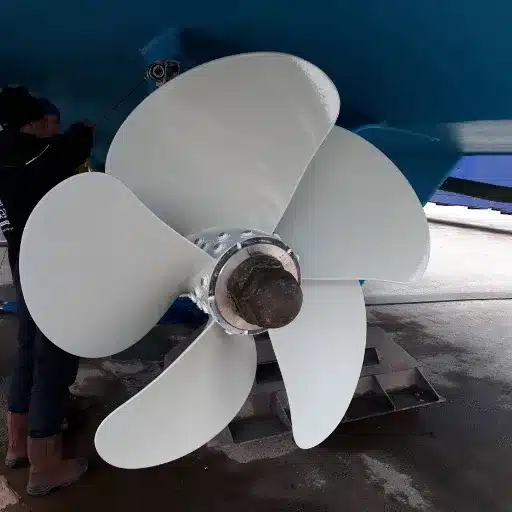
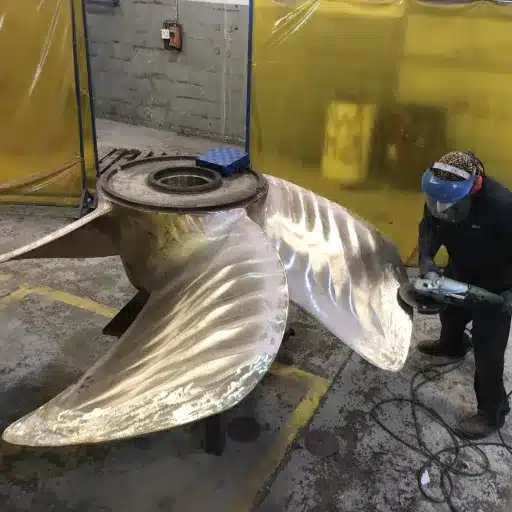
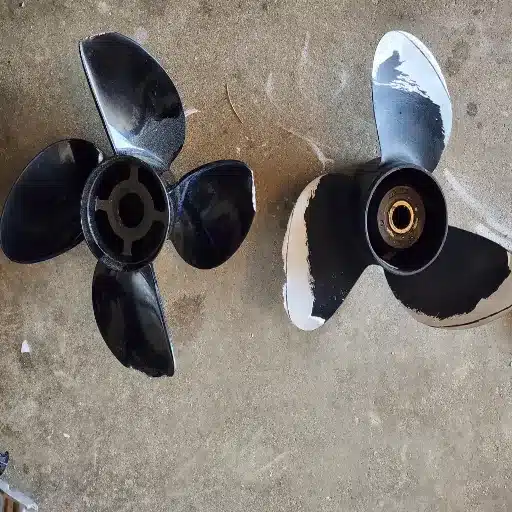
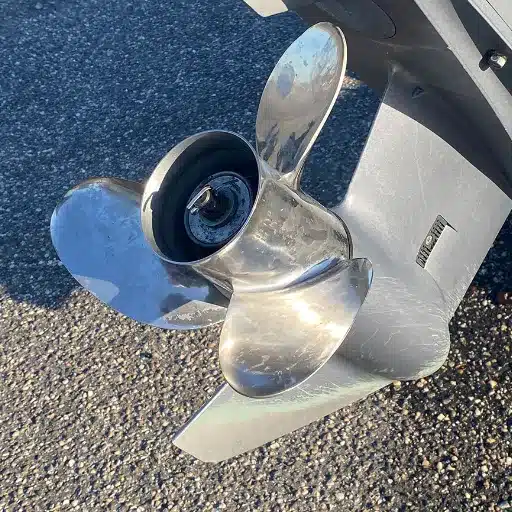
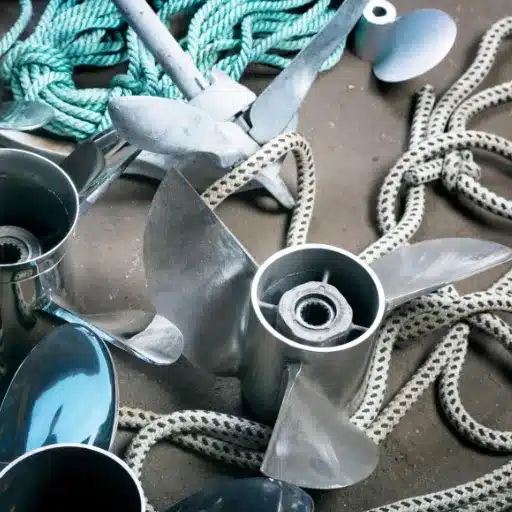
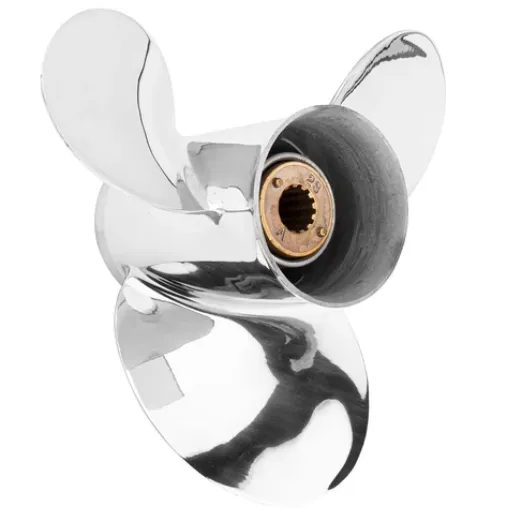
Stainless steel propellers offer a slightly enhanced maximum speed of 5-10%, better fuel efficiency, and a service life twice to three times longer than aluminum, while costing 3-4 times more than aluminum. Choose a stainless steel if you run over 150 horsepower and heavy loads in terms of hours or mostly need the maximum output. Go aluminum if your boat is shallow- or rocky-watered, its power is under 150 HP, or you’re looking for wallet-friendly features.
The aluminum vs stainless steel propeller decision sounds simple on the surface. Pay more, go faster. Spend less, fix it cheaper. Real-world ownership is more nuanced. Blade flex saps the performance you paid for. A bent stainless prop becomes a costly repair instead of a $40 fix. Fuel savings stack up over years, not weekends.
At Captain Marine, we have helped thousands of boat owners run the numbers and pick the right prop. This guide walks through the full comparison: material properties, head-to-head performance, true 5-year cost of ownership, and a use-case decision matrix. For a deeper look at the complete selection process, see our boat propeller selection guide. By the end, you will know exactly which propeller fits your boat, budget, and boating style.
Key Takeaways
- A stainless steel propeller offers from 5-10% of increased speed and 3-5% efficiency in fuel economy compared to aluminum, but at the higher upfront price, they usually cost three times more.
- At high RPM, aluminum blades warp 10-15%, wasting generated engine power, translating in reduced hole shot performance.
- The simplest decision line is the engine size on which almost everything depends: below 150 hp, aluminum usually works fine. Stainless, in comparison to aluminum, usually pays back over 150 hp.
- Typical use would probably give them a life of eight to 15 years for stainless steel as compared to three to five years for aluminum, effectively affecting time-to-return ratios.
- When stepping from an aluminum to a stainless propeller, reduce the pitch by 1-2 inches to keep WOT RPM within the range given by your manufacturer.
What Makes Aluminum and Stainless Steel Propellers Different
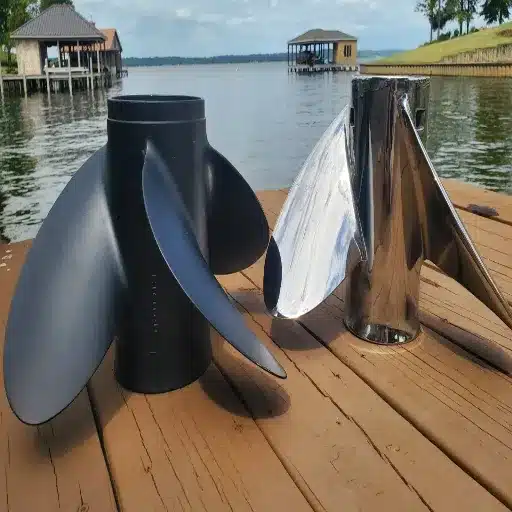
The aluminum vs stainless steel propeller question comes down to one physical fact: stainless steel has roughly five times the stress tolerance of aluminum. That single number drives every performance and cost difference you will read about.
Material Properties at a Glance
Typically, aluminum propellers are made from a marine-grade alloy, often called Mercalloy in the field of Mercury props, which are produced through casting. This material is lightweight, ductile, and machine-friendly. Stainless steel blades are produced by casting high-chromium alloy and finishing them with great precision. This material is heavier, stiffer, and more resistant to corrosion.
Density is the thing. Steel has about 2.8 times the weight of aluminum in a cubic inch. The gap magnifies through stiffness, so you have a long way to go. More powerful materials allow engineers to build blades to a lighter gauge in stainless steel, so less drag and better grip on the water.
Why Material Strength Matters on the Water
Strength is mandatory as propellers work under enormous stress. The tip of the blade will turn over 150 miles per hour in the water with the throttle wide open. Water pressure pushing against the edge of the blade tends to flex it back. But aluminum bows to this pressure, whereas stainless steel stands stiff.
That gap is noticeable when it comes to performance. One main problem that foil blades face is their deformation by 10 to 15% under load due to high RPM, and hence, the pitch is spoiled, resulting in a loss of engine power. In contrast, the special design of stainless blades, without this drawback, requires one horsepower of engine power to be converted into forward force.
Aluminum Propellers: Strengths and Limitations

Aluminum has been the default boat propeller material for decades. There are real reasons it stays popular, but there are also clear limits.
Cost Advantage and Repairability
The biggest reason boat owners stick with aluminum is price. A typical aluminum prop costs $80 to $200. A similar stainless model runs $300 to $800. That is a 3 to 4 times multiplier on initial outlay.
Repair costs follow the same pattern. A bent aluminum blade can usually be straightened, weld-repaired, and rebalanced for $40 to $120. Stainless repairs require specialized equipment and run $80 to $250 per blade.
Engine Protection in Shallow Water
Aluminum has one real advantage in rough conditions. When you hit a rock, stump, or sandbar, an aluminum blade bends or shears before the impact reaches the lower unit. The propeller sacrifices itself to save the gearcase.
A stainless prop transfers more of that impact energy to the shaft, seals, and gearcase. A hard strike can crack a gearcase or bend a prop shaft, turning a $200 propeller event into a $3,000 lower-unit repair. If you regularly boat in skinny water with submerged hazards, aluminum is the safer call.
Blade Flex: The Hidden Performance Tax
Aluminum’s flexibility is the price you pay for that lower cost. Under load, the blades twist slightly, reducing effective pitch by 10 to 15%. You will feel it as sluggish hole shot, slower top speed, and higher fuel burn at cruise.
The flex penalty grows with horsepower. On a 90 HP outboard, you might lose 1 to 2 MPH off the top. On a 250 HP outboard, the same prop can cost you 4 to 6 MPH and significantly slower time to plane.
Corrosion and Saltwater Realities
Aluminum corrodes faster than stainless steel, especially in saltwater. Without regular maintenance, pitting starts within months. Proper care, including anode replacement, freshwater rinses, and a corrosion guard spray, can extend aluminum prop life significantly. Our boat propeller maintenance guide covers the full corrosion prevention protocol.
Mercalloy and Premium Aluminum Variants
Not all aluminum props are equal. Mercury’s Mercalloy and similar premium alloys flex less than standard aluminum and resist corrosion better. They cost 30 to 50% more than basic aluminum but still come in well below stainless. For boaters who want most of the durability benefit without the stainless price tag, premium aluminum is a smart middle ground.
Stainless Steel Propellers: Performance and Premium Price
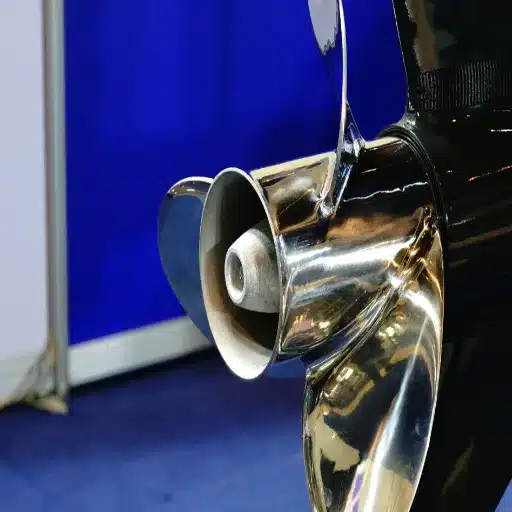
Stainless steel propellers are the choice of performance boaters, offshore anglers, and anyone who logs serious hours. The performance gains are real, but the trade-offs deserve a clear look.
Stiffness, Speed, and Hole Shot
The biggest win for stainless is blade stiffness. Because the blades do not flex under load, the engine’s power converts more efficiently into water displacement. Top speed gains run 5 to 10% on properly matched boats, which can be the difference between 38 MPH and 42 MPH on a typical bay boat.
Hole shot improves, too. Stainless props typically reach plane 0.5 to 1.5 seconds faster than aluminum. That feels significant when you are pulling a wakeboarder out of the hole or trying to outrun afternoon thunderheads. Blade design details like propeller cupping and propeller rake also influence how quickly a prop bites and how much lift it generates at the transom.
Fuel Efficiency Gains
Reduced blade flex means less prop slip, which means more of your fuel burn goes into forward motion. Real-world recreational boaters report 3 to 5% fuel efficiency gains after switching from aluminum to stainless. On commercial vessels with optimized stainless designs, fuel savings can reach 15 to 20%.
For a 225 HP outboard burning $3,000 in fuel per season, a 4% improvement saves $120 per year. Multiply over the 10-year lifespan of a stainless prop, and you recoup most of the $400 price premium. Real-world payback data from Beyond The Breakwater confirms that recreational boaters typically break even in 2 to 4 years, depending on hours and horsepower.
Durability and Lifespan
Stainless steel propellers commonly last 8 to 15 years with normal use. Aluminum props typically need replacement after 3 to 5 years. That 2 to 3 times longevity advantage compounds the total cost of ownership math in stainless’s favor.
Stainless steel also resists everyday wear better. Sand, light gravel, and surface scratches do not affect performance the way they degrade an aluminum blade. The prop you bought in 2026 still performs in 2036.
Brittleness and Lower-Unit Risk
Stainless steel is strong but more brittle than aluminum. Hit a rock hard enough and a stainless blade can crack or shatter instead of bending. Worse, the impact energy that aluminum would absorb gets transferred to your gearcase.
This is the single biggest reason to think twice before switching to stainless on a skinny-water boat. The propeller saves money. The gearcase repair erases the savings instantly.
Lead Time and Availability Issues
One overlooked cost of stainless is lead time. Popular sizes are often backordered for weeks, especially in spring. If you damage a stainless prop in May, you might be off the water until July. Aluminum props move faster through the supply chain and are usually in stock.
Head-to-Head Performance Comparison
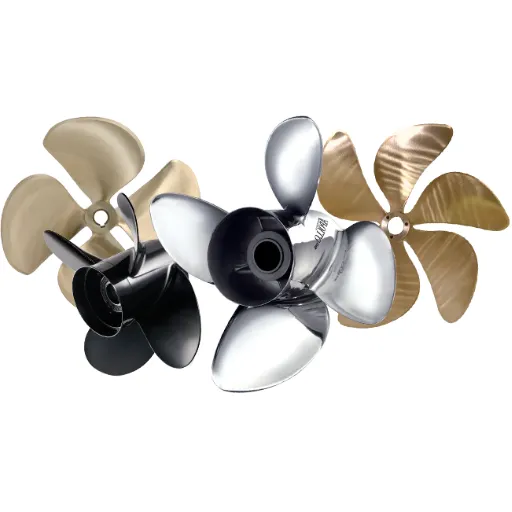
The aluminum vs stainless steel propeller debate is easier to settle when you look at side-by-side data.
Speed: 5 to 10% Difference Quantified
On a typical 21-foot bay boat with a 200 HP outboard, switching from aluminum to a properly sized stainless prop usually adds 3 to 5 MPH at WOT. That equates to roughly 8 to 12% gain. Lighter boats with smaller engines see less improvement; heavier boats with bigger engines see more. Blade count plays a role, too. Our 3 blade vs 4 blade propeller guide breaks down how extra blades affect grip, speed, and fuel burn.
Hole Shot and Acceleration
Time to plane improves measurably with stainless. A loaded 22-foot center console that takes 6 seconds to plane on aluminum often planes in 4.5 seconds on stainless. The thinner, stiffer blades grip water faster from a standstill.
Fuel Economy Across HP Bands
Fuel savings scale with engine size:
- Under 90 HP: 1 to 2% improvement, often not worth the cost
- 90 to 150 HP: 2 to 4% improvement, modest payback
- 150 to 250 HP: 3 to 5% improvement, meaningful savings
- Over 250 HP: 4 to 6% improvement, fastest payback
Performance Comparison Table
| Factor | Aluminum | Stainless Steel |
|---|---|---|
| Cost | 80 to 200 | 300 to 800+ |
| Top Speed | Baseline | +5 to 10% |
| Hole Shot | Baseline | 0.5 to 1.5 sec faster |
| Blade Flex | 10 to 15% at WOT | Minimal |
| Strength | Baseline | ~5x stronger |
| Fuel Efficiency | Baseline | +3 to 5% |
| Lifespan | 3 to 5 years | 8 to 15 years |
| Repair Cost | 40 to 120/blade | 80 to 250/blade |
| Lower-Unit Risk on Impact | Low (sacrificial) | Higher (rigid) |
| Best For | Under 150 HP, shallow water | 150+ HP, performance use |
True Lifecycle Cost: 5-Year Ownership Analysis
Sticker price is not the whole story. Real cost of ownership includes fuel, repairs, replacements, and resale value. Here is how the math plays out over 5 years.
Purchase Price Differential
Aluminum prop: $150. Stainless prop: $450. Initial gap: $300.
Fuel Cost Savings Modeling
For a 200 HP outboard logging 75 hours per year, burning 8 gallons per hour at $4 per gallon:
- Annual fuel cost on aluminum: $2,400
- Annual fuel cost on stainless (4% better): $2,304
- Annual savings: $96
- 5-year savings: $480
Repair and Replacement Frequency
Aluminum typically needs 1 to 2 minor repairs over 5 years ($60 each, so $90 average) plus replacement around year 4 to 5 ($150). Stainless steel usually lasts 5 years with no major repairs or replacements.
- 5-year aluminum total repair and replace: ~$240
- 5-year stainless total repair and replace: ~$50 (minor maintenance)
5-Year Total Cost of Ownership Table
| Cost Category | Aluminum | Stainless Steel |
|---|---|---|
| Purchase Price | $150 | $450 |
| Fuel (5 years at 75 hrs/yr) | $12,000 | $11,520 |
| Repairs and Replacement | $240 | $50 |
| 5-Year Total | $12,390 | $12,020 |
Over 5 years on a typical 200 HP setup, stainless saves around $370. The savings grow with higher horsepower, more hours, and longer ownership.
When Stainless Pays Back
The break-even point depends on three variables: engine size, hours per year, and fuel cost. As a rule of thumb:
- Under 50 hours per year on a 90 HP engine: stainless rarely pays back on fuel alone
- 75 to 150 hours per year on a 150 to 200 HP engine: stainless pays back in 3 to 4 years
- Over 150 hours per year on a 225+ HP engine: stainless pays back in 2 to 3 years
Which Material Fits Your Boat?
Use case drives the right choice more than horsepower alone.
Aluminum: Best For
- Casual lake and river boaters logging under 50 hours per year
- Engines under 150 HP
- Skinny water, rocky shorelines, or stump-filled lakes
- Budget-conscious replacements
- Backup or spare propellers
- Pontoon boats running displacement speeds
Stainless Steel: Best For
- Saltwater offshore boats running 150+ HP
- Performance applications (skiing, wakeboarding, tournament fishing)
- Anyone logging 75+ hours per year
- Bass boats, center consoles, and bay boats
- Boats running cruise speeds at 4,000+ RPM for extended periods
- Owners planning to keep the boat for 5+ years
Engine Horsepower Decision Threshold
The 150 HP line is the simplest rule of thumb. Below 150 HP, the performance gap shrinks and aluminum’s lower cost usually wins. Above 150 HP, blade flex on aluminum costs you more in lost performance than you save on purchase price.
Saltwater vs Freshwater Considerations
Saltwater accelerates corrosion on both materials, but it hits aluminum hardest. If you run primarily in salt, premium aluminum or stainless is strongly preferred over basic aluminum. Freshwater boaters have more flexibility, though sand and silt can wear aluminum faster than you might expect.
How to Switch from Aluminum to Stainless Steel
Upgrading propellers is not a one-for-one swap. The mechanics matter.
Pitch Adjustment: Why You Drop 1 to 2 Inches
Because stainless steel flexes less, it grips water more efficiently. That higher efficiency translates to higher RPM with the same pitch. To stay in your engine manufacturer’s recommended WOT range, drop the pitch by 1 to 2 inches when switching.
For example, if you currently run a 19-inch aluminum prop and your engine hits 5,800 RPM at WOT, a 17-inch or 18-inch stainless prop will keep RPM in spec.
WOT RPM Testing Protocol
After installing a new prop, run a full WOT test with a typical load:
- Bring the boat to a full plane on calm water
- Trim to your typical cruising trim angle
- Push throttle to WOT and hold for 5 to 10 seconds
- Read your engine’s max RPM
If RPM exceeds the manufacturer’s recommended range, the pitch is too low (add pitch). If RPM falls below the range, the pitch is too high (reduce pitch).
Hub System Compatibility
Different propellers use different hub systems (Flo-Torq, Pressed Rubber, Solid Hub). Make sure your new stainless prop ships with the correct hub kit for your engine. Mercury, Yamaha, and other OEMs each use slightly different hub interfaces.
Common Switching Mistakes
The three biggest mistakes when upgrading from aluminum to stainless:
- Keeping the same pitch: Causes the engine to lug under load, damaging the powerhead over time
- Skipping the WOT test: Locks in suboptimal performance you paid extra for
- Ignoring the hub kit: Causes prop to spin or fail catastrophically at high RPM
What About Composite Propellers?
Composite (carbon fiber and reinforced polymer) propellers are emerging as a third option in 2026.
Where Composites Fit
Composite props are lightweight, corrosion-proof, and increasingly popular on electric outboards. They cost about the same as aluminum but offer some performance benefits closer to stainless steel. The trade-off is impact resilience; composite blades can chip or shatter on hard strikes, and field repair options are limited.
Composite vs Aluminum vs Stainless
For most recreational boaters in 2026, composites are still a niche choice. The mainstream decision remains aluminum vs stainless steel propeller, with composites worth watching as electric propulsion grows.
Real-World Case Studies
Numbers in tables only go so far. Here is how the math plays out for three typical boaters.
Case 1: Mike’s 225 HP Offshore Boat
Mike runs a 24-foot center console with a 225 HP Yamaha on the Gulf Coast. He logs 120 hours per year, mostly running 30 miles offshore to fish. After switching from a 19-inch aluminum prop to a 17-inch stainless three years ago, he added 4 MPH at cruise, dropped his hole shot from 5.2 to 3.8 seconds, and noticed his fuel gauge moving slower on long runs. He calculated $180 per year in fuel savings, plus zero prop repairs versus two aluminum prop replacements over the previous five years. The $400 premium paid back in just over 2 years.
Case 2: Sarah’s 90 HP Pontoon
Sarah keeps a 22-foot pontoon on a small lake in Wisconsin. She runs the boat about 30 hours per year, mostly at cruising speeds for sunset rides with family. She considered upgrading to stainless when her old aluminum prop got nicked, but ran the math: at 30 hours per year on 90 HP, the fuel savings would never recoup the $300 price difference. She bought a $90 replacement aluminum prop. The right call for her use case.
Case 3: Jamal’s 150 HP Fishing Skiff
Jamal runs a 19-foot skiff with a 150 HP outboard for redfish trips in coastal flats. He hits oyster bars about once a year and clipped a submerged stump last spring. The aluminum prop bent but saved his gearcase. He decided to stick with aluminum, accepting slightly slower performance in exchange for cheaper repairs and lower-unit protection. For his style of fishing, the trade-off works.
Frequently Asked Questions
Is a stainless steel propeller worth the money?
Stainless steel propellers are worth the money for boats running 150+ HP, logging 75+ hours per year, or operating in saltwater. The 5 to 10% speed gain, 3 to 5% fuel savings, and 8 to 15 year lifespan typically pay back the higher upfront cost within 2 to 4 years. For casual under-150 HP recreational boaters, aluminum is usually the better value.
How much faster is a stainless steel propeller?
A properly sized stainless propeller adds 5 to 10% top speed over aluminum on most boats. That works out to 2 to 5 MPH gain depending on horsepower, hull design, and load. Larger engines see bigger gains.
Do stainless steel propellers save fuel?
Yes. Real-world boaters report 3 to 5% fuel efficiency gains after switching from aluminum to stainless. The savings come from reduced blade flex and lower prop slip, which means more engine power translates into forward thrust.
Will a stainless steel prop damage my outboard?
A properly sized stainless prop will not damage your outboard. Two scenarios cause damage: running the wrong pitch (engine over-revs or lugs) and hitting submerged objects (impact transfers to the gearcase). Drop pitch by 1 to 2 inches when upgrading from aluminum, run a WOT test, and avoid shallow rocky water.
How long does a stainless steel propeller last vs aluminum?
Stainless steel propellers commonly last 8 to 15 years with normal use. Aluminum propellers typically need replacement after 3 to 5 years. The 2 to 3 times longevity advantage is one of the biggest drivers of stainless’s lifecycle ROI.
Can I use aluminum propellers in saltwater?
Yes, but maintenance is essential. Rinse the prop after every saltwater outing, replace anodes annually, apply marine corrosion guard spray, and inspect monthly for pitting. Without that care, aluminum can corrode significantly within one season.
What pitch should I get when switching to stainless?
Drop pitch by 1 to 2 inches when upgrading from aluminum to stainless. A 19-inch aluminum prop typically translates to a 17-inch or 18-inch stainless prop. Verify with a WOT test on the water and adjust if your RPM falls outside the engine manufacturer’s recommended range.
Conclusion: Make the Right Call for Your Boat
The aluminum vs stainless steel propeller decision is rarely about “better” in absolute terms. It is about matching the material to your engine, your water, and your wallet.
Three quick takeaways:
- Under 150 HP, casual use, shallow water: Aluminum is usually the right call
- Over 150 HP, heavy hours, performance focus: Stainless typically pays back within 2 to 4 years
- Mixed use, premium budget, want longevity: Mercalloy aluminum or entry-level stainless splits the difference
The single best investment you can make is matching the propeller to your specific setup, not just the material. Pitch, diameter, blade count, and rake all matter as much as the metal. For deeper guidance on the full selection process, see our boat propeller selection guide.
If you are ready to upgrade your prop, browse Captain Marine’s propeller catalog or contact our engineering team for a free recommendation based on your boat, engine, and use case. We will run the numbers, recommend the right material and pitch, and back the purchase with our warranty so you spend more time on the water and less time second-guessing your prop choice.