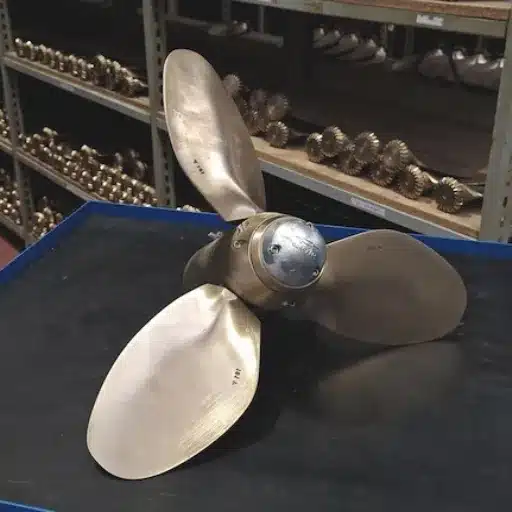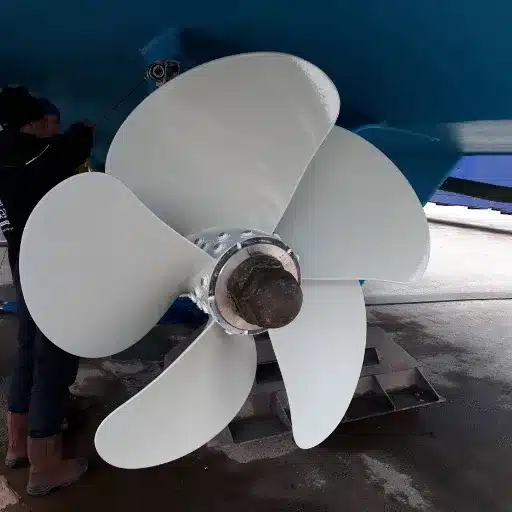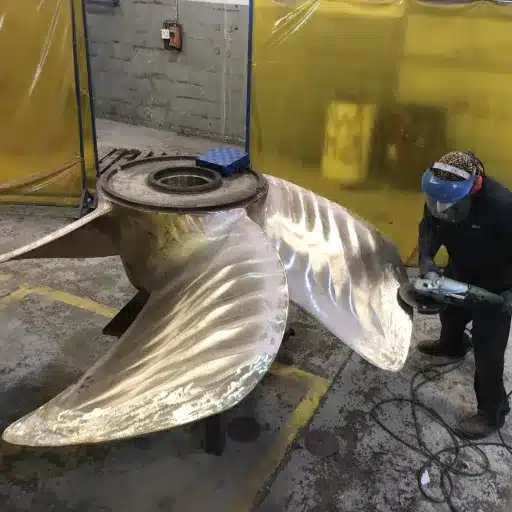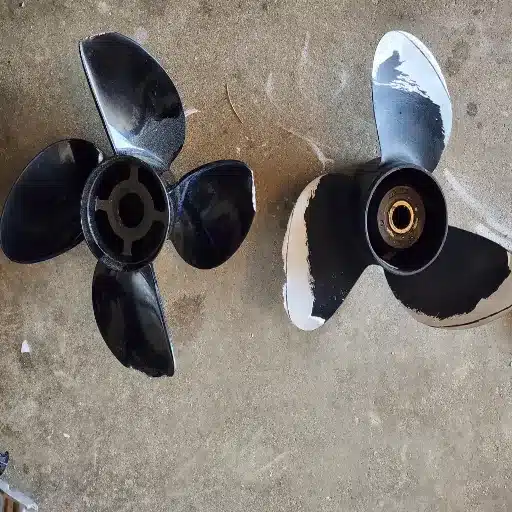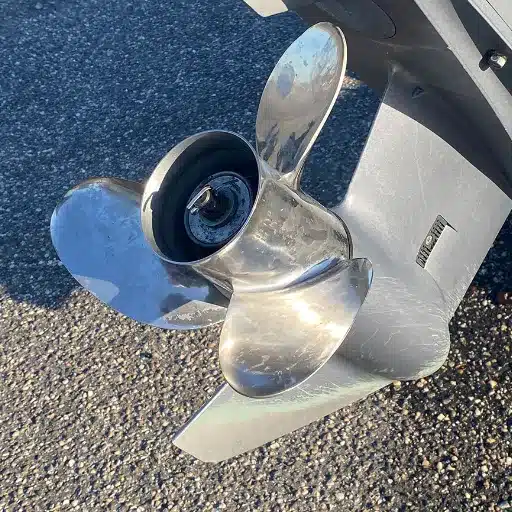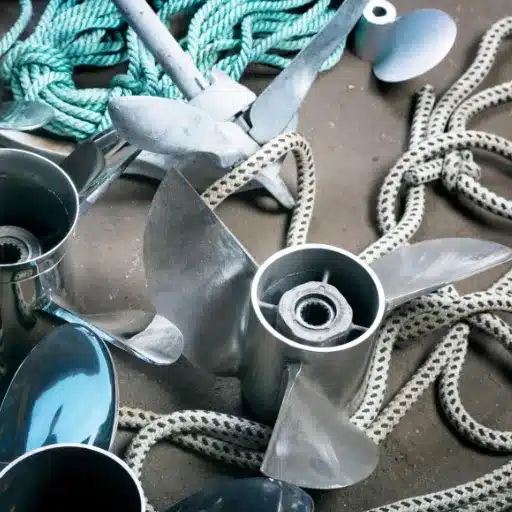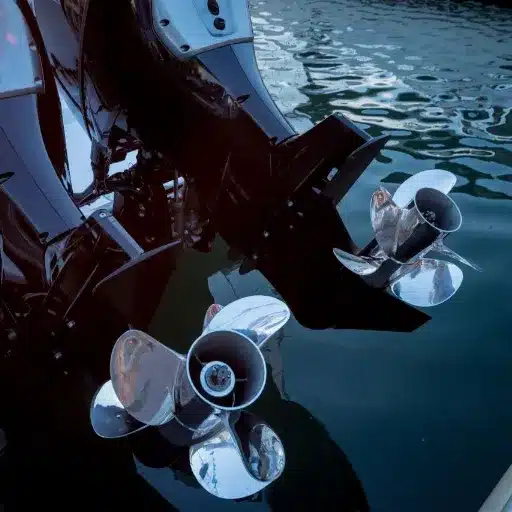
The appropriate boat propeller requires you to choose the correct diameter, pitch, and number of blades, and type of material, which will enable your engine to perform at its optimum power range during your regular boating operations. The five-step procedure enables you to collect engine specifications, read your existing propeller markings, identify your operational needs and select specifications which will help you achieve your performance objectives before testing at maximum throttle.
Jake purchased a 21-foot center console in 2024 but he chose to keep the previous owner’s propeller. After six months, he was using 22% more fuel for each offshore trip while his engine failed to achieve its maximum RPM capacity. The propeller change reduced his fuel expenses by almost $40 per journey while his cruising speed increased by 4 knots. The wrong prop creates problems that extend beyond basic inconvenience. The silent operation leads to financial losses that build up over time while your engine experiences gradual damage.
Props provide greater control to boaters who respect their ability to control their boats through propeller selection. The boaters start with horsepower, electronics, and hull design, and then use the prop that came with the boat. Their error results in 20-30% fuel waste, causing slow engine launches and damaging their engines faster than expected. The guide provides the specific procedure that marine engineers need to follow to match propellers to boats. The training will teach you how to interpret propeller markings, select the appropriate specifications for your activities, and test your equipment on water while avoiding common issues that boaters encounter each season.
Key Takeaways
- Running the right propeller would save you 20-30% on the fuel, whereas an improper propeller can result in damage to the engine that would mean an added cost.
- 1 inch pitch change causes an RPM crown of almost 150 to 200 rpm in open throttle; differences can be seen between all ctwined boats regarding propeller selection.
- Outline the five-step prop selection methodology – gather specs, read the markings, define use case, ensure goals are met, and finally test WOT to remove any guesswork involved in choosing propellers.
- Three-blade props hinder high-end speed because they may actually pick in quad-blade props for better acceleration and formwork.
- Stainless steel replaced aluminum in providing speed and durability by 5 to 10%, but it costs 3 or 4 times more.
The 5 Core Propeller Specifications Explained
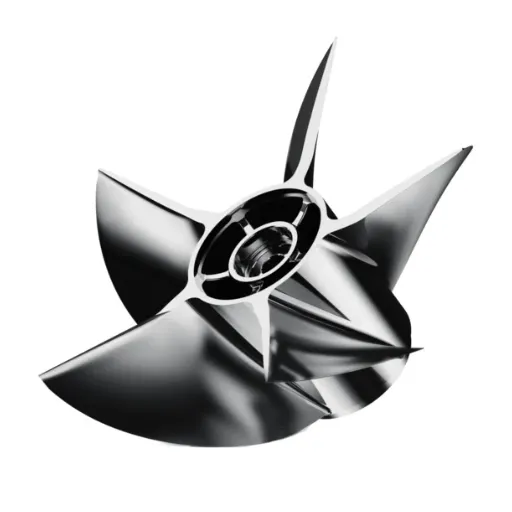
Before picking a propeller, know what the numbers and details practically mean. The propeller is actually specified by one of five mainline characteristics that all directly impact boat acceleration, handling, and fuel consumption.
Diameter: How Much Water Your Propeller Moves
The distance between the two blade ends of a propeller is known as its diameter. This is an indication of the amount of water that can be displaced by the propeller upon each turn. The bigger the diameter, the more the thrust and the quicker is the planning of the heavy boats, as well as the better the control at slower speeds. The smaller the diameter, the lesser is the drag and the higher the revolutions, which is most suitable for the lighter and faster hulls.
For each engine rating, engine manufacturers usually have a specified range of diameters. Going beyond or within this range can either overload or underload the engine. For further insights into the relationship between the diameter, the weight of the boat, and the design of the hull, check out the section below on how to choose the right propeller size. In the other article dedicated to the sub-topic of boat propeller sizing, you will find the ways of taking the measurements and the ready sheets to download. For the time being, just remember the basic fact that heavier boats demand more diameter while lighter boats require less.
Pitch: The Single Most Important Number
Pitch is the theoretical distance a propeller would move forward in one revolution if there were no slip. A 21-pitch prop would advance 21 inches per turn in a perfect world. In reality, water slips past the blades, so actual travel is less. However, pitch remains the primary tuning tool for engine performance.
Here is the rule every marine technician memorizes: 1 inch of pitch changes engine RPM by approximately 150-200 at wide-open throttle. If your engine over-revs, you need more pitch. If it cannot reach its rated RPM range, you need less. This relationship is why pitch is the first adjustment most professionals make when fine-tuning a setup. For a complete breakdown of pitch tuning strategies, see our article on what is the best propeller pitch for my boat. Our propeller pitch guide covers WOT testing, load adjustments, and fine-tuning in detail.
Blade Count: 3-Blade vs 4-Blade vs 5-Blade
Recreational boat propellers usually come with three blades. This type offers the best top speed, very good fuel economy under cruising conditions, and the least cost. Four-blade props have the tendency to drop a few speeds from the top end but have a tendency to reduce hole shot times, rough water handling, and tow sports performance. Additionally, the additional blade reduces the level of vibration, and this explains the fact that many cabin cruises and pontoons use them.
When one switches from a three-blade to a four-blade, WOT RPM usually decreases by 50-100 RPM. Make sure you have considered this change before taking the step. Physical five-blade propellers are quite rare on outboards; however, they can be found on performance and tow boats as they are designed to provide good traction with no cavitation for increased speed. For further reference on the topic, you may consider reading the differences and similarities of 3-blade vs 4-blade propellers for various vessels.
Rotation: Right-Hand vs Left-Hand
Rotation is about the direction the propeller is turning when seen from behind the boat. On most single-engine outboards, right-hand rotation is normal. At times, however, while using a couple of engines, you require a left-hand prop to oppose torque and straighten the boat in a line. If you have a couple of twins, it’s important that the props counter-rotate; rotating two right-hand props would be distinctly noticeable in pulling to one side and consuming excess fuel in overcoming an imbalance.
Material: Aluminum, Stainless Steel, and Beyond
Aluminum is the most common material for factory-installed props. It is affordable, easy to repair, and performs well for casual boating. However, aluminum blades flex by 10-15% at high RPM, which reduces efficiency and top speed. Stainless steel is stiffer, more durable, and can be shaped into more aggressive designs. Most stainless props deliver a 5-10% speed improvement over aluminum equivalents and resist damage from minor impacts that would ruin an aluminum blade.
Composite and carbon-fiber props are gaining traction, especially in electric propulsion systems. They are lighter than aluminum and corrosion-proof, but their long-term durability in impact scenarios is still being proven in the field. If you are deciding between aluminum and stainless steel, our aluminum vs stainless steel propeller comparison breaks down lifecycle costs and performance differences in detail.
Step-by-Step Propeller Selection Process
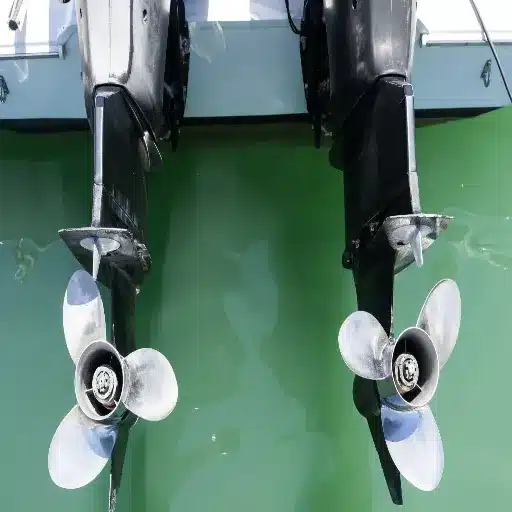
Now that you understand the specs, here is the exact process we recommend. Follow these five steps in order, and you will eliminate most of the guesswork from propeller selection.
Step 1: Gather Your Engine Specifications
Start by focusing on the constants, regardless of change: horsepower for your engine, the RPM range at wide-open throttle recommended, gear ratio, and propeller diameter recommended. This figure is found in your owner’s manual or perhaps from the manufacturer’s website and is put down in writing. On these numbers, every other judgment is based.
For example, in a propeller outline within Marine Technology Inc’s The Propeller Selection Guide, there may be a 150hp outboard’s WOT range as 5,000 to 6,000 revolutions per minute if its gear ratio is 1.86:1, and therefore, possible propeller diameter sizes will also be given. In this situation, the propeller must enable the engine to rise or fall slightly beyond the center of that range when subjected to normal load. If your current prop allows the engine to reach only 5,200 RPM with a light crew load, then it was certainly passed and is costing you some performance.
Step 2: Check Your Current Propeller Markings
Examine propeller blades’ hubs or barrels. You will note there are numbers stamped on the outer side of the hub that look like “14.25 x 21” or “14 1/4 x 21P.” The first number is an inch figure and indicates the diameter. The second number usually is the pitch. Sometimes you will also find a pair of letters that identifies the rotation (RH for right-hand, LH for left-hand) or a manufacturer part number.
If the numbers are already worn off, use a tape measure to measure across the blade tips for the diameter. A pitch gauge is required to determine local prop shop variation. Just knowing the diameter without details makes use of this knowledge in the beginning to assess.
Step 3: Define Your Primary Use Case
Be real about how you really use your boat, and not how you daydream. A single-man bass angler plying skinny water is about to require a totally different setup from your family pontoon captain, who makes a point of hauling two families of four people each out on weekends. The common applications and what they require appear below:
- Fishing: Quick hole shots, precise low-speed control, fuel efficiency at trolling speeds.
- Tow sports: Strong midrange acceleration, a smooth pull, but minimal bowrise.
- Cruising: Smooth riding, good fuel economy at cruise RPM, quiet operation.
- High-performance: Maximum top speed, minimum drag, and some aggressive cupping.
- Commercial: Durability, all-day reliability, and amount-carrying capability.
Step 4: Match Propeller Specifications to Performance Goals
Use your engine specs and use case to narrow your options. Start with a diameter in the manufacturer’s recommended range. Then choose pitch so your expected WOT RPM lands in the middle of your engine’s recommended range. Add or subtract blade count based on whether you prioritize top speed or hole-shot acceleration.
When Sarah runs a pontoon rental fleet on Lake Travis, she switched from three-blade aluminum props to four-blade stainless models and saw her boats plane 30% faster with full passenger loads. WOT testing showed each engine was now hitting 5,800 RPM, right in the sweet spot. Her fuel costs dropped, and customer complaints about sluggish performance disappeared entirely.
Want expert help matching specs to your boat? Book a free propeller consultation with Captain Marine, and we will walk you through the numbers.
Step 5: Test at Wide Open Throttle and Fine-Tune
On-water testing is non-negotiable. Load your boat with a typical crew and gear, then run it at wide-open throttle on calm water. Note the RPM reading on your tachometer. If you are below the recommended range, drop pitch by one or two inches. If you are above the range, add pitch. Re-test until your engine hits the middle of its WOT range under normal load.
Test in the conditions you actually boat in. A prop that tests perfectly on a cool morning with half a tank of fuel may struggle on a hot afternoon with a full load of ice, fish, and passengers. West Marine’s propeller selection guide emphasizes this point: real-world load is the only load that matters. For more details on testing methodology, see West Marine’s propeller advisor.
Propeller Selection by Boat Type
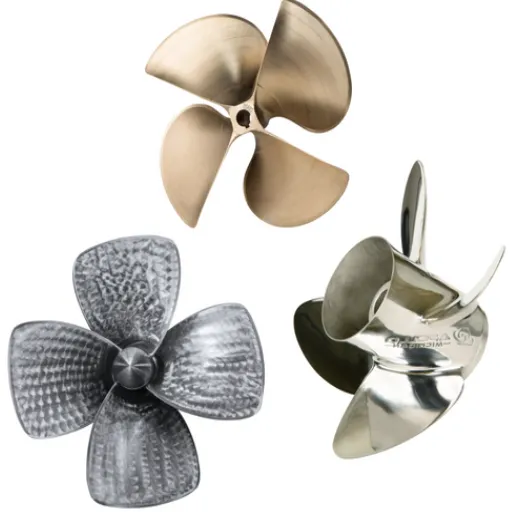
Different hull designs place different demands on a propeller. Here is how to think about selection for the most common boat categories.
Fishing Boats
Center consoles and bay boats need quick planing to reach fishing spots fast, then stable low-speed operation for drift fishing and trolling. A three-blade prop with moderate pitch and aggressive cupping usually delivers the best combination. If you fish heavy loads regularly — livewells full, multiple anglers, ice chests — consider bumping up to a four-blade to improve hole-shot performance without overworking the engine. Salt Water Sportsman’s propeller selection advice also emphasizes matching blade count to load for offshore anglers.
Pontoon Boats
Pontoons are heavy for their length and present a large profile to the wind. They need the diameter and blade area to push that weight onto the plane. Four-blade props are almost always the better choice here. They provide better handling, reduce the porpoising common on tri-toons, and improve fuel economy at cruise speeds between 18 and 25 knots. For pontoon-specific recommendations, see our guide to the best propellers for pontoon boats.
Ski and Wake Boats
Acceleration is instant at the start, the middle range is very strong, and the bow is not raised much; this is to facilitate skiers and wakeboarders popping up quickly. boats with four and five blades; they look hard to beat in this application because they grip the water well at low speed and maintain their RPM well under load. (Forget top speed: this is all about the acceleration and pull.)
Cruisers and Runabouts
The kind of quality riding, which goes with efficient fuel management, is what characterizes most cruisers, together with moderate degrees of sound emission. Many will find that a near-perfect marriage with a three-blade stainless prop that trims out and hammers pretty holeshot and midrange, as well as yielding the best cruise mileage. In rough water or heavy load situations, a four-blade propeller reduces vibration and improves tracking with minimal speed penalty.
High-Performance Boats
Speed Hulls are about Minimum Drag and Max RPM, which saves a Lot of Fuel. Three-Blade stainless steel propellers with a high pitch, aggressive rake, and precision cupping are a common fit in this environment. As every fraction of an inch matters for these crafts, most performance boaters will try several different props before ending up at the right combination. Composite propellers are also trying to be more acceptable to the lightweight and easily tunable fact.
Commercial and Work Boats
In the world of commercial boat operators, a big trade-off is uptime versus longevity of the component connected to its operating costs. Hence, although expensive upfront costs of stainless steel, it pays for itself rapidly in commercial use because it holds up better when hit and holds geometrical precision longer than aluminum does. Four-blade propellers are very common in towing and pushing applications where bite at slow speeds counts more than the top-end speed of the vessel.
Common Propeller Problems and How to Avoid Them
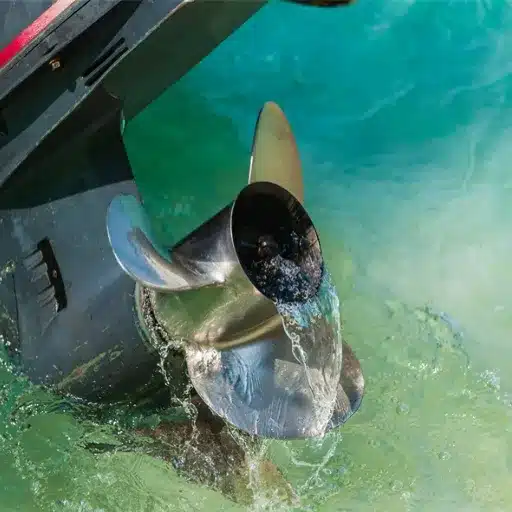
Even the right propeller can cause problems if it is damaged, improperly installed, or poorly matched to conditions. Here are the issues we see most often and how to prevent them.
Cavitation vs Ventilation: Know the Difference
Cavitation happens when water pressure drops so low around the blade that bubbles form and collapse. The collapsing bubbles erode the blade surface and create a rattling sound. It is usually caused by damaged blades, extreme angles, or props that are too small for the engine.
Ventilation occurs when air gets drawn into the propeller from the surface or from exhaust gases. The prop loses grip, RPM spikes, and acceleration suffers. It is common with engines mounted too high, props with too little diameter, or aggressive trim angles. Raising the engine slightly or switching to a prop with more blade area usually fixes it. If you are diagnosing persistent ventilation or cavitation burn, our cavitation vs ventilation guide walks through symptom checks and fixes step by step.
Slipping, Over-Revving, and Engine Lugging
Slipping occurs when the prop is not efficiently translating the engine power into forward motion. You feel like the engine is revving away, but the boat barely accelerates. The causes include damaged blades, worn hubs, or props that are really under-pitched.
Over-revving occurs when the propeller’s pitch is exceptionally low or has a very decreased diameter. The engine keeps spinning beyond its secure limits. This only causes internal damage – lugging, on the other hand. Adding too much pitch to the propeller makes it difficult to reach the power band of the engine, overheats the head, and allows it to burn extra fuel. Both destroy longevity. Our boat propeller troubleshooting guide takes you from your symptoms to their sources, so you can get to the bottom of it.
When Cupping and Rake Matter
Cupping is a small lip rolled into the trailing edge of each blade. It increases pitch at the blade tip, which improves hole shots and reduces slip. Rake is the angle of the blade relative to the propeller hub. Higher rake angles push water aft more aggressively, which can create bow lift on some hulls. Too much rake on the wrong hull can cause ventilation or handling quirks. For a complete engineering breakdown of how cup and rake affect bow lift and bite, read our propeller cupping and rake deep-dive. Macomb Marine Parts also covers cupping and rake basics in their propeller size chart guide, which is worth a read if you want to go deeper on blade geometry.
Propeller Materials: Which One Is Right for You?
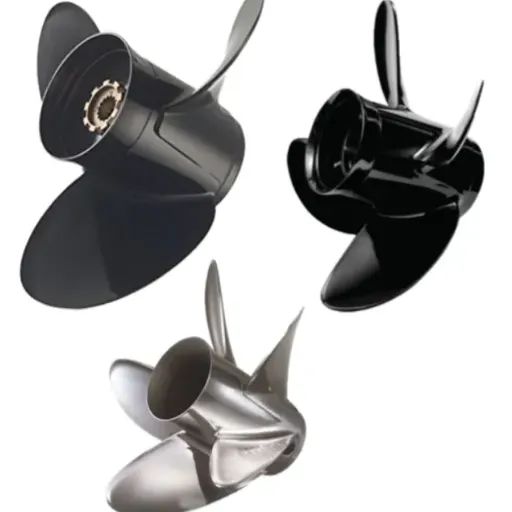
Material choice affects performance, durability, price, and repairability. Here is how the three main options compare.
Aluminum: The Practical Choice
Aluminum props cost between $75 and $250, making them the default for most factory installations. They perform adequately for casual boating, are easy to repair, and cause less damage to your lower unit if you strike an object because the blades are designed to sacrifice themselves. The downsides are blade flex at high RPM, shorter lifespan in saltwater, and lower top speed compared to stainless.
Stainless Steel: The Performance Investment
Stainless props range from $300 to $700 or more. They are stiffer, thinner, and can hold more precise geometry. That translates to better acceleration, higher top speed, and superior fuel economy. They also withstand minor impacts that would destroy an aluminum prop. The tradeoff is cost and the fact that a severe strike can transfer more damage to your lower unit gears instead of breaking the propeller.
Composite and Emerging Materials
Composite and carbon-fiber props made from reinforced polymers are starting to appear on electric outboards and high-performance applications. They are corrosion-proof, lightweight, and can be molded into complex shapes that would be expensive to machine in metal. Durability against impact remains the biggest question mark, and availability is limited compared to aluminum and stainless steel. As electric propulsion grows, specialized designs are becoming more relevant. Learn more in our guide to electric boat propellers.
Installation, Maintenance, and When to Replace
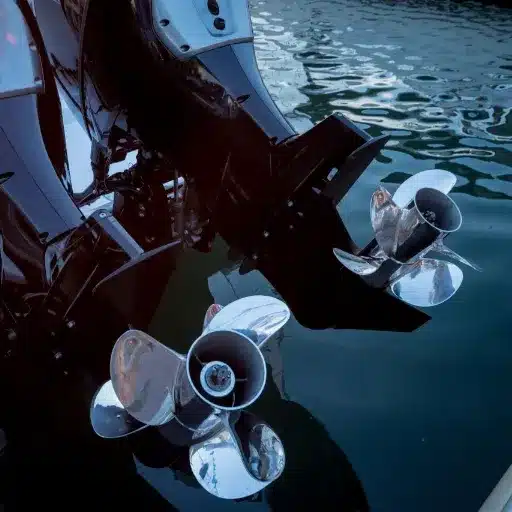
Selecting the right propeller is only half the battle. Proper installation and maintenance protect your investment and ensure consistent performance.
Basic Installation Checklist
Incorporate a new thrust washer and hardware every time a propeller is installed. Lubricate the prop shaft lightly with marine-grade waterproof grease to alleviate galvanic corrosion. Tighten the nut to the manufacturer’s torque — too loose and the prop wobbles; too tight and you gall the threads. Put a cotter pin or locking tab on such that it cannot back off. For detailed torque specifications and a printable checklist, see our propeller installation guide.
Maintenance Best Practices
Check out your propeller after each trip around a pond, especially if it’s shallow or has lots of debris. See if it has any nicks, if the edges are bent, or if there are reels of fishing line wound around the middle, or if it is pitting. A tiny ding may not seem like much, but it upsets the water flow and causes cavitation, which in turn eats away at the blade in the long run.
Get your propeller taken care of by a professional at least yearly if out boating heavily. Most prop shops would be able to straighten up bent blades, re-pitch the damage if your needs have changed, and also check the hub for wear. This can usually be achieved for under $100, which is still a far cry from shelling out for a new, damaged lower unit. For a maintenance schedule and the criteria for inspection per season, read our propeller maintenance guide.
Signs It’s Time for a New Propeller
Replace your propeller if you notice any of the following:
- Persistent vibration that balancing does not fix.
- Cracks in the hub or blade roots.
- Blade tips that are worn thin from erosion.
- RPM changes of 200 or more without explanation.
- Visible bends or cracks that cannot be safely repaired.
Mike, a charter captain out of Miami, ignored a small ding on his propeller for an entire season. The resulting vibration damaged his cutless bearing and cost him $1,200 in repairs. A $180 propeller replacement would have prevented it entirely. Do not let minor damage become a major expense.
Quick Reference Propeller Size Chart
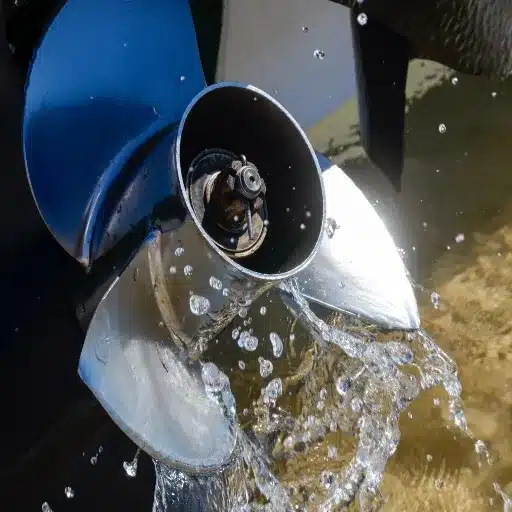
Use this table as a starting point for selecting propeller diameter based on engine horsepower. Always verify against your engine manufacturer’s specific recommendations and fine-tune with on-water testing.
| Engine HP | Recommended Diameter (in.) | Typical Pitch Range (in.) | Common Material |
|---|---|---|---|
| 8-20 | 8-9 | 8-11 | Aluminum |
| 25-40 | 9-10.5 | 10-14 | Aluminum |
| 50-70 | 10.5-11.5 | 12-17 | Aluminum/Stainless |
| 75-115 | 12-13.5 | 13-21 | Aluminum/Stainless |
| 135-175 | 13.5-15 | 17-23 | Stainless/Aluminum |
| 200-250 | 14-15.5 | 19-25 | Stainless |
| 250-350 | 15-16.5 | 21-27 | Stainless |
| 350+ | 16-18 | 24-32 | Stainless/Custom |
Remember that boat weight, hull design, and altitude all affect these ranges. At elevations above 5,000 feet, drop pitch by 1-2 inches to compensate for thinner air and reduced engine output. Game and Fish Magazine notes this adjustment in their propeller selection overview, and it is a detail many inland boaters overlook.
Frequently Asked Questions
What do the numbers stamped on my propeller mean?
The two primary measurements are the diameter and pitch, both of which are done in inches. For example, “14.5 x 19” refers to 14.5 inches in diameter and 19 inches for pitch. Sometimes, additional letters may imply the rotation direction, the manufacturing series, or cupping.
How much does it cost to replace a boat propeller?
Coming from the cost of aluminum props, it can range from $75 to $250; for stainless steel props, go up to $300 to $700, while the custom or high-performance crafted props go for well over $1,000. All that labor will mean next to nothing should you decide to stick to DIY, as most boaters can swap a prop in less than 15 minutes with basic hand tools.
Can I use the same prop for freshwater and saltwater?
Yes, but salt water will only expedite the corrosion on aluminum props. So, rinse the prop out with fresh water after each outing in salt water and regularly inspect it. The others say stainless steel is chosen to be used because, as it is known, steel does not corrode when exposed to salt, which is very common in coastal areas.
Does altitude affect my propeller choice?
Yes, it will matter. Engines lose about 3% of their power at every 5,000 feet above sea level since the air is thinner. Most would opt to drop one to two inches of pitch height at high altitude in order to help the engine achieve its rated rpm range.
Should I carry a spare propeller?
If you intend to launch your boat in places like submerged obstructions, rocks, or debris, a spare will be useful. It doesn’t take up much space, and if you hit an object and demolish your main prop, a spare prop, nut, and cotter pin may save what is supposed to be a relaxing weekend on the water. It is pretty much obligatory among the offshore angling fraternity.
What’s the best propeller brand?
The best brand depends on your engine, boat, and budget. Mercury, Yamaha, and Suzuki make excellent OEM props tuned for their engines. Aftermarket manufacturers like Michigan Wheel, SOLAS, and Powertech offer strong alternatives, often at lower prices. At Captain Marine, we take an engine-agnostic approach and engineer custom propellers based on CFD analysis rather than one-size-fits-all templates. If you want a prop designed specifically for your hull, explore our custom propeller engineering services.
Conclusion
Choosing a propeller correctly is less guesswork and a rather systematic process that starts from the hard specifications of the engine, down to what is narrowed down depending on the way people will use it in real life, and then, finally, there will be on-water confirmation. Using the boat propeller selection guide with the five-step process in the article will save your fuel from being saved and keep your engine working as efficiently as possible every time you leave the dock.
Start reviewing your engine specs before you finally get back to the propeller’s names. Really implement your use of the boat, ensure that the diameter and pitch match the expected performance, and ensure all information is verified in the WOT test at normal load. If you have any doubt at any step, or if your boat has some additional weird demand, Captain Marine’s engineers are here ready to help you. Contact us for a free consultation and build a perfect propeller for you in your upcoming season.