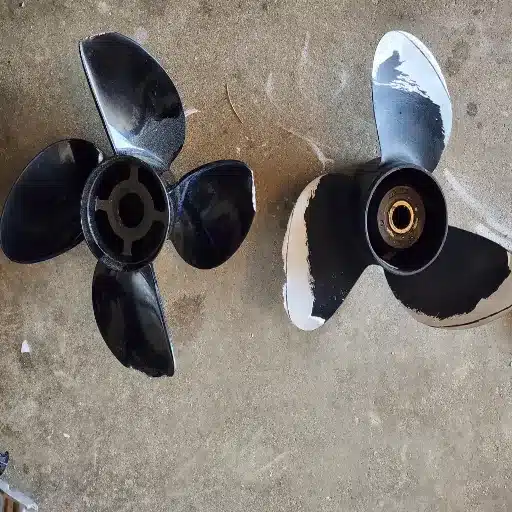
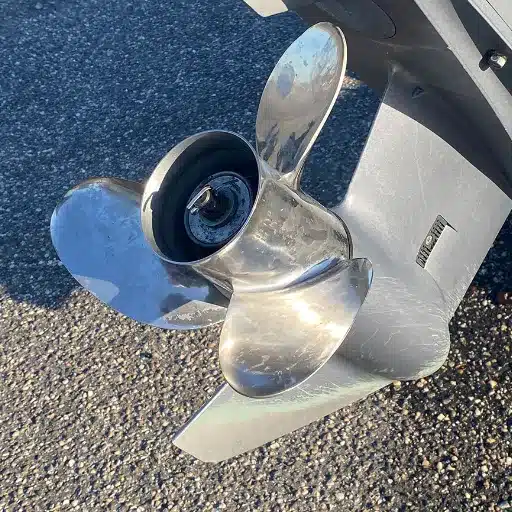
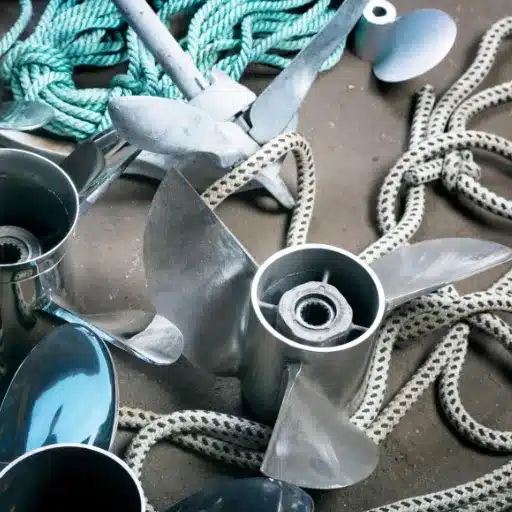
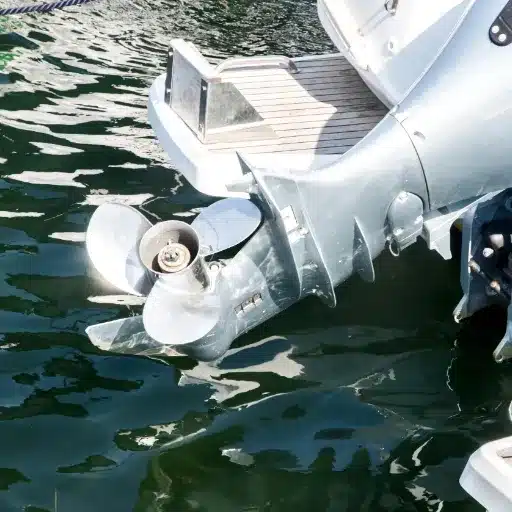
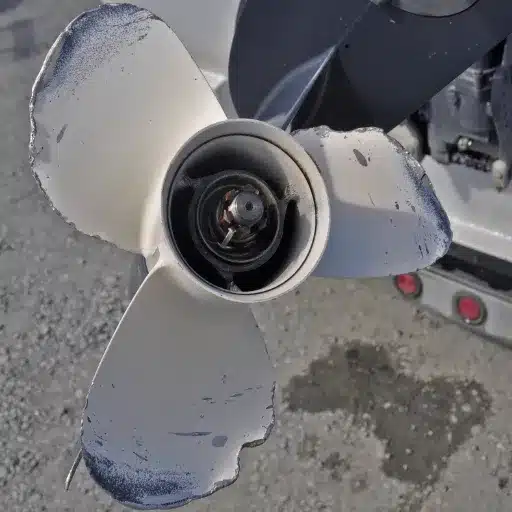
Boat propellers are made from four core materials: aluminum, stainless steel, bronze alloys, and composites. Aluminum dominates recreational boating because it is affordable and easy to repair. Stainless steel leads in performance and saltwater durability. Bronze and nickel-aluminum bronze (Nibral) rule inboard and commercial applications. Composites offer corrosion-proof convenience with replaceable blades.
But the real question is not what propellers are made of. It is which material belongs on your boat.
Most boaters face this decision at the worst possible time. A blade bends on a weekend trip. A prop shop quotes a repair. The counterman asks whether you want aluminum or stainless, and suddenly, you are guessing.
The material you choose affects price, speed, fuel efficiency, repair cost, and even whether a strike damages your lower unit. At Captain Marine, we help boaters cut through the confusion every day. This guide breaks down every common boat propeller material with real specs, 2026 pricing, and a simple framework for choosing the right one.
Key Takeaways
- Aluminum is the lightest and cheapest boat propeller material, ideal for freshwater and engines under 150 HP.
- Stainless steel offers the best strength, speed, and saltwater corrosion resistance, but costs more to buy and repair.
- Bronze and Nibral dominate inboard and commercial boats because they resist cavitation and seawater corrosion.
- Composite props are corrosion-proof and let you replace individual blades, making them popular for shallow or debris-filled water.
- The best material depends on your water type, horsepower, budget, and whether you prioritize performance or lower-unit protection.
What Are Boat Propellers Made Of?
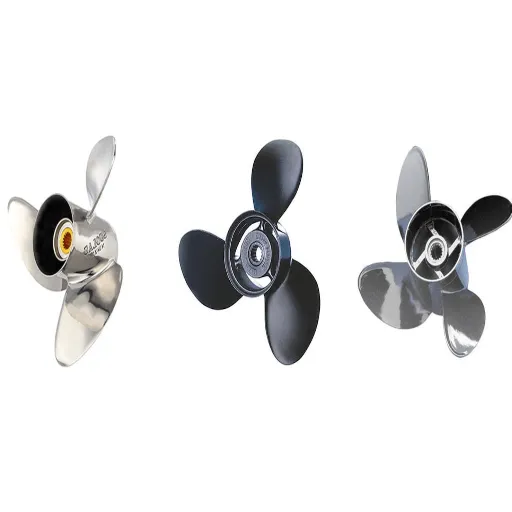
Modern boat propellers use metals and composites. Makers choose each material for strength, weight, corrosion resistance, and cost. Each one behaves differently in the water, during a strike, and over the years of ownership.
If you already know you need a saltwater prop, our guide to the best propeller material for saltwater focuses specifically on corrosion resistance and marine durability. For the broader comparison, keep reading.
| Material | Tensile Strength | Weight | Cost Range | Best For |
|---|---|---|---|---|
| Aluminum | ~40,000 psi | Lightest | $60-200 | Recreational, freshwater, <150 HP |
| Stainless Steel | ~80,000 psi | Heavy | $300-800+ | Saltwater, performance, 150+ HP |
| Manganese Bronze | ~65,000 psi | Medium | $200-600 | Inboards, freshwater, budget saltwater |
| Nibral (Ni-Al-Bronze) | ~90,000 psi | Medium | $400-1,500+ | Commercial, inboard, heavy saltwater |
| Composite / Plastic | Varies | Light | $150-350 | Shallow water, trolling, and backups |
| Carbon Fiber | Varies | Very light | $800-3,000+ | High efficiency, racing, premium cruising |
That table is the fastest way to compare boat propeller materials. The sections below explain why each number exists and what it means on the water.
Aluminum Propellers
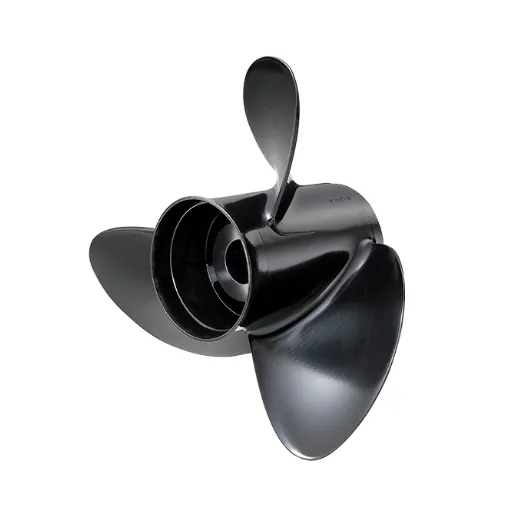
Aluminum is the most common boat propeller material for good reason. It is lightweight, inexpensive, and easy to repair. An aluminum propeller spins up quickly, which helps smaller engines reach their operating RPM range without straining.
The trade-off is softness. Aluminum blades are thicker than stainless steel blades to compensate for lower strength. That extra thickness creates more drag and slightly reduces top speed and fuel efficiency.
When aluminum hits a submerged object, it bends. That sounds like a weakness, but it is actually a design feature. The propeller acts as a sacrificial part, absorbing impact that might otherwise damage the prop shaft, gears, or lower unit.
Aluminum propellers come in two main types. Die-cast aluminum is made by pouring molten aluminum into a mold. It is brittle and usually cannot be repaired once a blade cracks. Sand-cast aluminum is stronger and more ductile, so shops can straighten and re-pitch it.
For the head-to-head comparison, read our aluminum vs stainless steel propeller guide.
Best for: recreational boats, freshwater lakes and rivers, engines under 150 HP, casual boaters, and anyone who wants a low-cost spare prop.
Limitations: bends and nicks easily, corrodes faster in saltwater, shorter lifespan than stainless steel, and thicker blades reduce efficiency.
When Jake bought his first bass boat, the dealer fitted it with a 17-pitch aluminum prop. He boated almost exclusively on a freshwater reservoir. Over three seasons, he picked up two small dings from submerged brush.
Each repair costs $65. A new aluminum prop would have cost $180. The aluminum material saved him money and protected his lower unit every time he brushed something hard.
Stainless Steel Propellers
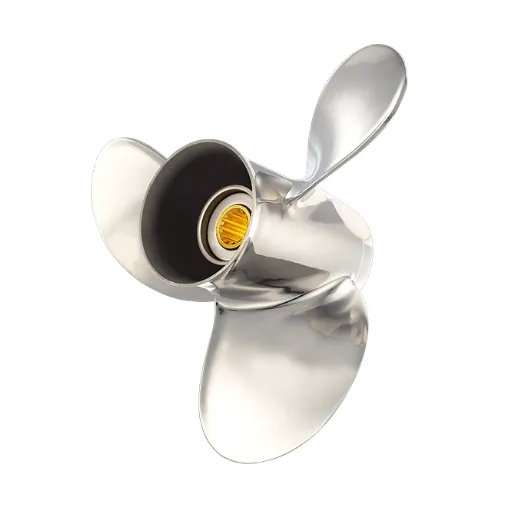
Stainless steel is roughly five times stronger than aluminum. That strength lets manufacturers make thinner blades with less drag. The result is better acceleration, higher top speed, and improved fuel efficiency.
Stainless steel also holds its shape under load. The propeller maintains its designed pitch and cup when you push the throttle. Corrosion resistance is another major advantage, especially in saltwater.
Marine-grade stainless steel, typically 316 or duplex alloys, forms a protective oxide layer that resists pitting and rust. With proper anode protection and rinsing, a stainless prop can last 8 to 15 years or more.
The downside is cost and repair expense. A quality stainless steel propeller typically costs $300 to $800 or more. Repair bills run $100 to $400, depending on damage. Hard impacts can also transfer force directly to the drivetrain because stainless steel does not bend as easily as aluminum.
Best for: saltwater fishing, offshore center consoles, ski and wake boats, high-horsepower engines over 150 HP, and performance enthusiasts.
Limitations: higher purchase price, expensive repairs, heavier weight, and can transfer impact damage to the lower unit.
Maria runs a charter boat out of Florida with twin 250 HP outboards. She switched to stainless steel props after replacing three aluminum props in one season.
The stainless props cost more upfront, but they held their pitch through hundreds of charter trips and resisted the constant salt spray. Her fuel efficiency improved enough that she estimated the upgrade paid for itself within two seasons.
Ready to explore stainless steel options? If performance, saltwater durability, or heavy-load boating matters to you, a precision-engineered stainless steel propeller can transform your boat’s efficiency. Explore Captain Marine stainless steel propellers →
Bronze and Nibral Propellers
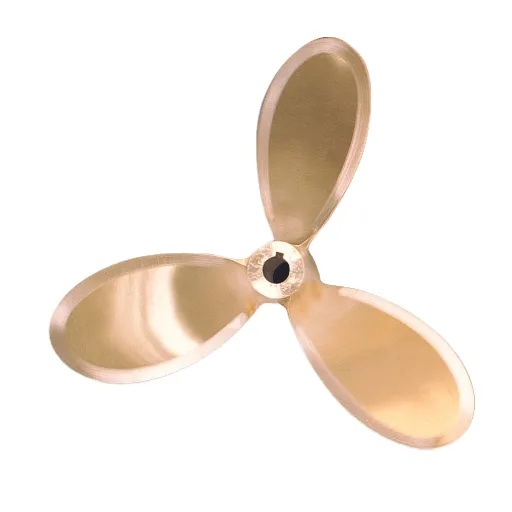
Bronze propellers have been used in marine applications for over a century. They are common on inboard boats, sailboat auxiliary engines, and commercial vessels. Bronze offers a middle ground between aluminum and stainless steel: stronger than aluminum, less expensive than high-end stainless, and naturally corrosion-resistant.
Manganese Bronze
Manganese bronze is a copper-zinc alloy with added manganese and iron for strength. Typical tensile strength runs around 65,000 psi. It machines and repairs well, which makes it popular for propeller shafts, bearings, and smaller propellers.
The catch is saltwater vulnerability. Manganese bronze contains significant zinc, which makes it susceptible to dezincification. In this process, zinc leaches out of the alloy. It leaves a porous copper surface that weakens the blade. This alloy can also cause galvanic corrosion when paired with aluminum or stainless steel parts without proper isolation.
Nickel-Aluminum Bronze (NAB / Nibral)
Nibral is the premium bronze alloy for marine propellers. Its typical composition includes copper, aluminum, nickel, iron, and manganese. Tensile strength reaches approximately 90,000 psi. That is higher than many stainless steels.
Nibral also resists cavitation erosion and seawater corrosion better than manganese bronze. Large commercial propellers, tugboats, fishing vessels, and high-performance inboard boats often use Nibral. It can withstand heavy loads and long service intervals. Repair shops can weld and straighten Nibral, though the work requires specialized equipment.
According to the Copper Development Association, nickel-aluminum bronze forms a protective oxide film in seawater that gives it excellent long-term durability.
Best for: inboard boats, commercial fishing vessels, workboats, sailboat auxiliaries, and long-distance cruisers.
Limitations: heavier than aluminum, higher cost than basic bronze, requires galvanic isolation from dissimilar metals.
Tom operates a 36-foot lobster boat in Maine with a single diesel inboard. His Nibral propeller has been in service for twelve years with routine polishing and anode checks.
During that time, he has seen aluminum props on similar boats replaced three times. The Nibral material costs more upfront, but its resistance to cavitation and seawater corrosion made it the clear choice for his working boat.
Composite and Carbon Fiber Propellers
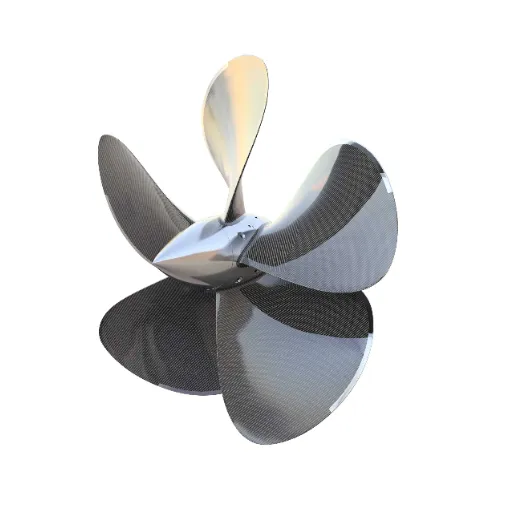
Composite propellers are made from fiber-reinforced plastics or advanced polymers. They are corrosion-proof, lightweight, and often less expensive than stainless steel. For a dedicated look at this category, see our guide to composite propellers.
Traditional composite props work well on trolling motors, small outboards, and boats where low maintenance matters more than maximum speed.
Modular Composite Props
Piranha-style modular propellers use a central hub with individually replaceable blades. If you damage a blade, you unbolt it and install a new one for around $25. The hub is usually guaranteed for life by the manufacturer.
This design is popular in rocky rivers, shallow lakes, and rental fleets where minor impacts are common. Real-world performance is mixed. Some boaters love the convenience. Others report that composite blades flex under heavy load, which reduces top speed and changes effective pitch. A few users in debris-heavy water find that blades break more often than they would like.
For casual boating and lower-unit protection, however, modular composites are a practical option. Composites World covers the manufacturing process behind these replaceable-blade designs.
Carbon Fiber Props
Carbon fiber propellers represent the high-performance end of composite materials. They can be 40% lighter than aluminum and offer fuel efficiency gains of 8-11% in some applications. Racing boats, long-distance cruising catamarans, and eco-conscious builders increasingly use carbon fiber.
The downside is cost and impact resistance. Carbon fiber props are expensive, and a hard strike can crack a blade rather than bend it. Repairs are limited compared to metal options.
Best for: shallow or rocky water, trolling motors, rental fleets, houseboats, and premium applications where weight savings matter.
Limitations: lower efficiency at high loads, mixed durability reviews, limited repair options, carbon fiber is expensive and brittle on impact.
Lisa keeps a pontoon on a river full of submerged logs and gravel bars. After two aluminum prop repairs in one summer, she tried a Piranha composite prop.
When a blade cracked on a hidden rock, she swapped it herself in ten minutes for less than the cost of lunch. The top speed dropped by about 2 mph, but the peace of mind was worth the trade.
Emerging Propeller Materials
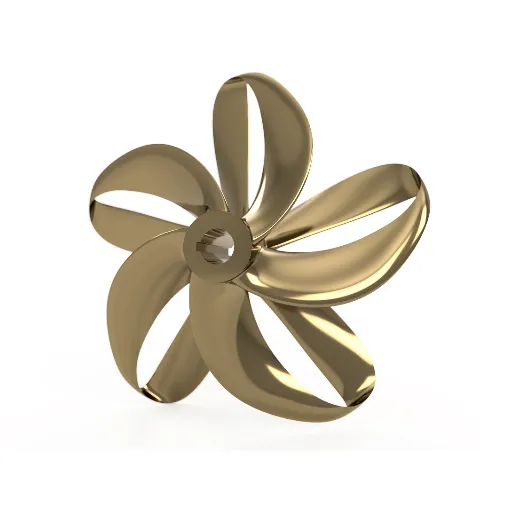
The marine industry is experimenting with new manufacturing methods and materials that could reshape propeller design.
3D-printed metal propellers use laser powder bed fusion to build titanium, aluminum, or stainless steel blades with custom geometries. Manufacturers can optimize blade shape for specific boats in ways traditional casting cannot match.
Early projects show potential weight reductions of 20-30% and efficiency gains of 15-25%. Cost is still the main barrier, with small 3D-printed props starting around $1,500 to $1,800 per build.
Titanium offers an exceptional strength-to-weight ratio and corrosion resistance. It is already used in some high-performance and military applications. As production costs fall, titanium could become a viable alternative to stainless steel for demanding boaters.
Recycled and bio-based composites are also gaining attention for eco-friendly boating. These materials aim to reduce environmental impact while maintaining enough strength for recreational use.
Emerging materials are not yet mainstream, but they show where boat propeller materials are heading. For most boaters today, the choice remains aluminum, stainless steel, bronze, or composite.
How to Choose the Right Boat Propeller Material
The best material is the one that matches how, where, and how hard you use your boat. Use this decision framework to narrow it down.
| Environment | Budget | Horsepower | Recommended Material |
|---|---|---|---|
| Freshwater | Low | Under 150 HP | Aluminum |
| Freshwater | Medium | Over 150 HP | Stainless Steel |
| Saltwater | Medium | Under 150 HP | Stainless Steel or Composite |
| Saltwater | High | Over 150 HP | Stainless Steel or Nibral |
| Commercial / Inboard | High | Any | Nibral |
| Shallow / Rocky | Low | Any | Composite |
| Performance / Racing | High | Any | Stainless Steel or Carbon Fiber |
Cost vs. Lifespan
Aluminum is the cheapest to buy but may need replacement or repair more often. Stainless steel costs more upfront but typically lasts 2-3 times longer.
Nibral is expensive but can last decades on commercial vessels. Composites save money on repairs but may not match metal longevity.
Repairability
Aluminum and stainless steel repair shops are common. Nibral requires specialized welding. Composites usually mean replacing blades or the whole prop.
Corrosion Environment
Saltwater is the great separator. Aluminum needs rinsing and anode maintenance. Stainless steel and Nibral handle salt far better. Composites do not corrode at all. Freshwater boaters have more freedom to choose based on budget and performance.
Performance Priorities
If top speed, acceleration, and fuel efficiency matter most, stainless steel or carbon fiber is the answer. If casual cruising and low cost matter most, aluminum or composite is the better fit.
Drivetrain Protection
Aluminum and composite props act as sacrificial parts in a strike. Stainless steel and Nibral resist damage but may transfer more force to the lower unit. If you boat in debris-filled water, the sacrificial option can save thousands in drivetrain repairs.
Maintenance by Material
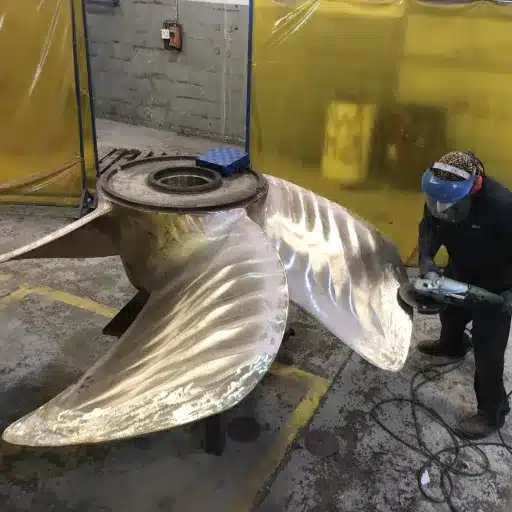
Every boat propeller material needs different care to reach its full lifespan.
Aluminum should be rinsed after saltwater use. Inspect blades for nicks and bends after shallow-water trips. Small dings can be filed smooth at home, but blade straightening and balancing belong in a prop shop.
Stainless steel needs regular anode checks because it is more noble than aluminum lower units. Polish the blades periodically to prevent pitting and maintain efficiency. Inspect the hub and splines for corrosion.
Bronze and Nibral require monitoring for galvanic corrosion. Keep anodes in good condition and inspect for dezincification or pitting. Professional polishing every few seasons helps maintain hydrodynamic performance.
Composite props need visual inspection for blade cracks, especially around the hub. Replace damaged blades promptly to maintain balance.
UV exposure can degrade some polymers over time, so store spare blades out of direct sunlight.
FAQ
What are boat propellers made of?
Boat propellers are made from aluminum, stainless steel, bronze alloys, or composite materials. Aluminum is the most common material for recreational boats. Stainless steel is preferred for saltwater and performance. Bronze and Nibral are standard on inboards and commercial vessels. Composites are popular for shallow water and trolling motors.
What is the best material for a boat propeller?
There is no single best material. Aluminum is best for casual freshwater boating on a budget. Stainless steel is best for saltwater, performance, and high horsepower.
Nibral is best for commercial and inboard applications. Composite is best for shallow or debris-filled water.
Are bronze propellers better than stainless steel?
Not necessarily. Bronze and Nibral resist seawater corrosion and cavitation erosion exceptionally well, making them ideal for inboard and commercial boats. Stainless steel is stronger, thinner, and more efficient for outboard performance. The right choice depends on the application.
What is a Nibral propeller?
Nibral is a nickel-aluminum-bronze alloy used for high-performance marine propellers. It has a tensile strength of around 90,000 psi, excellent corrosion resistance, and strong cavitation erosion resistance. It is common on commercial fishing boats, tugs, and inboard performance vessels.
Can composite propellers replace metal props?
Composites can replace metal props in some applications, especially for shallow water, trolling, and boats where low maintenance matters. They generally do not match stainless steel for top speed or heavy-load performance.
Do stainless steel propellers corrode in saltwater?
Stainless steel is highly corrosion-resistant but not completely immune. Without proper sacrificial anodes and occasional rinsing, stainless steel can develop pitting or crevice corrosion, especially around the hub and splines.
Why are boat propellers made of bronze?
Bronze resists corrosion in seawater, machines well, and can be repaired. Nibral, a bronze alloy with nickel and aluminum, adds strength and cavitation resistance. Bronze has been a trusted marine material for over a century.
Conclusion
Boat propeller materials are not interchangeable. Aluminum rewards the budget-conscious freshwater boater. Stainless steel rewards the saltwater or performance boater willing to invest more upfront. Bronze and Nibral serve inboard and commercial owners who need decades of service. Composites solve specific problems like shallow water, corrosion immunity, and quick field repairs.
The right choice comes down to your water, your engine, your budget, and how you use the boat. Match those four factors to the material, and you will spend less time at the prop shop and more time on the water.
For the complete aluminum vs. stainless steel comparison, visit our aluminum vs. stainless steel propeller guide. If you are not sure which material fits your boat, contact Captain Marine. We will help you choose a propeller engineered for your engine, your water, and your goals.