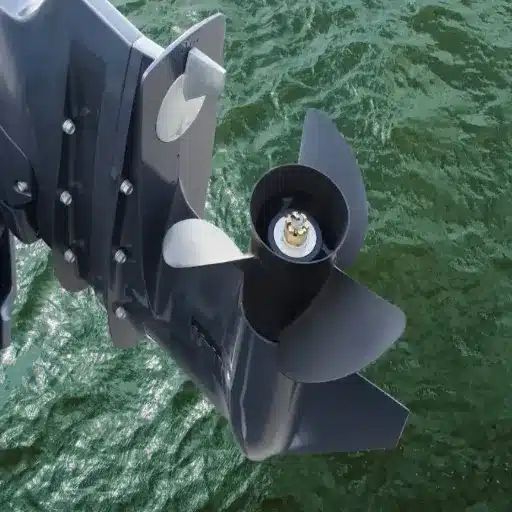
Switching from an aluminum to a stainless steel propeller is a straightforward upgrade that takes about 20 minutes to install, but getting the right pitch can save you two weekends of trial and error. The key rule: drop your pitch by 1-2 inches when moving from aluminum to stainless, because stainless blades do not flex under load the way aluminum does.
One boater on the Band of Boaters forum documented a real switch from a 14.5-inch by 19-pitch aluminum Quicksilver to a 14.75-inch by 16-pitch stainless Quicksilver Q3. His top speed jumped from 40 mph to 46.4 mph, according to GPS. His wide-open throttle RPM climbed from 4,400 to 4,700. His hole shot, as he put it, “improved dramatically and immediately.” That is the kind of difference the right stainless prop can deliver.
At Captain Marine, we have helped thousands of boaters make this exact switch. This guide walks you through every step, from deciding whether the switch makes sense for your boat to running your first WOT RPM test after installation.
Key Takeaways
- Drop pitch by 1-2 inches when switching from aluminum to stainless because stainless blades do not flex under load.
- Always confirm hub compatibility with your engine brand before ordering; the wrong hub kit will ruin the installation.
- Run a WOT RPM test after every prop swap; wrong pitch can cost you 10-20 percent performance loss.
- The total switch cost is typically $500-900 including the prop, hub kit, and tools.
- Boaters with 75+ HP engines, frequent usage, and performance goals see the best return on this upgrade.
The Short Answer: How to Switch from Aluminum to Stainless Steel Propeller
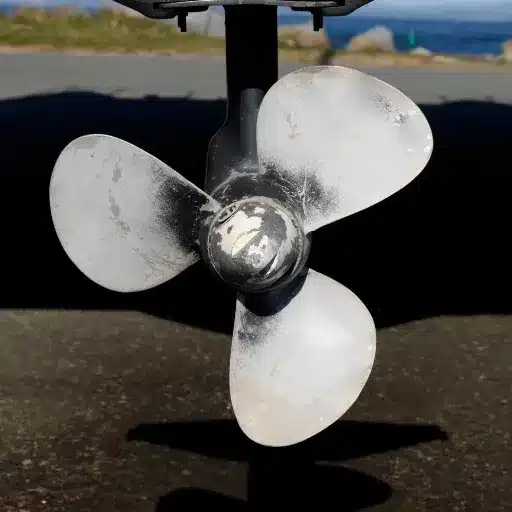
Here is the fastest way to understand the entire process before we explore the details:
- Record your current aluminum prop’s diameter, pitch, and WOT RPM.
- Select a stainless prop 1-2 inches lower in pitch than your aluminum prop.
- Confirm hub compatibility with your engine brand and shaft size.
- Remove the old prop and inspect the thrust washer and spline.
- Install the new prop with the correct hub kit and torque to spec.
- Run a WOT RPM test in calm water and adjust pitch if needed.
That is the core process. The sections below explain why each step matters and how to avoid the mistakes that trip up first-time switchers.
When Should You Switch from Aluminum to Stainless Steel?
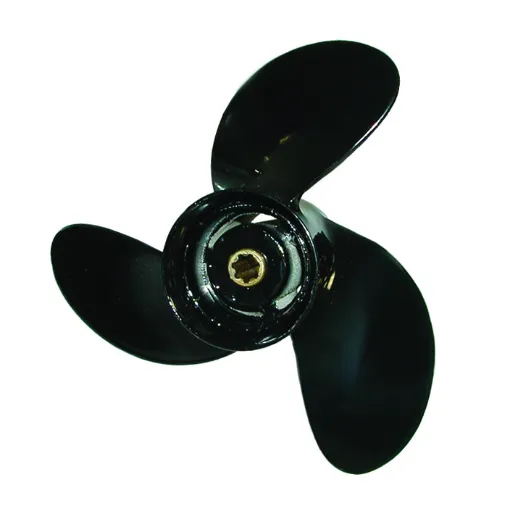
Not every boater benefits from this upgrade. Aluminum props are affordable, easy to repair, and forgiving when you hit something. Stainless props cost roughly three times more upfront, but they deliver better speed, acceleration, fuel efficiency, and durability. Here is how to decide.
You are a strong candidate if:
- Your engine is 75 horsepower or higher. According to Boat Specialists, aluminum is common for 30-70 HP outboards, while stainless is typically chosen for 75 HP and up.
- You boat frequently, especially in saltwater, where corrosion resistance matters.
- You care about hole shot, top speed, or fuel efficiency.
- You have clean, deep water with minimal debris risk.
You should stick with aluminum if:
- You run shallow, stump-filled, or rocky water. A hard strike with stainless steel transfers more force to your lower unit because the blades do not bend like aluminum. Several forum users have reported that aluminum’s sacrificial nature protected their drives from costly damage.
- Your engine is under 75 HP. The performance gains on low-power engines rarely justify the cost.
- Your budget is tight. Stainless props run $400-700 versus $150-300 for aluminum.
When Derek bought his first center console with a 150 HP Yamaha, he ran the stock aluminum prop for two seasons. It worked fine for casual weekend trips. But when he started fishing tournaments and needed faster hole shots to beat other anglers to the spots, he made the switch. A 19-pitch aluminum to a 17-pitch stainless transformed his acceleration. Derek told us it was the single best performance upgrade he made to that boat.
If you are on the fence about whether stainless steel is worth the investment, a complete ROI and cost analysis breaks down the long-term economics.
Why Pitch Changes When You Switch Materials
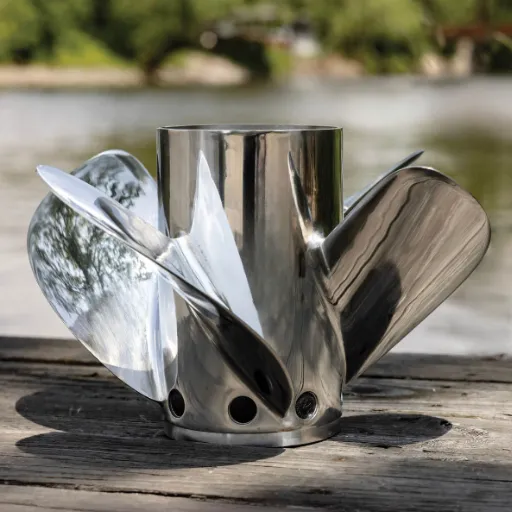
This is the detail that separates a successful switch from a frustrating one. Aluminum propeller blades flex under load. When you open the throttle, the blades bow slightly, which effectively reduces their pitch. A 21-pitch aluminum prop behaves more like a 20-pitch prop under full power.
Stainless steel blades are far more rigid. They hold their designed pitch through the entire RPM range. So if you swap a 21-pitch aluminum prop for a 21-pitch stainless prop, you are effectively adding pitch. Your engine will lug, struggle to reach its target WOT RPM, and deliver worse performance than your old aluminum prop.
The rule of thumb: drop 1-2 inches of pitch when switching from aluminum to stainless.
A boater on iBoats put it simply: “My 19-pitch aluminum felt like an 18-pitch under load. When I bought a 19-pitch stainless, my RPM dropped 400. Had to sell it and buy a 17-pitch.” That mistake cost him time, money, and a weekend on the water.
Here is a practical conversion table:
| Current Aluminum Pitch | Recommended Stainless Pitch | Best For |
|---|---|---|
| 17 | 15-16 | Small boats, 50-75 HP |
| 19 | 17-18 | Mid-size boats, 75-115 HP |
| 21 | 19-20 | Larger boats, 115-200 HP |
| 23 | 21-22 | High-performance, 200+ HP |
| 25 | 23-24 | Heavy boats, high torque |
Exceptions to the rule:
- Cupped props may need less of a drop because the cup effectively adds pitch.
- 4-blade props often carry more load and may need an extra inch of drop.
- Heavy loads (full fuel, multiple passengers, gear) may require less drop because the boat already sits deeper.
- High-elevation lakes where engines produce less power may need an extra inch of drop.
For a deeper look at how stainless steel improves performance across the board, our stainless steel propeller benefits guide covers the technical advantages in detail. Michigan Wheel provides additional independent data on how blade rigidity affects effective pitch.
Hub System Compatibility: What Fits Your Engine
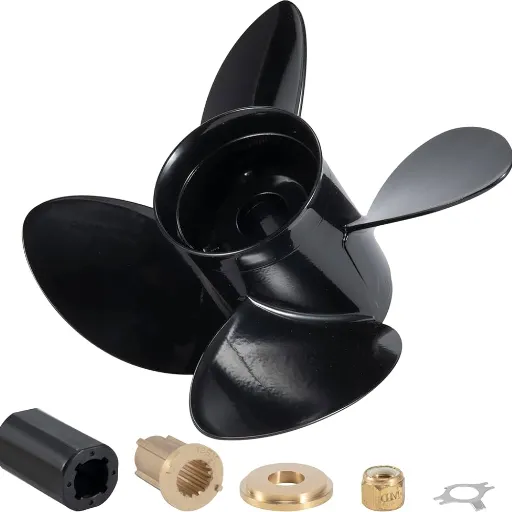
You cannot just bolt a stainless prop onto your shaft. Modern propellers use hub systems that vary by engine brand. Order the wrong one and the prop will not seat properly, will vibrate, or worse, will spin freely on the shaft.
Here is what you need to know:
Flo-Torq (Mercury/Mercruiser)
- Uses a removable hub insert that slides into the propeller.
- Flo-Torq II includes a drive sleeve designed to fail before your lower unit in a hard impact. This addresses the main concern boaters have about switching to stainless.
- Hub kits are color-coded by engine HP range.
- Check your engine manual for the correct Flo-Torq kit number.
SDS (Yamaha)
- Uses a spline-driven hub insert specific to Yamaha outboards.
- The insert is press-fit and must be replaced with each prop swap.
- Yamaha SDS hubs are not interchangeable with Mercury or other brands.
Rubber Hub / XHS (Universal)
- Common on aftermarket props from Solas, Powertech, and other manufacturers.
- The rubber bushing is pressed into the prop and acts as a shock absorber.
- Over time, the rubber can deteriorate and spin independently.
Splined vs. Tapered Shafts
- Most modern outboards use splined shafts.
- Some older engines and inboards use tapered shafts with a keyway.
- Verify your shaft type before ordering.
| Engine Brand | Hub System | Typical Kit Cost | Notes |
|---|---|---|---|
| Mercury | Flo-Torq II | $40-70 | Color-coded by HP |
| Yamaha | SDS | $35-65 | Spline-specific |
| Honda | Spline insert | $30-55 | Verify shaft size |
| Suzuki | Spline insert | $30-55 | Model-specific |
| Universal | XHS rubber | $25-50 | Aftermarket props |
Always confirm your engine model, year, and shaft size before ordering. A prop that fits a 2020 Yamaha F150 will not necessarily fit a 2015 Yamaha F150.
Step-by-Step Installation Guide
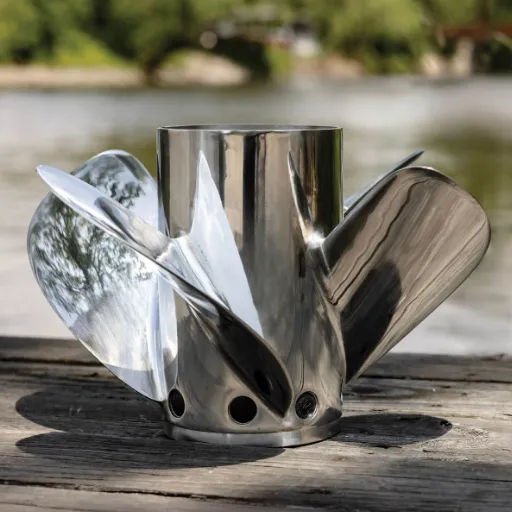
The actual installation is not complicated, but skipping a step can cause vibration, damage, or a prop that spins loose on the water. Here is the full process.
Tools You Need
- Prop wrench or large adjustable wrench
- Torque wrench (capable of 40-60 lb-ft)
- Marine grease
- Clean rags
- Flashlight or headlamp
- Cotter pin or tab washer (new)
- Safety glasses and gloves
Safety First
- Remove the kill switch lanyard so no one can accidentally start the engine.
- Shift into neutral.
- Secure the boat so it cannot move.
- Let the engine cool if it has been running.
Removing the Old Aluminum Prop
- Bend back the cotter pin or tab washer so it clears the nut.
- Loosen the prop nut. It may be tight. A prop wrench gives you better use than an adjustable wrench.
- Slide the prop off the shaft. It may need a gentle wiggle.
- Note the order of any spacers or washers as you remove them.
Inspecting the Thrust Washer and Spline
This step is critical and often skipped. A damaged thrust washer will cause vibration no matter how good your new prop is.
- Clean the prop shaft with a rag.
- Inspect the thrust washer (the large washer at the base of the shaft). Replace it if it is grooved, cracked, or worn.
- Check the spline for damage, corrosion, or debris. Clean thoroughly.
- Apply a thin coat of marine grease to the shaft.
Installing the Correct Hub Kit
- If your new prop came with a hub kit, follow the manufacturer’s instructions.
- For Mercury Flo-Torq: slide the insert into the prop until it seats fully.
- For Yamaha SDS: press the insert into the prop hub until it clicks.
- For rubber hubs: ensure the bushing is fully seated and not twisted.
Mounting the New Stainless Prop
- Slide the prop onto the greased shaft. It should slide on smoothly.
- Install any thrust washer or spacer in the correct orientation.
- Thread the prop nut by hand first. Never force it with a wrench.
- Tighten to the manufacturer’s torque specification.
Torque Specifications by Engine Brand
| Engine Brand | Torque Spec | Notes |
|---|---|---|
| Mercury | 55 lb-ft | Common across most outboards |
| Yamaha | 40 lb-ft | Verify in your manual |
| Honda | 40-45 lb-ft | Varies by model |
| Suzuki | 45-50 lb-ft | Check the manual for the exact spec |
If you do not have a torque wrench, tighten firmly by hand and then take the boat to a mechanic for proper torque verification. An under-tightened nut can back off. An over-tightened nut can damage the threads.
Installing the Cotter Pin or Tab Washer
- Install a new cotter pin through the castle nut and bend the legs to secure it.
- If your prop uses a tab washer, bend the tabs up against the nut flats.
- Never reuse an old cotter pin.
Post-Install Visual Check
- Spin the prop by hand. It should rotate freely with no binding or wobble.
- Check that the nut and cotter pin are secure.
- Verify the prop does not contact the trim tab or anti-ventilation plate.
- Double-check that your kill switch lanyard is back in place before starting the engine.
The WOT RPM Test: Did You Get the Pitch Right?
The installation is not complete until you verify your engine hits its recommended wide-open throttle RPM range. Every engine has a specified WOT RPM range, usually printed on the engine cover or in the owner’s manual. Typical ranges are 5,000-6,000 RPM for four-stroke outboards and 4,500-5,500 RPM for two-strokes.
Testing protocol:
- Load the boat normally. Use your typical passenger and gear weight.
- Find calm water with minimal current or wind.
- Trim the engine to its neutral or slightly up position.
- Accelerate smoothly to full throttle.
- Hold WOT for 10-15 seconds while recording peak RPM and GPS speed.
- Make 2-3 passes in opposite directions and average the results.
Decision tree:
| RPM Result | What It Means | What to Do |
|---|---|---|
| Within target range | Pitch is correct | You are done. Enjoy the upgrade. |
| 200-400 RPM below target | The prop has too much pitch | Drop 1 inch of pitch |
| 200-400 RPM above target | The prop has too little pitch | Add 1 inch of pitch |
| More than 400 RPM off | Significant pitch mismatch | Re-prop with the correct size |
| Vibration at all speeds | Wrong hub, damaged washer, or bent blade | Reinspect installation |
When Brian switched his 21-pitch aluminum to a 21-pitch stainless on his 175 HP Mercury, his WOT RPM dropped from 5,800 to 5,200. His engine was lugging. He swapped to a 19-pitch stainless, hit 5,750 RPM, and gained 3 mph on top end. Brian’s mistake cost him a weekend, but his fix confirmed the pitch rule in real-world conditions.
If your RPM is off, do not just accept it. Running outside the recommended range strains your engine, reduces fuel efficiency, and voids warranty coverage in some cases. A precision-engineered propeller matched to your engine specs is the difference between a good upgrade and a frustrating one.
Common Switching Mistakes (And How to Fix Them)
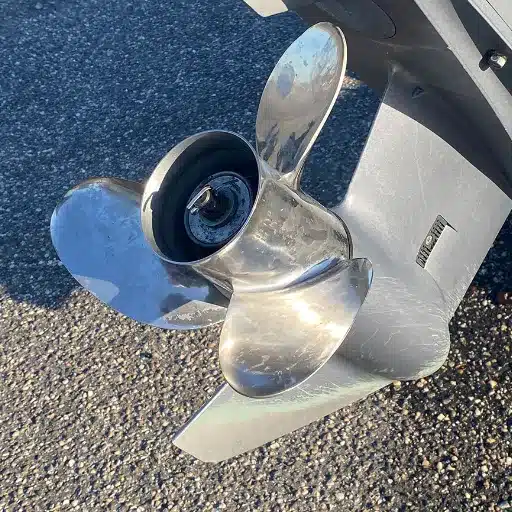
Wrong pitch. This is the most common error. Boaters buy the same pitch they had in aluminum and wonder why performance drops. Fix: always drop 1-2 inches when switching materials.
Wrong hub kit. Ordered a Mercury prop for a Yamaha engine? It will not fit. Fix: verify engine brand, model, and year before ordering.
Ignoring the WOT test. Some boaters install the prop, feel the boat runs fine at cruising speed, and skip the WOT test. Cruising RPM can mask a pitch problem. Fix: always run the full test protocol.
Wrong rotation direction. Right-hand rotation props spin clockwise in forward. Left-hand props spin counterclockwise. Installing the wrong rotation on a twin-engine boat creates a handling nightmare. Fix: Confirm rotation before ordering.
Damaged thrust washer. Reusing a grooved thrust washer causes vibration and premature wear. Fix: Replace the thrust washer with every prop swap.
Forgetting to torque the nut. Hand-tightening is not enough. A loose prop nut can back off and sink your new $600 propeller. Fix: Use a torque wrench every time.
Cost Breakdown: What the Switch Actually Costs
Be honest about the total investment so you can budget properly.
| Item | Cost Range | Notes |
|---|---|---|
| Stainless propeller | $400-700 | Varies by brand, diameter, and pitch |
| Hub kit | $30-80 | Required unless reusing a compatible kit |
| Tools (if needed) | $20-50 | Torque wrench, prop wrench |
| Thrust washer | $10-20 | Replace with every swap |
| Potential re-prop | $100-200 loss | If the first pitch is wrong and you resell |
| Total realistic budget | $500-900 | First-time switchers should budget for the high end |
Many experienced boaters keep their old aluminum prop as a spare. If you hit debris and damage the stainless prop on the water, swapping back to aluminum gets you home. It is a smart insurance policy.
FAQ
Can I install a stainless prop myself?
Yes. The physical installation takes 15-30 minutes if you have done it before, or 45-60 minutes for a first-timer. The harder part is getting the pitch right.
Do I need a new hub kit?
Usually yes. Most hub kits are specific to the propeller and engine combination. Even if your old kit fits, the rubber components may be worn. A new kit is cheap insurance against a spun hub.
How much does it cost to switch?
Budget $500-900 total. That includes the stainless prop ($400-700), hub kit ($30-80), tools ($20-50), and a potential re-prop if your first pitch guess is wrong.
Will switching void my warranty?
Generally no. Installing an aftermarket propeller does not void your engine warranty. However, running an incorrectly pitched prop that causes engine damage may not be covered. Always verify WOT RPM is within spec.
Can I go back to aluminum if I do not like it?
Yes. Simply remove the stainless prop and reinstall your aluminum prop. Keep your old prop as a backup regardless.
How much speed will I gain?
Real-world results vary. The documented Band of Boaters case showed a 6.4 mph gain. Most boaters see 2-5 mph improvement on top end plus noticeably better hole shot. The bigger gains come from improved acceleration and handling.
Should I switch pitch if my boat is heavily loaded?
Yes. A heavily loaded boat needs less pitch because it sits deeper and creates more drag. If you normally run light, add 1 inch. If you always run heavy, stick with the standard conversion or even drop an extra inch.
Conclusion
Learning how to switch from an aluminum to a stainless steel propeller is not just about bolting on a new part. It is about understanding why pitch changes, confirming hub compatibility, installing with proper torque, and verifying your work with a WOT RPM test.
The upgrade rewards boaters who do it right. Better hole shot. Higher top speed. Improved fuel efficiency. A propeller that lasts years longer. But the switch punishes shortcuts. Wrong pitch, wrong hub, or skipped testing can turn a $600 upgrade into a frustrating weekend.
Take your time. Record your baseline numbers. Order the right pitch and hub kit. Torque to spec. Run the test. And when you feel that first blast of acceleration with your new stainless prop, you will know you did it right.
For the complete material comparison between aluminum and stainless steel, see our aluminum vs. stainless steel propeller guide. If you want to understand exactly how much speed gain to expect, our real performance data breakdown has the numbers by boat type.
Not sure which pitch or hub kit fits your engine? Contact the Captain Marine team, and we will help you spec the exact propeller for your boat, engine, and boating style.