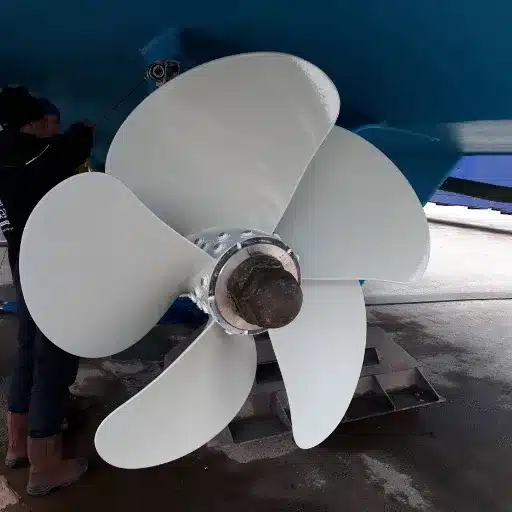
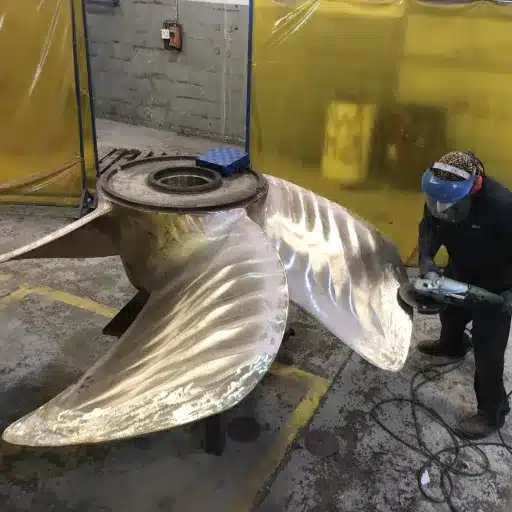
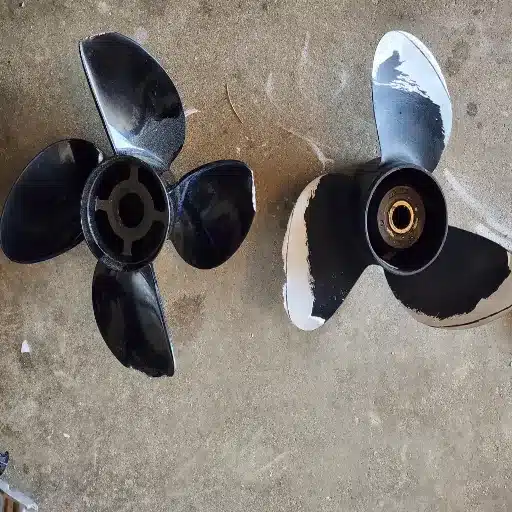
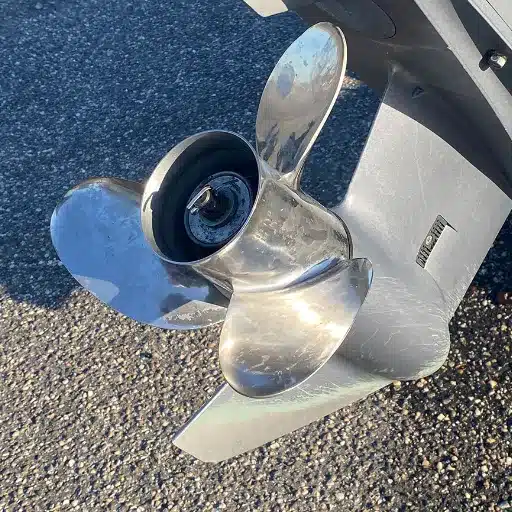
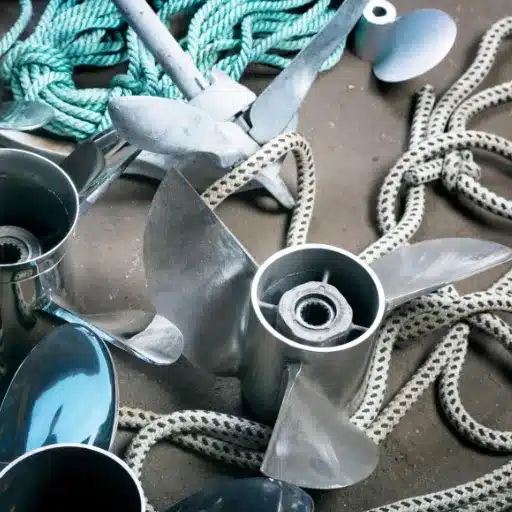
The best propeller material for saltwater depends on your boat type and usage. For center consoles and offshore outboards, marine-grade stainless steel (316/431) is the top choice. For inboard cruisers and yachts, Nibral outperforms everything. For budget recreational boaters, aluminum works if you accept a shorter lifespan. Bronze and composite fill specific niches in between.
Most saltwater propeller guides compare aluminum and stainless, declare stainless the winner, and call it a day. That is like comparing two cars and ignoring the entire truck category. Saltwater boaters run center consoles, inboard cruisers, sailboats, pontoons, and bay boats. Each setup faces different corrosion stresses, performance demands, and budget realities. The material that lasts fifteen years on a center console might be the wrong choice for an inboard trawler.
This guide covers every major propeller material used in saltwater. We will look at corrosion rates, real lifespan data, upfront costs, and cost-per-season calculations. By the end, you will know exactly which material matches your hull, engine, and saltwater usage.
Key Takeaways
- Marine-grade stainless steel (316/431) is the best all-around saltwater propeller for outboards, lasting 8-15 years with basic maintenance
- Nibral outperforms stainless in continuous saltwater immersion and is the gold standard for inboards and cruisers
- Aluminum corrodes 3.4x faster than stainless in saltwater and typically lasts 1-2 seasons under heavy use
- Bronze offers excellent corrosion resistance and natural anti-fouling for sailboats and work vessels
- Composite props are immune to galvanic corrosion but are currently limited to trolling motors and small electric drives
- At 100 saltwater hours per year, stainless steel costs roughly half as much per season as aluminum
Why Saltwater Destroys the Wrong Propeller
Chloride Attack: The Chemistry Working Against You
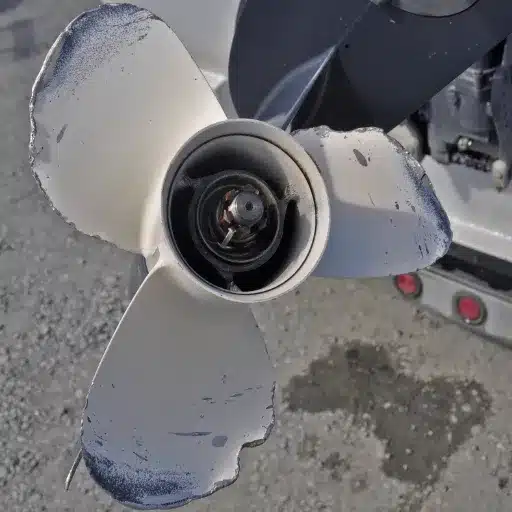
Saltwater is essentially a weak electrolyte. Dissolved chloride ions accelerate corrosion on any metal that is not specifically engineered to resist them. The effect is not gradual. It is exponential. A small nick or ding from a strike becomes a pit. The pit becomes a crack. The crack becomes a blade failure.
Aluminum suffers the most. Its corrosion rate in saltwater is roughly 0.144 mm per year. Marine-grade stainless steel drops to 0.042 mm per year. Nibral and bronze sit even lower, around 0.02-0.05 mm per year. Those numbers look small on paper, but propeller blades are thin. A few tenths of a millimeter of material loss changes blade geometry, reduces efficiency, and creates vibration.
Galvanic Corrosion: When Your Prop Becomes a Battery
If your propeller and your outboard lower unit are different metals — and they almost always are — saltwater creates a galvanic cell. Electrons flow from the less noble metal to the more noble one. The less noble metal dissolves. This is why a stainless prop on an aluminum lower unit without proper anode protection can destroy the lower unit faster than any prop corrosion.
Your choice of propeller material directly affects your entire drivetrain. A bronze prop on a stainless shaft creates a different galvanic pairing than a stainless prop on an aluminum lower unit. Understanding this pairing is as important as choosing the material itself.
Cavitation Erosion: The Hidden Killer
High-RPM operation in saltwater creates tiny vapor bubbles on the blade surface. When those bubbles collapse, they blast microscopic pits into the metal. Over hundreds of hours, those pits merge into channels that ruin blade geometry. Nibral resists cavitation erosion better than stainless steel. Aluminum suffers the most. This is why a saltwater propeller’s lifespan is never just about corrosion — it is about corrosion plus cavitation plus impact damage, all working together.
Material 1: Stainless Steel — The Outboard Standard
Why Stainless Leads for Saltwater Outboards
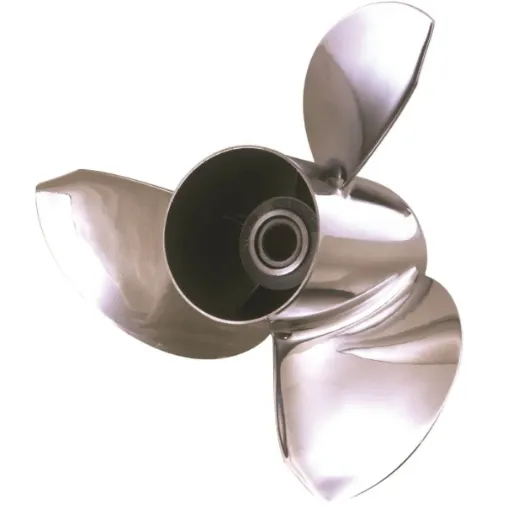
Marine-grade stainless steel — specifically AISI 316, 431, or super duplex grades — is the default choice for saltwater outboards for good reason. It resists chloride pitting far better than aluminum. It maintains blade geometry under high RPM because it does not flex. And it lasts 8-15 years with basic rinsing and anode maintenance.
The performance advantage is real. Stainless allows thinner blade profiles than any other material except the most advanced Nibral designs. Thinner blades mean less drag, better fuel efficiency, and higher top-end speed. A center console running twin 300s needs that rigidity. A bass boat pushing past 50 MPH needs it too.
Captain Elena runs a charter out of Tampa Bay. She logs 200-hour seasons in saltwater and tracked every prop replacement. Her standard aluminum props lasted 18 months on average. She tried Mercalloy and pushed that to 30 months. Then she switched to a marine-grade stainless prop. Five seasons later, the same prop is still on her lower unit with only minor cosmetic pitting. “I spent $150 every season and a half on aluminum replacements,” she said. “The stainless prop costs more upfront but lasts five times longer in saltwater.” For a complete cost comparison, read our aluminum propeller pros and cons.
The Stainless Caveats
Stainless is not perfect. It is prone to crevice corrosion in stagnant or polluted water. It has no natural anti-fouling properties — barnacles adhere to stainless steel readily. And it is rigid, which means impact shock transfers directly to your lower unit instead of being absorbed by the prop.
Maintenance matters more with stainless than people assume. If you skip anode checks, if you let barnacles colonize the blades, if you ignore a small pit after a strike — the corrosion accelerates. We have seen stainless props with significant pitting after just three seasons of neglected maintenance.
Best For
- Center consoles and offshore fishing boats
- High-HP outboards (150+ HP)
- Boats seeing 100+ saltwater hours per year
- Performance hulls where blade rigidity matters
Material 2: Nibral — The Inboard Gold Standard
Why Nibral Outperforms Stainless in Continuous Saltwater
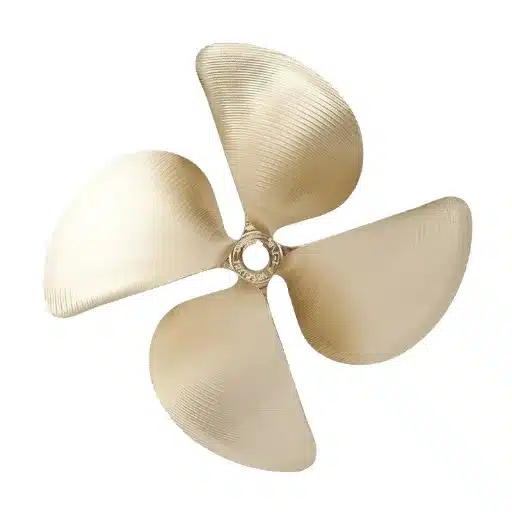
Nibral — an alloy of nickel, bronze, and aluminum — is the industry standard for commercial marine propellers. It is rarely discussed in recreational boating circles, which is a mistake. For inboard cruisers, yachts, and any vessel in continuous saltwater immersion, Nibral is arguably superior to stainless.
The corrosion resistance is exceptional. Nibral’s corrosion rate sits around 0.02-0.05 mm per year in saltwater, matching or beating stainless. But Nibral has two advantages that stainless cannot match. First, its copper content provides natural anti-fouling. Barnacles and algae grow far more slowly on Nibral than on stainless. Second, Nibral resists cavitation erosion better than any other common propeller material. For detailed engineering data on this alloy family, see Copper.org’s engineering guide to nickel aluminum bronze.
Nibral is also more forgiving in a strike. It absorbs impact energy rather than transferring it rigidly to the shaft and gearbox. For inboard setups where a lower unit rebuild is not an option and shaft replacement is a major haul-out, that forgiveness matters.
The Limitations
Nibral props are heavier than stainless — roughly 10% heavier for an equivalent design. They are primarily available for inboards and stern drives, not outboards. And they cost more upfront, typically $800-2,000+, depending on diameter and pitch.
Tom operates a 42-foot inboard cruiser out of Fort Lauderdale. He runs year-round in saltwater, about 300 hours per season. His first prop was stainless. After two seasons, he noticed significant pitting and had to haul the boat for prop service. His marine surveyor recommended Nibral. Tom switched to a Nibral prop eight years ago. He has had it re-pitched once and reconditioned twice. The prop is still within spec. “The surveyor told me Nibral was overkill for a recreational boat,” Tom said. “He was wrong. It is underkill for anything less.”
Best For
- Inboard cruisers and yachts
- Commercial vessels and charter fleets
- Continuous saltwater immersion
- Boats where impact forgiveness protects expensive drivetrains
Material 3: Bronze — The Traditional Workhorse
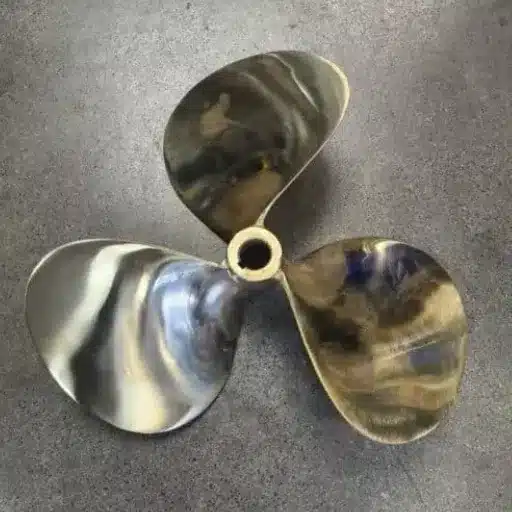
Aluminum Bronze and Manganese Bronze
Bronze has been the marine propeller material of choice for centuries, and it still holds its own in saltwater. The two main alloys are aluminum bronze (CA104) and manganese bronze. Both form a protective patina that shields the underlying metal from chloride attack.
Aluminum bronze offers excellent corrosion resistance and good cavitation resistance. It is easier to repair than stainless — a competent prop shop can weld and reshape bronze with standard equipment. It also has natural anti-fouling properties from its copper content, though slightly less effective than Nibral.
Manganese bronze is softer and less expensive but contains zinc, making it vulnerable to dezincification if galvanic protection fails. For saltwater use, aluminum bronze is the better bronze choice.
The Trade-Offs
Bronze is heavy. It does not allow the thin blade profiles that stainless and Nibral can achieve. That means slightly more drag and marginally lower top-end speed. But for sailboats, trawlers, and work vessels where cruising efficiency matters more than maximum speed, bronze is an excellent compromise.
Typical cost runs $500-900 for recreational sizes, with lifespan estimates of 10-20 years depending on alloy and maintenance.
Best For
- Sailboats and trawlers
- Work vessels and commercial fishing boats
- Budget-conscious inboard setups
- Boats in polluted or high-salinity harbors, where bronze often outperforms stainless steel
Material 4: Aluminum — The Budget Reality
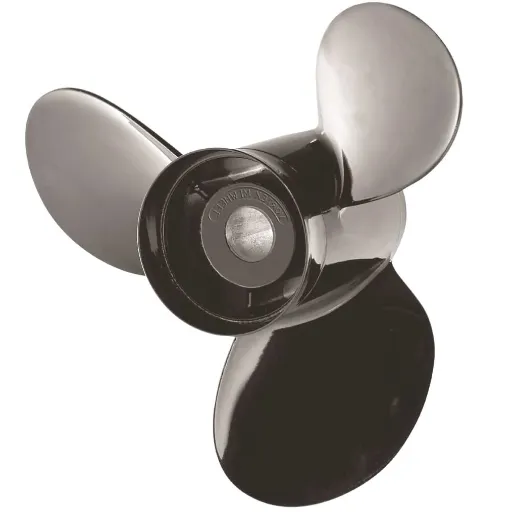
The Corrosion Math
Aluminum corrodes at roughly 0.144 mm per year in saltwater. That is 3.4 times faster than stainless. In practical terms, a standard aluminum prop used regularly in saltwater lasts 1-2 seasons. Premium alloys like Mercalloy extend that to 2-3 seasons. But even premium aluminum cannot match the longevity of stainless, bronze, or Nibral in saltwater.
Sand particles at high speed accelerate aluminum blade-edge wear by up to 72%. Cavitation pitting appears faster on aluminum than on any other material. And once pitting starts, it spreads rapidly because the pit itself creates a localized galvanic cell.
When Aluminum Still Makes Sense
Despite the corrosion penalty, aluminum has three legitimate roles in saltwater. First, small outboards under 115 HP do not generate enough torque to make the performance gap meaningful. Second, shallow-water anglers who hit submerged objects regularly benefit from aluminum’s sacrificial protection — the prop bends instead of cracking your lower unit. Third, aluminum is the ideal spare prop to keep onboard.
Jake runs a shallow-water flats boat in the Florida Keys. He poles through mangrove channels where oyster bars and limestone outcrops hide inches below the surface. He goes through two or three aluminum props per season. “I know stainless would last longer,” Jake told us. “But I would rather replace a $120 prop than rebuild a $2,000 lower unit. Aluminum is my insurance policy.”
Best For
- Casual recreational boaters with light saltwater use
- Shallow-water anglers in strike-prone waters
- Small outboards under 115 HP
- Spare propeller duty
Material 5: Composite / Polymer — The Emerging Option
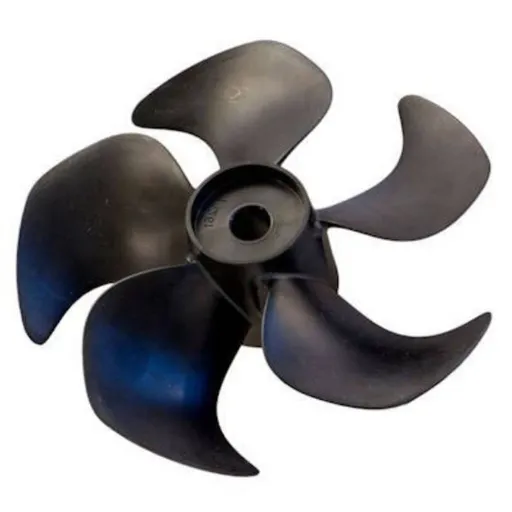
Immune to Galvanic Corrosion
Modern composite and polymer propellers are gaining traction for 2025-2026, particularly on electric trolling motors and small auxiliary drives. Their primary advantage in saltwater is simple: they are not metal. Galvanic corrosion cannot occur on a non-metallic surface. Cavitation erosion affects them differently — they can flex and absorb energy rather than pitting.
Composite props are lightweight, impact-forgiving, and require virtually no corrosion maintenance. Rinse them after use and inspect for UV degradation or delamination. That is it.
Current Limitations
The performance ceiling is real. Composite materials cannot yet handle the loads and RPM of high-HP gas outboards. Blade thickness must be greater than the metal to achieve equivalent strength, which creates drag. And the brand selection is still limited compared to the mature metal propeller market.
For kayaks, small electric vessels, and trolling motors, composite is already a viable and sometimes superior choice. For a 250 HP center console, it is not there yet.
Best For
- Electric trolling motors and auxiliary drives
- Kayaks and small personal watercraft
- Boaters who want zero corrosion maintenance
- Eco-conscious boaters seeking recyclable options
For a deeper look at where composite propellers fit in 2026, see our complete composite propeller guide.
Head-to-Head: All Five Materials Compared
| Material | Corrosion Rate (mm/yr) | Saltwater Lifespan | Upfront Cost | Cost/Season (100 hrs/yr) | Best Boat Type |
|---|---|---|---|---|---|
| Aluminum (Standard) | 0.144 | 1-2 seasons | $80-150 | $50-100 | Small outboards, spares |
| Aluminum (Premium) | ~0.10 | 2-3 seasons | $180-300 | $60-100 | Budget recreational |
| Stainless (316/431) | 0.042 | 8-15 years | $300-800 | $20-50 | Center console, offshore |
| Bronze (CA104) | ~0.04 | 10-20 years | $500-900 | $25-75 | Sailboat, trawler, work vessel |
| Nibral (Ni-Br-Al) | 0.02-0.05 | 10-20 years | $800-2,000+ | $40-130 | Inboard cruiser, yacht, commercial |
| Composite/Polymer | N/A (non-metallic) | 5-10 years | $100-300 | $10-30 | Electric motors, small craft |
For another manufacturer’s perspective on material trade-offs, see Michigan Wheel’s aluminum vs stainless steel prop comparison.
Cost Per Season: The Numbers That Matter
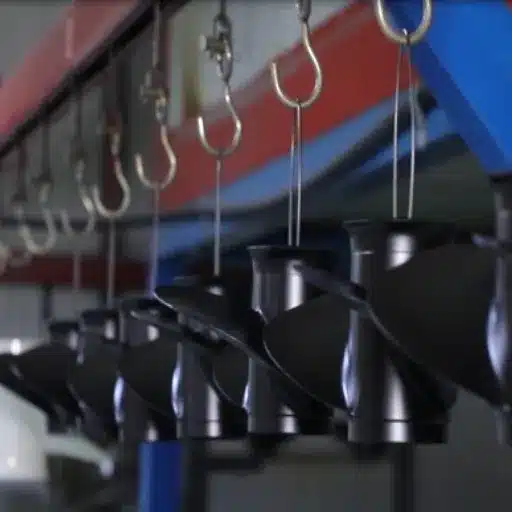
The 10-Year Ownership Calculation
Upfront cost is the number everyone looks at. It is also the least important number. What matters is cost per season, including replacement, repair, anode consumption, and coatings.
Assume 100 saltwater hours per year, moderate maintenance, and one underwater strike every two seasons:
- Standard aluminum: $150 prop, replace every 1.5 seasons, $40 repair per strike. 10-year cost: ~$1,400. Cost per season: ~$140.
- Premium aluminum: $250 prop, replace every 2.5 seasons, $50 repair per strike. 10-year cost: ~$1,300. Cost per season: ~$130.
- Stainless: $500 prop, lasts 10+ years, $150 repair per strike. 10-year cost: ~$850. Cost per season: ~$85.
- Bronze: $700 prop, lasts 12+ years, $100 repair per strike. 10-year cost: ~$1,000. Cost per season: ~$100.
- Nibral: $1,200 prop, lasts 15+ years, $120 repair per strike. 10-year cost: ~$1,500. Cost per season: ~$150.
Stainless steel pays for itself compared to standard aluminum after roughly 4-5 seasons. Bronze breaks even slightly later due to the higher upfront cost. Nibral is not a cost-saving choice — it is a durability and peace-of-mind choice for vessels where prop failure is unacceptable.
The charter fleet operator in Marathon, Florida, did the math for us. He runs six center consoles, each logging 150-200 saltwater hours per year. Five years ago, his fleet was all aluminum. He spent $2,400 per year on prop replacements and repairs across six boats. He switched the fleet to stainless over two seasons. His annual prop maintenance budget dropped to $800. “The switch paid for itself in three seasons,” he said. “And the boats perform better. Customers notice the smoother ride.”
Maintenance by Material: Saltwater Survival Guide
The Universal Rules
Every saltwater propeller, regardless of material, needs three things:
- Freshwater rinse within 30 minutes of haul-out. Salt left to dry accelerates corrosion by orders of magnitude.
- Anode checks every 3-4 months. Replace zinc or aluminum anodes when they reach 40-50% depletion.
- Post-strike inspection. Even a small ding creates a stress concentrator and corrosion initiation site.
For a complete maintenance schedule covering all materials, see our boat propeller maintenance guide.
Material-Specific Maintenance
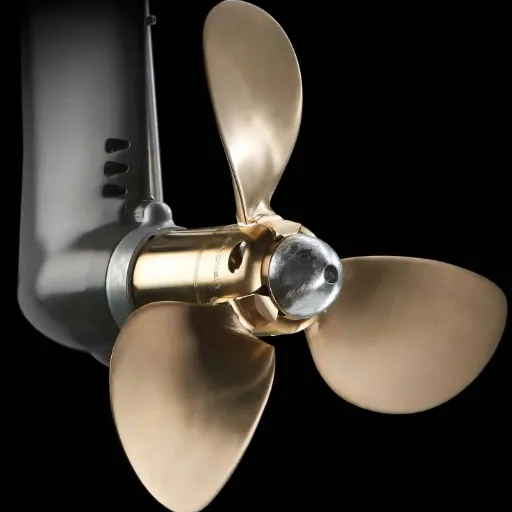
Stainless Steel: Inspect for pitting and crevice corrosion annually. Clean barnacles promptly — they trap moisture and create anaerobic conditions where crevice corrosion thrives. If your boat sits in the water for extended periods, consider an anti-fouling coating designed for propellers. Never skip anodes — stainless steel on aluminum lower units is a galvanic pairing that will destroy the lower unit without protection.
Nibral: Monitor the protective patina. A healthy patina is greenish-brown and smooth. If you see pinkish discoloration or rough pitting, consult a prop shop — it may indicate dezincification or improper alloy composition. Nibral is the easiest material to repair via MIG welding.
Bronze: Similar to Nibral, watch the patina. Aluminum bronze is more resistant to dezincification than manganese bronze. If you have manganese bronze, be extra vigilant with anode maintenance.
Aluminum: Rinse religiously. Consider a copper-based anti-fouling paint or anodizing treatment. Check for cavitation pitting on the blade faces after every season. Replace at the first signs of significant material loss — a thin aluminum blade is a failure waiting to happen.
Composite: Rinse after use. Inspect for UV degradation, delamination, or impact cracks. Store out of direct sunlight when not in use.
Anode Pairing by Propeller Material
| Water Type | Aluminum Prop | Stainless/Steel Prop | Bronze/Nibral Prop |
|---|---|---|---|
| Saltwater | Zinc or Aluminum | Zinc or Aluminum | Zinc or Aluminum |
| Brackish | Aluminum | Aluminum | Aluminum |
| Freshwater (clean) | Magnesium | Magnesium | Magnesium |
| Freshwater (polluted) | Aluminum | Aluminum | Aluminum |
Which Material Should You Choose?
By Boat Type
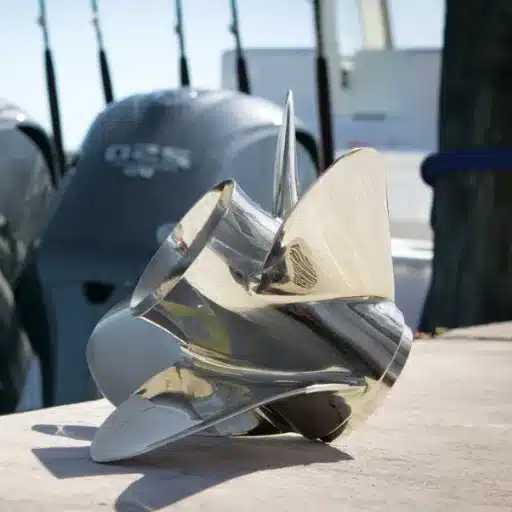
Center console / offshore fishing: Stainless steel. You need corrosion resistance, thin blade efficiency, and the durability to handle 100+ saltwater hours per year.
Inboard cruiser/yacht: Nibral. Continuous immersion, natural anti-fouling, and superior cavitation resistance make it the clear winner.
Sailboat/trawler: Bronze or Nibral. Weight is less critical than corrosion resistance and repairability.
Pontoon/bay boat (light saltwater): Stainless if budget allows, premium aluminum if you rinse meticulously.
Small jon boat/kayak: Aluminum for gas outboards, composite for electric motors.
By Usage Pattern
200+ hours per year in saltwater: Stainless or Nibral. Anything else becomes a maintenance and replacement burden.
50-100 hours per year: Stainless is ideal. Premium aluminum is acceptable if you are diligent about rinsing and anodes.
Occasional saltwater (under 50 hours): Aluminum with careful maintenance is fine. Keep a spare onboard.
By Budget
Under $200: Standard aluminum. Accept that you will replace it every 1-2 seasons.
$300-600: Entry-level stainless. The best long-term value for most saltwater outboards.
$600-1,200: Premium stainless or bronze. Better blade designs, longer life, improved efficiency.
$1,200+: Nibral for inboards. Not cheaper, but unbeatable for durability.
For a complete overview of all propeller materials and their properties, see our boat propeller materials guide. And for the foundational comparison that underpins this entire topic cluster, read our aluminum vs stainless steel propeller comparison.
Frequently Asked Questions
What is the most corrosion-resistant propeller material for saltwater?
Nibral has the lowest corrosion rate in saltwater at 0.02-0.05 mm per year and provides natural anti-fouling from its copper content. However, it is primarily available for inboards. For outboards, marine-grade stainless steel (316/431) is the most corrosion-resistant practical option.
How long do stainless steel propellers last in saltwater?
Marine-grade stainless steel propellers last 8-15 years in saltwater with basic maintenance. Super duplex alloys can push past 15 years. Lifespan depends heavily on anode maintenance, rinse frequency, and whether the boat sits in the water continuously or is trailered.
Do aluminum propellers work in saltwater?
They function, but they corrode significantly faster. Standard aluminum lasts 1-2 seasons in heavy saltwater use. Premium alloys like Mercalloy extend that to 2-3 seasons. Aluminum requires more diligent maintenance — rinsing after every trip, vigilant anode checks, and protective coatings. For a full breakdown, see our stainless steel propeller benefits guide.
What is Nibral, and why is it better than stainless for inboards?
Nibral is a nickel-bronze-aluminum alloy used primarily for inboard propellers. It resists cavitation erosion better than stainless steel, provides natural anti-fouling, absorbs impact energy instead of transferring it to the drivetrain, and is easier to repair. For continuous saltwater immersion, Nibral outperforms stainless steel in every metric except ultimate tensile strength.
How often should I replace zinc anodes in saltwater?
Check anodes every 3-4 months. Replace them when they reach 40-50% depletion, which typically happens every 6-12 months in saltwater. If anodes are not depleting, they may not be making proper electrical contact.
Can I use a freshwater propeller in saltwater?
Any propeller material can be used in saltwater, but materials not designed for marine corrosion will fail rapidly. Standard 304-grade stainless, for example, will pit within a season. Always choose marine-grade materials and maintain anodes regardless of where the prop was originally sold.
What coating protects propellers from saltwater corrosion?
Anti-fouling coatings designed for propellers — typically copper-based or ceramic — reduce both marine growth and corrosion. Anodizing is effective for aluminum. For stainless, the best protection is vigilant anode maintenance rather than coatings.
Conclusion
The best propeller material for saltwater is not a single answer. It is a matching exercise. Match the material to your boat type, your usage pattern, and your maintenance discipline.
For center consoles and offshore outboards running 100+ saltwater hours per year, marine-grade stainless steel is the clear winner on performance, durability, and cost per season. For inboard cruisers and yachts in continuous immersion, Nibral outperforms everything else. For casual recreational boaters on a budget, aluminum works if you accept the shorter lifespan and stay on top of maintenance. Bronze and composite fill the remaining niches with their own strengths.
The mistake is assuming one material fits all. Saltwater is unforgiving, but it is predictable. Choose the right material, maintain it properly, and your propeller will outlast your expectations.
Not sure which material fits your boat and engine? Contact Captain Marine for a free consultation. We will match your hull, engine, and saltwater usage to the right propeller material and model.