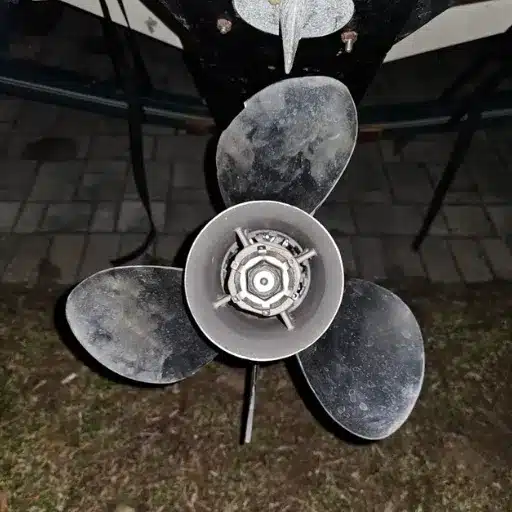
Propeller repair typically costs $40-150 for aluminum and $100-400+ for stainless steel, with stainless repairs running roughly 2-3 times more than aluminum. But the material that costs more to repair is often the smarter financial choice, because replacement cost—not repair cost—determines whether a fix makes sense.
What if that bent propeller in your garage is worth fixing after all? Most boaters assume aluminum is always cheaper to own and stainless is always expensive to maintain. The reality is more interesting. Aluminum does cost less per repair, yet it damages more easily and is harder to justify repairing once damage is severe. Stainless steel repair bills are higher, but because a new stainless prop costs $400-1,000+, paying $200 to restore a damaged blade is often the better call.
At Captain Marine, we help boaters make this decision every season. This guide breaks down real 2026 prop-shop pricing, explains what drives the cost difference, and gives you a simple rule for deciding whether to repair or replace.
Key Takeaways
- Aluminum prop repair costs $40-150; stainless steel prop repair costs $100-400+.
- Stainless repairs cost 2-3x more, but are more often worth doing because replacement cost is much higher.
- Use the 50% rule: repair if the quote is less than half the cost of a new propeller.
- Die-cast aluminum props usually cannot be repaired; sand-cast aluminum can be.
- Hidden damage to the prop shaft, hub, or lower unit can turn a $150 repair into a $1,500+ bill.
The Short Answer: Propeller Repair Cost Aluminum vs. Stainless Steel
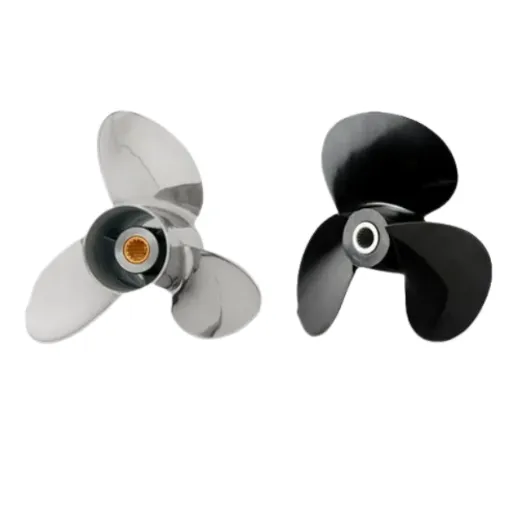
Here is the fastest way to understand the decision before we look at specific numbers:
- Aluminum prop repair: $40-150 for a typical reconditioning job.
- Stainless steel prop repair: $100-400+, depending on diameter, blade count, and welding needs.
- Stainless repair costs more upfront, but is justified by a higher replacement cost.
- Aluminum is cheaper to fix, but severe damage often makes replacement the smarter option.
- The 50% rule works for both materials: if the repair quote is under half the cost of a new prop, repair it.
That is the core idea. The sections below explain why those numbers exist, what shops actually charge, and how to avoid surprises when you drop your prop off for service.
Typical Repair Costs by Material
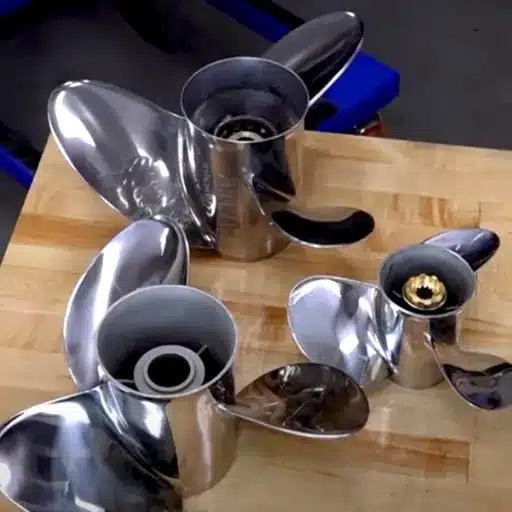
Repair pricing varies by region, shop, and damage severity, but several established prop shops publish rate sheets that give a reliable baseline. The data below reflects real 2026 pricing from shops across the United States.
Aluminum Propeller Repair Costs
Aluminum is the softer, less expensive material, and that shows in repair bills. Expect to pay:
- $40-75 at smaller regional shops like Black Creek Propeller in Michigan.
- $65-130 by diameter at Midwest Propeller, one of the larger U.S. repair services.
- $35-80 at East Coast Propeller / Boston Forging and Welding for most 3- and 4-blade props.
- $100-150 is a typical full reconditioning estimate cited by Discover Boating.
Surcharges are common. Most shops add 15% for a 4-blade prop and 25% for a 5-blade prop. If the blade needs welding to fill a chip or nick, add another $5-50 per spot. A mirror polish or high-buff finish can add $30-50 if you want the prop to look new again.
Stainless Steel Propeller Repair Costs
Stainless steel is harder, denser, and requires more specialized welding and grinding. The result is a higher bill:
- $100 and up at Black Creek Propeller.
- $170-245 by diameter at Midwest Propeller for single-prop drives.
- $240-280 each for duo-props and high-performance designs.
- $180-425 at Prop Depot for wake, ski, and surf boat props.
- $200-400 is the typical range cited by Discover Boating.
Stainless repairs often include TIG welding, blade straightening, pitch correction, balancing, and polishing. The higher labor cost can’t be avoided, but the economics usually work in the boater’s favor because a new stainless propeller costs significantly more than a new aluminum one.
Shop-by-Shop Cost Comparison
| Diameter | Aluminum 3-Blade | Stainless 3-Blade |
|---|---|---|
| 6″-11″ | $65 | $170 |
| 11⅛”-13⅞” | $75 | $180 |
| 14″-15½” | $85 | $220 |
| 15⅝”-19″ | $100 | $245 |
| 19⅛”+ | $130 | Varies |
Source: Midwest Propeller 2026 rate sheet. Prices do not include shipping, rush fees, or major welding.
If you are weighing whether stainless steel is worth the long-term investment, our complete aluminum vs. stainless steel propeller comparison covers every factor from performance to durability. For a deeper look at the ROI question, see our analysis of whether stainless steel propellers are worth it.
What Drives Propeller Repair Cost
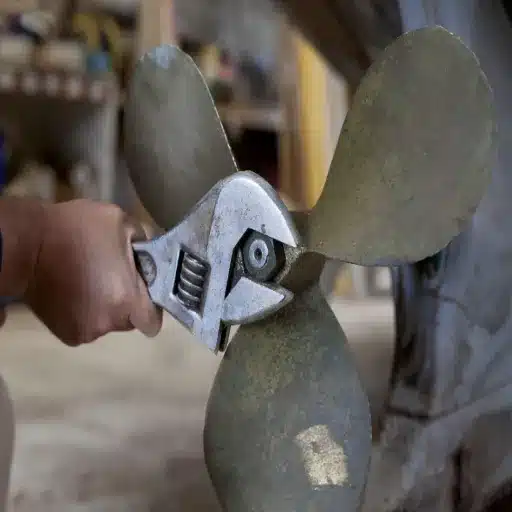
The material is the only variable. Several factors move the final quote up or down.
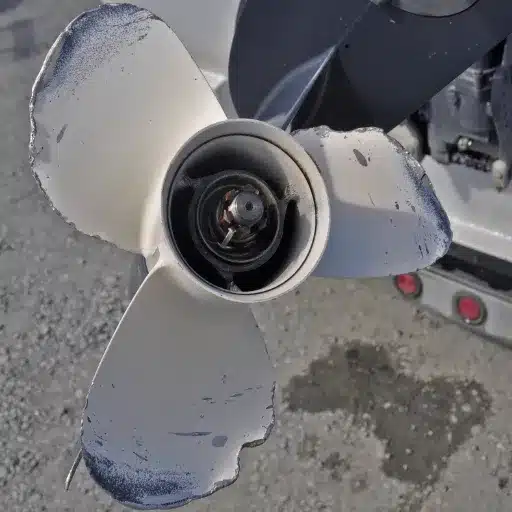
Damage severity. A small bend or rolled edge is a quick fix. A crack, missing blade material, or a bent hub requires welding, grinding, and careful balancing.
Propeller diameter and blade count. Larger props need more labor and material. Shops commonly add 15% for 4-blade props and 25% for 5-blade props.
Welding needs. Filling chips, nicks, or cracks with weld metal adds $5-50 per spot on aluminum and more on stainless.
Balancing and pitch correction. A repaired prop must spin true and hold its original pitch. This step is included in most reconditioning prices, but complex corrections may cost extra.
Shipping. If you do not live near a prop shop, expect $40-80 each way for insured shipping. Some boaters wait until the off-season and combine shipping with other maintenance to save money.
Turnaround time. Rush service during peak season can add 25-50%. Shops are busiest in spring, so dropping off a prop in fall often saves both time and money.
When Mike ran over a submerged log on his first trip of the season, his 15-inch stainless prop had two bent blades and a chipped edge. The shop quoted $245 for straightening, welding, and balancing. A new prop of the same specs costs $580. Mike repaired it, spent the saved money on a spare aluminum prop, and kept fishing. His decision was simple once he saw the replacement cost.
Aluminum vs. Stainless Steel: Repairability Differences
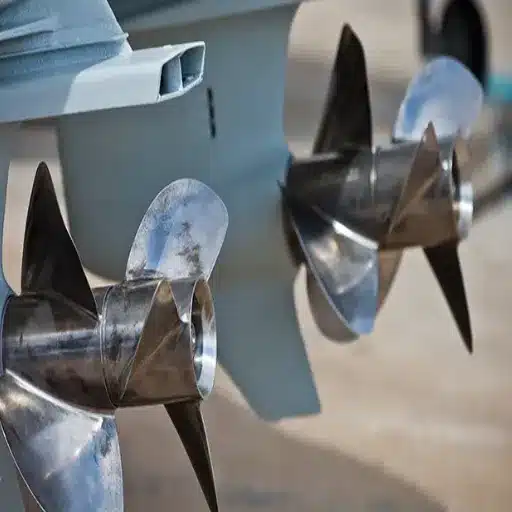
Not all propellers are equally repairable. The material affects both the cost and the likelihood that a repair will succeed.
Aluminum Props
Aluminum is soft and forgiving. When it hits something, the blades tend to bend rather than crack. That sacrificial behavior protects your lower unit, but it also means aluminum props need repair more often.
However, not all aluminum props are repairable. Die-cast aluminum props are made by pouring molten aluminum into a mold. The metal is brittle, and blades often break when a shop tries to straighten them. According to Michigan Wheel, die-cast props usually cannot be repaired and must be replaced.
Sand-cast aluminum props are different. They are stronger and more ductile, making them good candidates for straightening and re-pitching. Repair typically costs about one-third to one-half the price of a new sand-cast aluminum prop.
Even repairable aluminum has limits. Each time a blade is bent and straightened, the metal experiences fatigue. After several repair cycles, the blade may become unreliable.
For a deeper look at where aluminum shines and where it falls short, see our honest aluminum propeller pros and cons guide.
Stainless Steel Props
Stainless steel is roughly five times stronger than aluminum, according to Michigan Wheel. Blades are thinner, produce less drag, and hold their geometry longer. When damage occurs, stainless steel usually bends less and cracks more.
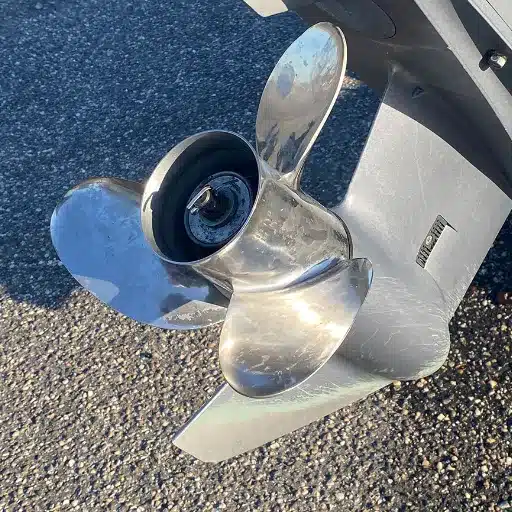
The good news is that stainless steel repairs beautifully. A skilled prop shop can weld chips and grind blades back to profile. They can also restore pitch and cup, polish the surface, and balance the assembly. The result is often nearly indistinguishable from a new prop.
Because a new stainless prop costs $400-1,000+, spending $200-300 on a repair is usually easy to justify. For a deeper breakdown of why stainless steel rewards the higher investment, read our stainless steel propeller benefits guide.
Repair or Replace? Use the 50% Rule
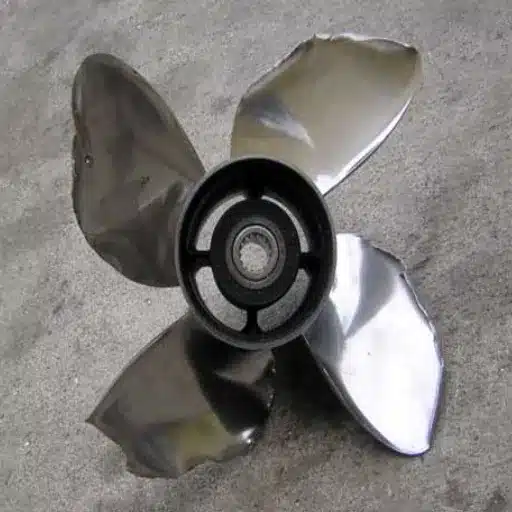
The simplest way to decide is to compare the repair quote to the replacement cost.
If the repair is less than 50% of a new propeller’s price, repair it.
For example:
- A new aluminum prop costs $180. A repair quote of $75 is 42% of the replacement cost. Repair it.
- A new stainless prop costs $650. A repair quote of $280 is 43% of the replacement cost. Repair it.
- A new aluminum prop costs $200. A repair quote of $120 is 60% of the replacement cost. Replacement is probably smarter.
This rule is not absolute, but it removes emotion from the decision.
When to Repair
- Damage is limited to the blades.
- No cracks reach the hub or blade root.
- The prop is otherwise in good condition.
- It is a high-quality stainless steel prop you want to keep.
- You need a quick fix while keeping a spare on board.
When to Replace
- Cracks extend to the hub or root of the blade.
- More than 10% of the blade surface is missing.
- The prop has already been repaired multiple times.
- The hub is spun, cracked, or damaged.
- Vibration or poor performance persists after repair.
- You want to change pitch, diameter, or blade count.
When Lisa brought her 21-pitch aluminum prop to a shop after a rocky landing, the technician found cracks near the hub. The repair quote was 95,wellunderhalfthe95,wellunderhalfthe220 replacement cost. But the cracks made the blade unsafe. Lisa replaced the prop instead. The 50% rule gave her a starting point, but safety overrode the math.
Hidden Damage That Raises the Real Cost
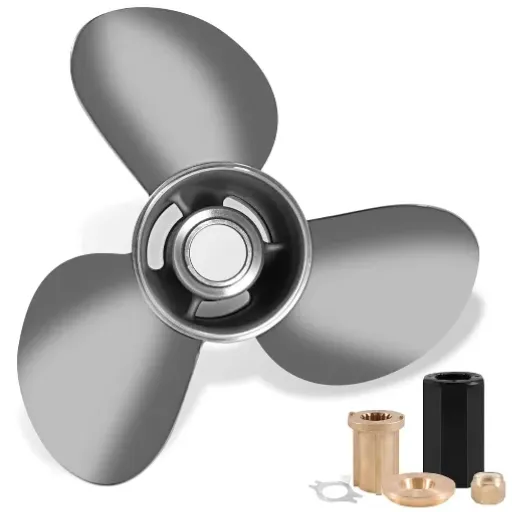
A propeller strike can damage more than the blades. Ignoring the surrounding hardware is how a $150 repair turns into a $1,500+ bill.
Prop shaft. A bent or nicked shaft will destroy even a perfectly repaired prop. Check for runout, corrosion, and spline damage.
Thrust washer and spacer. Worn or grooved washers cause vibration and uneven loading. They are cheap to replace but expensive to ignore.
Lower unit/gearcase. A hard impact can crack the gearcase, damage seals, or misalign internal gears. If vibration or noise appears after a strike, have a mechanic inspect the lower unit.
Hub. The rubber or plastic hub inside the propeller can spin, crack, or deteriorate. Symptoms include engine over-revving without a matching speed increase. Rehabbing is far cheaper than replacing the entire propeller.
Shaft seal. Fishing line wrapped around the propshaft can cut the seal and let water into the lower unit. Always inspect the seal after removing the prop.
DIY Minor Propeller Repair: What It Costs
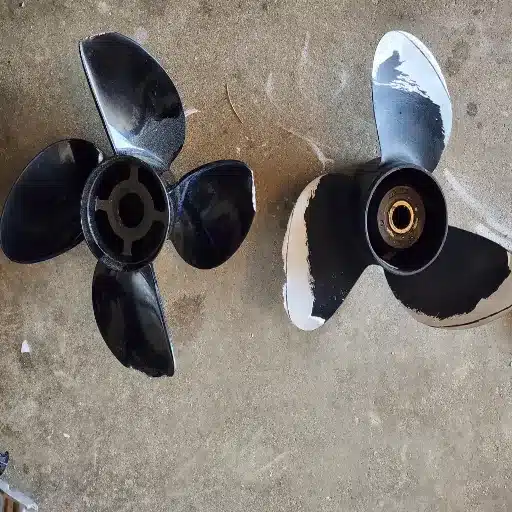
Some small repairs are safe to handle at home. The cost is low, but the limitations are real.
Basic tool kit:
- Mill bastard file: $10-20
- Sandpaper assortment: $5-10
- Marine grease: $8-12
- Propeller puller (if needed): $30-80
A DIYer can smooth small nicks, file off burrs, and clean corrosion. But balancing, pitch correction, and blade straightening require a prop shop. An unbalanced prop will vibrate, stress the engine, and eventually damage the lower unit. If the damage is more than cosmetic, take it to a professional.
Ready to upgrade instead of repairing? If your current prop is the wrong size or material for your boating style, a precision-engineered replacement can restore and exceed your boat’s original performance. Explore Captain Marine propellers →
5-Year Total Cost of Ownership
Repair cost matters, but repair frequency matters too. Here is how aluminum and stainless steel compare over a typical 5-year ownership window for a recreational boater.
| Material | New Prop Cost | Repair Frequency | Avg. Repair Cost | 5-Year Estimate |
|---|---|---|---|---|
| Aluminum | $150-300 | 1-2 times | $75-125 | $225-550 |
| Stainless Steel | $400-700 | 0-1 times | $200-300 | $400-1,000 |
Aluminum is cheaper to buy and cheaper to fix, but it gets damaged more often. Stainless costs more upfront and per repair, but it needs repair less frequently and lasts longer. For a full lifespan breakdown by material and environment, see our guide on how long propellers typically last. For frequent boaters, saltwater users, or performance-focused owners, stainless steel often wins on total cost of ownership.
FAQ
How much does it cost to repair a boat propeller?
Aluminum propeller repair typically costs $40-150. Stainless steel propeller repair typically costs $100-400+. Final price depends on diameter, blade count, damage severity, welding needs, and shop location.
Is it worth repairing a stainless steel propeller?
Usually yes. Because new stainless steel propellers cost $400-1,000+, spending $200-300 to repair a damaged blade is often the better financial choice. Use the 50% rule: repair if the quote is less than half the cost of replacement.
Can all aluminum propellers be repaired?
No. Die-cast aluminum props are usually too brittle to straighten and must be replaced. Sand-cast aluminum props are more ductile and can often be repaired for one-third to one-half the cost of a new prop.
What is the 50% rule for propeller repair?
Repair the propeller if the repair quote is less than 50% of the cost of a new propeller. If the repair approaches or exceeds 50%, replacement is usually the smarter option.
How long does propeller repair take?
Most professional repairs take 3-10 business days. Rush service may be available for a 25-50% surcharge. Spring is the busiest season, so off-season drop-offs often mean faster turnaround and lower prices.
Will a repaired propeller perform like new?
A quality repair from a reputable prop shop can restore performance to near-new condition. The key steps are blade straightening, pitch correction, welding if needed, balancing, and polishing. Poor repairs can leave vibration and performance issues.
What hidden damage should I check after a prop strike?
Inspect the prop shaft for bends or nicks, the thrust washer for wear, the hub for spinning or cracking, the shaft seal for cuts, and the lower unit for leaks or unusual noise. These issues can turn a small repair into a major bill.
Conclusion
The question of propeller repair cost, aluminum vs stainless steel, doesn’t have a single winner. Aluminum is cheaper to repair, but it bends more easily and is harder to justify fixing when damage is severe. Stainless steel costs more per repair, but the higher replacement cost is the smarter financial move in most cases.
Use the 50% rule as your starting point. Compare the repair quote to the cost of a new propeller. Inspect for hidden damage before you decide. And remember that the cheapest repair is the one you avoid through good maintenance and careful boating.
If your prop is damaged and you are not sure whether to repair, replace, or upgrade, contact the Captain Marine team. We will help you assess the damage, compare your options, and find the right propeller for your boat, engine, and budget.
For the full picture on how long propellers typically last, see our propeller lifespan guide. For the complete material comparison, visit our aluminum vs. stainless steel propeller guide.