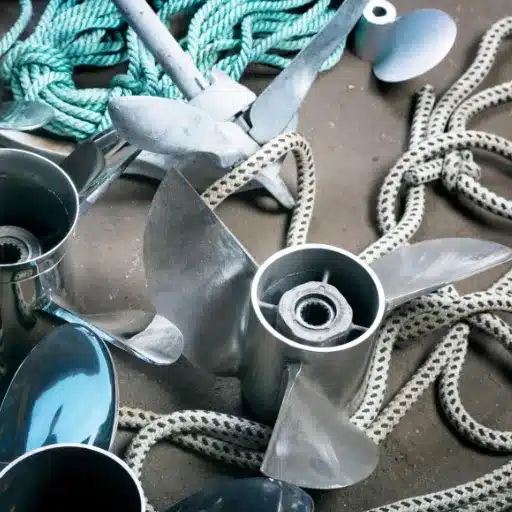
Aluminum propellers offer five clear advantages: they cost one-third to one-half the price of stainless, act as a sacrificial fuse to protect your lower unit, are lightweight and easy to swap, cost far less to repair, and modern premium alloys like Mercalloy and squeeze-cast designs close the performance gap. But they also have four real limitations: blade flex costs you RPM and speed, thicker blades create more drag, they wear out faster in saltwater, and they hit a performance ceiling on high-HP boats.
Most aluminum propeller pros and cons articles treat all aluminum the same. They do not distinguish between a $90 die-cast budget prop and a $250 Mercalloy or squeeze-cast premium design. That is like comparing a base-model sedan to a sport trim and calling it the same car.
This guide gives you the honest breakdown. We will cover every advantage and limitation with real numbers, explain what Mercalloy and squeeze-cast technology actually do, and show you when aluminum is genuinely the smarter choice — and when it is not.
Key Takeaways
- Aluminum props cost 1/3 to 1/2 the price of stainless, with entry-level options starting around $80-150
- The sacrificial fuse effect can save you $2,000+ in lower unit repairs after an underwater strike
- Repair costs run $30-80 for aluminum vs $150-400 for stainless
- Premium alloys like Mercalloy and squeeze-cast technology rival entry-level stainless performance
- Blade flex costs 150-200 RPM at WOT and creates a 2-4 MPH speed gap vs stainless
- Standard aluminum lasts 2-4 seasons in freshwater, 1-2 seasons in saltwater
- Aluminum hits a performance ceiling around 50 MPH and 150+ HP without premium alloys
The 5 Real Pros of Aluminum Propellers
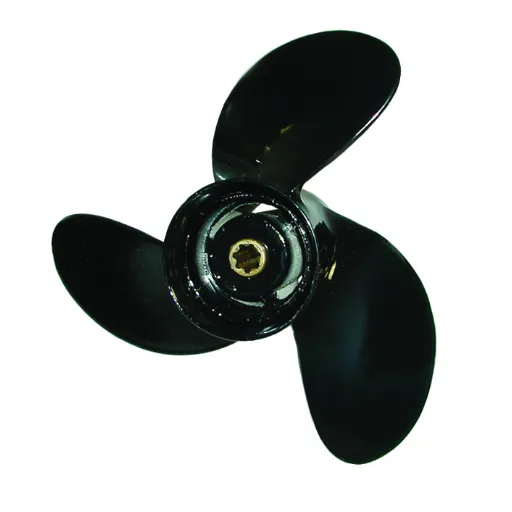
Pro 1: Upfront Cost — One-Third the Price of Stainless
The most obvious advantage is the price gap. A standard die-cast aluminum prop runs $80-150. A premium aluminum design like Mercalloy or squeeze-cast costs $180-300. Compare that to stainless steel, where entry-level options start at $300-600 and high-performance designs can push past $800.
| Propeller Type | Price Range | Manufacturing |
|---|---|---|
| Standard Die-Cast Aluminum | $80-150 | Conventional die-cast |
| Premium Aluminum (Mercalloy) | $180-250 | Patented alloy, die-cast |
| Premium Aluminum (Squeeze-Cast) | $200-300 | High-pressure squeeze-cast |
| Entry-Level Stainless Steel | $300-500 | Conventional stainless |
| High-Performance Stainless (X7) | $500-800+ | Advanced alloy |
That gap matters if you are buying your first prop, keeping a spare onboard, or running a boat where prop damage is routine. For budget-conscious boaters, aluminum is often the only practical choice. Michigan Wheel’s aluminum vs stainless steel prop comparison covers the basics from an OEM perspective.
Pro 2: The Sacrificial Fuse That Protects Your Lower Unit
Here is the advantage that no stainless steel seller wants to talk about. Aluminum is ductile. When it hits something, it bends or breaks. Stainless is rigid. When it hits something, it either survives intact or transfers the shock directly into your lower unit.
That shock can destroy gearcase seals, bend prop shafts, or crack the gear housing. A lower unit rebuild starts at $2,000 and can climb past $4,000. A replacement aluminum prop costs $80-150.
Jake runs a bass boat on Lake Guntersville. Three seasons ago he hit a submerged stump at 20 MPH. His $120 aluminum prop bent two blades. He was back on the water two days later with a $40 repair. His fishing buddy Mike hit the same stump a week later with a stainless prop. The prop survived with a small ding. But the impact cracked Mike’s lower unit seal, flooded the gearcase with water, and cost him $2,200 in repairs. “I used to laugh at Jake’s cheap aluminum prop,” Mike told us. “Not anymore.”
The physics are straightforward. Aluminum absorbs impact energy through deformation. Stainless transfers it. If you boat in rocky rivers, stump-filled lakes, or shallow flats, that sacrificial protection is worth more than any speed gain.
Pro 3: Lightweight for Better RPM Response
Aluminum weighs roughly half as much as stainless steel. A typical 15-inch aluminum prop weighs around 6-8 pounds. A comparable stainless prop weighs 12-16 pounds. That difference has three practical effects:
- Easier handling: Swapping props at the ramp or keeping a spare onboard is less of a chore.
- Better RPM response: Less rotating mass means the engine revs more freely during acceleration.
- Reduced engine load: The lower unit bearings and seals work less hard spinning a lighter prop over thousands of hours.
For smaller outboards under 115 HP, the weight advantage is more noticeable. The engine does not have to overcome as much inertia to get the prop spinning.
Pro 4: Easier and Cheaper to Repair
A dented or bent aluminum blade can often be hammered back into shape by a competent prop shop. Typical aluminum repair costs run $30-80, depending on damage severity. A new aluminum prop costs $80-250. So repair is often the smarter economic choice.
Stainless repairs are a different story. Because stainless steel is harder and less ductile, fixing a bent blade requires more specialized equipment. Typical stainless repair costs run $150-400. At that price, replacement often makes more sense.
| Repair Scenario | Aluminum Cost | Stainless Cost |
|---|---|---|
| Minor ding (1 blade) | $30-50 | $80-150 |
| Moderate bend (2 blades) | $50-80 | $150-250 |
| Severe damage (3+ blades) | $80-120 | $250-400 |
| Replacement (new prop) | $80-250 | $300-800+ |
The math is clear. Aluminum gives you more repair options at a lower cost. For a complete repair cost comparison, read our propeller repair cost guide.
Pro 5: Premium Alloys Close the Performance Gap
Not all aluminum is created equal. Two innovations have narrowed the performance gap between aluminum and stainless steel:
Mercalloy: Mercury Marine’s patented aluminum alloy has a higher strength-to-weight ratio than standard aluminum. That lets Mercury cast thinner blades without sacrificing durability. Thinner blades mean less drag, which translates to better speed and efficiency. Mercalloy props like the Black Max and SpitFire are rated for engines up to ~250 HP and speeds near 50 MPH.
Squeeze-Cast Technology: Turning Point Propellers uses a proprietary squeeze-casting process for its Hustler aluminum line. The process applies pressure during solidification, producing a high-density, tighter grain structure with fewer voids than conventional die-casting. Turning Point markets the Hustler as delivering “stainless performance at aluminum prices.” Explore the Hustler aluminum propeller line for specs and fitment.
| Technology | How It Works | Result |
|---|---|---|
| Conventional Die-Cast | Standard casting process | Good, affordable props |
| Mercalloy (Mercury) | Patented alloy formula | Thinner blades, higher strength |
| Squeeze-Cast (Turning Point) | Pressure-solidified casting | Stiffer blades, reduced flex |
These premium options cost more than basic aluminum but still undercut stainless by a wide margin. If you want an aluminum price with near-stainless performance, these are the options to consider.
The 4 Real Cons of Aluminum Propellers
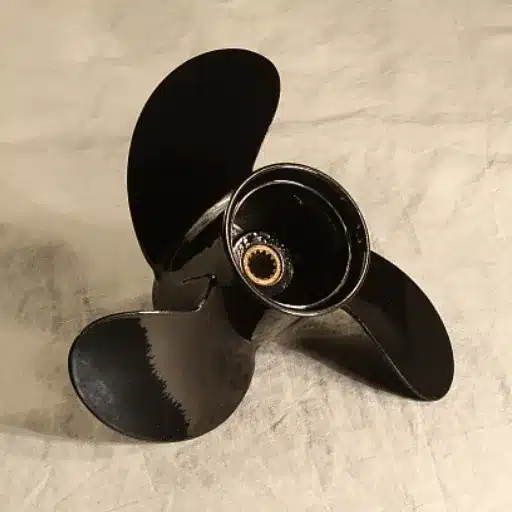
Con 1: Blade Flex Costs You RPM and Speed
Aluminum has a lower modulus of elasticity than stainless steel. In plain terms, aluminum blades bend and twist more when they push against water. Under high RPM and heavy load, an aluminum blade can lose a meaningful portion of its designed pitch.
This is called effective pitch loss. The prop behaves like a lower-pitch propeller at the exact moment you need maximum thrust. Propeller design engineer Ken Barnes has cited a 3-5% performance disadvantage for aluminum compared to stainless, specifically due to blade flex.
In controlled testing, boats with aluminum props consistently ran 150-200 RPM lower at wide-open throttle than identical boats with stainless props. That translates to a 2-4 MPH speed gap.
| Boat Type | Engine | Aluminum Top Speed | Stainless Top Speed | Gap |
|---|---|---|---|---|
| 20 ft Bowrider | 150 HP | ~44 MPH | ~47 MPH | -3 MPH |
| Bass Boat | 200 HP | ~48 MPH | ~50-51 MPH | -2-3 MPH |
| Offshore CC | Twin 300 HP | ~46 MPH | ~48 MPH | -2 MPH |
For casual boaters, that gap may not matter. For tournament anglers or performance enthusiasts, it is a real penalty.
Con 2: Thicker Blades Create More Drag
Because aluminum lacks the ultimate strength of stainless steel, manufacturers must cast the blades thicker to prevent failure. Thicker blades create more hydrodynamic drag. More drag means the engine works harder to maintain speed.
The efficiency penalty is most noticeable at cruising RPM, where most boaters spend 80% of their time. While exact numbers vary by hull and engine, the drag difference contributes to the fuel economy gap between aluminum and stainless.
Premium aluminum options help. Mercalloy’s thinner blades and squeeze-cast’s stiffer profiles reduce the penalty. But even the best aluminum cannot match the thin blade profiles that advanced stainless alloys enable.
Con 3: Shorter Lifespan, Especially in Saltwater
Aluminum corrodes faster than stainless steel in marine environments. In saltwater, the difference is dramatic.
| Material | Freshwater Lifespan | Saltwater Lifespan |
|---|---|---|
| Standard Aluminum | 2-4 seasons | 1-2 seasons |
| Premium Aluminum (Mercalloy) | 3-5 seasons | 2-3 seasons |
| Conventional Stainless | 7-10+ years | 5-8 years |
| X7 / TP17 Alloys | 10+ years | 8-10+ years |
Captain Elena runs a charter out of Tampa Bay. She logs 200-hour seasons in saltwater and tracked every prop replacement. Her standard aluminum props lasted 18 months on average. She tried Mercalloy and pushed that to 30 months. “The math finally pushed me to stainless,” she said. “I was spending $150 every season and a half on aluminum replacements. A stainless prop costs more upfront but lasts five times longer in saltwater.” For a full saltwater-focused breakdown, read our best propeller material for saltwater guide.
For freshwater boaters, the lifespan gap is less severe. But in saltwater, corrosion eats aluminum props alive. For a complete lifespan comparison across all materials, see our guide on how long propellers last.
Con 4: Performance Ceiling for High-HP Boats
Aluminum has a performance ceiling. Standard aluminum props are generally recommended for outboards up to 115 HP and speeds under 40 MPH. Premium options like Mercalloy extend that to ~250 HP and speeds near 50 MPH.
But once you are running high-performance hulls, big-block outboards, or speed boats pushing past 50 MPH, aluminum simply cannot deliver. The blade flex, drag penalty, and durability limits become unacceptable.
| Use Case | Max HP (Standard Al) | Max HP (Premium Al) | Recommended Material |
|---|---|---|---|
| Small jon boat, pontoon | 90 HP | 115 HP | Aluminum |
| Family bowrider, fishing | 150 HP | 200 HP | Aluminum or Stainless |
| Performance bass boat | 200 HP | 250 HP | Stainless |
| Offshore sportfishing | 250+ HP | 300+ HP | Stainless |
| High-speed runabout | 150 HP | 200 HP | Stainless |
The 50 MPH wall is real. Most aluminum props — even premium ones — are not designed to handle the loads and RPM of sustained high-speed operation.
Premium Aluminum vs Entry-Level Stainless: The Overlap Zone
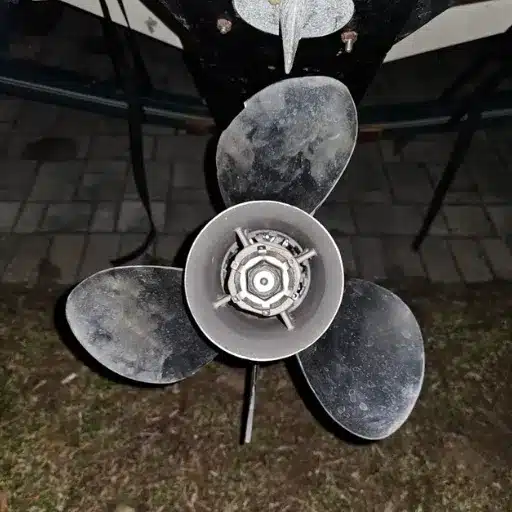
Here is where most buyers get stuck. A premium aluminum prop like a Mercalloy Black Max ($220) costs roughly the same as a budget stainless prop ($250-300). Which is the better buy?
The answer depends on your priorities:
| Factor | Premium Aluminum (Mercalloy/Squeeze-Cast) | Entry-Level Stainless |
|---|---|---|
| Upfront Cost | $180-300 | $250-400 |
| Speed | Near-stainless | Better |
| Durability | Good (3-5 seasons of freshwater) | Excellent (7-10 years) |
| Repair Cost | $30-80 | $150-400 |
| Lower Unit Protection | Excellent (sacrificial) | Poor (rigid, transfers shock) |
| Saltwater Life | 2-3 seasons | 5-8 years |
| Weight | Lighter | Heavier |
Choose premium aluminum if: You boat in freshwater or light saltwater, you want lower unit protection, you value repairability, and you do not need maximum speed.
Choose entry-level stainless if: You need maximum durability, you run in saltwater, you want the speed edge, and you are willing to pay more for repairs.
Tom, a weekend pontoon owner on Table Rock Lake, faced exactly this choice. His dealer offered him a Mercalloy prop for $220 or a basic stainless for $280. He chose the Mercalloy. Two seasons later he had hit three stumps, paid $110 total in repairs, and still had the same prop. His brother-in-law bought the stainless. One stump strike dented the prop and cost $180 to repair. “I thought stainless was the no-brainer upgrade,” Tom said. “Turns out the smarter upgrade was premium aluminum.”
Who Should Choose Aluminum?
The Budget-Conscious Boater
If $300 for a propeller feels like a lot, aluminum is the answer. You get on the water for $100-150 instead of $400-600. That gap pays for a season of fuel.
The Shallow-Water Fisherman
If you fish skinny water, stump-filled lakes, or rocky rivers, aluminum’s sacrificial protection is worth more than speed. A $120 prop that bends is cheaper than a $2,000 lower unit rebuild.
The Small-Outboard User (Under 115 HP)
On smaller motors, the performance gap between aluminum and stainless is smaller. The engine cannot generate enough torque to make blade flex a major issue. Aluminum is more than adequate.
The Boater Who Wants a Sacrificial Prop
Some boaters intentionally run aluminum as a sacrificial prop in hazardous waters, keeping a stainless spare for clean-water days. It is a practical strategy that aluminum makes affordable.
When Aluminum Is the Wrong Choice
Aluminum is not always the right call. Avoid it if:
- You run a high-HP performance boat (150+ HP pushing past 45 MPH)
- You log 100+ hours per season in saltwater
- Maximum speed and efficiency are your top priorities
- You want a prop that lasts a decade with minimal maintenance
For a full comparison, see our aluminum vs stainless steel propeller comparison. And for the complete material landscape, check our boat propeller materials guide.
| Use Case | Best Choice | Why |
|---|---|---|
| Budget pontoon cruising | Aluminum | Cost-effective, adequate performance |
| Shallow-water bass fishing | Aluminum | Sacrificial protection for the lower unit |
| Saltwater charter (200+ hrs/yr) | Stainless | Corrosion resistance and longevity |
| Tournament bass (high speed) | Stainless | Speed and hole shot matter |
| Family bowrider (mixed use) | Premium Al or Stainless | Depends on the budget and the waters |
| Small jon boat (under 90 HP) | Aluminum | Perfect match for low HP |
Frequently Asked Questions
Are aluminum propellers worth it?
Yes, for most recreational boaters. Aluminum props deliver adequate performance at one-third the cost of stainless. The sacrificial fuse effect, easy repairability, and light weight make them the practical choice for budget-conscious boaters, shallow-water anglers, and small-outboard users. They are only a poor value if you run high-HP boats in saltwater, where replacement costs add up quickly.
Do aluminum propellers protect the lower unit?
Yes. Aluminum’s ductility allows it to bend or break on impact, absorbing energy that would otherwise transfer to the gearcase, shaft, and seals. This sacrificial protection can prevent $2,000+ lower unit repairs. Stainless props are more rigid and transfer impact shock directly into the drivetrain.
What is Mercalloy?
Mercalloy is a patented aluminum alloy developed by Mercury Marine specifically for propellers. It has a higher strength-to-weight ratio than standard aluminum, allowing thinner blade designs with less drag. Mercalloy props like the Black Max and SpitFire are rated for engines up to ~250 HP and speeds near 50 MPH.
Can aluminum propellers be repaired?
Yes, and affordably. Typical aluminum prop repair costs $30-80 for minor to moderate damage. Because aluminum is ductile, bent blades can often be hammered back into shape. Severely damaged props may not be worth repairing, but replacement costs $80-250 — still far less than stainless.
How long do aluminum propellers last?
Standard aluminum props last 2-4 seasons in freshwater and 1-2 seasons in saltwater. Premium options like Mercalloy extend that to 3-5 seasons of freshwater and 2-3 seasons of saltwater. In saltwater, stainless lasts 3-4x longer.
Are aluminum propellers good for saltwater?
They work, but they wear out quickly. Saltwater accelerates aluminum corrosion dramatically. Standard aluminum may need replacement after just one season of heavy saltwater use. Premium alloys like Mercalloy offer better corrosion resistance, but still cannot match stainless steel. If you boat primarily in saltwater, stainless is usually the smarter long-term investment.
Conclusion
Aluminum propeller pros and cons are not simple. The material is not just the budget option, and stainless is not always the upgrade. The right choice depends on your boat, your waters, your budget, and your priorities.
Aluminum wins on cost, repairability, lower unit protection, and weight. It loses on speed, durability, and high-HP performance. Premium alloys like Mercalloy and squeeze-cast technology narrow the gap but cannot close it entirely.
If you are a casual freshwater boater, a shallow-water angler, or a budget-conscious buyer, aluminum is probably the smarter choice. If you run saltwater, high HP, or demand maximum performance, stainless is worth the premium.
Not sure which prop fits your boat? Contact Captain Marine for a free consultation. We will match your hull, engine, and use case to the right prop — aluminum, stainless, or premium alloy.