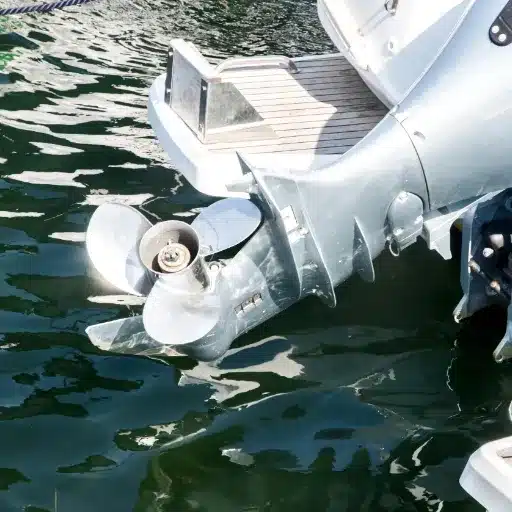
Composite propellers are boat propellers made from fiber-reinforced polymers rather than metal. They split into three main categories: modular composite props with replaceable blades, fixed molded composite props, and high-performance carbon fiber props. Each type trades raw strength for benefits like corrosion immunity, lower unit protection, and lighter weight.
Most boaters first hear about composite propellers after a bad day on the water. They hit a rock, bend an aluminum blade, and a friend says, “You should try a Piranha.” That advice can be brilliant or misguided, depending on how and where they boat. Composite propellers solve real problems, but they also introduce new ones.
This guide explains what composite propellers are made of, where they shine, where they fall short, and how to decide if one belongs on your boat.
Key Takeaways
- Composite propellers use fiber-reinforced polymers, with modular, fixed, and carbon fiber variants for different needs.
- Modular Piranha-style props excel at shallow-water strikes because you can swap individual blades in minutes.
- Carbon fiber propellers offer the best efficiency and weight savings but cost far more than plastic composites.
- Composite props generally flex more and top out lower than stainless steel or high-quality aluminum.
- The best use cases are rocky rivers, saltwater trolling, backup props, and electric or lightweight boats.
What Are Composite Propellers Made Of?
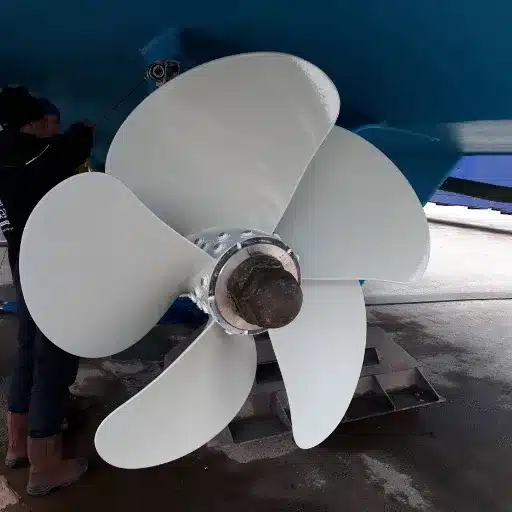
Composite propellers are built from fiber-reinforced polymers instead of aluminum, stainless steel, or bronze. The fibers provide strength. The polymer matrix holds everything together.
Common materials include:
- Glass fiber reinforced polymers (GFRP): Used in many modular and fixed composite props because glass fiber is affordable and impact-tolerant.
- Carbon fiber reinforced polymers (CFRP): Used in premium props where weight reduction and efficiency matter most.
- Thermoplastic matrices: Nylon or polyamide blends that resist corrosion, UV damage, and marine chemicals.
Piranha propellers use a proprietary aerospace-grade composite, with some hub designs over-molded around an aluminum core for stiffness. The result is a blade that absorbs impact rather than transferring it to the lower unit.
The manufacturing process matters. Compression molding and injection molding dominate lower-cost fixed props. Higher-end carbon fiber props use layered pre-preg sheets cured under heat and pressure, similar to aircraft components.
Three Types of Composite Propellers
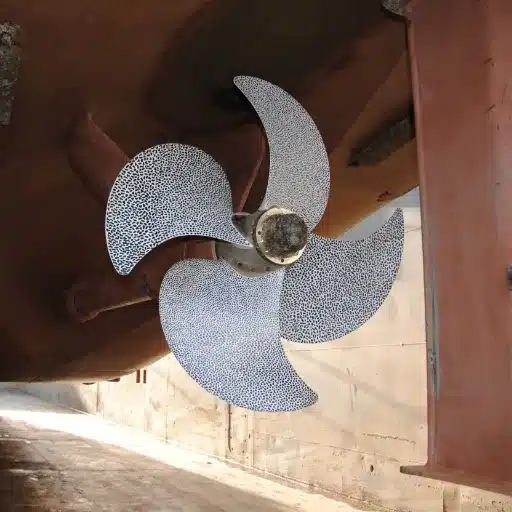
Not every composite propeller serves the same purpose. The category covers everything from weekend fishing backups to racing-grade carbon fiber.
Modular Composite Props
Modular composite propellers use a permanent central hub and individually replaceable blades. Piranha popularized this design. If a blade cracks or chips, you unbolt it and install a new one. Replacement blades typically cost $25-50, and a spare set fits in a small bag.
This design is popular in shallow or debris-filled water. The blades act as sacrificial parts. A hard hit damages a $30 blade instead of a $300 prop or a $2,000 lower unit.
Fixed Composite Props
Fixed composite props are molded as one piece, like a traditional metal prop, but made from fiber-reinforced plastic. They are corrosion-proof, lightweight, and inexpensive. They work well on trolling motors, small outboards, and houseboats where top speed is not the priority.
Carbon Fiber Props
Carbon fiber propellers sit at the high end of the composite family. They can be 40-60% lighter than metal and offer efficiency gains of 3-5% or more. Racing boats, long-distance cruising catamarans, and electric vessels increasingly use carbon fiber. The trade-off is cost, with prices often starting above $800 and climbing past $3,000.
Advantages of Composite Propellers
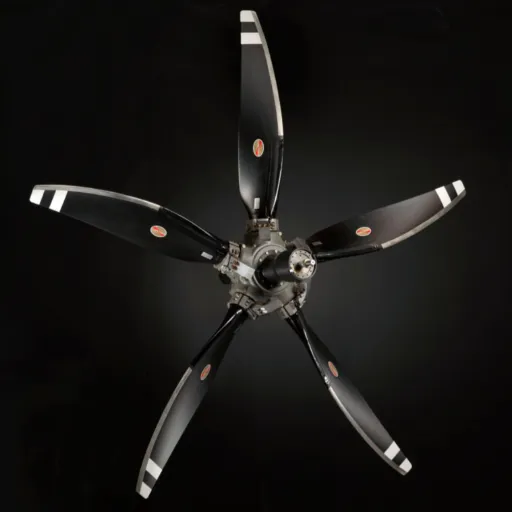
Composite propellers earn their place on boats for several reasons.
Corrosion immunity. Unlike aluminum or bronze, composite materials do not rust, pit, or dezincify. Saltwater boaters who forget to rinse after every trip still get years of service.
Lightweight. A composite prop can weigh half as much as a comparable aluminum prop and much less than stainless steel. That reduction helps small engines spin up faster and improves acceleration.
Lower-unit protection. Composite blades deform or break on impact. The force of a strike gets absorbed before it reaches the prop shaft, gears, or lower unit.
Modular repair. Piranha-style props let you swap a damaged blade in about five to ten minutes on the water. No prop shop visit. No towing bill.
Low maintenance. No anodes required. No polishing needed. A quick visual inspection is usually enough.
Cost control. A complete modular prop often costs $150-350. Replacement blades are cheap insurance against submerged rocks and logs.
Disadvantages of Composite Propellers
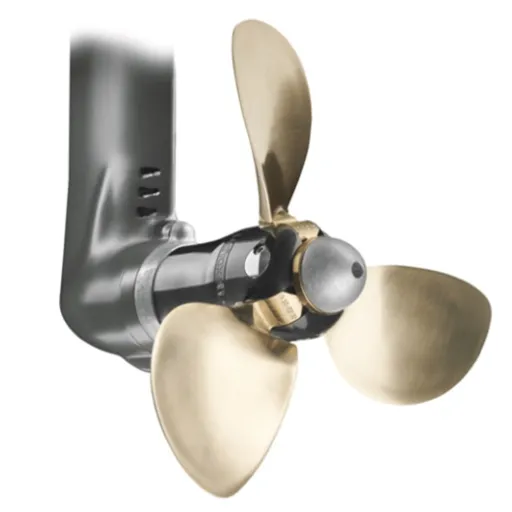
Composite propellers aren’t a universal upgrade. Their weaknesses matter on some boats.
Blade flex. Composite blades can flex under heavy load. That flex changes the effective pitch and reduces top-end speed. Some boaters report losing 1-2 mph compared to a good aluminum prop.
Impact fragility. Composite blades absorb impact well, but a hard strike can crack or shear a blade entirely. In debris-heavy water, some users replace blades more often than they expected.
Mixed durability reviews. Forum threads show real disagreement. Some boaters love the convenience. Others call composite props too fragile for rough use.
Limited high-horsepower options. Many composite props are rated for engines under 250-300 HP. High-performance boats often need the rigidity of stainless steel or carbon fiber.
Repair limitations. A cracked composite blade usually gets replaced, not repaired. Metal props can often be straightened, welded, or re-pitched.
Hub reliability concerns. The joint between a composite blade and a metal hub is a known engineering challenge. Commercial composite propeller projects spend significant testing time on this connection.
Composite vs Aluminum vs Stainless Steel
Choosing a prop material means balancing cost, performance, and risk. This table summarizes the trade-offs.
| Factor | Composite | Aluminum | Stainless Steel |
|---|---|---|---|
| Price | $85-350 | $60-250 | $300-800+ |
| Weight | Lightest | Light | Heavy |
| Corrosion resistance | Excellent | Moderate | Excellent |
| Repair | Replace blades | Straighten / weld | Weld / re-pitch |
| Top speed | Often lower | Good | Best |
| Hole shot | Good | Good | Excellent |
| Durability | Mixed | Bends on impact | Strongest |
| Best for | Shallow water, backups | Budget, general use | Performance, saltwater |
Composite props win when lower-unit protection and easy field repair matter more than raw speed. Aluminum remains the best budget choice for general recreational boating. Stainless steel still dominates performance, saltwater durability, and high-horsepower applications.
If corrosion resistance is your top concern, our guide to the best propeller material for saltwater focuses specifically on marine durability.
Piranha Propellers: The Modular Leader
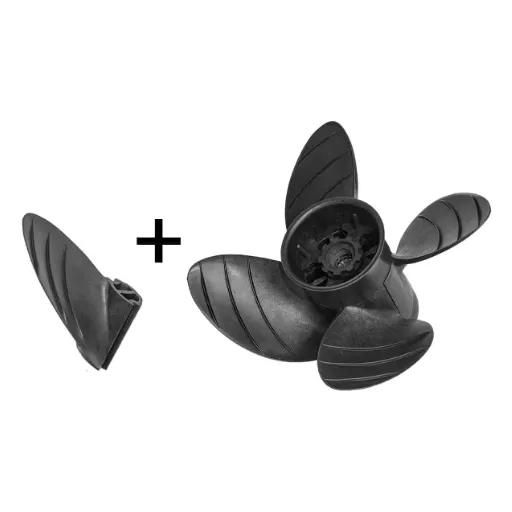
Piranha propellers are the most recognizable name in modular composite props. Their design has been around for decades and remains popular with river boaters, rental fleets, and anyone tired of prop shop bills.
The hub stays on the engine. Blades slide into place and lock with a bolt. Piranha offers three-blade and four-blade hub configurations, plus different blade shapes for acceleration or speed. The company claims its aerospace-grade composite is 15-17% stronger than aluminum by tensile strength.
HydroBites are small ridges molded into some Piranha blades. Piranha says they improve hole shot, reduce vibration, and control ventilation. Real-world feedback is mixed but generally positive for casual use.
The warranty is a major selling point. Piranha hubs carry a lifetime unconditional guarantee. If the hub fails, the company replaces it.
User experiences are split along use cases. Boaters in rocky rivers praise the ability to swap blades on the beach. Boaters who run hard in shallow, stump-filled water sometimes report blades breaking more often than they would like. The honest verdict: Piranha props are convenient and protective, but they are not indestructible.
Carbon Fiber Propellers
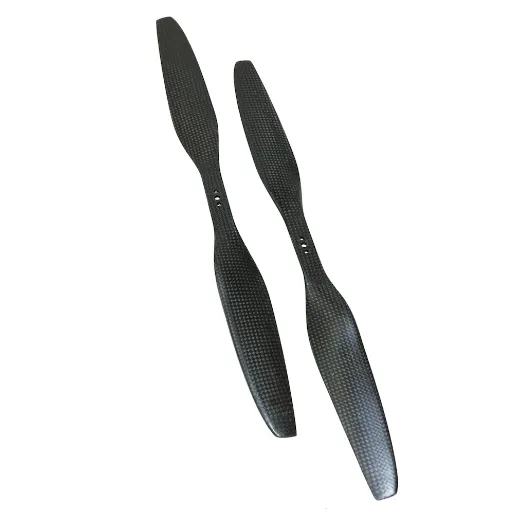
Carbon fiber propellers represent the advanced end of composite technology. They are built from carbon fiber reinforced plastic rather than glass fiber or nylon blends.
Nakashima Propeller, a major Japanese manufacturer, lists several advantages of CFRP propellers:
- Weight about one-fifth that of conventional copper alloys
- Higher fatigue strength than metal propellers
- Reduced vibration due to light weight and high damping
- Blade deformation that matches water flow, reducing overload in rough seas
- Larger possible diameters for improved efficiency
- Reduced cavitation and underwater noise
Teignbridge Propellers in the UK has developed a clamp-on carbon fiber blade system that allows individual blades to be replaced without removing the entire propeller from the shaft. Early trials on a 10-meter electric vessel showed efficiency improvements of 3-4% over traditional metal blades.
The catch is cost. Carbon fiber props start around $800 and can exceed $3,000 for large or custom designs. They also behave more stiffly than modular plastic props, so a hard strike can crack rather than deform a blade.
Carbon fiber makes most sense for electric boats, racing boats, long-distance cruisers, and commercial vessels where fuel efficiency and noise reduction justify the investment.
When to Choose a Composite Propeller
The right prop depends on how, where, and how hard you use your boat.
| Use Case | Best Composite Type | Why |
|---|---|---|
| Rocky or shallow river | Modular Piranha-style | Replace blades instead of repairing metal |
| Saltwater trolling | Fixed composite | Corrosion-proof, low maintenance |
| Backup / spare prop | Modular composite kit | Carry spare blades, swap anywhere |
| Pontoon or houseboat | Fixed composite | Smooth, quiet, corrosion-resistant |
| Electric boat | Carbon fiber | Efficiency gains, low noise, light weight |
| Performance racing | Carbon fiber | Best strength-to-weight ratio |
If you boat in water where submerged logs, gravel bars, or rocks are common, a modular composite prop can pay for itself quickly. If you need every bit of top speed and acceleration, stainless steel is still the better bet.
Need help matching a prop to your boat? Captain Marine engineers propellers for a wide range of engines and water conditions. Explore Captain Marine propellers by material →
Maintenance for Composite Propellers

Composite props need less maintenance than metal, but they aren’t zero-maintenance.
Inspect blades after every trip in shallow or debris-filled water. Look for cracks around the hub and nicks on the leading edge. Check carbon fiber props for delamination. Replace damaged blades promptly. A cracked blade can vibrate or fail under load.
Check hub bolts on modular props periodically. Vibration and water pressure can loosen hardware over time. Use the manufacturer’s torque spec.
Store spare blades out of direct sunlight. UV exposure can degrade some polymers over time, making them brittle.
For carbon fiber props, watch for impact damage that may not be visible on the surface. A small crack can grow quickly under cyclic loading.
FAQ
What are composite propellers made of?
Composite propellers are made from fiber-reinforced polymers. Common materials include glass fiber, carbon fiber, and thermoplastic matrices such as nylon or polyamide. Modular props often use glass-fiber composites, while high-performance props use carbon fiber.
Are composite propellers better than aluminum?
Not always. Composite props are better for corrosion resistance, lower-unit protection, and shallow-water repairability. Aluminum props usually offer better top speed, more predictable flex, and easier repair for minor dings.
Do composite propellers corrode?
No. Composite materials don’t corrode like metal. They’re immune to saltwater rust, pitting, and galvanic corrosion. If saltwater durability is your main concern, our guide to the best propeller material for saltwater compares all marine options.
Why do composite propellers flex?
Composite blades are less rigid than metal. Under load, the blade material bends slightly. That flex can improve hole shot, but may reduce top speed and change effective pitch.
Can composite propellers replace stainless steel?
For some boats, yes. Modular composites can replace stainless steel as a protective backup or shallow-water prop. Carbon fiber can replace stainless steel in performance or electric applications. For pure top-speed performance, stainless steel usually still wins. See our aluminum vs stainless steel propeller guide for the full metal comparison.
How much do replacement blades cost?
Replacement blades for modular composite props typically cost $25-50 each. Complete composite props generally range from $85-350. Carbon fiber props cost $800-3,000 or more.
Are Piranha propellers worth it?
Piranha props are worth it for boaters who value convenience and lower-unit protection over ultimate durability. They are especially useful in rocky rivers, rental fleets, and as backup props. They are less ideal for high-speed or heavy-load performance boating.
Conclusion
Composite propellers fill a clear niche. They protect lower units, resist corrosion, and make field repairs simple. Modular designs like Piranha let you swap a blade for the price of a lunch instead of waiting days at a prop shop. Carbon fiber options push the material into high-efficiency territory for electric boats and performance craft.
They are not the fastest option. They are not the cheapest option. They are the right option when protection, convenience, and corrosion immunity matter more than raw metal strength.
Match your prop to your water, your engine, and your priorities. Do that, and you’ll spend less time worrying about props and more time on the water.
For the broader material comparison, read our boat propeller materials guide. If you are unsure which prop fits your setup, explore Captain Marine propellers or contact our team for a recommendation.