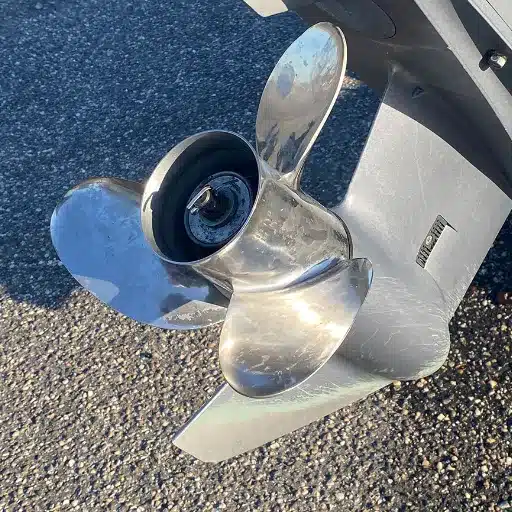
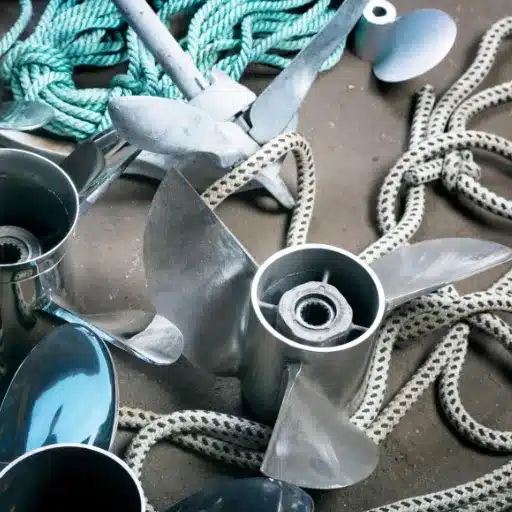
The difference between propeller cavitation and ventilation is simple: cavitation is water boiling into vapor bubbles on the propeller blade due to extremely low pressure, while ventilation is air from the surface or exhaust being drawn into the propeller. Both kill thrust and make your engine over-rev, but the fixes are completely different — and treating one like the other wastes time and money.
Your engine is screaming, but the boat is barely moving. You have ruled out fuel, filters, and spark plugs. The problem is between the lower unit and the water, but is it cavitation or ventilation? At Captain Marine, we diagnose both issues daily in our rigging shop. For a complementary field diagnostic perspective, Jim Walker at JLM Marine covers the same symptoms from an outboard-service angle. For the full propeller decision framework that prevents these problems before they start, see our boat propeller selection guide. This article walks you through the symptoms, the 60-second field test, and the fix hierarchy that gets you back on track fast.
Key Takeaways
- Ventilation is air reaching the prop; cavitation is water boiling into vapor bubbles on the blade
- Ventilation is usually a trim or mounting issue; cavitation is usually a propeller or loading issue
- Ventilation causes sudden RPM spikes of 300 to 800 RPM; cavitation causes persistent vibration and blade pitting
- Most ventilation fixes are free and take under 30 seconds; most cavitation fixes require prop repair or replacement
- Both problems accelerate engine wear, raise fuel burn, and reduce top speed if ignored
Direct Answer: What Is the Difference Between Cavitation and Ventilation?
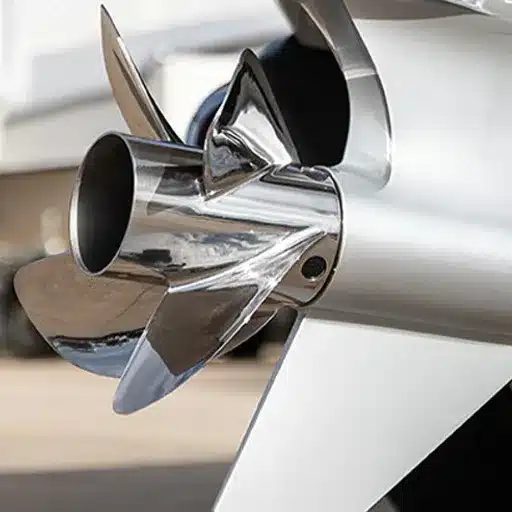
Cavitation happens when the water pressure on the forward side of a spinning propeller blade drops so low that the water turns into vapor bubbles at ambient temperature. Those bubbles travel to a high-pressure zone and implode against the blade surface like microscopic jackhammers. Over time, this pits and erodes the metal. Cavitation is a hydrodynamic problem rooted in the propeller design, condition, or load.
Ventilation happens when air — from the surface, exhaust gases, or turbulent flow off the hull — gets pulled into the propeller disc. Because air is roughly 1/800th the density of water, the propeller loses its grip instantly. The engine RPM spikes, but thrust collapses. Ventilation is a positioning or geometry problem, not a propeller-material problem.
| Factor | Cavitation | Ventilation |
|---|---|---|
| Mechanism | Water vaporizes into bubbles from low pressure | Air enters the propeller disc |
| Root cause | Damaged prop, wrong size, excessive load | Trim angle, mounting height, hull condition |
| Blade damage | Yes — pitting, erosion, cavitation burn | No direct damage |
| RPM behavior | May drop or hunt under load | Sudden spike above normal WOT |
| Vibration | Persistent, often at 3,000 to 4,500 RPM | Brief or none |
| Noise | Rumbling, growling, crackling | Rattling, howling, buzzing |
| Fix category | Hardware — prop repair or replacement | Operational — trim, driving style, mounting |
What Is Propeller Cavitation?
The Physics in Plain English
As a propeller blade spins, the curved face creates a pressure difference. The back side of the blade pulls water inward at extremely low pressure. If that pressure drops below the water’s vapor pressure, the water effectively boils at room temperature and forms tiny vapor bubbles. Those bubbles collapse violently when they hit a high-pressure zone. Each collapse releases a shockwave that hammers the blade surface. Over hours of operation, that repeated hammering eats into the metal.
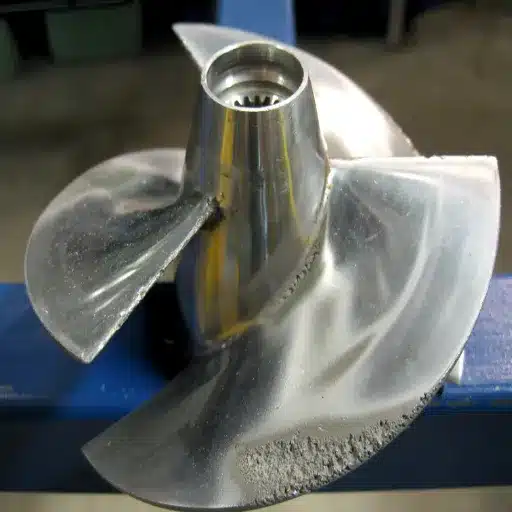
The result is pitting, erosion, and what marine technicians call “cavitation burn.” A propeller that looks fine from the dock can be badly damaged underwater, where the bubbles form.
What Cavitation Damage Looks Like
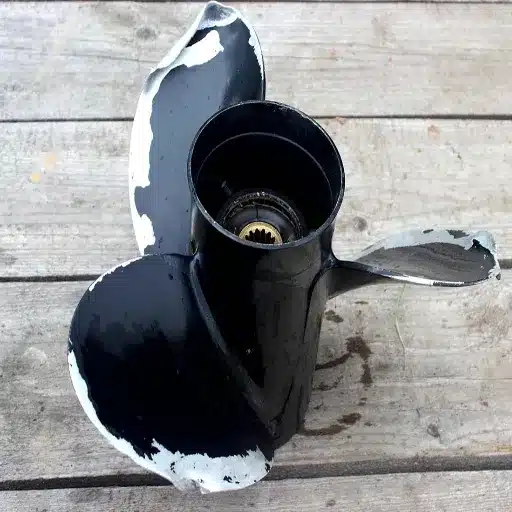
Cavitation damage has a distinctive look once you know what to search for. On aluminum props, it shows as rough, pitted patches on the back side of the blade, usually near the tips or along the leading edge. The pits can be 1/16 to 1/8 inch deep in severe cases. On stainless steel props, the damage is smoother but still visible as erosion patterns that strip the polish from the blade surface.
Where to look: Inspect the blade back — the side facing away from the boat — starting at the tip and working toward the hub. Cavitation rarely affects the blade face. If you see smooth blades on the face but rough pitting on the back, you have cavitation.
Types of Cavitation
Most boat owners encounter three types:
- Sheet cavitation — A thin sheet of bubbles covers the blade back. Common on high-rake props running at high RPM. Usually harmless unless it becomes severe.
- Tip vortex cavitation — Bubbles form in a spiral off the blade tip. Creates a visible streamer behind the prop. Common on props with small diameters or excessive pitch.
- Bubble cavitation — Isolated bubbles form on rough spots, nicks, or damaged edges. This is the most destructive type because the bubbles collapse against the blade itself.
What Is Propeller Ventilation?
How Air Reaches the Propeller
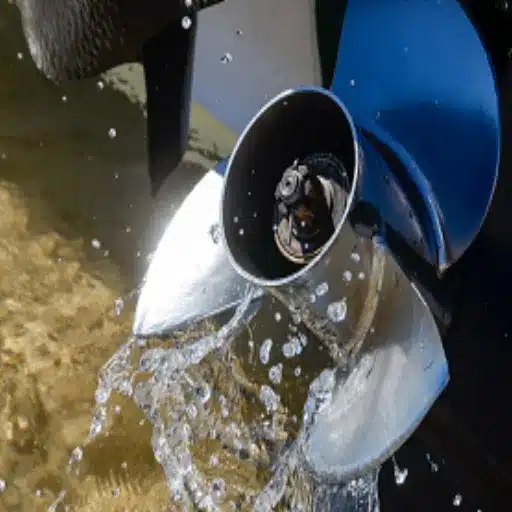
Ventilation is an air problem, not a vapor problem. When the propeller is too close to the surface — because of excessive positive trim, an engine mounted too high, or the stern lifting in waves — the low-pressure zone behind the blades draws surface air down into the disc. Exhaust gases can also get pulled in if the anti-ventilation plate is missing or damaged.
Because air offers almost no resistance compared to water, the propeller spins freely. The engine RPM shoots up. The boat slows down. And the propeller loses steering bite, which makes the helm feel mushy.
What Ventilation Looks Like
Unlike cavitation, ventilation usually causes no direct damage to the propeller blades. The damage it causes is secondary: chronic over-revving strains the powerhead, raises oil and coolant temperatures, and accelerates internal wear. In extreme cases, an engine that ventilates repeatedly at WOT can exceed its rated RPM range by 500 to 1,000 RPM.
Visual cues while underway: Look for a stream of white bubbles trailing the propeller, or the propeller actually breaking the surface in turns or chop. You may also hear a change in engine tone — a hollow, howling sound — as the prop starts to breathe air.
Common Ventilation Scenarios
- Excessive positive trim — The most common cause. Owners trim the engine out to chase top speed and bring the prop too close to the surface.
- Engine mounted too high — The anti-ventilation plate should sit 1 to 3 inches below the hull bottom. Any higher and the prop sucks air.
- Sharp high-speed turns — The hull banks, the inside prop lifts, and air enters the disc.
- Jumping waves in rough water — The stern leaves the water briefly on each wave, and the prop ventilates on re-entry.
- Missing or damaged anti-ventilation plate — The plate deflects exhaust and surface air away from the prop. Without it, ventilation is almost guaranteed.
Symptom Comparison: How to Tell Which One You Have
The Symptom Checklist
| Symptom | Cavitation | Ventilation |
|---|---|---|
| RPM spike at WOT | Rare or slight | Yes — 300 to 800 RPM above normal |
| Vibration felt in the hull | Yes — persistent at cruise | No — brief or none |
| Noise type | Rumbling, growling, crackling | Rattling, howling, buzzing |
| Blade damage visible | Yes — pitting, erosion on the blade back | No — blades look normal |
| Occurs at steady cruise RPM | Yes — 3,000 to 4,500 RPM | No |
| Worse during sharp turns | No | Yes |
| Worse with a heavy passenger load | Yes | No or less |
| Improves when you drop trim | No change | Yes — often immediately |
| Improves at a lower speed | Sometimes | Usually |
| Fuel economy drop | Gradually over time | Suddenly, when it happens |
The 60-Second Field Test
This test works on any outboard or sterndrive in calm water:
- Run the boat at WOT on flat water with a normal load. Record peak RPM and how the boat feels.
- Without changing the throttle, drop the trim 2 to 3 clicks toward negative.
- Wait 5 to 10 seconds and observe.
If the RPM drops back to normal and the boat regains grip — you have ventilation. The trim change submerged the prop deeper and cut off the air supply.
If the RPM stays high and the vibration or rumbling persists — you have cavitation. The problem is in the propeller or the load, not the trim.
Causes and Root Analysis
Causes of Cavitation
Cavitation is almost always a hardware or specification problem:
- Damaged propeller — A nick, bent tip, or broken leading edge disrupts smooth water flow and creates localized low-pressure zones. Even a 1/4-inch chip can trigger measurable cavitation.
- Wrong prop for the application — Diameter too small, pitch too high, or blade area insufficient for the boat’s weight. A loaded pontoon on a bass boat prop will cavitate every time.
- Excessive prop loading — Overweight boats, towing heavy tubes, or running with too many passengers force the prop to work harder than its blade area allows.
- Sharp leading edges or burrs — Factory edges that are too sharp, or damage that creates a burr, can trip the flow into bubbles.
- Debris and fouling — Weeds, fishing line, barnacles, or algae on the blades disturb laminar flow.
- Upstream flow disturbances — Sacrificial anodes, transducers, or through-hull fittings mounted directly in the prop wash path create turbulent water before it reaches the prop.
For the full breakdown of how propeller diameter, pitch, and blade count affect performance — and how to choose the right combination — check your engine manufacturer’s propeller selection chart or contact a prop shop with your hull and engine specs.
Causes of Ventilation
Ventilation is almost always a positioning or geometry problem:
- Engine mounted too high — The propeller should be fully submerged at all operating trim angles. If the anti-ventilation plate is visible above the waterline at rest, the engine is too high.
- Excessive positive trim — Trimming out raises the bow and the prop together. More than 3 to 5 clicks of positive trim on most outboards brings the prop into the aerated water layer.
- Missing or damaged anti-ventilation plate — The plate sits directly above the propeller and forces exhaust and surface air away from the disc. A cracked or missing plate is an open invitation to ventilation.
- Hull imperfections near the transom — Dings, corrosion, or poorly mounted accessories that disturb water flow into the propeller can introduce air.
- High-rake prop on a low-mount engine — High-rake blades point the tips closer to the surface. If the engine is already mounted low, the tips can break the waterline.
The Overlap Zone
Sometimes you have both. Severe ventilation can create such turbulent, aerated flow that the propeller operates in a foam-water mixture. That foam behaves like a low-density fluid and can trigger cavitation-like pressure drops on the blades. If your 60-second test shows partial improvement from dropping trim, but vibration remains, you may have ventilation causing secondary cavitation. Fix the ventilation first, then reassess.
How to Fix Cavitation: Step-by-Step
Step 1: Inspect the Propeller
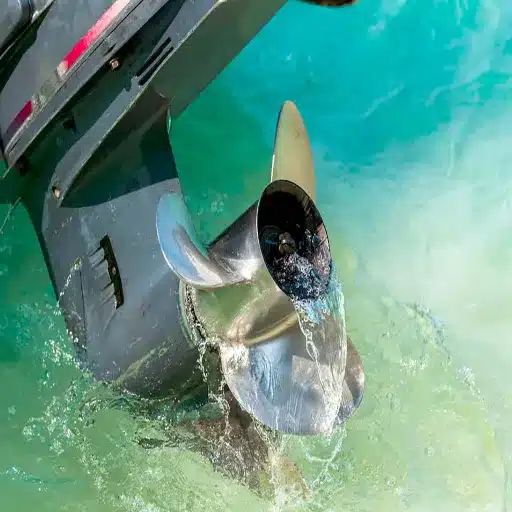
Pull the prop and look at the blade back. Search for pitting, erosion, nicks, bent tips, or cracks. Run your finger along the leading edge. It should feel smooth. Any rough spot, burr, or chip is a potential cavitation trigger.
Step 2: Clean and Remove Debris
Remove all weeds, fishing line, and marine growth. Pay attention to the hub area where the line can wrap and create turbulence. A wire brush and a putty knife handle most cleaning jobs.
Step 3: Check for Upstream Obstructions
Look at everything mounted on the lower unit or transom directly ahead of the propeller. Anodes, transducers, speed sensors, or trim tabs that sit in the prop wash path can disturb flow enough to cause cavitation. Relocate anything that sits within 6 inches of the propeller centerline.
Step 4: Verify Propeller Spec
Check your prop diameter, pitch, and blade count against the manufacturer’s recommendation for your hull and engine. A prop that is too small in diameter or too high in pitch is a common cavitation cause on loaded boats. If you are unsure whether your current prop is the right match, remember that a 4-blade prop carries more load at lower RPM than a 3-blade of the same pitch. Loaded boats often need the extra blade area.
Step 5: Repair or Replace
- Minor nicks and burrs — File smooth with a fine mill file, then polish with wet sandpaper. Have the prop rebalanced afterward.
- Bent blades or more serious damage — Take it to a prop shop for straightening and welding. Most repairs cost $75 to $200.
- Severe cavitation burn or cracks — Replace the prop. If cavitation was caused by an undersized aluminum prop, consider upgrading to stainless steel. Stainless is 10 to 15% stiffer and resists the flex that contributes to cavitation on loaded boats. For the full lifecycle cost breakdown, compare the upfront price of aluminum against the longer service life and repairability of stainless steel.
How to Fix Ventilation: Step-by-Step
Fix 1: Adjust Trim (Free, 30 Seconds)
Drop trim 2 to 3 clicks toward neutral or negative. Run WOT again. If the RPM normalizes and the boat planes properly, your problem was trim-induced ventilation. This fix costs nothing and takes less than a minute.
Fix 2: Adjust Driving Style (Free, Immediate)
Reduce turn aggressiveness at high speed. A sharp turn at 40 MPH can lift the inside prop out of the water on any hull. In rough water, back off the throttle slightly when crossing waves rather than holding WOT through the chop.
Fix 3: Check Engine Mounting Height
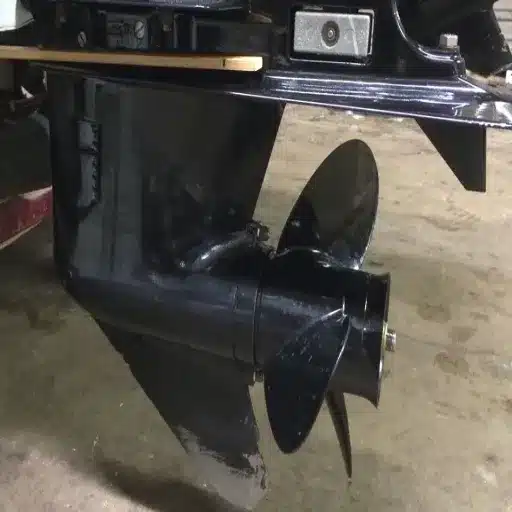
With the boat at rest on plane, the anti-ventilation plate should sit 1 to 3 inches below the bottom of the hull. If it is higher, the engine is mounted too high. Lowering the engine one mounting hole typically costs 100to100to250 at a marine shop and solves chronic ventilation permanently.
Fix 4: Inspect the Anti-Ventilation Plate
The plate is the flat metal surface directly above the propeller. Look for cracks, missing pieces, or corrosion holes. If it is damaged, replace it. Most anti-ventilation plates are $30 to $80 in parts plus labor.
Fix 5: Propeller Changes
If the geometry is correct but ventilation persists in turns or chop, a propeller with more cup can help. Cupping creates a pocket that resists air ingestion at the blade tips. A larger diameter propeller also sits deeper in the water and is less prone to surface breathing.
Real-World Case Studies
Case 1: Bass Boat — Cavitation from a Stump-Strike Nick
Mike runs a 21-foot Skeeter bass boat with a 250 HP Yamaha on a Texas lake. After a tournament day in May, he noticed a rumbling vibration at 4,200 RPM that had never been there before. His top speed dropped from 62 MPH to 59 MPH.
We pulled the prop and found a 1/4-inch chip on the leading edge of one blade, likely from a submerged stump. The nick was small, but it was enough to trip the flow and create bubble cavitation at high RPM. We filed the edge smooth, had the prop rebalanced, and reinstalled it. The vibration disappeared. His top speed returned to 62 MPH. Total cost: $85. A new stainless prop would have run $600.
Case 2: Pontoon — Ventilation from Excessive Trim
Lisa owns a 24-foot Bennington pontoon with a 150 HP Mercury. She read online that trimming out improves top speed, so she ran the engine at maximum positive trim every time she opened the throttle. Her WOT RPM climbed to 5,800 — 700 RPM above the engine’s rated range of 5,000 to 5,100.
The boat felt fast, but the engine screamed. We had her drop the trim to neutral and re-run WOT. RPM settled at 5,050. Top speed dropped 1 MPH, but the engine was back in its safe range. The fix costs nothing. She had been over-revving the motor for three seasons.
Case 3: Runabout — Hull-Induced Ventilation
Jerry keeps a 19-foot Bayliner runabout with a 115 HP Mercury at a Florida marina. Every time he turned hard at speed or ran through a boat wake, the engine would over-rev and lose bite for 2 to 3 seconds.
Inspection showed two problems: a cracked anti-ventilation plate and a corroded, rough edge on the transom directly above the lower unit. The rough transom was tripping air into the prop wash, and the cracked plate was doing nothing to stop it. We replaced the plate and sanded the transom edge smooth. The intermittent power loss vanished. Total cost: $120 in parts and labor.
Prevention: Seasonal Checklist
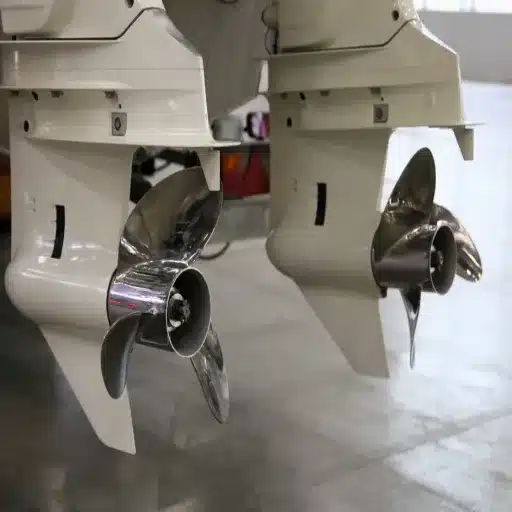
Pre-Season Inspection
- Inspect propeller blades for nicks, cracks, or pitting
- Check the anti-ventilation plate for cracks or corrosion
- Verify engine mounting height is within the manufacturer’s spec
- Sand any rough or corroded edges on the transom near the lower unit
- Confirm all anodes and fittings ahead of the prop are secure and streamlined
Mid-Season Monitoring
- Record your baseline WOT RPM with a normal load on flat water
- Note any new vibrations, noises, or RPM changes
- Log trim position that gives the best grip vs the highest RPM
- Clean the prop after any weedy or debris-filled run
End-of-Season Care
- Remove the prop, clean thoroughly, and photograph any damage for year-over-year comparison
- Grease the prop shaft and reinstall with a new cotter pin
- Store the prop in a dry place to prevent corrosion pitting that can mimic cavitation damage
Frequently Asked Questions
What is the difference between cavitation and ventilation?
Cavitation is water boiling into vapor bubbles on the propeller blade due to extremely low pressure. Ventilation is air from the surface or exhaust being drawn into the propeller disc. Cavitation damages blades over time; ventilation causes sudden RPM spikes without direct blade damage.
Can cavitation damage my propeller?
Yes. The imploding vapor bubbles act like microscopic jackhammers against the blade surface. Over time, this creates pitting, erosion, and “cavitation burn” on the back side of the blades. Severe cavitation can weaken blades and require replacement.
Does ventilation damage the engine?
Ventilation does not directly damage the propeller, but it causes chronic over-revving that strains the powerhead, raises oil temperatures, and accelerates internal wear. An engine that ventilates repeatedly at WOT can exceed its rated RPM range by 500 to 1,000 RPM.
What does propeller cavitation sound like?
Cavitation typically produces a rumbling, growling, or crackling noise that is most noticeable in the 3,000 to 4,500 RPM cruise band. It often comes with a persistent vibration felt through the hull or helm. The sound is deeper and more constant than the rattling or howling of the ventilation.
Why does my outboard over-rev at high speed?
Sudden over-revving at high speed is almost always ventilation. The propeller is pulling air instead of solid water, so the engine spins freely. Try the 60-second test: drop trim 2 to 3 clicks. If RPM normalizes, you have ventilation. If RPM stays high with vibration, you have cavitation.
Can a damaged prop cause cavitation?
Yes. A nick, bent tip, or cracked leading edge disrupts smooth water flow and creates localized low-pressure zones that trigger bubble cavitation. Even a 1/4-inch chip on the leading edge can be enough to cause measurable cavitation at high RPM.
What is an anti-ventilation plate and do I need one?
The anti-ventilation plate is the flat metal surface directly above the propeller on an outboard or sterndrive lower unit. It deflects exhaust gases and surface air away from the propeller disc. Every outboard and sterndrive needs one. A cracked or missing plate guarantees ventilation problems.
How do I know if my engine is mounted too high?
With the boat at rest, the anti-ventilation plate should sit 1 to 3 inches below the bottom of the hull. If the plate is visible above the waterline, the engine is mounted too high. Another sign is chronic ventilation at normal trim angles, even with a good propeller.
Can the wrong propeller cause both cavitation and ventilation?
Yes. A propeller with too small a diameter or too little blade area will cavitate under load. A propeller with too much rake or too large a diameter on a low-mounted engine can ventilate because the tips run too close to the surface. Choosing the right prop for your hull, engine, and load prevents both problems.
Is propeller slip the same as cavitation?
No. Propeller slip is the normal difference between theoretical propeller travel and actual boat travel. All props slip 5 to 20 percent, depending on design and load. Cavitation is a destructive condition where vapor bubbles form and implode on the blade. A prop can have normal slip and still be cavitating.
How much does it cost to fix propeller cavitation?
Minor damage can be filed smooth and rebalanced for $75 to $150. Professional straightening and welding of bent blades runs $100 to $250. If the propeller has severe cavitation burn or cracks, replacement is the only option. Aluminum props run $80 to $250; stainless props run $300 to $900.
Can cupping on a propeller prevent ventilation?
Yes. Cupping — a small lip rolled into the trailing edge of the blade — creates a pocket that resists air ingestion at the blade tips. Props with more cups are less prone to ventilation in turns and chop. Cupping also increases effective pitch by roughly 1 inch, which helps bite at low RPM.
The Bottom Line
Propeller cavitation and ventilation both steal performance, burn extra fuel, and stress your engine — but they are not the same problem, and they do not respond to the same fixes. Cavitation is a propeller or loading issue that usually requires hardware repair or replacement. Ventilation is a trim, mounting, or geometry issue that is often fixed for free in under a minute.
The 60-second field test — drop trim and re-test WOT — will tell you which one you have before you spend a dollar. Start with the free operational fixes for ventilation. Inspect the propeller for pitting and damage if the symptoms point to cavitation. And if you are still unsure, send us your boat specs, symptoms, and propeller markings. The Captain Marine rigging team will diagnose it and recommend the right fix. If you need a deeper dive into advanced propeller design solutions, search for commercial-grade cavitation-reduction technologies such as Sharrow propellers, CFD-optimized blade profiles, and anti-cavitation coatings. For a full diagnostic approach to propeller-related performance issues, check our boat propeller troubleshooting guide.