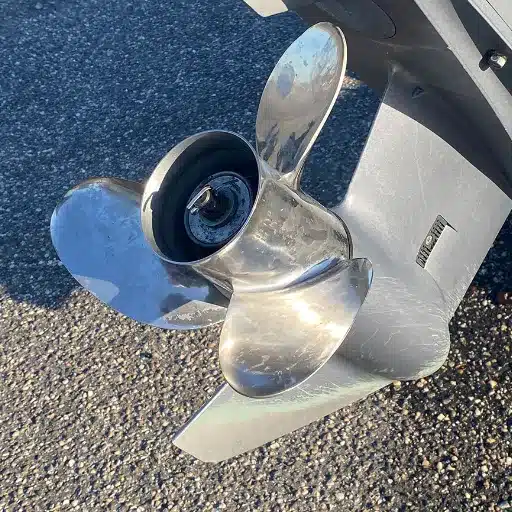
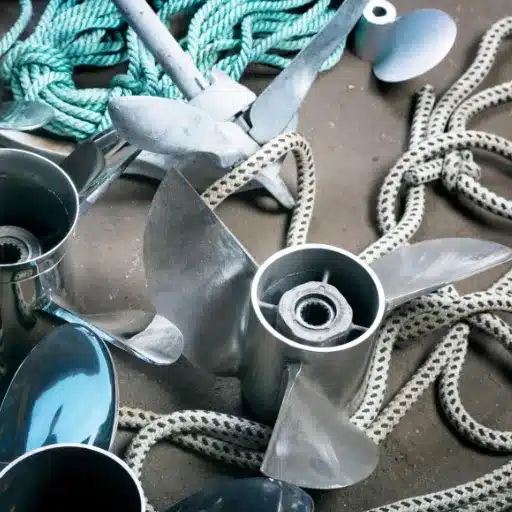
A 3-blade propeller gives you 1 to 3 MPH more top speed and slightly better fuel economy at wide open throttle. A 4-blade propeller gets you on plane 0.5 to 1.5 seconds faster, runs smoother at cruise, and handles heavy loads better. Pick a 3-blade for light, fast boats and top-speed runs; pick a 4-blade for towing, heavy boats, rough water, or trolling.
About 90% of new outboard motors ship with a 3-blade propeller, so most boaters never question the default. That standard works fine for the average runabout. It does not work as well for a heavy center console pushing through chop, a pontoon hauling six adults plus a cooler, or a ski boat trying to drop a wakeboarder out of the hole.
At Captain Marine, we have rigged and tested both blade counts across dozens of hull types. The 3 blade vs 4 blade propeller decision is not about which one is “better.” It is about matching blade count to your boat, your engine, and the way you actually use the water. For the full propeller decision process, start with our boat propeller selection guide. This article gives you the data, real test results, and a decision matrix to choose with confidence.
Key Takeaways
- A 3-blade propeller delivers 1 to 3 MPH faster top speed and slightly better wide-open-throttle fuel economy than a 4-blade of the same pitch.
- A 4-blade propeller plane 0.5 to 1.5 seconds faster, lowers WOT RPM by 100 to 200, and improves mid-range fuel economy by up to 10%.
- When switching from a 3-blade to a 4-blade, drop pitch by 1 to 2 inches to keep WOT RPM in your engine manufacturer’s recommended range.
- 4-blade propellers cost roughly 10 to 30% more than equivalent 3-blade models, and the extra blade area resists cavitation better in turns.
- Recreational top-speed boats usually do best with 3-blade props; tow boats, heavy cruisers, pontoons, and rough-water rigs benefit most from 4-blade props.
How Propeller Blade Count Affects Performance
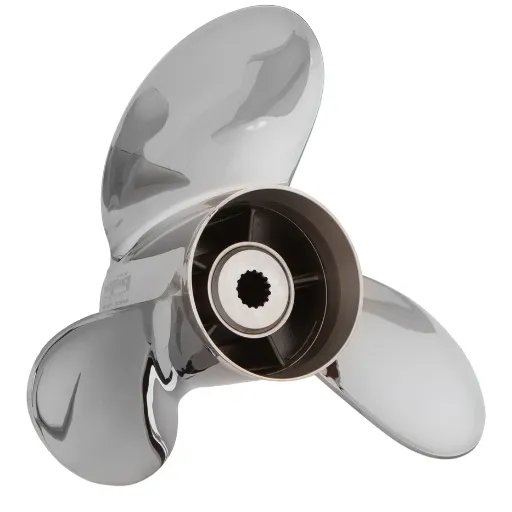
Blade count changes three core factors at the same time: total blade area, water grip, and drag. Every performance trade-off in the 3 blade vs 4 blade propeller debate comes from how those factors interact at different RPM ranges. Manufacturer engineering data from Michigan Wheel confirms the same trade-off pattern across the recreational HP range.
Blade Area and Water Grip
A 4-blade propeller adds roughly 20 to 30% more blade area than a 3-blade of the same diameter and pitch. More surface means more contact with the water, which translates to more grip during acceleration and turns. Think of it like swapping summer tires for all-season tires; you trade a small amount of top-end speed for noticeably better grip in tougher conditions.
That extra grip is most useful when the boat is heavy, the prop is loaded, or the water surface is rough. The 3-blade gives up grip in exchange for less drag at wide open throttle, which is why it wins on top speed.
Why 3-Blade Props Dominate the Market
Roughly 90% of factory outboards ship with a 3-blade propeller for three practical reasons. Three-blade props are cheaper to manufacture, lighter to handle, and well-matched to the typical runabout buyer who values top speed over hole shot. They also balance more easily, which keeps vibration low without expensive precision work.
For a stock 17-foot aluminum fishing boat with a 60 HP outboard, the factory 3-blade is almost always the right choice. The math changes the moment you add weight, horsepower, towing loads, or rougher water.
Is a 3 Blade or 4 Blade Propeller Better?
Neither blade count is universally better. A 3-blade propeller is better for top speed and fuel economy at wide open throttle, while a 4-blade propeller is better for hole shot, mid-range cruising, towing, and rough-water handling. The right choice depends on boat weight, horsepower, and how you use the boat. For light runabouts and speed-focused setups, choose a 3-blade. For tow boats, pontoons, heavy center consoles, and trolling rigs, choose a 4-blade.
3 Blade Propellers: Strengths and Limitations
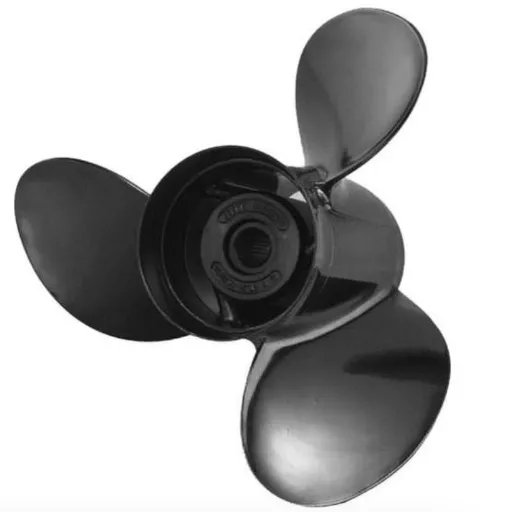
The 3-blade is the default for a reason. It is fast, efficient at full throttle, affordable, and easy to find. It just is not the universal answer.
Top Speed Advantage
A 3-blade propeller is the speed king. With less blade surface in the water, it produces less drag at wide open throttle. On most setups, that translates to a 1 to 3 MPH advantage over an equivalent 4-blade. According to Yamaha test data, the top-end advantage runs 3 to 5% across the typical recreational HP range.
That gap matters most when your boat operates near wide open throttle for extended periods, like a bass boat running to a distant fishing spot or a runabout chasing horizon time.
Lower Drag and Fuel Economy at WOT
Less blade area means less drag, which means lower fuel burn at WOT. If you regularly cruise above 80% throttle, the 3-blade typically uses 2 to 4% less fuel than a 4-blade of the same pitch. For high-speed offshore runners and bass tournament boats that chase efficiency at speed, the savings stack up over a season.
Cost and Availability
A typical aluminum 3-blade propeller costs $80 to $200, and stainless steel options run $300 to $700. Three-blade props are also the most stocked SKU at marine retailers, so replacements ship faster, and pitch options are wider. If you need a propeller this weekend, the 3-blade catalog is almost always larger.
Limitations: Hole Shot and Heavy-Load Handling
The 3-blade’s smaller blade area is its main weakness. When the boat is heavy, loaded down with passengers and gear, or pulling a wakeboarder, the 3-blade slips more before grabbing water. You feel it as a slower hole shot, more cavitation in turns, and a bow that takes longer to rise to plane.
Mike, a Captain Marine customer who tows two teenagers on a tube behind a 22-foot bowrider, told us his factory 3-blade “took forever to get them up” once both kids were on the tube together. Switching to a 4-blade dropped his time-to-plane from about 7 seconds to under 4 seconds with no change in cruise fuel burn.
Want help matching propeller specs to your engine? Talk to our rigging team, and we will run the numbers with you, no charge.
4 Blade Propellers: Strengths and Limitations
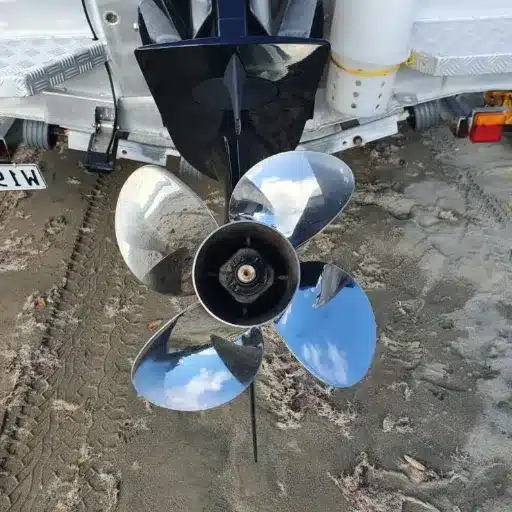
Four-blade propellers earn their 10 to 30% price premium in specific situations. If your boating profile fits any of the four scenarios below, the 4-blade typically pays for itself within a season.
Hole Shot: 0.5 to 1.5 Seconds Faster to Plane
The 4-blade’s biggest, most consistent win is a hole shot. The extra blade area grabs water faster, so the boat accelerates harder out of idle. Real-world testing shows 4-blade propellers reach plane 0.5 to 1.5 seconds faster than 3-blade propellers on the same boat-engine combo.
That difference is most noticeable on heavier boats, deep-V hulls, and tow rigs where the bow has to fight gravity to rise.
Smoother Operation and Reduced Vibration
A 4-blade puts more impulses into the water per revolution, which smooths out the power pulses you feel at the helm. Vibration drops, the deck feels quieter, and conversations at cruise speed get easier.
For pontoon owners and family cruisers who spend hours at mid-throttle, that smoother ride is the second-biggest reason to upgrade after the hole shot.
Mid-Range Cruise Efficiency
At cruise RPMs (typically 3,500 to 4,500 RPM on a modern outboard), the 4-blade often delivers better fuel economy than the 3-blade. Industry tests show up to 10% mid-range fuel savings on properly matched setups, because the extra blade area reduces prop slip in the most-used RPM band.
For a 200 HP outboard burning $4,000 in fuel per season at cruise, a 10% improvement adds up to about $400 saved per year. That covers the price premium in two seasons or less.
Stability in Rough Water and Under Heavy Load
The 4-blade’s extra grip also resists ventilation and cavitation in turns and chop. When a 3-blade lifts a blade out of the water on a sharp turn, the engine RPM jumps and the boat skids; a 4-blade holds the water better and keeps the bite consistent.
For offshore boaters, bay anglers, and anyone who runs heavy gear, that stability is worth real money in safer handling and less wear on the lower unit.
Limitations: Slight Top Speed Loss, Higher Cost
The 4-blade costs more, weighs more, and gives up 1 to 3 MPH at the top end. If your boating life revolves around wide-open-throttle runs and the boat is light, those trade-offs are real losses. The decision matrix in the next section sorts out who actually wins with a 4-blade and who should stay with the 3-blade.
Head-to-Head Performance Comparison

The simplest way to compare 3 blade vs 4 blade propeller performance is a side-by-side scorecard. Use the table below as your at-a-glance reference, then read the sections that follow for the data behind each row.
3 Blade vs 4 Blade Propeller: Side-by-Side Comparison
| Factor | 3 Blade Propeller | 4 Blade Propeller |
|---|---|---|
| Top Speed | Faster (1 to 3 MPH gain) | Slightly slower |
| Hole Shot | Baseline | 0.5 to 1.5 sec faster |
| Mid-Range Cruise | Baseline | Up to 10% better fuel economy |
| Blade Area | Baseline | 20 to 30% more |
| WOT RPM (same pitch) | Higher | 100 to 200 RPM lower |
| Smoothness/Vibration | Standard | Smoother, less vibration |
| Cavitation Resistance | Standard | Better in turns and rough water |
| Cost | Lower | 10 to 30% more |
| Availability | Widest selection | Narrower stock |
| Best For | Top-speed runabouts, light boats, fuel economy at WOT | Towing, heavy boats, rough water, trolling, mid-range cruise |
Top Speed: Quantifying the 1 to 3 MPH Gap
Three-blade propellers typically deliver 1 to 3 MPH more top speed than an equivalent 4-blade on the same boat. The reason is simple: less blade area equals less drag at high RPM, so more of the engine’s horsepower converts into forward motion rather than churning water.
The gap shrinks on heavier boats that never run efficiently at WOT anyway, and it widens on light, well-matched boats that hold their pitch under load.
Hole Shot and Time to Plane
A 4-blade propeller reaches plane 0.5 to 1.5 seconds faster than a 3-blade. The extra blade area grabs water faster from idle, so the boat accelerates harder out of the hole. This is the single most consistent advantage 4-blades show in real testing.
Mid-Range Cruise Fuel Economy
At the 3,500 to 4,500 RPM cruise band, the 4-blade’s reduced prop slip can improve fuel economy by up to 10%. The advantage flips at WOT, where the 3-blade’s lower drag wins back the fuel savings and adds top speed. Where you spend most of your throttle time decides which prop saves more fuel over a season.
RPM at WOT
Swap a 3-blade for a 4-blade of the same pitch, and your WOT RPM typically drops 100 to 200 RPM. The extra blade area loads the engine more heavily. That is why you usually drop 1 to 2 inches of pitch when switching, so the engine returns to its recommended WOT RPM range.
Cavitation and Ventilation Resistance
In tight turns or rough water, a 3-blade can ventilate (suck air down to the prop) and lose bite. The 4-blade’s extra blade area holds water grip through harder turns and rougher seas. For offshore boats running inlets or bay boats chasing fish across chop, that grip is a real safety and performance margin.
Real-World Test Data
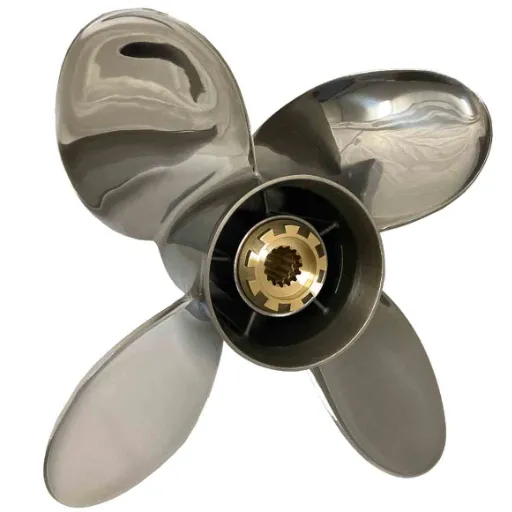
Test numbers from documented runs tell the story better than theory. The cases below come from independent testing and Captain Marine customer reports.
28-Foot Shearwater RIB with Suzuki 300 HP
According to BoatTEST’s documented prop comparison, a 28-foot Shearwater RIB powered by a Suzuki 300 HP outboard ran through multiple prop options. The result surprised some readers: a Solas 16×19 three-blade delivered quicker acceleration than every 4-blade tested on that exact hull-engine combo. The 16-inch-diameter 3-blade simply had less slip across the widest RPM range.
The lesson is not that 3-blades always win on RIBs; it is that hull, engine, and prop must be matched. Don’t assume a 4-blade will improve hole shot until you have run the numbers for your specific rig.
22-Foot Bay Boat with 200 HP Outboard
A typical 22-foot bay boat with a 200 HP outboard sees these averages when switching from a stainless 17-pitch 3-blade to a stainless 15-pitch 4-blade:
- Time to plane: drops from about 5.2 seconds to about 4.0 seconds
- Top speed: drops from about 48 MPH to about 46 MPH
- WOT RPM: drops by about 150 RPM (re-pitched to stay in range)
- Cruise fuel burn at 3,800 RPM: improves by about 6%
For an angler who spends most of the day at trolling speed or cruising, the 4-blade is the right call. For a tournament boater chasing 50 MPH runs, the 3-blade still wins.
24-Foot Pontoon with 150 HP Outboard
Heavy pontoons make the strongest case for a 4-blade upgrade. With a full passenger load, a 24-foot pontoon often struggles to plane on a factory 3-blade. Switching to a 4-blade typically:
- Cuts time-to-plane from over 12 seconds to under 7 seconds
- Reduces vibration noticeably at cruise
- Improves cruise fuel economy by 5 to 8%
- Costs about 2 MPH at the top end (which most pontoon owners do not miss)
Tom, who runs a 24-foot pontoon on a Carolina lake, told us he could only get five adults up on the plane with the factory 3-blade. Once he upgraded to a 4-blade with 2 inches less pitch, the same boat planes with seven adults plus gear, and he gained about 3 MPG at cruise. For a pontoon-specific deep dive on pitch, diameter, and load matching, see our guide to the best propeller for pontoon boats.
Which Blade Count Fits Your Boat? Decision Framework

Use the questions below to narrow your choice, then check the use-case matrix to confirm.
Choose a 3 Blade Propeller If…
- Your boat is light (under about 2,500 pounds dry)
- You run a small to mid-size outboard (under 150 HP)
- You chase top speed (bass boats, ski-tow lights, runabouts)
- You boat in mostly flat water
- You want the lowest replacement cost and the widest stock options
- You spend most of your throttle time at WOT
Choose a 4 Blade Propeller If…
- You tow water sports loads (skiers, wakeboarders, tubers, hydrofoils)
- Your boat is heavy (offshore center consoles, pontoons, cuddy cabins)
- You run a larger outboard (200 HP and up)
- You cruise most of your day at mid-throttle
- You boat in rough water, inlets, or open offshore
- You troll at very slow speeds (4-blades hold a heading better)
When to Use a 4 Blade Propeller: Quick List
Use a 4-blade propeller when you need any of the following:
- Faster hole shot for towing or heavy passenger loads
- Better grip in rough water or tight turns
- Smoother operation at cruise RPM
- Up to 10% better fuel economy at mid-range cruise
- Stable bow lift on heavy or stern-heavy hulls
- Better trolling control at very low speeds
- Improved planning on pontoons with full passenger loads
Use-Case Decision Matrix
| Boat Type | Typical HP | Recommended Blade Count | Why |
|---|---|---|---|
| Bass boat | 150 to 250 HP | 3-blade | Top-speed priority, mostly WOT runs |
| Ski boat | 200 to 350 HP | 4-blade | Hole shot under tow load matters most |
| Wakeboard boat | 300 to 450 HP | 4-blade or 5-blade | Heavy ballast, demanding hole shot |
| Pontoon | 90 to 200 HP | 4-blade | Heavy load, planning assistance |
| Bay boat | 150 to 300 HP | Either, often 4-blade | Mixed use; 4-blade if trolling or running rough water |
| Offshore center console | 250 to 700 HP | 4-blade (twin or triple) | Heavy boat, rough water, towing |
| Flats skiff | 60 to 150 HP | 3-blade | Light boat, shallow water, top-speed runs |
| Jon boat/runabout | Under 90 HP | 3-blade | Factory default works fine |
| Cuddy cabin/cruiser | 200 to 400 HP | 4-blade | Heavy boat, cruise efficiency |
Engine Horsepower Considerations
Horsepower predictably interacts with blade count. Under 150 HP, the difference between blade counts is small enough that most boaters do not need to upgrade. From 150 to 250 HP, the use case becomes the deciding factor. Above 250 HP, especially on twin or triple outboard rigs, 4-blades and even 5-blades become the standard for serious offshore and tow-boat applications.
How to Switch from 3 Blade to 4 Blade
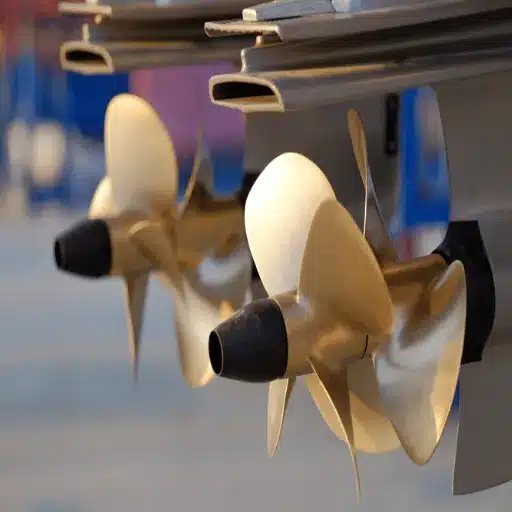
Swapping blade count is more than a parts change. Get the pitch wrong, and you can damage your engine. Follow this procedure.
Pitch Adjustment: Drop 1 to 2 Inches
A 4-blade of the same pitch as your 3-blade will pull WOT RPM down 100 to 200 RPM. That puts most engines below their recommended WOT range, which loads the powerhead and can shorten engine life. Drop the pitch by 1 to 2 inches when switching, so your engine returns to the manufacturer’s WOT range. For a 250 HP outboard, the recommended range is usually 5,500 to 6,000 RPM.
WOT RPM Testing Protocol
After installing a new prop, run the boat through a real-world test:
- Load the boat to its typical operating weight (passengers, fuel, gear)
- Run to wide open throttle on flat water
- Hold WOT for 30 seconds and record peak RPM
- Compared to the engine manufacturer’s recommended WOT range
- If RPM is below range, drop pitch by 1 inch
- If RPM is above range, add 1 inch of pitch
- Test again until you land within the recommended range
This is the same procedure professional rigging shops use. If you skip it, you risk lugging the engine or over-revving it, both of which shorten powerhead life. If your numbers still look off after a swap (or you see slipping, over-revving, or hot starts), our boat propeller troubleshooting guide walks symptoms to root causes.
Hub System Compatibility
Most modern outboards use a flexible hub system (Flo-Torq SSR, Yamaha SDS, or a basic rubber hub). Almost all 4-blade propellers work with the same hubs as 3-blade propellers, but always confirm the hub kit is included or available before ordering. Captain Marine includes the correct hub kit with every prop we ship.
Common Switching Mistakes
Avoid these common pitfalls:
- Buying a 4-blade in the same pitch as your old 3-blade and never re-testing RPM
- Choosing a 4-blade for a light, top-speed-focused boat where a 3-blade fits the use case better
- Skipping the WOT RPM test after installation
- Overlooking blade design features like cupping or rake that also change performance (see our propeller cupping and rake guide)
What About 5 Blade Propellers?
Five-blade propellers exist for a narrow but growing set of applications. They show up most often on:
- High-performance offshore center consoles with twin or triple outboards
- Heavy wake boats running large ballast loads
- High-thrust applications where extreme grip beats raw speed
- Racing applications with custom hull-prop matches
A 5-blade adds another 15 to 25% of blade area over a 4-blade, which improves grip and smoothness even further. The trade-offs match the 3-to-4 jump: another 1 to 2 MPH off top speed, another 100 RPM drop at WOT, and another step up in price. For most recreational boaters, a 5-blade is overkill. For serious tow rigs and heavy offshore boats, it can be the right answer.
How Material Choice Interacts with Blade Count
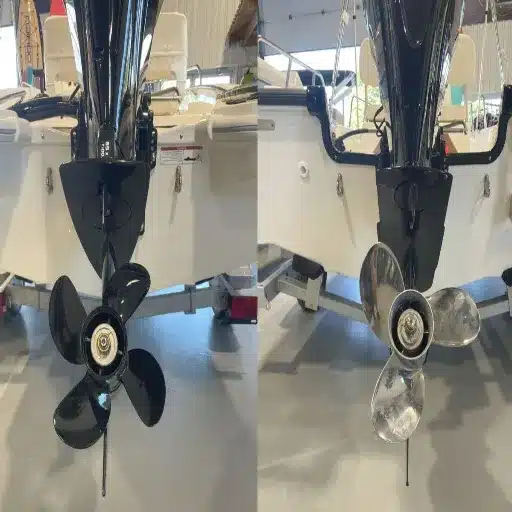
Material and blade count work together. The 3 blade vs 4 blade propeller decision should be made alongside the choice of aluminum or stainless steel.
A stainless 4-blade gives you the maximum hole shot, stability, and durability advantage; an aluminum 3-blade gives you the lowest cost and most engine-protective setup for shallow water. Most performance-focused boaters who upgrade to a 4-blade also upgrade to stainless at the same time, because the stiffer material amplifies the blade-count advantages. For the full breakdown of materials, see our guide to aluminum vs stainless steel propellers.
Cost Comparison
Expect to pay roughly 10 to 30% more for a 4-blade than a 3-blade of the same material. Typical 2026 retail prices:
- Aluminum 3-blade: $80 to $200
- Aluminum 4-blade: $100 to $250
- Stainless steel 3-blade: $300 to $700
- Stainless steel 4-blade: $400 to $900
Repair costs are roughly the same per blade, but a 4-blade has one more blade to repair if all four take damage. Regular care, including light cleaning and balance checks each season, extends prop life for either blade count.
When you factor in the potential mid-range fuel savings (up to 10% on the right setup), the 4-blade can pay back its price premium in one to three seasons, depending on hours, fuel cost, and load. For more cost-vs-performance context across material and blade count choices, Sport Fishing Magazine’s expert prop roundup is a useful additional read.
Frequently Asked Questions
Is a 3 blade or 4 blade propeller better?
Neither is universally better. A 3-blade wins on top speed and WOT fuel economy. A 4-blade wins on hole shot, smoothness, mid-range fuel economy, and rough-water grip. Match blade count to your use case, not to a hype headline.
Do 4 blade props increase hole shot?
Yes. A 4-blade propeller plane 0.5 to 1.5 seconds faster than an equivalent 3-blade on the same boat, because the extra blade area grabs water more effectively at low RPM.
Will I lose top-end speed with a 4 blade propeller?
Usually 1 to 3 MPH on a light, top-speed-focused boat. On heavy boats that never run efficiently at WOT, the loss is smaller or sometimes invisible.
Which prop has better fuel efficiency, 3 or 4 blade?
The 3-blade is slightly better at wide open throttle; the 4-blade is up to 10% better at mid-range cruise. Where you spend most of your throttle time decides which prop saves more fuel over a season.
Does a 4 blade prop reduce RPM?
Yes. Swap a 3-blade for a 4-blade of the same pitch and WOT RPM drops 100 to 200. To keep the engine in its recommended WOT range, drop pitch by 1 to 2 inches when switching.
When should I use a 4 blade propeller?
Use a 4-blade when you tow water sports, run a heavy boat, cruise mostly at mid-throttle, boat in rough water, troll at very slow speeds, or struggle to get a fully loaded pontoon up on plane.
How much pitch do I drop when switching to a 4 blade?
Drop 1 to 2 inches of pitch when switching from a 3-blade to a 4-blade of the same diameter. After installation, run a WOT RPM test to confirm the engine lands in its manufacturer-recommended range.
Are 4 blade propellers better for towing?
Yes. The 4-blade’s extra blade area generates more thrust at low RPM, which gets the boat on plane faster under a tow load. That is the single most common reason ski boats and tow rigs run 4-blades.
Do bass boats use 3 or 4 blade props?
Most bass boats run 3-blade props. The use case (top-speed runs to fishing spots, light boat, premium on WOT efficiency) favors the 3-blade in almost every case. Tournament-level bass boats sometimes test 4-blades for hole shot in chop, but the 3-blade remains standard.
Are 4 blade propellers more expensive?
Yes, by 10 to 30% for the same material and quality tier. The mid-range fuel savings and hole-shot improvement often pay back the difference within one to three seasons on the right boat.
The Bottom Line
The 3 blade vs 4 blade propeller decision comes down to how you actually use your boat. A 3-blade is the right pick for light, top-speed-focused boats and budget-minded boaters. A 4-blade earns its premium on heavy boats, tow rigs, pontoons, rough water, and mid-range cruisers.
Key takeaways:
- 3-blade wins: top speed (1 to 3 MPH), WOT fuel economy, lowest cost, widest stock
- 4-blade wins: hole shot (0.5 to 1.5 sec faster), mid-range cruise efficiency (up to 10%), smoothness, rough-water grip
- Always re-pitch when switching blade counts (drop 1 to 2 inches) and run a WOT RPM test
- Match blade count to the use case, not to the spec sheet of someone else’s boat
Still not sure? That is what we are here for. Send your boat year, engine, current prop pitch, and how you use the boat, and the Captain Marine rigging team will recommend a specific 3-blade or 4-blade setup with the right pitch and material. Browse our propeller catalog or contact our team to get your boat dialed in for the 2026 season.