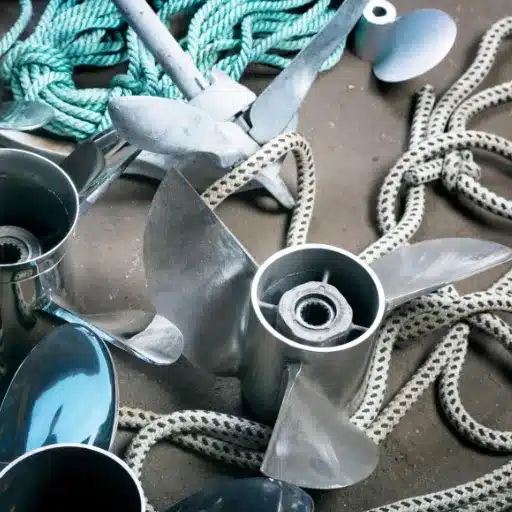
For recreational boaters running under 100 hours per season with engines under 150 HP, stainless steel propellers are usually not worth the upfront cost. For anglers, saltwater operators, and commercial users running 150+ HP and 100+ hours per season, stainless steel typically pays for itself within 2-3 years through fuel savings and reduced replacement costs.
That answer is simple. The math behind it is not. If you are staring at a $450 stainless prop and comparing it to a $120 aluminum alternative, you need more than a rule of thumb. You need a dollar-for-dollar breakdown that matches your engine, your hours, and your water.
At Captain Marine, we have guided thousands of boaters through this exact decision. We have seen the weekend warrior buy stainless steel and regret it. We have also seen the charter captain run the numbers and realize stainless was the smartest investment he made that year. The difference is never the propeller itself. It is whether the math works for your specific situation.
In this guide, we will model the true 5-year cost of ownership across four real-world scenarios. You will see exactly when stainless pays off, when it does not, and how to calculate your own break-even point before you spend a dime.
Key Takeaways
- Stainless steel propellers cost $240-$600 more upfront than aluminum, but fuel savings of 3-5% and longer lifespan create a payback window of 2-3 years for high-use boaters.
- A 225 HP boater running 150 hours per year breaks even in roughly 2.5 years. A 150 HP weekend warrior running 50 hours per year never breaks even on fuel alone.
- Hidden costs — polishing, balancing, backorder delays, and shock-absorbing hub upgrades — add $150-$400 to the first-year stainless investment.
- Saltwater operators see faster payback because stainless resists corrosion that destroys aluminum props in 2-3 seasons.
- Use the break-even formula in this guide to calculate your exact payback period in under 60 seconds.
The Real Price Gap: What You Actually Pay Upfront
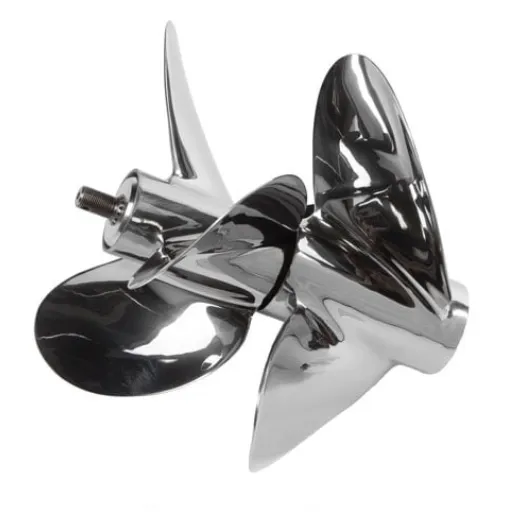
Sticker shock is the first hurdle. A quality aluminum propeller costs $60-$200. A comparable stainless steel propeller runs $300-$800+. That is not a small jump. But the headline price is only part of the story.
Purchase Price by Material and HP Band
| Engine HP | Aluminum Prop | Stainless Prop | Price Premium |
|---|---|---|---|
| 90-115 HP | $60-$120 | $300−$450 | $240−$330 |
| 150-200 HP | $100-$180 | $400−$600 | $300−$420 |
| 225-250 HP | $140-$200 | $500−$700 | $360−$500 |
| 300+ HP | $180-$250 | $600−$900+ | $420−$650 |
Prices are typical retail for mainstream brands (Solas, Michigan Wheel, Mercury, Yamaha). Premium series cost more.
Hub Kits and Installation Costs
Both materials require a hub kit, typically $25−$60. Installation is the same regardless of material. The real hidden upfront cost is the pitch adjustment. When you switch from aluminum to stainless, you usually drop 1-2 inches of pitch to maintain proper WOT RPM. If your current hub kit is not compatible with the new prop, you may need a different system — like a Flo-Torq SSR or Yamaha SDS — which adds $40−$80.
When Tom upgraded his 200 HP Mercruiser from a 21-pitch aluminum to a 19-pitch stainless, the prop cost $520. The hub kit was another $55. The prop shop charged $45 to swap and test. His total first-day outlay was $620. His old aluminum prop had cost $140 total. The real premium was $480 — not the $380 difference in sticker price.
Fuel Savings: The Math That Matters
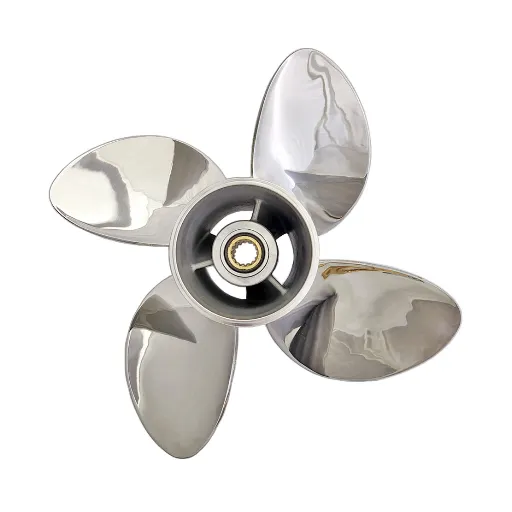
This is where most “worth it” articles fall apart. They say stainless saves fuel. They rarely tell you how much for your engine, at your hours.
How Much Fuel Does a Stainless Prop Actually Save?
Stainless steel blades flex less than aluminum under load. That means less prop slip and more efficient power transfer. In typical recreational use, the fuel savings run 3-5%. On high-performance setups with advanced cupping and rake designs, savings can reach 10-15%.
The critical variable is not the percentage. It is the volume. A 5% savings on a 90 HP engine burning 5.5 gallons per hour is modest. A 5% savings on a 250 HP engine burning 13.5 gallons per hour is significant.
Gallons Saved per Season by HP and Hours
| Engine HP | GPH | 5% Savings | 50 Hrs/Yr | 100 Hrs/Yr | 200 Hrs/Yr | 400 Hrs/Yr |
|---|---|---|---|---|---|---|
| 90 HP | 5.5 | 0.28 gal/hr | 14 gal | 28 gal | 56 gal | 112 gal |
| 150 HP | 8.5 | 0.43 gal/hr | 21 gal | 43 gal | 86 gal | 172 gal |
| 225 HP | 12.0 | 0.60 gal/hr | 30 gal | 60 gal | 120 gal | 240 gal |
| 300 HP | 16.0 | 0.80 gal/hr | 40 gal | 80 gal | 160 gal | 320 gal |
At $3.50/gal average. Adjust for your local fuel prices.
When Lisa runs her 150 HP pontoon 50 hours per season, she burns roughly 425 gallons total. A 5% stainless savings equals 21 gallons — about $74 per year. Against a $350 price premium, her fuel payback alone takes nearly 5 years. But when her charter-captain brother runs his 225 HP center console 400 hours per season, his 5% savings equals 240 gallons — $840 per year. His payback is under 6 months.
For a deeper exploration of speed and efficiency gains by boat type, see Do stainless steel propellers increase speed.
Maintenance and Repair: The Long-Term Spend
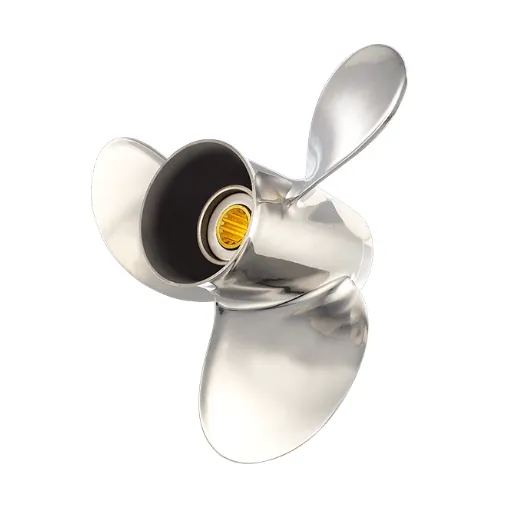
Fuel savings get the attention. Repair and replacement costs often decide the winner.
Aluminum Prop Repair Frequency and Costs
Aluminum props bend, chip, and wear. That is their design — they sacrifice themselves to protect your lower unit. A typical recreational boater repairs an aluminum prop once every 2-3 seasons. Each repair runs $40−$120 per blade. A full replacement every 4-5 years is common.
Stainless Prop Repair Frequency and Costs
Stainless resists dings and nicks that would damage aluminum. A stainless prop in recreational use might need repair once every 4-6 years. However, stainless repairs cost more — $80−$250 per blade — because the metal is harder to work. The good news: stainless can be restored closer to original condition than aluminum, which weakens with repeated heating and straightening.
Annual Maintenance Budgets
| Maintenance Item | Aluminum | Stainless |
|---|---|---|
| Annual cleaning/corrosion spray | $20−$40 | $20−$40 |
| Polishing (every 2-3 years) | $0 | $50−$100 |
| Dynamic balancing (every 3-5 years) | $0 | $75−$150 |
| Anode replacement | $15−$30 | $15−$30 |
Stainless props do not corrode as aggressively as aluminum in saltwater, but they still need care. The extra polishing and balancing costs are real — and rarely mentioned in comparison articles.
For a full breakdown of repair costs by damage type and material, see our propeller repair cost comparison.
5-Year Total Cost of Ownership: Four Scenarios

Here is the bottom line most boaters want: what does this actually cost me over five years?
Scenario A: Weekend Warrior
50 hours/year, 150 HP, freshwater, light loads
- Fuel savings (5%): $74/year
- Prop replacement (aluminum): $120 every 4 years = $150 over 5 years
- Repairs (aluminum): $80 total over 5 years
- 5-year aluminum TCO: $230 (maintenance) + $0 fuel premium = $230
- 5-year stainless TCO: $620 upfront + $200 maintenance – $370 fuel savings = $450
- Winner: Aluminum. Stainless never pays for itself at this use level.
Scenario B: Serious Angler
150 hours/year, 225 HP, mixed freshwater/saltwater
- Fuel savings (5%): $315/year = $1,575 over 5 years
- Prop replacement (aluminum): $160 every 3 years = $320 over 5 years
- Repairs (aluminum): $200 total
- Corrosion treatments (aluminum): $150
- 5-year aluminum TCO: $670 (maintenance) + $0 fuel premium = $670
- 5-year stainless TCO: $650 upfront + $350 maintenance – $1,575 fuel savings = -$575
- Winner: Stainless. Net savings of $575 over 5 years. Payback in ~2.1 years.
Scenario C: Saltwater Enthusiast
100 hours/year, 200 HP, saltwater primary
- Fuel savings (5%): $210/year = $1,050 over 5 years
- Prop replacement (aluminum, saltwater): $140 every 2.5 years = $420 over 5 years
- Repairs (aluminum): $250 total
- 5-year aluminum TCO: $670 (maintenance) + $0 fuel premium = $670
- 5-year stainless TCO: $550 upfront + $300 maintenance – $1,050 fuel savings = -$200
- Winner: Stainless. Net savings of $200 over 5 years. Payback in ~2.6 years.
Scenario D: Charter Captain
400 hours/year, 250 HP, saltwater, heavy loads
- Fuel savings (5%): $945/year = $4,725 over 5 years
- Prop replacement (aluminum): $180 every 2 years = $540 over 5 years
- Repairs (aluminum): $400 total
- 5-year aluminum TCO: $940 (maintenance) + $0 fuel premium = $940
- 5-year stainless TCO: $700 upfront + $450 maintenance – $4,725 fuel savings = -$3,575
- Winner: Stainless by a landslide. Payback in under 1 year.
Side-by-Side TCO Comparison Table
| Scenario | Aluminum 5-Yr TCO | Stainless 5-Yr TCO | Net Difference | Payback |
|---|---|---|---|---|
| Weekend Warrior (50hr/150HP) | $230 | $450 | +$220 | Never |
| Serious Angler (150hr/225HP) | $670 | -$575 | -$1,245 | ~2.1 years |
| Saltwater Enthusiast (100hr/200HP) | $670 | -$200 | -$870 | ~2.6 years |
| Charter Captain (400hr/250HP) | $940 | -$3,575 | -$4,515 | <1 year |
Negative numbers for stainless indicate net savings. Positive numbers indicate net additional cost.
The Break-Even Calculator: Find Your Payback
You do not need a spreadsheet. You need two numbers and a formula.
The Formula
Simple Payback (years) = (Stainless Price - Aluminum Price) / Annual Fuel SavingsExample: You are buying a 19-pitch prop for a 150 HP engine. Stainless costs 450.Aluminumcosts450.Aluminumcosts140. You run 100 hours per year at 8.5 GPH. Fuel is $3.50/gallon.
- Price premium: $450 – $140 = $310
- Annual fuel savings: 100 hrs x 8.5 GPH x 5% x $3.50 = $149
- Payback: $310 / $149 = 2.1 years
Break-Even by Hours per Season
| HP Band | 50 Hrs/Yr | 100 Hrs/Yr | 150 Hrs/Yr | 200 Hrs/Yr | 400 Hrs/Yr |
|---|---|---|---|---|---|
| 90 HP | Never | ~4.8 yr | ~3.2 yr | ~2.4 yr | ~1.2 yr |
| 150 HP | Never | ~2.1 yr | ~1.4 yr | ~1.0 yr | ~0.5 yr |
| 225 HP | ~5.2 yr | ~2.6 yr | ~1.7 yr | ~1.3 yr | ~0.6 yr |
| 300 HP | ~3.9 yr | ~1.9 yr | ~1.3 yr | ~1.0 yr | ~0.5 yr |
Assumes $3.50/gal and 5% fuel savings. “Never” means payback exceeds typical 10-year ownership.
Why Some Boaters Never Break Even
If you run under 75 hours per year with an engine under 150 HP, the fuel math alone will not close the gap. Your savings might total $40−$60 per year. Against a $300+ premium, that is a 5-7 year payback — longer than many owners keep a boat. For these boaters, stainless is only worth it if performance gains, durability, or resale value matter more than pure fuel ROI.
Not sure where you land? Tell us your engine, your hours, and your fuel price. We will run your exact numbers. Get a free propeller ROI calculation →
Hidden Costs Nobody Talks About
The upfront price and fuel savings are only part of the equation. Here are the costs competitors rarely mention.
Backorder Delays and Seasonal Interruptions
Popular stainless sizes can be backordered for 2-6 weeks during peak season. If your prop is damaged in July and the replacement ships in September, you have lost half your summer. Aluminum props are stocked everywhere. That availability has a value.
Polishing and Balancing Requirements
Stainless props hold their finish longer, but when they lose it, they look terrible. A full polish runs $50-$100. Dynamic balancing, recommended every few years, costs $75-$150. Aluminum props do not polish well and are rarely balanced — but they are also $120 to replace.
Shock-Absorbing Hub Upgrades
Stainless transmits impact force to your lower unit. A shock-absorbing hub — Flo-Torq SSR or Yamaha SDS — is cheap insurance at $40−$80. Factor this into your first-year cost.
Theft and Insurance Considerations
Stainless props are theft targets. They are easy to remove, hard to trace, and sell for $200+ used. Some insurers require proof of locking hardware for full coverage. Aluminum props are rarely stolen.
Resale Value Impact
A boat with a quality stainless propeller may command a slightly higher resale price — perhaps 200−400 more. That defrays part of the premium if you sell within the payback window.
When Stainless Is Clearly Worth It
Stainless steel makes financial sense when:
- You run 100+ hours per season
- Your engine is 150 HP or higher
- Fuel costs are $3.50+/gallon
- You operate in saltwater (reduced corrosion-related replacement)
- You need consistent performance under variable loads
- You keep your boat longer than 3 years
Boat Types with Fastest ROI
- Offshore center consoles: High HP, saltwater, heavy loads = fastest payback
- Bass boats: Tournament anglers run hard and often
- Ski/wake boats: Hole shot demands justify the premium
- Charter/commercial: Hours pile up; fuel savings scale fast
When Stainless Is NOT Worth It
Stainless steel does not make financial sense when:
- You run under 50 hours per season
- Your engine is under 125 HP
- You boat primarily in freshwater with minimal debris
- You are on a tight budget and need a cheap spare
- You plan to sell your boat within 2 years
- You navigate shallow, debris-filled water where impact is frequent
Boat Types Where Aluminum Wins Financially
- Pontoons: Low HP, low speeds, minimal efficiency gains
- Jon boats: Shallow water, debris risk, sacrificial protection is valuable
- Small runabouts: Under 150 HP, light loads, casual use
- Spare props: Keep a cheap aluminum backup regardless of the primary prop material
The Upgrade Timing Question: Switch Now or Later?
If Your Current Aluminum Prop Is New
Do not switch. Run the aluminum prop through its lifespan (3-5 years). Track your hours and fuel costs. When it is time to replace, run the payback formula with your actual numbers. You will make a better decision with real data.
If Your Current Aluminum Prop Is Worn
This is the ideal switching window. You are already spending $120-$180 on a replacement. The incremental cost to jump to stainless is smaller — perhaps $250-$400 instead of $450. Your payback period shrinks accordingly.
If You Are Buying Your First Property
Start with aluminum. Learn your boat. Learn your water. Track your hours for a season or two. Once you know what performance you are missing — and whether you actually need it — then upgrade. The used aluminum prop retains enough value to offset part of the stainless purchase.
Frequently Asked Questions
How long does a stainless steel propeller take to pay for itself?
For a 150+ HP boater running 100+ hours per year, the typical payback is 2-3 years through fuel savings alone. For high-hour commercial operators, payback can be under 1 year. For casual boaters under 150 HP running under 50 hours per year, stainless may never pay for itself on fuel savings alone.
Do stainless steel propellers increase resale value?
Yes, modestly. A boat with a quality stainless propeller may sell for $200-$400 more than the same boat with an aluminum prop. That defrays part of the upfront premium if you sell within the first few years.
What is the biggest mistake people make when calculating prop ROI?
Ignoring the hidden costs. Most boaters only compare sticker price and fuel savings. They forget hub upgrades, polishing, balancing, backorder delays, and repair cost differences. Add $150-$400 to your first-year stainless budget.
Are composite propellers a better financial middle ground?
Composite props — like Solas Amita and Piranha — typically cost $150−$350. They offer moderate performance gains, corrosion resistance, and modular blade replacement. For boaters who want better durability than aluminum without the stainless price tag, composites can be the sweet spot.
Should I buy a used stainless steel propeller to save money?
Only if you can verify its history. A bent or poorly repaired stainless prop can cause vibration and lower-unit damage. Unlike aluminum, stainless steel does not show fatigue as visibly. If the price is too good to be true, it usually is. A new aluminum prop is safer than a questionable used stainless prop.
Can you repair a stainless steel propeller?
Yes, and it is one of stainless steel’s advantages over aluminum. Minor dings and bends can be welded, ground, and polished back to near-original condition. However, repairs cost $80−$250 per blade — roughly double aluminum repair costs. For a full cost breakdown, see how long do propellers last.
Conclusion
The question “Are stainless steel propellers worth it” has only one honest answer: it depends on your numbers.
If you are a casual freshwater boater with a 115 HP engine and 40 hours per season, stainless steel is a luxury, not an investment. The fuel savings will never close the gap. Stick with aluminum, enjoy the sacrificial protection, and put the $300 difference toward fuel or maintenance.
If you are a saltwater angler with a 225 HP engine and 150 hours per season, stainless steel is one of the smartest upgrades you can make. The fuel savings, reduced replacement frequency, and corrosion resistance create a payback in roughly 2 years. After that, every hour on the water is cheaper than it would have been with aluminum.
The formula is simple. The decision is personal. Run your hours, your HP, and your fuel price through the payback calculator in this guide. The number you get is your answer.
Still unsure? Captain Marine offers free propeller consultations. Tell us your engine, your hours, and how you use your boat. We will help you decide whether stainless steel is worth it for your specific setup. Get your free propeller recommendation →
For the complete material and performance comparison — including speed, durability, and switching mechanics — see our aluminum vs stainless steel propeller guide.