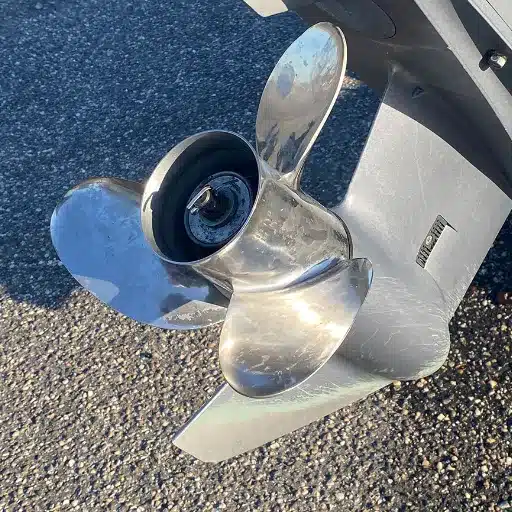
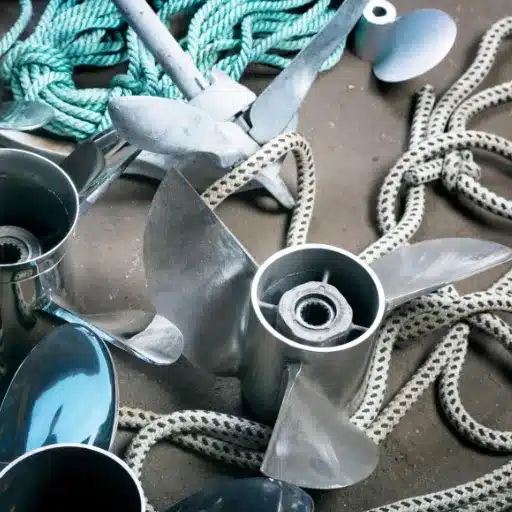
Most boat performance problems that look like engine trouble are actually propeller trouble. If your engine runs smoothly in neutral but struggles under load — high revs with low speed, vibration at cruise, or an unexplained drop in top end — the problem is almost always between the lower unit and the water, not inside the powerhead. Boat propeller troubleshooting starts with one simple test that takes two minutes and tells you exactly which direction to look.
You already know the frustration. Last season, the boat ran 48 MPH at wide open throttle. This season, it barely cracks 42. Or maybe the helm shakes so hard at 3,500 RPM that your passengers complain. These symptoms feel expensive, but most propeller problems are diagnosable on the trailer in under ten minutes — and some cost nothing to fix. At Captain Marine, we see the same five propeller issues walk through our service bay every spring. This article gives you the same diagnostic process our riggers use, starting with the WOT RPM test that narrows every symptom down to a specific cause.
For the full framework on choosing the right propeller from the start, see our boat propeller selection guide.
Key Takeaways
- The WOT RPM test is the single most powerful propeller diagnostic tool — run it before you spend a dollar
- High RPM with low speed means a spun hub, ventilation, or under-pitched prop — not engine failure
- Low RPM with sluggish acceleration means over-pitch, prop damage, or excessive load
- Vibration is almost always a bent blade, debris, or shaft issue — never ignore it
- Most propeller problems are diagnosable in under 10 minutes with basic visual checks
Is It the Propeller or the Engine?
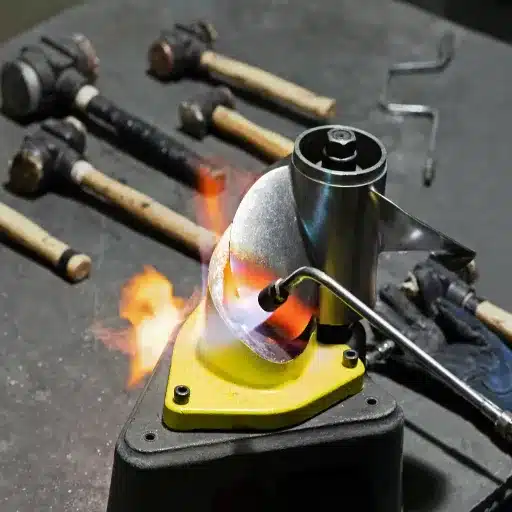
Before you blame the propeller, rule out the engine in two minutes. Start the motor and let it idle in neutral. Rev it smoothly through the RPM range. If it accelerates cleanly without stumbling, missing, or smoking, your fuel system, ignition, and air intake are fine. The problem only appears when the engine is under load — which means the propeller is the culprit.
The Engine Elimination Checklist
- Fuel filter — Replace if it is over 100 hours old or shows discoloration
- Spark plugs — Fouled plugs cause misfires that feel like prop slip, but happen in neutral too
- Air filter — A clogged filter chokes the engine at high RPM in any gear
- Water separator — Contaminated fuel causes intermittent power loss unrelated to the prop
If the engine runs clean in neutral but bogs, vibrates, or over-revs under load, you have a propeller problem. Now you can troubleshoot with confidence instead of throwing parts at the motor.
The WOT RPM Diagnostic Test
This test is the centerpiece of every propeller troubleshooting session in our shop. It tells you whether your prop is over-pitched, under-pitched, damaged, or spinning freely — all from one number.
How to Run the Test
- Load the boat with your normal passenger and gear weight
- Find flat water with no current
- Set trim to neutral (zero clicks from center)
- Advance the throttle smoothly to wide open throttle (WOT)
- Hold WOT for 10 to 15 seconds and record the peak RPM
- Compare your recorded RPM to the manufacturer’s WOT spec
The WOT spec is printed on a label on the engine cowl or in your owner’s manual. Most outboards have a recommended WOT range, such as 5,000 to 5,800 RPM. Your goal is to hit somewhere inside that range with your normal load.
The RPM Decision Table
| WOT RPM vs Manufacturer Spec | Likely Cause | First Check |
|---|---|---|
| 300+ RPM above spec | Spun hub, ventilation, or under-pitched prop | Hub marker test, trim position |
| 100 to 300 RPM above spec | Slightly under-pitched or light load | Prop markings, passenger count |
| Within the recommended range | Prop is likely fine; check hull or engine | Hull fouling, fuel system |
| 100 to 300 RPM below spec | Slightly over-pitched or minor prop damage | Visual blade inspection |
| 300+ RPM below spec | Over-pitched prop, severe damage, or overloaded boat | Prop diameter and pitch vs spec |
This table is your roadmap. One number points you to the right section of this article.
Symptom 1: High RPM but Low Speed
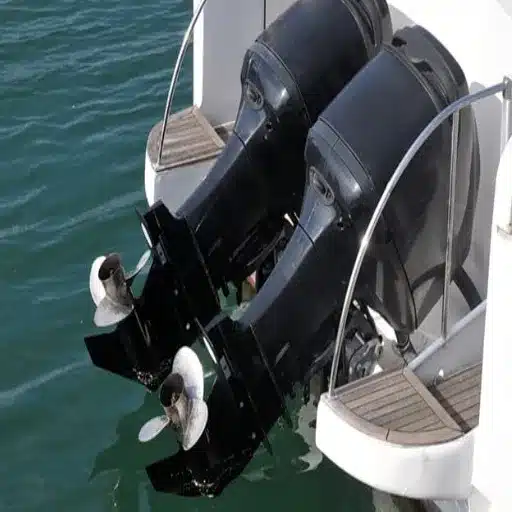
Your engine screams but the boat barely moves. This is the classic signature of three distinct problems, and they require completely different fixes.
Spun Propeller Hub
The rubber bushing inside the propeller hub is designed to absorb shock and protect your lower unit gears. When it fails, the propeller shaft spins inside the hub without turning the blades. The engine revs freely. The boat goes nowhere.
How to diagnose it: With the engine off, draw a straight line with a permanent marker across the propeller hub — from the outer barrel, across the rubber insert, to the inner spline. Run the boat under load briefly. If the line is broken or misaligned, the hub has spun. You can also try twisting the propeller by hand while holding the shaft. Any rotational play confirms a spun hub.
The fix: For aluminum props, replacement is often cheaper than re-hubbing. For stainless steel props, a hub kit costs 30to30to60 and takes 20 minutes to install.
Ventilation
Ventilation happens when air — from the surface, exhaust, or turbulent hull flow — gets pulled into the propeller disc. Air is roughly 1/800th the density of water, so the prop loses its grip instantly and the engine RPM spikes.
How to diagnose it: Drop the trim 2 to 3 clicks toward negative and re-test at WOT. If the RPM drops back to normal and the boat regains speed, you have ventilation. It usually happens in hard turns, rough water, or when trimmed too high.
The fix: Lower the trim, reduce turn aggressiveness at speed, or check your engine mounting height. For the full diagnostic on ventilation vs cavitation, read our propeller cavitation vs ventilation guide.
Under-Pitched Propeller
A prop with too little pitch lets the engine over-rev without producing enough thrust. The engine hits the top of its RPM range while the boat is still hungry for more speed.
How to diagnose it: If your WOT RPM is above spec but the hub is fine, and there is no ventilation, the pitch is too low. Rule of thumb: 1 inch of pitch change equals roughly 150 to 200 RPM.
The fix: Increase pitch by 1 to 2 inches. For help calculating the right pitch for your engine and boat, see our guide on what is the best propeller pitch for my boat.
Symptom 2: Vibration
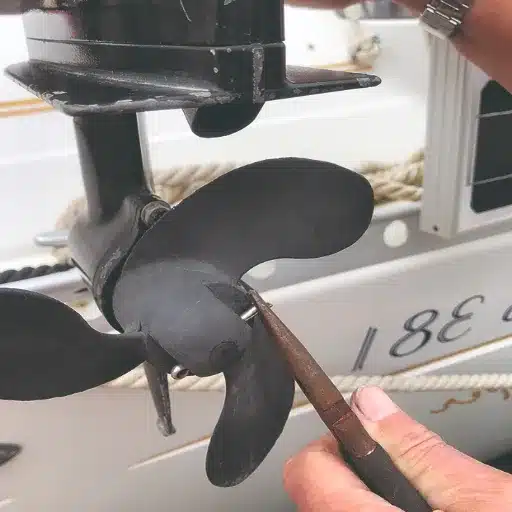
Vibration is your boat’s way of telling you something is out of balance. Ignore it and you will damage bearings, seals, and engine mounts.
Bent Blade or Damaged Propeller
Even a small bend — as little as 1/8 inch — can create noticeable vibration. A nick or chip on one blade disrupts the balance and causes the prop to wobble.
How to diagnose it: Remove the prop and lay it on a flat surface. Look for bent tips, chipped leading edges, or cracks. Spin the prop slowly and watch for wobble. Run your finger along each leading edge. It should feel smooth. Any rough spot or burr is a potential vibration source.
The fix: Minor nicks can be filed smooth with a mill bastard file. Bent blades need professional straightening (100to100to250). Cracked blades require replacement.
Debris or Fouling
Fishing line, rope, weeds, or plastic bags wrapped around the propeller shaft create an off-center load that vibrates through the entire drivetrain.
How to diagnose it: Remove the propeller and inspect the shaft behind it. Fishing line is the most common culprit and can cut into the shaft seal if left in place.
The fix: Cut away all debris with a knife or scissors. Clean the shaft and hub area thoroughly.
Bent Propeller Shaft
If vibration persists after replacing or repairing the propeller, suspect the shaft.
How to diagnose it: Remove the prop and watch the shaft while a helper bumps the starter. Any visible wobble indicates a bent shaft. Inboard and sterndrive shafts should show less than 0.005 inch of runout at the coupling.
The fix: Bent shafts require professional replacement. This is not a DIY repair.
Symptom 3: Boat Won’t Reach Top Speed
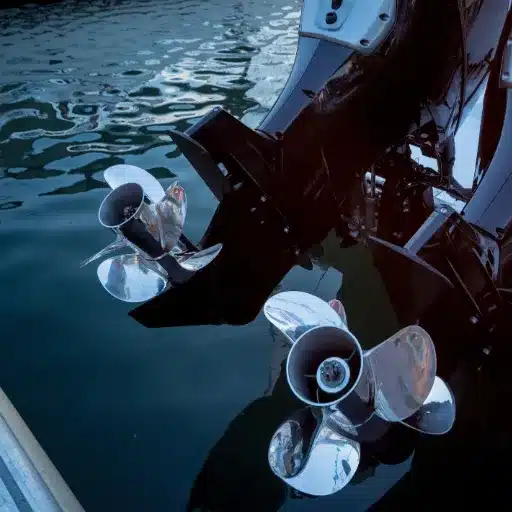
Your boat used to plane faster and cruise higher. Now it feels sluggish, and the GPS confirms the loss. If the WOT RPM test shows low numbers, here are the likely causes.
Over-Pitched Propeller
Too much pitch overloads the engine. It cannot reach its power band, and the boat feels like it is towing an anchor.
How to diagnose it: WOT RPM is 200 to 400 below the manufacturer’s spec. The engine sounds labored at full throttle. Hole shot is sluggish.
The fix: Reduce pitch by 1 to 2 inches. Remember the 200 RPM rule: each inch of pitch change moves WOT RPM by roughly 150 to 200. For detailed pitch tuning, see our guide on boat propeller size.
Damaged or Worn Propeller
A damaged propeller loses efficiency even if it is still balanced enough to avoid vibration. Nicks, erosion, and cavitation burn all reduce thrust.
How to diagnose it: Visual inspection shows pitting, chips, or rough edges on the blade back. Even a 1/4-inch nick on the leading edge can cost 2 to 3 MPH at the top end.
The fix: File minor nicks smooth. Professional reconditioning for moderate damage. Replace if the cavitation burn is severe.
Excessive Load or Weight Distribution
Too many passengers, too much gear in the stern, or water in the bilge can overload the propeller and make it feel like the wrong size.
How to diagnose it: Test with a light load. If performance returns to normal, the prop is fine — the boat is just overloaded.
The fix: Redistribute weight forward. Pump out the bilge. Reduce passenger count or leave heavy gear at the dock.
Hull Fouling
Marine growth on the hull bottom creates drag that feels like a propeller problem. A fouled hull can reduce speed by 10 to 20 percent even with a perfect prop.
How to diagnose it: Inspect the hull bottom. If you see barnacles, algae, or slime, clean it before blaming the prop.
The fix: Pressure wash or scrape the hull. Apply fresh bottom paint if needed.
Symptom 4: Boat Pulls to One Side
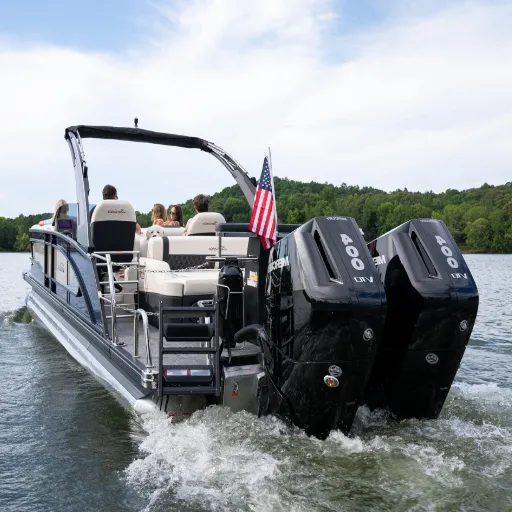
A boat that used to track straight but now pulls left or right at speed usually has an asymmetric propeller problem.
Uneven Blade Damage
If one blade is more damaged than the others, the prop produces unequal thrust. The boat turns toward the side with the weaker blade.
How to diagnose it: Remove the prop and compare all blades. Look for differences in tip shape, leading edge condition, or overall length.
The fix: Professional straightening and balancing. Uneven damage usually means the prop struck something, so inspect the lower unit for impact damage too.
Incorrect Rotation
A left-hand prop on a right-hand rotation engine (or vice versa) creates sideways thrust that makes the boat pull. This usually happens after a DIY prop swap using the wrong replacement.
How to diagnose it: Check the propeller part number against your engine spec. Most single-engine outboards use right-hand rotation props.
The fix: Replace with the correct rotation propeller.
Symptom 5: Rattling, Clunking, or Grinding Noises
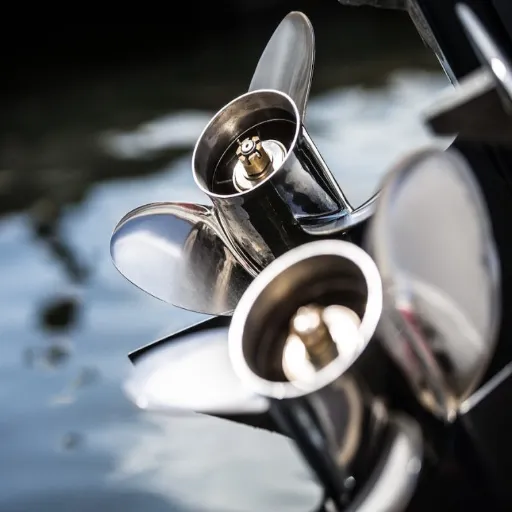
Noise from the stern is never good. The type of noise tells you what is failing.
Spun Hub (Rattling at Idle)
A partially spun hub creates a metallic rattle at low RPM as the rubber insert slips and catches against the barrel.
How to diagnose it: The rattle disappears at higher RPM, where centrifugal force helps the hub grip. The marker test confirms it.
The fix: Replace the hub kit or the propeller.
Cavitation (Growling or Rumbling)
Cavitation produces a deep growl or rumble, often with persistent vibration. It happens when vapor bubbles collapse against the blade surface.
How to diagnose it: The noise is most noticeable at 3,000 to 4,500 RPM. The blade back shows pitting or erosion.
The fix: Repair blade damage, remove debris, or re-pitch the prop. Advanced cavitation-reduction technologies include CFD-optimized blade profiles and anti-cavitation coatings for commercial applications.
Gearcase or Bearing Issues
A clunking or grinding noise that persists even with the prop removed points to the lower unit — not the propeller.
How to diagnose it: Remove the prop and run the engine briefly in neutral. If the noise remains, the problem is inside the gearcase.
The fix: See a marine mechanic immediately. Operating with damaged gears can destroy the lower unit.
The 10-Minute Propeller Inspection
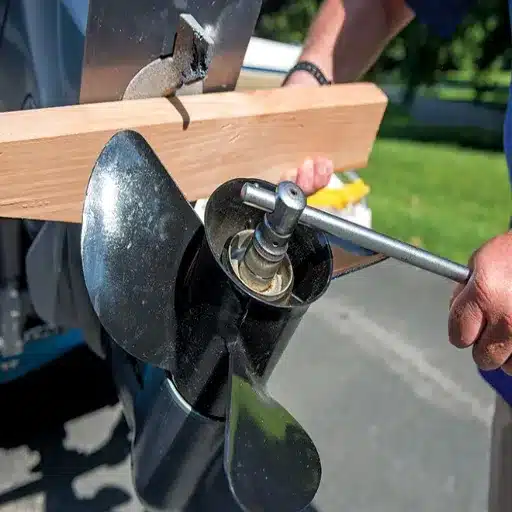
Every boat owner should know this inspection. Run through it before each season and after any prop strike.
Step 1: Visual Blade Check
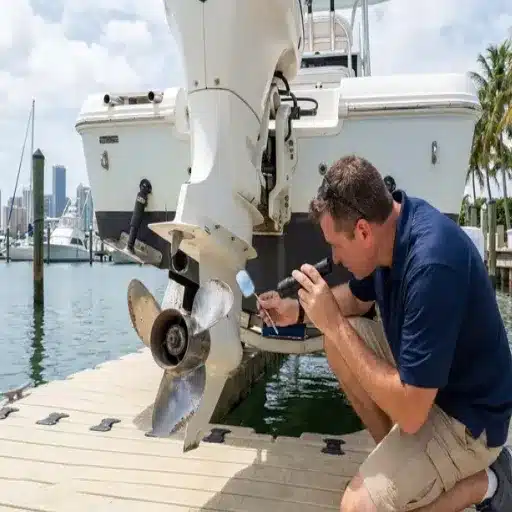
Remove the propeller and look at every blade. Check for nicks, cracks, chips, bent tips, and corrosion. Pay special attention to the leading edges and blade tips, where most impact damage occurs.
Step 2: Leading Edge Feel Test
Run your finger along each leading edge from hub to tip. It should feel smooth and consistent. Any burr, rough spot, or sharp edge can trigger cavitation. A mill bastard file will remove minor burrs in seconds.
Step 3: Hub Check
Inspect the rubber bushing for cracks, bulging, or separation from the metal barrel. Twist the propeller by hand on the shaft. There should be zero rotational play.
Step 4: Shaft and Debris Check
Look behind the propeller for fishing line, rope, weeds, or plastic bags. Check the shaft for grooves or scoring where the line may have cut into the metal.
Step 5: Hardware Tightness
Reinstall the propeller with a new cotter pin. Torque the prop nut to the manufacturer’s spec:
| Engine Brand | Prop Nut Torque Spec |
|---|---|
| Mercury | 55 ft-lb (aluminum) / 60 ft-lb (stainless) |
| Yamaha | 40 ft-lb |
| Johnson/Evinrude | 50 ft-lb |
| Honda | 45 ft-lb |
| Suzuki | 40 ft-lb |
Grease the prop shaft splines with marine-grade grease before reinstalling.
Repair vs Replace: Cost Decision Guide
Not every damaged propeller needs replacement. Use this table to decide whether to repair, re-hub, or replace.
| Problem | DIY Repair Cost | Professional Repair Cost | Replacement Cost | Recommendation |
|---|---|---|---|---|
| Minor nicks and burrs | $0 (file) | $75 to $150 | $80 to $900 | File smooth if minor |
| Bent blade (minor) | N/A | $100 to $250 | $80 to $900 | Repair if stainless |
| Spun hub (aluminum) | 0to0to30 (hub kit) | $50 to $100 | $80 to $250 | Hub kit or replace |
| Spun hub (stainless) | 30to30to60 (hub kit) | $75 to $150 | $300 to $900 | Hub kit first |
| Cavitation burn (light) | N/A | $150 to $300 | $80 to $900 | Repair if moderate |
| Cavitation burn (severe) | N/A | $250 to $400 | $80 to $900 | Replace |
| Bent propeller shaft | N/A | $400 to $800 | N/A | Professional only |
| Cracked blade | N/A | N/A | $80 to $900 | Always replace |
The general rule: if professional repair costs more than 50 percent of a new aluminum prop or 30 percent of a new stainless prop, replace it.
Emergency Fixes on the Water
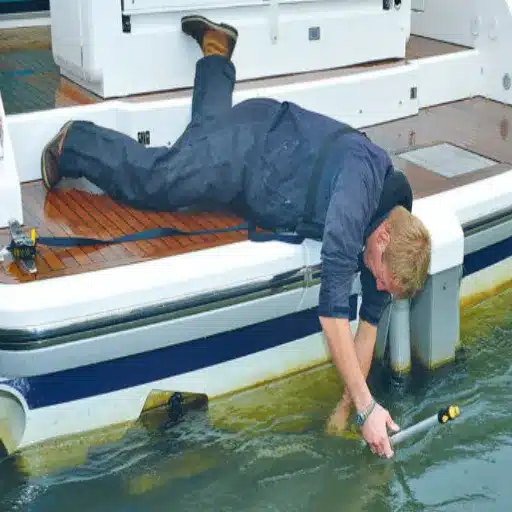
Propeller problems never happen at the dock. Here is what to do when they strike on the water.
Spun Hub
Limp home at low RPM — under 2,500 if possible. Avoid WOT entirely. A spun hub can over-rev the engine and cause internal damage. If you have a spare prop and the tools, swap it on the water. Always carry a spare propeller, a prop wrench, and spare hardware.
Debris on the Shaft
Run the engine briefly in reverse to dislodge weeds or rope. If that fails, trim the engine up, shut it off, and cut away the debris with a knife while leaning over the transom. Use a kill switch lanyard so the engine cannot start accidentally.
Ventilation in Rough Water
Drop the trim 3 to 5 clicks toward negative immediately. Reduce speed in turns. Shift passengers toward the bow to keep the stern deeper in the water.
Bent Blade
File any sharp edges with whatever tool you have — a pocket knife, multitool, or even sandpaper. This will not fix the bend, but it can reduce vibration enough to get home without damaging the lower unit.
Real-World Case Studies
Case 1: Bass Boat — Over-Propped and Lugging
Tom runs a 20-foot bass boat with a 200 HP Mercury Verado on a Minnesota lake. Last fall, his top speed was 51 MPH at 5,600 RPM. This spring, he could only hit 48 MPH, and the engine sounded strained at WOT.
We ran the WOT RPM test. His peak was 4,900 RPM — well below the Mercury spec of 5,200 to 6,000. The previous owner had installed a 23-pitch propeller chasing top speed numbers. Tom’s tournament load — two anglers, gear, and a full livewell — was too much for that pitch.
We borrowed a 21-pitch prop from another customer for a test run. WOT RPM jumped to 5,450. Top speed dropped slightly to 50 MPH, but the hole shot improved dramatically, and the engine no longer lugged. Tom bought the 21-pitch prop and sold the 23-pitch to a lighter runabout owner. Cost to diagnose: $0. Cost to fix: the price difference between two used props.
Case 2: Pontoon — Spun Hub After Beach Landing
Karen owns a 22-foot Bennington pontoon with a 115 HP Yamaha. One July afternoon, she beached the boat on a sandbar to let the kids swim. When she tried to leave, the engine revved to 5,500 RPM, but the pontoon barely crawled.
The marker test told the story instantly. A line drawn across the hub was broken by about 15 degrees. Sand and gravel had gotten between the hub and the prop barrel during the beach landing, and the torque of getting off the sandbar spun the hub.
Karen carried a spare Flo-Torq hub kit in her tool bag — something every pontoon owner should do. We pulled the prop on the beach, pressed in the new hub, and reinstalled it in 20 minutes. Total cost: $32 for the hub kit. She was back on the water before the kids finished their sandwiches.
Case 3: Runabout — Bent Blade from Submerged Log
Dave keeps a 19-foot Bayliner runabout with a 150 HP Mercury at a Wisconsin lake house. Midway through summer, he hit a submerged log at 35 MPH. The boat shook violently, and he immediately throttled back.
Inspection showed a 1/2-inch bend on the tip of one blade and a chip on the leading edge of another. The vibration was so severe at 3,500 RPM that his wife refused to ride in the boat.
Dave brought the prop to our shop. We straightened the bent blade, welded the chipped edge, and rebalanced the prop on our dynamic balancer. The vibration disappeared completely. His top speed returned to within 1 MPH of pre-strike numbers. Total cost: 165.Anewstainlesspropwouldhaverun165.Anewstainlesspropwouldhaverun520.
Prevention: Seasonal Checklist
The best troubleshooting is the problem you prevent. Run through this checklist at three points each season.
Pre-Season Inspection
- Remove the propeller and inspect all blades for nicks, cracks, and corrosion
- Check the hub for cracks, bulging, or separation
- Grease the prop shaft splines with fresh marine grease
- Torque the prop nut to spec and install a new cotter pin
- Record your baseline WOT RPM with a normal load on flat water
- Inspect the hull bottom for fouling and clean if needed
Mid-Season Monitoring
- Re-test WOT RPM monthly and compare to your baseline
- Note any new vibrations, noises, or RPM changes
- Inspect the prop after any strike — even a small tap can bend a blade
- Clean debris from the shaft after weedy or shallow-water runs
- Check prop nut tightness every 50 hours
End-of-Season Care
- Remove the propeller, clean thoroughly, and photograph any damage for year-over-year comparison
- Apply fresh grease to the shaft and reinstall with new hardware
- Store the prop in a dry place to prevent corrosion
- Document this season’s WOT RPM, top speed, and fuel burn for next spring’s comparison
Frequently Asked Questions
Why is my boat not reaching top speed?
The most common propeller-related causes are over-pitch, physical damage, excessive load, or hull fouling. Start with the WOT RPM test. If RPM is below spec, you are over-propped or damaged. If RPM is normal but speed is low, check hull fouling and weight distribution.
How do I know if my propeller hub is spun?
Draw a straight line with a permanent marker across the propeller hub — from the outer barrel to the inner spline. Run the boat under load. If the line no longer aligns, the hub has spun. You can also twist the propeller by hand on the shaft. Any rotational play confirms a spun hub.
What does propeller cavitation feel like?
Cavitation feels like a persistent rumbling vibration, most noticeable at 3,000 to 4,500 RPM. It often comes with a growling noise from the stern. Unlike ventilation — which causes sudden RPM spikes — cavitation causes steady vibration and gradually damages the propeller blades.
Can a damaged propeller cause vibration?
Yes. Even minor blade damage — a 1/8-inch bend or a small chip — can create enough imbalance to vibrate through the hull. A damaged prop can also damage bearings, seals, and engine mounts if operated for extended periods.
Why does my boat pull to one side?
Asymmetric blade damage is the most common cause of propeller damage. If one blade is more damaged than the others, the prop produces unequal thrust and the boat turns toward the weaker side. Incorrect rotation (left-hand vs right-hand) can also cause pulling.
Should I repair or replace my damaged propeller?
Repair if the damage is minor nicks, a single bent blade on a stainless prop, or a spun hub. Replace if the blade is cracked, the cavitation burn is severe, or repair costs exceed 50 percent of a new aluminum prop or 30 percent of a new stainless prop.
How much does propeller repair cost?
Minor nick filing is free with a mill file. Professional straightening and balancing runs $100 to $250. Hub kit replacement is $30 to $60. New aluminum props cost $80 to $250. New stainless props cost $300 to $900.
Can I run my boat with a spun propeller hub?
You can limp home at low RPM, but avoid WOT. A spun hub allows the engine to over-rev dangerously, which can damage the powerhead. Carry a spare propeller and the tools to swap it.
Why does my outboard over-rev at WOT?
Sudden over-revving at WOT is usually ventilation or a spun hub. Gradual over-revving — where the engine has always run above spec — means the propeller pitch is too low. Drop the trim to test for ventilation. Run the marker test for a spun hub.
How often should I inspect my propeller?
Inspect visually before every outing. Remove and thoroughly inspect the prop at the start of each season, after any impact, and at season’s end. Record WOT RPM monthly during the boating season.
What causes a propeller to slip?
True propeller slip is a normal hydrodynamic phenomenon — all props slip 5 to 15 percent. Excessive slip feels like the boat is not accelerating despite rising RPM, and it is caused by a spun hub, ventilation, under-pitch, or severe blade damage.
Can the wrong propeller damage my engine?
Yes. An over-pitched propeller makes the engine work too hard, which can cause overheating, premature wear, and internal damage over time. A spun hub allows dangerous over-revving that can exceed the engine’s rated RPM limit. Operating with severe vibration from a bent prop can damage bearings and seals.
The Bottom Line
Boat propeller troubleshooting does not require a mechanic’s certification or expensive tools. It requires one test — the WOT RPM comparison — and a systematic check of symptoms against likely causes. Start with the engine elimination test to make sure you are chasing the right problem. Run the WOT RPM test to narrow the field. Then follow the symptom guide in this article to pinpoint the exact cause and the right fix.
Most propeller problems cost less than a tank of gas to diagnose. Some cost nothing at all. And nearly all of them are preventable with a 10-minute seasonal inspection. If you are still unsure what is causing your boat’s performance issue, send us your boat specs, symptoms, and WOT RPM numbers. The Captain Marine rigging team will diagnose it and recommend the right fix — whether that means a quick file, a hub kit, or a propeller upgrade tailored to your setup.